
PMP Exam Prep - Five Day Session   616-slide PPT PowerPoint presentation slide deck (PPTX)
$70.00

PMP Exam Prep - Five Day Session (616-slide PPT PowerPoint presentation slide deck (PPTX)) Preview Image
Log in to unlock full preview.
PMP Exam Prep - Five Day Session (616-slide PPT PowerPoint presentation slide deck (PPTX)) Preview Image
Arrow   Click main image to view in full screen.

PMP Exam Prep - Five Day Session (PowerPoint PPTX Slide Deck)

PowerPoint (PPTX) 616 Slides

Top 100 Best Practice $70.00
FlevyPro price: $49.00 (30% discount)
Developed by a team of experts with global consulting experience at McKinsey, Deloitte, and Capgemini. It's in accordance with PMI Authorized Training Partners (ATPs) and based on the PMBOK Guide (7th Edition).
Add to Cart


Immediate download
Fully editable PowerPoint
Free lifetime updates

PMP PPT DESCRIPTION

Editor Summary A 616-slide PowerPoint training deck, PMP Exam Prep – Five Day Session (PPTX), developed by RadVector Consulting and created by a team with global consulting experience at McKinsey, Deloitte, and Capgemini. Read more

Introduction:
Are you gearing up for the Project Management Professional (PMP®) certification? Look no further. This extensive PowerPoint presentation, spanning over 616 slides, is your ticket to mastering PMP exam content that impeccably aligns with the PMP Exam Content Outline. It serves as a premier project management training resource, authorized by PMI.

1. PMP Certification Overview:
•  PMP Essentials: An introduction to the PMP certification and its significance.
•  PMP Exam Changes: Delve into the recent PMP exam changes effective from January 2, 2021.
•  The Three New Domains: Explore the three revamped domains: People, Process, and Business Environment.
•  Value Delivery Spectrum: Understand the incorporation of predictive, agile, and hybrid approaches.

2. Preparing for PMP Success:
•  The PMP Journey: Get ready for your PMP journey, from eligibility to exam day.
•  PMBOK Guide (7th Edition): Embrace the latest PMBOK Guide (7th Edition) as your trusted companion.
•  5-Day Session: A comprehensive, 5-day itinerary for holistic PMP preparation.

3. Domain: People (Leadership & Team) – Day 1 & 2:
•  Leading Teams: Master the art of effectively leading project teams.
•  Communication Skills: Learn the importance of communication in project leadership.
•  Team Dynamics: Understand the intricacies of team dynamics.
•  Negotiation & Conflict Resolution: Explore negotiation techniques and conflict resolution strategies.
•  Stakeholder Engagement: Dive into strategies for stakeholder engagement.

4. Domain: Process (Technical Aspects) – Day 3:
•  Project Management Lifecycle: Navigate through the project management lifecycle.
•  Project Management Processes: Explore the technical aspects of managing a project.
•  Tools & Techniques: Understand essential project management tools and techniques.

5. Domain: Business Environment (Strategy) – Day 4 & 5:
•  Organizational Strategy: Highlight the connection between projects and organizational strategy.
•  Benefits Management: Grasp the intricacies of benefits management in project management.
•  Governance & Compliance: Explore governance and compliance aspects.
•  Tailoring & Considerations: Learn about tailoring approaches and considerations across domains.
•  Mock Exam: Assess various facets and domains of your knowledge.

This comprehensive PMP exam preparation guide equips you with the knowledge and skills to confidently tackle the PMP certification. It's not only a personal study companion but also a valuable resource for PMP exam prep courses. Stay up-to-date with the latest PMBOK Guide (7th Edition) content and embark on your journey to PMP success.

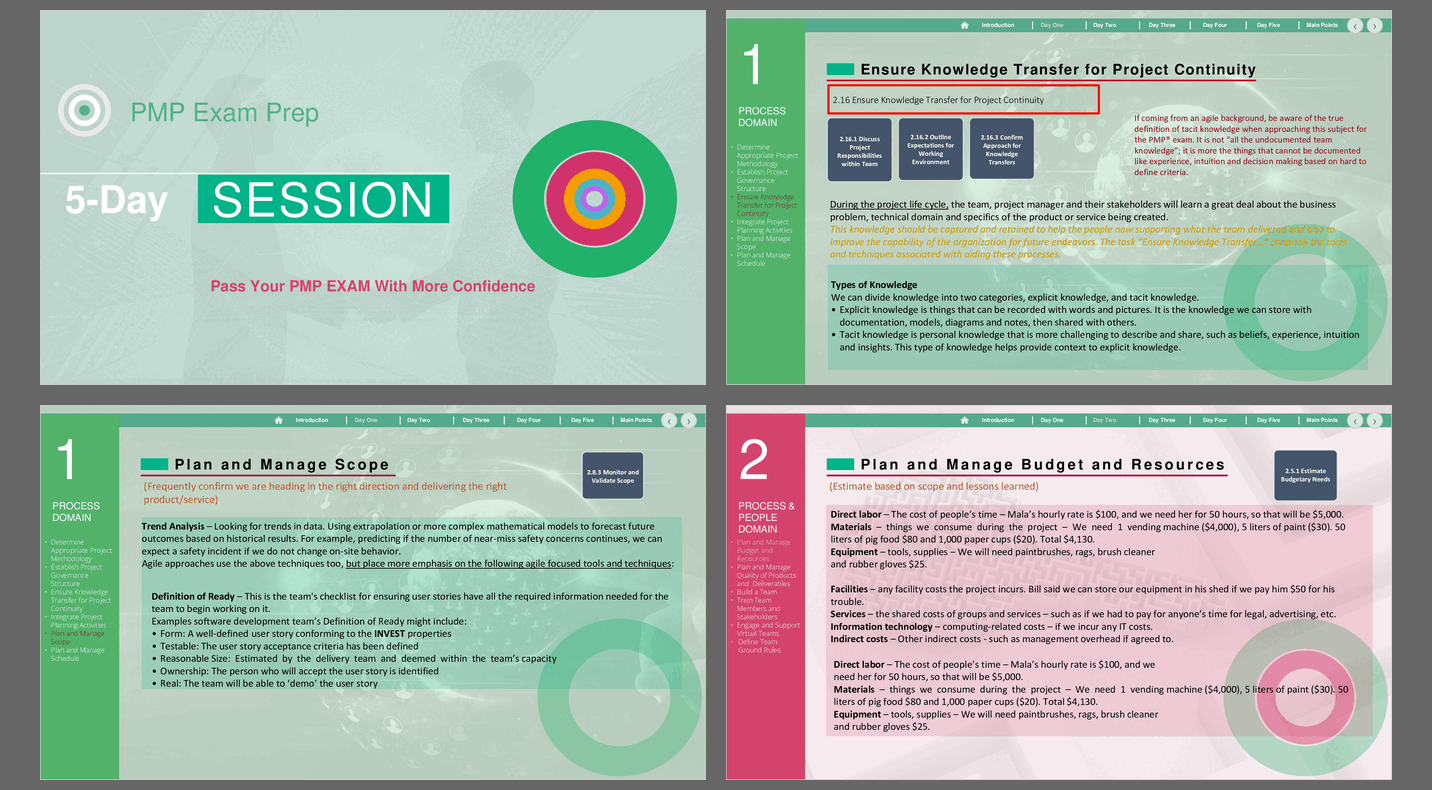
This guide covers the determination of appropriate project methodologies, ensuring knowledge transfer, and managing scope and schedules. It also includes practice questions to test your understanding and readiness for the PMP exam.

Got a question about the product? Email us at support@flevy.com or ask the author directly by using the "Ask the Author a Question" form. If you cannot view the preview above this document description, go here to view the large preview instead.

MARCUS OVERVIEW

This synopsis was written by Marcus [?] based on the analysis of the full 616-slide presentation.


Executive Summary
This PMP Exam Prep – Five Day Session (PPTX) is a structured, slide-based training deck designed to prepare candidates for the PMP® exam in alignment with the latest PMP Exam Content Outline and PMBOK® guidance. The deck walks through the full exam structure, including the People, Process, and Business Environment domains, and integrates predictive, agile, and hybrid approaches as required by the current exam format.

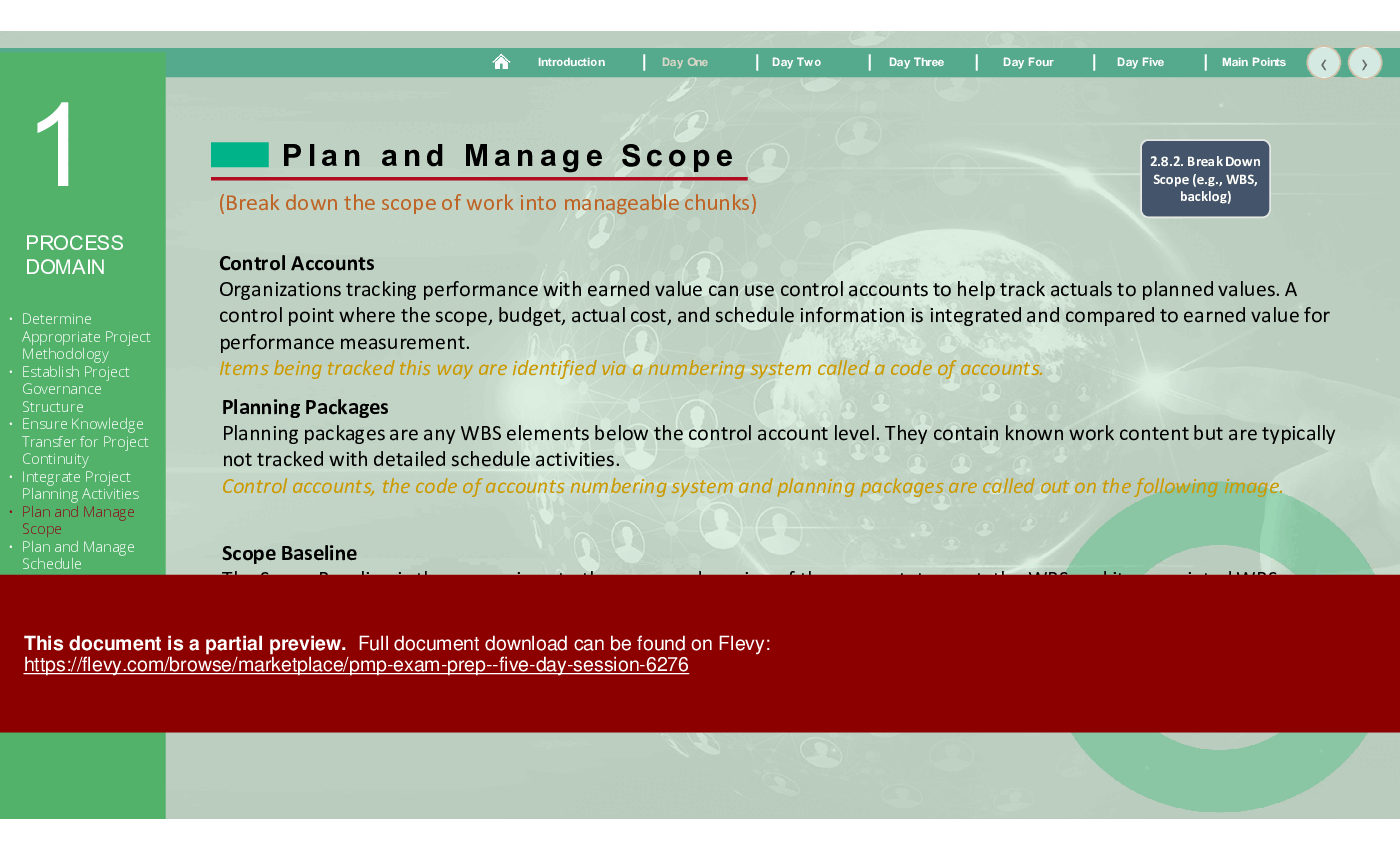
The presentation follows a five-day progression supported by detailed subtopics, exam-focused explanations, and practical breakdowns of project management tasks. It covers core exam areas such as determining appropriate project methodology, establishing project governance, integrating project planning activities, managing risks and changes, leading teams, and delivering business value.

Buyers can use this deck to run an instructor-led PMP bootcamp, support self-study sessions, structure internal corporate PMP training, or align team knowledge to PMI standards. It provides both conceptual explanations and task-level breakdowns consistent with the PMP exam domains and task statements.

Who This Is For and When to Use

•  Project managers preparing to sit for the PMP® certification exam
•  PMO leaders building structured internal PMP exam preparation programs
•  Corporate L&D teams delivering PMI-aligned project management training
•  Agile and hybrid project leaders needing exam-aligned domain clarity
•  Consultants designing PMP training workshops or bootcamps
•  Team leads transitioning from predictive to agile/hybrid environments

Best-fit moments to use this deck:

•  When launching a 5-day PMP exam prep bootcamp
•  When aligning training materials to the updated PMP Exam Content Outline
•  When preparing teams for the 180-question PMP exam format
•  When reinforcing People, Process, and Business Environment domain mastery
•  When integrating agile and predictive concepts for exam readiness

Learning Objectives

•  Define the PMP exam structure, qualification requirements, and updated exam domains
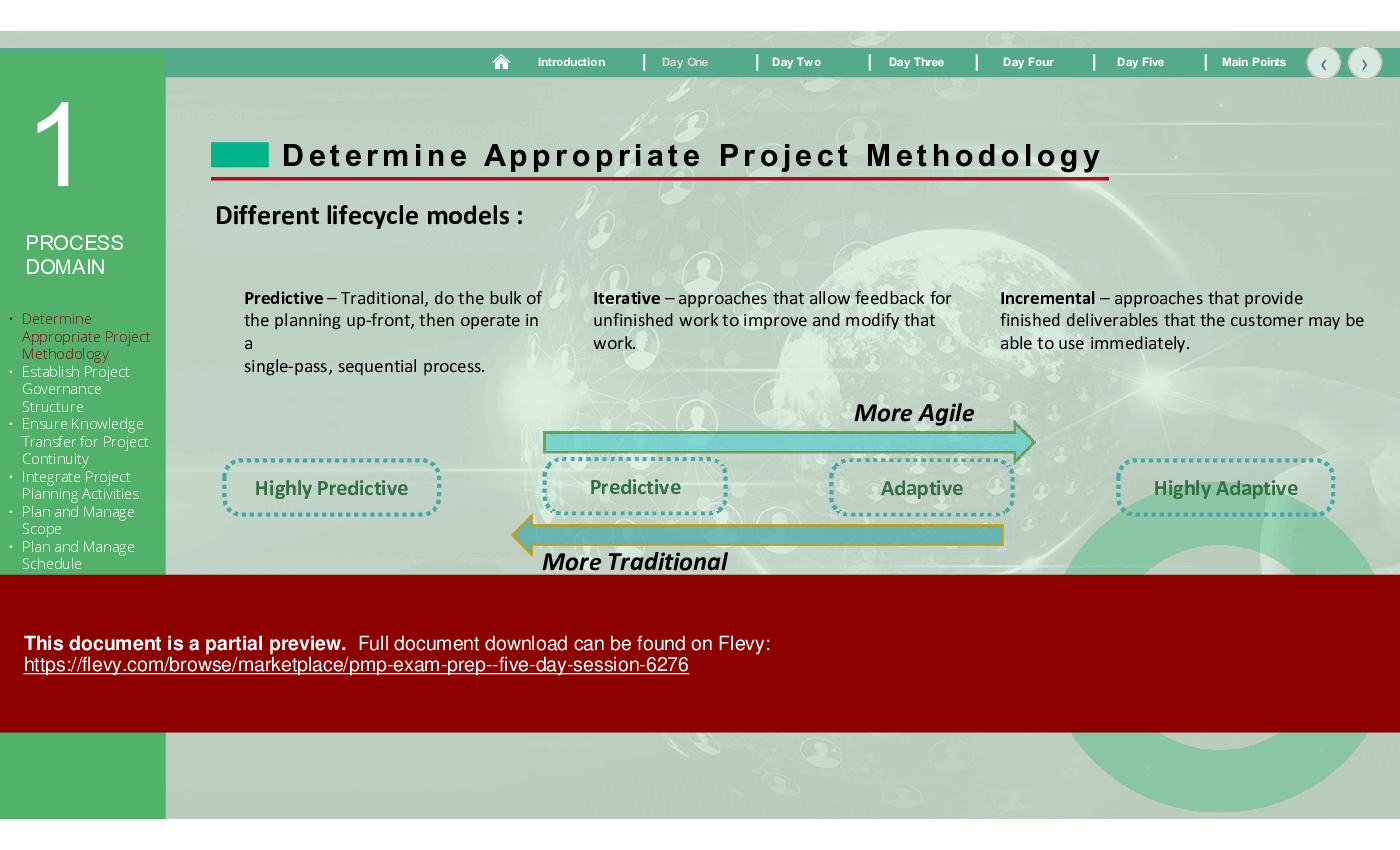
•  Differentiate predictive, iterative, incremental, agile, and hybrid lifecycle models
•  Determine appropriate project methodology based on complexity, uncertainty, and governance context
•  Establish and document project governance structures, escalation paths, and phase gates
•  Build and integrate subsidiary plans into a consolidated Project Management Plan
•  Apply knowledge transfer techniques, including lessons learned registers and repositories
•  Manage risks, changes, communications, and stakeholder engagement in alignment with exam tasks
•  Execute project work with urgency to deliver business value
•  Evaluate project compliance, benefits realization, and organizational change impacts

Table of Contents

•  Introduction (page 3)
•  Day One (page 24)
•  Day Two (page 96)
•  Day Three (page 148)
•  Day Four (page 274)
•  Day Five (page 331)
•  Tips (page 411)
•  Mock Exam (page 436)

Primary Topics Covered

•  Exam Content Outline Domains - Detailed coverage of the People (42%), Process (50%), and Business Environment (8%) domains, aligned to real-life project management practices and exam weighting.
•  Project Methodology Selection - Framework for determining appropriate project methodology, including predictive, iterative, incremental, agile, and hybrid approaches based on project complexity, uncertainty, and stakeholder context.
•  Project Governance Structure - Definition of governance frameworks, escalation paths, phase gates, and change control mechanisms consistent with PMI terminology.
•  Integrated Project Management Plan - Consolidation of subsidiary plans into a master Project Management Plan, including scope, schedule, cost, risk, quality, resource, procurement, and stakeholder engagement plans.
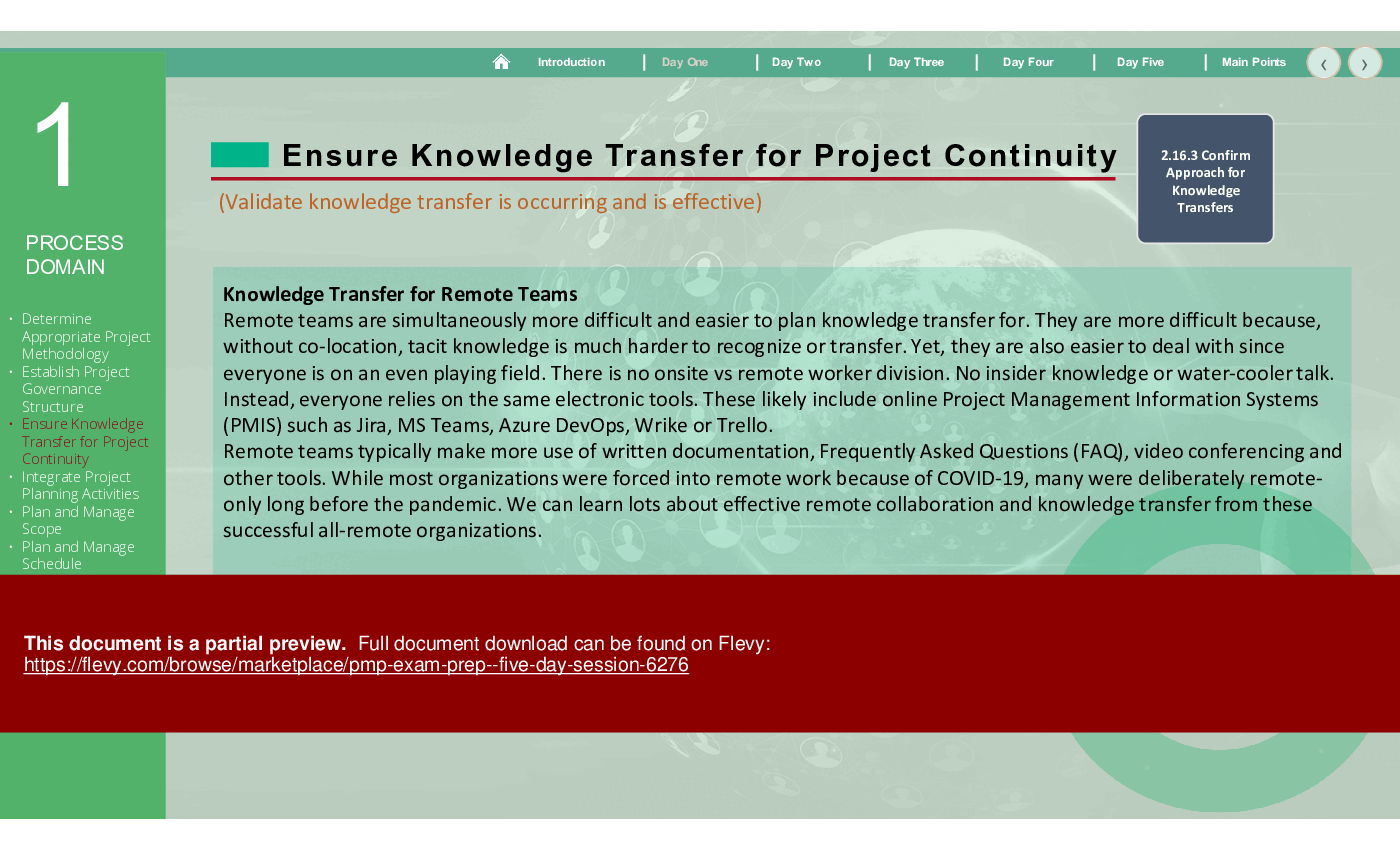
•  Knowledge Transfer and Continuity - Explicit and tacit knowledge management, lessons learned registers, repositories, retrospectives, and tools for effective knowledge sharing across project phases.
•  Execution and Value Delivery - Tasks related to executing projects with urgency, managing communications, engaging stakeholders, managing risks and issues, and delivering measurable business value.

Deliverables, Templates, and Tools

•  Project Management Plan structure with integrated subsidiary plans
•  Scope, schedule, cost, and performance baselines
•  Lessons Learned Register and organizational repository model
•  Change Management Plan and Change Control Board structure
•  Configuration Management Plan and Configuration Management System framework
•  Agile Suitability Filter assessment model
•  Escalation path and governance gate structure template
•  Stakeholder engagement categorization and communication planning framework
•  Risk identification and prioritization model
•  Sprint retrospective question set for agile environments

Slide Highlights

•  Visual breakdown of predictive versus agile/hybrid lifecycle models and their characteristics
•  Diagram of the three PMP exam domains with percentage weightings
•  Agile Suitability Filter radar chart illustrating lifecycle fit analysis
•  Stacey Matrix visual explaining project uncertainty dimensions
•  Governance phase gate diagram outlining continue, modify, or terminate decisions
•  Project Management Plan slide listing all subsidiary plans and baselines
•  Knowledge transfer lifecycle model showing identify, capture, share, apply, and assess stages
•  Agile retrospective framework with structured reflection prompts

Potential Workshop Agenda

PMP Exam Foundations Session (Half Day)

•  Overview of PMP qualification requirements and exam format
•  Breakdown of People, Process, and Business Environment domains
•  Predictive versus agile/hybrid lifecycle comparison

Project Methodology and Governance Session (Half Day)

•  Determine appropriate project methodology using real-world scenarios
•  Establish governance structures, escalation paths, and phase gates
•  Apply agile suitability filter and uncertainty analysis

Integrated Planning and Control Session (Half Day)

•  Build consolidated Project Management Plan
•  Review baselines, configuration management, and change control
•  Practice identifying dependencies and gaps using PMIS concepts

Execution and Value Delivery Session (Half Day)

•  Manage risks, issues, communications, and stakeholder engagement
•  Evaluate compliance and benefits realization
•  Reinforce exam-aligned task statements through discussion and Q&A

Customization Guidance

•  Insert organization-specific governance structures, escalation paths, and PMO roles
•  Adapt examples to industry-specific project types such as IT, construction, or product development
•  Replace generic PMIS examples with internal tools used by your organization
•  Add company case studies to illustrate methodology selection decisions
•  Align terminology with your corporate project lifecycle model while retaining PMP exam language

Secondary Topics Covered

•  PMP exam qualification requirements and 35 contact hour education requirement
•  Updated exam format of 180 questions and 230-minute duration
•  Emotional intelligence in supporting team performance
•  Virtual team engagement and collaboration techniques
•  Procurement planning and supplier management
•  Compliance management and regulatory alignment
•  Business environment impact assessment on scope
•  Organizational change support and cultural assessment
•  Configuration management and artifact tracking
•  Change control board structure and emergency change process

Topic FAQ

What are the 3 domains of the current PMP exam and how are they weighted?

The current PMP exam is organized into 3 domains: People, Process, and Business Environment. The exam weighting is detailed as People 42%, Process 50%, and Business Environment 8%, which the PMP Exam Prep – Five Day Session maps directly to those domain weightings.

How should I decide between predictive, agile, and hybrid methodologies for a given project?

Methodology selection should be based on project complexity, uncertainty, and governance/stakeholder context. Use uncertainty analysis and lifecycle-fit tools to evaluate options; the referenced materials include an Agile Suitability Filter and a Stacey Matrix to support methodology choice.

What components belong in an integrated Project Management Plan for exam-focused training?

An integrated Project Management Plan consolidates subsidiary plans such as scope, schedule, cost, risk, quality, resource, procurement, and stakeholder engagement, plus baselines and configuration management elements; these specific subsidiary plans are outlined in the deck.

What should I look for in a slide deck to run an instructor-led PMP bootcamp?

Look for explicit alignment to the PMP Exam Content Outline and PMBOK 7th Edition, a clear multi-day progression, domain-focused modules, practical templates for governance and planning, and practice assessment material such as a mock exam; this deck includes a five-day structure and a mock exam on page 436.

Can corporate L&D adapt a PMP training deck to industry-specific projects and internal tools?

Yes; the presentation provides customization guidance to insert organization-specific governance, replace PMIS examples with internal tools, and adapt examples for IT, construction, or product development. The resource is supplied as a PPTX file with 616 slides for adaptation.

Which topics should I prioritize when training teams transitioning from predictive to hybrid delivery for the PMP exam?

Prioritize lifecycle differentiation, methodology selection based on complexity, governance and phase-gate design, integrated planning and baselines, knowledge transfer practices, and agile practices such as sprint retrospectives; the deck includes an Agile Suitability Filter and sprint retrospective question set.

How are knowledge transfer and lessons learned treated in PMP-oriented training?

Knowledge transfer covers both explicit and tacit knowledge, with practices such as lessons learned registers, organizational repositories, retrospectives, and knowledge-sharing tools to capture and reuse project knowledge; a Lessons Learned Register and repository model are provided.

How does training material prepare candidates for the format and timing of the current PMP exam?

Effective materials explain the exam structure, map training to People/Process/Business Environment domains, offer task-level explanations and practice questions, and include simulated assessments; the deck references the current exam format of 180 questions and a 230-minute duration.

Document FAQ
These are questions addressed within this presentation.


What is the format of the current PMP exam?
The exam consists of 180 questions including multiple choice, multiple response, matching, hotspot, and limited fill-in-the-blank formats, with 230 minutes allotted for completion.

What are the three PMP exam domains?
The domains are People, Process, and Business Environment, with weighted emphasis across team leadership, technical project management, and strategic alignment.

Does this deck cover agile and hybrid approaches?
Yes. The content explicitly addresses predictive, agile, and hybrid approaches and includes lifecycle comparisons and suitability analysis tools.

Is governance covered in detail?
Yes. The deck defines project governance, escalation paths, phase gates, and change control structures consistent with PMI definitions.

Does it include project planning integration concepts?
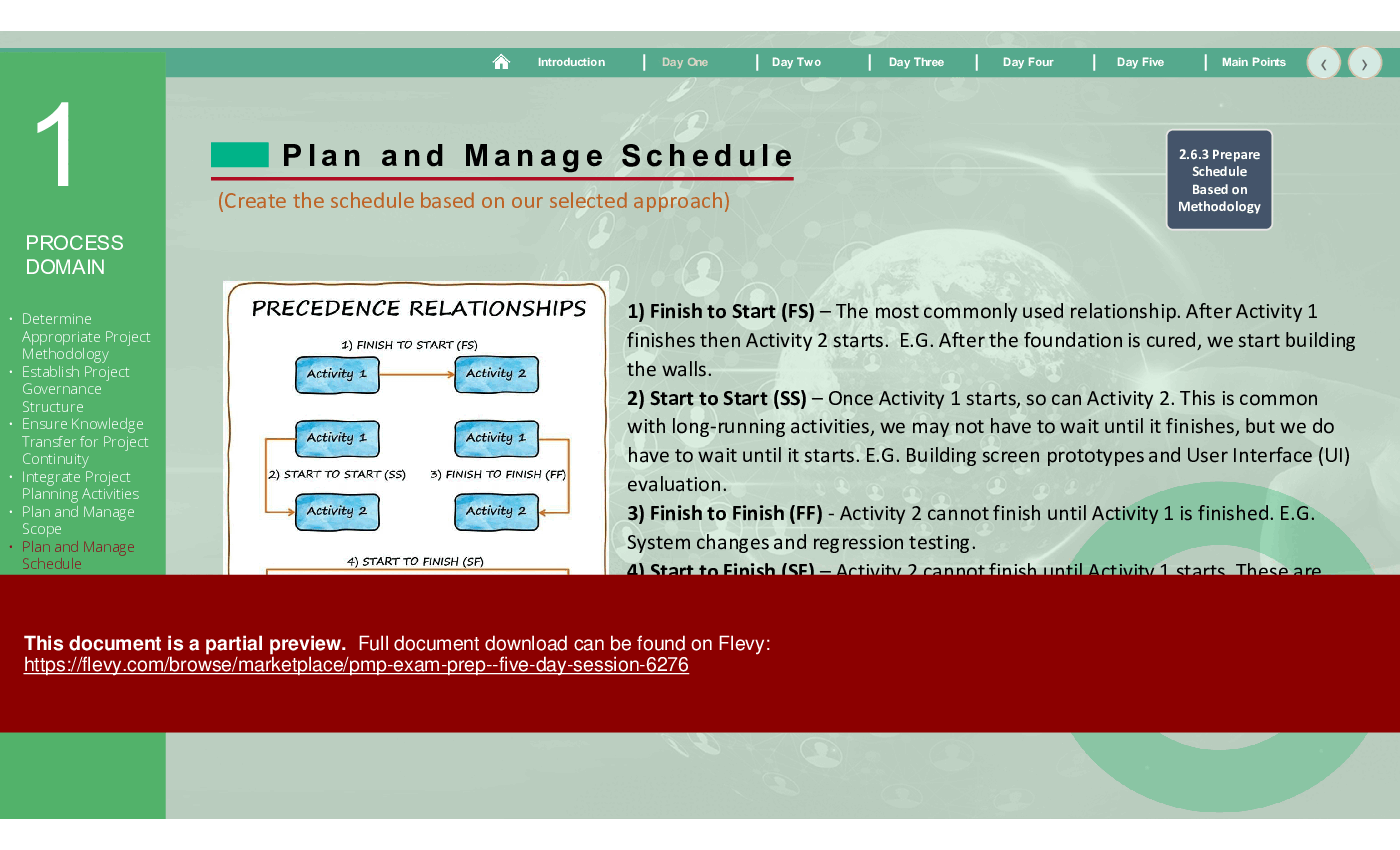
Yes. It explains consolidation of subsidiary plans into a Project Management Plan and outlines scope, schedule, cost, and performance baselines.

Are knowledge transfer practices included?
Yes. It covers explicit and tacit knowledge, lessons learned registers, repositories, retrospectives, and knowledge-sharing tools.

Is the deck aligned to the updated PMP syllabus?
Yes. The content reflects the updated exam structure effective January 2021, including domain-based task coverage.

Can this be used for corporate bootcamps?
Yes. The five-day structure and domain breakdown make it suitable for instructor-led corporate PMP preparation programs.

Does it address compliance and business value delivery?
Yes. It includes planning and managing project compliance, evaluating project benefits, and addressing organizational change.

Is it suitable for remote team training?
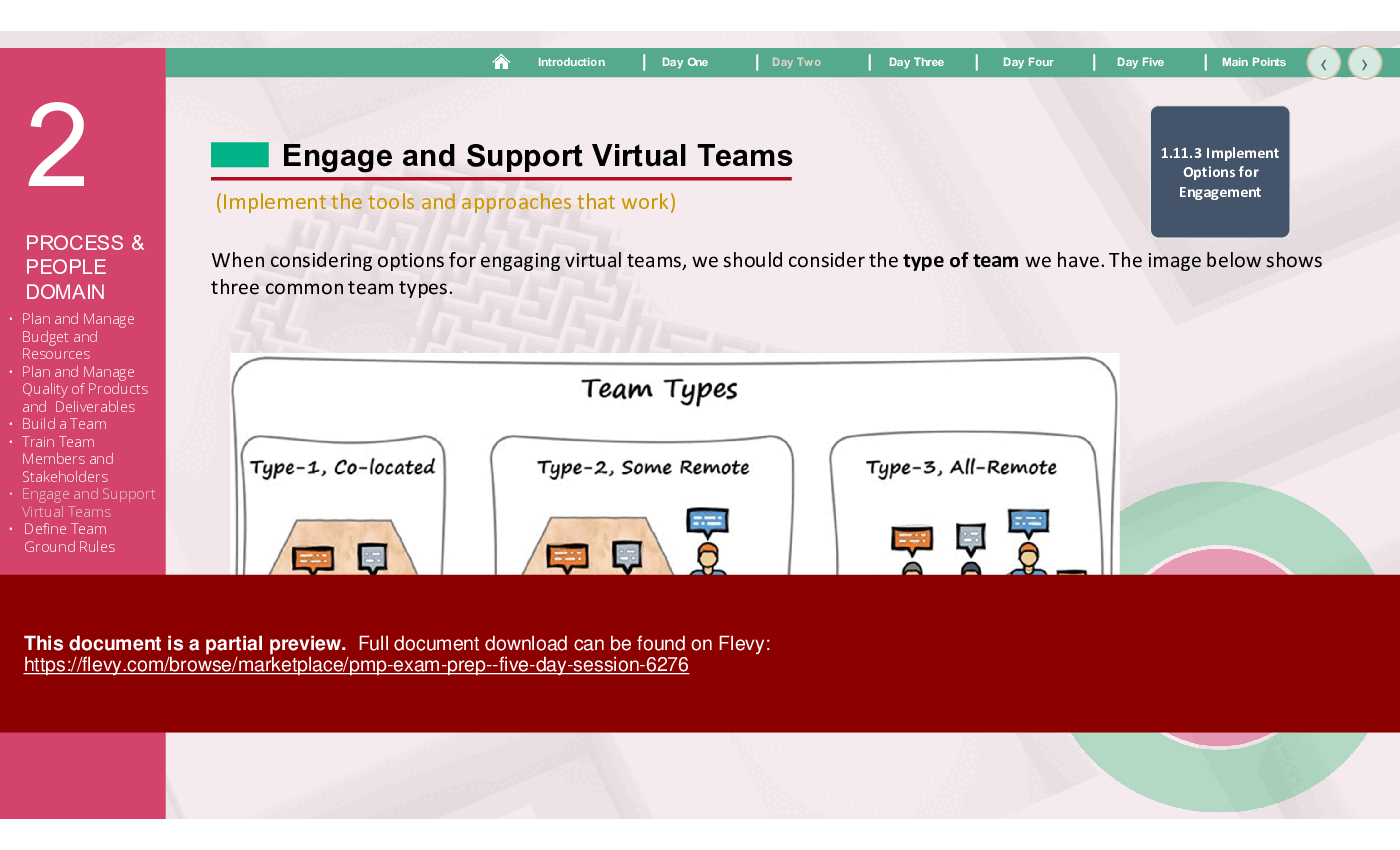
Yes. The deck discusses remote collaboration tools, PMIS platforms, and virtual knowledge transfer approaches.

Glossary

•  Agile Approach - An iterative and incremental lifecycle emphasizing early feedback and adaptability
•  Baseline - Approved version of scope, schedule, cost, or performance used for comparison
•  Change Control Board - Formal group responsible for reviewing and approving project changes
•  Configuration Management - Procedures for tracking and controlling project artifacts
•  Escalation Path - Defined route for resolving issues beyond the project manager’s authority
•  Hybrid Approach - Combination of predictive and agile lifecycle elements
•  Knowledge Transfer - Process of identifying, capturing, sharing, applying, and assessing project knowledge
•  Lessons Learned Register - Document capturing knowledge gained during a project
•  Phase Gate - Predetermined review point to continue, modify, or terminate a project
•  PMIS - Project Management Information System used to track and manage project data
•  Predictive Lifecycle - Plan-driven, sequential project execution model
•  Project Governance - Framework guiding project management activities to meet organizational goals
•  Project Management Plan - Integrated master plan consolidating all subsidiary management plans
•  Risk Management Plan - Plan defining how risks will be identified, analyzed, and managed
•  Stakeholder Engagement Plan - Plan describing how stakeholders will be engaged based on needs and impact
•  Tacit Knowledge - Personal knowledge such as experience and intuition that is difficult to document

Source: Best Practices in PMP PowerPoint Slides: PMP Exam Prep - Five Day Session PowerPoint (PPTX) Presentation Slide Deck, RadVector Consulting


$70.00
FlevyPro price: $49.00 (30% discount)
Developed by a team of experts with global consulting experience at McKinsey, Deloitte, and Capgemini. It's in accordance with PMI Authorized Training Partners (ATPs) and based on the PMBOK Guide (7th Edition).
Add to Cart
  

ABOUT THE AUTHOR

Additional documents from author: 182

We are a group of aviation experts & specialists (PhDs, Engineers, Pilots, Navigators, ...), leaders in helping organizations to transform their business performance using Methodologies and Principles of Lean, Agile, Six Sigma, and Innovation.

Ask the Author a Question

You must be logged in to contact the author.

Click here to log in Click here register

Did you know?
The average daily rate of a McKinsey consultant is $6,625 (not including expenses). The average price of a Flevy document is $65.


Trusted by over 10,000+ Client Organizations
Since 2012, we have provided business templates to over 10,000 businesses and organizations of all sizes, from startups and small businesses to the Fortune 100, in over 130 countries.
AT&T GE Cisco Intel IBM Coke Dell Toyota HP Nike Samsung Microsoft Astrazeneca JP Morgan KPMG Walgreens Walmart 3M Kaiser Oracle SAP Google E&Y Volvo Bosch Merck Fedex Shell Amgen Eli Lilly Roche AIG Abbott Amazon PwC T-Mobile Broadcom Bayer Pearson Titleist ConEd Pfizer NTT Data Schwab


Read Customer Testimonials

 
"Flevy is now a part of my business routine. I visit Flevy at least 3 times each month.

Flevy has become my preferred learning source, because what it provides is practical, current, and useful in this era where the business world is being rewritten.

In today's environment where there are so "

– Omar Hernán Montes Parra, CEO at Quantum SFE
 
"If you are looking for great resources to save time with your business presentations, Flevy is truly a value-added resource. Flevy has done all the work for you and we will continue to utilize Flevy as a source to extract up-to-date information and data for our virtual and onsite presentations!"

– Debbi Saffo, President at The NiKhar Group
 
"I have found Flevy to be an amazing resource and library of useful presentations for lean sigma, change management and so many other topics. This has reduced the time I need to spend on preparing for my performance consultation. The library is easily accessible and updates are regularly provided. A wealth of great information."

– Cynthia Howard RN, PhD, Executive Coach at Ei Leadership
 
"As an Independent Management Consultant, I find Flevy to add great value as a source of best practices, templates and information on new trends. Flevy has matured and the quality and quantity of the library is excellent. Lastly the price charged is reasonable, creating a win-win value for "

– Jim Schoen, Principal at FRC Group
 
"I like your product. I'm frequently designing PowerPoint presentations for my company and your product has given me so many great ideas on the use of charts, layouts, tools, and frameworks. I really think the templates are a valuable asset to the job."

– Roberto Fuentes Martinez, Senior Executive Director at Technology Transformation Advisory
 
"The wide selection of frameworks is very useful to me as an independent consultant. In fact, it rivals what I had at my disposal at Big 4 Consulting firms in terms of efficacy and organization."

– Julia T., Consulting Firm Owner (Former Manager at Deloitte and Capgemini)
 
"As a consultant requiring up to date and professional material that will be of value and use to my clients, I find Flevy a very reliable resource.

The variety and quality of material available through Flevy offers a very useful and commanding source for information. Using Flevy saves me time, enhances my expertise and ends up being a good decision."

– Dennis Gershowitz, Principal at DG Associates
 
"As a small business owner, the resource material available from FlevyPro has proven to be invaluable. The ability to search for material on demand based our project events and client requirements was great for me and proved very beneficial to my clients. Importantly, being able to easily edit and tailor "

– Michael Duff, Managing Director at Change Strategy (UK)


Customers Also Bought These Documents


Customers Also Like These Documents

Explore Templates on Related Management Topics


Your Recently Viewed Documents
Download our FREE Strategy & Transformation Framework Templates

Download our free compilation of 50+ Strategy & Transformation slides and templates. Frameworks include McKinsey 7-S Strategy Model, Balanced Scorecard, Disruptive Innovation, BCG Experience Curve, and many more.