
7 Tactics to Upskilling   24-slide PPT PowerPoint presentation slide deck (PPTX)
$29.00

7 Tactics to Upskilling (24-slide PPT PowerPoint presentation slide deck (PPTX)) Preview Image
Log in to unlock full preview.
7 Tactics to Upskilling (24-slide PPT PowerPoint presentation slide deck (PPTX)) Preview Image
Arrow   Click main image to view in full screen.

7 Tactics to Upskilling (PowerPoint PPTX Slide Deck)

PowerPoint (PPTX) 24 Slides FlevyPro Document

Top 1,000 Best Practice $29.00
FlevyPro price: FREE (included in subscription)
This framework is developed by a team of former McKinsey and Big 4 consultants. The presentation follows the headline-body-bumper slide format used by global consulting firms.
Add to Cart


Immediate download
Free lifetime updates

EMPLOYEE TRAINING PPT DESCRIPTION

Editor Summary 24-slide PowerPoint presentation (PPTX) that outlines 7 upskilling tactics—Learning and Development, Job Rotation, Job Enlargement, Job Enrichment, Peer Coaching, Peer Mentoring, and Hiring External Experts—and includes practical templates and tools such as an L&D strategy development template, job rotation framework, job enlargement/enrichment guidelines, peer coaching and mentoring program structures, an external expert engagement plan, and evaluation metrics. Read more

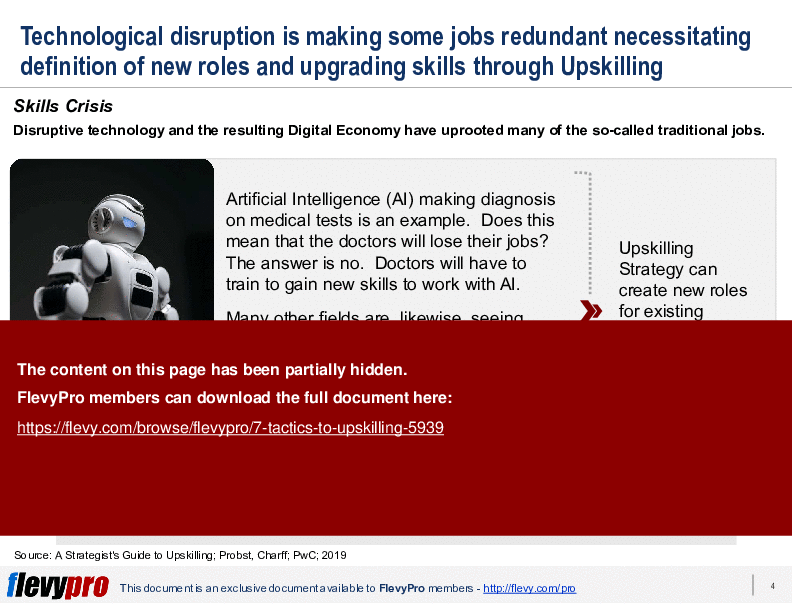
Disruptive technology is re-shaping the present-day work environment. Technological advances are making job roles—that have been long-standing—superfluous.

A change in job roles with the help of Upskilling has become necessary in light of the evolving disruption.

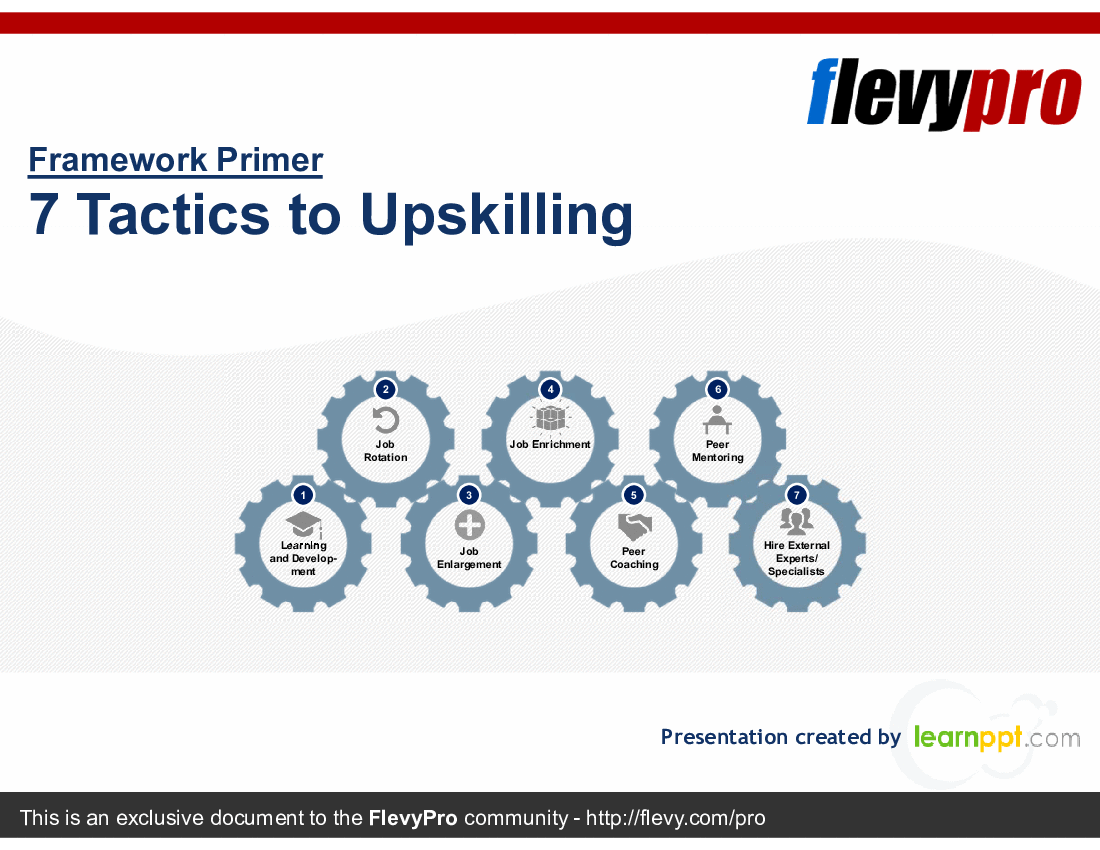
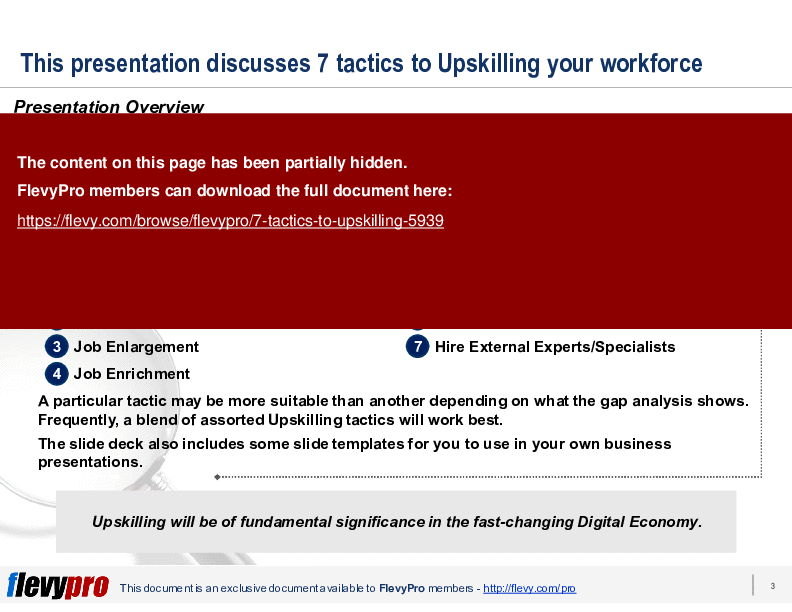
Having a robust Upskilling strategy in place is the first step towards a successful Upskilling effort. However, the brass tacks of an effective Upskilling effort are the following 7 tactics to Upskilling:

1. Learning and Development (L&D)
2. Job Rotation
3. Job Enlargement
4. Job Enrichment
5. Peer Coaching
6. Peer Mentoring
7. Hire External Experts/Specialists

A particular tactic may be more suitable than another depending on what the gap analysis shows. Frequently, a blend of assorted Upskilling tactics will work best.

The slide deck also includes some slide templates for you to use in your own business presentations.

Upskilling is not just a buzzword; it’s a strategic imperative in today’s fast-paced digital economy. This presentation delves into the nuances of implementing an effective upskilling strategy, highlighting the importance of aligning tactics with organizational goals. The PPT provides a detailed examination of each tactic, from Learning and Development to Hiring External Experts, ensuring you have a comprehensive toolkit to address skill gaps within your workforce.

The presentation also includes real-world case studies from leading organizations like Arla Foods and PwC, showcasing how these companies have successfully navigated the complexities of upskilling. These examples provide valuable insights into the practical application of the tactics discussed, offering a roadmap for other organizations to follow. The inclusion of these case studies underscores the tangible benefits of upskilling, such as enhanced employee engagement, increased productivity, and a stronger competitive edge.

For those looking to integrate these tactics into their own business presentations, the slide deck comes equipped with customizable templates. These templates are designed to facilitate the seamless incorporation of upskilling strategies into your organizational framework. Whether you are a seasoned HR professional or a C-level executive, this presentation offers the tools and insights needed to drive meaningful change and ensure your workforce remains agile and future-ready.

Got a question about this document? Email us at flevypro@flevy.com.

MARCUS OVERVIEW

This synopsis was written by Marcus [?] based on the analysis of the full 24-slide presentation.


Executive Summary
The "7 Tactics to Upskilling" presentation provides a strategic framework for enhancing workforce capabilities in response to the demands of the Digital Economy. As technological advancements render traditional job roles obsolete, organizations must adopt effective upskilling strategies. This presentation outlines 7 essential tactics—Learning and Development (L&D), Job Rotation, Job Enlargement, Job Enrichment, Peer Coaching, Peer Mentoring, and Hiring External Experts. By implementing these tactics, organizations can bridge skills gaps, enhance employee engagement, and foster a culture of continuous learning.

Who This Is For and When to Use
•  HR leaders focused on talent development and workforce agility
•  Learning and Development (L&D) teams designing training programs
•  Organizational leaders seeking to enhance employee capabilities
•  Change management professionals addressing skills gaps due to technological disruption

Best-fit moments to use this deck:
•  During strategic planning sessions for workforce development
•  When assessing skills gaps and identifying upskilling needs
•  In workshops aimed at designing or refining L&D initiatives
•  For presentations to stakeholders on the importance of upskilling

Learning Objectives
•  Define upskilling and its significance in the modern workforce
•  Identify the 7 tactics for effective upskilling
•  Develop a tailored upskilling strategy based on organizational needs
•  Implement job rotation and enrichment techniques to enhance employee skills
•  Foster a culture of peer coaching and mentoring within teams
•  Evaluate the impact of upskilling initiatives on employee performance

Table of Contents
•  Overview (page 3)
•  Upskilling (page 4)
•  Upskilling Tactics (page 10)
•  Upskilling Case Examples (page 15)
•  Templates (page 19)

Primary Topics Covered
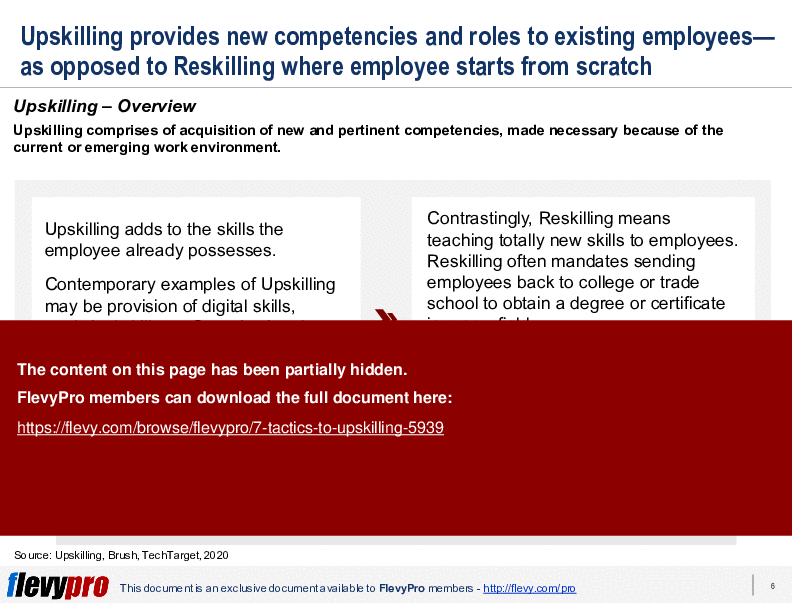
•  Upskilling Definition - Upskilling refers to the process of enhancing existing employee skills to meet current and future job demands, as opposed to reskilling, which involves teaching entirely new skills.
•  Learning and Development (L&D) - L&D programs are foundational for upskilling, focusing on training needs analysis, learning objectives, and evaluation methods.
•  Job Rotation - This tactic involves moving employees between roles to develop new skills and competencies, enhancing their understanding of the organization.
•  Job Enlargement - Job enlargement adds more responsibilities at the same level, encouraging employees to broaden their skill sets and increase engagement.
•  Job Enrichment - This tactic enhances roles by adding more responsibilities and opportunities for autonomy, leading to greater job satisfaction.
•  Peer Coaching - Peer coaching facilitates informal skill transfer among employees, promoting a collaborative learning environment.
•  Peer Mentoring - Experienced employees mentor others, sharing insights and knowledge that may not be documented in formal training.
•  Hiring External Experts - When internal capabilities are lacking, organizations can hire specialists to fill knowledge gaps and provide targeted training.

Deliverables, Templates, and Tools
•  L&D strategy development template outlining phases from needs analysis to evaluation
•  Job rotation framework for implementing employee movement across roles
•  Job enlargement and enrichment guidelines to enhance employee responsibilities
•  Peer coaching and mentoring program structure for knowledge sharing
•  External expert engagement plan to facilitate targeted upskilling initiatives
•  Evaluation metrics for assessing the effectiveness of upskilling programs

Slide Highlights
•  Overview of the 7 tactics for upskilling, visually represented for clarity
•  Detailed breakdown of L&D strategy phases and their importance
•  Case studies illustrating successful upskilling initiatives in various organizations
•  Templates for practical implementation of upskilling tactics
•  Visual aids demonstrating the impact of upskilling on employee engagement and productivity

Potential Workshop Agenda
Introduction to Upskilling (30 minutes)
•  Overview of upskilling and its relevance in today's workforce
•  Discussion on the skills gap and its implications

Tactics Deep Dive (60 minutes)
•  Detailed exploration of each of the 7 tactics
•  Group activities to brainstorm implementation strategies

Case Study Analysis (45 minutes)
•  Review of successful upskilling initiatives
•  Discussion on lessons learned and best practices

Action Planning (30 minutes)
•  Develop a tailored upskilling plan for your organization
•  Identify key stakeholders and resources needed for implementation

Customization Guidance
•  Tailor the L&D strategy to align with organizational goals and employee needs
•  Adjust job rotation and enrichment plans based on departmental requirements
•  Incorporate specific metrics for evaluating the success of upskilling initiatives
•  Modify peer coaching and mentoring frameworks to fit organizational culture
•  Adapt external expert engagement strategies to address immediate skills gaps

Secondary Topics Covered
•  The role of technology in facilitating upskilling
•  Strategies for fostering a culture of continuous learning
•  The importance of employee engagement in successful upskilling
•  Cost-benefit analysis of upskilling initiatives
•  Trends in workforce development and skills training

Topic FAQ

What is the difference between upskilling and reskilling?

Upskilling enhances existing employee skills to meet current and future job demands, while reskilling teaches entirely new skills for different roles. The presentation’s glossary defines both terms and frames upskilling as skill enhancement versus reskilling as role conversion, reflecting that distinction in the deck’s definitions.

What are the typical phases of an L&D-led upskilling strategy?

An L&D-led upskilling strategy typically begins with a skills gap analysis, proceeds through learning design and delivery, and concludes with evaluation and continuous improvement. Flevy’s 7 Tactics to Upskilling includes an L&D strategy development template that outlines phases from needs analysis through evaluation.

Which upskilling tactics work best when internal training capacity is limited?

When internal capacity is constrained, organizations can combine tactics such as peer coaching, focused job enlargement/enrichment, and hiring external experts for targeted content. The 7 Tactics to Upskilling deck lists these options and provides an external expert engagement plan alongside peer coaching and job enlargement guidelines.

What metrics should I use to evaluate the success of upskilling programs?

Common metrics include measurable employee performance improvements, engagement levels, retention rates, and the program’s impact on organizational goals. The product’s deliverables explicitly list evaluation metrics for assessing upskilling effectiveness, including performance, engagement, and retention indicators.

What should I look for in an off-the-shelf upskilling toolkit or slide deck?

Look for a clear L&D strategy template, practical implementation frameworks (job rotation/enrichment), peer coaching and mentoring program structures, external expert engagement guidance, and real case studies for applicability. Flevy’s 7 Tactics to Upskilling includes those elements and places templates starting on slide 19.

How do I decide between internal upskilling and hiring external experts?

Base the decision on a skills gap analysis: use internal L&D, peer coaching, or job rotation where capabilities exist; hire external experts when specialized knowledge is absent or needed quickly. The deck provides guidance and an external expert engagement plan to operationalize that choice.

After a merger, which upskilling tactics help integrate teams and roles?

Tactics that foster cross-team knowledge and shared practices—job rotation to expose employees to new functions, peer mentoring for knowledge transfer, and targeted L&D programs—are useful. The presentation supplies a job rotation framework and peer mentoring program structure to support integration efforts.

Are paid upskilling templates worth the cost compared to building materials internally?

A buy-versus-build decision should weigh time-to-deploy and access to proven structures; premade templates can accelerate planning, standardize metrics, and incorporate case-study lessons. The product discusses cost-benefit analysis as a secondary topic and includes case studies from Arla Foods and PwC for reference.

Document FAQ
These are questions addressed within this presentation.

What is the difference between upskilling and reskilling?
Upskilling enhances existing skills, while reskilling involves teaching entirely new skills to employees.

How can organizations assess their upskilling needs?
Conduct a skills gap analysis to identify areas where employees require additional training or development.

What are the benefits of job rotation?
Job rotation helps employees gain a broader understanding of the organization, enhances their skill sets, and prepares them for future roles.

How can peer coaching be implemented effectively?
Establish a structured program that pairs employees for skill sharing and provides guidelines for effective coaching interactions.

What metrics should be used to evaluate upskilling initiatives?
Metrics may include employee performance improvements, engagement levels, retention rates, and overall impact on organizational goals.

How can external experts contribute to upskilling efforts?
External experts can provide specialized knowledge and training that may not be available internally, helping to fill immediate skills gaps.

What role does technology play in upskilling?
Technology facilitates access to online training resources, learning management systems, and virtual coaching opportunities, making upskilling more flexible and scalable.

How can organizations ensure continuous learning?
Create a culture that encourages ongoing training and development, offering regular opportunities for skill enhancement and professional growth.

Glossary
•  Upskilling - The process of enhancing existing skills to meet current and future job demands.
•  Reskilling - Teaching entirely new skills to employees for different job roles.
•  Learning and Development (L&D) - Programs designed to improve employee skills and competencies.
•  Job Rotation - Moving employees between different roles to develop new skills.
•  Job Enlargement - Adding more responsibilities at the same level to enhance employee engagement.
•  Job Enrichment - Enhancing roles by adding responsibilities and opportunities for autonomy.
•  Peer Coaching - Informal skill transfer between employees.
•  Peer Mentoring - Knowledge sharing from experienced employees to less experienced ones.
•  External Experts - Specialists hired to provide targeted training and fill skills gaps.
•  Skills Gap Analysis - Assessment of the difference between current employee skills and required skills.
•  Employee Engagement - The level of commitment and involvement an employee has towards their organization.
•  Continuous Learning - Ongoing training and development opportunities for employees.

EMPLOYEE TRAINING PPT SLIDES

Strategic Tactics for Employee Upskilling

PwC's Strategic Workforce Upskilling Framework

Arla Foods' Comprehensive Workforce Upskilling Initiative

Source: Best Practices in Training, Learning Organization, Upskilling PowerPoint Slides: 7 Tactics to Upskilling PowerPoint (PPTX) Presentation Slide Deck, LearnPPT Consulting


$29.00
FlevyPro price: FREE (included in subscription)
This framework is developed by a team of former McKinsey and Big 4 consultants. The presentation follows the headline-body-bumper slide format used by global consulting firms.
Add to Cart
  

Did you need more documents?

Consider a FlevyPro subscription from $39/month. View plans here.

For $10.00 more, you can download this document plus 2 more FlevyPro documents. That's just $13 each.

ABOUT FLEVYPRO

This document is part of the FlevyPro Library, a curated knowledge base of documents for our FlevyPro subscribers.

FlevyPro is a subscription service for on-demand business frameworks and analysis tools. FlevyPro subscribers receive access to an exclusive library of curated business documents—business framework primers, presentation templates, Lean Six Sigma tools, and more—among other exclusive benefits.

Click here to learn more about FlevyPro and its benefits.

Did you know?
The average daily rate of a McKinsey consultant is $6,625 (not including expenses). The average price of a Flevy document is $65.


Trusted by over 10,000+ Client Organizations
Since 2012, we have provided business templates to over 10,000 businesses and organizations of all sizes, from startups and small businesses to the Fortune 100, in over 130 countries.
AT&T GE Cisco Intel IBM Coke Dell Toyota HP Nike Samsung Microsoft Astrazeneca JP Morgan KPMG Walgreens Walmart 3M Kaiser Oracle SAP Google E&Y Volvo Bosch Merck Fedex Shell Amgen Eli Lilly Roche AIG Abbott Amazon PwC T-Mobile Broadcom Bayer Pearson Titleist ConEd Pfizer NTT Data Schwab


Read Customer Testimonials

 
"FlevyPro provides business frameworks from many of the global giants in management consulting that allow you to provide best in class solutions for your clients."

– David Harris, Managing Director at Futures Strategy
 
"I have used FlevyPro for several business applications. It is a great complement to working with expensive consultants. The quality and effectiveness of the tools are of the highest standards."

– Moritz Bernhoerster, Global Sourcing Director at Fortune 500
 
"Flevy is now a part of my business routine. I visit Flevy at least 3 times each month.

Flevy has become my preferred learning source, because what it provides is practical, current, and useful in this era where the business world is being rewritten.

In today's environment where there are so "

– Omar Hernán Montes Parra, CEO at Quantum SFE
 
"As a consultant requiring up to date and professional material that will be of value and use to my clients, I find Flevy a very reliable resource.

The variety and quality of material available through Flevy offers a very useful and commanding source for information. Using Flevy saves me time, enhances my expertise and ends up being a good decision."

– Dennis Gershowitz, Principal at DG Associates
 
"Flevy is our 'go to' resource for management material, at an affordable cost. The Flevy library is comprehensive and the content deep, and typically provides a great foundation for us to further develop and tailor our own service offer."

– Chris McCann, Founder at Resilient.World
 
"Flevy.com has proven to be an invaluable resource library to our Independent Management Consultancy, supporting and enabling us to better serve our enterprise clients.

The value derived from our [FlevyPro] subscription in terms of the business it has helped to gain far exceeds the investment made, making a subscription a no-brainer for any growing consultancy – or in-house strategy team."

– Dean Carlton, Chief Transformation Officer, Global Village Transformations Pty Ltd.
 
"As a small business owner, the resource material available from FlevyPro has proven to be invaluable. The ability to search for material on demand based our project events and client requirements was great for me and proved very beneficial to my clients. Importantly, being able to easily edit and tailor "

– Michael Duff, Managing Director at Change Strategy (UK)
 
"[Flevy] produces some great work that has been/continues to be of immense help not only to myself, but as I seek to provide professional services to my clients, it gives me a large "tool box" of resources that are critical to provide them with the quality of service and outcomes they are expecting."

– Royston Knowles, Executive with 50+ Years of Board Level Experience


Customers Also Bought These Documents


Customers Also Like These Documents

Explore Templates on Related Management Topics


Your Recently Viewed Documents
Download our FREE Organization, Change, & Culture, Templates

Download our free compilation of 50+ slides and templates on Organizational Design, Change Management, and Corporate Culture. Methodologies include ADKAR, Burke-Litwin Change Model, McKinsey 7-S, Competing Values Framework, etc.