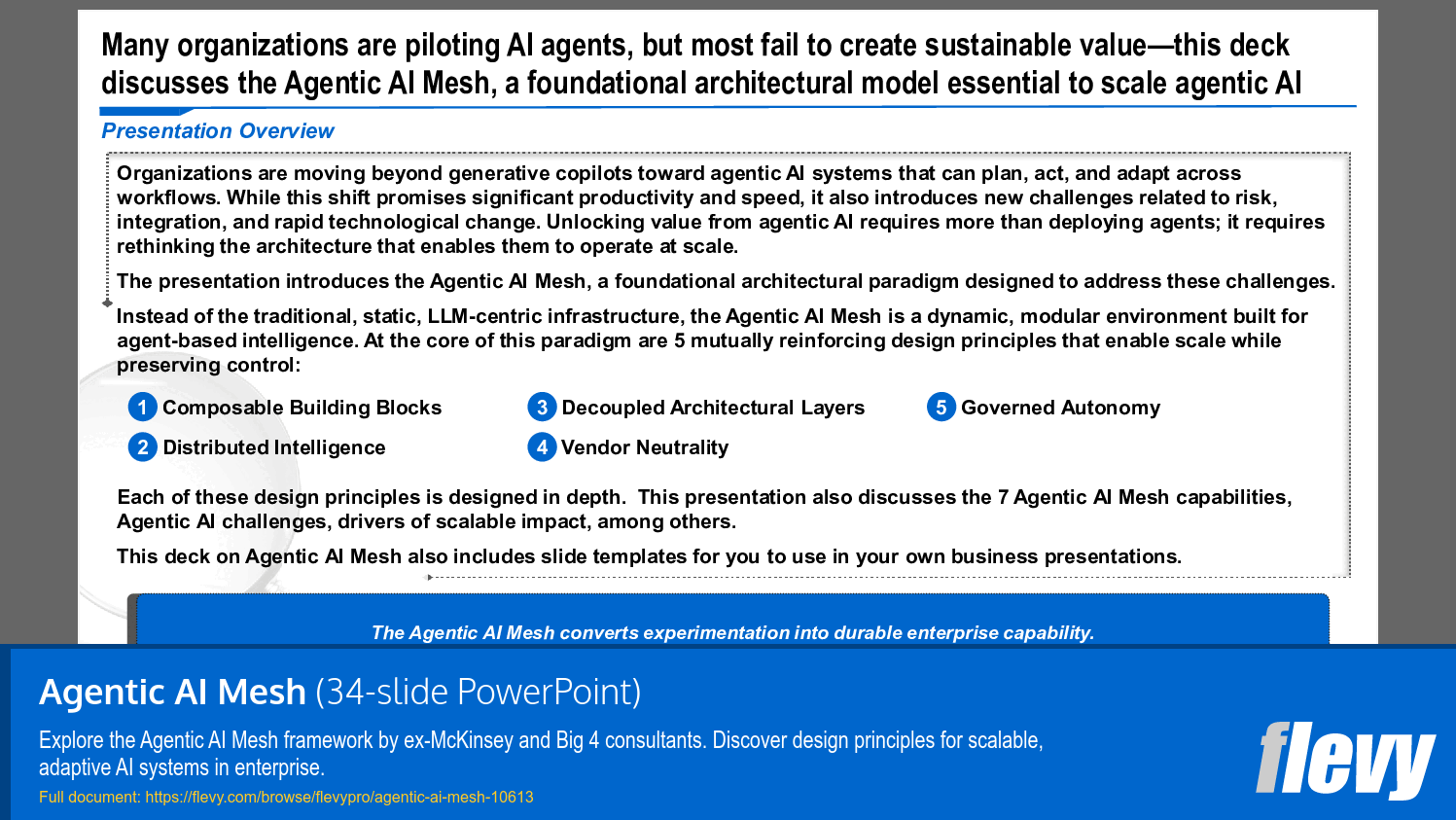

Organizations are moving beyond generative copilots toward agentic AI systems that can plan, act, and adapt across workflows. While this shift promises significant productivity and speed, it also introduces new challenges related to risk, integration, and rapid technological change. Unlocking value from agentic AI requires more than deploying agents. It requires rethinking the architecture that enables them to operate at scale.
The PPT presentation introduces the Agentic AI Mesh, a foundational architectural paradigm designed to address these challenges.
Instead of the traditional, static, LLM-centric infrastructure, the Agentic AI Mesh is a dynamic, modular environment built for agent-based intelligence. The Agentic AI Mesh converts experimentation into durable enterprise capability.
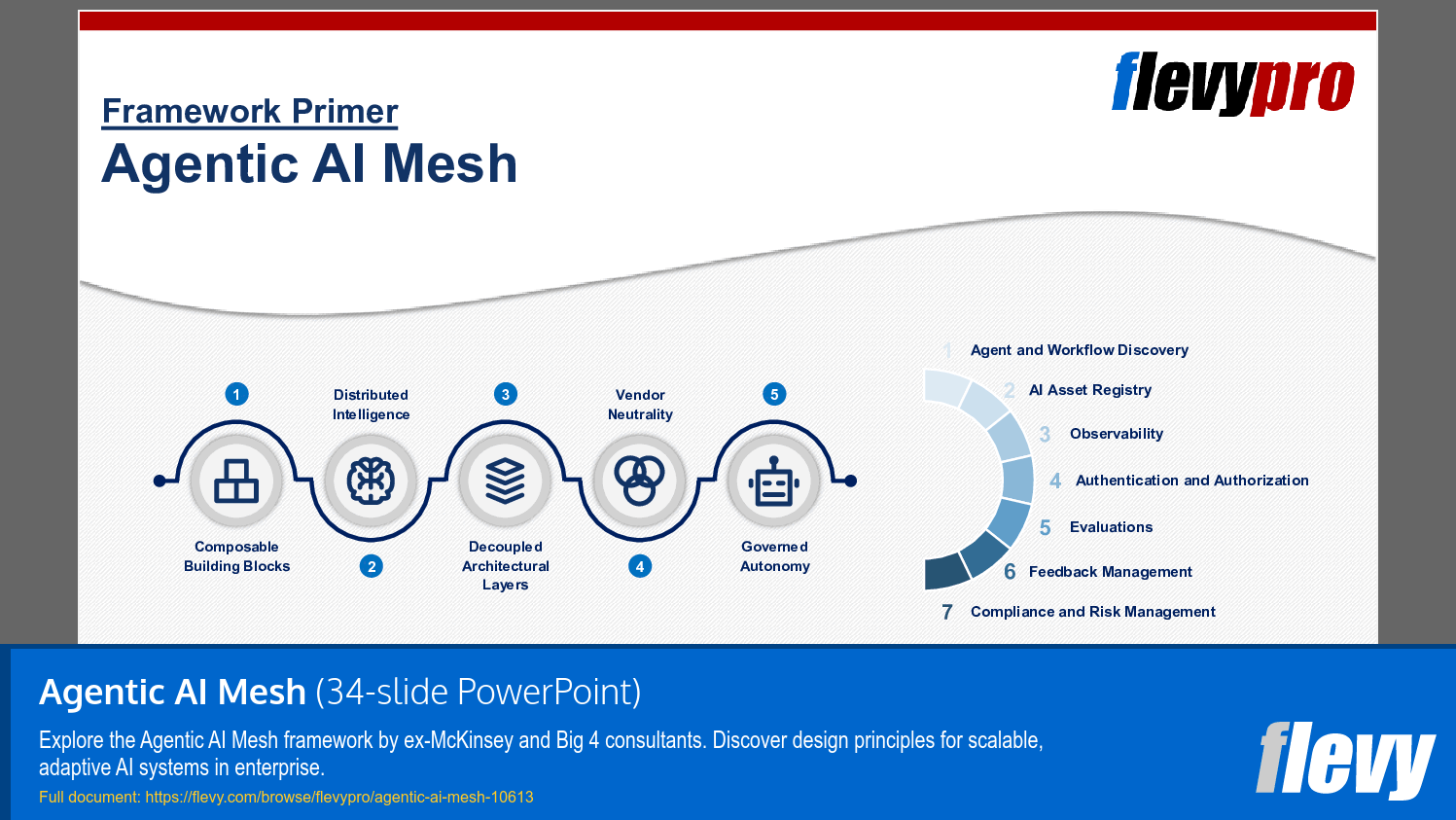
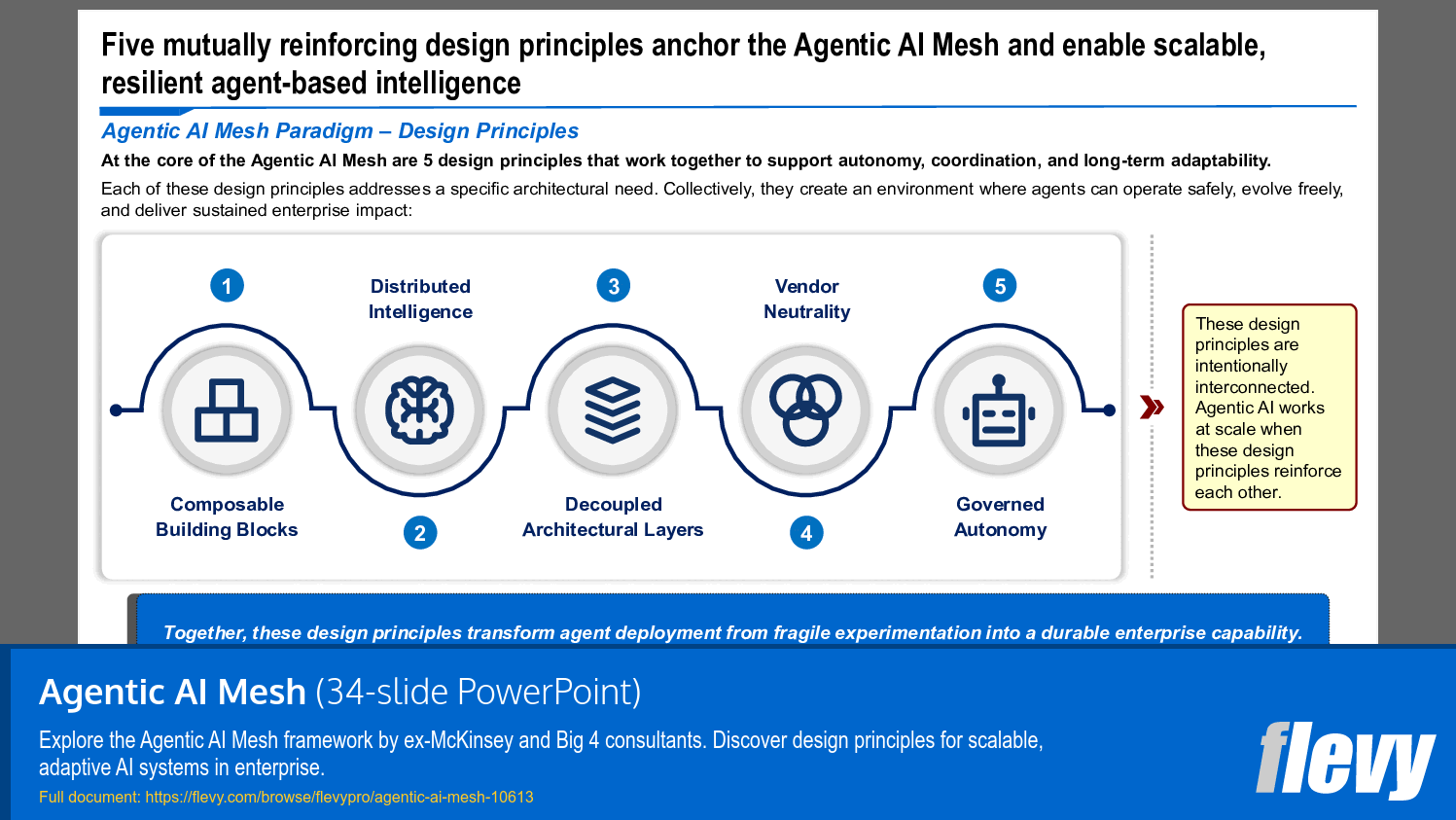
At the core of the Agentic Mesh Paradigm are 5 mutually reinforcing design principles that enable scale while preserving control:
1. Composable Building Blocks
2. Distributed Intelligence
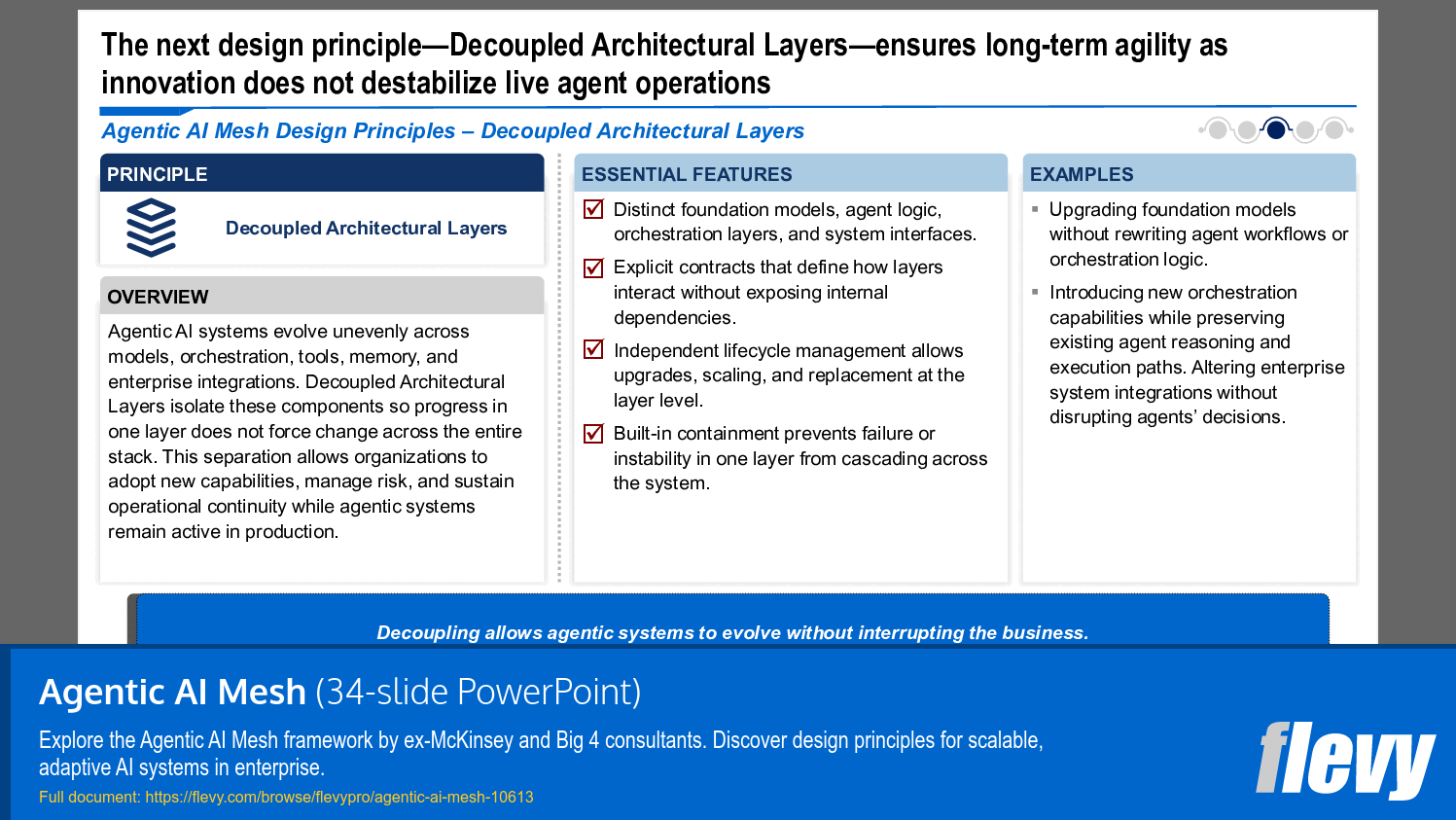
3. Decoupled Architectural Layers
4. Vendor Neutrality
5. Governed Autonomy
Each of these design principles is designed in depth. This presentation also discusses the 7 Agentic AI Mesh capabilities, Agentic AI challenges, drivers of scalable impact, among others.
This deck on Agentic AI Mesh also includes slide templates for you to use in your own business presentations.
Got a question about this document? Email us at flevypro@flevy.com.
Executive Summary
The Agentic AI Mesh framework offers a transformative approach to integrating AI systems within enterprises, moving beyond traditional models to a modular architecture designed for scalability and adaptability. This presentation, crafted by seasoned consultants from McKinsey and the Big 4, outlines the core principles and capabilities of the Agentic AI Mesh, enabling organizations to harness the full potential of agentic AI. It emphasizes the importance of a structured design that facilitates the deployment of autonomous agents capable of planning, acting, and adapting across workflows, thereby driving efficiency and innovation while managing associated risks.
Who This Is For and When to Use
• Corporate executives overseeing digital transformation initiatives
• Integration leaders responsible for implementing AI systems
• Consultants advising on AI strategy and architecture
• IT teams tasked with developing and maintaining AI infrastructure
• Risk management professionals focusing on AI governance
Best-fit moments to use this deck:
• During strategic planning sessions for AI integration
• When assessing the scalability of current AI systems
• In workshops aimed at redesigning workflows for agent execution
• For training sessions on best practices in AI governance
Learning Objectives
• Define the Agentic AI Mesh and its significance in modern enterprises
• Build a comprehensive understanding of the 5 design principles that support agentic AI
• Establish frameworks for managing risks associated with autonomous agents
• Identify the interconnected capabilities that enable scalable AI systems
• Develop strategies for integrating agentic AI into existing workflows
• Create governance models that ensure ethical AI implementation
Table of Contents
• Overview (page 2)
• Agentic AI (page 4)
• Agentic AI Mesh Paradigm (page 8)
• Agentic AI Mesh Design Principles (page 10)
• Agentic AI Mesh Capabilities (page 17)
• Slide Design Structure & Templates (page 21)
Primary Topics Covered
• Agentic AI Overview - An introduction to AI systems capable of autonomous decision-making and their impact on industries.
• Agentic AI Mesh Paradigm - A modular architecture designed to support continuous autonomous execution across workflows.
• Design Principles - Five key principles that enable scalable, resilient agent-based intelligence: Composable Building Blocks, Distributed Intelligence, Decoupled Architectural Layers, Vendor Neutrality, and Governed Autonomy.
• Capabilities - Seven interconnected capabilities that form the backbone of the Agentic AI Mesh, facilitating effective agent-based systems.
• Governance and Risk Management - Strategies for embedding oversight and accountability into AI systems to mitigate risks.
Deliverables, Templates, and Tools
• Framework for the Agentic AI Mesh design principles
• Templates for governance models tailored to agentic AI
• Slide designs for presenting AI capabilities and workflows
• Checklists for evaluating AI system performance and compliance
• Guidelines for integrating agentic AI into existing business processes
Slide Highlights
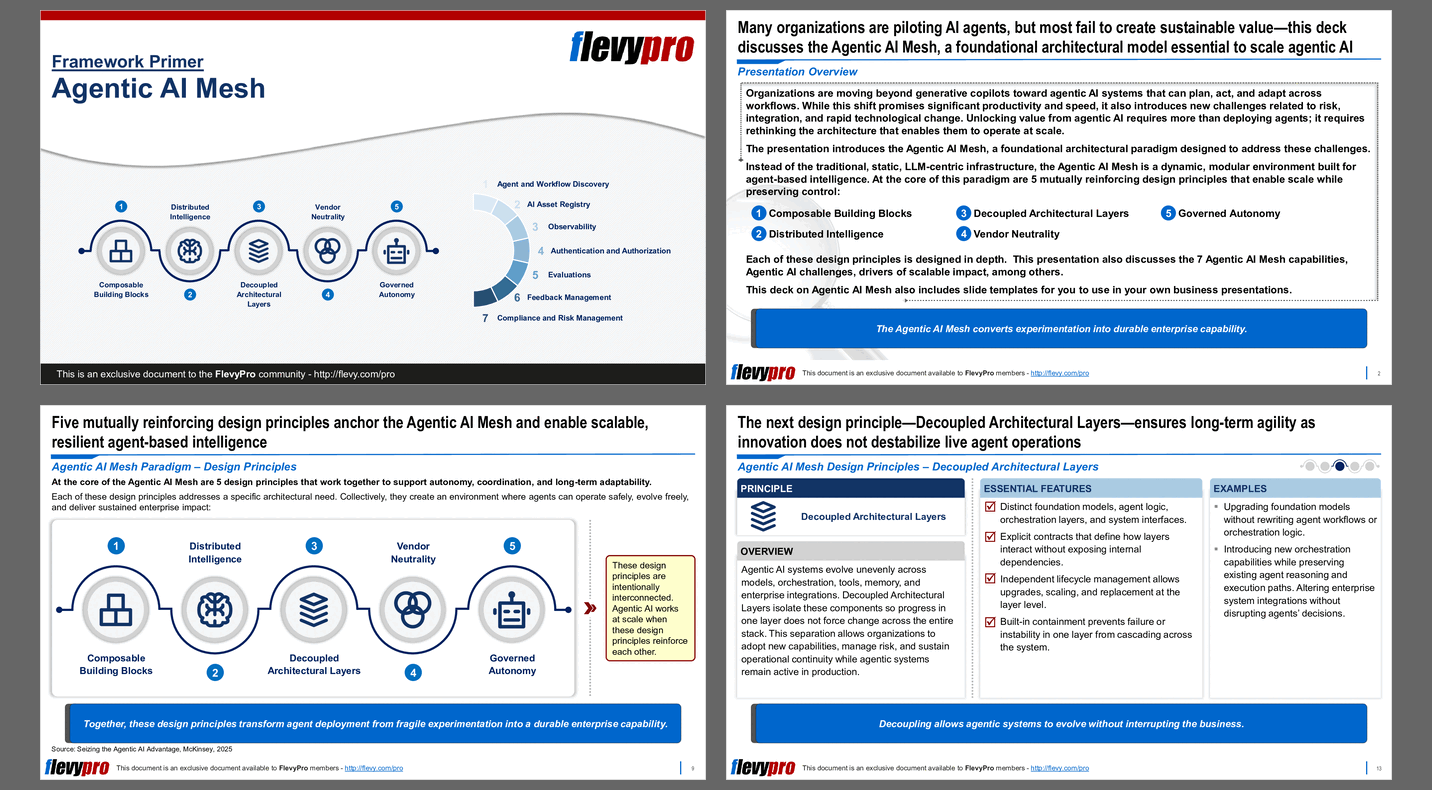
• Overview of the Agentic AI Mesh and its significance in enterprise architecture
• Detailed exploration of the 5 design principles that support agentic AI
• Visual representation of the interconnected capabilities of the Agentic AI Mesh
• Case studies demonstrating successful implementations of agentic AI systems
• Templates for governance frameworks and risk management strategies
Potential Workshop Agenda
Introduction to Agentic AI (30 minutes)
• Overview of agentic AI and its relevance
• Discussion on current challenges in AI integration
Design Principles Deep Dive (60 minutes)
• Exploration of the 5 design principles
• Group activities to apply principles to real-world scenarios
Capabilities and Governance (60 minutes)
• Review of the 7 capabilities of the Agentic AI Mesh
• Strategies for embedding governance in AI systems
Wrap-Up and Q&A (30 minutes)
• Summary of key takeaways
• Open floor for questions and further discussion
Customization Guidance
• Tailor the framework templates to reflect your organization's specific workflows and processes
• Adjust governance models to align with your compliance requirements and risk appetite
• Incorporate industry-specific examples and case studies to enhance relevance
Secondary Topics Covered
• Ethical considerations in AI deployment
• The role of cross-functional teams in AI integration
• Future trends in agentic AI and their implications for businesses
• Best practices for continuous evaluation and feedback in AI systems
Topic FAQ
Document FAQ
These are questions addressed within this presentation.
What is the Agentic AI Mesh?
The Agentic AI Mesh is a modular architecture designed to support scalable and adaptive AI systems, enabling autonomous agents to operate effectively across workflows.
How does the Agentic AI Mesh differ from traditional AI architectures?
Unlike traditional models, the Agentic AI Mesh emphasizes a modular approach that allows for continuous autonomous execution and collaboration among multiple agents.
What are the key design principles of the Agentic AI Mesh?
The 5 design principles are Composable Building Blocks, Distributed Intelligence, Decoupled Architectural Layers, Vendor Neutrality, and Governed Autonomy.
What capabilities does the Agentic AI Mesh provide?
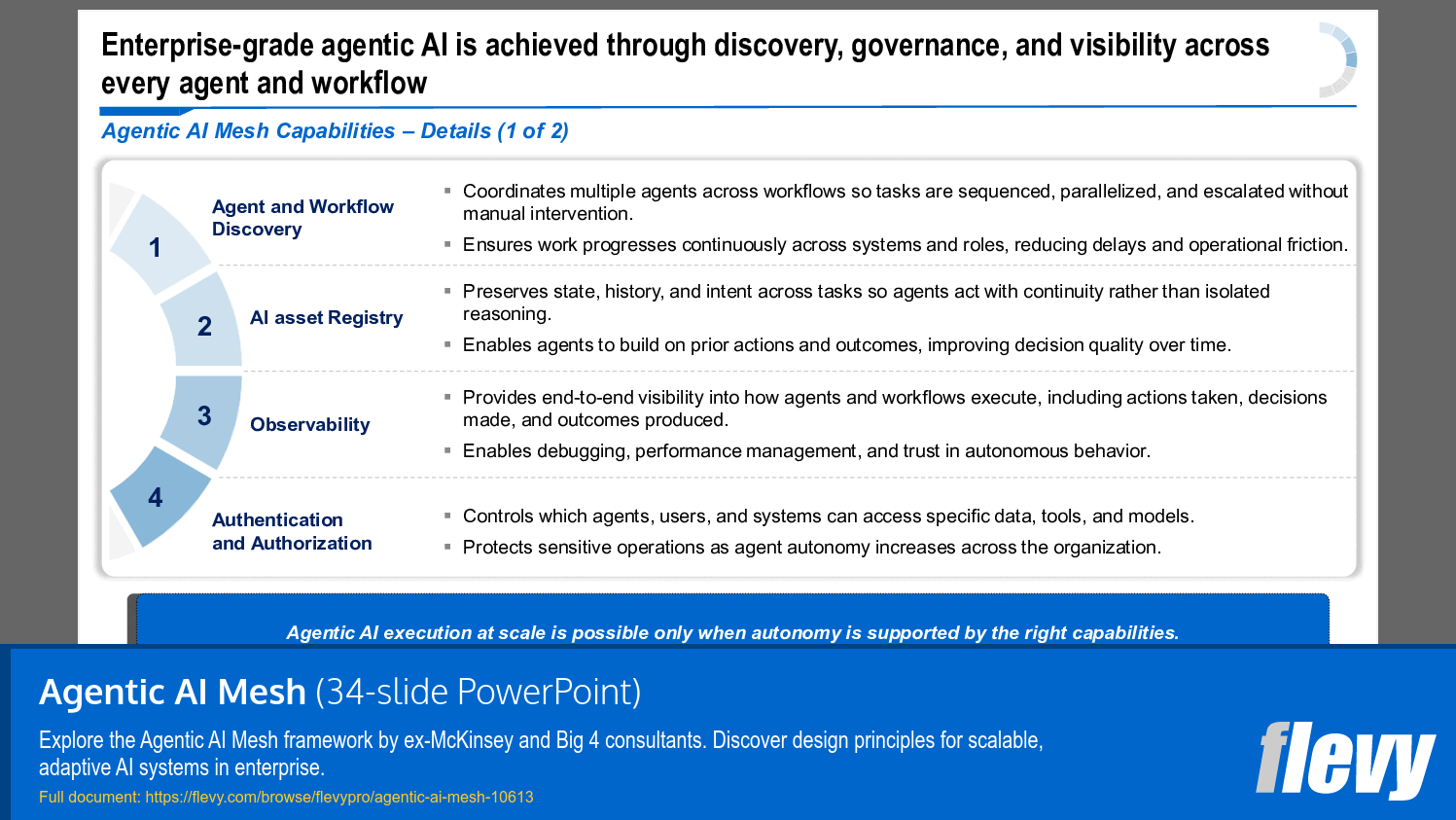
The mesh includes capabilities such as Agent and Workflow Discovery, AI Asset Registry, Observability, Authentication and Authorization, Evaluations, Feedback Management, and Compliance and Risk Management.
How can organizations ensure ethical AI implementation?
By embedding governance and accountability directly into the design of AI systems, organizations can manage risks and ensure compliance with ethical standards.
What industries can benefit from the Agentic AI Mesh?
Industries such as manufacturing, healthcare, finance, retail, transportation, and energy can leverage the Agentic AI Mesh to enhance efficiency and drive innovation.
How can this framework be customized for my organization?
Organizations can adapt the templates and governance models to fit their specific workflows, compliance needs, and industry requirements.
What are the challenges of implementing agentic AI?
Challenges include managing new operational risks, ensuring interoperability among diverse agents, and maintaining agility amid rapidly evolving technology.
How does the Agentic AI Mesh support scalability?
The modular design allows organizations to introduce new agents and capabilities without disrupting existing operations, facilitating growth and adaptability.
What role do cross-functional teams play in AI integration?
Cross-functional teams are essential for designing, supervising, and improving agent behavior, ensuring that AI systems align with business objectives.
Glossary
• Agentic AI - AI systems capable of making autonomous decisions and taking actions with minimal human intervention.
• Agentic AI Mesh - A modular architecture designed for scalable and adaptive agent-based intelligence.
• Governed Autonomy - Embedding governance directly into AI systems to enhance reliability and trust.
• Composable Building Blocks - Modular components that allow for flexible assembly of agent capabilities.
• Distributed Intelligence - A decentralized approach where multiple agents make decisions independently.
• Decoupled Architectural Layers - Isolated components that evolve independently without disrupting overall system functionality.
• Vendor Neutrality - The ability to select and integrate components from multiple vendors without being locked into a single provider.
• Observability - The capability to track agent actions and workflow execution in real-time.
• Compliance and Risk Management - Mechanisms to ensure AI systems adhere to legal and ethical standards.
• Feedback Management - Processes for capturing performance data to improve agent behavior over time.
• AI Asset Registry - A record of AI assets and their context to ensure continuity and reasoning.
• Authentication and Authorization - Controls that manage access to AI systems and data.
• Evaluations - Continuous testing of AI systems to validate accuracy and compliance.
Source: Best Practices in Artificial Intelligence, Agentic AI PowerPoint Slides: Agentic AI Mesh PowerPoint (PPTX) Presentation Slide Deck, LearnPPT Consulting
Did you need more documents?
Consider a FlevyPro subscription from $39/month. View plans here.
For $10.00 more, you can download this document plus 2 more FlevyPro documents. That's just $13 each.
|
Download our FREE Digital Transformation Templates
Download our free compilation of 50+ Digital Transformation slides and templates. DX concepts covered include Digital Leadership, Digital Maturity, Digital Value Chain, Customer Experience, Customer Journey, RPA, etc. |