
This framework is developed by a team of former McKinsey and Big 4 consultants. The presentation follows the headline-body-bumper slide format used by global consulting firms.
Corporate culture PPT: Learn the 4 types of corporate culture with clear examples. Perfect for company culture presentations and organizational culture training. Download now. 4 Types of Corporate Culture is a 22-slide PPT PowerPoint presentation slide deck (PPT) available for immediate download upon purchase.
Defining any one culture is difficult as it is based on complex combination of people's shared attitudes, beliefs, assumptions, and behaviors. Every organization is different. All organizations have a unique culture to organize groups of people. Yet, a few people know that every organization actually combines a mix of 4 different Types of Corporate Culture under one leading cultural style.
Based on the research done by Quinn and Cameron, flexible organizations are more successful than rigid ones. And the best organizations are those that are able to manage the competition between cultures while activating each of the 4 value sets when needed.
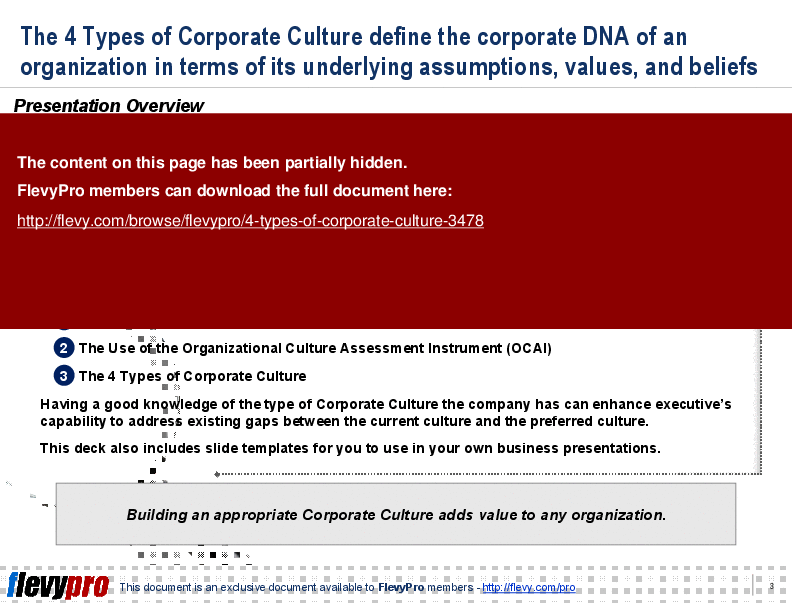
This presentation provides organizations an in-depth understanding of the different corporate cultures and the management tool to effectively manage the shift in cultures. Key topics covered include:
• The Competing Value Framework (CVF)
• The Use of the Organizational Culture Assessment Instrument (OCAI)
• The 4 Types of Corporate Culture
Having a good knowledge of the type of Corporate Culture the company has can enhance executive's capability to address existing gaps between the current culture and the preferred culture.
This deck also includes slide templates for you to use in your own business presentations.
The Competing Values Framework (CVF) is central to understanding the nuances of corporate culture. It hinges on two dimensions: internal vs. external focus and flexibility vs. control. These dimensions create four distinct quadrants, each representing a unique type of corporate culture: Clan, Adhocracy, Market, and Hierarchy. This framework helps leaders identify their organization's current cultural orientation and guides them in fostering a more adaptable and effective corporate environment.
Each culture type has its own strengths and challenges. Clan culture emphasizes collaboration and trust, Adhocracy thrives on innovation and risk-taking, Market culture focuses on competition and results, and Hierarchy values structure and efficiency. This PPT provides detailed profiles of each culture type, including core values, workplace characteristics, and case examples. These insights are crucial for executives aiming to align their organizational culture with strategic objectives and drive sustainable growth.
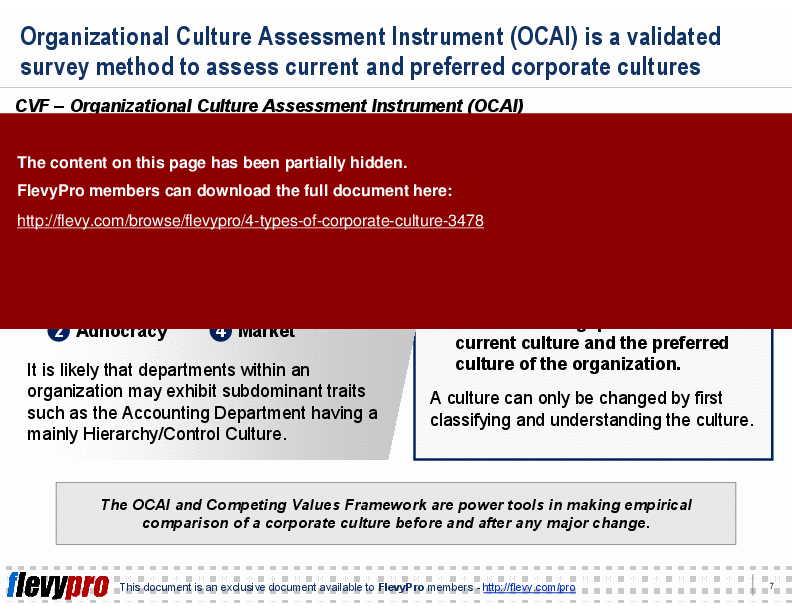
The Organizational Culture Assessment Instrument (OCAI) is a survey tool for evaluating current and desired corporate cultures, based on the Competing Values Framework (CVF) by Quinn and Cameron, used by over 12,000 companies globally. The OCAI identifies 4 cultural types: Clan, Adhocracy, Hierarchy, and Market, each representing distinct values and behaviors. Departments within an organization may exhibit varying cultural traits; for example, the Accounting Department may reflect a Hierarchy/Control Culture. Leaders can use the OCAI to understand their organization’s dominant culture and identify gaps between existing and preferred cultures, which is essential for driving meaningful change. The OCAI and CVF are critical for organizations aiming for cultural alignment and transformation, enabling leaders to navigate organizational change effectively.
The Hierarchy Culture is characterized by a structured work environment governed by formal procedures and institutional guidelines. Core values focus on consistency and uniformity, ensuring adherence to established norms. This culture features a clear chain of command and defined roles, with low tolerance for deviation from processes. The "glue" represents the formal rules and policies binding the organization, emphasizing stability, predictability, and efficiency for operational effectiveness. Success is defined by low costs, dependable delivery, and smooth scheduling, prioritizing operational excellence. Typical organizations embodying this culture include large bureaucratic entities like McDonald's, military organizations, and government agencies, highlighting its prevalence in structured organizations.
Adhocracy culture fosters energy and creativity, encouraging employees to take risks and positioning leaders as innovators. Key attributes include change, agility, and adaptability in a dynamic, entrepreneurial environment. This culture values experimentation and individual ingenuity, promoting a proactive workforce ready for new challenges. 'Glue' signifies the commitment to innovation, unifying the organization with a long-term focus on growth and resource acquisition. Success is defined by unique offerings and market leadership. A case example of Facebook illustrates this culture, highlighted by Mark Zuckerberg's directive to "Move fast and break things," emphasizing speed and innovation. The Adhocracy culture is applicable across various sectors, including aerospace, software development, think-tank consulting, and filmmaking.
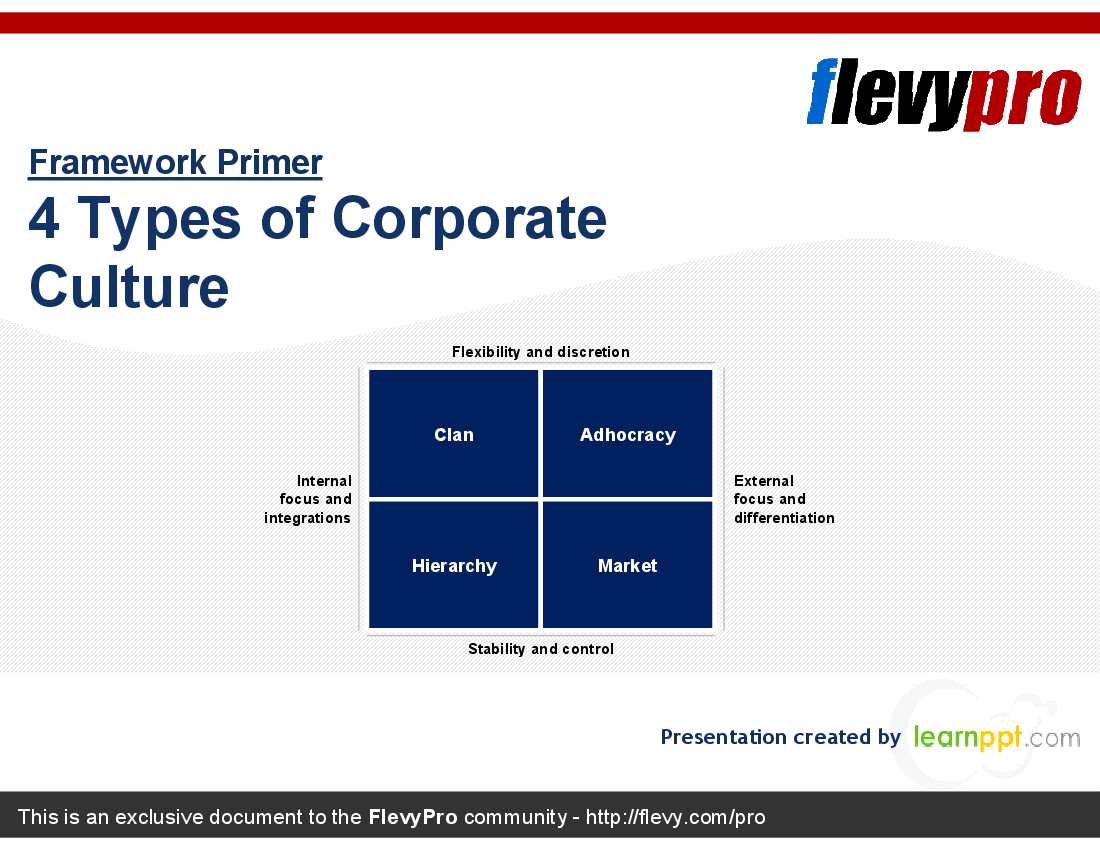
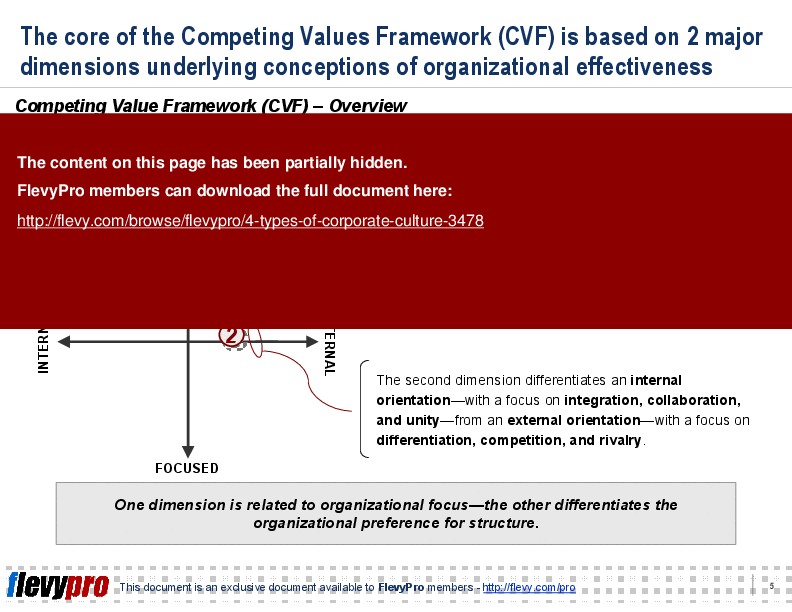
The Competing Values Framework (CVF) categorizes organizational cultures along 2 key dimensions: flexibility versus stability and internal versus external focus. This dual-axis model identifies 4 corporate culture types: Clan, Adhocracy, Hierarchy, and Market. The vertical axis contrasts flexibility and discretion with stability and control, indicating that flexible organizations are adaptive and innovative, while stable ones emphasize structure. The horizontal axis differentiates internal focus, which fosters collaboration, from external focus, which prioritizes competitiveness. Effective organizations balance these cultural types, activating different values to address business challenges, crucial for sustaining growth and achieving strategic objectives.
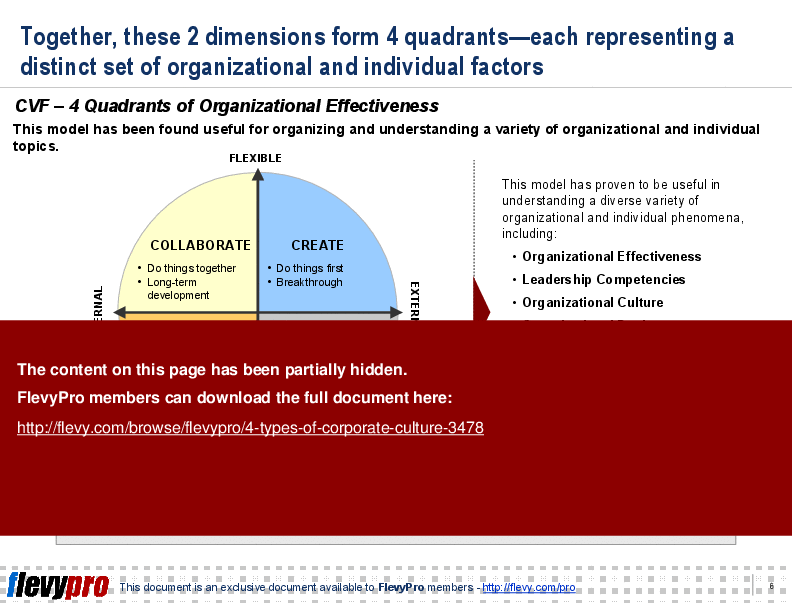
The Competing Values Framework (CVF) categorizes organizational effectiveness into 4 quadrants defined by internal versus external focus and flexibility versus control. The "Collaborate" quadrant emphasizes teamwork and long-term development, prioritizing relationships and a collaborative culture. The "Create" quadrant focuses on innovation and market opportunities, driving differentiation through new ideas. The "Control" quadrant highlights efficiency and process adherence, maintaining stability and operational excellence. The "Compete" quadrant centers on speed and short-term performance, emphasizing immediate results and market responsiveness. This model applies to leadership competencies, organizational culture, and financial strategy, aiding executives in aligning strategies with organizational goals.
Source: Best Practices in Corporate Culture, Organizational Design, Robert Quinn, Jon Rohrbaugh PowerPoint Slides: 4 Types of Corporate Culture PowerPoint (PPT) Presentation Slide Deck, LearnPPT Consulting
This framework is developed by a team of former McKinsey and Big 4 consultants. The presentation follows the headline-body-bumper slide format used by global consulting firms.
For $10.00 more, you can download this document plus 2 more FlevyPro documents. That's just $13 each.
ABOUT FLEVYPRO
This document is part of the FlevyPro Library, a curated knowledge base of documents for our FlevyPro subscribers.

FlevyPro is a subscription service for on-demand business frameworks and analysis tools. FlevyPro subscribers receive access to an exclusive library of curated business documents—business framework primers, presentation templates, Lean Six Sigma tools, and more—among other exclusive benefits.
The average daily rate of a McKinsey consultant is $6,625 (not including expenses). The average price of a Flevy document is $65.
Trusted by over 10,000+ Client Organizations
Since 2012, we have provided business templates to over 10,000 businesses and organizations of all sizes, from startups and small businesses to the Fortune 100, in over 130 countries.
"As a small business owner, the resource material available from FlevyPro has proven to be invaluable. The ability to search for material on demand based our project events and client requirements was great for me and proved very beneficial to my clients. Importantly, being able to easily edit and tailor
the material for specific purposes helped us to make presentations, knowledge sharing, and toolkit development, which formed part of the overall program collateral. While FlevyPro contains resource material that any consultancy, project or delivery firm must have, it is an essential part of a small firm or independent consultant's toolbox.
"
– Michael Duff, Managing Director at Change Strategy (UK)
"I am extremely grateful for the proactiveness and eagerness to help and I would gladly recommend the Flevy team if you are looking for data and toolkits to help you work through business solutions."
– Trevor Booth, Partner, Fast Forward Consulting
"As an Independent Management Consultant, I find Flevy to add great value as a source of best practices, templates and information on new trends. Flevy has matured and the quality and quantity of the library is excellent. Lastly the price charged is reasonable, creating a win-win value for
the customer, Flevy and the various authors. This is truly a service that benefits the consulting industry and associated clients. Thanks for providing this service.
"
– Jim Schoen, Principal at FRC Group
"As a niche strategic consulting firm, Flevy and FlevyPro frameworks and documents are an on-going reference to help us structure our findings and recommendations to our clients as well as improve their clarity, strength, and visual power. For us, it is an invaluable resource to increase our impact and value."
– David Coloma, Consulting Area Manager at Cynertia Consulting
"As a young consulting firm, requests for input from clients vary and it's sometimes impossible to provide expert solutions across a broad spectrum of requirements. That was before I discovered Flevy.com.
Through subscription to this invaluable site of a plethora of topics that are key and crucial to consulting, I
have been able to exceed expectations and deliver quality advice and solutions to my clients. The quality and expertise of the authors are exemplary and gives me great confidence to use as part of my service offerings.
I highly recommend this company for any consultant wanting to apply international best practice standards in their service offerings.
"
– Nishi Singh, Strategist and MD at NSP Consultants
"[Flevy] produces some great work that has been/continues to be of immense help not only to myself, but as I seek to provide professional services to my clients, it gives me a large "tool box" of resources that are critical to provide them with the quality of service and outcomes they are expecting."
– Royston Knowles, Executive with 50+ Years of Board Level Experience
"The wide selection of frameworks is very useful to me as an independent consultant. In fact, it rivals what I had at my disposal at Big 4 Consulting firms in terms of efficacy and organization."
– Julia T., Consulting Firm Owner (Former Manager at Deloitte and Capgemini)
"Flevy is our 'go to' resource for management material, at an affordable cost. The Flevy library is comprehensive and the content deep, and typically provides a great foundation for us to further develop and tailor our own service offer."
Download our free compilation of 50+ slides and templates on Organizational Design, Change Management, and Corporate Culture. Methodologies include ADKAR, Burke-Litwin Change Model, McKinsey 7-S, Competing Values Framework, etc.