
 Click main image to view in full screen.
Organizational Culture Assessment & Questionnaire (PowerPoint PPTX Slide Deck)
PowerPoint (PPTX) + Excel (XLSX) 57 Slides


BENEFITS OF THIS POWERPOINT DOCUMENT
- Provides a robust Organizational Culture Assessment that encompasses 200+ questions, which evaluates Culture across 10 critical dimensions.
- Identifies strengths and areas for improvement of your Organizational Culture to aid in the development of strategies for cultural enhancement.
- Ensures a standardized, easy-to-understand, and actionable format for scoring and interpreting responses.
CORPORATE CULTURE PPT DESCRIPTION
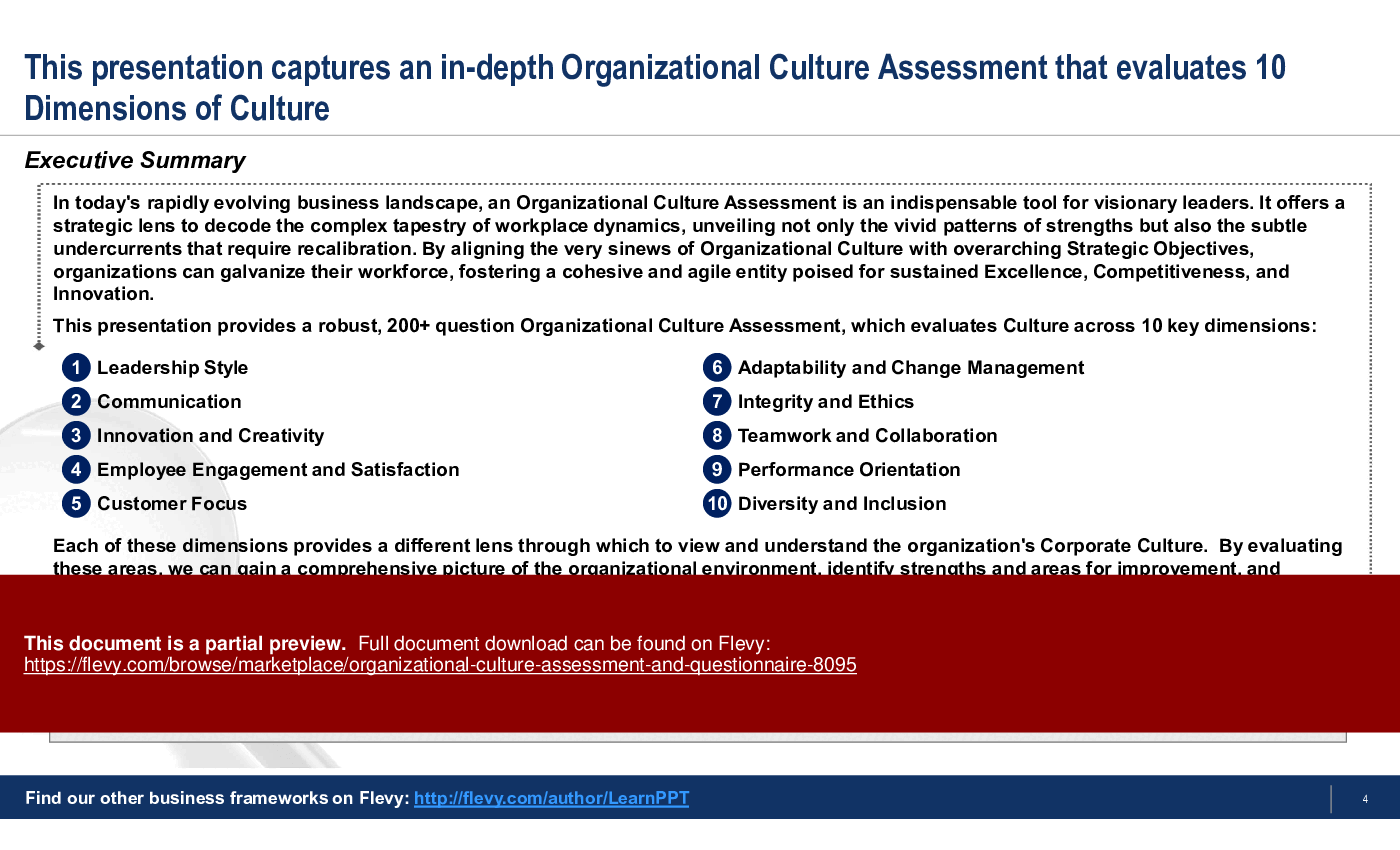
In today's rapidly evolving business landscape, an Organizational Culture Assessment is an indispensable tool for visionary leaders. It offers a strategic lens to decode the complex tapestry of workplace dynamics, unveiling not only the vivid patterns of strengths but also the subtle undercurrents that require recalibration. By aligning the very sinews of Organizational Culture with overarching Strategic Objectives, organizations can galvanize their workforce, fostering a cohesive and agile entity poised for sustained Excellence, Competitiveness, and Innovation.
An Organizational Culture Assessment can act as a pivotal in sculpting an environment that resonates with employee values and aspirations, thereby amplifying engagement and propelling productivity.
This PowerPoint presentation provides a robust, 200+ question Organizational Culture Assessment, which evaluates Culture across 10 key dimensions:
1. Leadership Style
2. Communication
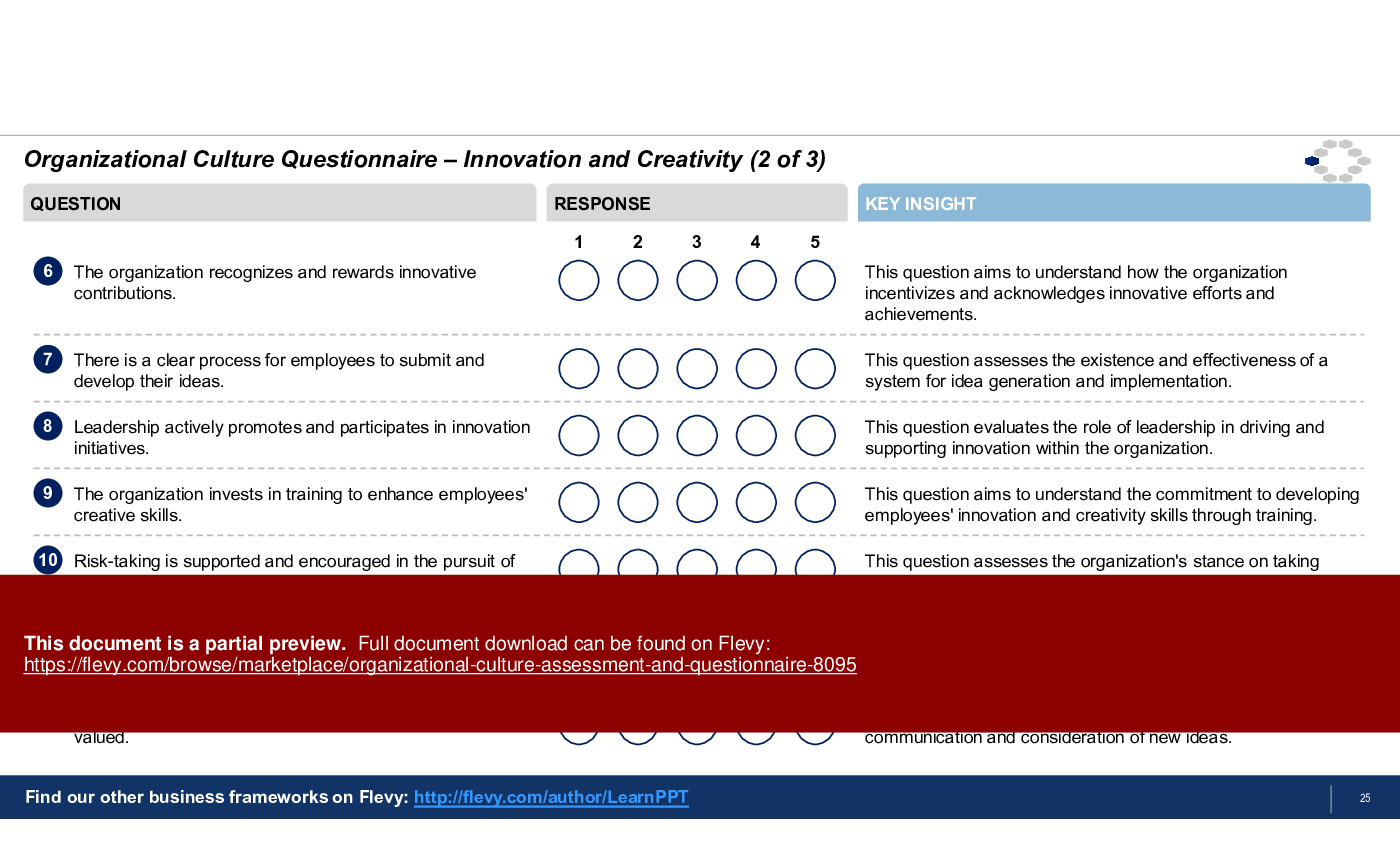
3. Innovation and Creativity
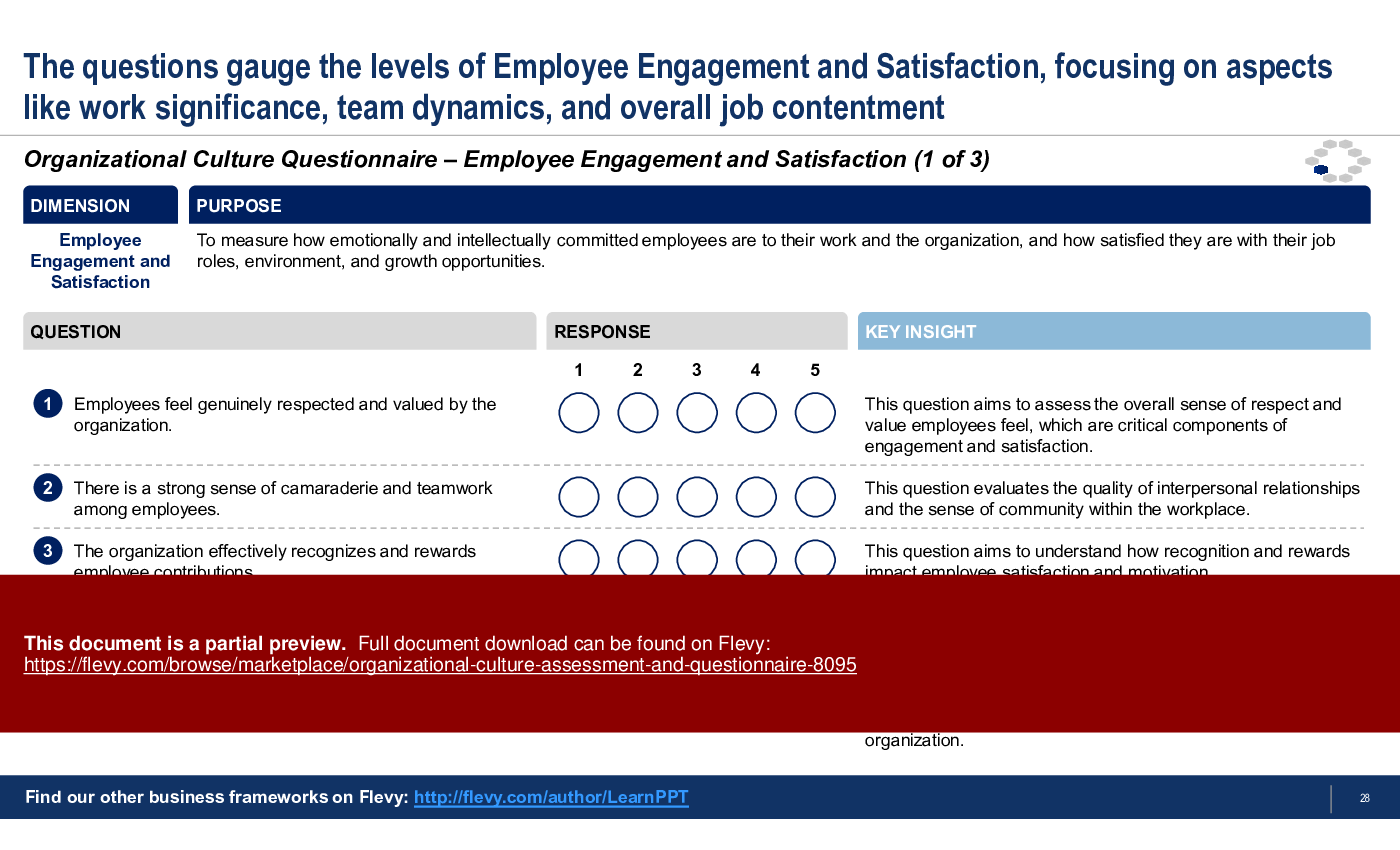
4. Employee Engagement and Satisfaction
5. Customer Focus
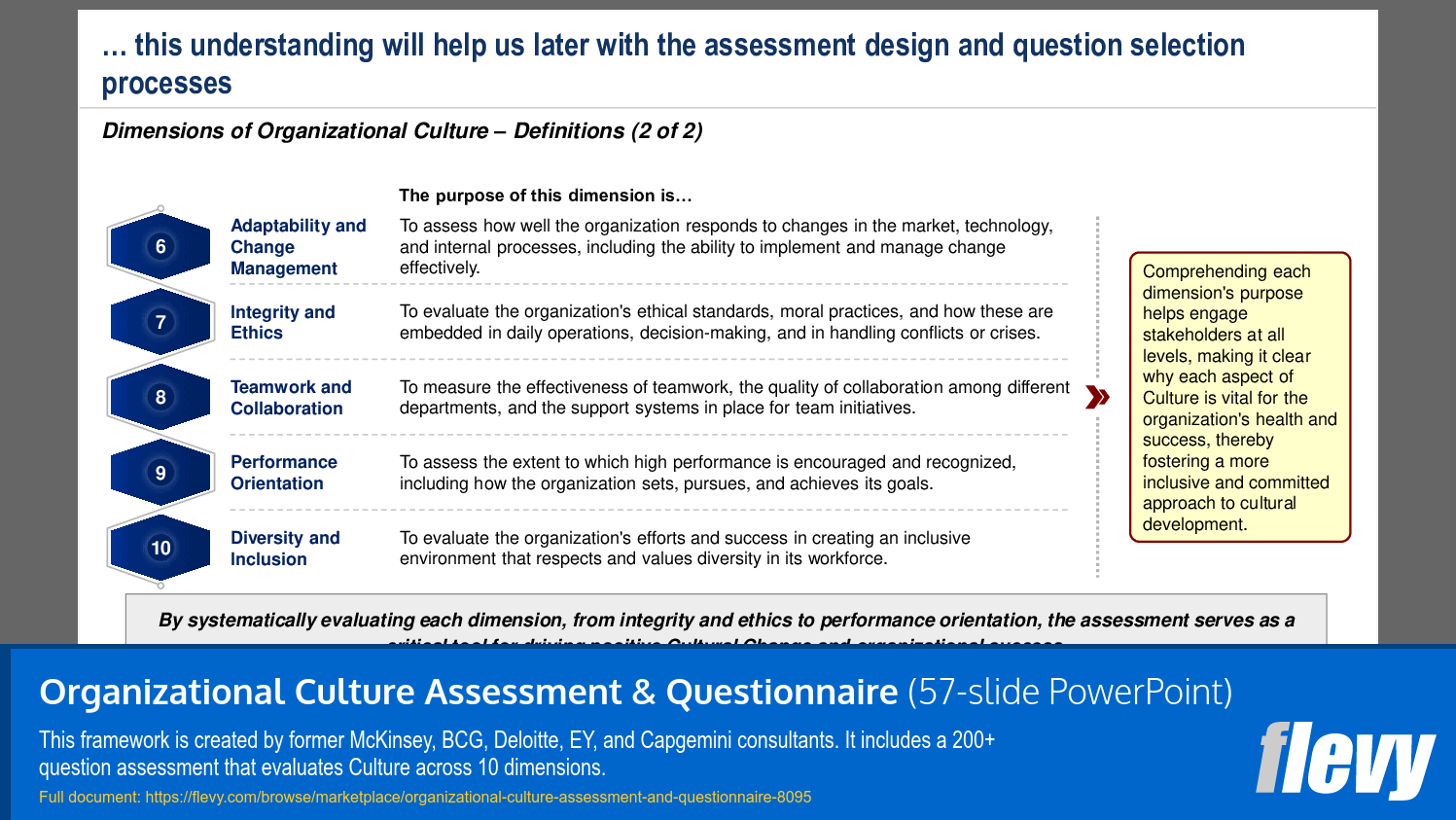
6. Adaptability and Change Management
7. Integrity & Ethics
8. Teamwork & Collaboration
9. Performance Orientation
10. Diversity & Inclusion
Each of these dimensions provides a different lens through which to view and understand the organization's Corporate Culture. By evaluating these areas, we can gain a comprehensive picture of the organizational environment, identify strengths and areas for improvement, and develop strategies for cultural enhancement.
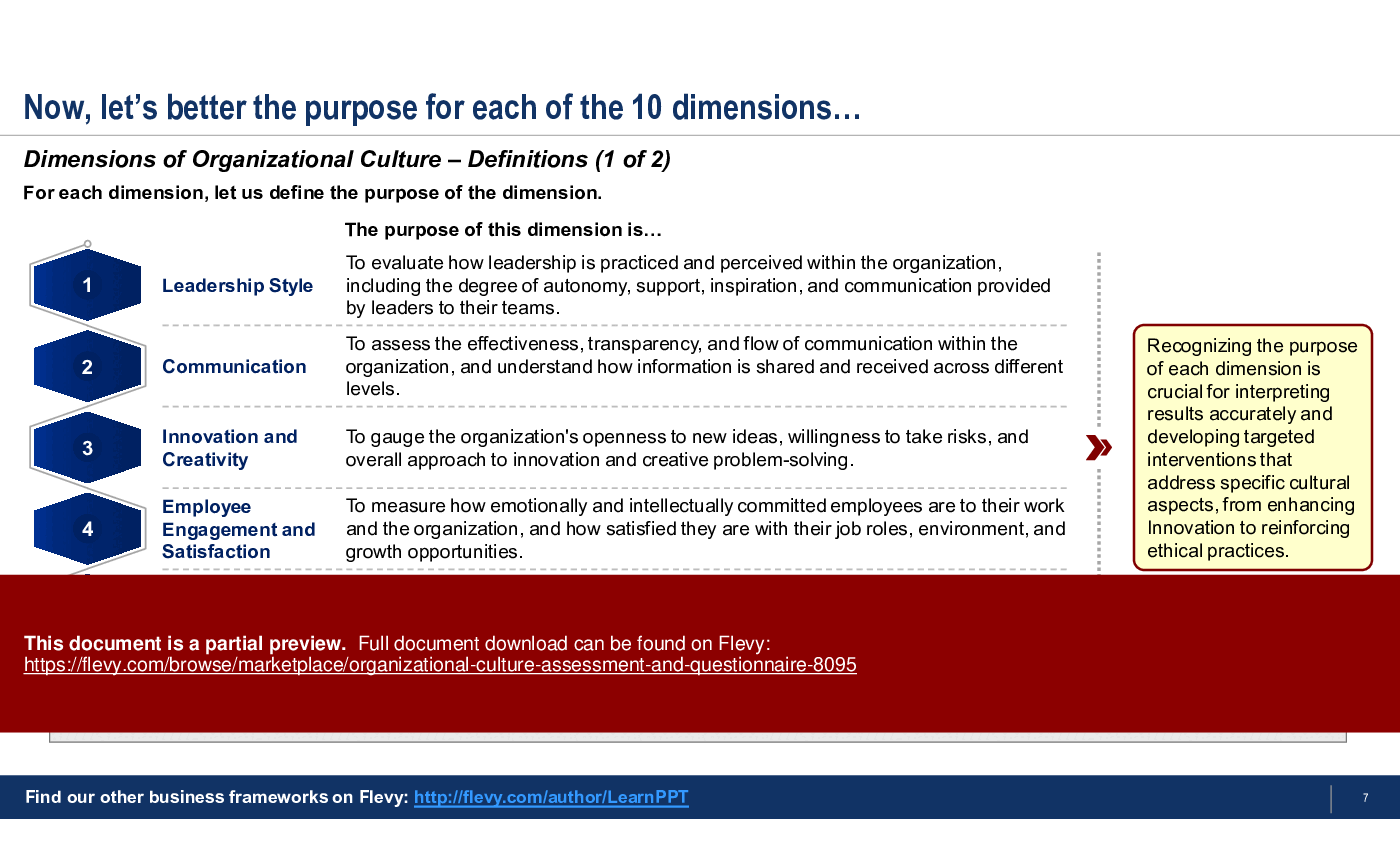
A organization may choose not to evaluate all 10 dimensions. The specific dimensions to evaluate may vary depending on the organization's industry, size, and strategic priorities. For each dimension, we define the purpose for its evaluation. Recognizing the purpose of each dimension is crucial for interpreting results accurately and developing targeted interventions that address specific cultural aspects, from enhancing Innovation to reinforcing ethical practices. Furthermore, Comprehending each dimension's purpose helps engage stakeholders at all levels, making it clear why each aspect of Culture is vital for the organization's health and success, thereby fostering a more inclusive and committed approach to cultural development.
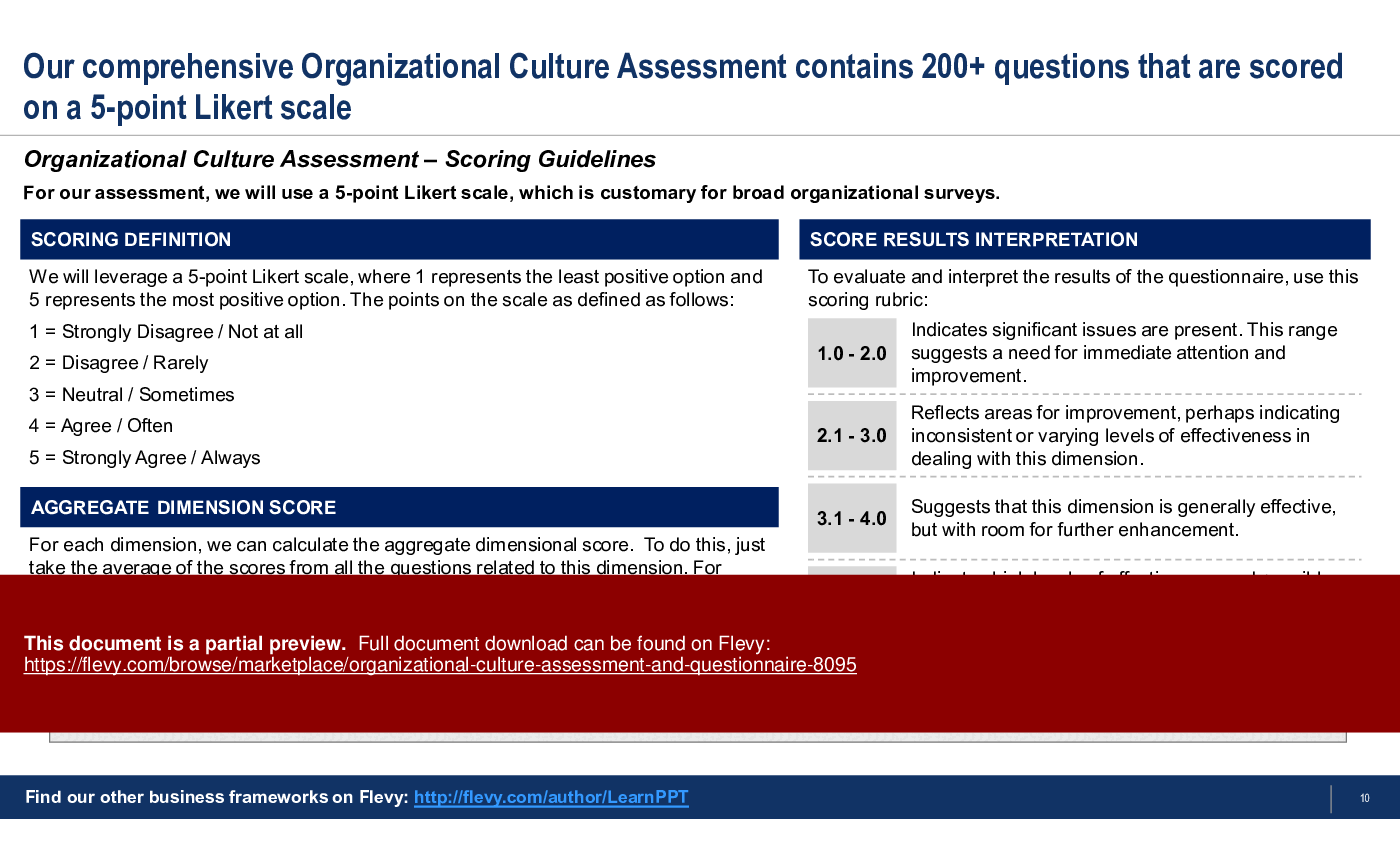
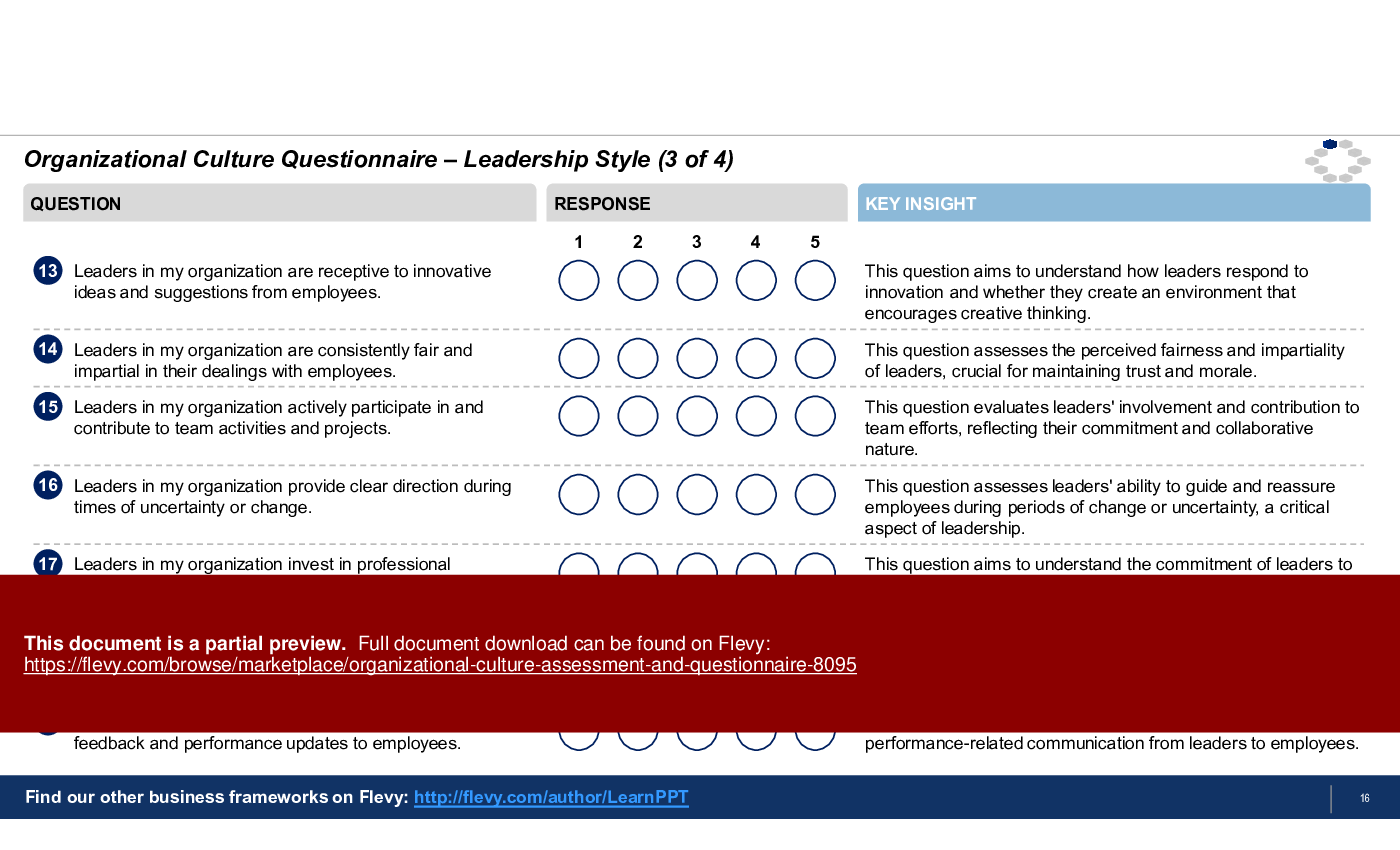
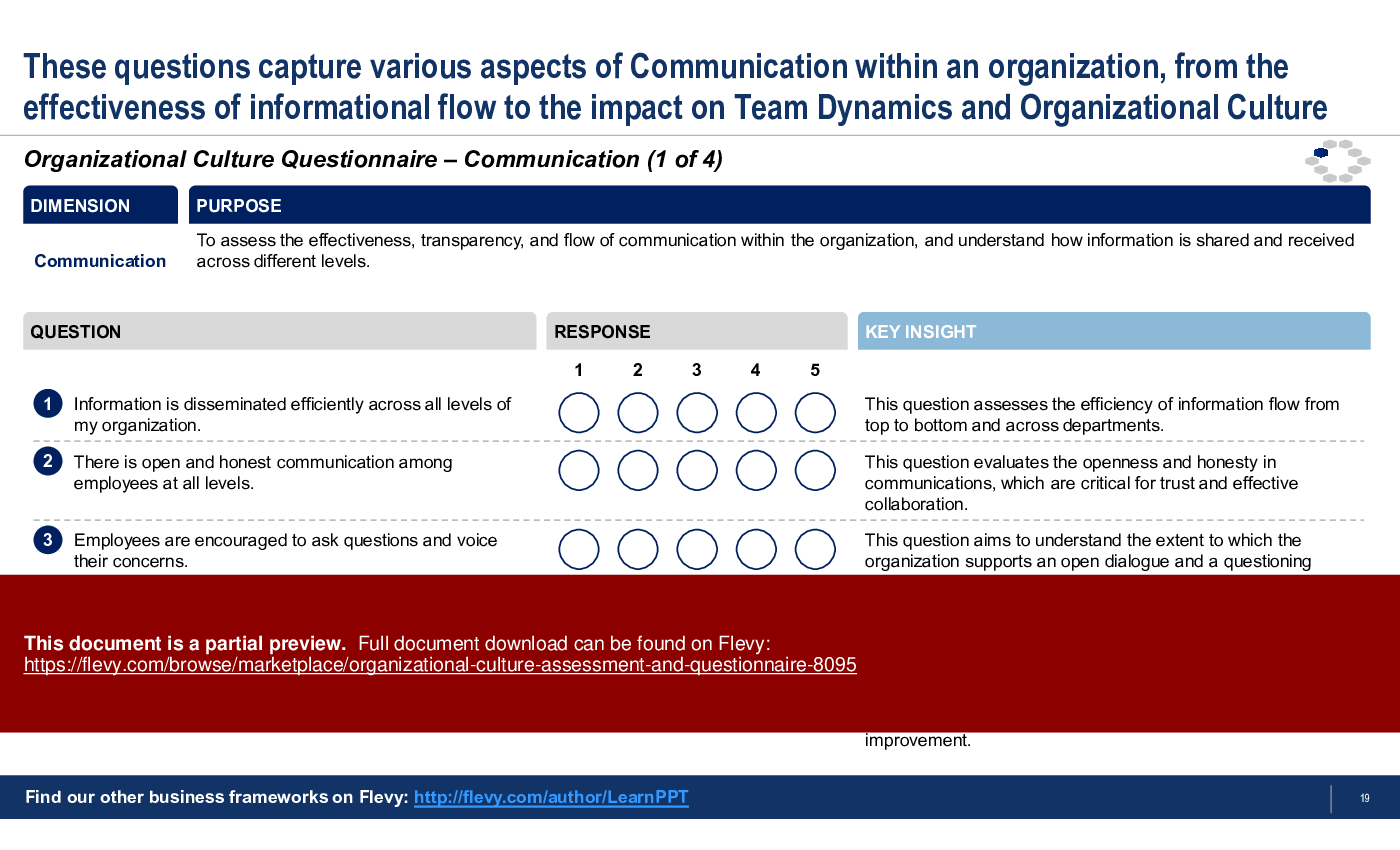
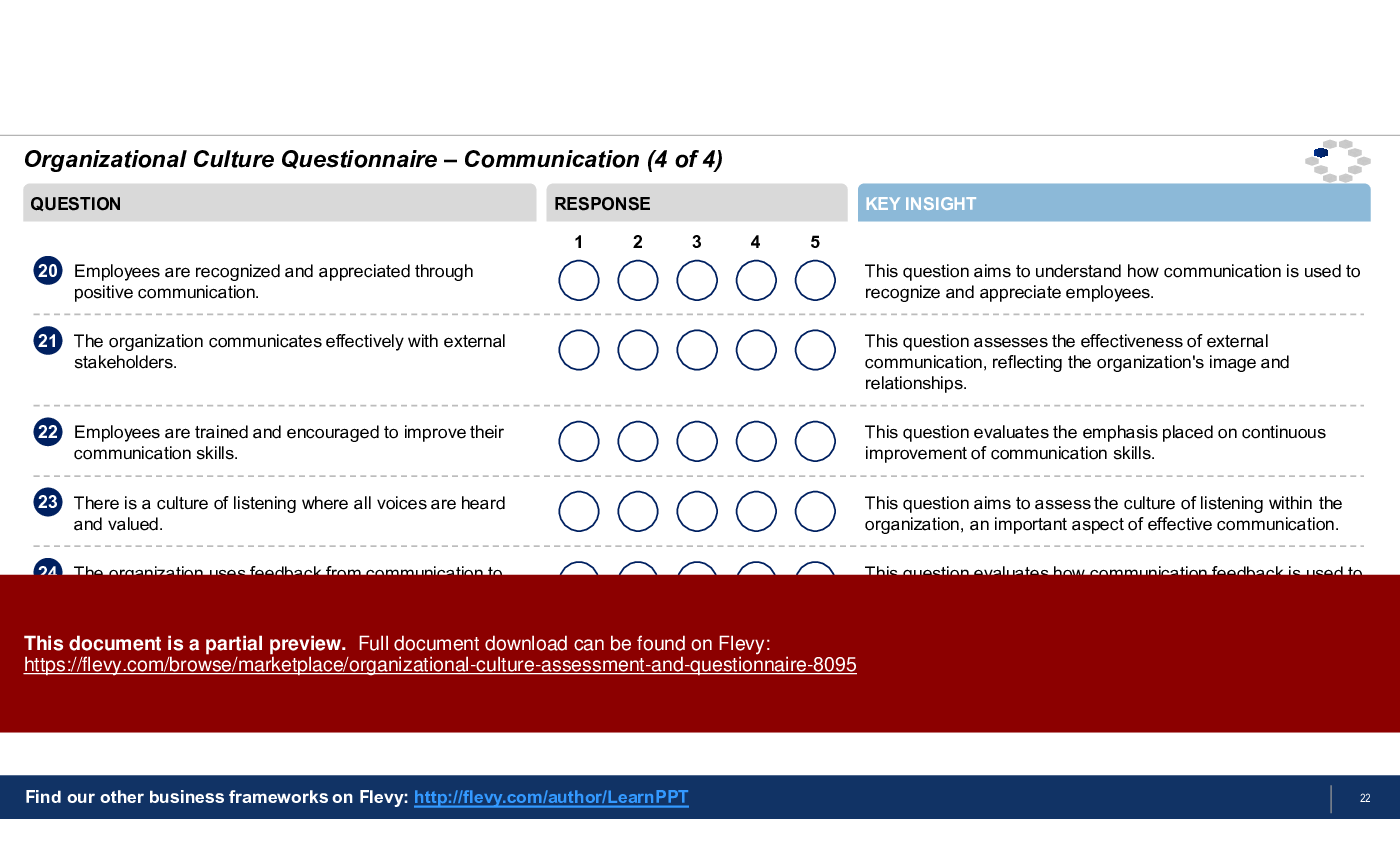
The 200+ questions that are part of this assessment are scored on a 5-point Likert scale. For each question, we have also explicitly called out the key insight that the question seeks to elicit.
This PowerPoint presentation also includes an accompanying Excel format of the Culture Assessment questionnaire.
This comprehensive assessment not only provides a detailed analysis of your organization's culture, but also equips leaders with actionable insights to drive meaningful change. By leveraging this tool, executives can pinpoint specific cultural strengths and weaknesses, ensuring alignment with strategic goals and enhancing overall organizational effectiveness.
Got a question about the product? Email us at support@flevy.com or ask the author directly by using the "Ask the Author a Question" form. If you cannot view the preview above this document description, go here to view the large preview instead.
MARCUS OVERVIEW
This synopsis was written by Marcus [?] based on the analysis of the full 57-slide presentation.
Executive Summary
The Organizational Culture Assessment & Questionnaire is a strategic tool designed to evaluate the cultural dynamics within an organization through a comprehensive set of over 200 questions. Developed by former consultants from top firms such as McKinsey, BCG, Deloitte, EY, and Capgemini, this framework assesses culture across 10 critical dimensions. By utilizing this assessment, organizations can align their culture with strategic objectives, enhance employee engagement, and drive productivity. The assessment provides insights into strengths and areas for improvement, enabling organizations to cultivate a culture that fosters excellence and innovation.
Who This Is For and When to Use
• Corporate executives seeking to align organizational culture with strategic goals
• HR leaders focused on improving employee engagement and satisfaction
• Change management teams implementing cultural transformations
• Consultants advising organizations on cultural assessments and improvements
Best-fit moments to use this deck:
• During strategic planning sessions to align culture with business objectives
• When initiating culture change initiatives or mergers
• To assess the impact of leadership changes on organizational culture
• In preparation for employee engagement surveys or feedback sessions
Learning Objectives
• Define the 10 dimensions of organizational culture and their significance
• Build a tailored culture assessment strategy that aligns with organizational goals
• Establish a framework for interpreting assessment results and identifying actionable insights
• Create a plan for implementing cultural changes based on assessment findings
• Foster a culture of continuous improvement through regular assessments
• Enhance employee engagement by addressing cultural strengths and weaknesses
Table of Contents
• Executive Summary (page 3)
• Dimensions of Organizational Culture (page 5)
• Organizational Culture Assessment (page 9)
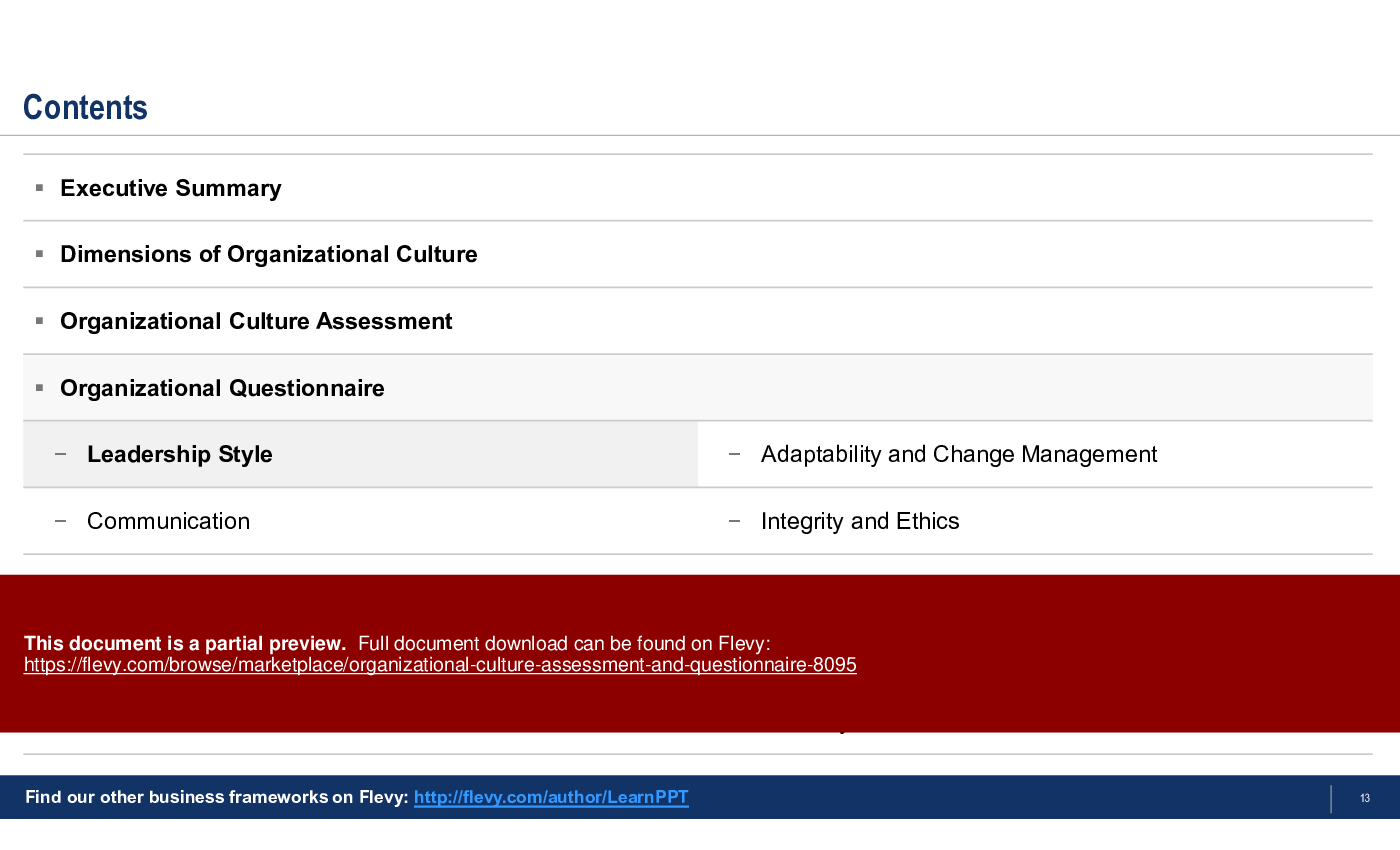
• Organizational Culture Questionnaire (page 13)
• Leadership Style (page 13)
• Adaptability and Change Management (page 35)
• Communication (page 18)
• Integrity and Ethics (page 39)
• Innovation and Creativity (page 23)
• Teamwork and Collaboration (page 43)
• Employee Engagement and Satisfaction (page 27)
• Performance Orientation (page 47)
• Customer Focus (page 31)
• Diversity and Inclusion (page 51)
Primary Topics Covered
• Leadership Style - Evaluates how leadership is practiced and perceived, including communication and support provided to teams.
• Communication - Assesses the effectiveness and transparency of information flow within the organization.
• Innovation and Creativity - Gauges the organization's openness to new ideas and willingness to take risks.
• Employee Engagement and Satisfaction - Measures emotional and intellectual commitment of employees to their work and the organization.
• Customer Focus - Evaluates the organization's commitment to customer satisfaction and service quality.
• Adaptability and Change Management - Assesses how well the organization responds to changes in the market and internal processes.
• Integrity and Ethics - Evaluates the organization's ethical standards and practices.
• Teamwork and Collaboration - Measures the effectiveness of teamwork and the quality of collaboration among departments.
• Performance Orientation - Assesses the extent to which high performance is encouraged and recognized.
• Diversity and Inclusion - Evaluates the organization's efforts to create an inclusive environment that values diversity.
Deliverables, Templates, and Tools
• Comprehensive Organizational Culture Assessment questionnaire
• Scoring rubric for interpreting assessment results
• Excel version of the assessment for data analysis
• Guidelines for conducting cultural assessments and follow-up actions
• Best practices for fostering a positive organizational culture
Slide Highlights
• Overview of the 10 dimensions of organizational culture
• Insights on the importance of leadership in shaping culture
• Detailed scoring guidelines for assessment results
• Framework for interpreting cultural assessment findings
• Strategies for implementing cultural changes based on assessment outcomes
Potential Workshop Agenda
Introduction to Organizational Culture (30 minutes)
• Overview of the importance of culture in organizational success
• Discussion of the 10 dimensions of culture
Assessment Design and Implementation (60 minutes)
• Review of the assessment questionnaire
• Strategies for conducting the assessment
Interpreting Results and Action Planning (90 minutes)
• Analyzing assessment results
• Developing action plans based on findings
Follow-Up and Continuous Improvement (30 minutes)
• Establishing a framework for ongoing cultural assessments
• Strategies for fostering a culture of continuous improvement
Customization Guidance
• Tailor the assessment questions to reflect specific organizational values and goals
• Adjust the scoring rubric to align with organizational performance metrics
• Integrate feedback mechanisms to continuously refine the assessment process
• Customize the follow-up action plans based on unique organizational needs
Secondary Topics Covered
• The role of leadership in cultural transformation
• Techniques for enhancing employee engagement through culture
• Best practices for integrating diversity and inclusion into organizational culture
• Methods for measuring the impact of culture on organizational performance
Topic FAQ
What dimensions are commonly evaluated in an organizational culture assessment?
Typical dimensions cover leadership style, communication, innovation and creativity, employee engagement and satisfaction, customer focus, adaptability and change management, integrity and ethics, teamwork and collaboration, performance orientation, and diversity and inclusion, totaling 10 dimensions.How is a Likert scale applied when scoring culture survey responses?
Culture surveys commonly use a 5-point Likert scale to standardize responses and enable quantitative comparison across questions and groups. The Organizational Culture Assessment & Questionnaire uses a 5-point Likert scale and pairs each question with an explicit key insight to inform interpretation, using the 5-point Likert scale.What deliverables should I expect from a culture assessment package?
A typical package includes the assessment questionnaire, scoring rubric or detailed scoring guidelines, an analysis-capable Excel version, guidance for conducting the assessment, and follow-up action planning templates—concretely including an Excel version and a scoring rubric.How should I select a culture assessment tool for a merger integration project?
Choose a tool that lets you tailor questions to the merging entities, provides a clear scoring rubric for comparative analysis, and offers guidance for post-assessment action plans. The Organizational Culture Assessment & Questionnaire supports customization and includes 200+ questions and a scoring rubric to aid integration analysis, with 200+ questions.How can I assess the cost versus value of buying a premade culture assessment template?
Evaluate the template by its practical deliverables: number of survey items, inclusion of an Excel analysis file, presence of scoring guidelines, and customization advice. Those attributes determine usability and time saved; for example, this product includes a 200+ question questionnaire, an Excel file, and scoring guidelines.How often should organizations repeat a culture assessment to monitor change?
Organizations are encouraged to run assessments on a regular cadence to track cultural shifts and measure the impact of interventions; the materials recommend establishing a framework for ongoing cultural assessments and follow-up action planning as part of continuous improvement, a framework for ongoing cultural assessments.Can I customize assessment questions and scoring to suit my industry or strategy?
Yes. The assessment materials advise tailoring questions to reflect specific organizational values and strategic priorities and adjusting the scoring rubric to align with performance metrics, enabling tailored diagnostics through adjusted questions and a scoring rubric.What does a scoring rubric typically include for organizational culture surveys?
A scoring rubric provides standardized interpretation of Likert-scale responses, thresholds for highlighting strengths and weaknesses, and guidance for turning scores into action items. The Organizational Culture Assessment & Questionnaire supplies detailed scoring guidelines tied to the 5-point Likert responses and interpretation, using a 5-point Likert scale.Document FAQ
These are questions addressed within this presentation.
What is the purpose of the Organizational Culture Assessment?
The assessment evaluates cultural dynamics across 10 dimensions, helping organizations identify strengths and areas for improvement to align culture with strategic objectives.
How many questions are included in the assessment?
The assessment comprises over 200 questions designed to provide a comprehensive evaluation of organizational culture.
Can the assessment be customized for specific industries?
Yes, organizations can tailor the assessment questions to reflect their unique industry challenges and strategic priorities.
What scoring system is used for the assessment?
A 5-point Likert scale is used to score responses, allowing for standardized interpretation of results.
Is there a follow-up process after the assessment?
Yes, organizations are encouraged to develop action plans based on assessment findings and establish a framework for ongoing cultural assessments.
How can the assessment improve employee engagement?
By identifying cultural strengths and weaknesses, organizations can implement targeted strategies to enhance employee satisfaction and commitment.
What are the key dimensions evaluated in the assessment?
The assessment evaluates dimensions such as leadership style, communication, innovation, employee engagement, customer focus, adaptability, integrity, teamwork, performance orientation, and diversity.
Is there an Excel version of the assessment?
Yes, an Excel version of the Organizational Culture Assessment & Questionnaire is available for data analysis and reporting.
How often should the assessment be conducted?
Organizations are encouraged to conduct the assessment regularly to monitor cultural changes and improvements over time.
Glossary
• Organizational Culture - The shared values, beliefs, and practices that shape how work is done within an organization.
• Likert Scale - A psychometric scale commonly used in surveys to gauge attitudes or opinions.
• Employee Engagement - The emotional commitment an employee has to their organization and its goals.
• Diversity and Inclusion - Efforts to create a workplace that respects and values diverse backgrounds and perspectives.
• Change Management - The process of managing organizational change to minimize resistance and maximize engagement.
• Performance Orientation - The emphasis placed on achieving high performance and recognizing contributions.
• Team Collaboration - The process of working together effectively across different teams and departments.
• Customer Focus - The commitment to understanding and meeting customer needs and expectations.
• Integrity and Ethics - The adherence to moral principles and standards in organizational practices.
• Adaptability - The ability of an organization to respond effectively to changes in the environment.
• Leadership Style - The manner in which leaders guide, motivate, and manage their teams.
• Employee Satisfaction - The level of contentment employees feel regarding their job roles and work environment.
• Innovation - The process of introducing new ideas, products, or methods to improve performance.
CORPORATE CULTURE PPT SLIDES
Source: Best Practices in Corporate Culture PowerPoint Slides: Organizational Culture Assessment & Questionnaire PowerPoint (PPTX) Presentation Slide Deck, LearnPPT Consulting
ABOUT THE AUTHOR
We are a team of management consultants trained by top tier global consulting firms (including McKinsey, BCG, Deloitte, EY, Capgemini) with a collective experience of several decades. We specialize in business frameworks based on real-life consulting engagements.
We have served 100s of clients that range from Fortune 500 companies to tech startups to
... [read more]
Ask the Author a Question
You must be logged in to contact the author.




























