
This framework is developed by a team of former McKinsey and Big 4 consultants. The presentation follows the headline-body-bumper slide format used by global consulting firms.
Editor Summary
A 23-slide PowerPoint presentation by LearnPPT Consulting that explains the Digital Factory concept and how to embed a digital culture.
Read moreCovers 5 imperatives—Adopt the VC Mindset; Get Creative to Attract Digital Talent; Build Working Team Squads; Create a Collaborative Workspace; Foster an Agile Culture—and references practices such as Design Thinking, Zero-based Process Reengineering, and Agile software development. Includes slide templates and guidance on change plans, KPIs for digital adoption, and leadership roles. Sold as a digital download on Flevy with immediate digital download.
Use this primer when an organization aims to embed a digital culture to improve customer journeys, accelerate product development, and increase measurable digital adoption across the business.
Digital transformation leads developing a change plan and KPIs for digital adoption to track progress and acceptance.
Senior executives appointing capable leaders and allocating resources to scale a Digital Factory across business units.
Product managers redesigning end-to-end customer journeys using Design Thinking and Agile workflows.
HR/talent leads recruiting digital talent and designing collaborative workspaces to support cross-functional squads.
The approach emphasizes iterative, cross-functional practices combining Design Thinking, process reengineering, and Agile development.
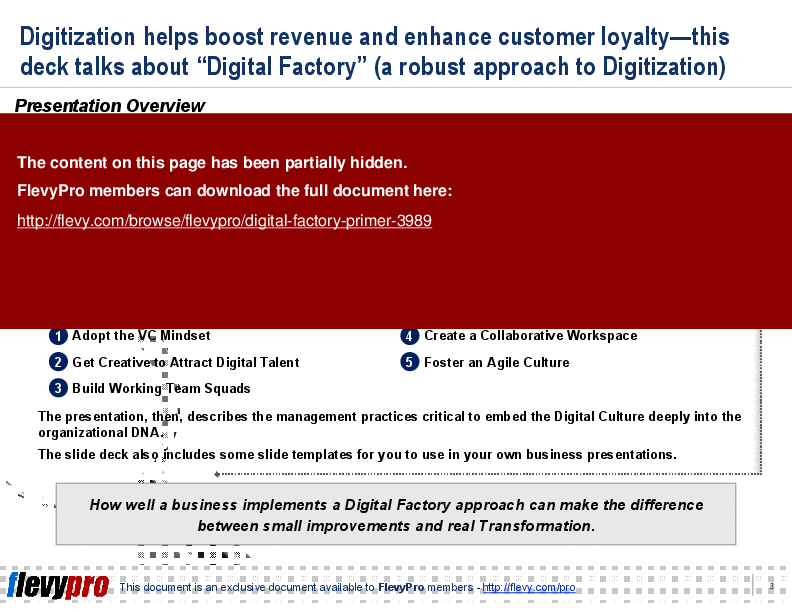
Digitization helps boost revenue, enhance customer loyalty, and reduce costs. Top digital companies not only improve Customer Journeys, they consistently revisit and streamline them. A rigorous approach to Digitization—referred to as the "Digital Factory"—demands a collaborative culture, digital talent, agility, and determined leadership.
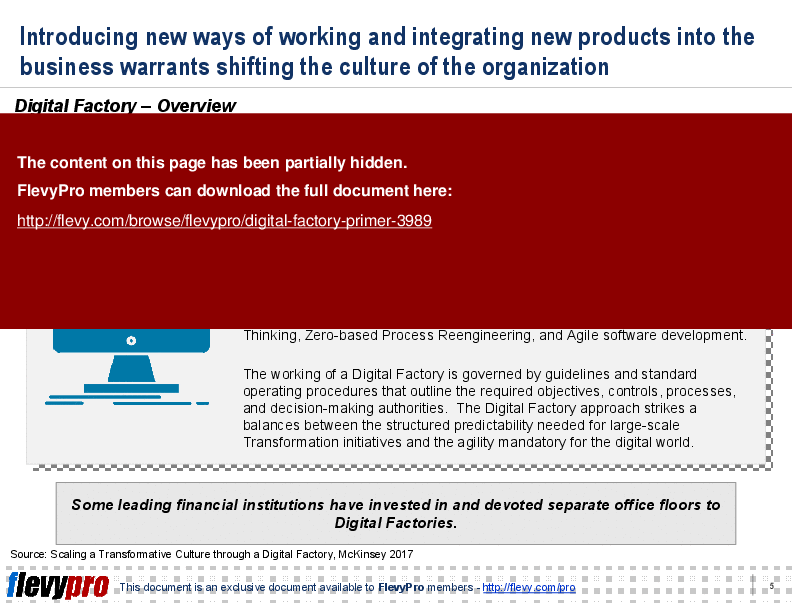
A Digital Factory integrates the capabilities, processes, and inputs to yield quality deliverables. These deliverables are mostly journeys—a string of interfaces to accomplish a job, for instance, a new method to resolve issues with customers service or a new lending process. The Digital Factory adopts new workflows to develop innovative products—utilizing leading practices like Design Thinking, Zero-based Process Reengineering, and Agile software development.
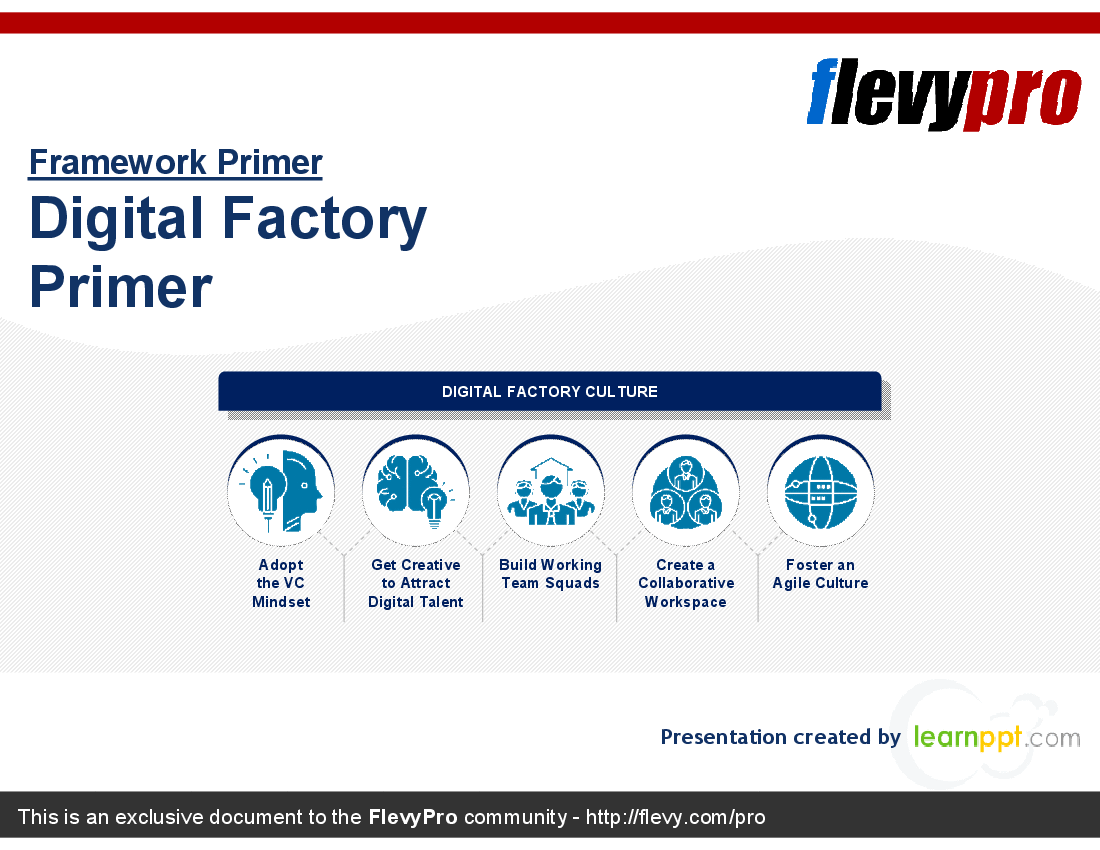
This presentation provides a detailed account of the 5 key imperatives necessary to develop a Corporate Culture that supports the Digital Factory approach:
1. Adopt the VC Mindset
2. Get Creative to Attract Digital Talent
3. Build Working Team Squads
4. Create a Collaborative Workspace
5. Foster an Agile Culture
How well a business implements a Digital Factory approach can make the difference between small improvements and real Transformation.
The presentation, then, describes the management practices critical to embed the Digital Culture deeply into the organizational DNA.
The slide deck also includes some slide templates for you to use in your own business presentations.
The Digital Factory Primer delves into the intricacies of fostering a Digital Culture, emphasizing the necessity for prompt decision-making and the integration of new products into existing business models. It outlines the importance of appointing capable leaders to manage the Digital Factory, ensuring wide-scale acceptance and achieving tangible results. The PPT provides actionable insights into developing a change plan, adopting KPIs for digital adoption, and finding multi-disciplinary leaders. This comprehensive guide is essential for any organization looking to drive impactful digital transformation and embed a robust Digital Culture.
What is a Digital Factory and how does it differ from ad hoc digitization efforts?
A Digital Factory integrates capabilities, processes, and inputs to produce repeatable deliverables—primarily customer or operational journeys—rather than one-off digital fixes. It emphasizes continuous revisiting and streamlining of journeys, collaborative teams, and leadership commitment, with deliverables focused on end-to-end journeys.
What core practices support a Digital Factory's product and process development?
Leading practices cited for Digital Factories include Design Thinking for customer-centered design, Zero-based Process Reengineering for fundamental workflow redesign, and Agile software development for iterative delivery. These methods are used together to develop innovative products and new workflows, including Design Thinking, Zero-based Process Reengineering, and Agile software development.
What organizational imperatives are needed to develop a Digital Factory?
Successful implementation depends on cultural and structural elements: adopting a VC mindset, attracting digital talent, building working team squads, creating collaborative workspaces, and fostering an agile culture. Flevy's Digital Factory Primer provides a detailed account of these 5 key imperatives.
How should a company measure adoption and impact from Digital Factory initiatives?
Measurement focuses on KPIs tied to digital adoption, prompt decision-making, integration of new products into existing business models, and attainment of wide-scale acceptance and tangible results. The presentation discusses developing a change plan and adopting KPIs for digital adoption.
What should I look for when selecting a Digital Factory presentation or template?
Look for materials that explain cultural enablers (leadership, talent attraction, collaborative workspaces), squad-based operating models, practices linking Design Thinking to Agile delivery, guidance on change planning, and examples of KPIs. Flevy's Digital Factory Primer also includes usable slide templates to support presentations and planning.
How large a team or what roles are typically required to run Digital Factory practices?
Team size varies by scale,, but implementation requires appointed leaders and multi-disciplinary teams able to operate in squad structures. Emphasis is placed on recruiting digital talent, forming working team squads, and having determined leadership to drive adoption and results through working team squads.
We just completed an acquisition—how can a Digital Factory help integrate customer journeys?
A Digital Factory helps by revisiting and streamlining customer journeys across combined entities, adopting new workflows to integrate products into existing business models, and using iterative methods to resolve customer service or lending processes. This typically leverages Design Thinking and Agile methodologies.
What leadership qualities and roles are necessary to achieve wide-scale acceptance of a Digital Factory?
Leadership should be determined and capable of building cross-functional teams, appointing multi-disciplinary leaders, driving prompt decision-making, and sponsoring change plans and KPIs for adoption. The primer highlights the need to appoint capable, multi-disciplinary leaders.
Cultivating an agile culture enhances operational effectiveness through 3 critical shifts. First, organizations should transition decision-making from top management to autonomous teams, enabling quicker responses to changing circumstances and customer needs. Second, move away from rigid long-term initiatives based on extensive market analysis, embracing experimentation and a learning mindset that accepts failures, fostering innovation and adaptation based on real-time customer feedback. Third, critique traditional hierarchical structures in favor of a flatter organizational model with flexible roles, which enhances employee ownership and engagement. These principles align organizations with the demands of today’s fast-paced business environment, leading to improved performance and customer satisfaction.
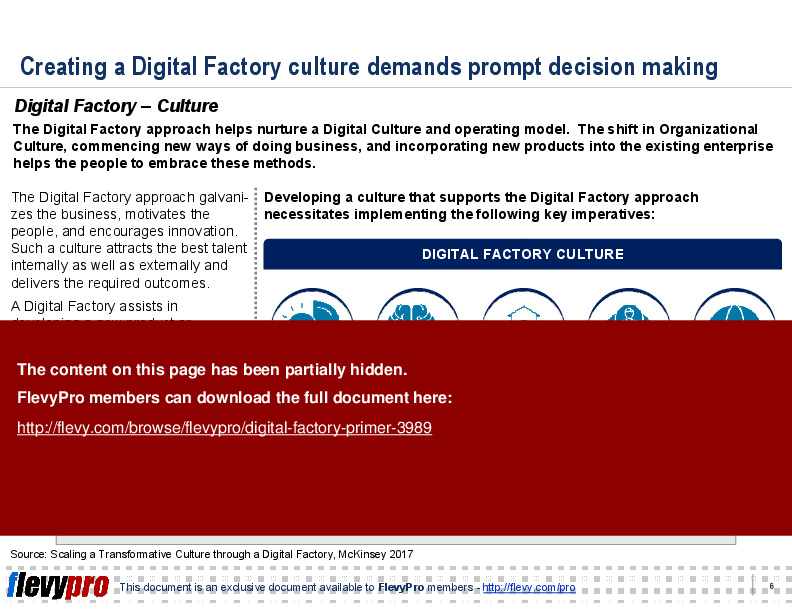
This PPT slide outlines essential elements for cultivating a successful Digital Factory culture. A venture capitalist mindset is crucial, emphasizing swift decision-making and clear objectives. The investment strategy should prioritize effective ideas over exhaustive analyses, enabling agility in product development. Monitoring progress and readiness to pivot is vital. The concept of a minimum viable product (MVP) is highlighted, advocating for rapid development and transition to the main business if successful. Attracting digital talent is critical, with high-demand skills such as customer experience design, Agile development, and data analytics identified. Organizations should create a compelling value proposition and engage digital community influencers for talent acquisition. Building internal capacity through collaboration and training programs enhances digital skills, while a hiring war room can improve recruitment practices, sustaining a robust Digital Factory culture.
Cultivating a Digital Factory culture revitalizes business operations, motivates employees, and fosters innovation. A robust Digital Culture attracts top talent and enhances product development and customer experiences. Key imperatives include adopting a "VC Mindset" to encourage risk-taking and rapid iteration, and emphasizing creativity to differentiate and attract digital talent. Building effective team squads is critical for collaboration, while creating a collaborative workspace supports interaction and idea-sharing. Fostering an agile culture enables organizations to adapt quickly to changes in the digital landscape. These actionable steps guide executives in implementing a successful Digital Factory culture for sustained innovation.
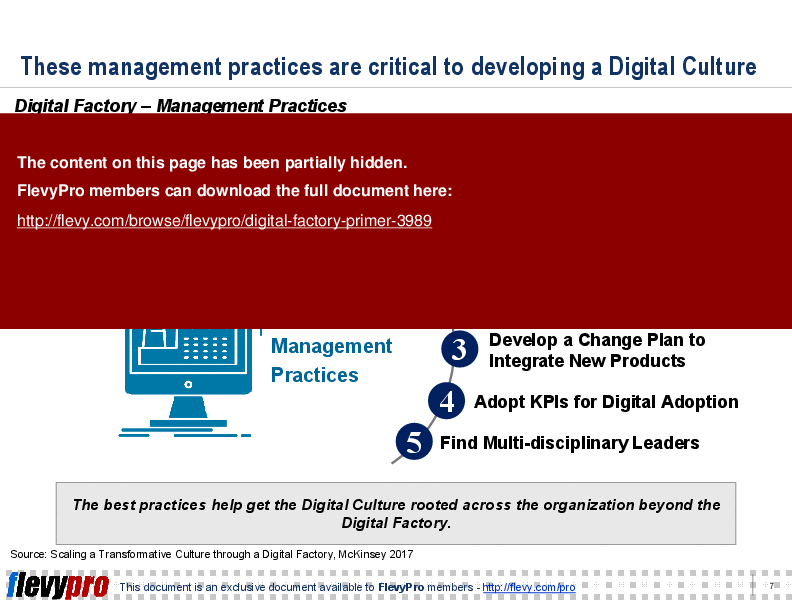
This PPT slide outlines essential management practices for fostering a Digital Factory culture. Key practices include:
1. Build with Purpose: Initiatives must align with the organization's mission to ensure meaningful outcomes.
2. Invest to Drive Impact: Allocate resources strategically to maximize the effectiveness of digital initiatives.
3. Develop a Change Plan to Integrate New Products: Implement a structured approach for managing change, facilitating seamless adoption of new technologies.
4. Adopt KPIs for Digital Adoption: Establish key performance indicators to measure the success of digital initiatives and track progress.
5. Find Multi-disciplinary Leaders: Effective leadership with diverse skills is crucial for navigating digital transformation complexities.
These practices must be ingrained into the organizational DNA for long-term success.
Source: Best Practices in Digital Transformation, Digital Culture PowerPoint Slides: Digital Factory Primer PowerPoint (PPT) Presentation Slide Deck, LearnPPT Consulting
This framework is developed by a team of former McKinsey and Big 4 consultants. The presentation follows the headline-body-bumper slide format used by global consulting firms.
For $10.00 more, you can download this document plus 2 more FlevyPro documents. That's just $13 each.
ABOUT FLEVYPRO
This document is part of the FlevyPro Library, a curated knowledge base of documents for our FlevyPro subscribers.
FlevyPro is a subscription service for on-demand business frameworks and analysis tools. FlevyPro subscribers receive access to an exclusive library of curated business documents—business framework primers, presentation templates, Lean Six Sigma tools, and more—among other exclusive benefits.
The average daily rate of a McKinsey consultant is $6,625 (not including expenses). The average price of a Flevy document is $65.
Trusted by over 10,000+ Client Organizations
Since 2012, we have provided business templates to over 10,000 businesses and organizations of all sizes, from startups and small businesses to the Fortune 100, in over 130 countries.
"As a young consulting firm, requests for input from clients vary and it's sometimes impossible to provide expert solutions across a broad spectrum of requirements. That was before I discovered Flevy.com.
Through subscription to this invaluable site of a plethora of topics that are key and crucial to consulting, I
have been able to exceed expectations and deliver quality advice and solutions to my clients. The quality and expertise of the authors are exemplary and gives me great confidence to use as part of my service offerings.
I highly recommend this company for any consultant wanting to apply international best practice standards in their service offerings.
"
– Nishi Singh, Strategist and MD at NSP Consultants
"Last Sunday morning, I was diligently working on an important presentation for a client and found myself in need of additional content and suitable templates for various types of graphics. Flevy.com proved to be a treasure trove for both content and design at a reasonable price, considering the time I
saved. I encountered a download issue during the ordering process. However, a quick email to Flevy's support team, even on a Sunday (!!!), resulted in assistance within less than an hour, allowing me to download the content I needed. Fantastic job, Flevy! I give 5 stars for both content/price and customer service. Thank you!
"
– M. E., Chief Commercial Officer, International Logistics Service Provider
"I like your product. I'm frequently designing PowerPoint presentations for my company and your product has given me so many great ideas on the use of charts, layouts, tools, and frameworks. I really think the templates are a valuable asset to the job."
– Roberto Fuentes Martinez, Senior Executive Director at Technology Transformation Advisory
"One of the great discoveries that I have made for my business is the Flevy library of training materials.
As a Lean Transformation Expert, I am always making presentations to clients on a variety of topics: Training, Transformation, Total Productive Maintenance, Culture, Coaching, Tools, Leadership Behavior, etc. Flevy
It is well worth the money to purchase these presentations. Sure, I have the knowledge and information to make my point. It is another thing to create a presentation that captures what I want to say. Flevy has saved me countless hours of preparation time that is much better spent with implementation that will actually save money for my clients.
"
– Ed Kemmerling, Senior Lean Transformation Expert at PMG
"The wide selection of frameworks is very useful to me as an independent consultant. In fact, it rivals what I had at my disposal at Big 4 Consulting firms in terms of efficacy and organization."
– Julia T., Consulting Firm Owner (Former Manager at Deloitte and Capgemini)
"As a small business owner, the resource material available from FlevyPro has proven to be invaluable. The ability to search for material on demand based our project events and client requirements was great for me and proved very beneficial to my clients. Importantly, being able to easily edit and tailor
the material for specific purposes helped us to make presentations, knowledge sharing, and toolkit development, which formed part of the overall program collateral. While FlevyPro contains resource material that any consultancy, project or delivery firm must have, it is an essential part of a small firm or independent consultant's toolbox.
"
– Michael Duff, Managing Director at Change Strategy (UK)
"I have found Flevy to be an amazing resource and library of useful presentations for lean sigma, change management and so many other topics. This has reduced the time I need to spend on preparing for my performance consultation. The library is easily accessible and updates are regularly provided. A wealth of great information."
– Cynthia Howard RN, PhD, Executive Coach at Ei Leadership
"Flevy is now a part of my business routine. I visit Flevy at least 3 times each month.
Flevy has become my preferred learning source, because what it provides is practical, current, and useful in this era where the business world is being rewritten.

many challenges and there is the need to make the right decisions in a short time, with so much scattered information, we are fortunate to have Flevy. Flevy investigates, selects, and puts at our disposal the best of the best to help us be successful in our work.
Download our FREE Digital Transformation Templates
Download our free compilation of 50+ Digital Transformation slides and templates. DX concepts covered include Digital Leadership, Digital Maturity, Digital Value Chain, Customer Experience, Customer Journey, RPA, etc.