
Our organization must become Analytics-driven. This is the call of the times. To be globally competitive, our company must have the capability to effectively use Advanced Analytics.
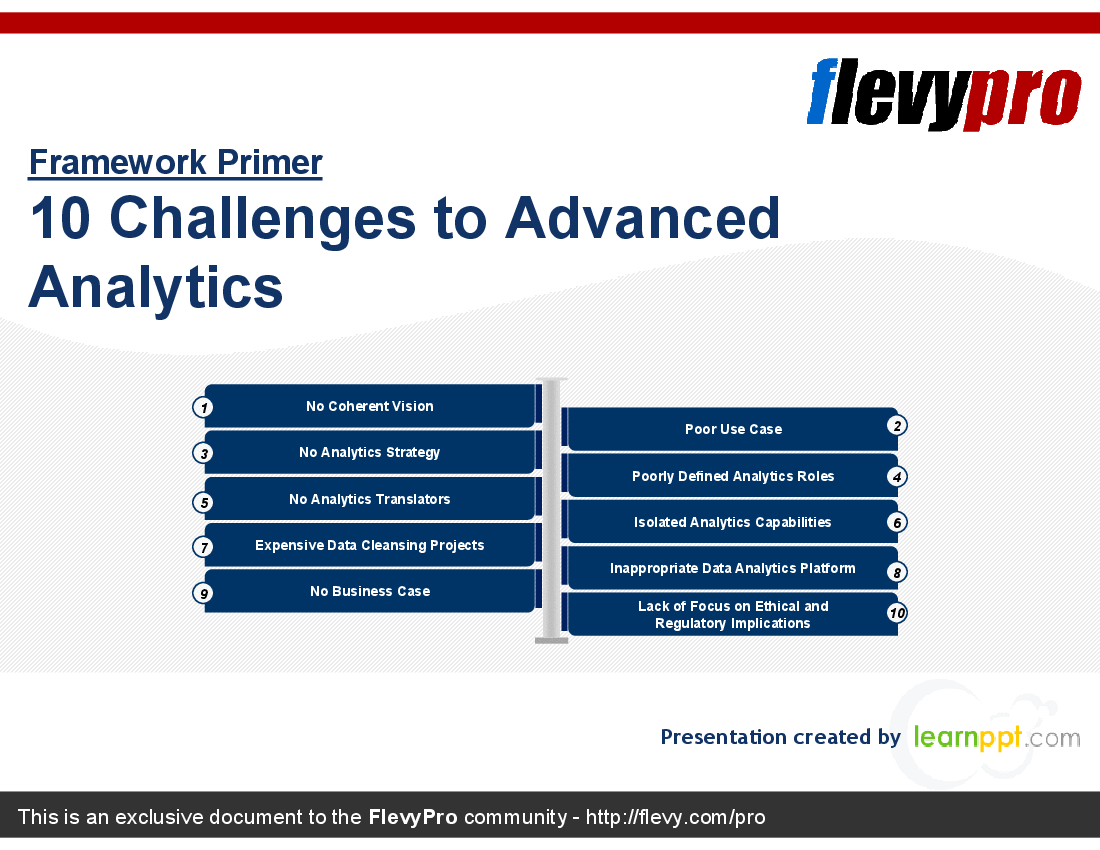
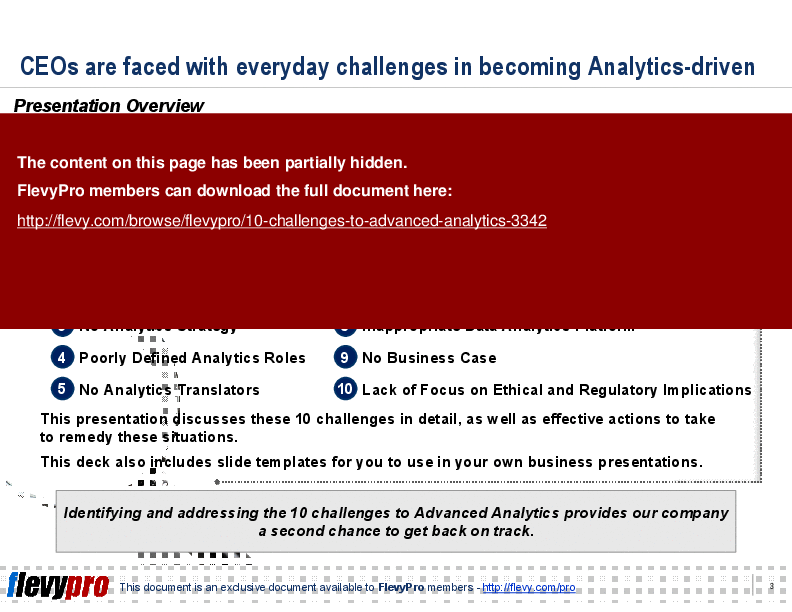
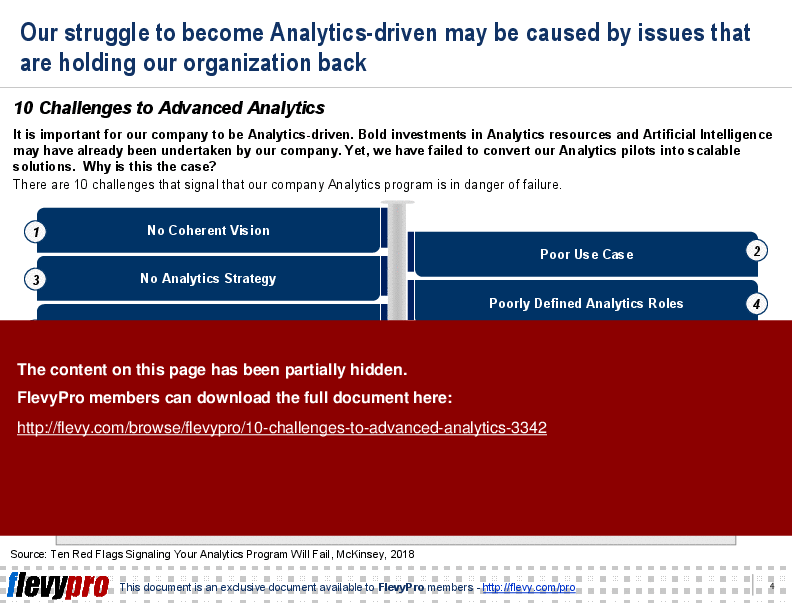
Despite big moves, Analytics pilots are not being converted into scalable solutions. There are 10 core challenges that any Analytics program encounters, which makes any Analytics-driven initiative a struggle. These challenges are:
1. No Coherent Vision
2. Poor Use Case
3. No Analytics Strategy
4. Poorly Defined Analytics Roles
5. No Analytics Translators
6. Isolated Analytics Capabilities
7. Expensive Data Cleansing Projects
8. Inappropriate Data Analytics Platform
9. No Business Case
10. Lack of Focus on Ethical and Regulatory Implications
This presentation discusses these 10 challenges in detail, as well as effective actions to take to remedy these situations.
This deck also includes slide templates for you to use in your own business presentations.
Identifying and addressing the 10 challenges to Advanced Analytics provides our company a second chance to get back on track. The presentation outlines a comprehensive action plan for each challenge, ensuring that your organization can overcome these hurdles and fully leverage the power of Advanced Analytics. From establishing a coherent vision to defining clear roles and responsibilities, this PPT serves as a strategic guide for transforming your analytics initiatives into scalable, impactful solutions.
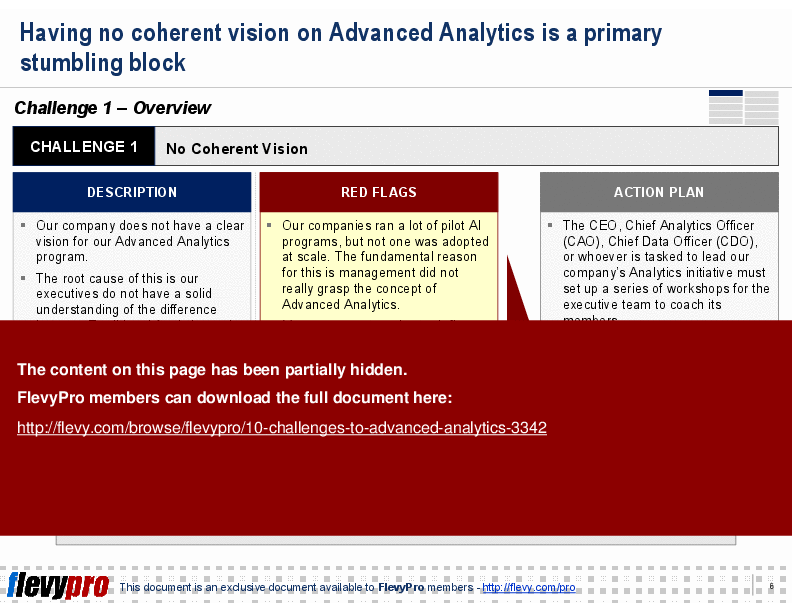
Having no coherent vision on Advanced Analytics is a primary stumbling block. Without a clear understanding of the difference between traditional and advanced analytics, executives struggle to align their teams and resources effectively. The document provides actionable steps for the CEO, CAO, or CDO to lead workshops and coaching sessions, ensuring that the management team grasps the concept of Advanced Analytics and can drive the initiative forward.
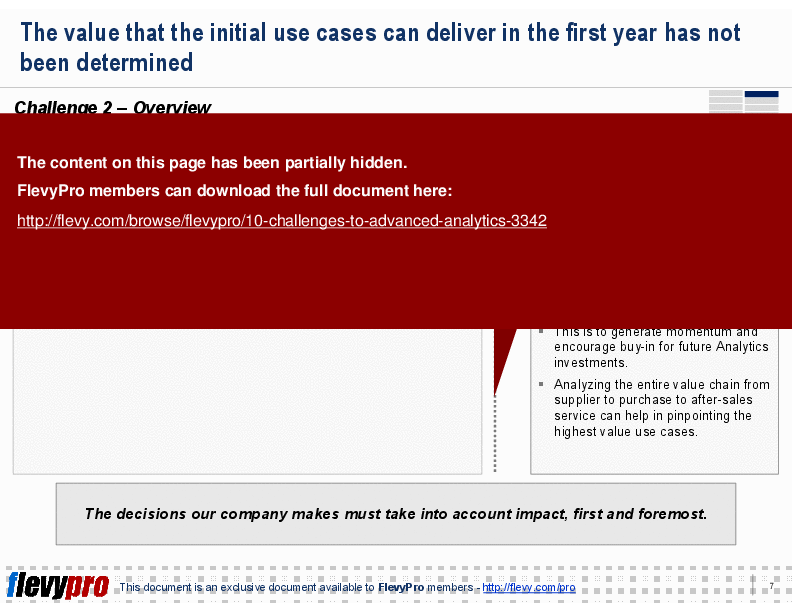
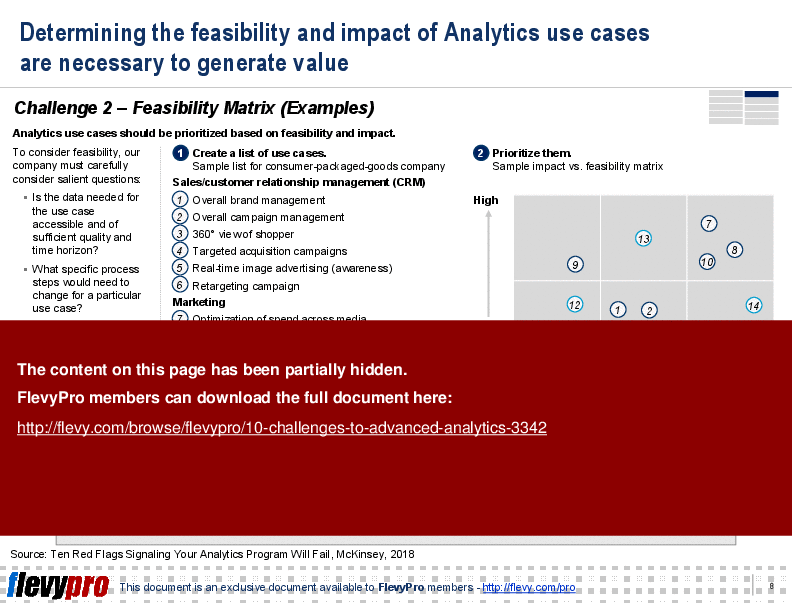
The value that the initial use cases can deliver in the first year has not been determined. To address this, the presentation includes a feasibility matrix to prioritize analytics use cases based on their impact and feasibility. By analyzing the entire value chain from supplier to after-sales service, companies can pinpoint the highest value use cases and generate momentum for future analytics investments. This structured approach helps in making informed decisions that maximize the return on analytics investments.
Got a question about this document? Email us at flevypro@flevy.com.
Executive Summary
The "10 Challenges to Advanced Analytics" presentation provides a comprehensive exploration of the key obstacles organizations face in implementing effective analytics strategies. It identifies ten critical challenges, including the absence of a coherent vision, poorly defined analytics roles, and a lack of focus on ethical implications. This presentation equips corporate executives and analytics leaders with actionable insights and frameworks to overcome these hurdles, ensuring that analytics initiatives can be successfully scaled and integrated into business operations.
Who This Is For and When to Use
• Chief Analytics Officers (CAOs) and Chief Data Officers (CDOs) overseeing analytics initiatives
• Business executives seeking to enhance their organization's analytics capabilities
• Data scientists and analytics teams aiming to align their work with business objectives
• Consultants advising organizations on analytics strategy and implementation
Best-fit moments to use this deck:
• During strategic planning sessions to identify and address analytics challenges
• In workshops aimed at educating leadership on the importance of advanced analytics
• When assessing the current state of analytics capabilities within an organization
Learning Objectives
• Define the ten core challenges to advanced analytics and their implications
• Identify actionable strategies to overcome each challenge
• Develop a coherent vision for analytics that aligns with business goals
• Establish clear roles and responsibilities within analytics teams
• Create a framework for prioritizing analytics use cases based on feasibility and impact
• Implement governance structures that address ethical and regulatory considerations
Table of Contents
• Overview (page 3)
• Challenges to Advanced Analytics (page 4)
• Templates (page 19)
Primary Topics Covered
• No Coherent Vision - The absence of a clear vision for analytics hampers effective implementation and scaling of initiatives.
• Poor Use Case - Indiscriminate application of analytics tools can lead to wasted resources and diminished stakeholder confidence.
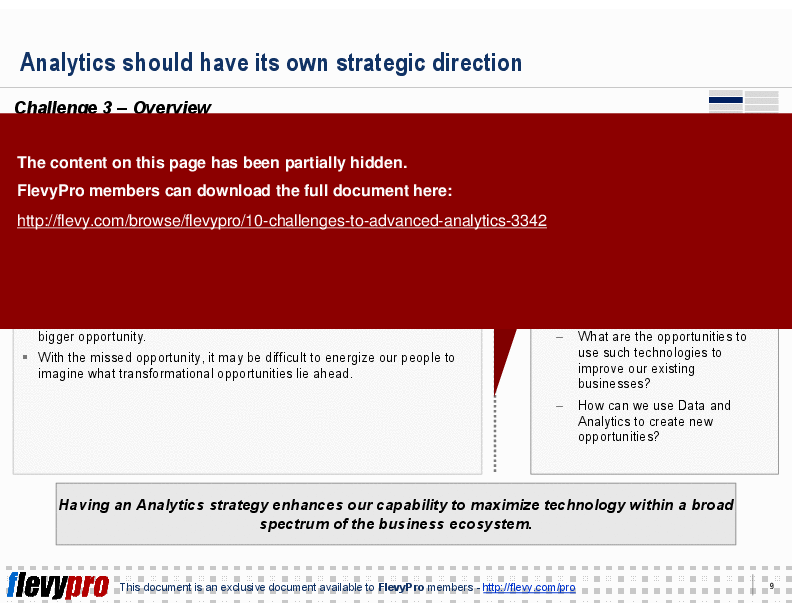
• No Analytics Strategy - Without a defined strategy, organizations struggle to capitalize on analytics opportunities.
• Poorly Defined Analytics Roles - Lack of clarity in roles can hinder the effectiveness of analytics teams.
• No Analytics Translators - The absence of individuals who bridge the gap between technical and business teams limits the value derived from analytics.
• Isolated Analytics Capabilities - Successful analytics initiatives require integration with core business functions.
• Expensive Data Cleansing Projects - Overemphasis on data cleansing can lead to wasted resources if not aligned with valuable use cases.
• Inappropriate Data Analytics Platform - Legacy systems may not adequately support modern analytics needs.
• No Business Case - Failure to define the quantitative impact of analytics investments can lead to resource misallocation.
• Lack of Focus on Ethical and Regulatory Implications - Organizations must consider ethical risks and regulatory compliance in their analytics initiatives.
Deliverables, Templates, and Tools
• Framework for developing a coherent analytics vision
• Use case prioritization matrix template
• Role definition guide for analytics teams
• Workshop agenda for educating executives on analytics
• Checklist for assessing ethical and regulatory implications in analytics
• Data cleansing strategy template
Slide Highlights
• Overview of the ten challenges to advanced analytics
• Action plans for addressing each challenge
• Visual representation of analytics roles and responsibilities
• Case studies illustrating successful analytics transformations
Potential Workshop Agenda
Introduction to Advanced Analytics (30 minutes)
• Overview of the importance of analytics in modern business
• Discussion of the ten challenges
Challenge Identification and Action Planning (60 minutes)
• Breakout sessions to identify specific challenges faced by participants
• Development of action plans to address identified challenges
Wrap-Up and Next Steps (30 minutes)
• Summary of key takeaways
• Discussion of resources and support available for implementation
Customization Guidance
• Tailor the action plans based on specific organizational challenges and industry context
• Adjust the workshop agenda to fit the time constraints and needs of participants
• Incorporate case studies relevant to the organization’s sector for enhanced engagement
Secondary Topics Covered
• The role of leadership in driving analytics initiatives
• Strategies for fostering a data-driven culture within organizations
• Best practices for integrating analytics into business processes
Topic FAQ
Document FAQ
These are questions addressed within this presentation.
What are the main challenges organizations face in adopting advanced analytics?
Organizations often struggle with a lack of coherent vision, poorly defined roles, and insufficient focus on ethical implications, among other challenges.
How can we prioritize analytics use cases effectively?
By evaluating use cases based on their feasibility and potential impact, organizations can focus on initiatives that deliver the greatest value quickly.
What role do analytics translators play in an organization?
Analytics translators bridge the gap between technical teams and business leaders, ensuring that analytics initiatives align with business objectives.
How can we ensure our analytics strategy is effective?
Establishing a clear strategy that aligns with business goals and includes defined roles and responsibilities is crucial for success.
What steps can we take to address ethical implications in our analytics initiatives?
Creating a dedicated team to evaluate ethical and regulatory considerations and implementing risk management protocols are essential steps.
How can we measure the impact of our analytics investments?
Developing a performance management framework with clear metrics allows organizations to track the financial impact of analytics initiatives.
What are the benefits of integrating analytics capabilities with business functions?
Integration leads to more impactful analytics initiatives, as insights can be directly applied to business operations, enhancing decision-making.
How can we avoid costly data cleansing projects?
Focusing data cleansing efforts on the data that supports the most valuable use cases can prevent wasted resources and improve efficiency.
Glossary
• Advanced Analytics - Techniques that analyze data to provide predictive and prescriptive insights.
• Analytics Translator - A professional who bridges the gap between technical analytics teams and business stakeholders.
• Data Cleansing - The process of correcting or removing inaccurate records from a dataset.
• Use Case - A specific scenario in which analytics can be applied to solve a business problem.
• Performance Management Framework - A structured approach to measuring and managing the performance of analytics initiatives.
• Ethical Implications - Considerations regarding the moral aspects of data usage and analytics practices.
• Regulatory Compliance - Adherence to laws and regulations governing data usage and analytics.
• Data Governance - The management of data availability, usability, integrity, and security.
• Business Intelligence - The use of data analysis tools to support business decision-making.
• Predictive Analytics - Techniques that use statistical algorithms and machine learning to identify the likelihood of future outcomes.
• Prescriptive Analytics - Techniques that recommend actions based on data analysis.
• Analytics Center of Excellence (CoE) - A team or entity within an organization that provides leadership, best practices, and support for analytics initiatives.
Source: Best Practices in Digital Transformation, Analytics PowerPoint Slides: 10 Challenges to Advanced Analytics PowerPoint (PPTX) Presentation Slide Deck, LearnPPT Consulting
Did you need more documents?
Consider a FlevyPro subscription from $39/month. View plans here.
For $10.00 more, you can download this document plus 2 more FlevyPro documents. That's just $13 each.
|
Download our FREE Digital Transformation Templates
Download our free compilation of 50+ Digital Transformation slides and templates. DX concepts covered include Digital Leadership, Digital Maturity, Digital Value Chain, Customer Experience, Customer Journey, RPA, etc. |