
Analytics-driven Organization   24-slide PPT PowerPoint presentation slide deck (PPTX)
$29.00

Analytics-driven Organization (24-slide PPT PowerPoint presentation slide deck (PPTX)) Preview Image
Log in to unlock full preview.
Analytics-driven Organization (24-slide PPT PowerPoint presentation slide deck (PPTX)) Preview Image
Arrow   Click main image to view in full screen.

Analytics-driven Organization (PowerPoint PPTX Slide Deck)

PowerPoint (PPTX) 24 Slides FlevyPro Document

Top 1,000 Best Practice $29.00
FlevyPro price: FREE (included in subscription)
This framework is developed by a team of former McKinsey and Big 4 consultants. The presentation follows the headline-body-bumper slide format used by global consulting firms.
Add to Cart


Immediate download
Free lifetime updates

ANALYTICS PPT DESCRIPTION

Editor Summary Analytics-Driven Organization is a 24-slide PowerPoint (PPTX) presenting a framework and implementation templates for embedding analytics into business decision-making. Read more

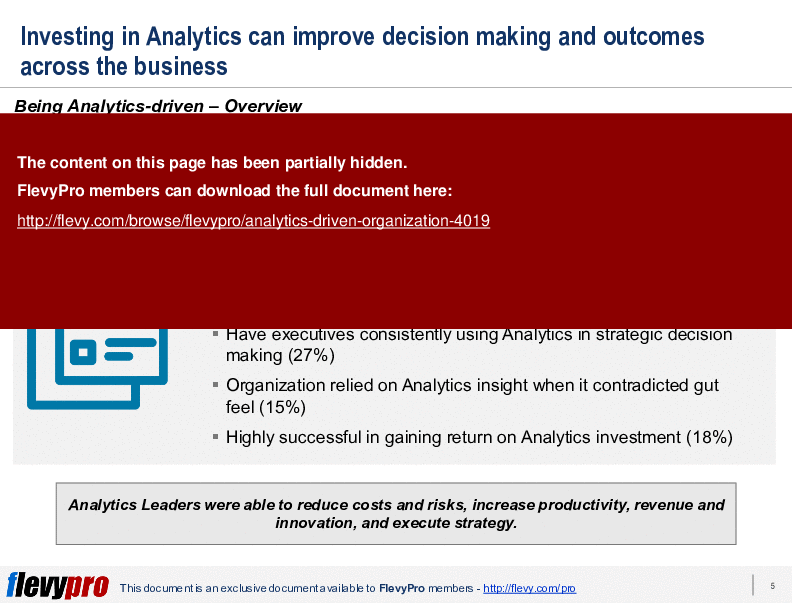
Enterprise organizations invest in Analytics to improve Decision Making and outcomes across the business. This is from Research & Development to Supply Chain to Risk Management. Yet, many executives are not yet seeing the results of their Analytics initiatives and investments.

Every organization putting on investment on Analytics have experienced several stumbling blocks. This differentiates the leaders from the laggards. Analytics-driven organizations have clearly established processes, practices, and organizational conditions for success. Their commitment to Analytics is creating a major payoff from their investments and a Competitive Advantage.

This presentation provides organizations a good insight on being Analytics-driven and the 4 core obstacles to generating actionable insights with Analytics.

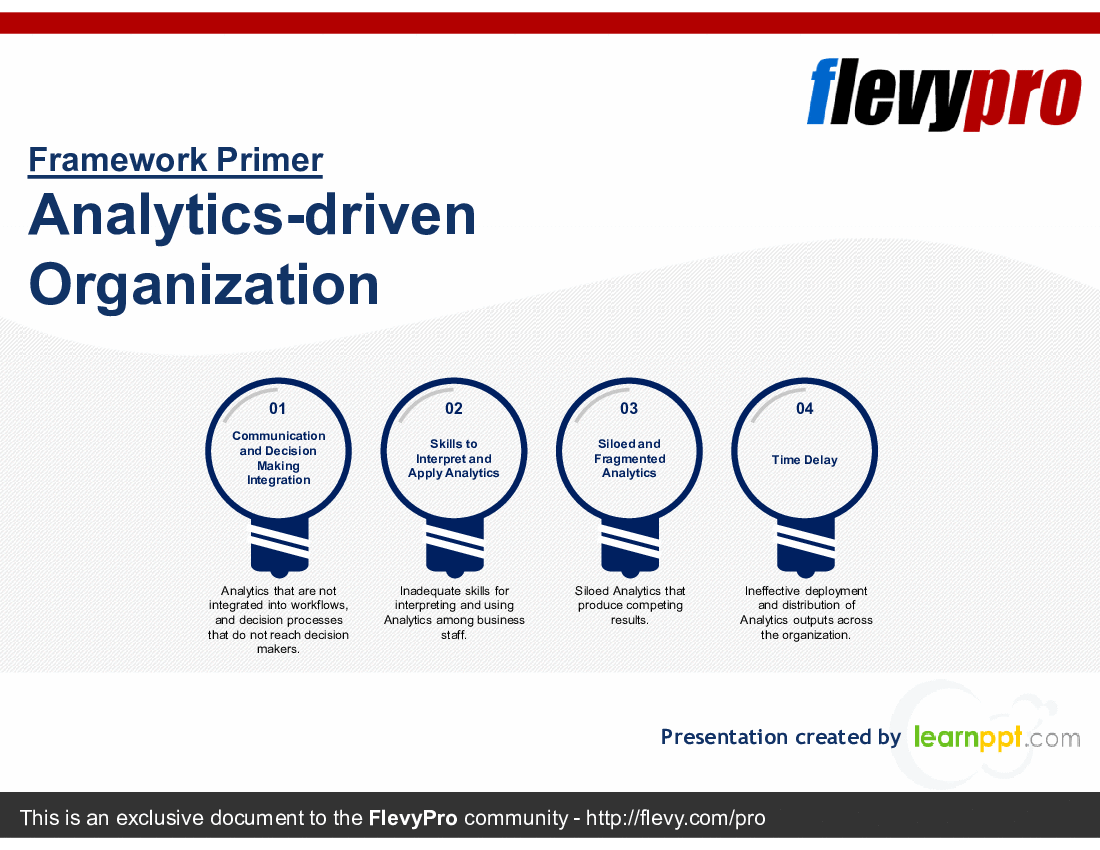
1. Communication and Decision Making Integration
2. Skills to Interpret and Apply Analytics
3. Siloed and Fragmented Analytics
4. Time Delay

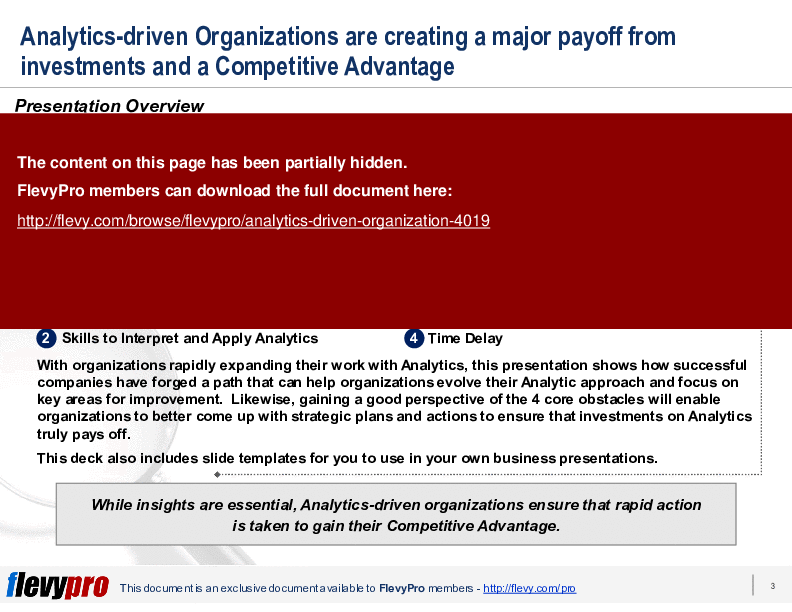
With organizations rapidly expanding their work with Analytics, this presentation shows how successful companies have forged a path that can help organizations evolve their Analytic approach and focus on key areas for improvement. Likewise, gaining a good perspective of the 4 core obstacles will enable organizations to better come up with strategic plans and actions to ensure that investments on Analytics truly pays off.

This deck also includes slide templates for you to use in your own business presentations.

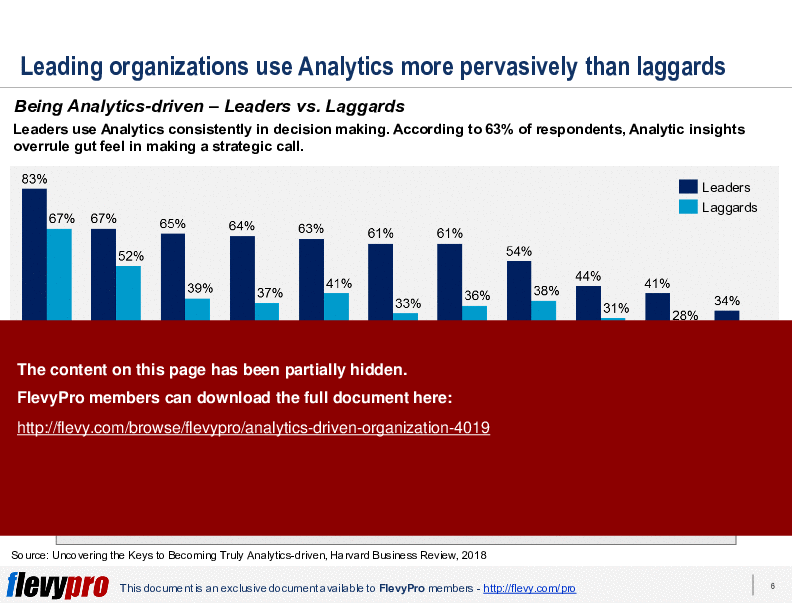
This presentation delves into the critical stages of Analytics—Descriptive, Predictive, and Prescriptive—each offering unique insights to drive business value. It highlights how leading organizations leverage Analytics more effectively than laggards, with 83% of leaders using Analytics consistently in decision-making. The PPT also addresses core challenges such as fragmented Analytics and time delays, providing actionable strategies for overcoming these obstacles. By focusing on cross-functional deployment and developing strong Analytical talent, organizations can significantly enhance their return on Analytics investments.

Got a question about this document? Email us at flevypro@flevy.com.

MARCUS OVERVIEW

This synopsis was written by Marcus [?] based on the analysis of the full 24-slide presentation.


Executive Summary
The "Analytics-Driven Organization" presentation equips businesses with essential insights into leveraging analytics for improved decision-making and operational efficiency. It outlines the critical obstacles organizations face in fully realizing their analytics investments and offers actionable strategies to overcome these challenges. By adopting an analytics-driven culture and integrating analytics into workflows, organizations can enhance their competitive advantage and achieve significant returns on investment. This presentation serves as a comprehensive guide for executives and teams aiming to foster a data-centric environment.

Who This Is For and When to Use
•  Corporate executives seeking to enhance decision-making processes through analytics
•  Analytics leaders responsible for implementing data-driven strategies
•  Business unit managers aiming to integrate analytics into daily operations
•  Change management teams focused on fostering an analytics-driven culture

Best-fit moments to use this deck:
•  During strategic planning sessions to align analytics initiatives with business objectives
•  In workshops aimed at overcoming barriers to effective analytics use
•  When developing training programs to enhance analytics skills across the organization

Learning Objectives
•  Define the characteristics of an analytics-driven organization
•  Identify and address core obstacles to effective analytics implementation
•  Develop strategies for integrating analytics into decision-making processes
•  Enhance skills for interpreting and applying analytics among staff
•  Foster collaboration between analytics teams and business units
•  Establish metrics for measuring the success of analytics initiatives

Table of Contents
•  Overview (page 3)
•  Being Analytics-Driven (page 5)
•  Core Obstacles (page 10)
•  Analytics Leadership (page 15)
•  Templates (page 18)

Primary Topics Covered
•  Overview of Analytics-Driven Organizations - This section discusses the importance of analytics in enhancing decision-making and operational outcomes, highlighting the competitive advantage gained by organizations that effectively leverage analytics.
•  Core Obstacles - Identifies the 4 main barriers to successful analytics implementation: communication and decision-making integration, skills to interpret and apply analytics, siloed and fragmented analytics, and time delays.
•  Stages of Analytics - Outlines the 3 stages of analytics: descriptive, predictive, and prescriptive, providing insights into how organizations can progress through these stages to maximize their analytics capabilities.
•  Analytics Leadership Focus Areas - Discusses the essential focus areas for leadership to foster an analytics-driven culture, including cross-functional deployment and the development of analytical talent.
•  Templates for Implementation - Provides practical templates that organizations can utilize to structure their analytics initiatives effectively.

Deliverables, Templates, and Tools
•  Framework for integrating analytics into decision-making processes
•  Template for assessing current analytics capabilities and identifying gaps
•  Guide for developing an analytics-driven culture within the organization
•  Checklist for overcoming common obstacles to analytics implementation
•  Sample metrics for evaluating the success of analytics initiatives
•  Roadmap for progressing through the stages of analytics

Slide Highlights
•  Overview slide detailing the competitive advantages of analytics-driven organizations
•  Visual representation of the core obstacles to effective analytics use
•  Stages of analytics slide illustrating the progression from descriptive to prescriptive analytics
•  Leadership focus areas slide emphasizing the importance of culture and collaboration
•  Template slides providing structured approaches for implementation

Potential Workshop Agenda
Analytics Integration Workshop (90 minutes)
•  Discuss the importance of analytics in decision-making
•  Identify current barriers to analytics use within the organization
•  Develop action plans for integrating analytics into workflows

Skills Development Session (60 minutes)
•  Assess current analytics capabilities among staff
•  Identify training needs and resources for skill enhancement
•  Create a roadmap for building analytical competencies

Customization Guidance
•  Tailor the analytics integration framework to align with specific organizational goals
•  Modify the skills assessment template to reflect the unique context of your business
•  Adjust the roadmap for analytics progression based on current capabilities and desired outcomes

Secondary Topics Covered
•  The role of data quality in successful analytics initiatives
•  Strategies for fostering collaboration between analytics and business teams
•  Techniques for presenting analytical outputs effectively
•  The impact of organizational culture on analytics adoption
•  Case studies of successful analytics-driven organizations

Topic FAQ

What are the most common barriers organizations face when trying to become analytics-driven?

Organizations commonly encounter 4 barriers: poor integration of analytics into communication and decision processes, insufficient skills to interpret and apply analytics, siloed and fragmented analytics across teams, and time delays between data collection and actionable insights, collectively described as the 4 core obstacles.

How can I make sure analytic outputs actually reach and influence decision-makers?

Ensure analytics outputs are routed through defined decision workflows, align analytics deliverables to business questions, and set leadership expectations for data use. The presentation provides a framework for integrating analytics into decision-making processes to operationalize this alignment and workflow integration.

What are the stages of analytics maturity and how do they differ?

Analytics maturity is described in 3 stages: descriptive analytics (what happened), predictive analytics (what will happen), and prescriptive analytics (what action to take). Progressing across these stages increases the sophistication and actionability of insights, moving from reporting to recommendation-driven outputs.

When evaluating an analytics adoption toolkit, what practical elements should I prioritize?

Prioritize items that enable operational use: a framework to embed analytics into decisions, tools to assess current capabilities, templates for culture and skills development, measurable success metrics, and a roadmap for progression. Flevy's Analytics-Driven Organization includes a capability assessment template, roadmap, and sample metrics.

How should organizations measure the success or ROI of analytics initiatives?

Measure success by defining metrics tied to decision-making impact and operational outcomes, such as reduced decision latency or efficiency gains, and track these against baseline performance. The deck includes sample metrics and guidance for establishing measurable indicators to evaluate analytics initiatives.

What practical steps break down siloed analytics between departments?

Promote cross-functional deployment, create shared objectives and joint projects, establish regular communication channels, and have leadership mandate collaboration. The presentation highlights leadership focus areas and cross-functional deployment as levers to reduce fragmentation and improve integrated analytics delivery.

I need a short internal workshop to improve analytics use — what format and duration work?

The product suggests a 90-minute Analytics Integration Workshop to discuss analytics importance, identify barriers, and develop action plans, plus a separate 60-minute Skills Development Session for assessing staff capabilities and creating training roadmaps, providing concrete workshop formats and durations.

What templates help me assess current analytics capabilities and plan improvements?

Use a capability assessment template to identify gaps, a checklist to address common implementation obstacles, and a roadmap to sequence capability-building efforts. Flevy's Analytics-Driven Organization supplies a capability assessment template and checklist to structure these activities.

Document FAQ
These are questions addressed within this presentation.

What are the core obstacles to becoming an analytics-driven organization?
The core obstacles include communication and decision-making integration, inadequate skills for interpreting analytics, siloed analytics practices, and time delays in analytics outputs.

How can organizations effectively integrate analytics into decision-making?
Organizations can integrate analytics by establishing clear processes that ensure analytics outputs reach decision-makers and by fostering a culture that values data-driven insights.

What skills are necessary for staff to effectively use analytics?
Staff should develop skills in data interpretation, analytical thinking, and the ability to apply insights to real-world business scenarios.

How can leadership foster an analytics-driven culture?
Leadership can foster an analytics-driven culture by demonstrating commitment to data-driven decision-making, setting clear objectives for analytics, and encouraging collaboration between analytics and business teams.

What are the stages of analytics?
The stages of analytics include descriptive (what happened), predictive (what will happen), and prescriptive (what action should be taken).

How can organizations measure the success of their analytics initiatives?
Success can be measured through established metrics that evaluate the impact of analytics on decision-making, operational efficiency, and overall business outcomes.

What templates are included in the presentation?
The presentation includes templates for integrating analytics into workflows, assessing analytics capabilities, and developing an analytics-driven culture.

How can organizations overcome the time delays associated with analytics?
Organizations can streamline analytics processes by improving data access, enhancing analytical tools, and ensuring timely communication of insights to decision-makers.

What role does data quality play in analytics success?
High data quality is essential for generating accurate insights; poor data quality can lead to incorrect conclusions and undermine the value of analytics initiatives.

How can organizations ensure collaboration between analytics and business teams?
Establishing regular communication channels, joint projects, and shared objectives can enhance collaboration between analytics and business teams.

Glossary
•  Analytics-Driven Organization - An organization that integrates analytics into its decision-making processes to enhance performance.
•  Descriptive Analytics - Analytics that identify and describe what is currently happening.
•  Predictive Analytics - Analytics that predict what is likely to happen in the future.
•  Prescriptive Analytics - Analytics that recommend what actions to take next.
•  Core Obstacles - The main barriers preventing effective use of analytics within organizations.
•  Data Quality - The accuracy and reliability of data used in analytics.
•  Analytics Culture - An organizational culture that prioritizes data-driven decision-making.
•  Siloed Analytics - Analytics practices that are isolated within departments, leading to inconsistent insights.
•  Time Delay - The lag between data collection and the availability of insights for decision-making.
•  Analytics Leadership - The leadership focus on fostering an analytics-driven environment.
•  Collaboration - The act of working together across departments to leverage analytics effectively.
•  Metrics for Success - Quantifiable measures used to evaluate the effectiveness of analytics initiatives.

ANALYTICS PPT SLIDES

Understanding the Three Stages of Analytics

Analytics Utilization: Leaders vs. Laggards Overview

Overcoming Obstacles in Analytics Implementation

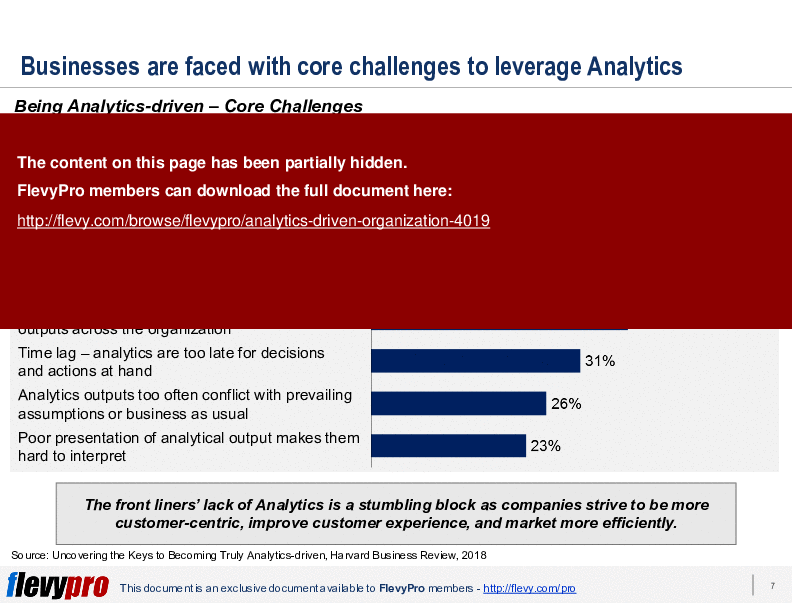
Core Challenges in Leveraging Analytics Effectively

Source: Best Practices in Analytics PowerPoint Slides: Analytics-driven Organization PowerPoint (PPTX) Presentation Slide Deck, LearnPPT Consulting


$29.00
FlevyPro price: FREE (included in subscription)
This framework is developed by a team of former McKinsey and Big 4 consultants. The presentation follows the headline-body-bumper slide format used by global consulting firms.
Add to Cart
  

Did you need more documents?

Consider a FlevyPro subscription from $39/month. View plans here.

For $10.00 more, you can download this document plus 2 more FlevyPro documents. That's just $13 each.

ABOUT FLEVYPRO

This document is part of the FlevyPro Library, a curated knowledge base of documents for our FlevyPro subscribers.

FlevyPro is a subscription service for on-demand business frameworks and analysis tools. FlevyPro subscribers receive access to an exclusive library of curated business documents—business framework primers, presentation templates, Lean Six Sigma tools, and more—among other exclusive benefits.

Click here to learn more about FlevyPro and its benefits.

Did you know?
The average daily rate of a McKinsey consultant is $6,625 (not including expenses). The average price of a Flevy document is $65.


Trusted by over 10,000+ Client Organizations
Since 2012, we have provided business templates to over 10,000 businesses and organizations of all sizes, from startups and small businesses to the Fortune 100, in over 130 countries.
AT&T GE Cisco Intel IBM Coke Dell Toyota HP Nike Samsung Microsoft Astrazeneca JP Morgan KPMG Walgreens Walmart 3M Kaiser Oracle SAP Google E&Y Volvo Bosch Merck Fedex Shell Amgen Eli Lilly Roche AIG Abbott Amazon PwC T-Mobile Broadcom Bayer Pearson Titleist ConEd Pfizer NTT Data Schwab


Read Customer Testimonials

 
"Flevy is now a part of my business routine. I visit Flevy at least 3 times each month.

Flevy has become my preferred learning source, because what it provides is practical, current, and useful in this era where the business world is being rewritten.

In today's environment where there are so "

– Omar Hernán Montes Parra, CEO at Quantum SFE
 
"I am extremely grateful for the proactiveness and eagerness to help and I would gladly recommend the Flevy team if you are looking for data and toolkits to help you work through business solutions."

– Trevor Booth, Partner, Fast Forward Consulting
 
"As a niche strategic consulting firm, Flevy and FlevyPro frameworks and documents are an on-going reference to help us structure our findings and recommendations to our clients as well as improve their clarity, strength, and visual power. For us, it is an invaluable resource to increase our impact and value."

– David Coloma, Consulting Area Manager at Cynertia Consulting
 
"I have used FlevyPro for several business applications. It is a great complement to working with expensive consultants. The quality and effectiveness of the tools are of the highest standards."

– Moritz Bernhoerster, Global Sourcing Director at Fortune 500
 
"FlevyPro provides business frameworks from many of the global giants in management consulting that allow you to provide best in class solutions for your clients."

– David Harris, Managing Director at Futures Strategy
 
"[Flevy] produces some great work that has been/continues to be of immense help not only to myself, but as I seek to provide professional services to my clients, it gives me a large "tool box" of resources that are critical to provide them with the quality of service and outcomes they are expecting."

– Royston Knowles, Executive with 50+ Years of Board Level Experience
 
"As a small business owner, the resource material available from FlevyPro has proven to be invaluable. The ability to search for material on demand based our project events and client requirements was great for me and proved very beneficial to my clients. Importantly, being able to easily edit and tailor "

– Michael Duff, Managing Director at Change Strategy (UK)
 
"I have found Flevy to be an amazing resource and library of useful presentations for lean sigma, change management and so many other topics. This has reduced the time I need to spend on preparing for my performance consultation. The library is easily accessible and updates are regularly provided. A wealth of great information."

– Cynthia Howard RN, PhD, Executive Coach at Ei Leadership


Customers Also Bought These Documents


Customers Also Like These Documents

Explore Templates on Related Management Topics


Your Recently Viewed Documents
Download our FREE Digital Transformation Templates

Download our free compilation of 50+ Digital Transformation slides and templates. DX concepts covered include Digital Leadership, Digital Maturity, Digital Value Chain, Customer Experience, Customer Journey, RPA, etc.