
This framework is developed by a team of former McKinsey and Big 4 consultants. The presentation follows the headline-body-bumper slide format used by global consulting firms.
Editor Summary
A 21-slide PowerPoint presentation titled "5 As of Analytics Transformation" by LearnPPT Consulting that presents a five-step framework—Align, Act, Adjust, Adopt, Adapt—for embedding analytics into organizational decision-making.
Read moreIncludes 6 implementation templates (framework overview, roadmap, leadership checklist, action plan, implementation guide, evaluation framework), case studies, and a workshop agenda. Target users include corporate executives, analytics leaders, change management professionals, and consultants. Available on Flevy with immediate digital download.
Use this deck when an organization needs to embed analytics into decision-making—during digital transformation planning, capability assessments, or workshops to build a data-driven culture.
Corporate executives aligning sponsors and securing executive buy‑in through a leadership alignment checklist and stakeholder mapping.
Analytics leaders building a phased roadmap and defining immediate goals and quick wins using the roadmap template.
Change management professionals designing stakeholder engagement and behavior-change activities during adoption.
Consultants running workshops and applying case studies to identify capability gaps.
The 5-phase, repeatable roadmap and templates follow common consulting practice of phased implementation, stakeholder alignment, and capability building.
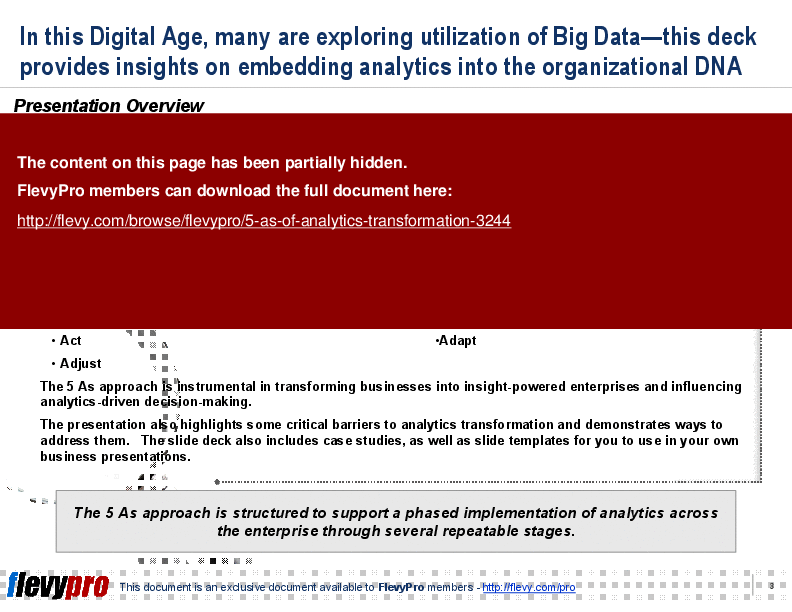
The pursuit to tap the benefits derived from analytics-driven insights is gaining momentum everywhere. Companies are striving to become insight-powered enterprises—where there is a culture of utilizing data-driven insights to make decisions at all levels within the enterprise.
Most firms that had invested profoundly in analytics, experience substandard outcomes and below-par returns on their investment. Often, they procure latest technologies without working on enhancing their organizational capacity, which is a limiting factor to their success with analytics. It warrants new ways of working based on critical insights and agile decision-making to become an insight-powered enterprise. An enterprise needs to address its core. This could entail transitioning from a traditional approach to fact-based decision-making.
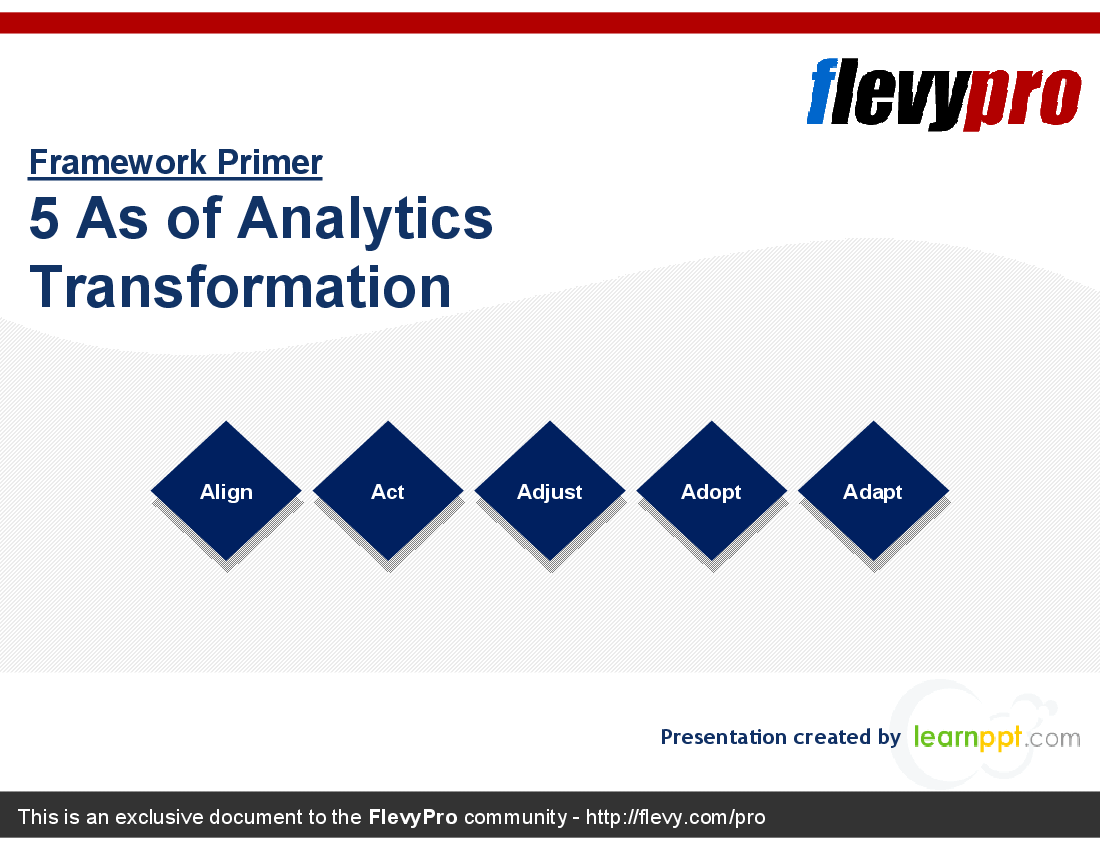
This deck renders a detailed overview of the "5 As" (5-step) approach to manage Analytics Transformation:
1. Align
2. Act
3. Adjust
4. Adopt
5. Adapt
The 5 As approach is instrumental in transforming businesses into insight-powered enterprises and influencing analytics-driven decision-making. This approach is structured to support a phased implementation of analytics across the enterprise through several repeatable stages.
The presentation also highlights some critical barriers to analytics transformation and demonstrates ways to address them. The slide deck also includes case studies, as well as slide templates for you to use in your own business presentations.
This comprehensive presentation also delves into the practical aspects of implementing analytics transformation, offering a granular look at each step of the 5 As framework. It includes detailed case studies from leading organizations, showcasing real-world applications and the tangible benefits achieved. The deck provides actionable insights and templates, enabling you to seamlessly integrate these strategies into your own business processes. This resource is designed to equip your leadership team with the tools needed to drive a successful analytics transformation, ensuring long-term value creation and competitive advantage.
This synopsis was written by Marcus [?] based on the analysis of the full 21-slide presentation.
Executive Summary
The "5 As of Analytics Transformation" presentation provides a structured framework for organizations aiming to embed analytics into their decision-making processes. Developed by seasoned consultants, this presentation outlines a phased approach to analytics transformation, emphasizing the importance of aligning leadership, initiating the analytics journey, adjusting strategies based on insights, adopting new technologies, and adapting organizational processes. By following this framework, businesses can enhance their data-driven decision-making capabilities, ultimately leading to improved ROI and a culture of insight-driven operations.
Who This Is For and When to Use
• Corporate executives overseeing digital transformation initiatives
• Analytics leaders responsible for implementing data-driven strategies
• Change management professionals facilitating organizational shifts
• Consultants advising clients on analytics integration
Best-fit moments to use this deck:
• During strategic planning sessions focused on analytics integration
• In workshops aimed at fostering a culture of data-driven decision-making
• When assessing current analytics capabilities and identifying gaps
Learning Objectives
• Define the "5 As" framework and its role in analytics transformation
• Build a roadmap for initiating the analytics journey within an organization
• Establish mechanisms for adjusting strategies based on analytics insights
• Implement new technologies and expertise to support analytics initiatives
• Adapt organizational processes to maximize the value of analytics
• Foster a culture of experimentation and data-driven decision-making
Table of Contents
• Overview (page 3)
• 5 As of Analytics Transformation (page 5)
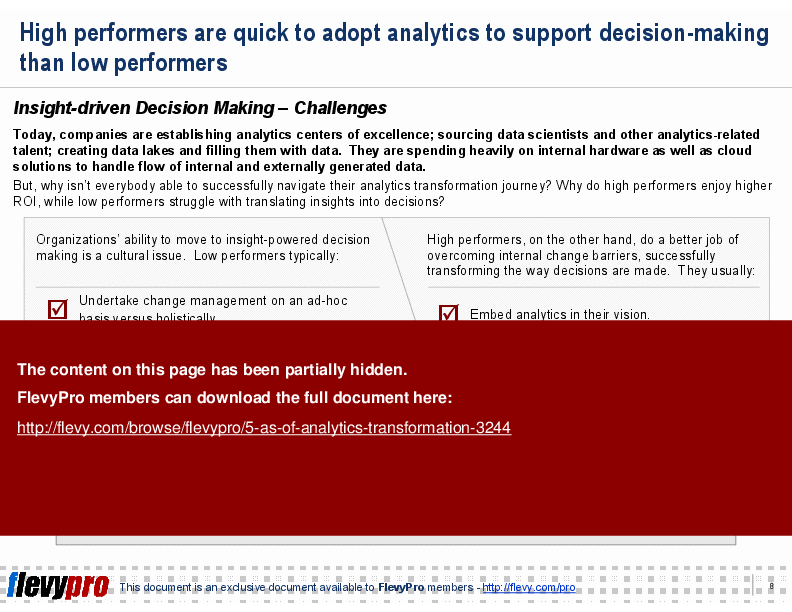
• Insight-driven Decision Making (page 8)
• Case Studies (page 11)
• Templates (page 17)
Primary Topics Covered
• Overview of Analytics Transformation - This section introduces the need for analytics in modern organizations and outlines the framework for embedding analytics into decision-making processes.
• The 5 As Framework - A detailed explanation of the 5 steps: Align, Act, Adjust, Adopt, and Adapt, which guide organizations through their analytics transformation journey.
• Insight-driven Decision Making - Discusses the importance of leveraging analytics for informed decision-making and the cultural shifts required for successful implementation.
• Case Studies - Real-world examples demonstrating the application of the 5 As framework in various organizations, highlighting successes and lessons learned.
• Templates - Practical templates to assist organizations in implementing the 5 As framework effectively.
Deliverables, Templates, and Tools
• Framework overview template for the 5 As of Analytics Transformation
• Roadmap template for initiating the analytics journey
• Checklist for aligning leadership and building organizational capacity
• Action plan template for adjusting strategies based on analytics insights
• Implementation guide for adopting new technologies and expertise
• Evaluation framework for adapting decision-making processes
Slide Highlights
• Visual representation of the 5 As framework, illustrating the transformation journey
• Case study slides showcasing successful analytics implementations in various industries
• Insights on common challenges faced during analytics transformation and strategies to overcome them
• Templates for practical application of the 5 As in organizational settings
Potential Workshop Agenda
Introduction to Analytics Transformation (30 minutes)
• Overview of the 5 As framework
• Discussion on the importance of analytics in decision-making
Aligning Leadership (60 minutes)
• Identifying key stakeholders and sponsors
• Building a shared vision for analytics integration
Initiating the Analytics Journey (90 minutes)
• Developing a roadmap for implementation
• Setting immediate goals and quick wins
Adjusting Strategies (60 minutes)
• Analyzing insights and course-correcting as needed
• Engaging stakeholders in the adjustment process
Customization Guidance
• Tailor the framework to fit specific organizational contexts and cultures
• Adjust templates to reflect unique business goals and metrics
• Incorporate industry-specific examples into case studies for relevance
Secondary Topics Covered
• Barriers to successful analytics transformation
• The role of leadership in fostering a data-driven culture
• Best practices for engaging employees in analytics initiatives
• Techniques for measuring the impact of analytics on business outcomes
Topic FAQ
What are the 5 As of analytics transformation and how do they sequence?
The 5 As are Align, Act, Adjust, Adopt, and Adapt, presented as a five-step, repeatable approach guiding organizations from securing leadership alignment through initiating activity, course-correcting with insights, implementing technology and skills, and changing processes, structured across 5 sequential steps.
What common barriers block analytics transformation and how can organizations address them?
Common barriers include weak leadership alignment, insufficient organizational capacity, and low employee engagement; the framework recommends aligning leadership, building capacity, and engaging staff through change management and templates such as a leadership checklist and roadmap to address these barriers.
How should an organization begin a phased analytics transformation program?
Begin by securing executive sponsors and aligning vision, then develop a roadmap with immediate goals and quick wins, run planning workshops to establish roles and measures, and use a roadmap template and implementation guide to sequence activities and metrics for initial rollout.
What should buyers look for when selecting an analytics transformation toolkit?
Choose materials that provide a phased framework, practical templates for roadmap and action planning, case studies showing applied examples, and guidance on leadership alignment and adoption; look specifically for roadmap, checklist, action plan, and implementation guidance.
How much time and workshop capacity is typically required to start an analytics transformation?
Timelines vary by organization,, but an initial planning sequence can use short workshops and sessions such as a 30-minute introduction, a 60-minute leadership alignment session, a 90-minute roadmap planning session, and a 60-minute adjustment session as outlined in a sample agenda.
We purchased analytics tools, but see little ROI—what framework helps diagnose the problem?
A common issue is investing in technology without building organizational capacity; apply a phased approach that begins with Align (leadership and vision), then Act and Adjust to realize quick wins, and finally Adopt and Adapt to embed technologies and processes using the five-step framework.
How do templates accelerate an analytics transformation program?
Templates create repeatable artifacts for planning and governance—framework overview, roadmap, leadership checklist, action plan, implementation guide, and evaluation framework—that standardize activities, speed stakeholder alignment, and support measurement during each phase.
Are purchased templates worth using instead of building in-house for analytics programs?
Pre-built templates can reduce planning time and provide structured, repeatable artifacts; for example, Flevy's 5 As of Analytics Transformation includes 6 ready templates—framework overview, roadmap, checklist, action plan, implementation guide, and evaluation framework—that organizations can adapt.
Document FAQ
These are questions addressed within this presentation.
What are the 5 As of Analytics Transformation?
The 5 As are Align, Act, Adjust, Adopt, and Adapt, which guide organizations in embedding analytics into their decision-making processes.
How can this framework improve decision-making?
By following the 5 As, organizations can create a culture of data-driven decision-making, leading to more informed and effective business strategies.
What types of organizations can benefit from this presentation?
Any organization looking to enhance its analytics capabilities and foster a culture of insight-driven decision-making can benefit from this framework.
How does the framework address common barriers to analytics transformation?
The framework emphasizes leadership alignment and employee engagement, which are critical for overcoming cultural and operational barriers to successful analytics implementation.
What practical tools are included in the presentation?
The presentation includes templates and action plans to assist organizations in applying the 5 As framework effectively.
Can this framework be tailored to specific industries?
Yes, the framework is adaptable and can be customized to fit the unique needs and challenges of different industries.
How long does the transformation process typically take?
The duration of the transformation process varies by organization, but is structured to allow for phased implementation and continuous improvement.
What role does leadership play in this transformation?
Leadership is crucial for aligning vision, securing buy-in, and fostering a culture that embraces data-driven decision-making.
Glossary
• Analytics Transformation - The process of integrating analytics into organizational decision-making.
• 5 As Framework - A structured approach consisting of Align, Act, Adjust, Adopt, and Adapt to guide analytics transformation.
• Insight-driven Decision Making - Making business decisions based on data-driven insights derived from analytics.
• Change Management - The discipline of managing the transition of individuals, teams, and organizations to a desired future state.
• Cultural DNA - The underlying values, beliefs, and behaviors that shape an organization's culture.
• Analytics Center of Excellence (CoE) - A dedicated team or unit within an organization that focuses on developing and promoting analytics capabilities.
• Data-driven Culture - An organizational culture that prioritizes the use of data and analytics in decision-making processes.
• Stakeholder Engagement - The process of involving individuals or groups who have an interest in the outcomes of a project or initiative.
• Quick Wins - Immediate, easily achievable goals that can demonstrate progress and build momentum for larger initiatives.
• Agile Decision Making - A flexible approach to decision-making that allows organizations to respond quickly to changing circumstances.
• ROI (Return on Investment) - A measure used to evaluate the efficiency or profitability of an investment.
• Case Studies - Real-world examples used to illustrate the application and impact of a particular framework or strategy.
• Templates - Pre-designed documents or tools that facilitate the implementation of strategies and processes.
• Performance Management - The process of ensuring that organizational goals are consistently being met in an effective and efficient manner.
• Behavioral Change - The process of changing habits or actions within an organization to achieve desired outcomes.
• Data Lakes - Centralized repositories that allow organizations to store and analyze large volumes of structured and unstructured data.
• Experimentation Culture - An organizational environment that encourages testing new ideas and approaches to foster innovation.
• Leadership Alignment - The process of ensuring that leaders within an organization share a common vision and goals.
• Organizational Capacity - The ability of an organization to effectively implement strategies and achieve its objectives.
• Metrics - Standards of measurement used to assess performance or progress toward goals.
This PPT slide presents a case study of a North American big box retailer's strategic transformation from store expansion to customer-centric practices due to market saturation. The process is structured into 4 phases: Align, Act, Adjust, and Adopt, over 4 years. In Year 1, the retailer aligned its executive team around a new analytics vision, conducting workshops to foster a customer-centric mindset and initiate small-scale test pilots. Year 2 focused on embedding customer-centric processes, with engagement increasing from 500 to 5,000 communications and training initiatives for managers. By Year 3, the goal was to implement insight-powered stores, generating 50,000 insights through data-driven decision-making. In Year 4, the focus expanded to creating an insight-powered organization, targeting 100,000 insights to benefit the entire company. This journey underscores the critical role of analytics in driving customer-centricity and organizational change.
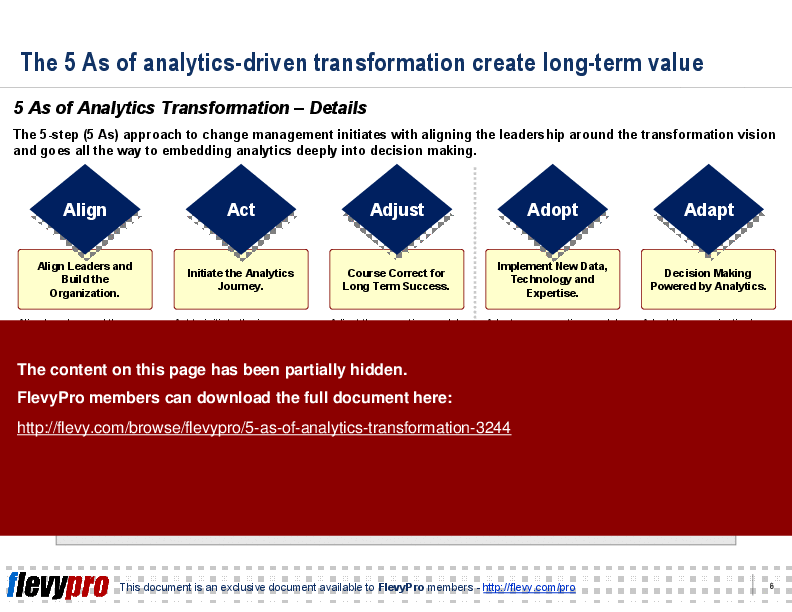
The "5 As" framework outlines a structured approach to analytics-driven transformation. The first step, "Align," focuses on unifying leadership around a common vision for transformation, ensuring stakeholder commitment. "Act" initiates the analytics journey at a manageable scale, demonstrating value through quick wins. The third step, "Adjust," emphasizes refining operating models and processes based on insights gained during initial phases. "Adopt" involves implementing new data, technology, and expertise on a larger scale, fostering a culture of data-driven thinking. Finally, "Adapt" embeds analytics into decision-making processes, ensuring sustained integration into organizational culture. Visible signs of success include top-down sponsorship, momentum, and stakeholder engagement, leading to a more agile organization capable of leveraging analytics for long-term success.
This PPT slide presents a case study of a European bank's transformation from a relationship-based model to a digital banking approach, guided by the "5 As" framework over 5 years. In Year 1, the focus is on establishing an analytics vision, with only 4% of sales driven by insights and the launch of an Analytics Center of Excellence (CoE). Year 2 sees foundational insights prioritized, increasing insight-driven sales to 8%. Years 3 and 4 mark significant advancements, with sales rising to 14% and 18% as the bank enhances customer engagement and embeds analytics into new sales channels. By Year 5, the target is 75% insight-driven operations, emphasizing the need for a change in mindsets alongside technical implementation. This case study serves as a blueprint for leveraging analytics for growth and improved business outcomes.
Source: Best Practices in Digital Transformation, Analytics PowerPoint Slides: 5 As of Analytics Transformation PowerPoint (PPTX) Presentation Slide Deck, LearnPPT Consulting
This framework is developed by a team of former McKinsey and Big 4 consultants. The presentation follows the headline-body-bumper slide format used by global consulting firms.
For $10.00 more, you can download this document plus 2 more FlevyPro documents. That's just $13 each.
ABOUT FLEVYPRO
This document is part of the FlevyPro Library, a curated knowledge base of documents for our FlevyPro subscribers.
FlevyPro is a subscription service for on-demand business frameworks and analysis tools. FlevyPro subscribers receive access to an exclusive library of curated business documents—business framework primers, presentation templates, Lean Six Sigma tools, and more—among other exclusive benefits.
The average daily rate of a McKinsey consultant is $6,625 (not including expenses). The average price of a Flevy document is $65.
Trusted by over 10,000+ Client Organizations
Since 2012, we have provided business templates to over 10,000 businesses and organizations of all sizes, from startups and small businesses to the Fortune 100, in over 130 countries.
"My FlevyPro subscription provides me with the most popular frameworks and decks in demand in today’s market. They not only augment my existing consulting and coaching offerings and delivery, but also keep me abreast of the latest trends, inspire new products and service offerings for my practice, and educate me
in a fraction of the time and money of other solutions. I strongly recommend FlevyPro to any consultant serious about success.
"
– Bill Branson, Founder at Strategic Business Architects
"Flevy is now a part of my business routine. I visit Flevy at least 3 times each month.
Flevy has become my preferred learning source, because what it provides is practical, current, and useful in this era where the business world is being rewritten.

many challenges and there is the need to make the right decisions in a short time, with so much scattered information, we are fortunate to have Flevy. Flevy investigates, selects, and puts at our disposal the best of the best to help us be successful in our work.
"
– Omar Hernán Montes Parra, CEO at Quantum SFE
"As a young consulting firm, requests for input from clients vary and it's sometimes impossible to provide expert solutions across a broad spectrum of requirements. That was before I discovered Flevy.com.
Through subscription to this invaluable site of a plethora of topics that are key and crucial to consulting, I
have been able to exceed expectations and deliver quality advice and solutions to my clients. The quality and expertise of the authors are exemplary and gives me great confidence to use as part of my service offerings.
I highly recommend this company for any consultant wanting to apply international best practice standards in their service offerings.
"
– Nishi Singh, Strategist and MD at NSP Consultants
"As a niche strategic consulting firm, Flevy and FlevyPro frameworks and documents are an on-going reference to help us structure our findings and recommendations to our clients as well as improve their clarity, strength, and visual power. For us, it is an invaluable resource to increase our impact and value."
– David Coloma, Consulting Area Manager at Cynertia Consulting
"FlevyPro provides business frameworks from many of the global giants in management consulting that allow you to provide best in class solutions for your clients."
– David Harris, Managing Director at Futures Strategy
"I have found Flevy to be an amazing resource and library of useful presentations for lean sigma, change management and so many other topics. This has reduced the time I need to spend on preparing for my performance consultation. The library is easily accessible and updates are regularly provided. A wealth of great information."
– Cynthia Howard RN, PhD, Executive Coach at Ei Leadership
"If you are looking for great resources to save time with your business presentations, Flevy is truly a value-added resource. Flevy has done all the work for you and we will continue to utilize Flevy as a source to extract up-to-date information and data for our virtual and onsite presentations!"
– Debbi Saffo, President at The NiKhar Group
"As a consultant requiring up to date and professional material that will be of value and use to my clients, I find Flevy a very reliable resource.
The variety and quality of material available through Flevy offers a very useful and commanding source for information. Using Flevy saves me time, enhances my expertise and ends up being a good decision."
Download our FREE Digital Transformation Templates
Download our free compilation of 50+ Digital Transformation slides and templates. DX concepts covered include Digital Leadership, Digital Maturity, Digital Value Chain, Customer Experience, Customer Journey, RPA, etc.