
Concise introduction to descriptive, predictive and prescriptive analytics. Also includes brief coverage of analytics applications to demand chains and supply chains, namely Digital Marketing Analytics and Supply Chain Optimization, respectively.
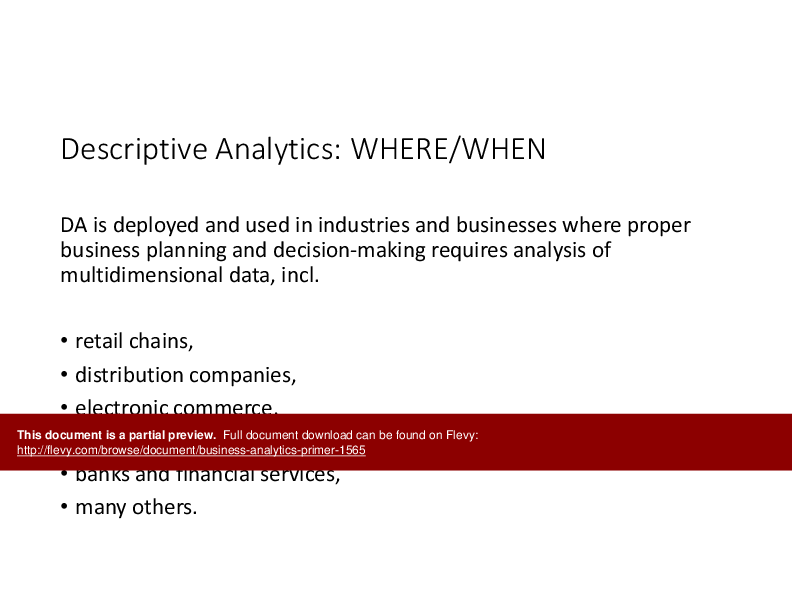
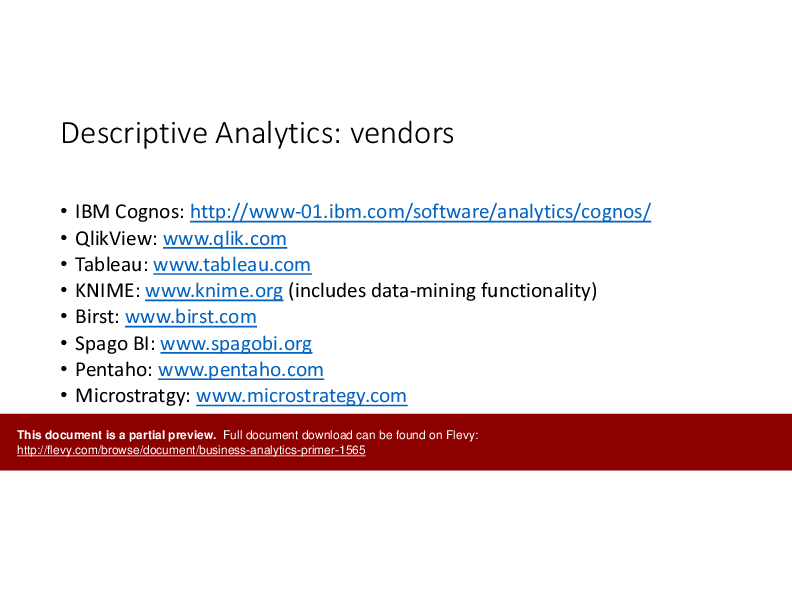
This PPT delves into the core of Business Analytics (BA), emphasizing its role in organizing and managing data modeling and analysis to aid executive decision-making. It outlines the deployment of Descriptive Analytics across various industries, including retail chains, distribution companies, and financial services, highlighting its necessity in multidimensional data analysis for effective business planning. The document also lists key vendors like IBM Cognos, QlikView, and Tableau, providing a comprehensive overview of the tools available for implementing Descriptive Analytics.
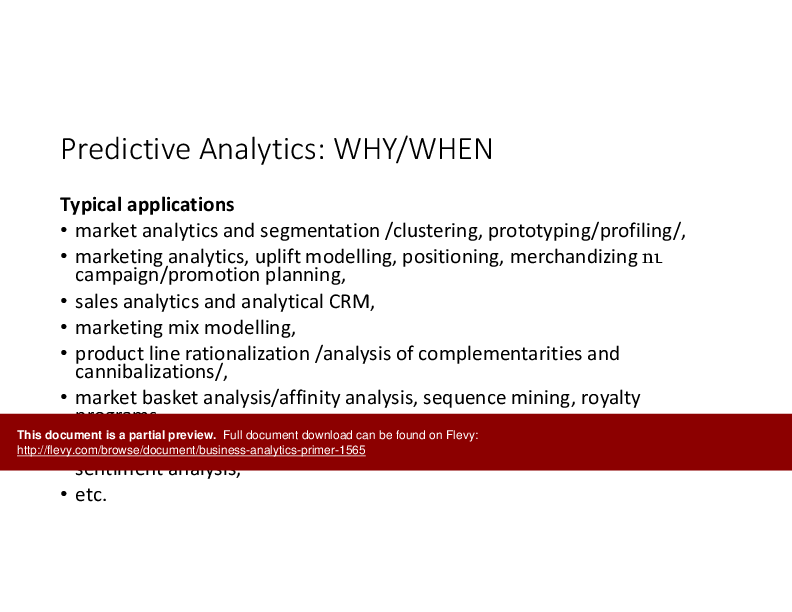
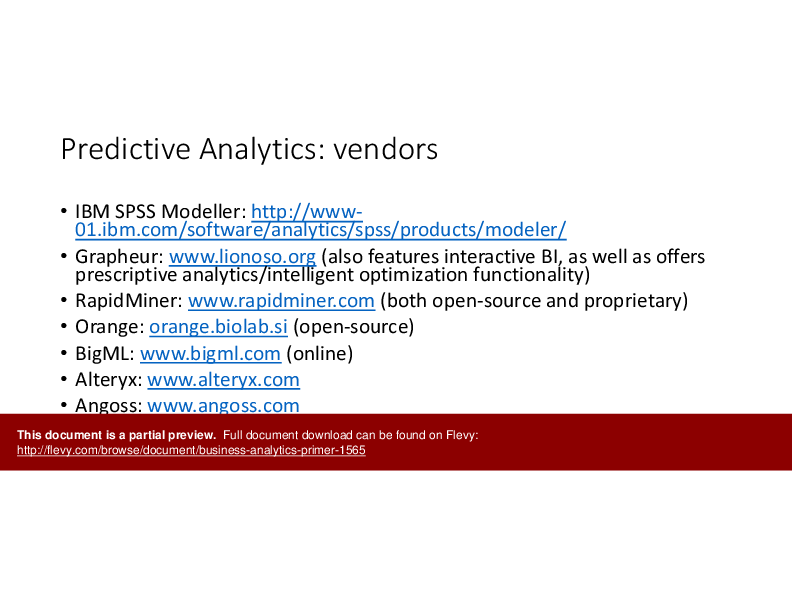
Predictive Analytics is explored with a focus on its applications in market segmentation, sales analytics, and marketing mix modeling. This section underscores the importance of predictive tools in optimizing product lines and understanding market dynamics. Vendors such as IBM SPSS Modeller, RapidMiner, and Alteryx are identified, offering insights into the software solutions that facilitate predictive modeling and analysis. The document provides practical examples of how these tools can be utilized to drive business strategies and improve decision-making processes.
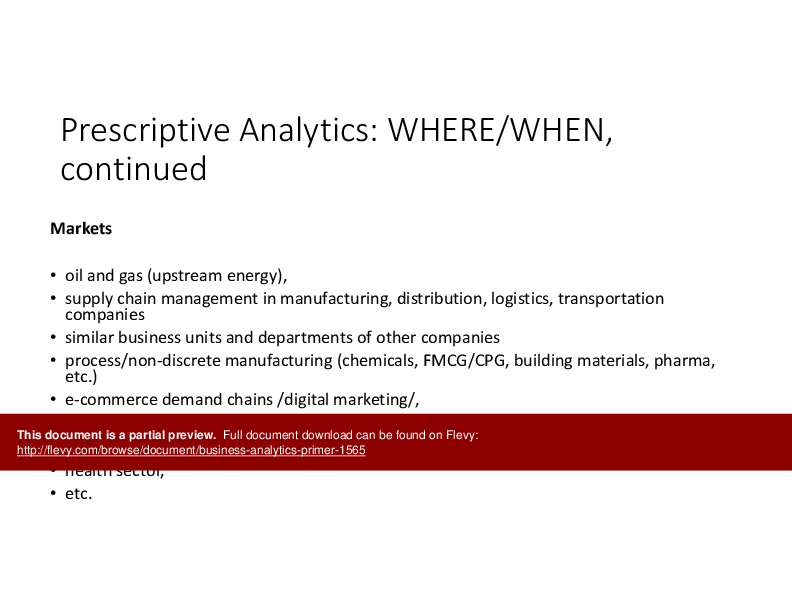
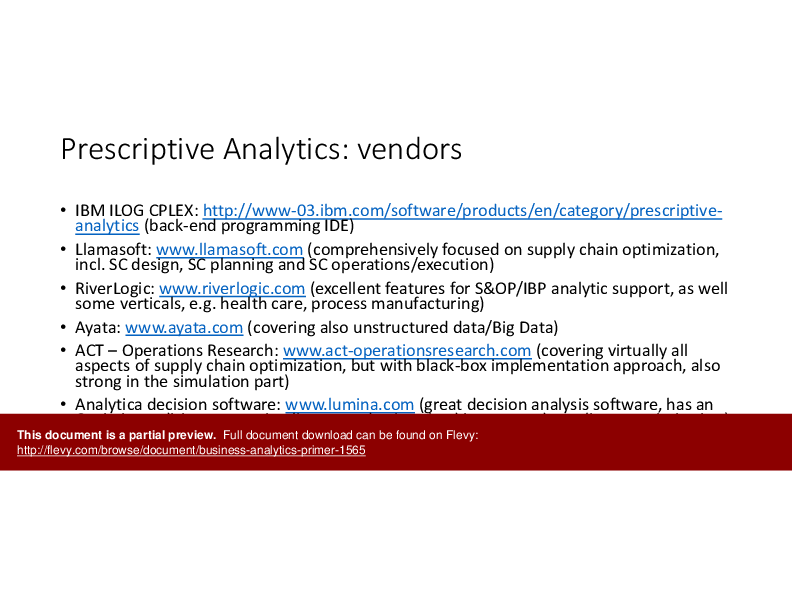
Prescriptive Analytics is discussed with examples from oil and gas, supply chain management, and e-commerce. The document highlights the significance of prescriptive tools in optimizing operations and enhancing efficiency. Vendors like IBM ILOG CPLEX and Llamasoft are mentioned, showcasing their capabilities in supply chain optimization and decision analysis. The document also includes case studies on digital marketing optimization and adaptive procurement, demonstrating the real-world applications of prescriptive analytics in various business scenarios.
Got a question about the product? Email us at support@flevy.com or ask the author directly by using the "Ask the Author a Question" form. If you cannot view the preview above this document description, go here to view the large preview instead.
Executive Summary
The Business Analytics Primer is a comprehensive introduction to the essential types of business analytics, including descriptive, predictive, and prescriptive analytics. This presentation equips corporate executives, integration leaders, and consultants with the foundational knowledge necessary for effective data-driven decision-making. By understanding these analytics types, users will be able to enhance their planning processes, optimize marketing strategies, and improve supply chain management. Download the PPTX to gain insights into the applications and tools that can transform data into actionable strategies.
Who This Is For and When to Use
• Business executives seeking to leverage analytics for strategic decision-making
• Marketing professionals aiming to optimize digital marketing efforts
• Supply chain managers looking to enhance operational efficiency
• Data analysts and consultants focused on implementing analytics solutions
Best-fit moments to use this deck:
• During strategic planning sessions to inform decision-making processes
• When launching new marketing campaigns that require data analysis
• In supply chain optimization initiatives to improve performance metrics
• For training sessions aimed at building analytics capabilities within teams
Learning Objectives
• Define the core concepts of business analytics and its significance in decision-making
• Identify the different types of analytics and their applications in various business contexts
• Analyze how descriptive analytics can provide insights into past performance
• Explore predictive analytics to forecast future trends and behaviors
• Understand prescriptive analytics for recommending optimal courses of action
• Apply analytics techniques to enhance digital marketing and supply chain strategies
Table of Contents
• Summary (page 3)
• What is Business Analytics (page 4)
• Types of BA (page 5)
• Descriptive Analytics: WHAT (page 6)
• Descriptive Analytics: WHERE/WHEN (page 7)
• Predictive Analytics: WHAT (page 11)
• Predictive Analytics: WHERE (page 12)
• Prescriptive Analytics: WHAT (page 17)
• Application of Analytics in Demand Chain (page 23)
• Application of Analytics in Supply Chain (page 26)
• Summary: Further Steps for Learning and Implementation of BA (page 30)
Primary Topics Covered
• Business Analytics Definition - Business Analytics (BA) involves the organization and management of data analysis to support planning and decision-making across various business functions.
• Types of Business Analytics - BA encompasses descriptive, predictive, and prescriptive analytics, each serving distinct purposes in data interpretation and decision-making.
• Descriptive Analytics - This type focuses on analyzing historical data to provide insights into past performance, aiding in effective decision-making.
• Predictive Analytics - Predictive analytics utilizes data patterns to forecast future outcomes, enabling proactive decision-making based on potential scenarios.
• Prescriptive Analytics - This analytics type recommends optimal actions based on data analysis, guiding decision-makers toward the best possible outcomes.
• Digital Marketing Analytics - Analytics applied in digital marketing to optimize campaigns and improve customer engagement through data-driven insights.
• Supply Chain Analytics - The use of analytics in supply chain management to enhance efficiency, reduce costs, and improve service levels.
Deliverables, Templates, and Tools
• Business Analytics framework template for structured analysis
• Descriptive analytics reporting dashboard template for visualizing data insights
• Predictive analytics model for forecasting trends and behaviors
• Prescriptive analytics decision-making guide for optimal action recommendations
• Digital marketing optimization plan template for campaign analysis
• Supply chain performance metrics dashboard for tracking KPIs
Slide Highlights
• Overview of the different types of analytics and their applications in business
• Visual representation of the analytics process from data collection to decision-making
• Case studies demonstrating successful implementation of analytics in marketing and supply chain
• Tools and vendors associated with each type of analytics for practical application
Potential Workshop Agenda
Introduction to Business Analytics (60 minutes)
• Overview of business analytics and its importance
• Discussion on the types of analytics and their applications
Hands-on Session: Descriptive Analytics (90 minutes)
• Interactive analysis of historical data using descriptive analytics tools
• Group activity on creating dashboards for data visualization
Predictive and Prescriptive Analytics Workshop (120 minutes)
• Exploration of predictive analytics techniques and tools
• Case study analysis on prescriptive analytics applications in decision-making
Customization Guidance
• Tailor the analytics framework to align with specific business goals and objectives
• Adjust case studies and examples to reflect industry-specific challenges and solutions
• Modify templates to incorporate organizational branding and terminology
Secondary Topics Covered
• Diagnostic Analytics and its role in root cause analysis
• Cognitive Analytics for unstructured data analysis
• Applications of analytics in various industries such as finance, healthcare, and retail
• The importance of data governance and quality in analytics
Topic FAQ
Document FAQ
These are questions addressed within this presentation.
What is business analytics?
Business analytics is the systematic analysis of data to support decision-making processes across various business functions.
What are the main types of business analytics?
The main types include descriptive analytics, predictive analytics, and prescriptive analytics, each serving different purposes in data analysis.
How can descriptive analytics benefit my organization?
Descriptive analytics provides insights into past performance, enabling informed decision-making and strategic planning.
What tools are commonly used for predictive analytics?
Popular tools include IBM SPSS, RapidMiner, and SAS, which facilitate data mining and forecasting.
What is the role of prescriptive analytics?
Prescriptive analytics recommends optimal actions based on data analysis, guiding decision-makers toward the best outcomes.
How can I implement business analytics in my organization?
Start by assessing business requirements, building analytics capabilities, and considering both training and technology solutions.
What industries benefit from supply chain analytics?
Industries such as manufacturing, retail, and logistics utilize supply chain analytics to enhance operational efficiency and reduce costs.
How does digital marketing analytics improve campaign effectiveness?
Digital marketing analytics provides insights into customer behavior, enabling targeted marketing strategies and improved engagement.
Glossary
• Business Analytics - The practice of using data analysis to inform business decisions.
• Descriptive Analytics - Analysis of historical data to understand past performance.
• Predictive Analytics - Techniques used to forecast future outcomes based on historical data patterns.
• Prescriptive Analytics - Recommendations for optimal actions based on data analysis.
• Digital Marketing Analytics - Analytics focused on optimizing digital marketing efforts.
• Supply Chain Analytics - The use of analytics to improve supply chain efficiency and performance.
• Data Visualization - The graphical representation of data to facilitate understanding.
• ETL - Extract, Transform, Load; a process for data integration.
• Data Mining - The practice of analyzing large datasets to discover patterns and insights.
• Machine Learning - A subset of artificial intelligence that enables systems to learn from data.
• KPI - Key Performance Indicator; a measurable value that demonstrates how effectively a company is achieving key business objectives.
• OLAP - Online Analytical Processing; a category of software technology that enables analysts to extract and view data from different perspectives.
• Big Data - Large and complex datasets that traditional data processing software cannot adequately deal with.
• Cognitive Analytics - The use of AI to analyze unstructured data and provide insights.
• Simulation Modeling - The process of creating a digital twin of a physical entity to analyze its performance.
• Decision Support System - An information system that supports business or organizational decision-making activities.
• Data Governance - The management of data availability, usability, integrity, and security.
• Business Intelligence - Technologies and strategies for analyzing business data.
• Analytics Framework - A structured approach to implementing analytics in an organization.
• Operational Efficiency - The ability to deliver products or services in the most cost-effective manner without compromising quality.
• Customer Segmentation - The process of dividing customers into groups based on common characteristics.
Source: Best Practices in Analytics PowerPoint Slides: Business Analytics Primer PowerPoint (PPTX) Presentation Slide Deck, tangentmgmt
|
Download our FREE Digital Transformation Templates
Download our free compilation of 50+ Digital Transformation slides and templates. DX concepts covered include Digital Leadership, Digital Maturity, Digital Value Chain, Customer Experience, Customer Journey, RPA, etc. |










