
Change Management Process - PPT (IT Service Management, ITSM)   32-slide PPT PowerPoint presentation slide deck (PPTX)
$30.00

Change Management Process - PPT (IT Service Management, ITSM) (32-slide PPT PowerPoint presentation slide deck (PPTX)) Preview Image
Log in to unlock full preview.
Change Management Process - PPT (IT Service Management, ITSM) (32-slide PPT PowerPoint presentation slide deck (PPTX)) Preview Image
Arrow   Click main image to view in full screen.

Change Management Process - PPT (IT Service Management, ITSM) (PowerPoint PPTX Slide Deck)

PowerPoint (PPTX) + supplemental PDF 32 Slides

#2 in ITSM $30.00

Add to Cart


Immediate download
Fully editable PowerPoint
Free lifetime updates

BENEFITS OF THIS POWERPOINT DOCUMENT

  1. Easier implementation of Change Management process in your Organisation
  2. ISO 20000 and ITSM best practice compliant
  3. Awareness and Implementation Workshop for Change Management process

CHANGE MANAGEMENT PPT DESCRIPTION

Editor Summary Change Management Process - PPT (IT Service Management, ITSM) is a 32-slide PowerPoint with a supplemental PDF by ITSM Consulting that documents an ITIL-aligned change lifecycle from initiation to evaluation. Read more

Change Management Process is essential Process in Service Transition. Process is contained in ITSM best practices.

Document describes the process in detail including Process flow, key definitions, process roles, CSFs, KPIs, Risks and Challenges.

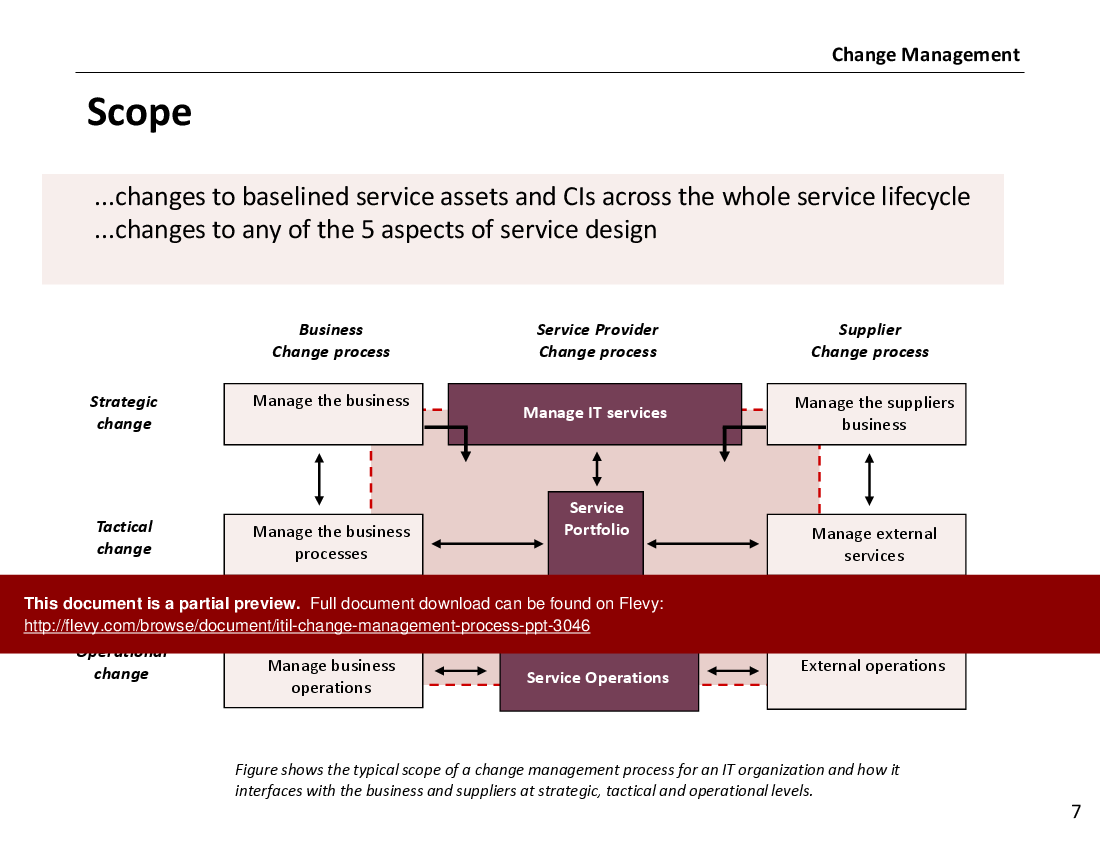
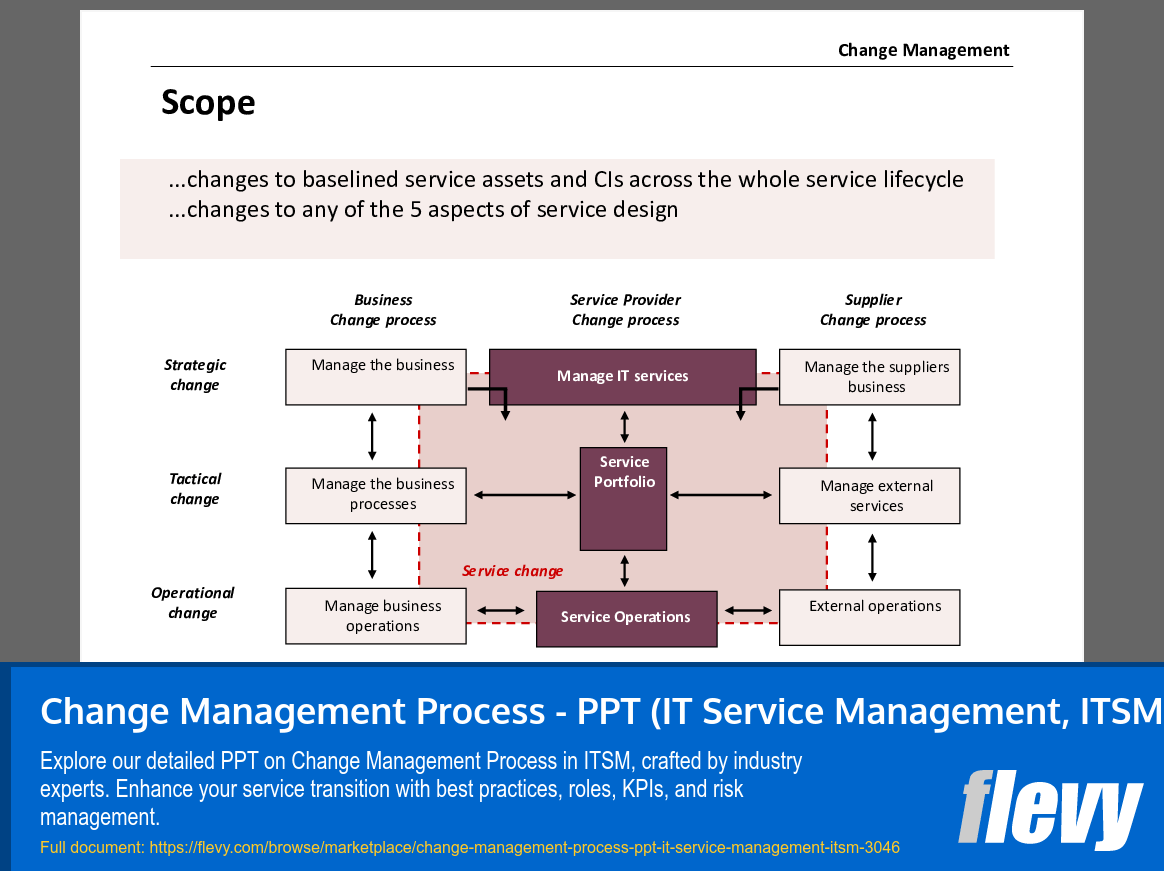
This comprehensive PPT on Change Management Process delves into the intricacies of managing IT service changes. It covers the entire lifecycle of changes, ensuring minimal disruption to IT services. The PPT provides a detailed scope, highlighting changes to baselined service assets and the five aspects of service design. It outlines the strategic, tactical, and operational levels of change management, ensuring alignment with business processes and supplier management.

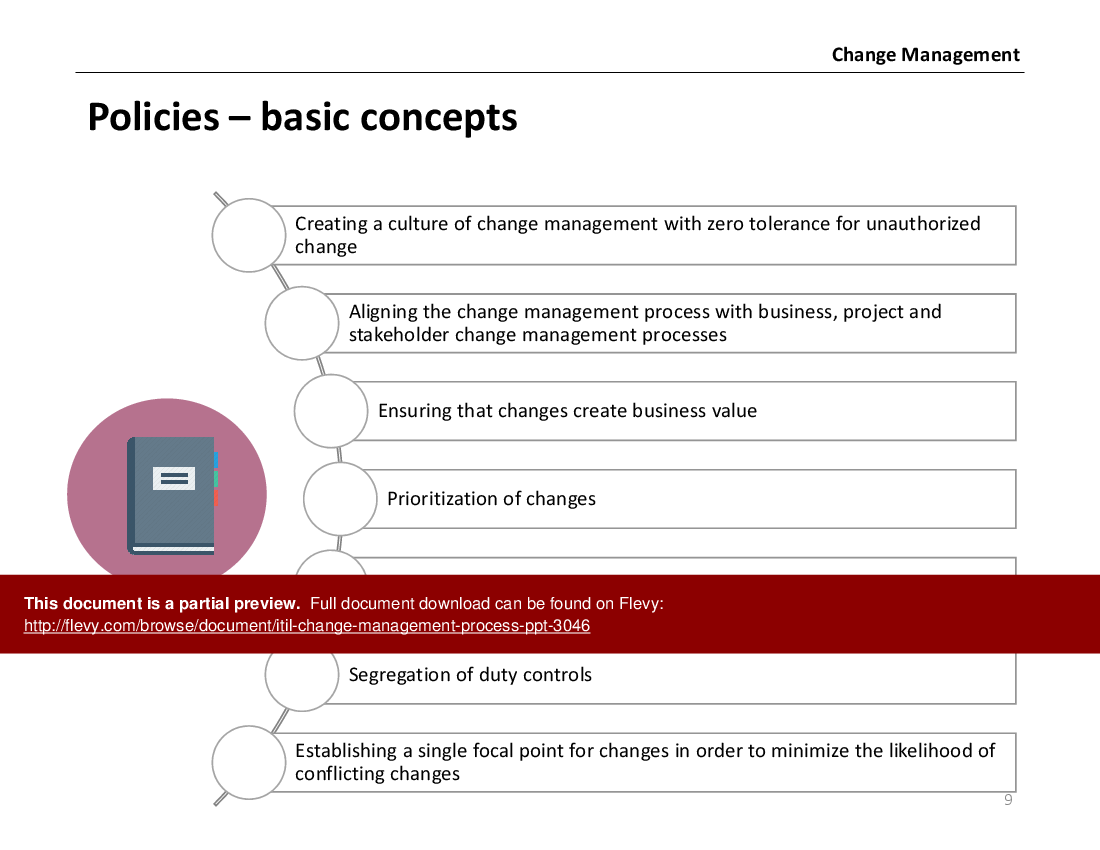
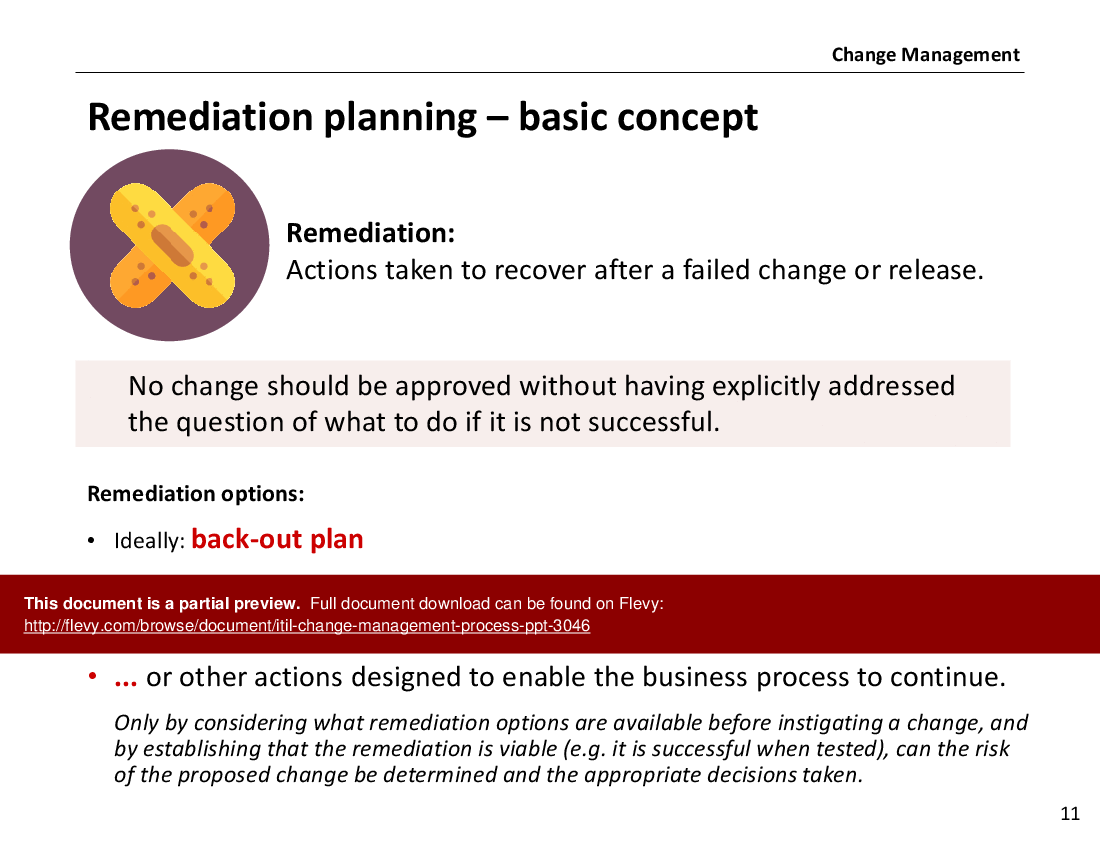
The document also emphasizes the importance of creating a culture of change management with zero tolerance for unauthorized changes. It aligns change management processes with business, project, and stakeholder processes. The PPT includes a robust section on remediation planning, detailing actions to recover after failed changes or releases. It stresses the need for a back-out plan and other actions to enable business continuity.

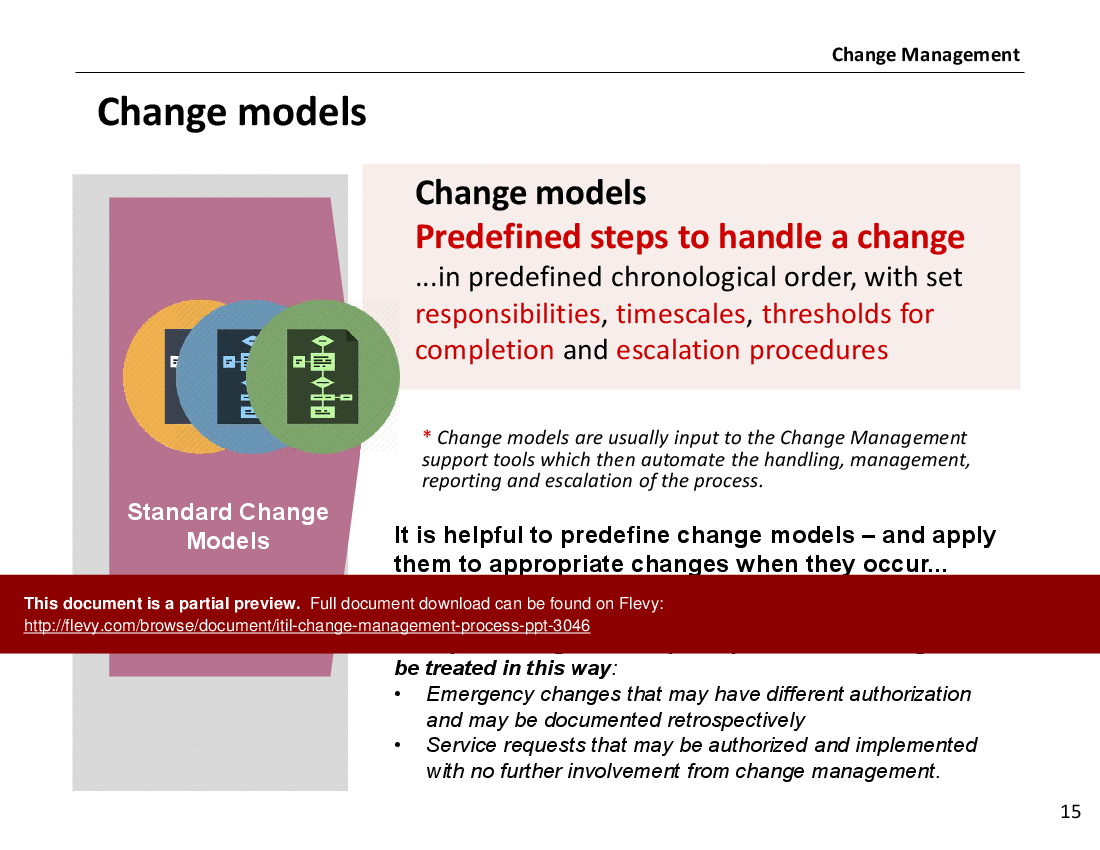
The roles and responsibilities within the change management process are clearly defined. From designing change authority hierarchies to managing individual changes, the document ensures that every aspect of change management is covered. The inclusion of standard and emergency change models, along with their respective process flows, provides a practical guide for handling changes efficiently. This document is an essential resource for any organization looking to implement or improve its change management process.

Got a question about the product? Email us at support@flevy.com or ask the author directly by using the "Ask the Author a Question" form. If you cannot view the preview above this document description, go here to view the large preview instead.

MARCUS OVERVIEW

This synopsis was written by Marcus [?] based on the analysis of the full 32-slide presentation.


Executive Summary
The Change Management Process PPT is a comprehensive guide designed for IT Service Management (ITSM) and ITIL frameworks. It provides a structured approach to managing changes within IT services, ensuring that beneficial changes are implemented with minimal disruption. This presentation equips executives and consultants with the necessary tools to oversee the change lifecycle, from initiation to evaluation, thereby enhancing service quality and operational efficiency.

Who This Is For and When to Use
•  IT Service Managers overseeing change processes
•  Change Management Practitioners implementing ITIL practices
•  Project Managers coordinating IT service changes
•  Business Analysts assessing change impacts on operations

Best-fit moments to use this deck:
•  During the planning phase of IT service changes
•  For training sessions on ITIL change management practices
•  In workshops aimed at improving change management processes
•  When developing or revising change management policies

Learning Objectives
•  Define the key components of the ITIL Change Management process
•  Establish a framework for evaluating and prioritizing change requests
•  Implement effective change management workflows to enhance service delivery
•  Document and track changes to ensure compliance and accountability
•  Analyze the risks associated with changes and develop mitigation strategies
•  Optimize resource allocation for change initiatives

Table of Contents
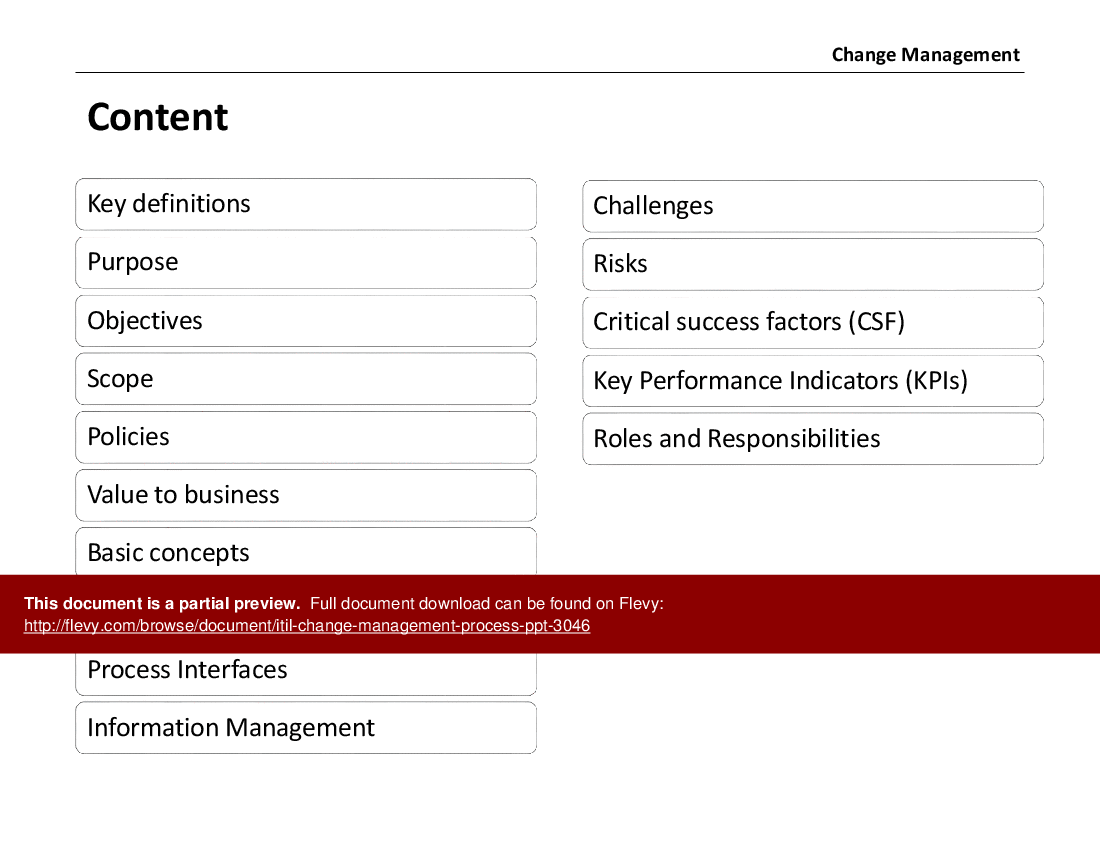
•  Key Definitions (page 4)
•  Purpose (page 5)
•  Objectives (page 6)
•  Scope (page 7)
•  Policies (page 9)
•  Value to Business (page 8)
•  Process Workflow (page 13)
•  Process Interfaces (page 23)
•  Information Management (page 25)
•  Challenges (page 27)
•  Risks (page 28)
•  Critical Success Factors (CSF) (page 26)
•  Key Performance Indicators (KPIs) (page 26)
•  Roles and Responsibilities (page 29)

Primary Topics Covered
•  Key Definitions - Essential terms such as Change, Request for Change (RFC), and Change Schedule are defined to establish a common understanding.
•  Purpose - The primary aim of Change Management is to control the lifecycle of changes, ensuring minimal disruption to IT services while maximizing value.
•  Objectives - Objectives include recording, evaluating, authorizing, and documenting changes in a controlled environment.
•  Scope - The scope encompasses all changes affecting IT services, processes, and related documentation.
•  Policies - Policies focus on creating a culture of change management, ensuring accountability, and prioritizing changes effectively.
•  Value to Business - Highlights the benefits of effective change management, including reduced risks and improved service availability.

Deliverables, Templates, and Tools
•  Change Request Form template for documenting RFCs
•  Change Schedule template for tracking planned changes
•  Risk Assessment template for evaluating potential impacts
•  Change Management Workflow diagram for process visualization
•  Remediation Plan template for addressing failed changes
•  Change Management Policy document for governance

Slide Highlights
•  Overview of the Change Management process and its significance in ITSM
•  Visual representation of the Change Management workflow
•  Key definitions and their implications for effective change management
•  Examples of different types of change requests and their handling
•  Critical Success Factors and Key Performance Indicators for measuring effectiveness

Potential Workshop Agenda
Change Management Overview Session (60 minutes)
•  Introduce the ITIL Change Management framework
•  Discuss the importance of effective change management
•  Review key definitions and objectives

Process Workflow Deep Dive (90 minutes)
•  Analyze the Change Management workflow
•  Identify roles and responsibilities within the process
•  Discuss common challenges and risks associated with change management

Practical Application Workshop (120 minutes)
•  Develop a Change Request using the provided template
•  Conduct a risk assessment for a hypothetical change
•  Create a remediation plan for a failed change scenario

Customization Guidance
•  Tailor the Change Request Form to fit organizational needs
•  Update the Change Schedule template with specific timelines and milestones
•  Adjust the risk assessment criteria based on industry standards
•  Incorporate organizational terminology into the Change Management Policy document

Secondary Topics Covered
•  Change Management roles and responsibilities
•  Interfaces with other ITSM processes such as Incident Management
•  The significance of communication in the Change Management process
•  Strategies for stakeholder engagement during change initiatives
•  Continuous improvement in Change Management practices

Topic FAQ

What are the main phases of an ITIL-aligned change management process?

An ITIL-aligned change process tracks a change from initiation through evaluation, authorization, scheduling, implementation, and post-implementation review. Key steps include recording an RFC, impact/risk assessment, approval (CAB or change authority), scheduling and execution, plus remediation and documentation in a Change Record.

How should organizations classify change types and why is classification important?

Organizations classify changes as standard (pre‑approved, low risk), normal (subject to full process), or emergency (rapid handling with ECAB if needed). Classification determines the required approval path, pace of implementation, and handling procedures, using categories such as standard, normal, and emergency.

What KPIs and critical success factors are used to measure change management effectiveness?

Typical measures include percentage of successful changes, reduction in emergency changes, and stakeholder satisfaction scores. Critical success factors focus on accurate recording, timely authorization, clear roles, and effective remediation—all tracked through KPIs like successful change rate and emergency change reduction.

How does a Change Advisory Board (CAB) operate within the change process?

The CAB assesses, prioritizes, authorizes, and schedules changes to ensure all technical, business, and risk aspects are considered prior to implementation. Emergency decisions may be handled by an Emergency CAB (ECAB), with CAB outputs feeding the Change Schedule and authorization records.

What should I look for when buying a change management toolkit for ITSM?

Look for a toolkit that documents process flow, roles and responsibilities, KPIs/CSFs, and practical templates (RFC, Change Schedule, Risk Assessment, remediation/back‑out). Flevy’s Change Management Process - PPT (ITSM) lists these elements and includes a Change Request Form, Change Schedule, and Remediation Plan.

How much training time is needed to run initial change management workshops?

Initial workshops can be structured into short, focused sessions: an overview session (~60 minutes), a process workflow deep dive (~90 minutes), and hands‑on practical exercises (~120 minutes). These sample agenda items provide a minimum set of training interactions for stakeholders.

I need to document and track changes after a failed release—what practices should I follow?

Create a remediation plan and a documented back‑out procedure, record a Change Record for the RFC, and perform a root‑cause and impact assessment to prevent recurrence. Use templates for Remediation Plan and Change Record to ensure consistent documentation and accountability.

What methods can I use to assess risk for a proposed change?

Conduct an impact assessment evaluating effects on services, operations, suppliers, and business processes, then score risks with a Risk Assessment template. Use the assessment to inform prioritization, approval level, and contingency/back‑out planning.

Document FAQ
These are questions addressed within this presentation.

What is the purpose of Change Management?
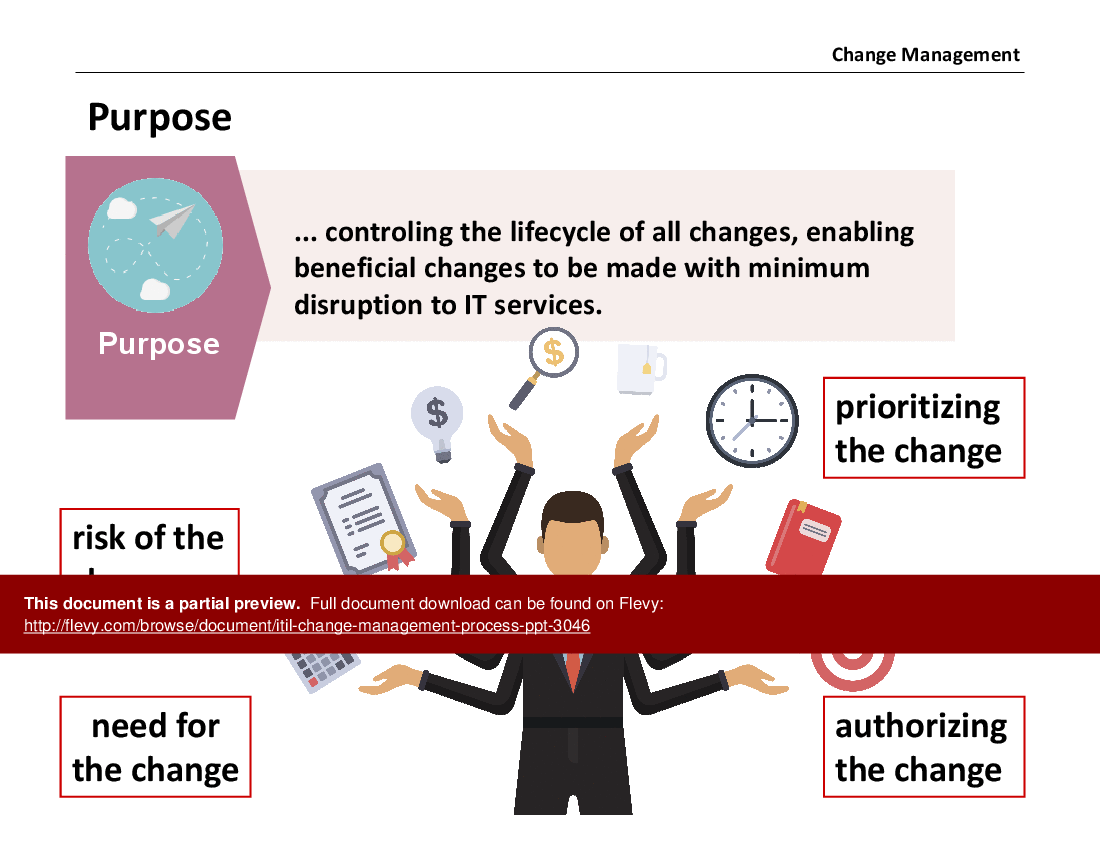
The purpose of Change Management is to control the lifecycle of all changes, enabling beneficial changes to be made with minimal disruption to IT services.

What types of changes are managed?
Changes can be categorized as standard, normal, or emergency, each requiring different handling procedures.

How are changes prioritized?
Changes are prioritized based on their potential impact on IT services and business operations, ensuring that critical changes are addressed promptly.

What is an RFC?
An RFC, or Request for Change, is a formal proposal for a change that includes details about the proposed change and its expected impact.

What are the key performance indicators for Change Management?
Key performance indicators include the percentage of successful changes, reduction in emergency changes, and stakeholder satisfaction scores.

How does Change Management interface with other ITSM processes?
Change Management interfaces with processes like Incident Management and Problem Management to ensure coordinated handling of changes and their impacts.

What are the common challenges in implementing Change Management?
Common challenges include ensuring all changes are recorded, gaining support from stakeholders, and avoiding bureaucratic delays.

What is the role of the Change Advisory Board (CAB)?
The CAB assesses, prioritizes, authorizes, and schedules changes, ensuring that all aspects of change are considered.

How can organizations improve their Change Management processes?
Organizations can improve by regularly reviewing and updating their Change Management policies, training staff, and leveraging technology for better tracking and reporting.

Glossary
•  Change - The addition, modification, or removal of anything that could affect IT services.
•  RFC - Request for Change; a formal proposal for a change.
•  Change Schedule - A plan detailing changes and their effects on business activities.
•  Change Record - A record created for every RFC received.
•  Remediation - Actions taken to recover from a failed change or release.
•  CAB - Change Advisory Board; a group that supports change assessment and authorization.
•  CSF - Critical Success Factor; essential areas that must be managed effectively.
•  KPI - Key Performance Indicator; metrics used to evaluate success.
•  CMS - Configuration Management System; a system for managing configuration items.
•  SKMS - Service Knowledge Management System; a system for managing service knowledge.
•  Emergency Change - A change that must be implemented as soon as possible due to its impact.
•  Standard Change - A pre-approved change that is low risk and follows a defined procedure.
•  Normal Change - A change that follows the standard Change Management process.
•  Change Management Process Owner - The individual responsible for overseeing the Change Management process.
•  Change Management Practitioner - A person who carries out the Change Management process.
•  Change Authority - The entity responsible for approving RFCs.
•  ECAB - Emergency Change Advisory Board; a subgroup that makes decisions on emergency changes.
•  Service Portfolio - A collection of all services managed by an organization.
•  Service Catalogue - A detailed list of all live services and those being prepared for deployment.
•  Impact Assessment - The evaluation of the potential effects of a change on services and operations.

Source: Best Practices in Change Management, ITIL, SLM, ITSM PowerPoint Slides: Change Management Process - PPT (IT Service Management, ITSM) PowerPoint (PPTX) Presentation Slide Deck, ITSM Consulting


$30.00

Add to Cart
  

ABOUT THE AUTHOR

Additional documents from author: 44

Ask the Author a Question

You must be logged in to contact the author.

Click here to log in Click here register

Did you know?
The average daily rate of a McKinsey consultant is $6,625 (not including expenses). The average price of a Flevy document is $65.


Trusted by over 10,000+ Client Organizations
Since 2012, we have provided business templates to over 10,000 businesses and organizations of all sizes, from startups and small businesses to the Fortune 100, in over 130 countries.
AT&T GE Cisco Intel IBM Coke Dell Toyota HP Nike Samsung Microsoft Astrazeneca JP Morgan KPMG Walgreens Walmart 3M Kaiser Oracle SAP Google E&Y Volvo Bosch Merck Fedex Shell Amgen Eli Lilly Roche AIG Abbott Amazon PwC T-Mobile Broadcom Bayer Pearson Titleist ConEd Pfizer NTT Data Schwab


Read Customer Testimonials

 
"[Flevy] produces some great work that has been/continues to be of immense help not only to myself, but as I seek to provide professional services to my clients, it gives me a large "tool box" of resources that are critical to provide them with the quality of service and outcomes they are expecting."

– Royston Knowles, Executive with 50+ Years of Board Level Experience
 
"Flevy is our 'go to' resource for management material, at an affordable cost. The Flevy library is comprehensive and the content deep, and typically provides a great foundation for us to further develop and tailor our own service offer."

– Chris McCann, Founder at Resilient.World
 
"As a young consulting firm, requests for input from clients vary and it's sometimes impossible to provide expert solutions across a broad spectrum of requirements. That was before I discovered Flevy.com.

Through subscription to this invaluable site of a plethora of topics that are key and crucial to consulting, I "

– Nishi Singh, Strategist and MD at NSP Consultants
 
"As a consultant requiring up to date and professional material that will be of value and use to my clients, I find Flevy a very reliable resource.

The variety and quality of material available through Flevy offers a very useful and commanding source for information. Using Flevy saves me time, enhances my expertise and ends up being a good decision."

– Dennis Gershowitz, Principal at DG Associates
 
"FlevyPro has been a brilliant resource for me, as an independent growth consultant, to access a vast knowledge bank of presentations to support my work with clients. In terms of RoI, the value I received from the very first presentation I downloaded paid for my subscription many times over! The "

– Roderick Cameron, Founding Partner at SGFE Ltd
 
"I like your product. I'm frequently designing PowerPoint presentations for my company and your product has given me so many great ideas on the use of charts, layouts, tools, and frameworks. I really think the templates are a valuable asset to the job."

– Roberto Fuentes Martinez, Senior Executive Director at Technology Transformation Advisory
 
"Flevy.com has proven to be an invaluable resource library to our Independent Management Consultancy, supporting and enabling us to better serve our enterprise clients.

The value derived from our [FlevyPro] subscription in terms of the business it has helped to gain far exceeds the investment made, making a subscription a no-brainer for any growing consultancy – or in-house strategy team."

– Dean Carlton, Chief Transformation Officer, Global Village Transformations Pty Ltd.
 
"As a niche strategic consulting firm, Flevy and FlevyPro frameworks and documents are an on-going reference to help us structure our findings and recommendations to our clients as well as improve their clarity, strength, and visual power. For us, it is an invaluable resource to increase our impact and value."

– David Coloma, Consulting Area Manager at Cynertia Consulting


Customers Also Bought These Documents


Customers Also Like These Documents

Explore Templates on Related Management Topics


Your Recently Viewed Documents
Download our FREE Organization, Change, & Culture, Templates

Download our free compilation of 50+ slides and templates on Organizational Design, Change Management, and Corporate Culture. Methodologies include ADKAR, Burke-Litwin Change Model, McKinsey 7-S, Competing Values Framework, etc.










