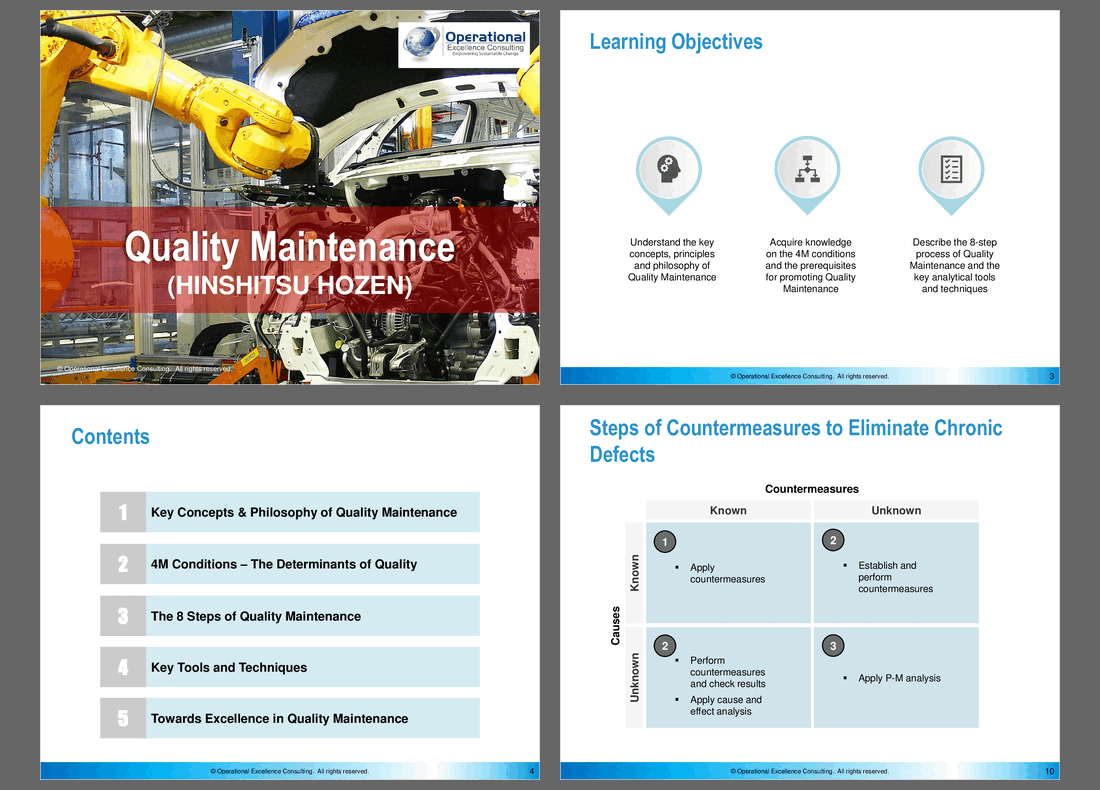

TPM: Quality Maintenance (Hinshitsu Hozen)   145-slide PPT PowerPoint presentation slide deck (PPTX)
$79.00

TPM: Quality Maintenance (Hinshitsu Hozen) (145-slide PPT PowerPoint presentation slide deck (PPTX)) Preview Image
Log in to unlock full preview.
TPM: Quality Maintenance (Hinshitsu Hozen) (145-slide PPT PowerPoint presentation slide deck (PPTX)) Preview Image
Arrow   Click main image to view in full screen.

TPM: Quality Maintenance (Hinshitsu Hozen) (PowerPoint PPTX Slide Deck)

PowerPoint (PPTX) + supplemental PDF 145 Slides

Top 1,000 Best Practice $79.00
Developed by a renowned JIPM-certified TPM Instructor with extensive experience at industry leaders like Continental and Micron, this comprehensive presentation is your key to successful and streamlined TPM implementation.
Add to Cart


Immediate download
Fully editable PowerPoint
Free lifetime updates

BENEFITS OF THIS POWERPOINT DOCUMENT

  1. Provides a framework for creating a production system that assures 100% good products.
  2. Provides the process, methods and tools to establish and sustain zero-defect conditions.

QUALITY MANAGEMENT PPT DESCRIPTION

Editor Summary TPM: Quality Maintenance (Hinshitsu Hozen) is a 145-slide PowerPoint training presentation with supplemental PDF poster materials, developed by Operational Excellence Consulting and a JIPM-certified TPM instructor with industry experience. Read more

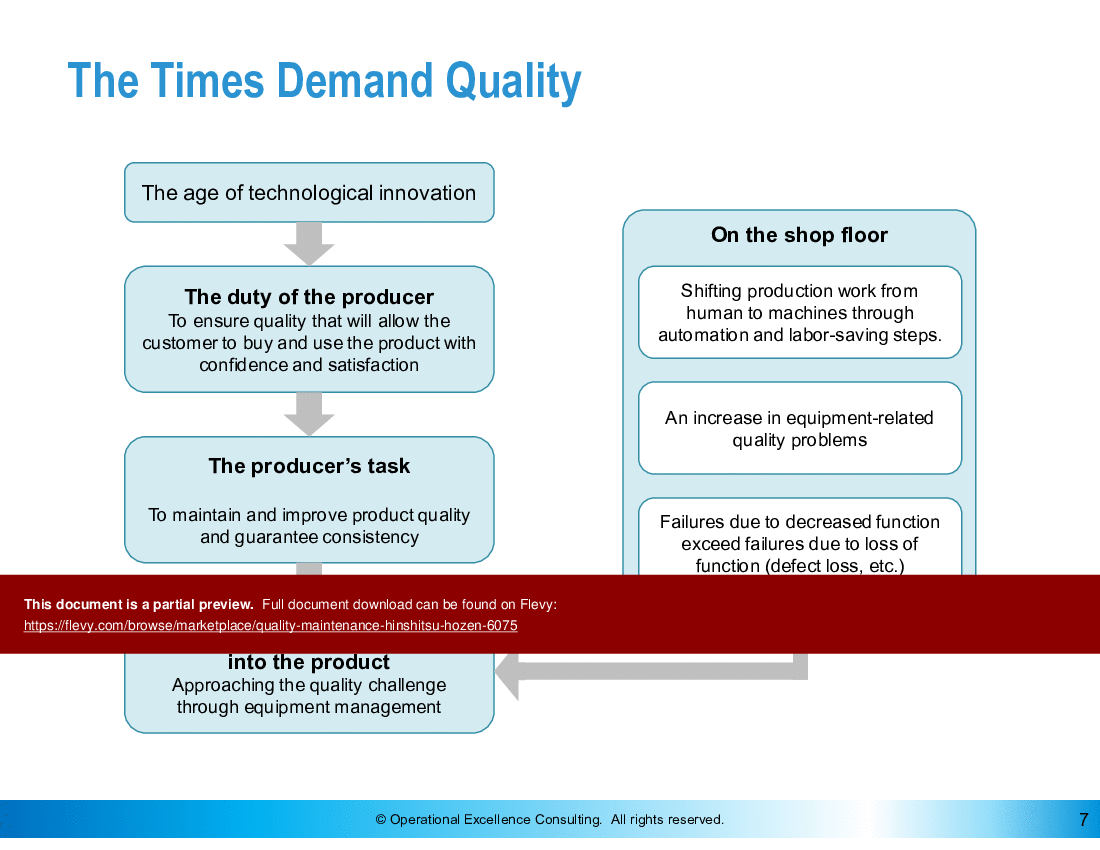
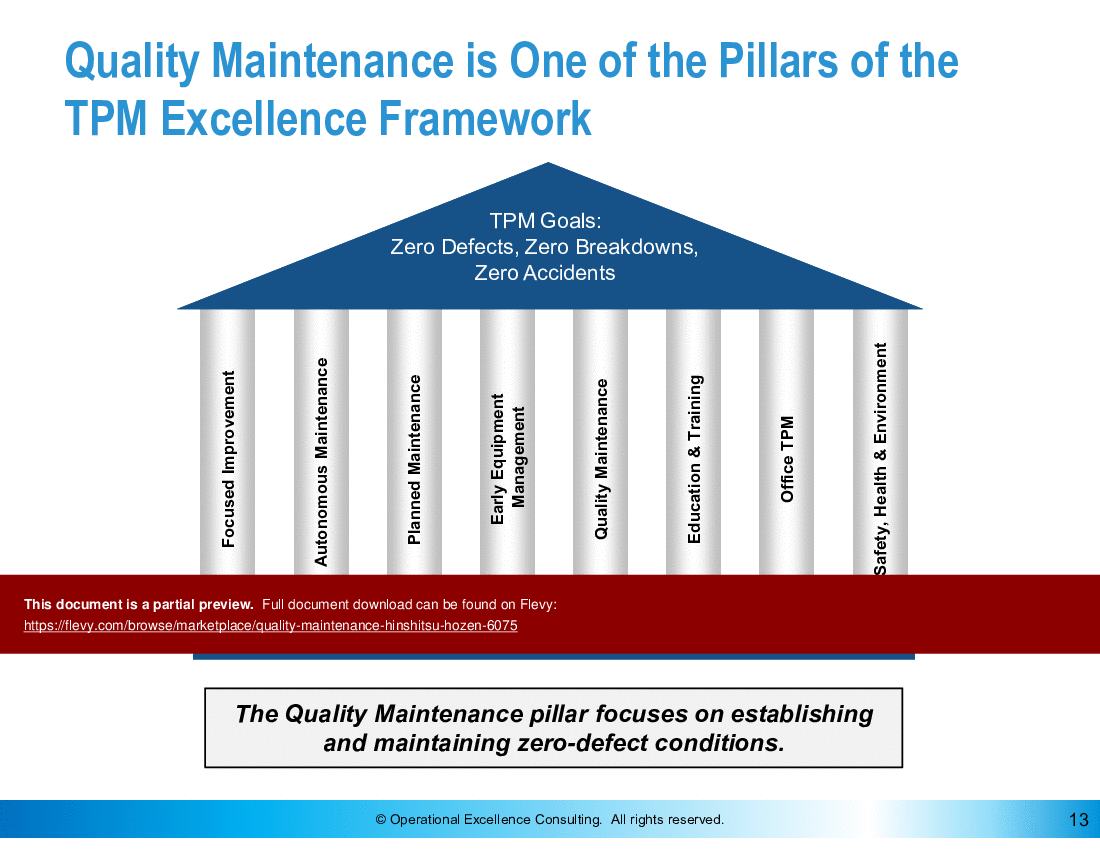
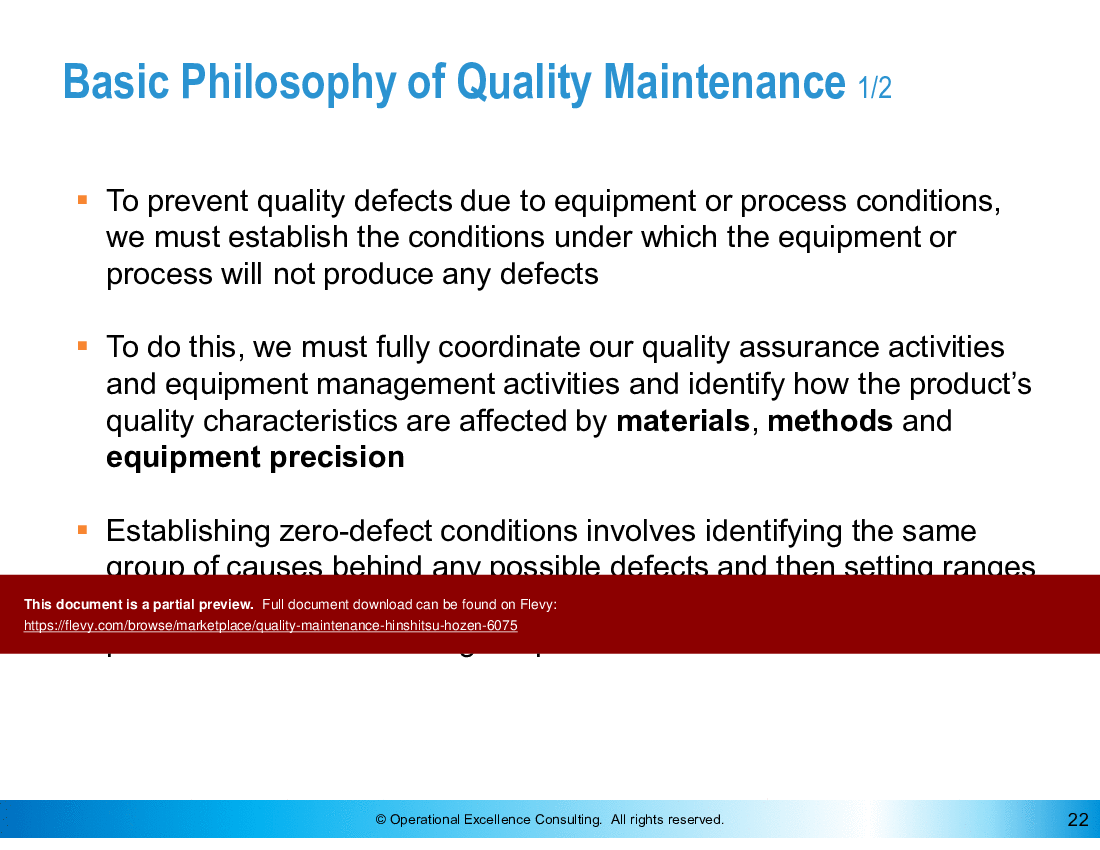
Quality Maintenance is an "advanced" pillar of TPM and aims to assure zero defect conditions. Also known as Hinshitsu Hozen in Japanese, it does this by understanding and controlling the process interactions between the 4Ms – manpower, material, machines and methods that could enable defects to occur. The key is to prevent defects from being produced in the first place, rather than screening them out through inspection systems after they have been produced. Controlling quality through its causes is the essence of Quality Maintenance.

Developed by our JIPM-certified TPM Instructor, this presentation teaches the key concepts, principles and philosophy of Quality Maintenance, the 4M conditions that are essential for defect-free production, as well as the step-by-step process for Quality Maintenance.

|||||||||||||||||||||||||||||||||||||||||||||||||||||||||||||||||||||||||||||||||||||||||||||||||||||||||||||||||||||||||||||||||||||||||||||||||||||||
This training package includes:
1. Quality Maintenance training presentation (PowerPoint format)
2. Quality Maintenance poster (PDF format, in four monochrome variations, printable in A3 size)
|||||||||||||||||||||||||||||||||||||||||||||||||||||||||||||||||||||||||||||||||||||||||||||||||||||||||||||||||||||||||||||||||||||||||||||||||||||||

LEARNING OBJECTIVES

1. Understand the key concepts, principles and philosophy of Quality Maintenance.
2. Acquire knowledge on the 4M conditions and the prerequisites for promoting Quality Maintenance.
3. Describe the 8-step process of Quality Maintenance and the key analytical tools and techniques.

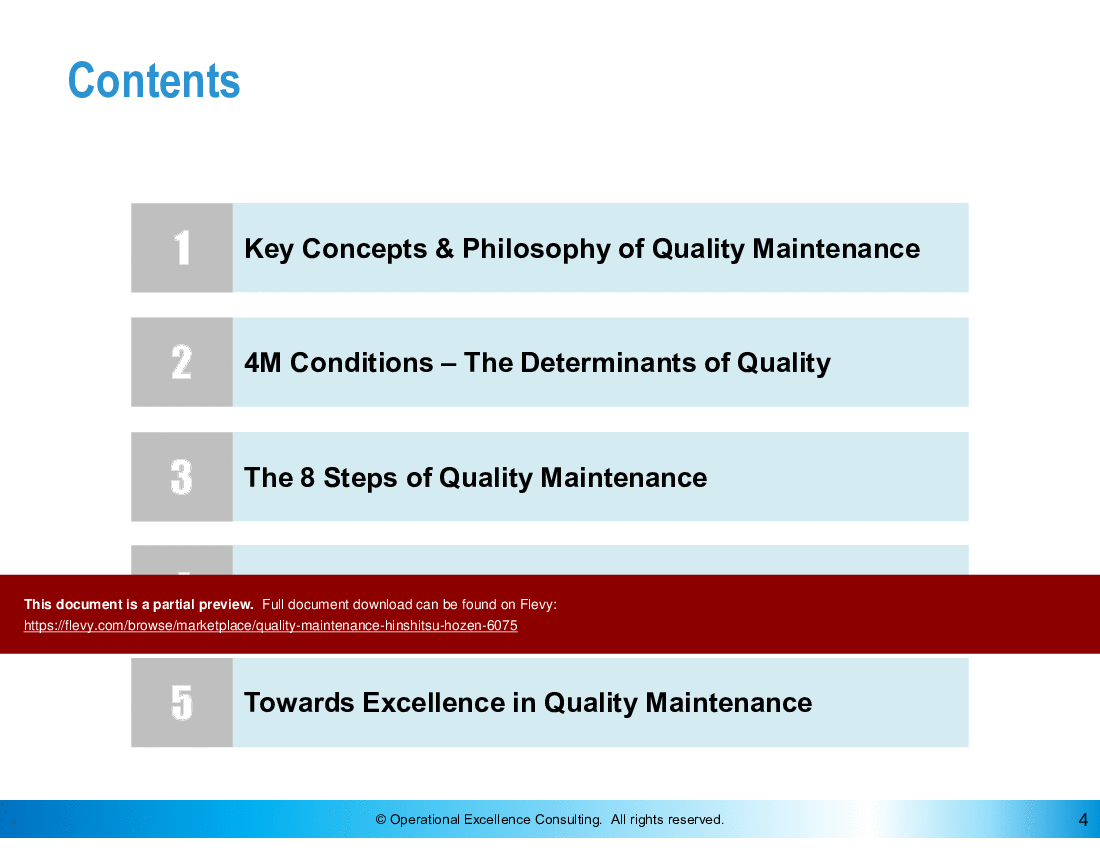
CONTENTS

1. Key Concepts & Philosophy of Quality Maintenance
2. 4M Conditions – The Determinants of Quality
3. The 8 Steps of Quality Maintenance
4. Key Tools & Techniques for Quality Maintenance
5. Towards Excellence in Quality Maintenance

*Note: The Japan Institute of Plant Maintenance (JIPM) is a nonprofit research, consulting, and educational organization that helps companies increase organizational efficiency and profitability through improved maintenance of manufacturing equipment, processes, and facilities. The JIPM is the sponsoring organization for the TPM Excellence Award, awarded annually to recognize excellence in company-wide maintenance systems. Based in Japan, JIPM is the innovator of methodologies that have been implemented around the world.

This presentation outlines the steps to develop a QA Matrix, crucial for identifying defect modes. It also emphasizes the importance of setting provisional tolerances to maintain quality standards.

Got a question about the product? Email us at support@flevy.com or ask the author directly by using the "Ask the Author a Question" form. If you cannot view the preview above this document description, go here to view the large preview instead.

MARCUS OVERVIEW

This synopsis was written by Marcus [?] based on the analysis of the full 145-slide presentation.


Executive Summary
The TPM: Quality Maintenance (Hinshitsu Hozen) presentation is a meticulously crafted training resource designed to facilitate the implementation of Total Productive Maintenance (TPM) with a focus on achieving zero defects in production. Developed by a JIPM-certified TPM instructor, this presentation provides actionable insights into the principles, processes, and tools necessary for effective quality maintenance. Users will learn to establish and maintain zero-defect conditions, analyze the 4M conditions (Man, Machine, Material, Method), and apply the 8-step process of Quality Maintenance to enhance operational excellence.

Who This Is For and When to Use
•  Quality Assurance Managers seeking to improve defect prevention strategies
•  TPM Coordinators responsible for implementing quality maintenance practices
•  Production Managers focused on achieving zero-defect production
•  Continuous Improvement Teams looking to enhance quality control measures

Best-fit moments to use this deck:
•  During TPM training sessions for new employees
•  As a reference during quality audits and assessments
•  When developing or revising quality maintenance protocols

Learning Objectives
•  Understand the key concepts, principles, and philosophy of Quality Maintenance
•  Describe the 8-step process of Quality Maintenance and the key analytical tools and techniques
•  Acquire knowledge on the 4M conditions and the prerequisites for promoting Quality Maintenance
•  Establish conditions that allow for the production of good quality products
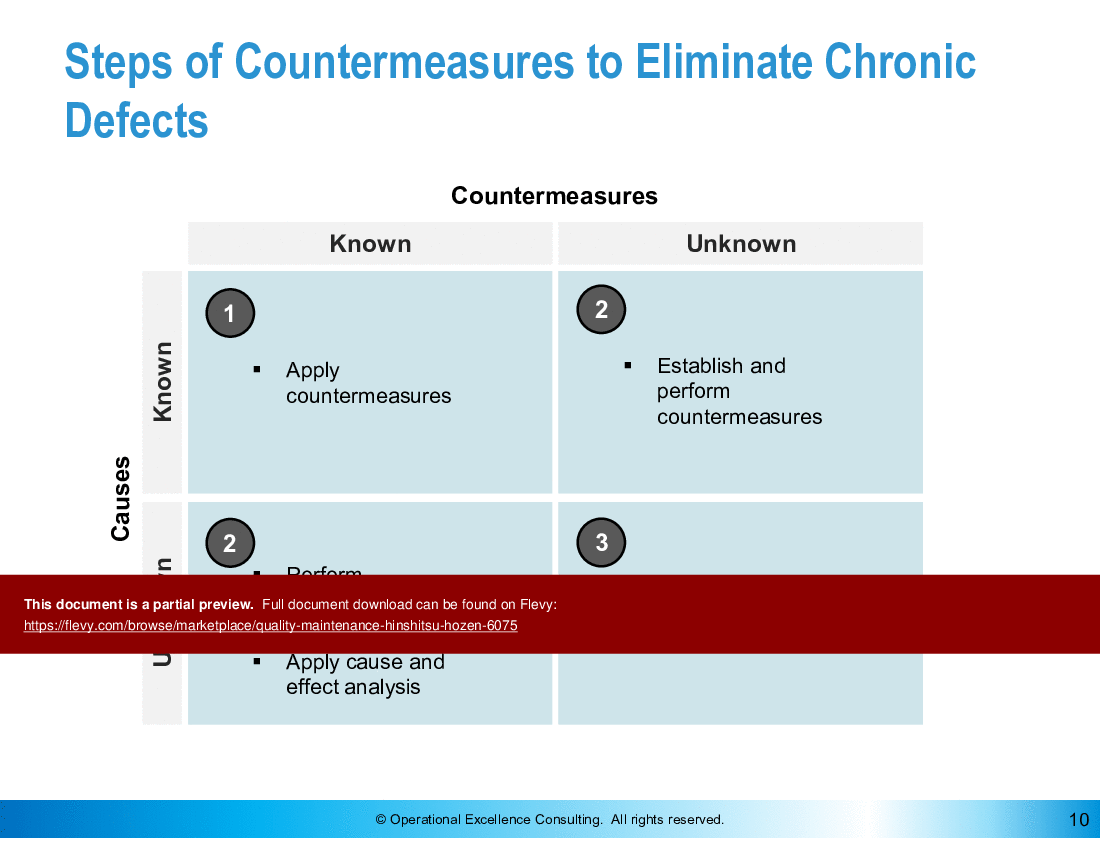
•  Identify and analyze chronic defects and develop countermeasures

Table of Contents
•  Key Concepts & Philosophy of Quality Maintenance (page 3)
•  4M Conditions – The Determinants of Quality (page 29)
•  The 8 Steps of Quality Maintenance (page 39)
•  Key Tools and Techniques (page 80)
•  Towards Excellence in Quality Maintenance (page 129)

Primary Topics Covered
•  Key Concepts of Quality Maintenance - Quality Maintenance focuses on establishing and maintaining conditions that prevent defects, ensuring that equipment operates within specified parameters.
•  4M Conditions - The 4 determinants of quality: Materials, Machines, Methods, and Men/Women, that must be controlled to achieve zero defects.
•  8 Steps of Quality Maintenance - A systematic approach to defect loss elimination based on the PDCA (Plan-Do-Check-Act) model.
•  Quality Assurance Matrix - A tool for identifying processes generating defects and analyzing their causes.
•  P-M Analysis - A method for systematically uncovering and testing all possible factors contributing to chronic problems.

Deliverables, Templates, and Tools
•  Quality Assurance (QA) Matrix template for analyzing defect sources
•  Quality Maintenance (QM) Matrix for tracking quality characteristics and management items
•  5 Why Analysis worksheet for root cause identification
•  P-M Analysis process guide for chronic defect resolution
•  Training materials for TPM implementation and quality maintenance

Slide Highlights
•  Overview of the 4M conditions and their impact on quality
•  Detailed breakdown of the 8 steps of Quality Maintenance
•  Illustrative examples of QA and QM matrices
•  Key principles of Quality Maintenance emphasizing preventive approaches
•  Strategies for sustaining TPM activities and achieving operational excellence

Potential Workshop Agenda
Introduction to Quality Maintenance (30 minutes)
•  Overview of key concepts and philosophy
•  Discussion on the importance of quality in production

4M Conditions and Their Impact (45 minutes)
•  In-depth analysis of each 4M condition
•  Group activity to identify lapses in current practices

8 Steps of Quality Maintenance (60 minutes)
•  Detailed walkthrough of each step
•  Case studies and practical applications

Tools and Techniques for Quality Maintenance (30 minutes)
•  Introduction to QA and QM matrices
•  Hands-on session for completing a 5 Why Analysis

Customization Guidance
•  Tailor the presentation to reflect specific industry standards and practices
•  Modify case studies to align with organizational challenges and experiences
•  Adjust the agenda to fit the time constraints and learning objectives of your audience

Secondary Topics Covered
•  The role of Autonomous Maintenance in supporting Quality Maintenance
•  Techniques for engaging employees in quality initiatives
•  Continuous Improvement methodologies applicable to Quality Maintenance
•  Metrics for measuring the effectiveness of quality maintenance efforts

Topic FAQ

What are the 4M conditions and why are they important in Quality Maintenance?

The 4M conditions are Materials, Machines, Methods, and Men/Women; they are the primary determinants of product quality and must be controlled to prevent defects at source. Quality Maintenance emphasizes understanding and managing these interactions to maintain defect-free production, focusing on the 4M conditions.

What are the 8 steps of Quality Maintenance and how do they relate to PDCA?

The 8-step Quality Maintenance sequence is a structured, PDCA-based approach for identifying and eliminating defect losses through analysis and corrective action. It guides teams from problem identification through countermeasure testing and verification, ending with sustained controls as described in the 8-step process.

How does P‑M Analysis help resolve chronic defects on the production line?

P‑M Analysis systematically uncovers and tests possible factors contributing to chronic problems by examining process interactions and candidate causes, then validating solutions through testing. It’s presented as a structured method in the materials, supported by a P‑M Analysis process guide.

When defects increase, what immediate Quality Maintenance actions should a production team take?

Immediate steps include analyzing the 4M conditions, documenting defect sources in a QA Matrix, running quick 5 Why sessions to identify root causes, and implementing provisional tolerances or countermeasures while monitoring results. The presentation supplies a QA Matrix template and a 5 Why worksheet.

What should I look for in a Quality Maintenance training deck for my plant?

Look for clear coverage of Quality Maintenance principles, 4M analysis, the PDCA-based 8-step process, and practical tools such as QA and QM matrices, P‑M Analysis guidance, and a 5 Why worksheet—plus adaptable training materials and a printable poster for shop-floor use including a QA Matrix and 5 Why worksheet.

Are templates and worksheets worth purchasing for Quality Maintenance, and what do they provide?

Templates standardize analysis, speed implementation, and help ensure consistent root-cause documentation and tracking. Useful items include a QA Matrix for defect sources, a QM Matrix for quality characteristics, and a 5 Why worksheet; these templates support repeatable Quality Maintenance activities and training.

How can I structure a short operator training session on Quality Maintenance?

A concise session can include an introductory overview of concepts (about 30 minutes), a focused 4M conditions activity (about 45 minutes), a guided walkthrough of the 8-step process (about 60 minutes), and a hands-on tools segment using the 5 Why worksheet—mirroring the sample agenda with timed elements.

How does Quality Maintenance interact with Autonomous Maintenance and other TPM pillars?

Quality Maintenance is described as an advanced TPM pillar that relies on other pillars—Autonomous Maintenance supports defect prevention by empowering operators to maintain equipment and control conditions, enabling sustained quality through coordinated TPM practices and pillar integration.

Document FAQ
These are questions addressed within this presentation.

What is Quality Maintenance?
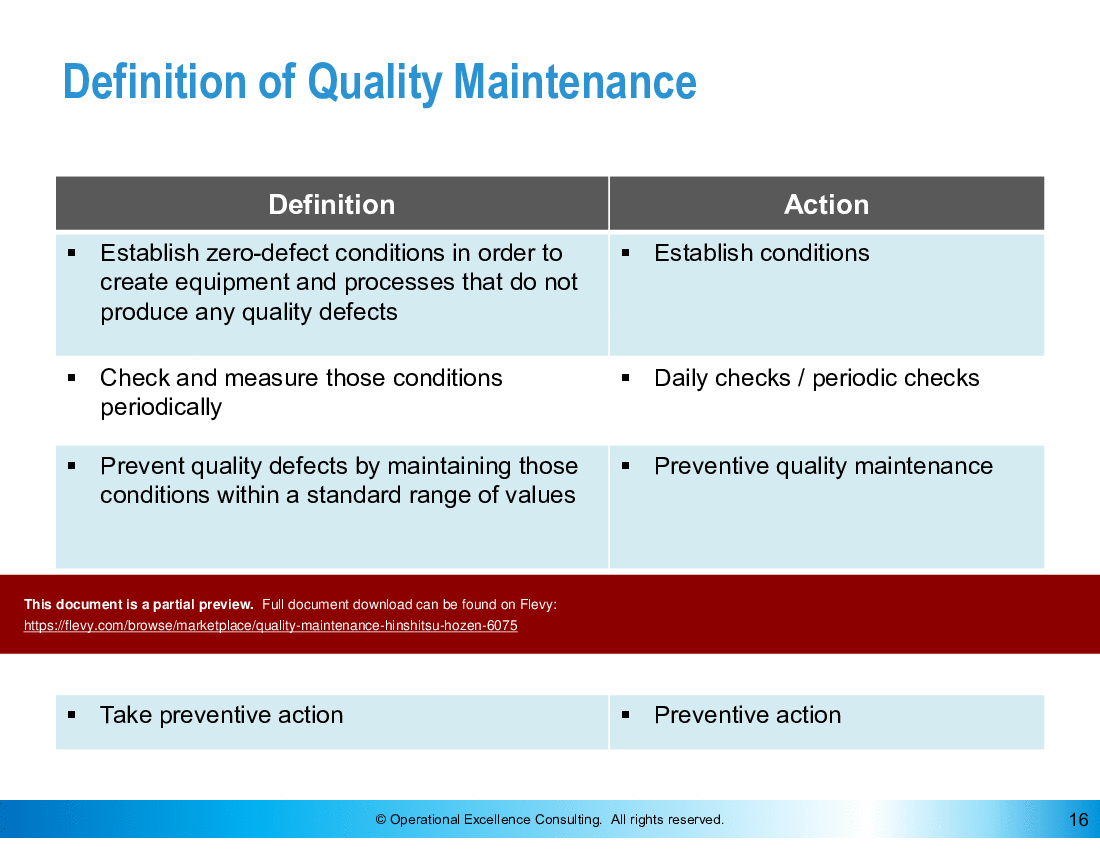
Quality Maintenance focuses on establishing and maintaining conditions that prevent defects in production processes, ensuring that equipment operates within specified parameters.

How does the 8-step process work?
The 8-step process provides a structured approach to identifying and eliminating defects through systematic analysis and corrective actions.

What are the 4M conditions?
The 4M conditions refer to Materials, Machines, Methods, and Men/Women, which are critical factors influencing product quality.

Can this presentation be customized for different industries?
Yes, the presentation can be tailored to reflect specific industry standards and practices relevant to your organization.

What tools are included in this presentation?
The presentation includes templates for QA and QM matrices, a 5 Why Analysis worksheet, and guidelines for P-M Analysis.

How can I implement these concepts in my organization?
Begin by training key personnel using this presentation, then apply the concepts to existing processes and continuously monitor for improvements.

What are the expected outcomes of implementing Quality Maintenance?
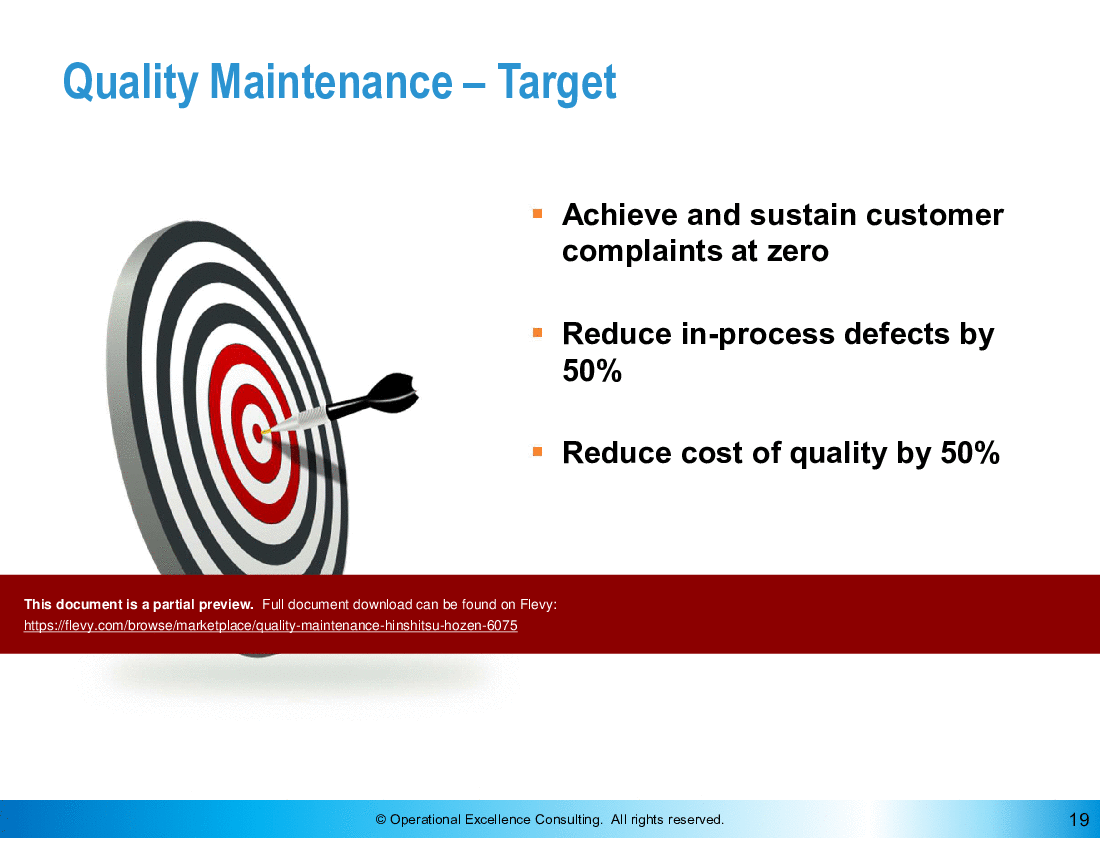
The primary outcomes include reduced defect rates, improved product quality, and enhanced operational efficiency.

Is there ongoing support available after the training?
Yes, Operational Excellence Consulting offers additional resources and consulting services to support your Quality Maintenance initiatives.

Glossary
•  4M Conditions - The 4 determinants of quality: Materials, Machines, Methods, and Men/Women.
•  Quality Maintenance - A systematic approach to maintaining conditions that prevent defects.
•  P-M Analysis - A method for analyzing and addressing chronic defects in production.
•  QA Matrix - A tool for identifying and analyzing defect sources in production processes.
•  QM Matrix - A framework for tracking quality characteristics and management items.
•  5 Why Analysis - A root cause analysis technique that involves asking "why" multiple times to uncover underlying issues.
•  Total Productive Maintenance (TPM) - A holistic approach to equipment maintenance that aims to achieve zero defects, breakdowns, and accidents.
•  Defect Loss - The loss incurred due to defects in products that require rework or result in scrap.
•  Continuous Improvement - Ongoing efforts to improve products, services, or processes.
•  Operational Excellence - A philosophy that emphasizes continuous improvement and the pursuit of efficiency in operations.
•  Autonomous Maintenance - A TPM pillar focused on empowering operators to take ownership of equipment maintenance.
•  Root Cause Analysis (RCA) - A method of problem-solving that aims to identify the root causes of faults or problems.
•  Preventive Maintenance - Maintenance performed to reduce the likelihood of equipment failure.
•  Standard Operating Procedures (SOPs) - Established procedures to ensure consistent quality and efficiency in operations.
•  Kaizen - A Japanese term meaning "continuous improvement," often used in business contexts.
•  Lean Manufacturing - A production practice that considers the expenditure of resources in any aspect other than the direct creation of value for the end customer to be wasteful and thus a target for elimination.
•  OEE (Overall Equipment Effectiveness) - A measure of how effectively a manufacturing operation is utilized.
•  Defect Rate - The percentage of defective products produced in a manufacturing process.
•  Quality Control - The process of ensuring that products meet specified requirements and standards.

Source: Best Practices in Quality Management, Hinshitsu Hozen PowerPoint Slides: TPM: Quality Maintenance (Hinshitsu Hozen) PowerPoint (PPTX) Presentation Slide Deck, Operational Excellence Consulting


$79.00
Developed by a renowned JIPM-certified TPM Instructor with extensive experience at industry leaders like Continental and Micron, this comprehensive presentation is your key to successful and streamlined TPM implementation.
Add to Cart
  

ABOUT THE AUTHOR

Author image
Additional documents from author: 257
Terms of usage (for all documents from this author)

Operational Excellence Consulting, founded in 2009 by Allan Ung, draws from extensive experience at Microsoft, IBM, and Underwriters Laboratories (UL). We specialize in strategy deployment, customer experience design, and operational excellence, applying Design Thinking, Lean, and Systems Thinking to maximize customer value and minimize waste.

Our ... [read more]

Ask the Author a Question

You must be logged in to contact the author.

Click here to log in Click here register

Did you know?
The average daily rate of a McKinsey consultant is $6,625 (not including expenses). The average price of a Flevy document is $65.



Trusted by over 10,000+ Client Organizations
Since 2012, we have provided business templates to over 10,000 businesses and organizations of all sizes, from startups and small businesses to the Fortune 100, in over 130 countries.
AT&T GE Cisco Intel IBM Coke Dell Toyota HP Nike Samsung Microsoft Astrazeneca JP Morgan KPMG Walgreens Walmart 3M Kaiser Oracle SAP Google E&Y Volvo Bosch Merck Fedex Shell Amgen Eli Lilly Roche AIG Abbott Amazon PwC T-Mobile Broadcom Bayer Pearson Titleist ConEd Pfizer NTT Data Schwab


Read Customer Testimonials

 
"My FlevyPro subscription provides me with the most popular frameworks and decks in demand in today’s market. They not only augment my existing consulting and coaching offerings and delivery, but also keep me abreast of the latest trends, inspire new products and service offerings for my practice, and educate me "

– Bill Branson, Founder at Strategic Business Architects
 
"Flevy is our 'go to' resource for management material, at an affordable cost. The Flevy library is comprehensive and the content deep, and typically provides a great foundation for us to further develop and tailor our own service offer."

– Chris McCann, Founder at Resilient.World
 
"Flevy.com has proven to be an invaluable resource library to our Independent Management Consultancy, supporting and enabling us to better serve our enterprise clients.

The value derived from our [FlevyPro] subscription in terms of the business it has helped to gain far exceeds the investment made, making a subscription a no-brainer for any growing consultancy – or in-house strategy team."

– Dean Carlton, Chief Transformation Officer, Global Village Transformations Pty Ltd.
 
"Flevy is now a part of my business routine. I visit Flevy at least 3 times each month.

Flevy has become my preferred learning source, because what it provides is practical, current, and useful in this era where the business world is being rewritten.

In today's environment where there are so "

– Omar Hernán Montes Parra, CEO at Quantum SFE
 
"[Flevy] produces some great work that has been/continues to be of immense help not only to myself, but as I seek to provide professional services to my clients, it gives me a large "tool box" of resources that are critical to provide them with the quality of service and outcomes they are expecting."

– Royston Knowles, Executive with 50+ Years of Board Level Experience
 
"The wide selection of frameworks is very useful to me as an independent consultant. In fact, it rivals what I had at my disposal at Big 4 Consulting firms in terms of efficacy and organization."

– Julia T., Consulting Firm Owner (Former Manager at Deloitte and Capgemini)
 
"As a small business owner, the resource material available from FlevyPro has proven to be invaluable. The ability to search for material on demand based our project events and client requirements was great for me and proved very beneficial to my clients. Importantly, being able to easily edit and tailor "

– Michael Duff, Managing Director at Change Strategy (UK)
 
"I have used FlevyPro for several business applications. It is a great complement to working with expensive consultants. The quality and effectiveness of the tools are of the highest standards."

– Moritz Bernhoerster, Global Sourcing Director at Fortune 500


Customers Also Bought These Documents

90-slide PowerPoint, Excel template
$95.00


Customers Also Like These Documents

Explore Templates on Related Management Topics


Your Recently Viewed Documents
Receive our FREE presentation on Operational Excellence

This 50-slide presentation provides a high-level introduction to the 4 Building Blocks of Operational Excellence. Achieving OpEx requires the implementation of a Business Execution System that integrates these 4 building blocks.