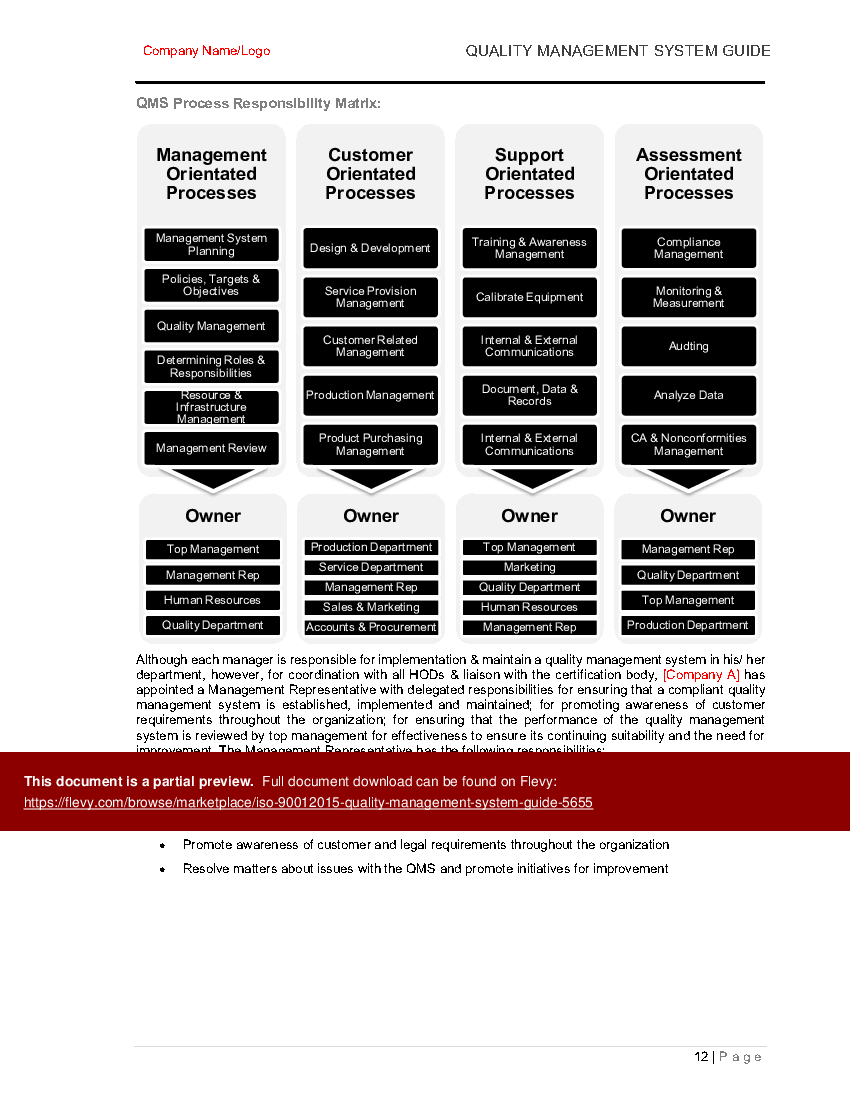
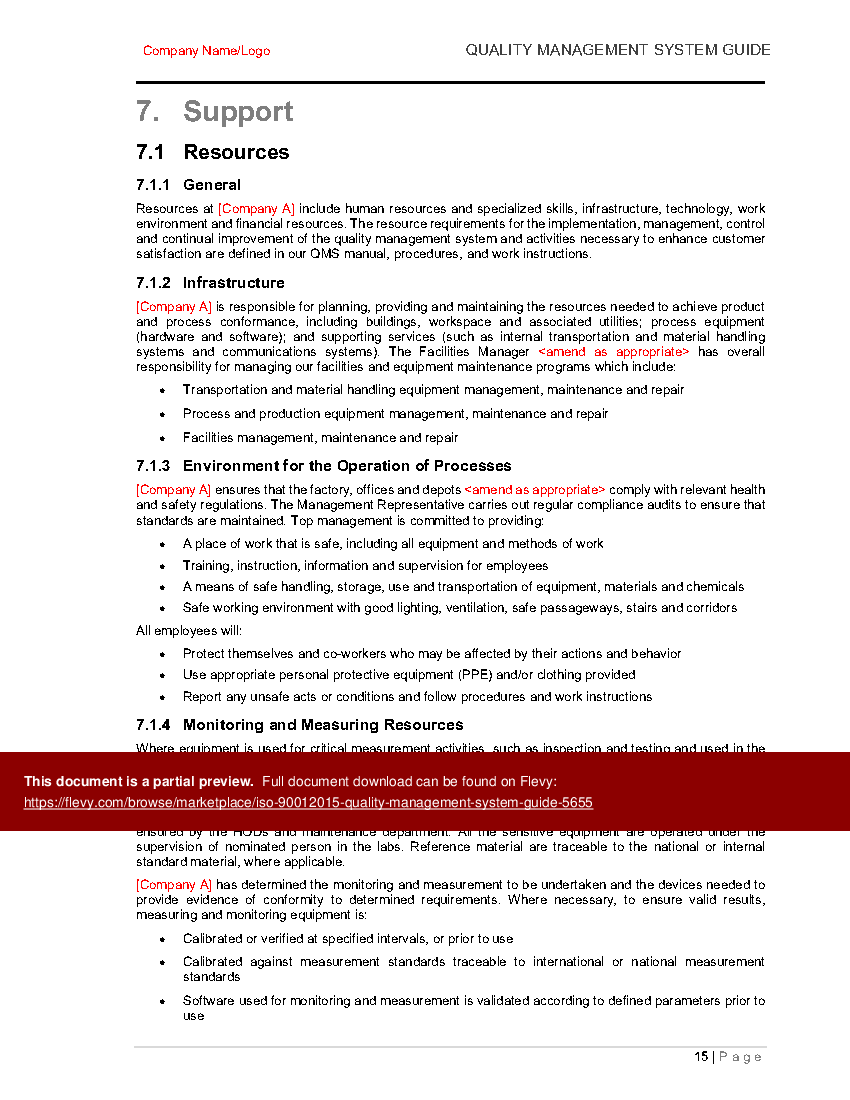
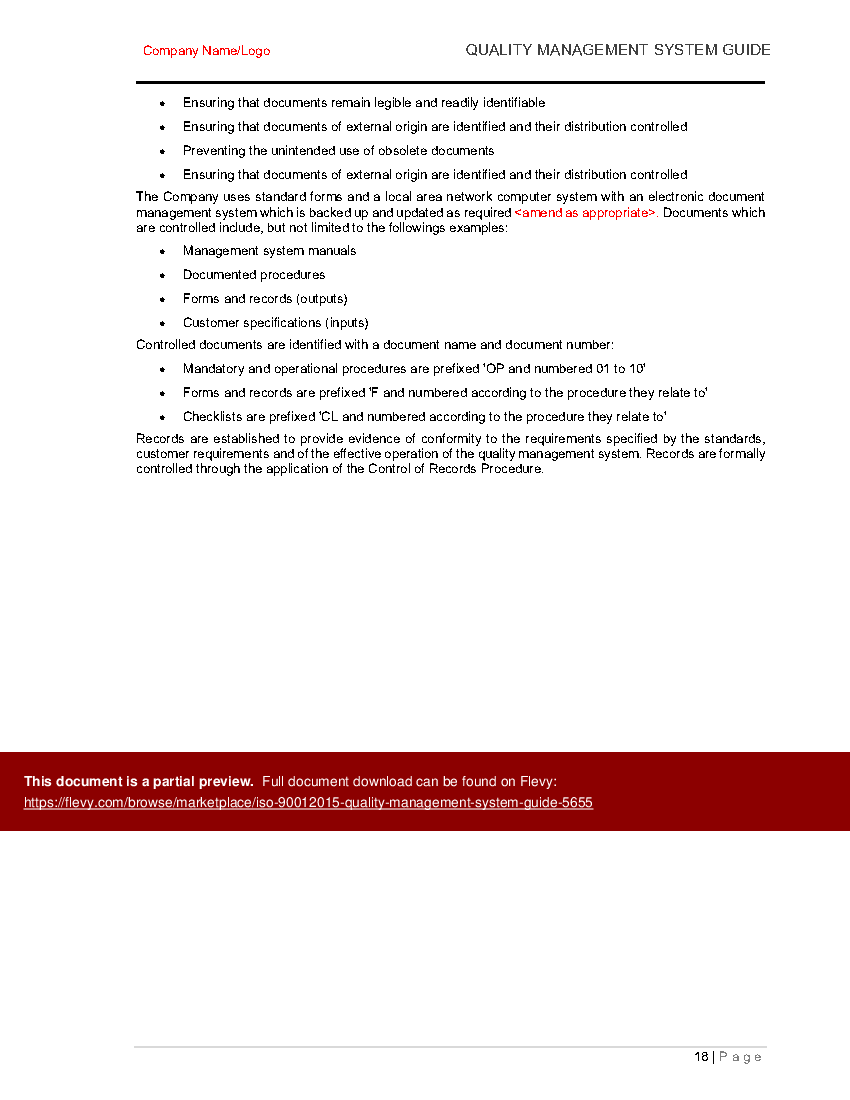
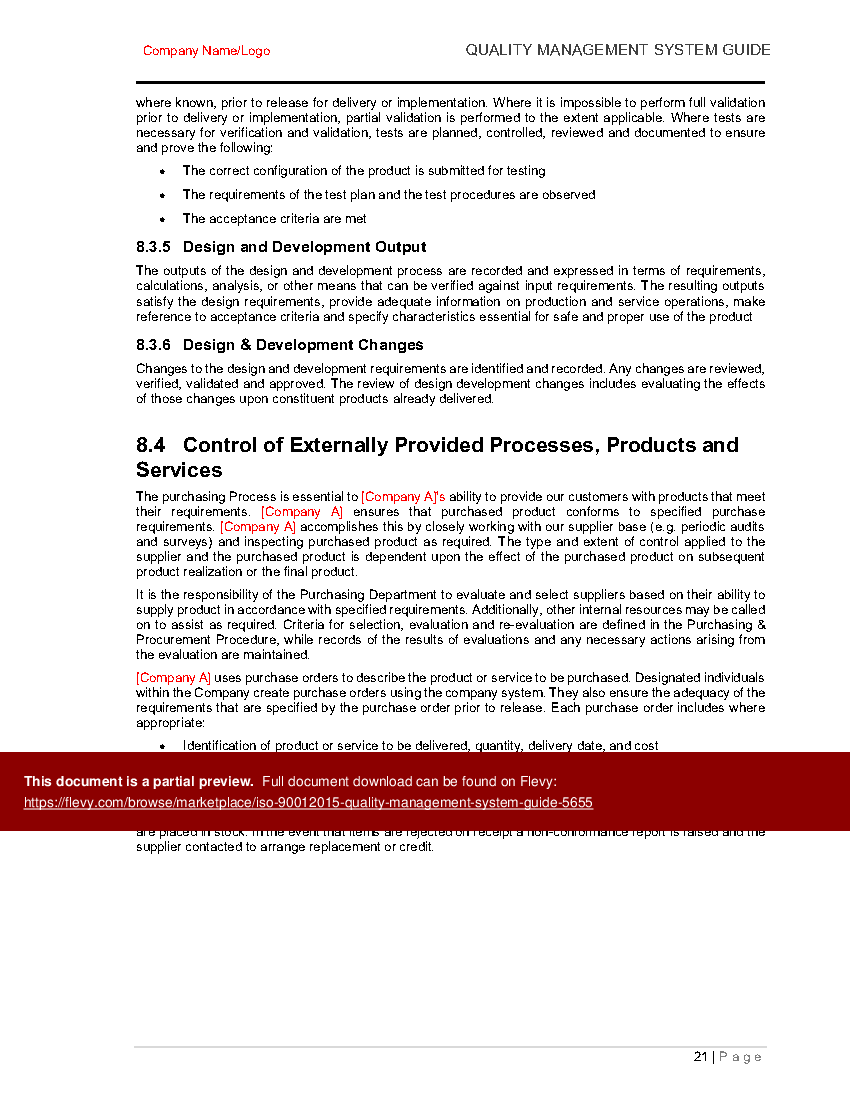

ISO 9001:2015 Quality Management System Guide   33-page Word document
$39.00

ISO 9001:2015 Quality Management System Guide (33-page Word document) Preview Image
Log in to unlock full preview.
ISO 9001:2015 Quality Management System Guide (33-page Word document) Preview Image
Arrow   Click main image to view in full screen.

ISO 9001:2015 Quality Management System Guide (Word DOCX)

Word (DOCX) 33 Pages

Top 500 Best Practice $39.00
Quality Management Guide used by experienced consultants in assisting clients with implementing ISO9001 as well as for proposal purposes (where required)
Add to Cart


Immediate download
Fully editable Word
Free lifetime updates

BENEFITS OF THIS WORD DOCUMENT

  1. Provides a guide for implementing the quality management system based on the ISO 9001:2015 standard
  2. Enhanced operational efficiency (through implementation)
  3. Enhanced customer satisfaction (through implementation)

QUALITY MANAGEMENT WORD DESCRIPTION

Editor Summary The ISO 9001:2015 Quality Management System Guide is a 33-page DOCX by Corporate Finance 101 that outlines ISO 9001:2015 requirements and QMS process controls organized around the Plan-Do-Check-Act (PDCA) cycle. Read more

Organizations around the world have adopted ISO 9001:2015 as their quality management standard because ISO 9001 helps your company assure quality, save money and customers expect it.

ISO 9001 applies to all types of organizations and the ISO 9001 Approach is Based on the Plan-Do-Check-Act (PDCA) Cycle.

Topics covered in the Editable Quality Management System (QMS) Guide include:
1. Introduction to the QMS in terms of the PDCA cycle
2. Scope – International Organization Standard ISO 9001:2015 describes the requirements for the QMS
3. Organizational context – The process is undertaken to review and analyze key aspects of a Company and its stakeholders to determine the Company's strategic direction
4. Leadership – The commitment by Management to implementing and developing the QMS, and the corporate policies defining this commitment
5. Planning – Matters determined by internal and external issues which affect the QMS and interested parties as well as actions to address risks and opportunities
6. Support – Resources and documented statements concerning corporate policies, targets and objectives for effective implementation of QMS
7. Operations – Documented procedures that describe processes and controls to be implemented
8. Performance evaluation – Define, plan and implement monitoring, measurement, analysis and improvement activities needed to assure product and QMS conformity
9. Improvement – Steps taken to improve its processes, products and services of a Company

Got a question about the product? Email us at support@flevy.com or ask the author directly by using the "Ask the Author a Question" form. If you cannot view the preview above this document description, go here to view the large preview instead.

MARCUS OVERVIEW

This synopsis was written by Marcus [?] based on the analysis of the full 33-slide presentation.


Executive Summary
The ISO 9001:2015 Quality Management System Guide serves as a comprehensive framework for organizations aiming to implement and maintain an effective quality management system (QMS) in accordance with international standards. This guide outlines the essential requirements of ISO 9001:2015, detailing the processes necessary for achieving product and service realization through systematic process control. It is designed for use by consultants and organizations seeking to enhance their quality management practices, ensuring compliance and continuous improvement while meeting customer expectations.

Who This Is For and When to Use
•  Quality Managers responsible for implementing QMS frameworks
•  Consultants assisting organizations in ISO 9001:2015 certification
•  Operational leaders focused on process improvement and compliance
•  Internal auditors evaluating the effectiveness of quality management systems

Best-fit moments to use this deck:
•  During the initial stages of ISO 9001:2015 implementation
•  For training sessions on quality management practices
•  When conducting internal audits or management reviews
•  In preparation for third-party certification assessments

Learning Objectives
•  Define the key principles of ISO 9001:2015 and their application in a QMS
•  Establish effective quality objectives aligned with organizational goals
•  Implement systematic processes for risk management and improvement
•  Develop a framework for monitoring and measuring QMS performance
•  Foster a culture of continuous improvement within the organization
•  Ensure compliance with statutory and regulatory requirements related to quality

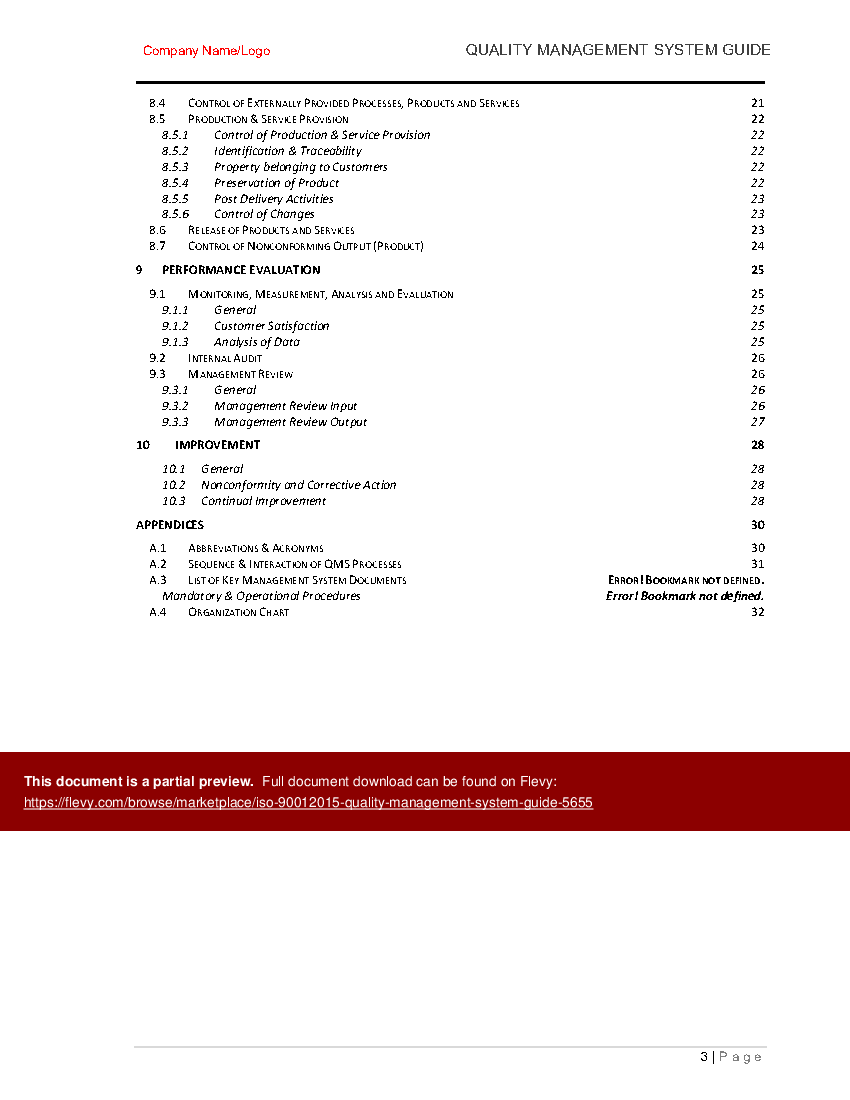
Table of Contents
•  Introduction (page 4)
•  Scope (page 5)
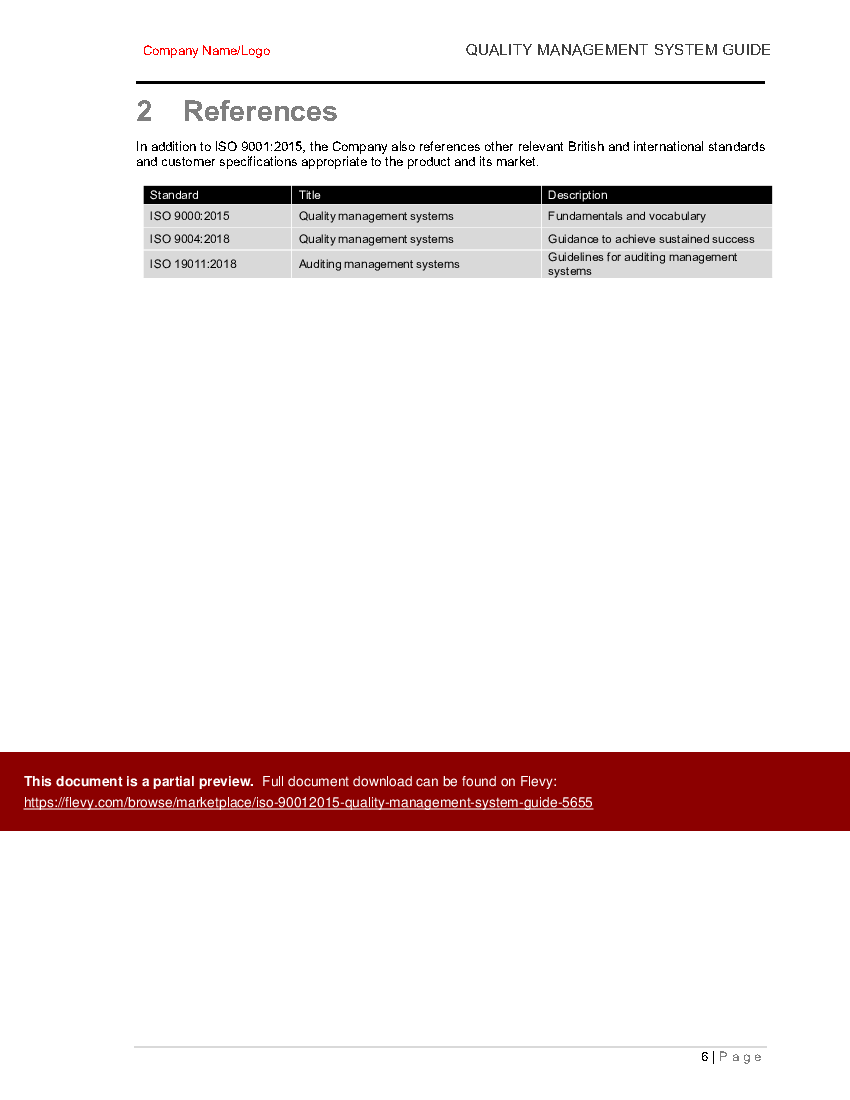
•  References (page 6)
•  Terms & Definitions (page 7)
•  Context of the Organization (page 8)
•  Leadership (page 10)
•  Planning (page 13)
•  Support (page 15)
•  Operation (page 19)
•  Performance Evaluation (page 25)
•  Improvement (page 28)
•  Appendices (page 30)

Primary Topics Covered
•  Scope of the QMS - Defines the boundaries and applicability of the quality management system within the organization, ensuring alignment with ISO 9001:2015 requirements.
•  Leadership Commitment - Emphasizes the role of top management in fostering a quality-focused culture and ensuring the QMS is effectively implemented and maintained.
•  Risk Management - Details the processes for identifying, assessing, and addressing risks and opportunities that could impact the QMS.
•  Customer Focus - Highlights the importance of understanding and meeting customer requirements to enhance satisfaction and loyalty.
•  Performance Evaluation - Outlines methods for monitoring, measuring, and analyzing QMS performance to drive continual improvement.
•  Nonconformity and Corrective Action - Describes the procedures for identifying and addressing nonconformities to prevent recurrence and improve processes.

Deliverables, Templates, and Tools
•  Quality management system manual template for documenting QMS processes
•  Risk assessment and management procedure template
•  Customer feedback and complaint handling process template
•  Internal audit checklist for evaluating QMS compliance
•  Management review meeting agenda template
•  Corrective action request form for tracking nonconformities

Slide Highlights
•  Overview of the PDCA (Plan-Do-Check-Act) cycle as a framework for continuous improvement
•  Organizational context analysis slide illustrating internal and external factors affecting the QMS
•  Leadership commitment slide detailing the roles and responsibilities of top management
•  Risk management process flowchart for identifying and addressing risks and opportunities
•  Performance evaluation metrics dashboard for monitoring QMS effectiveness

Potential Workshop Agenda
ISO 9001:2015 Implementation Overview (90 minutes)
•  Introduce the ISO 9001:2015 standard and its significance
•  Discuss the benefits of implementing a QMS
•  Outline the steps for successful implementation

Risk Management and Continuous Improvement (60 minutes)
•  Identify key risks and opportunities within the organization
•  Develop strategies for continuous improvement and customer satisfaction
•  Review case studies of successful QMS implementations

Internal Audit and Management Review (90 minutes)
•  Train participants on conducting effective internal audits
•  Discuss the management review process and its importance in QMS
•  Develop action plans for addressing identified nonconformities

Customization Guidance
•  Tailor the QMS manual to reflect the specific processes and terminology of your organization
•  Update risk management procedures to align with organizational priorities and industry standards
•  Modify customer feedback processes to incorporate relevant metrics and reporting structures
•  Adjust training materials to address the unique needs of your workforce and organizational culture

Secondary Topics Covered
•  Documentation control procedures for managing QMS records
•  Employee training and competence development strategies
•  Communication plans for disseminating QMS information
•  Supplier evaluation and management processes
•  Environmental and safety considerations within the QMS

Topic FAQ

What are the main ISO 9001:2015 clauses I need to cover when building a QMS?

ISO 9001:2015 implementation typically addresses organizational context, leadership, planning, support, operations, performance evaluation, and improvement. The guide’s Table of Contents maps these into its primary topics from Context of the Organization through Improvement, covering the 7 core sections listed in the document.

How does the Plan-Do-Check-Act (PDCA) cycle apply to a QMS implementation?

PDCA provides an iterative structure for planning QMS activities (plan), implementing controls (do), monitoring and measuring performance (check), and acting on findings to improve processes (act). The guide includes an overview slide explaining PDCA as the continuous-improvement backbone of the QMS with a PDCA overview slide.

What templates help manage nonconformities and corrective actions in a QMS?

Effective QMS nonconformity handling relies on documented procedures, an internal audit checklist to detect issues, and a corrective action request form to record root causes and follow-up. The guide provides a corrective action request form and internal audit checklist to manage nonconformities.

What should I look for when buying an ISO 9001:2015 QMS guide or template?

Prioritize editable formats (DOCX), clearly mapped ISO clauses, and practical templates for the QMS manual, risk assessments, internal audits, management reviews, and corrective actions. Also look for customization guidance to adapt templates to your processes; seek a QMS manual template and internal audit checklist.

How much workshop time does the guide suggest for an implementation and audit readiness program?

The guide outlines sample workshop modules, including a 90‑minute ISO 9001:2015 Implementation Overview, a 60‑minute Risk Management and Continuous Improvement session, and a 90‑minute Internal Audit and Management Review session to support readiness activities.

Which steps should I prioritize when preparing for a third‑party ISO 9001:2015 certification audit?

Prioritize defining the QMS scope, analyzing organizational context, securing leadership commitment, documenting planning for risks and opportunities, implementing operational controls, conducting internal audits, and holding management review meetings. The guide supplies an internal audit checklist and a management review agenda to support these steps.

What methods are recommended to measure QMS performance and customer satisfaction?

Measure QMS performance via defined monitoring, measurement, analysis activities and dashboards, and measure customer satisfaction through surveys, feedback forms, complaint analysis, and warranty/repeat business tracking. The guide includes a performance evaluation metrics dashboard for monitoring effectiveness.

What customization is typically required to adapt an ISO 9001:2015 template to my organization?

Customize the QMS manual to reflect your processes and terminology, update risk-management procedures to align with priorities, tailor customer feedback processes for relevant metrics, and adjust training materials to workforce needs. The guide’s customization guidance specifically recommends adapting the QMS manual template.

Document FAQ
These are questions addressed within this presentation.

What is ISO 9001:2015?
ISO 9001:2015 is an international standard that specifies requirements for a quality management system, focusing on meeting customer needs and enhancing satisfaction.

How can this guide help my organization?
This guide provides a structured approach to implementing a QMS that complies with ISO 9001:2015, ensuring effective processes and continuous improvement.

What are the key benefits of implementing a QMS?
Implementing a QMS can lead to improved product quality, enhanced customer satisfaction, increased operational efficiency, and better risk management.

How often should the QMS be reviewed?
The QMS should be reviewed at planned intervals, typically during management review meetings, to ensure its ongoing suitability and effectiveness.

What is the role of top management in the QMS?
Top management is responsible for establishing the quality policy, ensuring resources are available, and promoting a culture of quality throughout the organization.

How do we handle nonconformities?
Nonconformities should be identified, documented, and addressed through corrective action processes to prevent recurrence and improve overall quality.

What training is required for employees?
Employees should receive training on the QMS processes relevant to their roles, including quality objectives, risk management, and customer satisfaction practices.

How do we measure customer satisfaction?
Customer satisfaction can be measured through surveys, feedback forms, complaint analysis, and monitoring repeat business and warranty claims.

Glossary
•  QMS - Quality Management System
•  ISO - International Organization for Standardization
•  PDCA - Plan-Do-Check-Act
•  Nonconformity - Failure to meet a specified requirement
•  Corrective Action - Action taken to eliminate the cause of a nonconformity
•  Customer Satisfaction - Measure of how products and services meet customer expectations
•  Management Review - Periodic evaluation of the QMS by top management
•  Internal Audit - Systematic examination of the QMS to ensure compliance and effectiveness
•  Stakeholders - Individuals or groups with an interest in the organization's performance
•  Risk Management - Process of identifying, assessing, and mitigating risks to the QMS
•  Continual Improvement - Ongoing effort to enhance products, services, or processes
•  Documentation Control - Procedures for managing QMS documents and records
•  Training and Competence - Ensuring employees have the necessary skills and knowledge for their roles
•  Supplier Evaluation - Process of assessing suppliers to ensure they meet quality requirements
•  Customer Feedback - Information provided by customers regarding their satisfaction with products and services
•  Performance Metrics - Quantitative measures used to assess the effectiveness of the QMS
•  Quality Objectives - Specific goals related to quality that the organization aims to achieve
•  Audit Findings - Results of an internal audit, including identified nonconformities and areas for improvement
•  Management Representative - Individual responsible for overseeing the QMS and ensuring compliance with ISO standards

Source: Best Practices in Quality Management, ISO 9001 Word: ISO 9001:2015 Quality Management System Guide Word (DOCX) Document, Corporate Finance 101


$39.00
Quality Management Guide used by experienced consultants in assisting clients with implementing ISO9001 as well as for proposal purposes (where required)
Add to Cart
  

ABOUT THE AUTHOR

Additional documents from author: 37

Corporate Finance 101 consists of ex EY and Grant Thornton consultants who have experience helping professionals across disciplines, with a focus on strategy consulting and transaction advisory.

These documents are prepared to help you increase the impact of your business communication and save you valuable time.

The documents are based upon techniques learned while working at ... [read more]

Ask the Author a Question

You must be logged in to contact the author.

Click here to log in Click here register

Did you know?
The average daily rate of a McKinsey consultant is $6,625 (not including expenses). The average price of a Flevy document is $65.


Trusted by over 10,000+ Client Organizations
Since 2012, we have provided business templates to over 10,000 businesses and organizations of all sizes, from startups and small businesses to the Fortune 100, in over 130 countries.
AT&T GE Cisco Intel IBM Coke Dell Toyota HP Nike Samsung Microsoft Astrazeneca JP Morgan KPMG Walgreens Walmart 3M Kaiser Oracle SAP Google E&Y Volvo Bosch Merck Fedex Shell Amgen Eli Lilly Roche AIG Abbott Amazon PwC T-Mobile Broadcom Bayer Pearson Titleist ConEd Pfizer NTT Data Schwab


Read Customer Testimonials

 
"Flevy is now a part of my business routine. I visit Flevy at least 3 times each month.

Flevy has become my preferred learning source, because what it provides is practical, current, and useful in this era where the business world is being rewritten.

In today's environment where there are so "

– Omar Hernán Montes Parra, CEO at Quantum SFE
 
"As a small business owner, the resource material available from FlevyPro has proven to be invaluable. The ability to search for material on demand based our project events and client requirements was great for me and proved very beneficial to my clients. Importantly, being able to easily edit and tailor "

– Michael Duff, Managing Director at Change Strategy (UK)
 
"Flevy.com has proven to be an invaluable resource library to our Independent Management Consultancy, supporting and enabling us to better serve our enterprise clients.

The value derived from our [FlevyPro] subscription in terms of the business it has helped to gain far exceeds the investment made, making a subscription a no-brainer for any growing consultancy – or in-house strategy team."

– Dean Carlton, Chief Transformation Officer, Global Village Transformations Pty Ltd.
 
"I like your product. I'm frequently designing PowerPoint presentations for my company and your product has given me so many great ideas on the use of charts, layouts, tools, and frameworks. I really think the templates are a valuable asset to the job."

– Roberto Fuentes Martinez, Senior Executive Director at Technology Transformation Advisory
 
"As a consulting firm, we had been creating subject matter training materials for our people and found the excellent materials on Flevy, which saved us 100's of hours of re-creating what already exists on the Flevy materials we purchased."

– Michael Evans, Managing Director at Newport LLC
 
"My FlevyPro subscription provides me with the most popular frameworks and decks in demand in today’s market. They not only augment my existing consulting and coaching offerings and delivery, but also keep me abreast of the latest trends, inspire new products and service offerings for my practice, and educate me "

– Bill Branson, Founder at Strategic Business Architects
 
"I have found Flevy to be an amazing resource and library of useful presentations for lean sigma, change management and so many other topics. This has reduced the time I need to spend on preparing for my performance consultation. The library is easily accessible and updates are regularly provided. A wealth of great information."

– Cynthia Howard RN, PhD, Executive Coach at Ei Leadership
 
"Flevy is our 'go to' resource for management material, at an affordable cost. The Flevy library is comprehensive and the content deep, and typically provides a great foundation for us to further develop and tailor our own service offer."

– Chris McCann, Founder at Resilient.World


Customers Also Bought These Documents


Customers Also Like These Documents

Explore Templates on Related Management Topics


Your Recently Viewed Documents
Receive our FREE presentation on Operational Excellence

This 50-slide presentation provides a high-level introduction to the 4 Building Blocks of Operational Excellence. Achieving OpEx requires the implementation of a Business Execution System that integrates these 4 building blocks.










