
Internal Auditors Training Course on QMS as per ISO 9001:2015
The Internal Auditors Training Course on QMS as per ISO 9001:2015 is a vital initiative aimed at equipping participants with a comprehensive understanding of the Quality Management System (QMS) framework and the essential skills required to perform internal audits. This training is designed to empower participants to contribute effectively to their organization's journey towards consistent quality improvement, compliance, and operational excellence.
Course Overview
The course focuses on two primary objectives:
1. Understanding the ISO 9001:2015 System: Participants will delve into the key principles, structure, and requirements of ISO 9001:2015. The training will offer insights into the standard's process-based approach and its emphasis on risk-based thinking, customer satisfaction, and continual improvement.
2. Acquiring Internal Audit Skills: Participants will learn the methodologies and techniques needed to conduct effective internal audits. This includes planning, executing, and reporting audits to ensure the QMS aligns with ISO 9001:2015 requirements.
Learning Approach
The training combines theoretical knowledge with practical exercises, ensuring that participants gain hands-on experience. Case studies, group discussions, and role-playing scenarios simulate real-world audit situations, fostering active engagement and deeper understanding. Participants are encouraged to share their organizational contexts and challenges to tailor the learning experience.
Key Outcomes
By the end of the course, participants will:
• Be familiar with ISO 9001:2015 requirements and their application.
• Develop the confidence to plan and conduct internal audits effectively.
• Understand how to assess compliance, identify gaps, and recommend corrective actions.
• Contribute to their organization's ability to meet quality objectives and enhance customer satisfaction.
Conclusion
The Internal Auditors Training Course on QMS as per ISO 9001:2015 is an essential step for organizations seeking to align with global standards and ensure their processes are robust, efficient, and customer-focused. Through this training, participants will play a critical role in upholding and improving the QMS, paving the way for sustained organizational success.
Got a question about the product? Email us at support@flevy.com or ask the author directly by using the "Ask the Author a Question" form. If you cannot view the preview above this document description, go here to view the large preview instead.
Executive Summary
The Internal Auditors Training Course on QMS - ISO 9001:2015 is designed to equip participants with essential skills for conducting internal audits within a Quality Management System (QMS). This comprehensive training, developed by experts with extensive consulting experience, focuses on the principles of ISO 9001:2015, the audit process as outlined in ISO 19011:2018, and effective communication during audits. Attendees will gain practical knowledge to identify requirements, report findings, and implement corrective actions, enhancing their organization's compliance and operational efficiency.
Who This Is For and When to Use
• Internal auditors seeking to enhance their auditing skills and knowledge of ISO 9001:2015
• Quality managers responsible for overseeing QMS compliance
• Compliance officers tasked with ensuring adherence to quality standards
• Organizational leaders aiming to improve quality management practices
• Consultants providing guidance on ISO standards and QMS implementation
Best-fit moments to use this deck:
• During onboarding for new internal auditors
• As a refresher course for experienced auditors
• When preparing for an upcoming ISO 9001:2015 certification audit
• For teams looking to enhance their internal audit processes
Learning Objectives
• Define the key principles and requirements of ISO 9001:2015
• Build skills to conduct effective internal audits in accordance with ISO 19011:2018
• Establish a systematic approach to identifying and reporting audit findings
• Develop effective communication strategies during audits
• Create actionable corrective action plans for nonconformities
• Enhance understanding of risk-based thinking in audit processes
Table of Contents
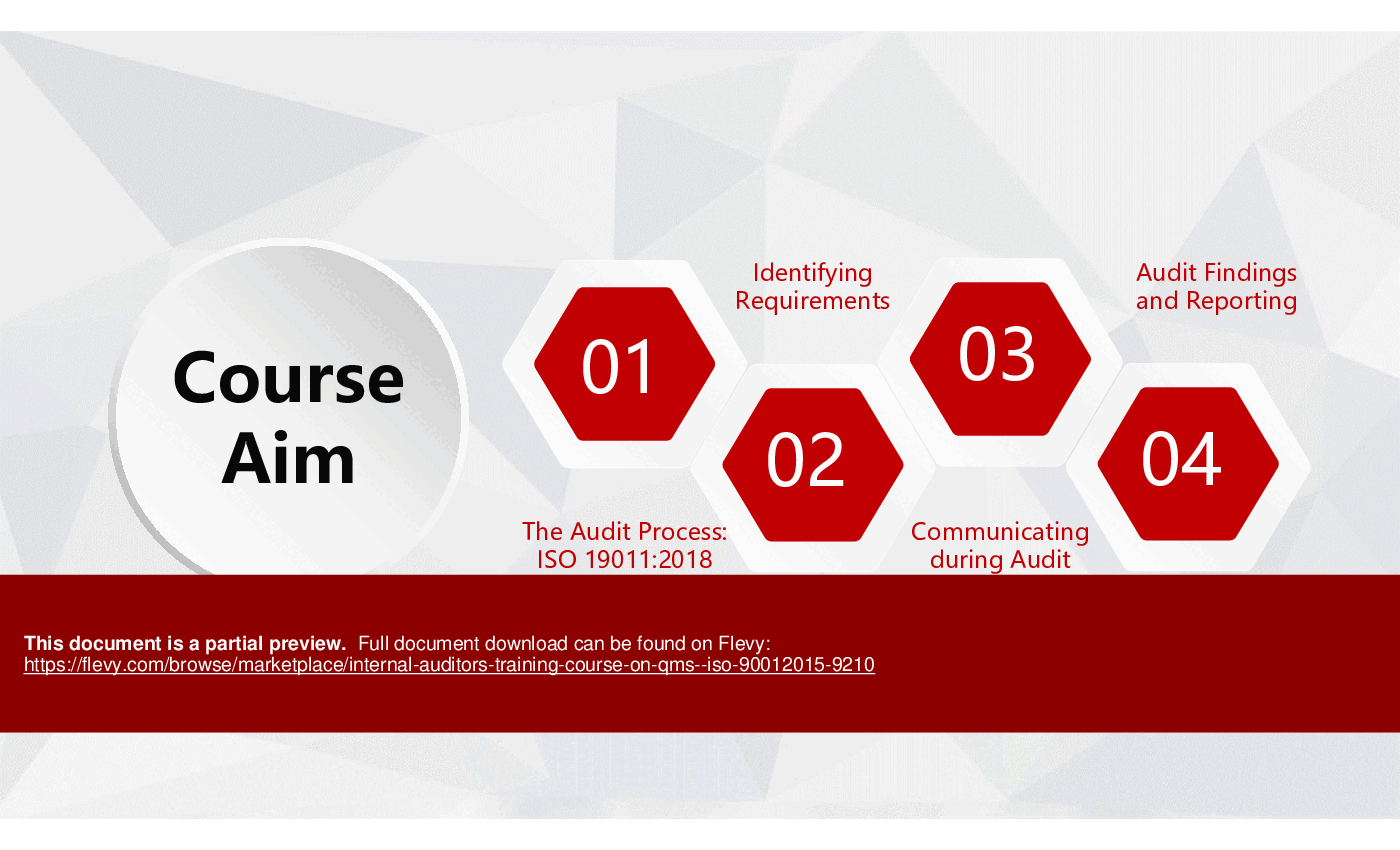
• Course Aim (page 2)
• Who is ISO? (page 6)
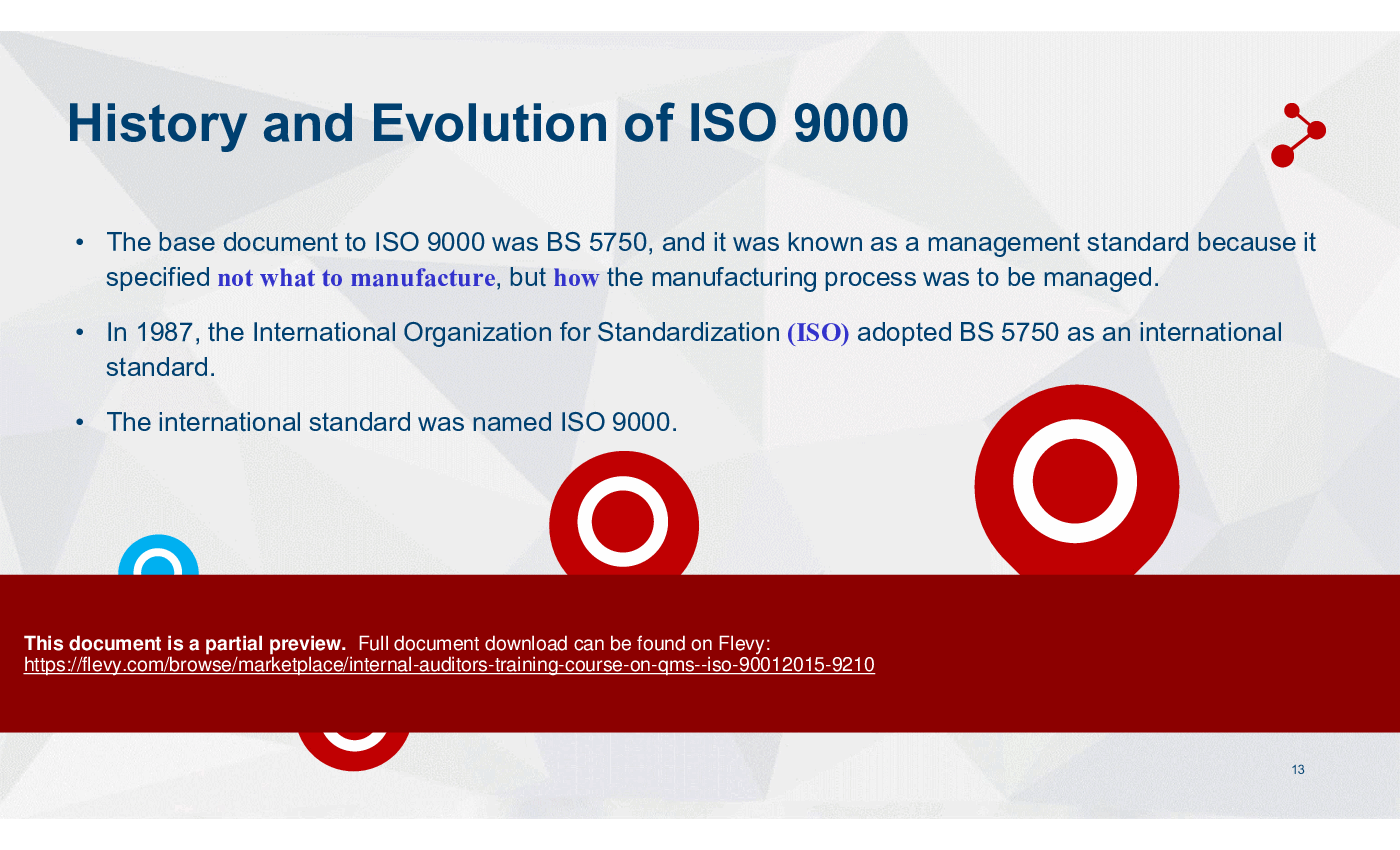
• History and Evolution of ISO 9000 (page 12)
• Benefits of Implementation (page 15)
• Key Concepts of ISO 9001:2015 (page 17)
• The Audit Process: ISO 19011:2018 (page 28)
• Audit Findings and Reporting (page 91)
Primary Topics Covered
• ISO 9001:2015 Overview - An introduction to the ISO 9001:2015 standard, focusing on its purpose and requirements for a quality management system.
• Audit Process - Detailed guidance on the audit process as per ISO 19011:2018, including planning, conducting, and reporting audits.
• Audit Findings - Classification of audit findings into positive, conformity, nonconformity, and observation categories, with emphasis on effective reporting.
• Corrective Action Plans - Steps to develop and implement corrective action plans for identified nonconformities.
• Communication during Audits - Strategies for effective communication with auditees, including questioning techniques and active listening.
• Risk-Based Thinking - Understanding the importance of risk-based thinking in the context of audits and quality management.
Deliverables, Templates, and Tools
• Internal audit plan template for scheduling and organizing audits
• Checklist templates for conducting audits effectively
• Audit report template for documenting findings and recommendations
• Corrective Action Plan (CAP) template for addressing nonconformities
• Communication guidelines for effective auditor-auditee interactions
• Sample audit evidence triangle for understanding evidence collection
Slide Highlights
• Overview of ISO 9001:2015 and its significance in quality management
• The audit process flowchart illustrating key steps and responsibilities
• Examples of effective audit findings and reporting formats
• Strategies for managing difficult situations during audits
• Key concepts of communication and questioning techniques for auditors
Potential Workshop Agenda
Introduction and Course Overview (30 minutes)
• Welcome and delegate introductions
• Overview of course objectives and structure
Audit Planning and Preparation (60 minutes)
• Discuss the importance of audit planning
• Group exercise: Create an internal audit plan
Conducting the Audit (120 minutes)
• Interactive session on audit execution techniques
• Role-playing exercise to practice communication skills
Reporting and Follow-Up (60 minutes)
• Review of audit findings and reporting requirements
• Group exercise: Develop a corrective action plan
Customization Guidance
• Tailor the internal audit plan template to fit specific departmental needs
• Adjust checklist items based on the unique processes of the organization
• Incorporate organizational terminology and metrics into the training materials
• Update case studies and examples to reflect current industry practices
Secondary Topics Covered
• History and evolution of ISO standards
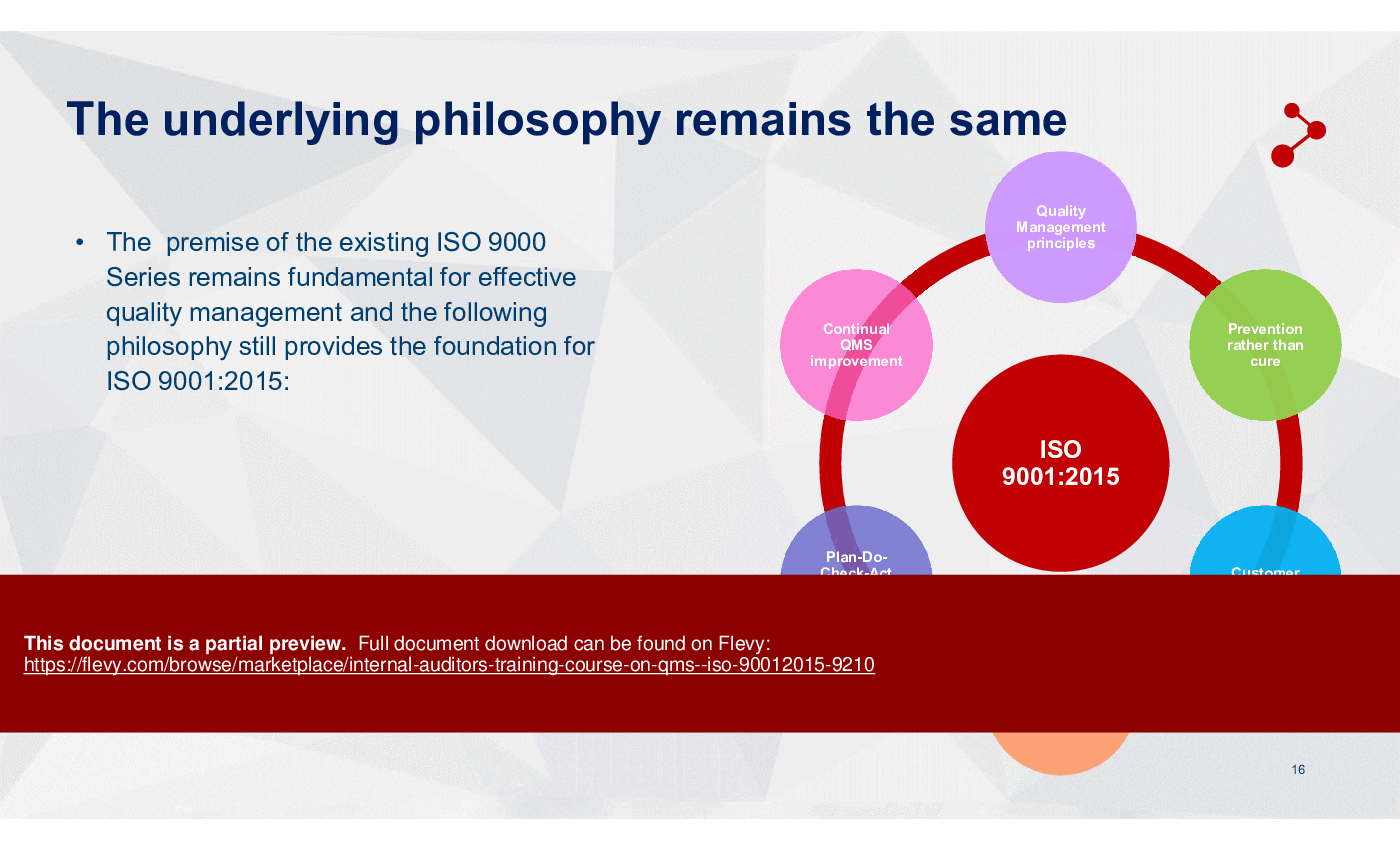
• Importance of continual improvement in quality management
• Overview of ISO 19011:2018 auditing guidelines
• Types of audits: first-party, second-party, and third-party audits
• Principles of auditing including integrity, confidentiality, and evidence-based approaches
Topic FAQ
Document FAQ
These are questions addressed within this presentation.
What is the purpose of ISO 9001:2015?
ISO 9001:2015 establishes a framework for organizations to ensure consistent quality in their products and services, enhancing customer satisfaction and operational efficiency.
Who should attend this training course?
This course is ideal for internal auditors, quality managers, compliance officers, and organizational leaders involved in quality management systems.
What are the key benefits of implementing ISO 9001:2015?
Benefits include improved operational efficiency, enhanced customer satisfaction, and international recognition for quality management practices.
How does the audit process work?
The audit process involves planning, conducting, reporting, and following up on audits to assess compliance with ISO standards and identify areas for improvement.
What types of audits are covered in this training?
The training covers first-party, second-party, and third-party audits, emphasizing the differences and appropriate applications for each type.
What is a corrective action plan?
A corrective action plan outlines the steps an organization will take to address identified nonconformities and prevent their recurrence.
How can communication be improved during audits?
Effective communication can be enhanced through active listening, clear questioning techniques, and establishing rapport with auditees.
What is risk-based thinking in audits?
Risk-based thinking involves identifying and assessing risks that could impact the effectiveness of the quality management system, allowing for proactive management and improvement.
Glossary
• ISO - International Organization for Standardization, responsible for developing quality standards.
• QMS - Quality Management System, a structured system for managing quality processes.
• Nonconformity - A deviation from a requirement in the quality management system.
• Corrective Action Plan (CAP) - A plan outlining actions to address nonconformities.
• Audit Evidence - Information collected during an audit to support findings and conclusions.
• Audit Report - A document summarizing the audit process, findings, and recommendations.
• Risk-Based Thinking - An approach that considers risks in the management of quality processes.
• Internal Audit - An audit conducted within an organization to assess compliance with its own policies and standards.
• External Audit - An audit conducted by an independent party to assess compliance with external standards.
• Audit Checklist - A tool used to ensure all necessary aspects of the audit are covered.
• ISO 19011 - Guidelines for auditing management systems.
• Conformity - Adherence to specified requirements in the quality management system.
• Observation - A finding that indicates a process is conforming, but could be improved.
• Evidence-Based Approach - A method of reaching conclusions based on objective evidence collected during the audit.
• Stakeholders - Individuals or groups with an interest in the organization's performance and outcomes.
• Quality Management Principles - Fundamental concepts that guide organizations in managing quality effectively.
• Leadership Commitment - The active involvement and support of top management in quality management initiatives.
• Customer Focus - The principle of prioritizing customer needs and satisfaction in quality management.
• Continual Improvement - Ongoing efforts to enhance products, services, or processes.
Source: Best Practices in Quality Management, ISO 9001 PowerPoint Slides: Internal Auditors Training Course on QMS - ISO 9001:2015 PowerPoint (PPTX) Presentation Slide Deck, RadVector Consulting
|
Receive our FREE presentation on Operational Excellence
This 50-slide presentation provides a high-level introduction to the 4 Building Blocks of Operational Excellence. Achieving OpEx requires the implementation of a Business Execution System that integrates these 4 building blocks. |










