
This framework is developed by a team of former McKinsey and Big 4 consultants. The presentation follows the headline-body-bumper slide format used by global consulting firms.
Editor Summary
19-slide PowerPoint on the Theory of Constraints (TOC) by PPT Lab, explaining TOC’s systems approach developed by Dr.
Read moreEliyahu Goldratt for identifying and addressing the most important limiting factor (constraint) to achieve organizational goals. Covers the five-step POOGI process (identify, exploit, subordinate, elevate, prevent inertia), use of Lean Management tools, nine functional solution areas including finance, sales, marketing, and strategy, plus principles and rules of thumb. Sold as a digital download on Flevy with immediate digital download and aimed at executives implementing TOC.
Use this deck when an organization needs to identify and remove a bottleneck that limits goal attainment, improve throughput without immediate capital expenditure, or restructure processes around a single limiting factor.
Operations managers mapping end-to-end flow to identify the process bottleneck and plan exploitation actions using POOGI steps.
Supply chain leads subordinating upstream/downstream activities to the constraint to raise overall throughput.
Finance leaders measuring constraint impact on cash flow and prioritizing investments to elevate constrained capacity.
Continuous improvement or Lean specialists applying Lean Management tools to maximize existing resource utilization.
The five-step POOGI sequence reflects a systems-based continuous improvement approach aligned with Lean Management practice.
The Theory of Constraints (TOC), developed by Dr. Eliyahu Goldratt, is a methodology for identifying the most important limiting factor (i.e. constraint) that stands in the way of achieving a goal and then systematically improving that constraint until it is no longer the limiting factor.
There is always at least one constraint, and TOC uses a focusing process to identify the constraint and restructure the rest of the organization around it.
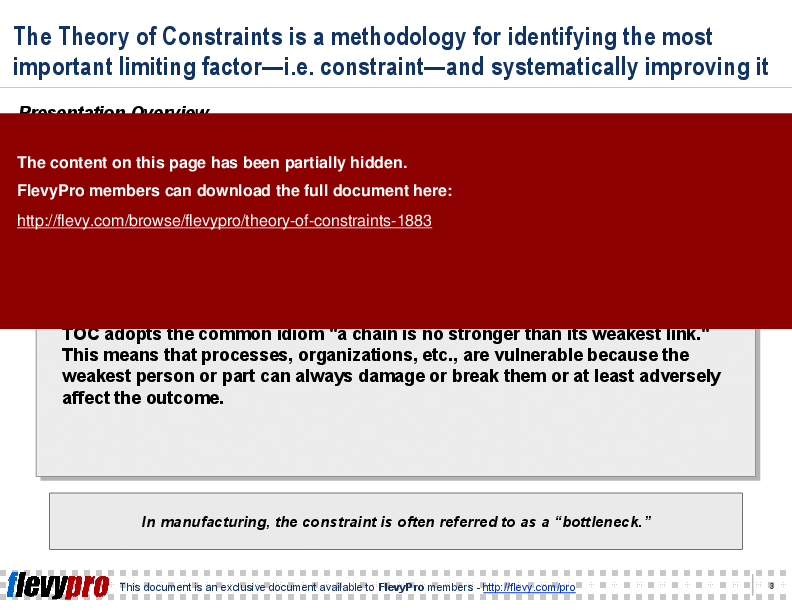
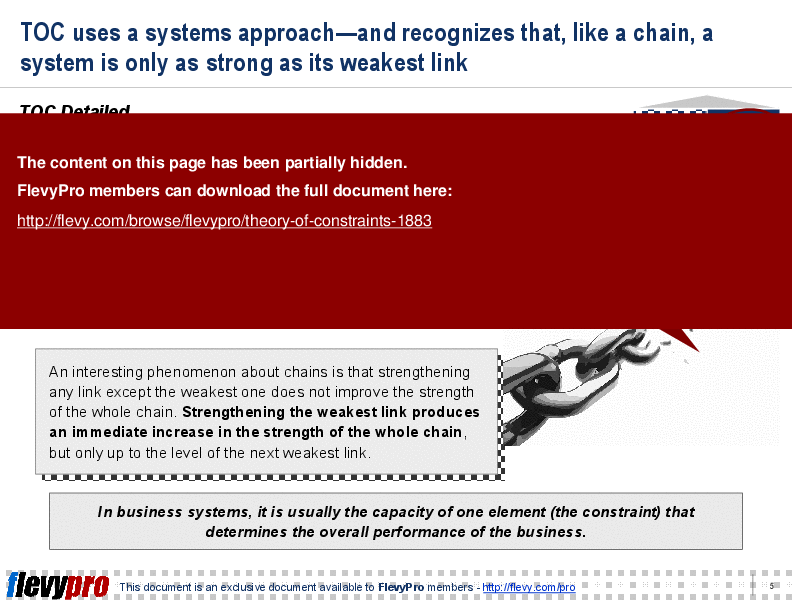
TOC adopts the common idiom "a chain is no stronger than its weakest link." This means that processes, organizations, etc., are vulnerable because the weakest person or part can always damage or break them or at least adversely affect the outcome.
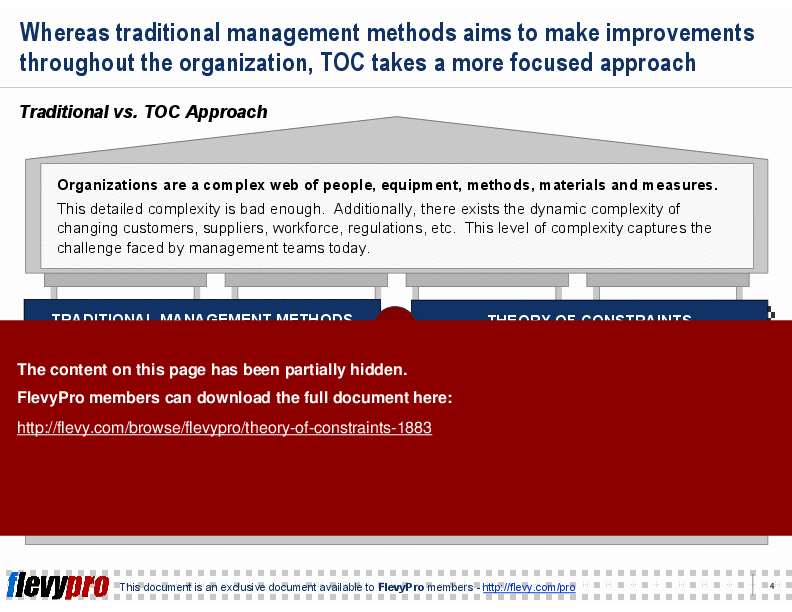
TOC leverages a systems approach to recognize that a system's strength is determined by its weakest link. Strengthening the weakest link yields immediate improvements in the overall system's performance. This PPT details how to identify and exploit constraints using Lean Management tools, ensuring maximum utilization of existing resources before considering additional investments.
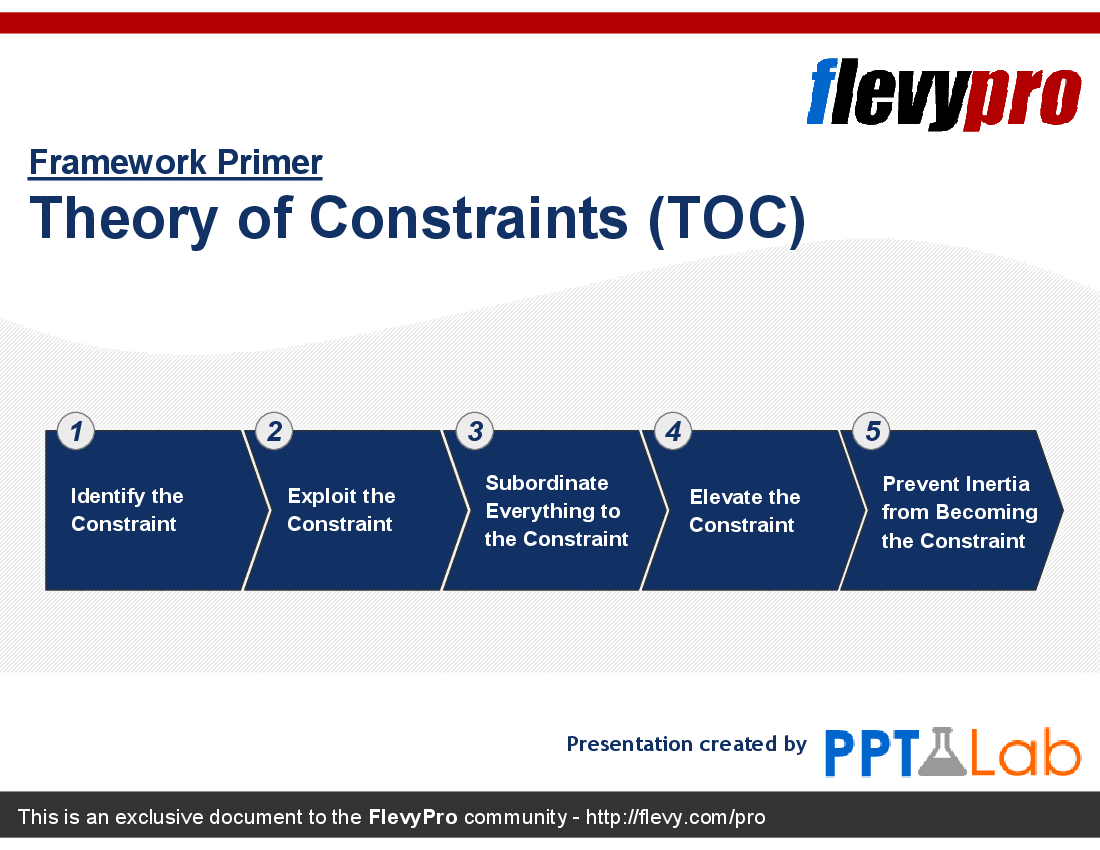
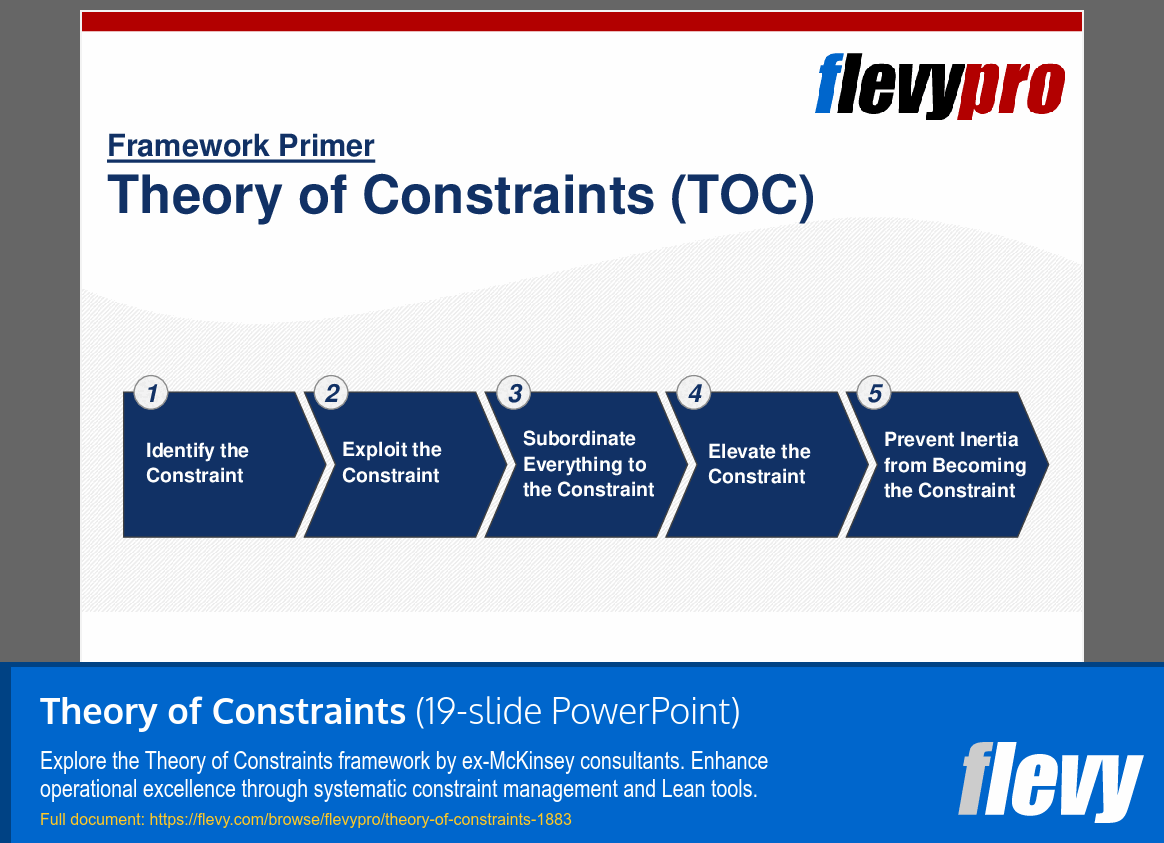
The process of ongoing improvement (POOGI) is broken down into five steps: identifying the constraint, exploiting it, subordinating other processes to it, elevating its capacity, and preventing inertia from becoming the new constraint. Each step is meticulously explained, providing actionable insights to drive continuous improvement and operational excellence.
Nine functional solution areas are identified where TOC can be applied, including finance, sales, marketing, and strategy. The document also covers general principles and rules of thumb about constraints, offering a comprehensive guide for executives looking to implement TOC in their organizations.
What are the 5 steps in the Theory of Constraints' process of ongoing improvement (POOGI)?
POOGI consists of identifying the system constraint, exploiting the constraint, subordinating other processes to the constraint, elevating the constraint’s capacity, and preventing inertia from becoming the next constraint. These 5 steps form the core TOC improvement cycle.
How does TOC define a "constraint" and why focus on it first?
TOC defines a constraint as the most important limiting factor that prevents a system from achieving its goal; there is always at least one constraint. Focusing on and strengthening the weakest link yields immediate improvements in overall system performance and throughput, addressing at least one constraint.
How does TOC interact with Lean Management techniques?
The TOC approach uses Lean Management tools to identify and exploit constraints and to ensure maximum utilization of existing resources before additional investments are considered. The document explicitly links TOC application to Lean Management tools.
What should I look for in a TOC PowerPoint toolkit for executives?
A suitable executive toolkit should explain the POOGI five-step process, show how to apply Lean Management tools to constraints, outline application across functional areas (finance, sales, marketing, strategy), and include practical principles and rules of thumb for prioritization, notably POOGI's 5 steps.
How long should an executive TOC presentation be and is slide count important?
Executive briefings are typically concise; the Theory of Constraints PowerPoint by PPT Lab is a 19-slide presentation designed to cover TOC fundamentals, POOGI steps, and application areas, making 19 slides a practical reference for a short executive briefing.
I need to improve throughput without extra capital—how can TOC help my team?
TOC starts by identifying the binding constraint and then exploits and subordinates other processes to it, raising capacity where needed and preventing inertia from becoming the next limit. This approach focuses on maximizing current resources prior to new investment and is structured around the POOGI five-step process.
Can TOC be applied to non-production areas like finance or marketing?
Yes. TOC’s systems focus on the weakest link can be applied beyond production; the material identifies nine functional solution areas where TOC applies, explicitly including finance, sales, marketing, and strategy.
How do I justify TOC to executives focused on ROI and short-term results?
TOC emphasizes strengthening the weakest link to generate immediate improvements in system performance and throughput, thereby maximizing return from existing assets before committing new capital. Communicating that expected outcome as immediate improvements in overall system performance helps make the commercial case.
The Process of Ongoing Improvement (POOGI) consists of 5 steps to enhance operational efficiency. The first step, "Identify the Constraint," focuses on pinpointing limitations that hinder performance. The second step, "Exploit the Constraint," aims to maximize output from the identified constraint. The third step, "Subordinate Everything to the Constraint," aligns all processes with the constraint's capacity to optimize resource utilization. The fourth step, "Elevate the Constraint," evaluates alternatives to enhance the constraint's capacity, seeking to eliminate it for long-term improvements. Finally, "Prevent Inertia from Becoming the Constraint" emphasizes the need for ongoing vigilance to avoid new limitations due to complacency. This structured approach fosters a culture of continuous improvement, driving efficiency and effectiveness across operations.
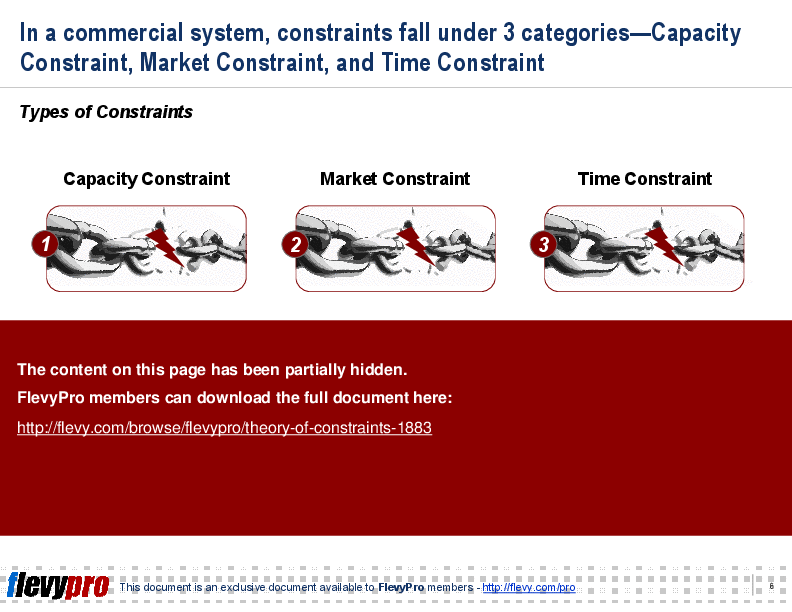
This PPT slide outlines 3 primary constraints in a commercial system: Capacity Constraint, Market Constraint, and Time Constraint. The Capacity Constraint occurs when resources, such as machinery or workforce, are insufficient, hindering efficiency and production. Addressing this involves optimizing resource allocation or investing in additional capacity. The Market Constraint arises when customer order volume is inadequate for desired growth, indicating opportunities for market expansion, product development, or enhanced marketing strategies. The Time Constraint emphasizes the system's responsiveness; excessive response times jeopardize customer commitments and new business attraction, highlighting the need for operational agility and streamlined processes. Identifying and addressing these constraints can enhance efficiency, customer satisfaction, and overall business growth.
Source: Best Practices in Process Improvement, Theory of Constaints, Eliyahu Goldratt PowerPoint Slides: Theory of Constraints PowerPoint (PPT) Presentation Slide Deck, PPT Lab
This framework is developed by a team of former McKinsey and Big 4 consultants. The presentation follows the headline-body-bumper slide format used by global consulting firms.
For $10.00 more, you can download this document plus 2 more FlevyPro documents. That's just $13 each.
ABOUT FLEVYPRO
This document is part of the FlevyPro Library, a curated knowledge base of documents for our FlevyPro subscribers.

FlevyPro is a subscription service for on-demand business frameworks and analysis tools. FlevyPro subscribers receive access to an exclusive library of curated business documents—business framework primers, presentation templates, Lean Six Sigma tools, and more—among other exclusive benefits.
The average daily rate of a McKinsey consultant is $6,625 (not including expenses). The average price of a Flevy document is $65.
Trusted by over 10,000+ Client Organizations
Since 2012, we have provided business templates to over 10,000 businesses and organizations of all sizes, from startups and small businesses to the Fortune 100, in over 130 countries.
"I have used Flevy services for a number of years and have never, ever been disappointed. As a matter of fact, David and his team continue, time after time, to impress me with their willingness to assist and in the real sense of the word. I have concluded in fact
that it is not at all just a repository of documents/resources but, in the way that David and his team manage the firm, it is like dealing with consultants always ready to assist, advise and direct you to what you really need, and they always get it right.
I am an international hospitality accomplished senior executive who has worked and lived during the past 35 years in 23 countries in 5 continents and I can humbly say that I know what customer service is, trust me.
Aside from the great and professional service that Flevy's team provide, their wide variety of material is of utmost great quality, professionally put together and most current.
Well done Flevy, keep up the great work and I look forward to continue working with you in the future and to recommend you to a variety of colleagues around the world.
"
– Roberto Pelliccia, Senior Executive in International Hospitality
"I have used FlevyPro for several business applications. It is a great complement to working with expensive consultants. The quality and effectiveness of the tools are of the highest standards."
– Moritz Bernhoerster, Global Sourcing Director at Fortune 500
"My FlevyPro subscription provides me with the most popular frameworks and decks in demand in today’s market. They not only augment my existing consulting and coaching offerings and delivery, but also keep me abreast of the latest trends, inspire new products and service offerings for my practice, and educate me
in a fraction of the time and money of other solutions. I strongly recommend FlevyPro to any consultant serious about success.
"
– Bill Branson, Founder at Strategic Business Architects
"I like your product. I'm frequently designing PowerPoint presentations for my company and your product has given me so many great ideas on the use of charts, layouts, tools, and frameworks. I really think the templates are a valuable asset to the job."
– Roberto Fuentes Martinez, Senior Executive Director at Technology Transformation Advisory
"As a consulting firm, we had been creating subject matter training materials for our people and found the excellent materials on Flevy, which saved us 100's of hours of re-creating what already exists on the Flevy materials we purchased."
– Michael Evans, Managing Director at Newport LLC
"As a niche strategic consulting firm, Flevy and FlevyPro frameworks and documents are an on-going reference to help us structure our findings and recommendations to our clients as well as improve their clarity, strength, and visual power. For us, it is an invaluable resource to increase our impact and value."
– David Coloma, Consulting Area Manager at Cynertia Consulting
"Flevy.com has proven to be an invaluable resource library to our Independent Management Consultancy, supporting and enabling us to better serve our enterprise clients.
The value derived from our [FlevyPro] subscription in terms of the business it has helped to gain far exceeds the investment made, making a subscription a no-brainer for any growing consultancy – or in-house strategy team."
– Dean Carlton, Chief Transformation Officer, Global Village Transformations Pty Ltd.
"FlevyPro provides business frameworks from many of the global giants in management consulting that allow you to provide best in class solutions for your clients."
– David Harris, Managing Director at Futures Strategy
Receive our FREE presentation on Operational Excellence
This 50-slide presentation provides a high-level introduction to the 4 Building Blocks of Operational Excellence. Achieving OpEx requires the implementation of a Business Execution System that integrates these 4 building blocks.
Receive our FREE presentation on Operational Excellence
Get Our FREE Product.
This 50-slide presentation provides a high-level introduction to the 4 Building Blocks of Operational Excellence. Achieving OpEx requires the implementation of a Business Execution System that integrates these 4 building blocks.