 Click main image to view in full screen.
Target Operating Model – PowerPoint PPTX Template
PowerPoint (PPTX) 12 Slides


BENEFITS OF THIS DOWNLOADABLE POWERPOINT DOCUMENT
- Target operating model
- The Key Questions for defining your Target Operating Model
- Logical design of accountability and activities
TARGET OPERATING MODEL PPT TEMPLATE DESCRIPTION
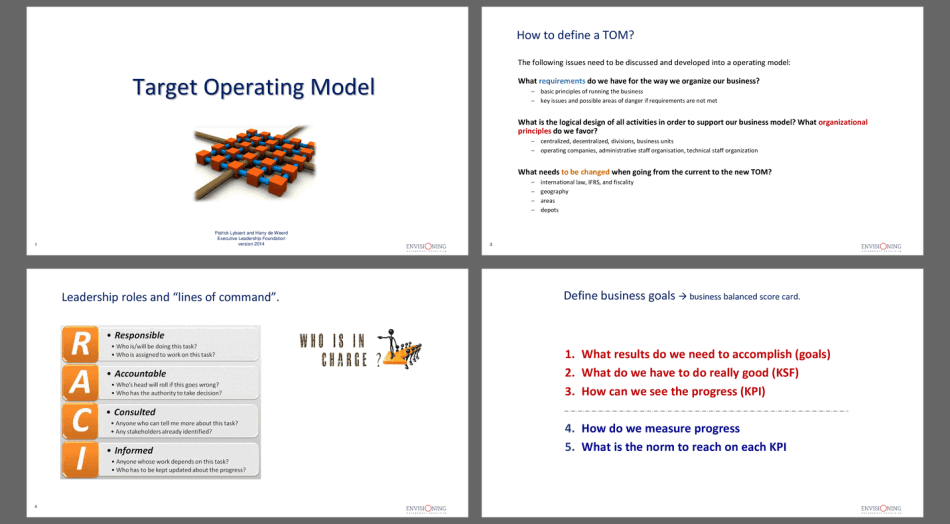
Defining your Target Operating Model in a snapshot.
What requirements do we have for the way we organize our business?
What is the logical design of all activities in order to support our business model? What organizational principles do we favor?
What needs to be changed when going from the current to the new TOM?
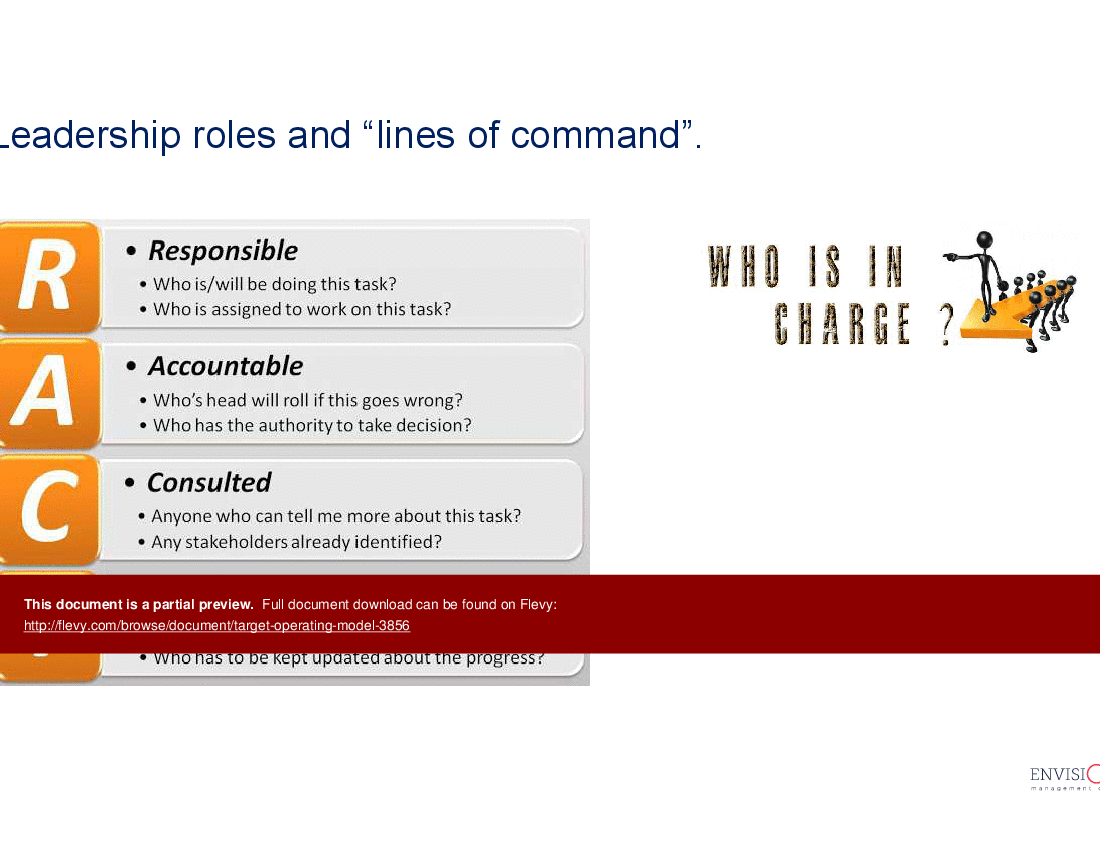
This PPT dives into the intricacies of leadership roles and lines of command, emphasizing the importance of clear responsibility, accountability, and consultation. It breaks down the RACI matrix, providing a structured approach to task assignment and stakeholder involvement. This ensures that every team member knows their role, reducing ambiguity and enhancing operational efficiency.
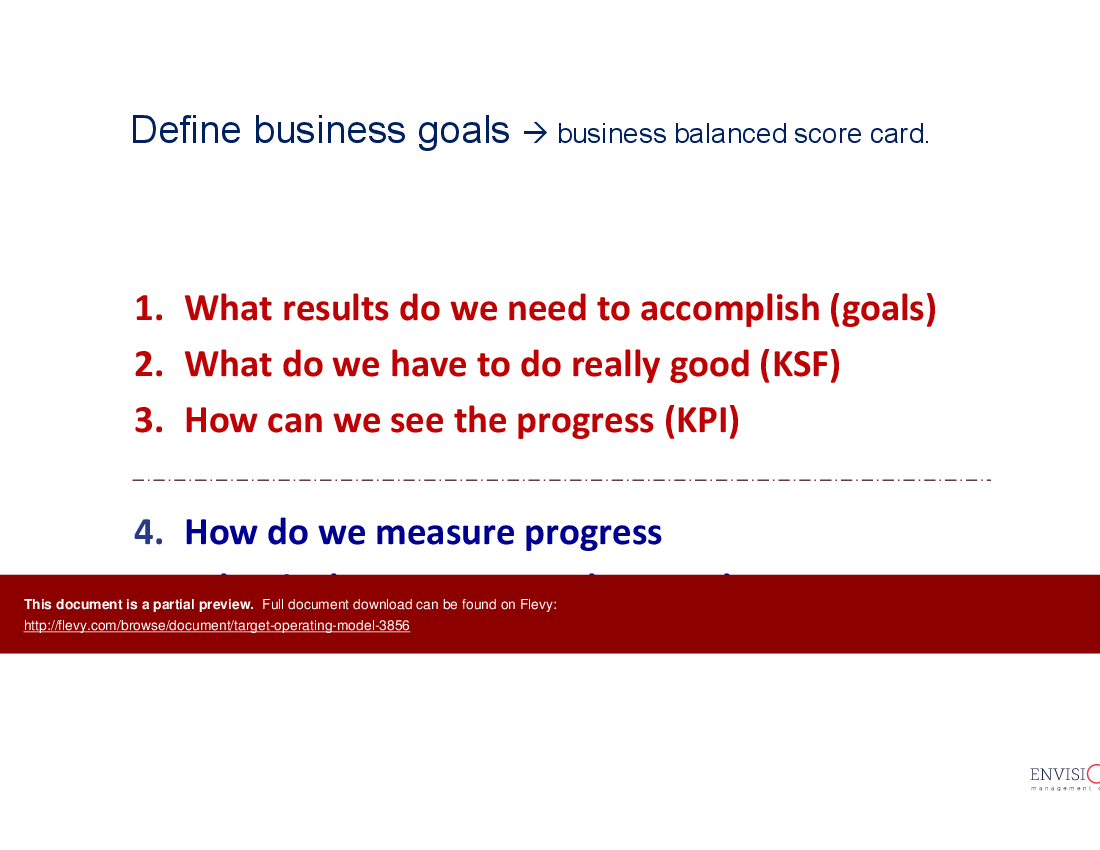
The presentation also focuses on defining business goals through a balanced scorecard approach. It outlines the critical success factors (KSFs) and key performance indicators (KPIs) necessary for tracking progress. This methodical approach helps in setting clear objectives and measuring outcomes effectively, ensuring alignment with the overall business strategy.
A comprehensive section on the Business Canvas Model is included, offering a visual framework for developing new or documenting existing business models. This tool is essential for understanding the various components of your business, from value propositions to customer segments, and how they interrelate. This holistic view aids in strategic planning and decision-making.
Got a question about the product? Email us at support@flevy.com or ask the author directly by using the "Ask the Author a Question" form. If you cannot view the preview above this document description, go here to view the large preview instead.
TOPIC FAQ
What is a Target Operating Model and what should it define?
A Target Operating Model articulates the logical design of activities and organizational principles needed to support a business model. It typically defines leadership roles, decision rights, accountabilities, performance measures, and how business components interrelate using tools such as a RACI matrix, balanced scorecard, and Business Canvas Model.How does a RACI matrix reduce role ambiguity in an operating model?
A RACI matrix assigns who is Responsible, Accountable, Consulted, and Informed for specific tasks, clarifying stakeholder involvement and reducing overlap. Using a RACI helps make lines of command explicit and ensures each team member knows their role, improving operational clarity through the RACI matrix.How can a balanced scorecard be used to track TOM implementation progress?
A balanced scorecard translates strategic objectives into measurable outcomes by defining critical success factors (KSFs) and associated KPIs. During TOM implementation it provides a framework to monitor progress against business goals, ensuring alignment between strategy and operations via KSFs and KPIs.When should I use a Business Canvas Model in designing an operating model?
Use the Business Canvas Model when you need a visual framework to develop or document a business model component-by-component — from value propositions to customer segments — to understand interdependencies and inform operating-model choices; the Business Canvas Model supports that documentation and design.What should I look for when buying an operating-model slide deck for executive briefings?
For executive briefings prioritize concise slides that cover leadership roles/decision rights, a RACI for accountability, performance measurement via a balanced scorecard, and a Business Canvas for model clarity. A compact example is a 12-slide deck like Target Operating Model that bundles these elements into an executive snapshot.How do I evaluate cost versus building my own TOM templates in-house?
Compare the time and expertise required to create governance definitions, RACI matrices, balanced scorecards, and a Business Canvas versus purchasing a ready deck. Buying can save template development time and provide structured sections for RACI, KSFs/KPIs, and Business Canvas as discrete tools.After a merger, how do I identify what needs to change from the current to a new TOM?
Start by mapping current leadership roles and lines of command, then run a RACI analysis to surface duplicated or missing accountabilities. Next, reassess strategic goals and update KSFs/KPIs via a balanced scorecard to reflect the merged entity’s priorities and required changes in governance and metrics.Which tools help set clear accountability for cross-functional processes?
Use a RACI matrix to assign responsibility, accountability, consultation, and information flows across functions, and pair it with a balanced scorecard to monitor outcomes against targets. Together they clarify who does what and how success is measured using the RACI matrix and balanced scorecard.Source: Best Practices in Target Operating Model PowerPoint Slides: Target Operating Model PowerPoint (PPTX) Presentation Slide Deck, Gert and Harry - Envisioning




























