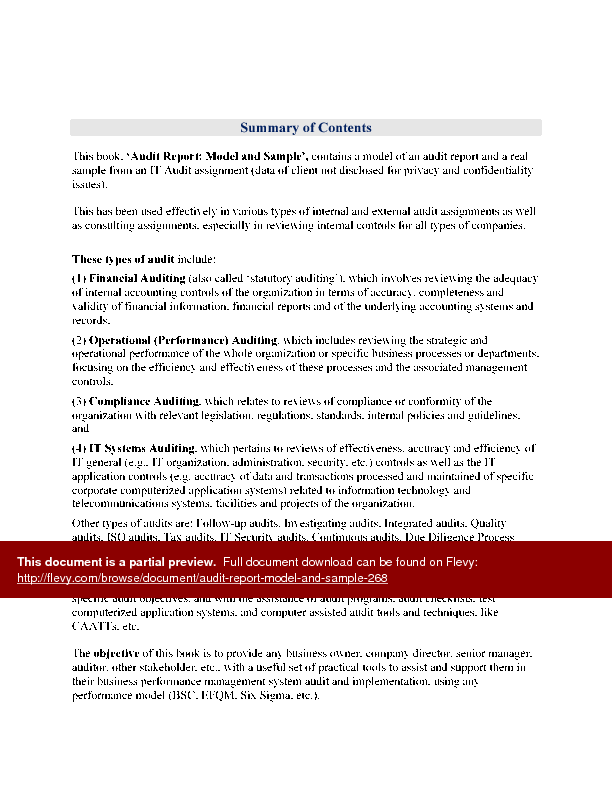
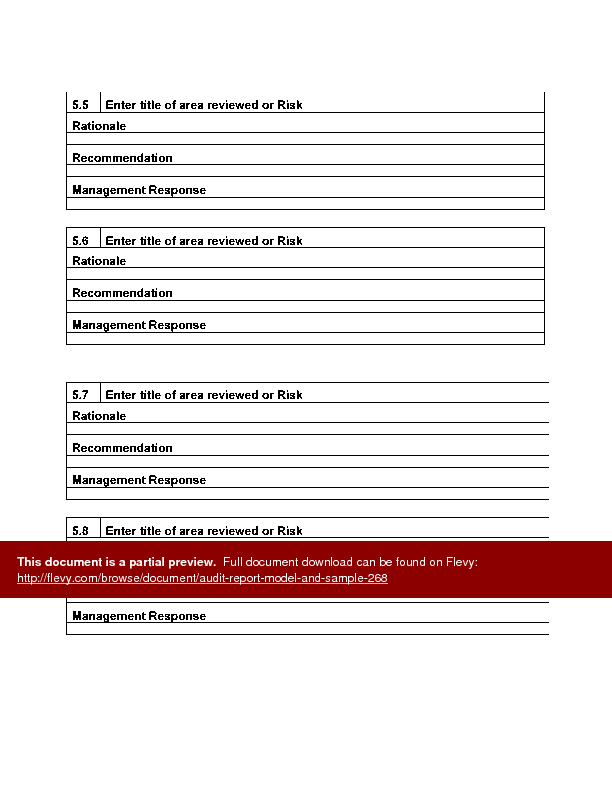
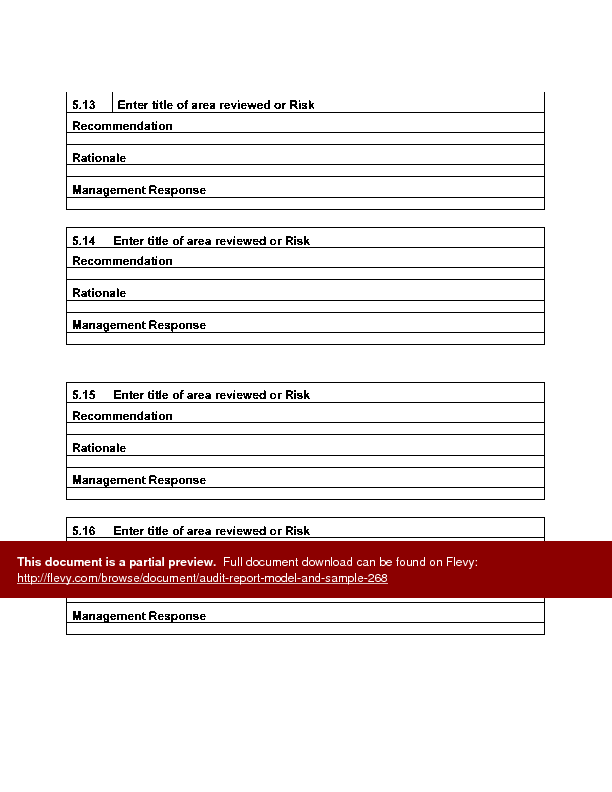
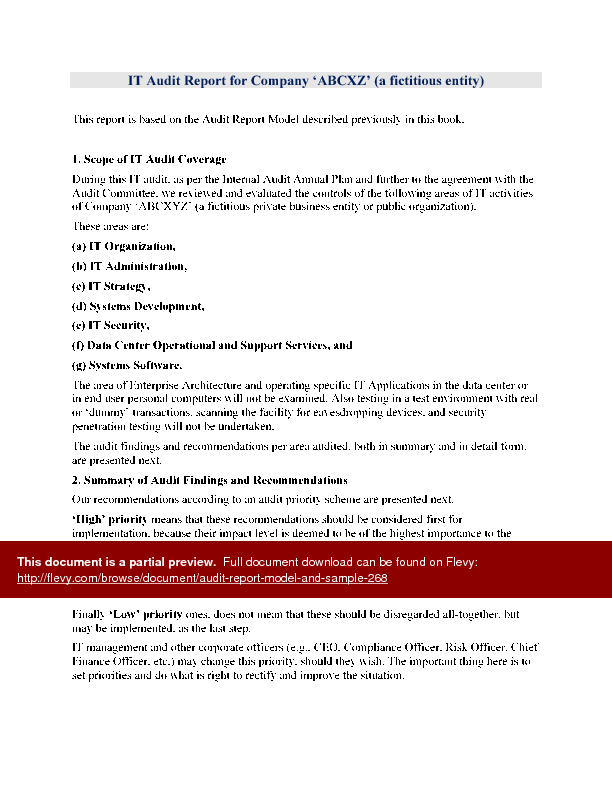
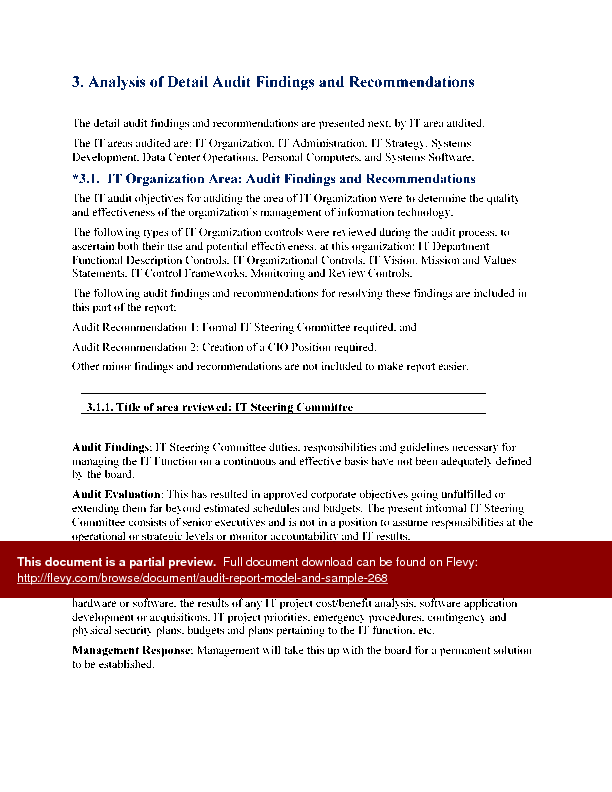
This document "Audit Report: Model and Sample" contains a model of an audit report and a real sample from an IT Audit assignment (data of client not disclosed for privacy and confidentiality issues).
This has been used effectively in various types of internal and external audit assignments as well as consulting assignments, especially in reviewing internal controls for all types of companies.
The document provides a comprehensive analysis of detailed audit findings and recommendations, covering critical areas such as IT organization, systems development, IT security, and data center operations. Each section is meticulously structured to offer actionable insights and prioritize recommendations based on their urgency and impact. This ensures that executives can swiftly identify and address key issues within their organizations.
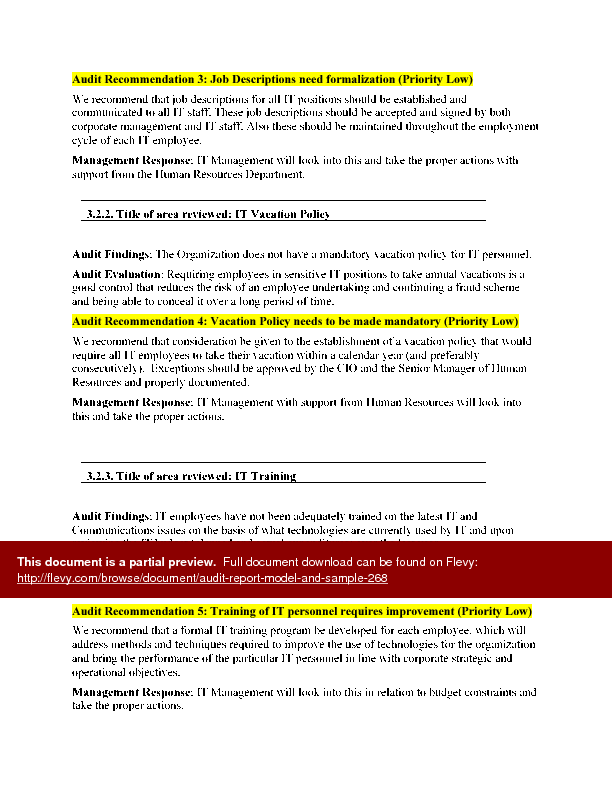
The audit recommendations are categorized by priority levels, from high to low, enabling a focused approach to risk management and operational improvement. For example, the document highlights the necessity of formalizing job descriptions, implementing mandatory vacation policies, and enhancing IT personnel training. These recommendations are designed to fortify internal controls and optimize organizational efficiency.
The sample audit report included in the document serves as a practical reference, illustrating how to effectively present audit findings and recommendations. This model can be adapted to various audit scenarios, making it a versatile tool for both internal and external auditors. By leveraging this document, executives can ensure their audit processes are robust, transparent, and aligned with industry best practices.
Got a question about the product? Email us at support@flevy.com or ask the author directly by using the "Ask the Author a Question" form. If you cannot view the preview above this document description, go here to view the large preview instead.
Executive Summary
The "Audit Report: Model and Sample" provides a comprehensive framework for conducting various types of audits, including financial, operational, compliance, and IT systems audits. This document serves as both a model and a sample report, offering practical tools for business owners, directors, and auditors to enhance their internal control assessments. By utilizing this template, users can effectively evaluate their organization's performance management systems and implement necessary improvements based on detailed audit findings and recommendations.
Who This Is For and When to Use
• Internal auditors conducting performance evaluations across various departments
• External auditors assessing compliance and operational efficiency
• Management consultants reviewing internal controls for clients
• Company directors and senior managers overseeing audit processes
Best-fit moments to use this deck:
• During internal audits to assess the effectiveness of controls
• When preparing for external audits to ensure compliance
• In consulting engagements focused on improving organizational performance
• For training sessions on audit methodologies and best practices
Learning Objectives
• Define the scope and objectives of various audit types
• Build a comprehensive audit report using the provided model
• Establish effective recommendations based on audit findings
• Analyze audit results to identify areas for improvement
• Implement management action plans to address audit recommendations
• Utilize audit tools and checklists to enhance audit efficiency
Table of Contents
• Introduction (page 3)
• Objectives (page 3)
• Scope (page 3)
• Opinion (page 5)
• Detailed Recommendations (page 5)
• Management Action Plan (page 10)
• IT Audit Report Example (page 11)
• Summary of Audit Findings (page 12)
• Audit Recommendations by Priority (page 12)
• Analysis of Detailed Findings (page 13)
Primary Topics Covered
• Audit Types - The document outlines various audit types, including financial, operational, compliance, and IT audits, each with specific objectives and methodologies.
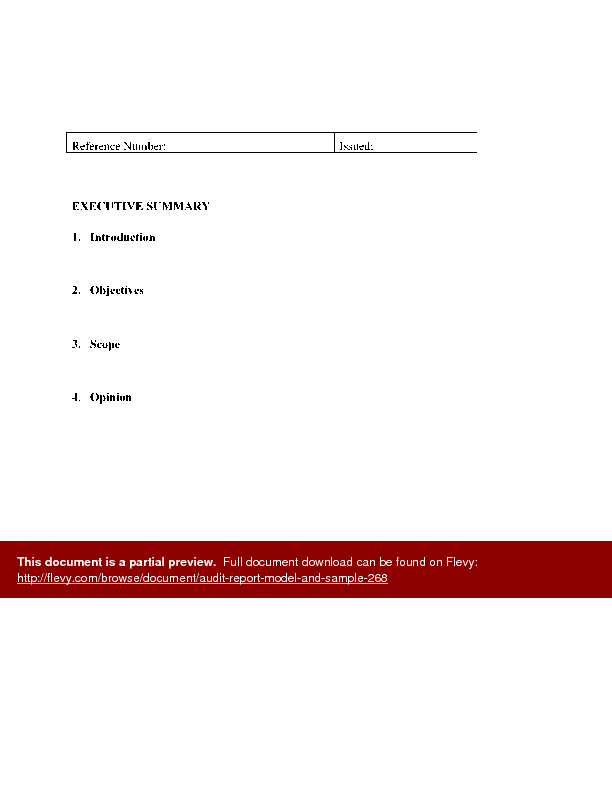
• Audit Report Model - A structured model for creating audit reports, including sections for executive summaries, objectives, scope, and detailed recommendations.
• Recommendations Framework - A systematic approach to presenting audit findings and actionable recommendations categorized by priority.
• Management Action Plans - Templates for tracking agreed actions, responsibilities, and implementation timelines based on audit recommendations.
• IT Audit Focus Areas - Specific areas of IT audits, including IT organization, administration, security, and systems development, with tailored recommendations.
• Performance Management Tools - Guidance on using performance models like BSC, EFQM, and Six Sigma in audit evaluations.
Deliverables, Templates, and Tools
• Audit report model template for consistent reporting
• Sample IT audit report for practical application
• Detailed recommendations framework for prioritizing actions
• Management action plan template for tracking implementation
• Audit checklist for various audit types to streamline processes
• Performance evaluation tools aligned with audit objectives
Slide Highlights
• Overview of audit types and their significance in organizational assessments
• Structured audit report model illustrating key sections and content
• Prioritization scheme for audit recommendations based on impact
• Example of an IT audit report showcasing practical application
• Management action plan template for effective follow-up on audit findings
Potential Workshop Agenda
Introduction to Audit Reporting (60 minutes)
• Overview of audit types and objectives
• Discussion on the importance of structured reporting
Building an Audit Report (90 minutes)
• Step-by-step guide to using the audit report model
• Group activity to draft sections of an audit report
Reviewing Audit Findings and Recommendations (60 minutes)
• Analyzing sample findings and prioritizing recommendations
• Developing actionable management plans based on findings
Customization Guidance
• Tailor the audit report model to fit specific organizational contexts and requirements
• Adjust the prioritization scheme for recommendations based on organizational risk appetite
• Incorporate company-specific terminology and frameworks into the report
• Modify the management action plan to reflect unique implementation timelines and responsibilities
Secondary Topics Covered
• Internal control frameworks and their relevance to audit processes
• Compliance requirements and best practices for various industries
• Techniques for effective communication of audit findings to stakeholders
• The role of technology in enhancing audit efficiency and effectiveness
Topic FAQ
Document FAQ
These are questions addressed within this presentation.
What types of audits can this model be used for?
This model can be applied to financial, operational, compliance, and IT audits, providing a versatile framework for various auditing needs.
How can I customize the audit report for my organization?
You can tailor the report by incorporating specific organizational terminology, adjusting the prioritization of recommendations, and aligning the content with your internal control frameworks.
What is the significance of the management action plan?
The management action plan tracks agreed actions, responsibilities, and implementation timelines, ensuring accountability and facilitating follow-up on audit recommendations.
Can this model be used for external audits?
Yes, the model is suitable for both internal and external audits, providing a structured approach to reporting and recommendations.
How do I prioritize audit recommendations?
Recommendations can be prioritized based on their impact on organizational performance and compliance, categorizing them into high, medium, and low priority.
What tools are included in the document?
The document includes templates for audit reports, management action plans, and checklists tailored for various audit types.
How can I ensure the effectiveness of audit recommendations?
Regular follow-up on the management action plan and continuous monitoring of implemented recommendations will help ensure their effectiveness.
What performance models can be integrated into the audit process?
You can integrate models such as Balanced Scorecard (BSC), European Foundation for Quality Management (EFQM), and Six Sigma to enhance performance evaluations.
Glossary
• Audit - A systematic examination of financial records or operational processes.
• Compliance Audit - An assessment of adherence to laws, regulations, and internal policies.
• IT Audit - An evaluation of an organization's information technology systems and controls.
• Management Action Plan - A document outlining actions to address audit findings and recommendations.
• Performance Management - The process of ensuring that organizational goals are met efficiently and effectively.
• Segregation of Duties - A control mechanism that prevents any one individual from having control over all aspects of a financial transaction.
• Risk Assessment - The process of identifying and analyzing potential issues that could negatively impact key business initiatives.
• Internal Control - Processes designed to provide reasonable assurance regarding the achievement of objectives related to operations, reporting, and compliance.
• Audit Recommendation - Suggestions made based on audit findings to improve processes or controls.
• Audit Checklist - A tool used to ensure that all necessary steps in the audit process are completed.
• Performance Model - A framework used to evaluate and improve organizational performance.
• IT Security Policy - A set of guidelines to protect an organization's IT assets and data.
• Data Center - A facility used to house computer systems and associated components, such as telecommunications and storage systems.
Source: Best Practices in Audit Management Word: Audit Report Model and Sample Word (DOC) Document, John Kyriazoglou
|
Receive our FREE presentation on Operational Excellence
This 50-slide presentation provides a high-level introduction to the 4 Building Blocks of Operational Excellence. Achieving OpEx requires the implementation of a Business Execution System that integrates these 4 building blocks. |