
The Standard Work presentation has 64 slides comprising of:
What is standard work
Origins, purpose and benefits
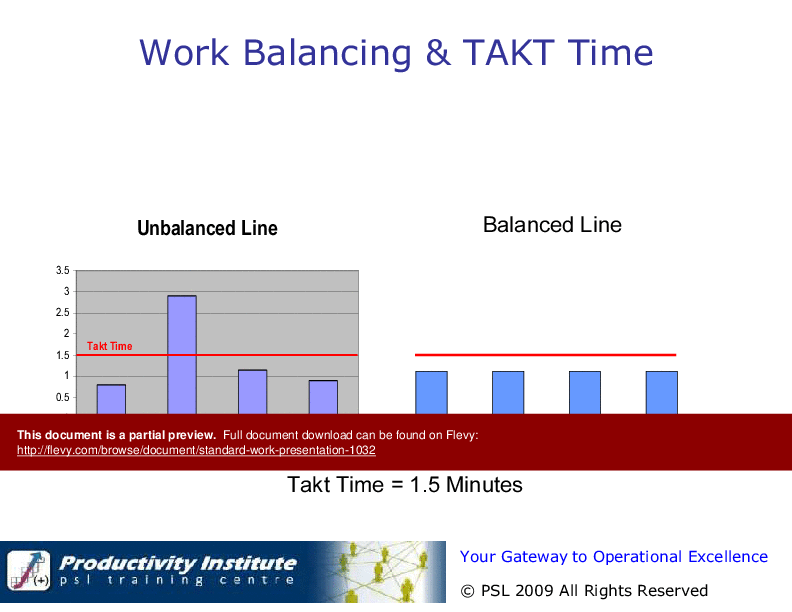
Work balancing & Takt Time
Standard work sequencing
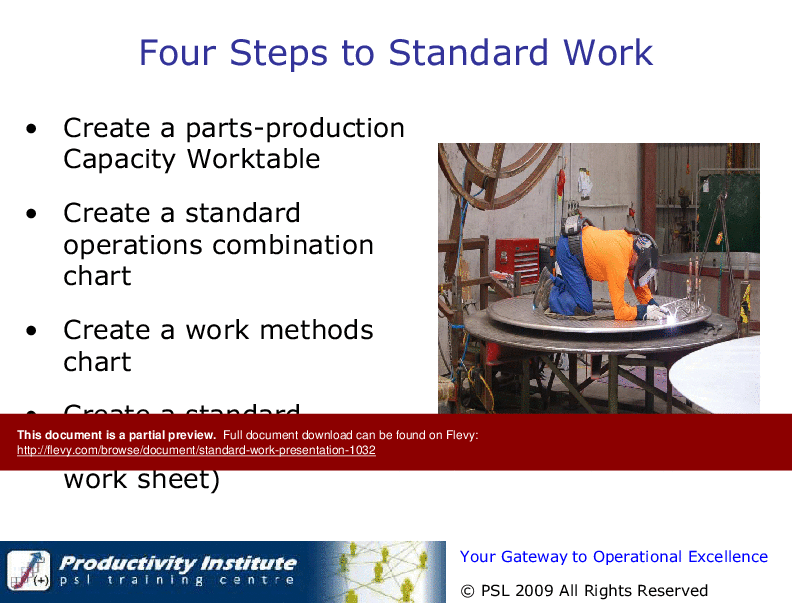
4 Steps to standard work
Parts-Production Capacity Work table
Standard operations combination chart
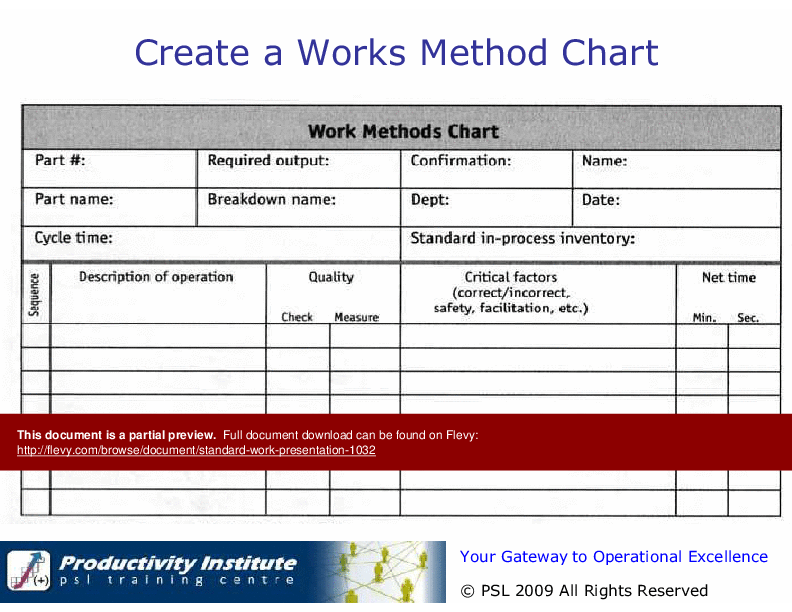
Work Methods chart
Standard operations chart
Mistake proofing
TWI (Job Instructions, Job Methods and Job Relations)
Creating Job Breakdown
JI – 4 step learning process
Standard leader work
Also included with this document is a bonus zip of 41 Lean documents (includes templates, case studies, articles, posters, charts, and more).
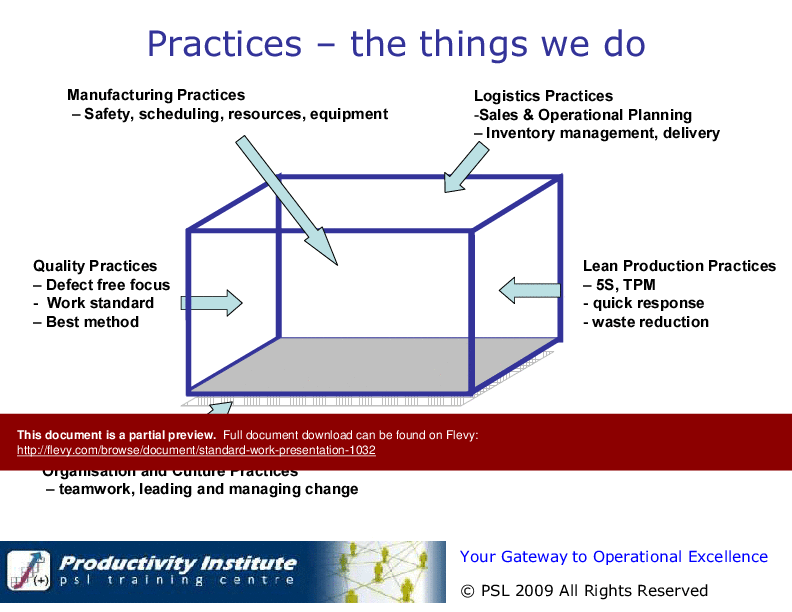
The Standard Work Presentation is a comprehensive guide designed to streamline operations and enhance productivity. It delves into the critical aspects of standard work, emphasizing the importance of consistent work procedures to achieve optimal efficiency. The presentation covers various practices, including manufacturing, logistics, quality, lean production, and organizational culture, providing a holistic approach to operational excellence.
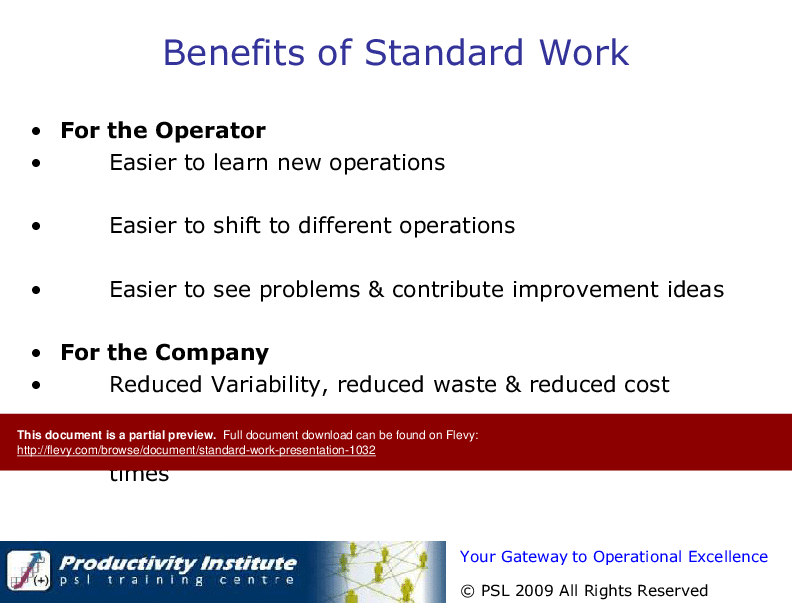
This presentation also highlights the benefits of standard work for both operators and companies. Operators find it easier to learn and shift between operations, identify problems, and contribute improvement ideas. Companies benefit from reduced variability, waste, and costs, leading to more predictable and efficient production processes. The document includes practical activities and real-world examples to illustrate the implementation and maintenance of standard work.
Included are detailed charts and tables, such as the Parts-Production Capacity Worktable, Standard Operations Combination Chart, Work Methods Chart, and Standard Operations Chart. These tools are essential for visualizing and managing work processes. The presentation also addresses mistake-proofing techniques and the importance of effective communication in standard work. This resource is invaluable for leaders aiming to instill discipline and accountability in their teams, ensuring that standard work principles are consistently applied across all levels of the organization.
Got a question about the product? Email us at support@flevy.com or ask the author directly by using the "Ask the Author a Question" form. If you cannot view the preview above this document description, go here to view the large preview instead.
Executive Summary
The Standard Work Presentation (PPT) is a comprehensive training resource designed to enhance operational efficiency through the implementation of standardized work practices. Developed by a Lean expert and certified LSS Master Black Belt, this presentation equips organizations with the tools to establish best practices, improve safety, and reduce costs. Users will learn how to implement Takt Time, mistake-proofing techniques, and Lean methodologies, ultimately leading to higher quality outcomes and streamlined processes.
Who This Is For and When to Use
• Operations Managers focused on process improvement
• Quality Assurance teams aiming for defect reduction
• Lean Practitioners implementing Lean methodologies
• Training and Development teams responsible for employee onboarding
• Continuous Improvement teams seeking to enhance operational efficiency
Best-fit moments to use this deck:
• During Lean training sessions for new employees
• When conducting workshops on process optimization
• In strategy meetings focused on quality improvement initiatives
• For team-building exercises centered around operational excellence
Learning Objectives
• Define Standard Work and its importance in operational excellence
• Establish Takt Time to align production with customer demand
• Implement mistake-proofing techniques to enhance quality
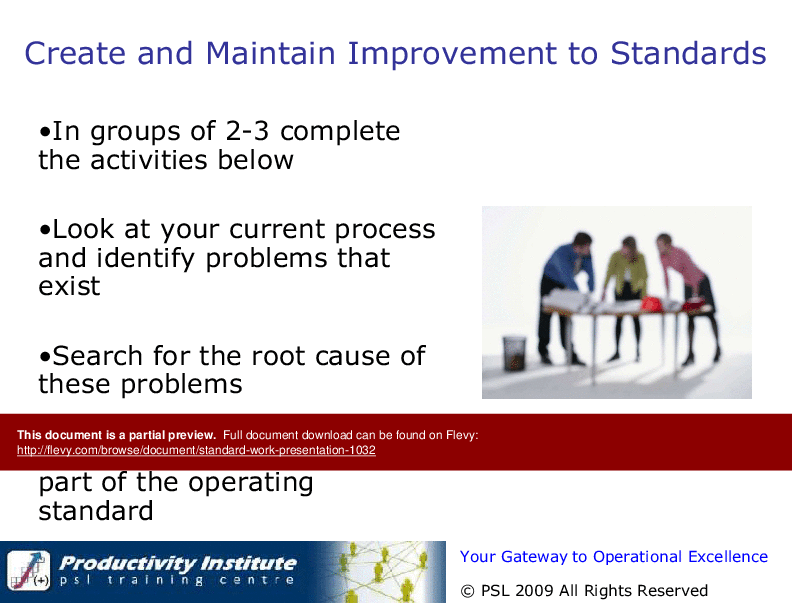
• Create and maintain effective work standards
• Analyze and improve current processes using Lean principles
• Develop user-friendly manuals and training materials
Table of Contents
• Introduction to Standard Work (page 3)
• The Purpose of Standard Work (page 5)
• Benefits of Standard Work (page 7)
• Work Balancing and Takt Time (page 10)
• Standard Work Sequencing (page 15)
• Four Steps to Standard Work (page 20)
• Communicating Standard Work (page 25)
• Mistake Proofing Techniques (page 30)
• Applications of Standardization (page 35)
• Training Within Industry (TWI) Overview (page 40)
• Key Learning Outcomes (page 45)
Primary Topics Covered
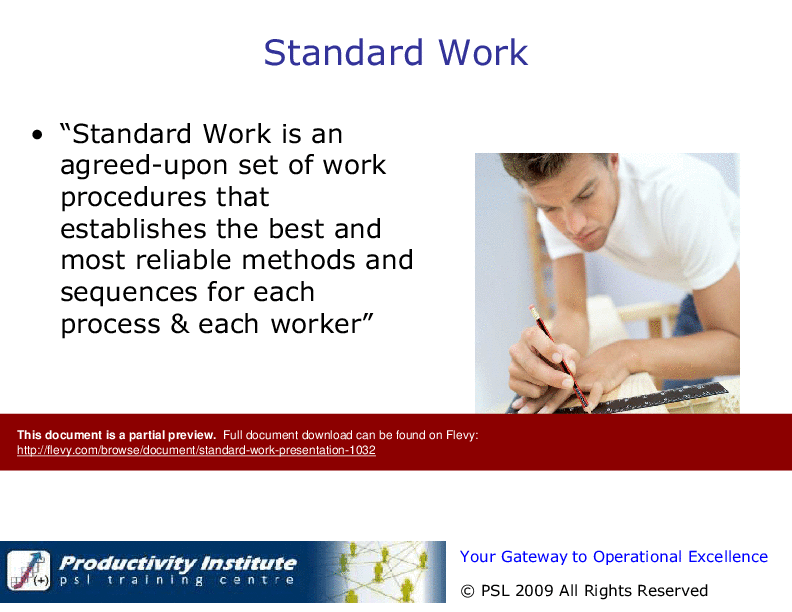
• Standard Work Definition - An agreed-upon set of work procedures that establishes the best and most reliable methods for each process and worker.
• Takt Time - The production rate required to meet customer demand, ensuring efficient workflow and resource allocation.

• Mistake Proofing - Techniques aimed at preventing errors in the work environment through self-checks and source inspections.
• Work Sequencing - The order of tasks involved in an operation, crucial for optimizing workflow and reducing bottlenecks.
• User-Friendly Standards - Guidelines for creating manuals that are easy to understand and follow, enhancing employee training.
• Continuous Improvement - The ongoing effort to improve products, services, or processes through incremental improvements.
Deliverables, Templates, and Tools
• Standard Operations Chart template for visualizing processes
• Work Methods Chart for documenting task sequences
• Capacity Worktable for assessing production capabilities
• Standard Operations Combination Chart for integrating multiple tasks
• User-friendly manual templates for effective training
• Mistake-proofing checklists to enhance quality control
Slide Highlights
• Overview of Standard Work and its significance in operational excellence
• Visual representation of Takt Time and its impact on production
• Examples of mistake-proofing techniques in various environments
• Step-by-step guide for creating a Standard Operations Chart
• Key learning outcomes to reinforce training effectiveness
Potential Workshop Agenda
Introduction to Standard Work (30 minutes)
• Overview of Standard Work principles
• Discussion on the importance of standardization
Takt Time and Work Balancing (60 minutes)
• Calculation of Takt Time for specific processes
• Group activity on balancing work across stations
Mistake Proofing Techniques (45 minutes)
• Presentation of various mistake-proofing methods
• Interactive session on identifying potential errors in processes
Creating User-Friendly Standards (30 minutes)
• Workshop on developing effective training manuals
• Review of best practices for communicating standards
Customization Guidance
• Tailor the presentation to include specific company processes and terminology
• Update examples and case studies to reflect industry-specific challenges
• Adjust the training materials to align with existing operational frameworks
Secondary Topics Covered
• Lean Production Practices and their role in efficiency
• Quality Assurance methods for defect reduction
• Organizational culture practices that support continuous improvement
• Training Within Industry (TWI) methods for effective skill development
Topic FAQ
Source: Best Practices in Takt Time, Standard Work PowerPoint Slides: Standard Work Presentation PowerPoint (PPT) Presentation Slide Deck, OpEx Academy NZ
|
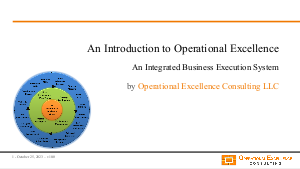
Receive our FREE presentation on Operational Excellence
This 50-slide presentation provides a high-level introduction to the 4 Building Blocks of Operational Excellence. Achieving OpEx requires the implementation of a Business Execution System that integrates these 4 building blocks. |