
Developed by a Senior Executive and Operational Excellence Coach with experience at organizations including NOKIA, MICROVENTION, and MAGELLAN, this material covers Statistical Sampling Plans and Confidence Interval Analysis using Minitab.
Determine Sample Sizes for Estimating One Parameter
Hypothesis Testing & Sample Sizes for One Parameter
Hypothesis Testing & Sample Sizes for Comparing Two Parameters
SIX SIGMA PROJECT PPT DESCRIPTION
Editor Summary
A 120-slide PowerPoint training module plus a supplemental Excel calculator, Six Sigma - Sampling Plans & Sample Sizes teaches statistical sampling methods, sample size determination, hypothesis testing, confidence interval analysis, and Design of Experiments with Minitab guidance.
Read moreIncludes templates and tools such as sample size calculators for means/proportions, an Excel Six Sigma Confidence Interval Analysis Calculator, and Minitab usage guides. Target users include Quality Assurance Managers, Data Analysts, Project Managers, Operational Excellence teams, and Market Researchers. Sold as a digital download on Flevy with immediate digital download.
Use this material when teams need to design or teach statistical sampling and sample-size approaches for quality control, market research, or process-improvement projects.
Quality Assurance Managers designing acceptance or inspection sampling plans and setting inspection sample sizes for production or service lines.
Data Analysts preparing hypothesis tests, computing confidence intervals, and running sample-size calculations in Minitab or Excel.
Project Managers running Six Sigma project kick-offs who must scope data collection requirements and define margins of error.

Operational Excellence teams monitoring process variation using subgroup sampling and capability indices.
The sequence from sampling plans through sample-size calculation, hypothesis testing, and DOE reflects standard, phase-based statistical practice used in operational excellence work.
The Six Sigma Sampling & Sample SizesTraining Module v1.0 includes:
1. MS PowerPoint Presentation including 120 slides covering
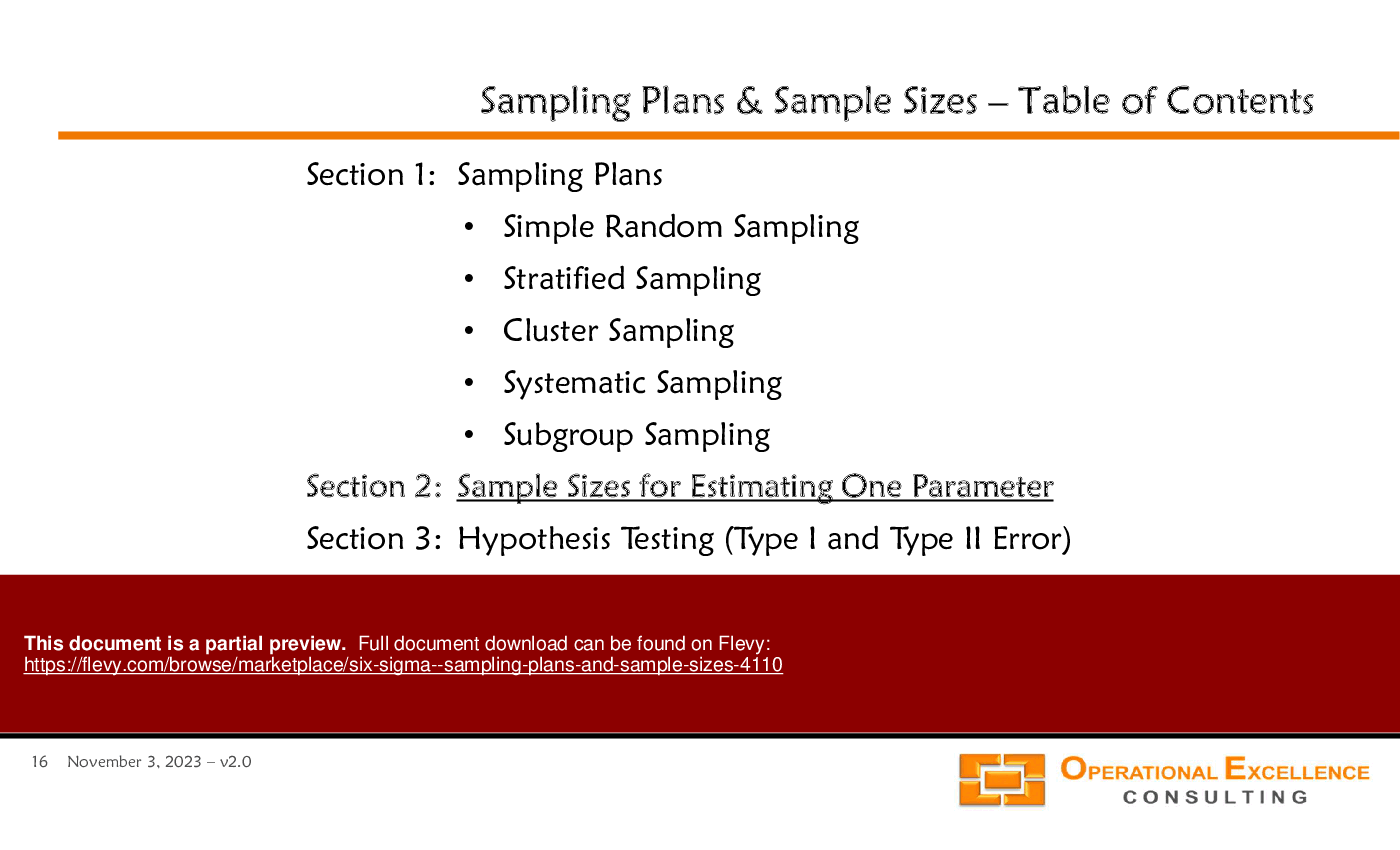
• Sampling Plans (Simple Random Sampling, Stratified Sampling, Cluster Sampling, Systematic Sampling, Subgroup Sampling),
• Sample Sizes for Estimating One Parameter,
• Introduction to Hypothesis Testing,
• Hypothesis Testing & Sample Sizes for One Parameter,
• Hypothesis Testing & Sample Sizes for Comparing Two Parameters, and
• Hypothesis Testing & Sample Sizes for Design of Experiments (DOE).
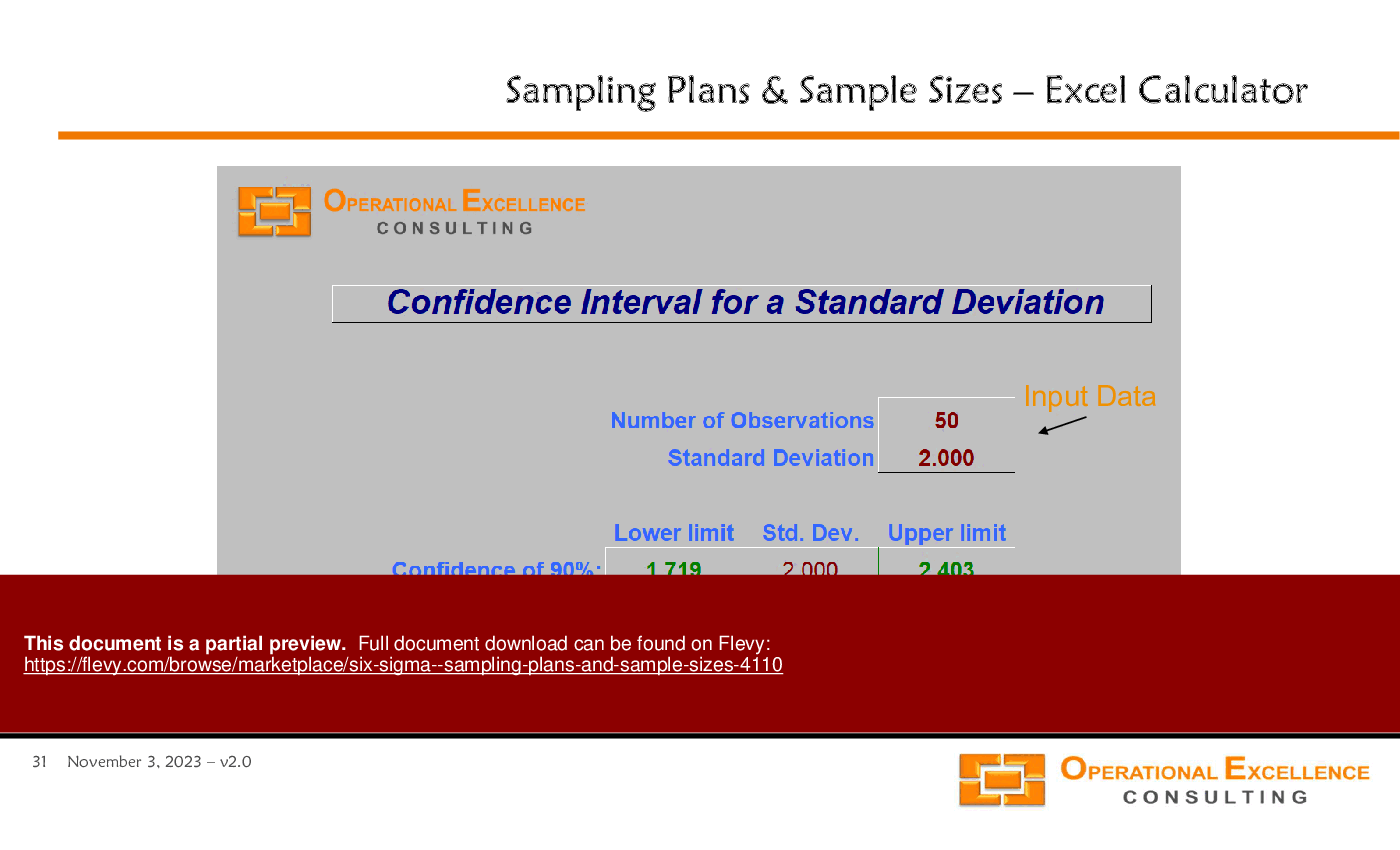
2. MS Excel Six Sigma Confidence Interval Analysis Calculator making it really easy to calculate Confidence Intervals (mean value, standard deviation, capability indices, proportions, count) and perform a Comparison of two Statistics (mean values, standard deviations, proportions, counts).
Note: The material is based on Minitab 19. Please visit their website to download a 30-day free trial license.
"After you have downloaded the training material, you can change any part of the training material and remove all logos and references to Operational Excellence Consulting. You can share the material with your colleagues and clients, and re-use it as you need. The only restriction is that you cannot publicly re-distribute, sell, rent or license the material as though it is your own. Thank you."
Got a question about the product? Email us at support@flevy.com or ask the author directly by using the "Ask the Author a Question" form. If you cannot view the preview above this document description, go here to view the large preview instead.
MARCUS OVERVIEW
This synopsis was written by Marcus [?] based on the analysis of the full 120-slide presentation.
Executive Summary
The "Six Sigma - Sampling Plans & Sample Sizes" presentation is a comprehensive guide designed for professionals seeking to enhance their understanding of statistical sampling methods and sample size determination. Developed by an experienced Operational Excellence Coach, this material provides practical insights into various sampling techniques, hypothesis testing, and the application of Minitab for data analysis. Users will learn how to implement effective sampling strategies to ensure data-driven decision-making in quality control, market research, and operational processes.
Who This Is For and When to Use
• Quality Assurance Managers overseeing product and process quality
• Data Analysts conducting statistical analysis for operational improvements
• Project Managers implementing Six Sigma methodologies in their projects
• Operational Excellence teams focused on process optimization and efficiency
• Market Researchers gathering and analyzing customer data
Best-fit moments to use this deck:
• During training sessions for new team members on statistical sampling techniques
• When developing quality control processes in manufacturing or service delivery
• In workshops focused on data-driven decision-making and hypothesis testing
• For project kick-offs involving Six Sigma methodologies and statistical analysis
Learning Objectives
• Define various sampling methods including simple random, stratified, and cluster sampling
• Build sample size calculations for estimating parameters with desired confidence levels
• Establish hypothesis testing frameworks, including Type I and Type II errors
• Apply statistical software like Minitab for sample size determination and analysis
• Interpret confidence intervals and margins of error in the context of sampling
• Utilize subgroup sampling techniques to monitor process variations effectively
Table of Contents
• Sampling Plans (page 1)
• Sample Sizes for Estimating One Parameter (page 17)
• Hypothesis Testing (Type I and Type II Error) (page 50)
• Hypothesis Testing for One Parameter (page 62)
• Hypothesis Testing for Comparing Two Parameters (page 78)
• Hypothesis Testing for Design of Experiments (page 109)
Primary Topics Covered
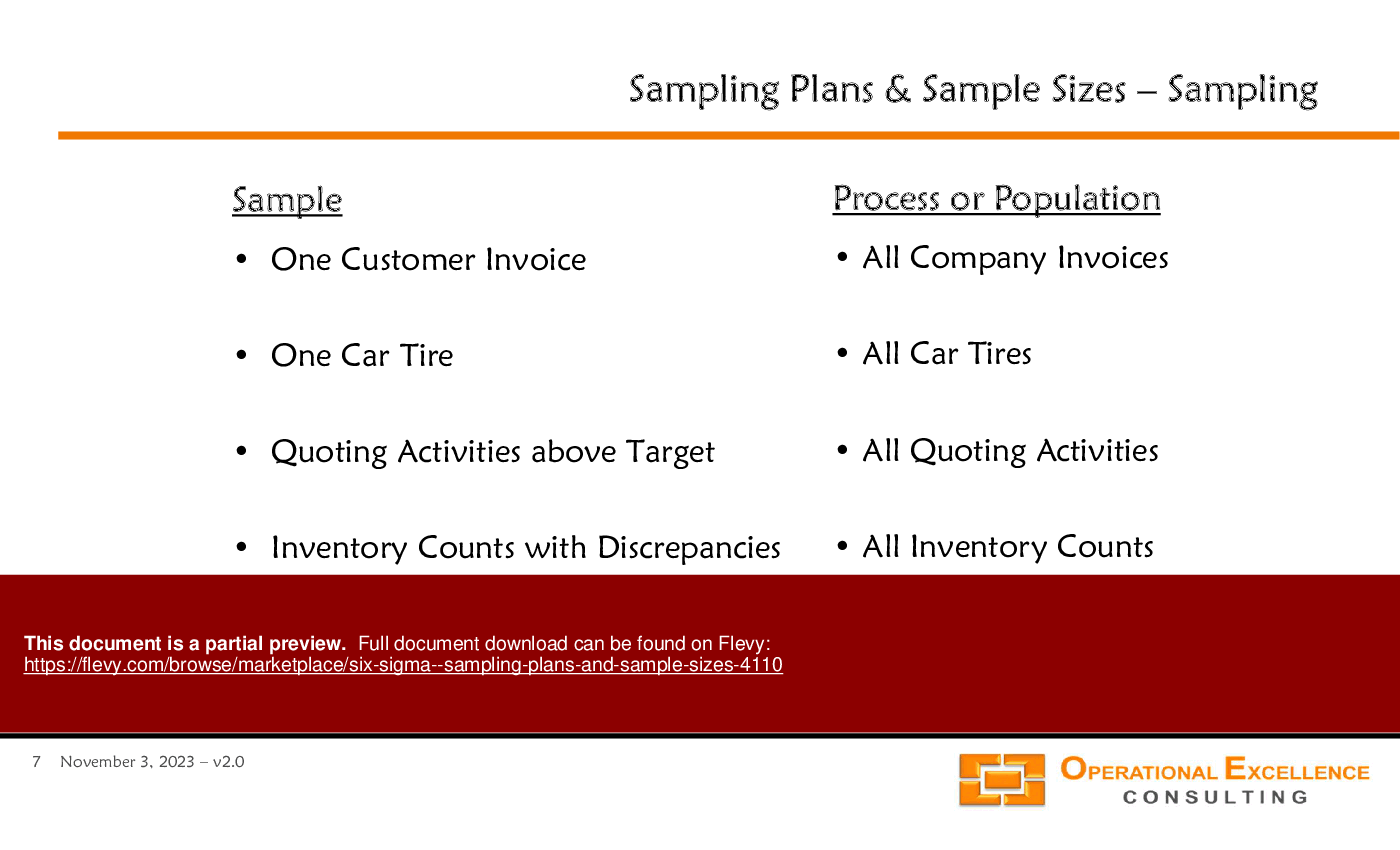
• Sampling Plans - Overview of various sampling methods including simple random, stratified, cluster, systematic, and subgroup sampling to ensure unbiased representation of populations.
• Sample Size Determination - Guidelines for calculating sample sizes necessary for estimating population parameters with specified confidence levels and margins of error.
• Hypothesis Testing Fundamentals - Introduction to null and alternate hypotheses, including the significance of Type I and Type II errors in statistical decision-making.

• Statistical Analysis with Minitab - Practical application of Minitab software for conducting hypothesis tests and determining sample sizes based on user-defined parameters.
• Confidence Intervals - Explanation of confidence intervals and their relationship to sample size, variability, and confidence levels in estimating population parameters.
• Design of Experiments - Insights into planning and executing experiments to test hypotheses regarding multiple factors and their effects on outcomes.
Deliverables, Templates, and Tools
• Sample size calculation templates for estimating means, proportions, and standard deviations
• Minitab usage guides for conducting hypothesis tests and analyzing data
• Excel calculators for quick reference on confidence intervals and margins of error
• Frameworks for developing sampling plans tailored to specific operational needs
• Visual aids illustrating the power of tests and sampling distributions
Slide Highlights
• Detailed explanations of sampling methods with practical examples
• Visual representations of confidence intervals and their implications
• Step-by-step guides for using Minitab in sample size determination
• Case studies demonstrating the application of hypothesis testing in real-world scenarios
• Power curves illustrating the relationship between sample size and detection probability
Potential Workshop Agenda
Introduction to Sampling Techniques (60 minutes)
• Overview of sampling methods and their applications
• Group discussion on challenges in data collection and analysis
Sample Size Calculations (90 minutes)
• Hands-on session using Minitab for sample size determination
• Exercises on calculating confidence intervals and margins of error
Hypothesis Testing Fundamentals (60 minutes)
• Explanation of Type I and Type II errors with examples
• Interactive case studies to reinforce learning
Design of Experiments (90 minutes)
• Planning and executing experiments using fractional factorial designs
• Group activity to develop a sampling plan for a specific project
Customization Guidance
• Adapt the presentation to include specific industry examples relevant to your organization
• Modify statistical examples to reflect actual data from your projects
• Integrate company-specific terminology and metrics into the sampling plans and templates
• Customize Minitab examples to align with the software version used in your organization
Secondary Topics Covered
• Sources of variation in sampling and their impact on data quality
• Common issues in sampling plans and how to mitigate them
• Advanced techniques for subgroup sampling and systematic sampling
• Statistical process control methods and their relationship to sampling
Topic FAQ
What are the common sampling methods and when should I use each?
Common methods covered include simple random, stratified, cluster, systematic, and subgroup sampling. Use simple random for unbiased general estimates, stratified to ensure representation across subgroups, cluster when sampling natural groups, systematic for every-kth selection, and subgroup sampling to monitor process variation — 5 methods.
How do I determine the right sample size for estimating a mean or proportion?
Sample size relies on the desired confidence level, margin of error, and population variability; statistical formulas translate these inputs into a required n. Practical tools and templates support these calculations; Flevy's Six Sigma - Sampling Plans & Sample Sizes includes sample size calculation templates and an Excel calculator.
What is the difference between Type I and Type II errors in hypothesis testing?
A Type I error rejects a true null hypothesis, while a Type II error fails to reject a false null hypothesis. Managing these errors requires selecting appropriate significance levels and power when planning tests; the presentation covers Type I and Type II error concepts on page 50.
How can I use Minitab to calculate sample sizes and run hypothesis tests?
Minitab provides built-in routines for power analysis, sample-size calculation, and hypothesis testing for means, proportions, and variance comparisons. The training material includes step-by-step Minitab usage guides based on Minitab 19 to demonstrate these procedures, with worked examples.
What should I look for when buying a sampling-plans and sample-size toolkit?
Look for coverage of sampling methods, clear sample-size calculation guidance, hypothesis-testing content, software examples (e.g., Minitab), and reusable templates or calculators. Also check for customization guidance and training-ready slides; this product provides 120 slides and an Excel calculator.
How much time should I allocate for a workshop teaching sampling and sample-size topics?
A suggested agenda in the material schedules 4 blocks: 60 minutes for sampling techniques, 90 minutes for sample-size calculations, 60 minutes for hypothesis testing, and 90 minutes for design of experiments, totaling 300 minutes (5 hours).
I need to design a QC sampling plan after a production line change—what steps should I follow?
Start by selecting an appropriate sampling method (e.g., subgroup or stratified), estimate variability and acceptable margin of error, compute sample sizes for required confidence and power, and validate with capability indices and subgroup monitoring. Use sample size templates and subgroup sampling techniques.
Are templates and calculators worth purchasing for sampling and sample-size work?
Templates and calculators standardize calculations, reduce manual errors, and speed training and deployment. They are particularly useful for repeated analyses and workshops; this product includes an Excel Six Sigma Confidence Interval Analysis Calculator and sample size templates.
Document FAQ
These are questions addressed within this presentation.
What is the purpose of sampling in quality control?
Sampling allows organizations to make inferences about a larger population based on a smaller subset, ensuring quality without inspecting every item.
How do I determine the appropriate sample size?
Sample size can be determined using statistical formulas that consider the desired confidence level, margin of error, and population variability.
What is the difference between Type I and Type II errors?
Type I error occurs when a true null hypothesis is incorrectly rejected, while Type II error occurs when a false null hypothesis is not rejected.
How can Minitab assist in hypothesis testing?
Minitab provides tools for conducting various hypothesis tests, calculating sample sizes, and analyzing data efficiently.
What factors affect the width of a confidence interval?
The width of a confidence interval is influenced by the sample size, confidence level, and variability within the sample.
Can this material be customized for specific training needs?
Yes, the presentation can be tailored to include industry-specific examples and terminology relevant to your organization.
What are the common pitfalls in sampling plans?
Common pitfalls include selection bias, non-response bias, and improper execution of sampling methods, which can lead to inaccurate conclusions.
How do I apply these concepts in a real-world scenario?
The concepts can be applied by developing a structured sampling plan for quality control, market research, or operational improvements within your organization.
Glossary
• Sampling - The process of selecting a subset of individuals from a population to estimate characteristics of the whole population.
• Confidence Interval - A range of values derived from sample data that is likely to contain the population parameter with a specified level of confidence.
• Margin of Error - The maximum expected difference between the true population parameter and a sample estimate.
• Type I Error - The error made when rejecting a true null hypothesis.
• Type II Error - The error made when failing to reject a false null hypothesis.
• Hypothesis Testing - A statistical method used to make decisions about population parameters based on sample data.
• Minitab - A statistical software package used for data analysis, including hypothesis testing and sample size determination.
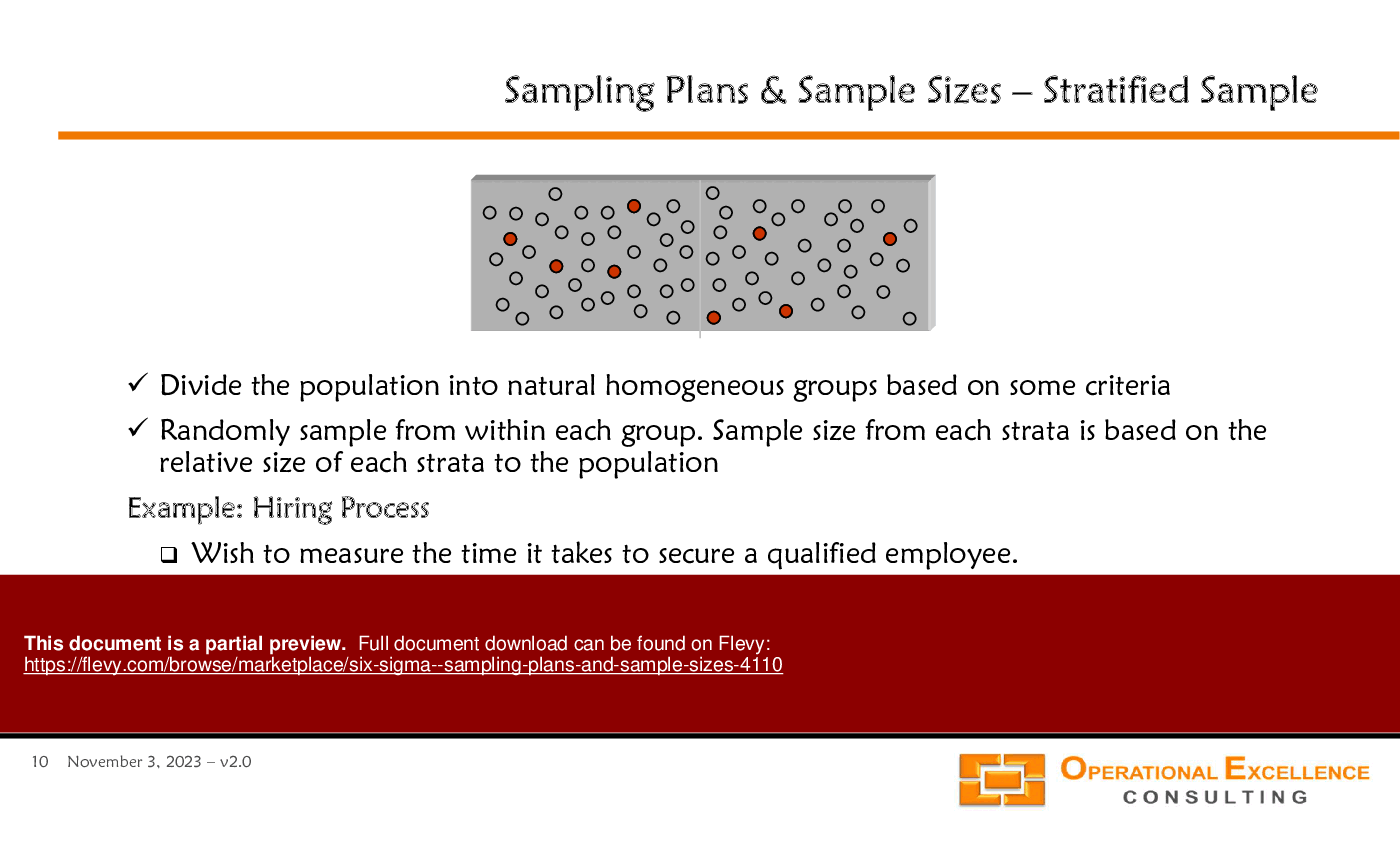
• Stratified Sampling - A sampling method that involves dividing the population into subgroups and randomly sampling from each subgroup.
• Cluster Sampling - A sampling technique where the population is divided into clusters, and entire clusters are randomly selected for analysis.
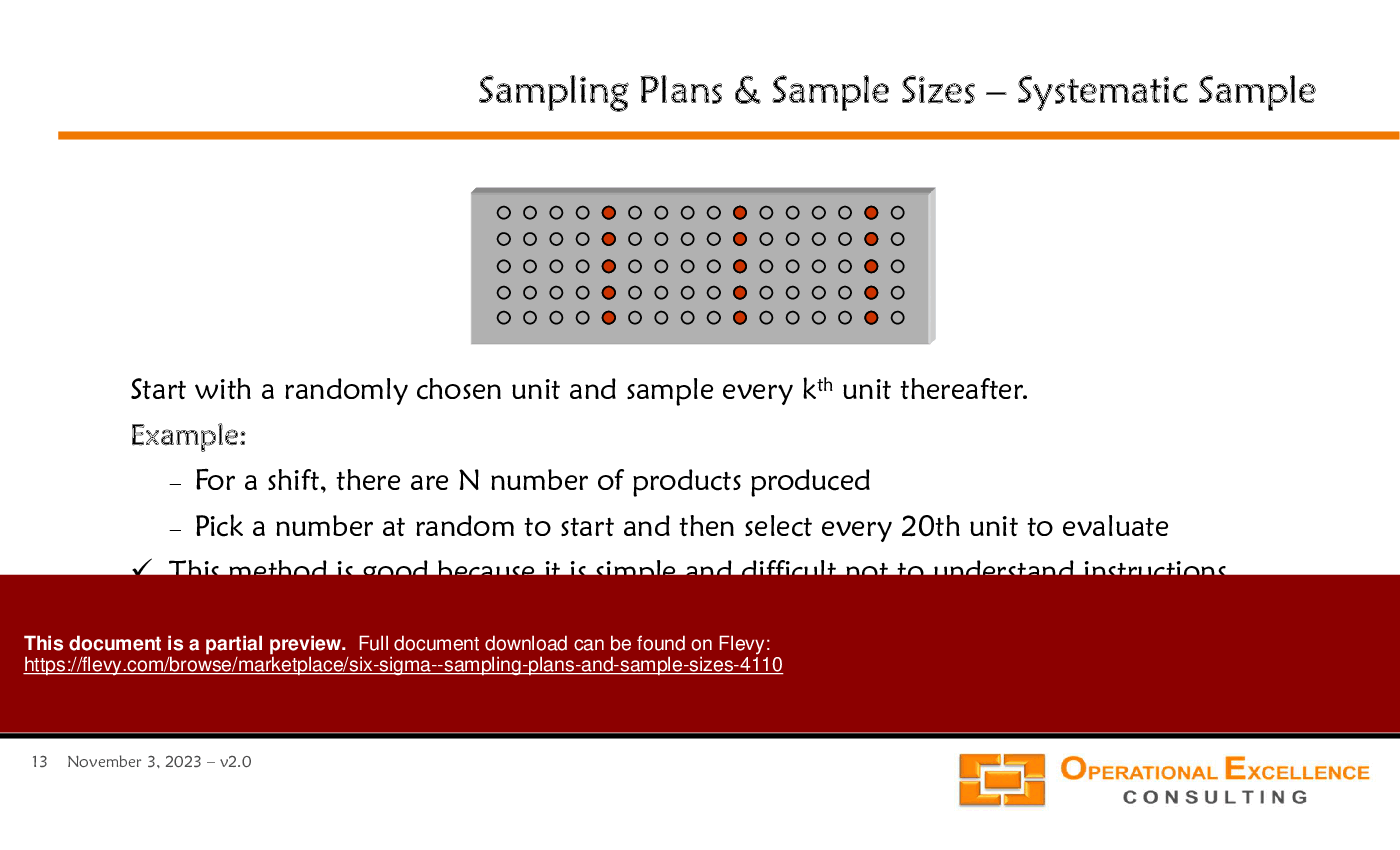
• Systematic Sampling - A method of sampling where every kth unit is selected from a list of the population.
• Subgroup Sampling - Sampling that involves taking measurements from several outputs of a process step at defined intervals.
• Power of a Test - The probability that the test will correctly reject a false null hypothesis.
• Standard Deviation - A measure of the amount of variation or dispersion in a set of values.
• Fractional Factorial Design - An experimental design that uses a fraction of the full factorial design to study the effects of multiple factors.
• ANOVA - Analysis of variance, a statistical method used to compare means among 3 or more groups.
• Proportion - A statistical measure that represents a part of a whole, often expressed as a percentage.
• Defect Rate - The frequency of defects in a production process, typically expressed as a ratio or percentage.
• Count or Defects - A method of measuring the number of defects or errors in a given sample or population.
• Capability Index - A measure of how well a process meets specified limits or tolerances.
• Excel Calculator - A tool used to perform statistical calculations in Microsoft Excel, often for confidence intervals and sample sizes.
This PPT slide provides an overview of using Minitab for calculating power and sample size in statistical analysis for one variance. The Minitab menu path is Stat > Power and Sample Size > 1 Variance. Key inputs include sample sizes, ratios of standard deviations (StDev / hypothesized StDev), and power values. Users must enter values for any 2 parameters, illustrating their interdependence. The desired power of the test, defined as (1 - ?), indicates the likelihood of correctly rejecting a false null hypothesis. Specifying the alpha risk (?) for Type I error is essential in hypothesis testing. Users must also select the alternative hypothesis to proceed effectively.
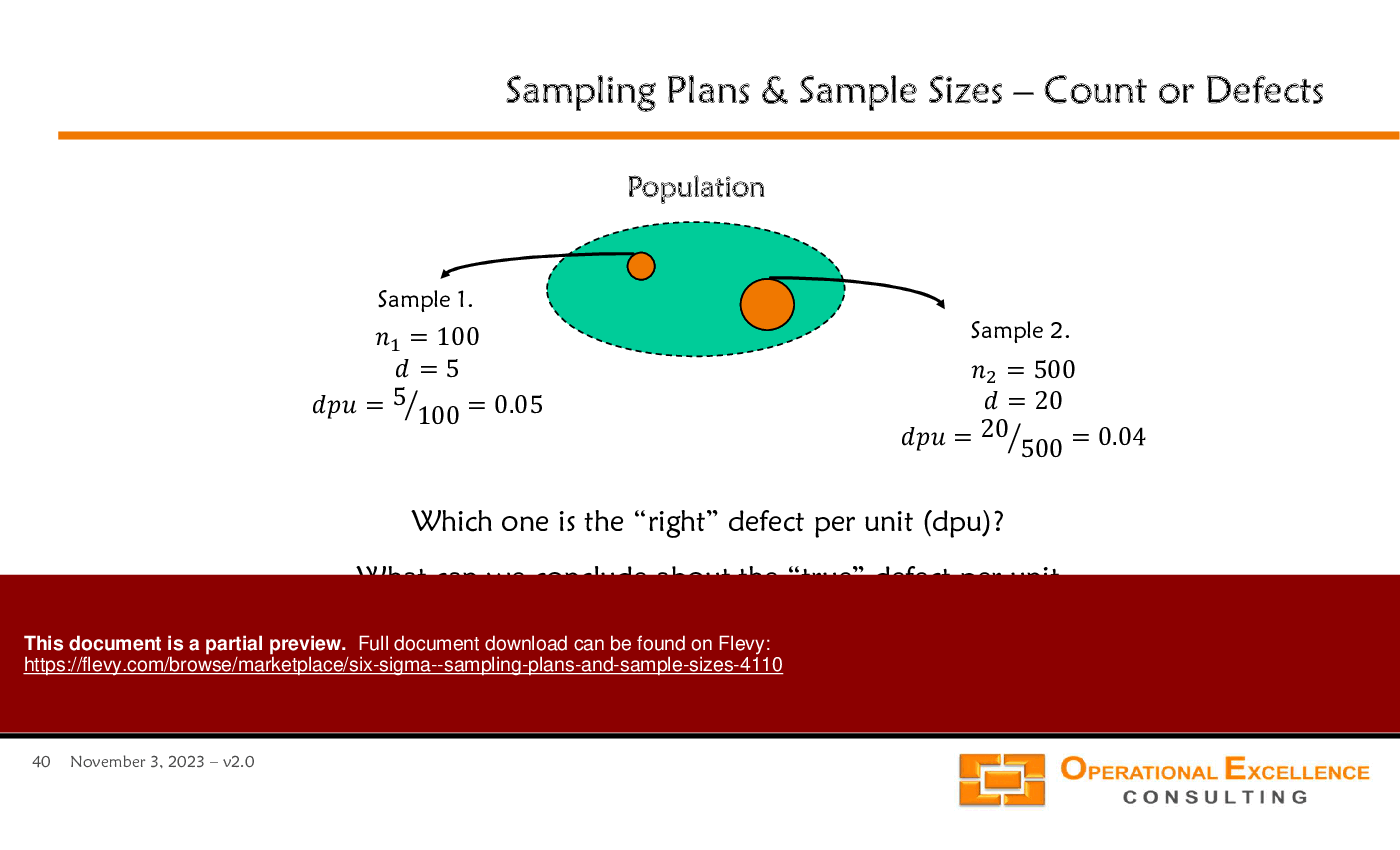
This PPT slide presents a comparative analysis of 2 sampling plans focused on defect rates. Sample 1 consists of 50 observations with 5 defects, resulting in a defect rate of 10% (p = 0.1). Sample 2 includes 500 observations with 45 defects, yielding a defect rate of 9% (p = 0.09). The analysis questions the validity of the defect rates and the implications of these estimates on understanding the true defect rate. It emphasizes the importance of sample size adequacy, suggesting that the reliability of defect rate estimates depends on whether the sample sizes are large enough to draw meaningful conclusions. This prompts discussion about the statistical power of the samples and the impact of sample size on defect rate accuracy.
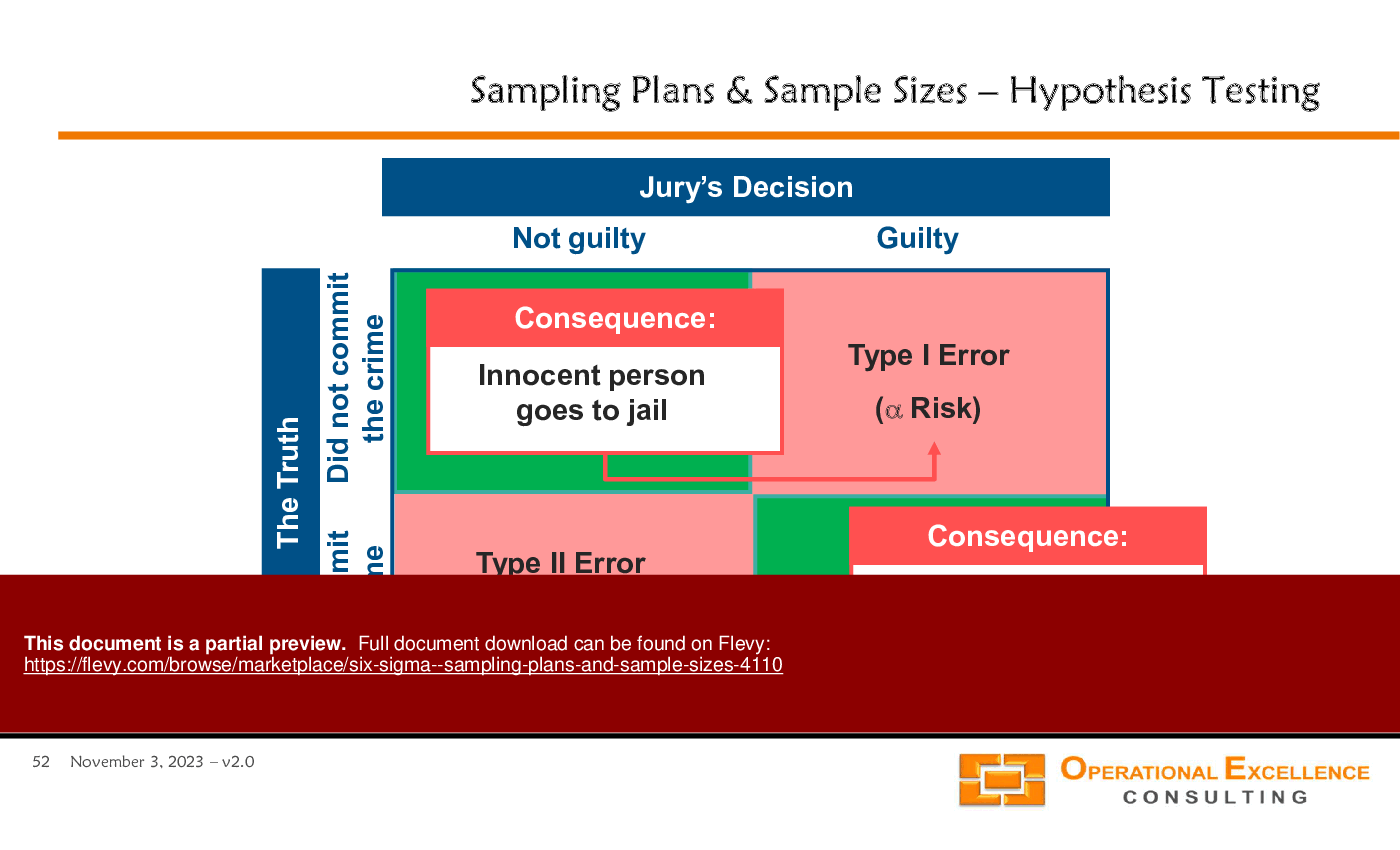
This PPT slide presents a framework for hypothesis testing using a decision matrix that categorizes outcomes based on the null hypothesis (H0). The vertical axis represents the truth of H0, labeled "H0 is True" at the top and "H0 is False" at the bottom. The horizontal axis reflects decisions: "Do Not Reject H0" on the left and "Reject H0" on the right. The top left quadrant shows a "Correct Decision" when H0 is true, while the top right quadrant indicates a "Type I Error," where H0 is incorrectly rejected, representing a risk of false positives. The bottom left quadrant identifies a "Type II Error," where H0 is false, but not rejected, leading to a different risk. The bottom right quadrant again confirms a "Correct Decision" when H0 is false. This matrix illustrates the balance between decision-making and statistical truth, enhancing the rigor of data-driven decision processes.
This PPT slide presents a Power Curve illustrating the correlation between statistical power and the ratio of standard deviations. As the ratio increases from 1.00 to 1.90, the power of the test rises, enhancing the ability to detect true effects. The curve, plotted in blue, shows a significant detection probability of approximately 96-97% at a ratio of 1.25. Understanding this relationship is essential for designing effective sampling plans, as selecting an appropriate sample size relative to expected standard deviation is crucial for reliable statistical testing results. The Power Curve guides decision-makers in optimizing sampling strategies to improve test effectiveness.
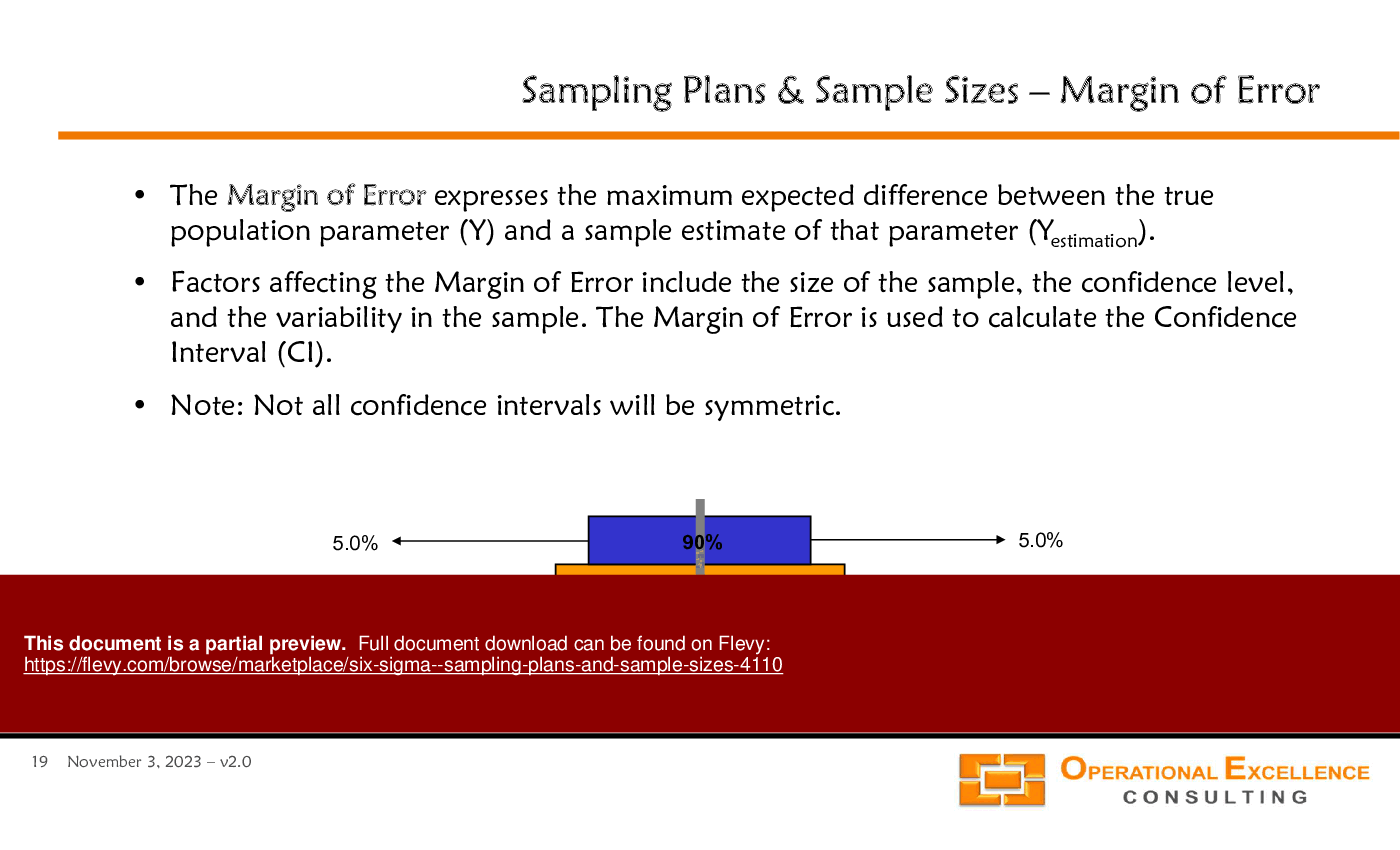
This PPT slide defines Margin of Error as the maximum expected difference between a true population parameter and a sample estimate, crucial for assessing how accurately a sample represents a larger population. Factors influencing Margin of Error include sample size, confidence level, and sample variability. The visual component illustrates confidence levels—90%, 95%, and 99%—and their corresponding margins of error, showing that higher confidence levels result in wider confidence intervals, affecting the Margin of Error. It also notes that confidence intervals may not be symmetric, indicating that data distribution impacts margin calculations and interpretations. Understanding how sample size and variability affect estimate reliability is essential for informed statistical decision-making.
This PPT slide focuses on subgroup sampling in process monitoring, emphasizing the importance of sampling outputs at defined intervals. This method is essential for utilizing x-bar and R Statistical Process Control Charts, which track process stability and variability. Key considerations include the sources of variation affecting subgroup representativeness and the necessity of predetermined sampling frequency aligned with control chart requirements. An example illustrates these principles by describing the process of pulling one plastic part from each of the 4 cavities of an injection molding machine at specified times. Careful planning around subgroup selection and sampling frequency is critical for effective quality control and reliable data collection, supporting informed decision-making in manufacturing contexts.
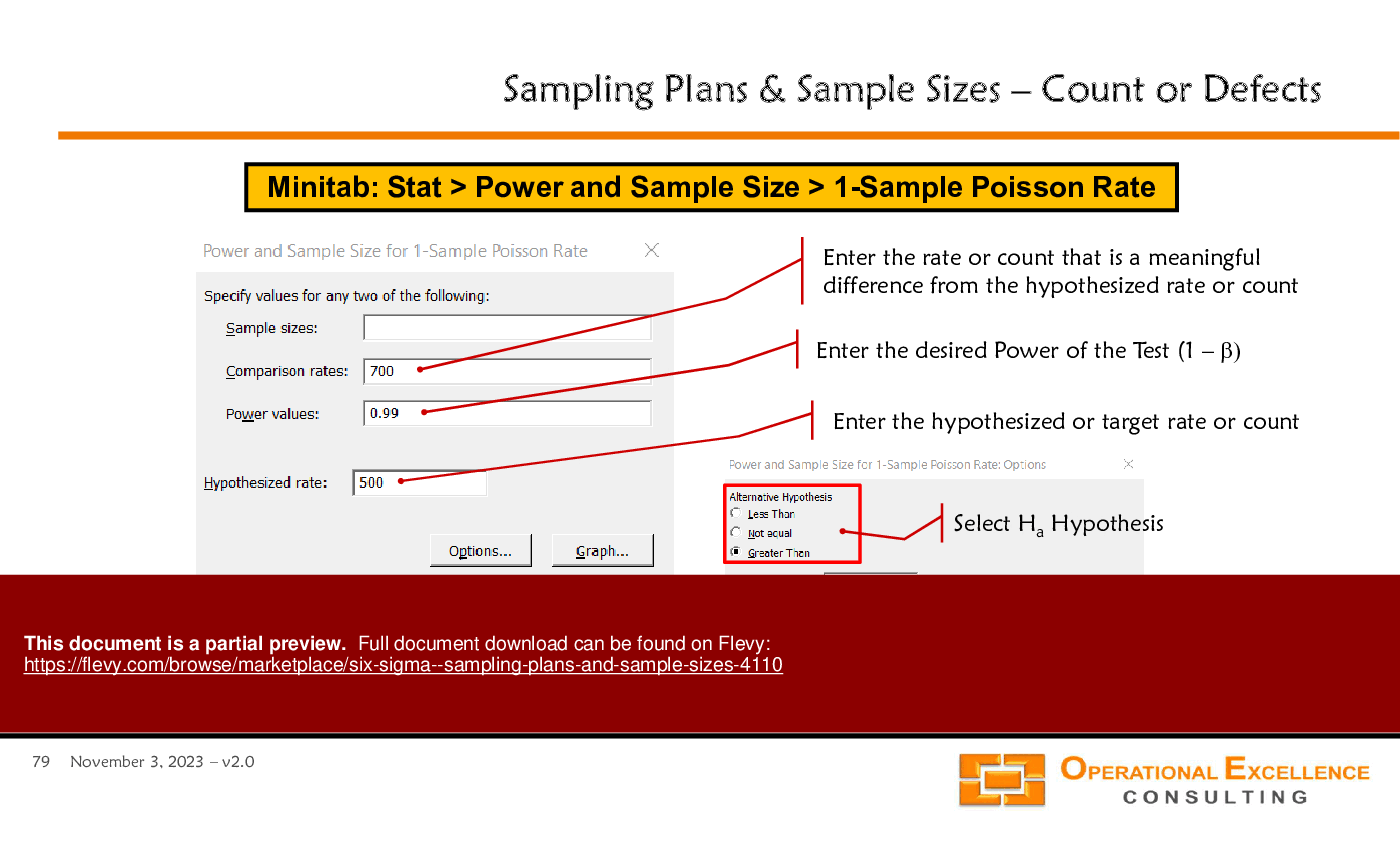
This PPT slide provides a structured overview of conducting a two-sample t-test using Minitab, focusing on power and sample size calculations. Critical inputs include sample sizes, the difference to be detected, desired power (ideally 0.9), and estimated standard deviation. Specifying the difference is essential for test sensitivity, while the power indicates the probability of correctly rejecting a false null hypothesis. The alpha risk, representing the likelihood of a Type I error, is also a necessary input that affects result validity. Additionally, users can select the alternative hypothesis, determining if the test is directional or non-directional, which impacts result interpretation and aligns with the research question.
This PPT slide provides an overview of cluster sampling methods, focusing on one-stage and two-stage techniques. One-stage cluster sampling involves dividing the population into clusters, randomly selecting clusters, and measuring all items within those clusters, which simplifies data collection for large populations. Two-stage cluster sampling adds a second selection layer, where items within the chosen clusters are randomly selected, allowing for a more nuanced sampling process that can yield more accurate results. These techniques are essential for effective data collection strategies and enhance statistical sampling methodologies.
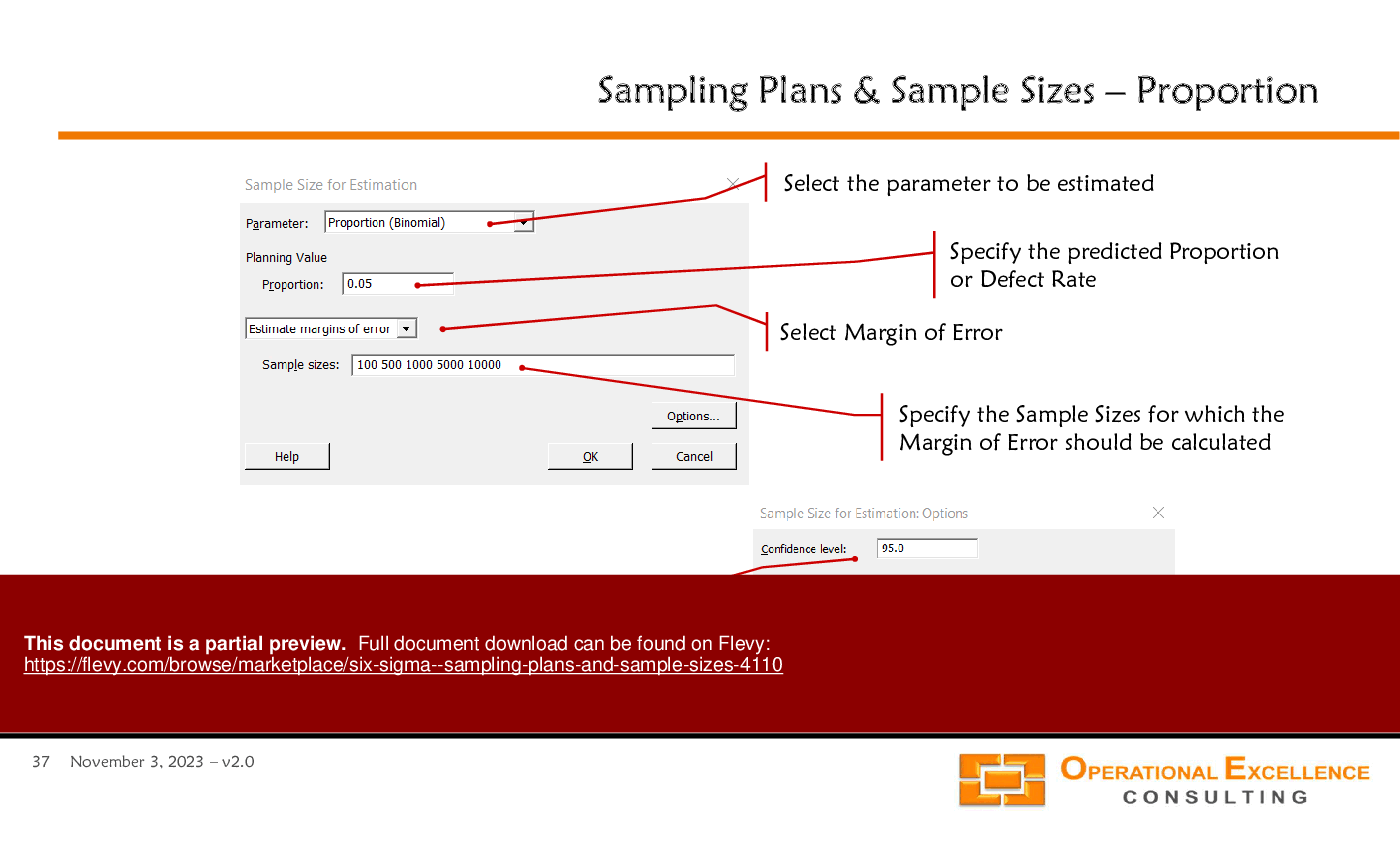
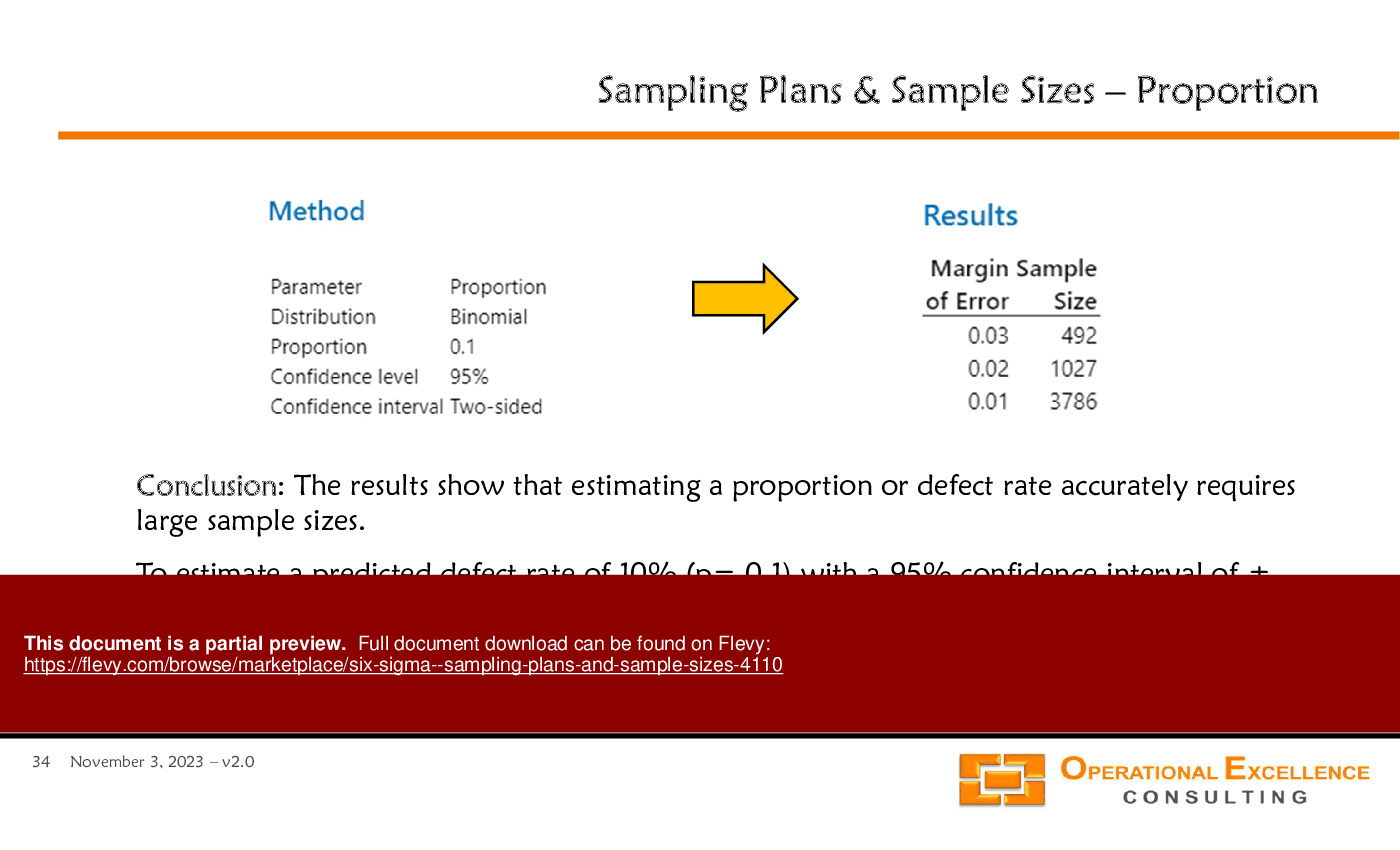
This PPT slide outlines a structured approach for determining sample sizes in statistical analysis, focusing on estimating proportions. Key parameters include selecting the "Proportion (3nmial)" for categorical data analysis and defining a "Planning Value," set at 0.1, as a baseline for estimation. Specifying sample size is crucial for representativeness. The "Margin of Error" is essential for establishing confidence intervals, with options like 0.001, 0.005, or 0.1 for tailored precision. A "Confidence Interval (CI) Level" of 95% is suggested, providing a robust framework for decision-making. This guide aids executives and analysts in implementing effective statistical sampling plans to derive meaningful insights from data.
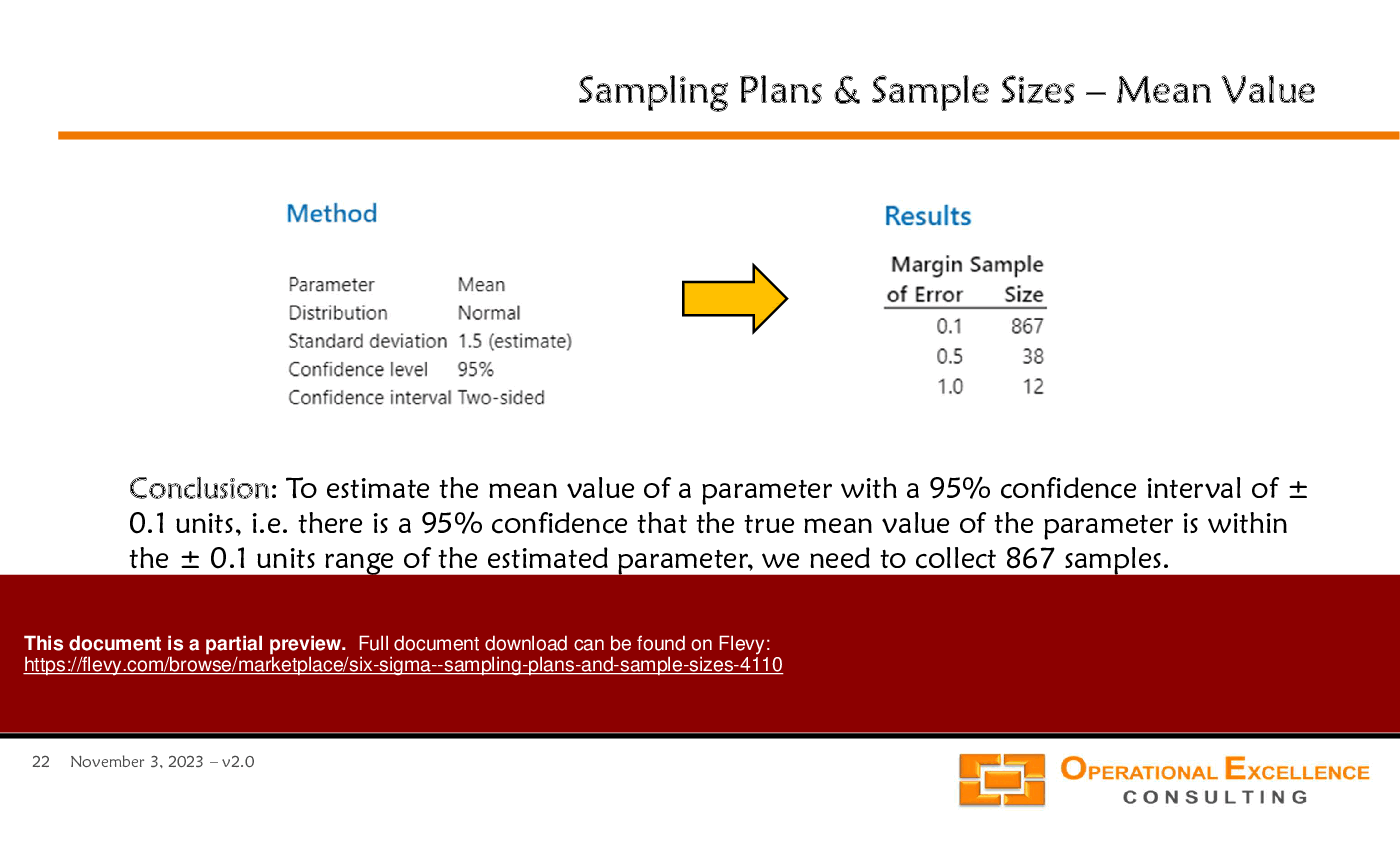
This PPT slide presents a statistical analysis of sampling plans and sample sizes for mean value estimation at a 95% confidence level. Key parameters include mean, distribution type, standard deviation (1.5), confidence level, and confidence interval. For a margin of error of ±0.1 units, 867 samples are required to achieve the desired confidence level, highlighting the need for robust sampling in statistical analysis. Conversely, a relaxed margin of error of ±1.0 units requires only 12 samples. This contrast illustrates how estimation precision directly affects data volume requirements. Careful consideration of sample sizes is essential for accurate results in data-driven decision-making.
This PPT slide compares 2 samples from a population, focusing on their mean values and implications. Sample 1 has 10 observations with a mean of 57.02 and a standard deviation of 7.03, while Sample 2 includes 50 observations with a mean of 61.12 and a standard deviation of 9.84. It raises the question of which sample provides the "right" mean value, highlighting the uncertainty in statistical sampling and the significance of sample size in deriving reliable estimates. Larger sample sizes generally reduce variability and enhance accuracy in estimating the population mean, emphasizing the critical role of sample size in statistical analysis and decision-making based on data.
This PPT slide outlines a structured approach to determining sample sizes for statistical estimation of mean values. Key components include selecting the parameter to estimate, specifying the standard deviation, and estimating sample sizes, all of which influence the reliability of results. Defining the margin of error is critical for setting acceptable limits on estimates, while specifying the confidence interval level is essential for understanding the certainty of estimates. The interface allows for selecting a confidence level, commonly 95%, indicating a high level of confidence in results. The two-sided confidence interval option accounts for variability in both directions, providing a comprehensive view of the data.
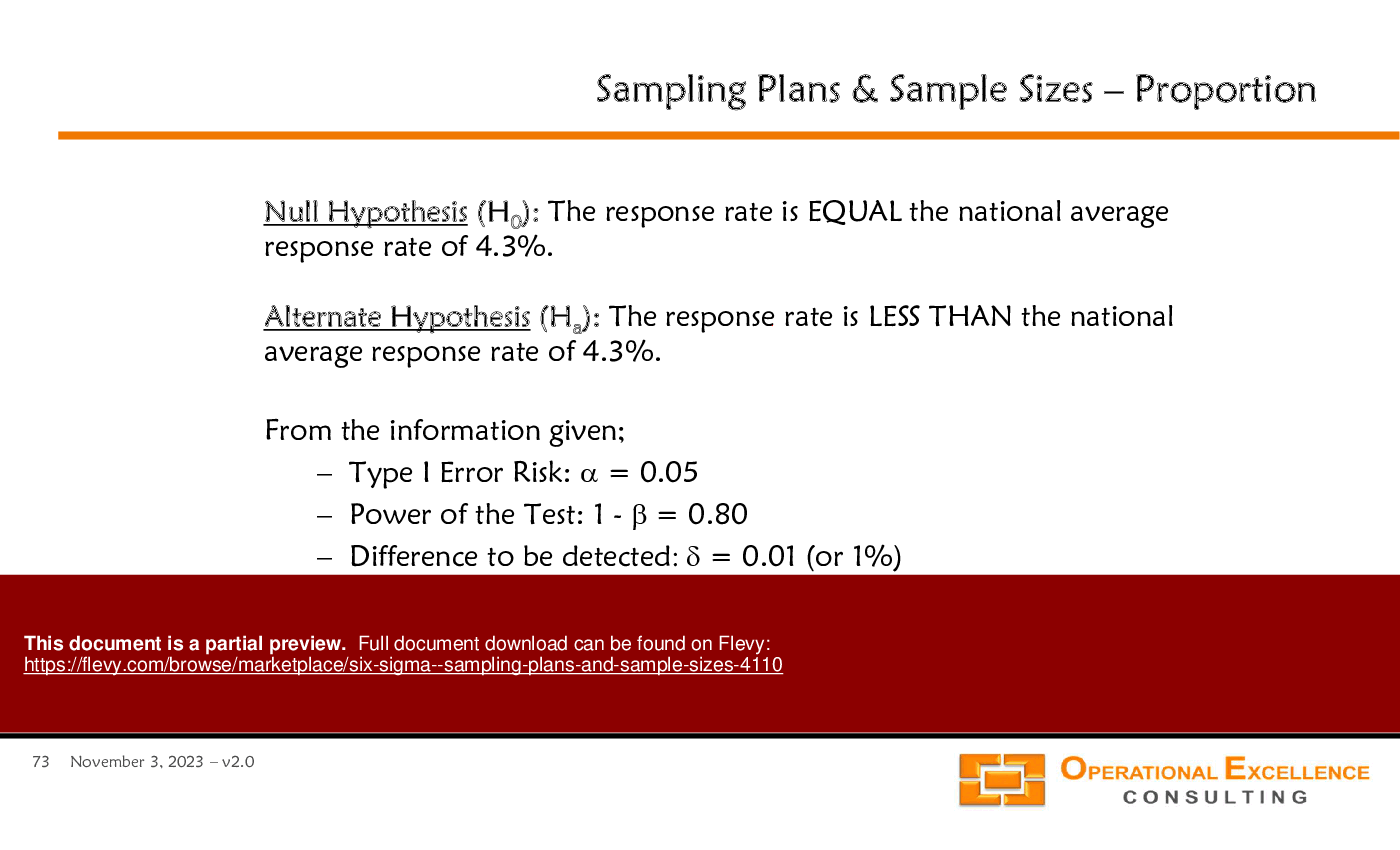
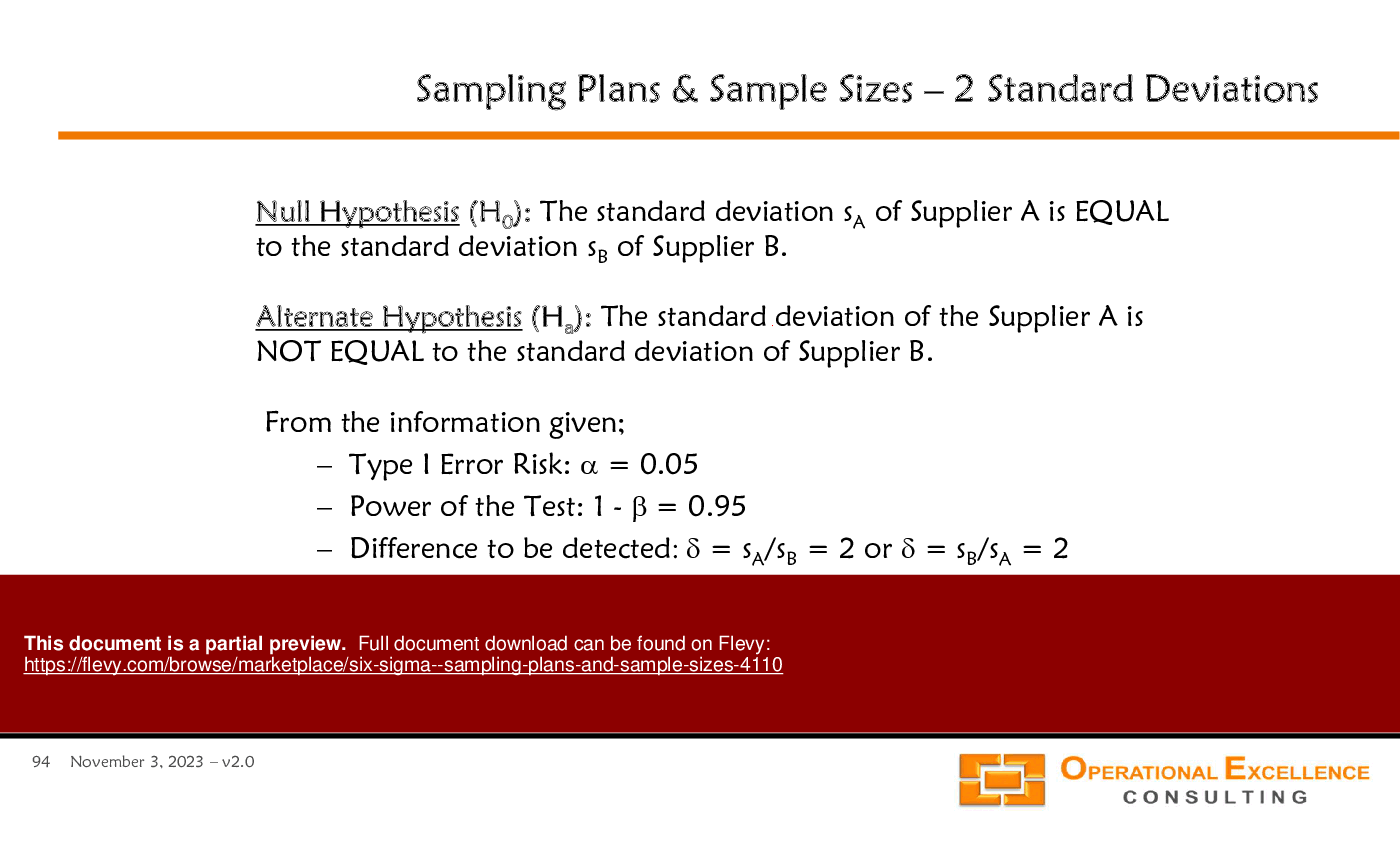
This PPT slide presents a statistical framework for evaluating the standard deviations of 2 suppliers, A and B, focusing on hypothesis testing. The null hypothesis (H0) asserts that the standard deviation of Supplier A equals that of Supplier B, while the alternate hypothesis (H1) posits they are not equal, facilitating a comparative analysis of performance metrics. The Type I error risk is set at 0.05, indicating a 5% chance of incorrectly rejecting H0. The test's power, represented as 1 - ?, is specified at 0.95, ensuring a high probability of correctly rejecting H0 when false. The difference to be detected, ?, includes 2 ratios: ? = sA/sB = 2 or ? = sB/sA = 2, emphasizing the relationship between the suppliers' standard deviations.
Source: Best Practices in Six Sigma Project PowerPoint Slides: Six Sigma - Sampling Plans & Sample Sizes PowerPoint (PPTX) Presentation Slide Deck, Operational Excellence Consulting LLC
Developed by a Senior Executive and Operational Excellence Coach with experience at organizations including NOKIA, MICROVENTION, and MAGELLAN, this material covers Statistical Sampling Plans and Confidence Interval Analysis using Minitab.
Operational Excellence Consulting LLC provides assessments, training solutions, kaizen event facilitation, and implementation support to enable our clients to achieve superior performance through Operational Excellence - Strategy Deployment & Hoshin Planning, Performance Management & Balanced Scorecards, Process Excellence & Lean Six Sigma, and High
... [read more] Performance Work Teams.
Frank Adler co-founded OEC LLC in 2009 to follow his passion for Operational Excellence and to be able to work with individuals and organizations that share this passion.
He is an accomplished and recognized Operational Excellence, Lean Management, and Six Sigma coach, with over 20 years of domestic and international executive leadership experience in General Management, multi-site Operations & Supply Chain Management, and Quality & Customer Support Management.
Frank is a certified and experienced Lean Six Sigma Master Black Belt with a proven track record of implementing these methods, concepts, and tools in various organizations and industries.
He holds a Master of Science in Mathematics & Physics from the Freie University of Berlin (Germany) and a Doctor of Philosophy in Applied Mathematics & Industrial Economics from the Helsinki University of Technology (Finland).
Since 2012, we have provided business templates to over 10,000 businesses and organizations of all sizes, from startups and small businesses to the Fortune 100, in over 130 countries.
"I have used Flevy services for a number of years and have never, ever been disappointed. As a matter of fact, David and his team continue, time after time, to impress me with their willingness to assist and in the real sense of the word. I have concluded in fact
that it is not at all just a repository of documents/resources but, in the way that David and his team manage the firm, it is like dealing with consultants always ready to assist, advise and direct you to what you really need, and they always get it right.
I am an international hospitality accomplished senior executive who has worked and lived during the past 35 years in 23 countries in 5 continents and I can humbly say that I know what customer service is, trust me.
Aside from the great and professional service that Flevy's team provide, their wide variety of material is of utmost great quality, professionally put together and most current.
Well done Flevy, keep up the great work and I look forward to continue working with you in the future and to recommend you to a variety of colleagues around the world.
"
– Roberto Pelliccia, Senior Executive in International Hospitality
"As a consultant requiring up to date and professional material that will be of value and use to my clients, I find Flevy a very reliable resource.
The variety and quality of material available through Flevy offers a very useful and commanding source for information. Using Flevy saves me time, enhances my expertise and ends up being a good decision."
– Dennis Gershowitz, Principal at DG Associates
"I am extremely grateful for the proactiveness and eagerness to help and I would gladly recommend the Flevy team if you are looking for data and toolkits to help you work through business solutions."
– Trevor Booth, Partner, Fast Forward Consulting
"The wide selection of frameworks is very useful to me as an independent consultant. In fact, it rivals what I had at my disposal at Big 4 Consulting firms in terms of efficacy and organization."
– Julia T., Consulting Firm Owner (Former Manager at Deloitte and Capgemini)
"Flevy.com has proven to be an invaluable resource library to our Independent Management Consultancy, supporting and enabling us to better serve our enterprise clients.
The value derived from our [FlevyPro] subscription in terms of the business it has helped to gain far exceeds the investment made, making a subscription a no-brainer for any growing consultancy – or in-house strategy team."
– Dean Carlton, Chief Transformation Officer, Global Village Transformations Pty Ltd.
"As a consulting firm, we had been creating subject matter training materials for our people and found the excellent materials on Flevy, which saved us 100's of hours of re-creating what already exists on the Flevy materials we purchased."
– Michael Evans, Managing Director at Newport LLC
"As a young consulting firm, requests for input from clients vary and it's sometimes impossible to provide expert solutions across a broad spectrum of requirements. That was before I discovered Flevy.com.
Through subscription to this invaluable site of a plethora of topics that are key and crucial to consulting, I
have been able to exceed expectations and deliver quality advice and solutions to my clients. The quality and expertise of the authors are exemplary and gives me great confidence to use as part of my service offerings.
I highly recommend this company for any consultant wanting to apply international best practice standards in their service offerings.
"
– Nishi Singh, Strategist and MD at NSP Consultants
"Flevy is our 'go to' resource for management material, at an affordable cost. The Flevy library is comprehensive and the content deep, and typically provides a great foundation for us to further develop and tailor our own service offer."
– Chris McCann, Founder at Resilient.World
Save with Bundles
This document is available as part of the following discounted bundle(s):
Receive our FREE presentation on Operational Excellence
This 50-slide presentation provides a high-level introduction to the 4 Building Blocks of Operational Excellence. Achieving OpEx requires the implementation of a Business Execution System that integrates these 4 building blocks.