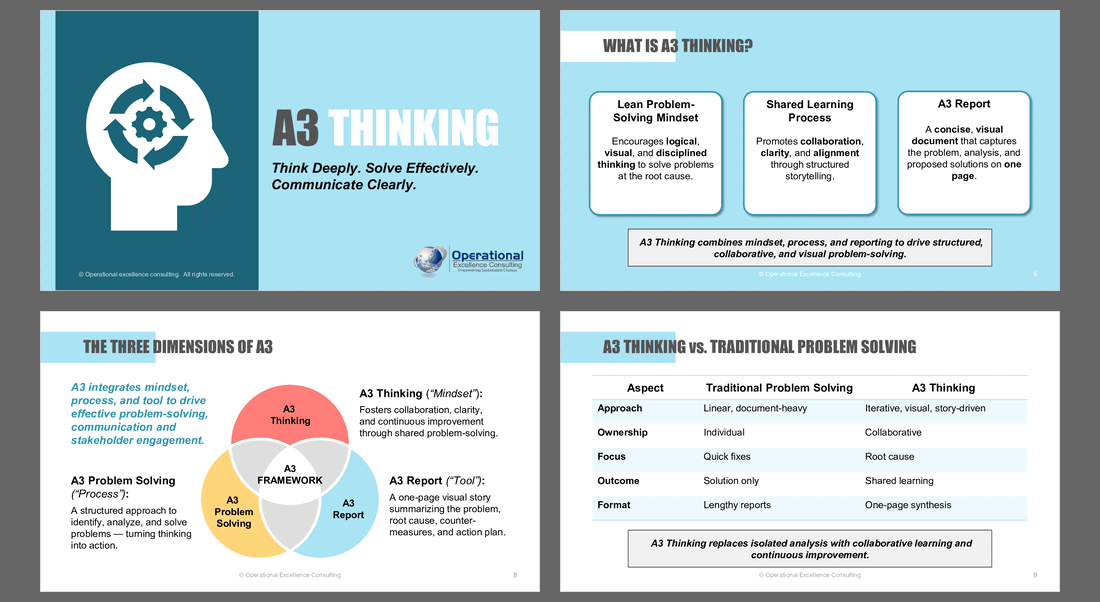

A3 Thinking is a hallmark of Lean management – a disciplined, structured approach to thinking, problem solving, and communication that embodies the spirit of continuous improvement. Originating from Toyota, A3 Thinking helps individuals and teams reason logically, visualize problems clearly, and engage others in collaborative learning and action.

This professional PowerPoint presentation blends the mindset, process, and tool dimensions of A3 Thinking. It guides users through the A3 Problem Solving process while emphasizing communication, coaching, and leadership behaviors that make problem-solving more effective and visible.
Designed as a complete, plug-and-play 1-day workshop deck, it provides a structured flow of concepts, tools, and group activities for immediate delivery. Ideal for leaders, facilitators, trainers, and improvement teams, the deck can be used for leadership development, internal training, or as a facilitation toolkit to coach problem solvers and strengthen structured thinking capabilities.
LEARNING OBJECTIVES
1. Understand the principles and significance of A3 Thinking in Lean and PDCA-based problem solving.
2. Apply the A3 framework to structure, communicate, and coach effective problem-solving discussions.
3. Guide teams in analyzing causes, developing countermeasures, and following up systematically.
4. Strengthen visual thinking and storytelling skills to improve clarity and engagement.
5. Foster a culture of reflection, collaboration, and continuous improvement within teams and organizations.
CONTENTS
1. Introduction to A3 Thinking
• Origins and purpose of A3 Thinking
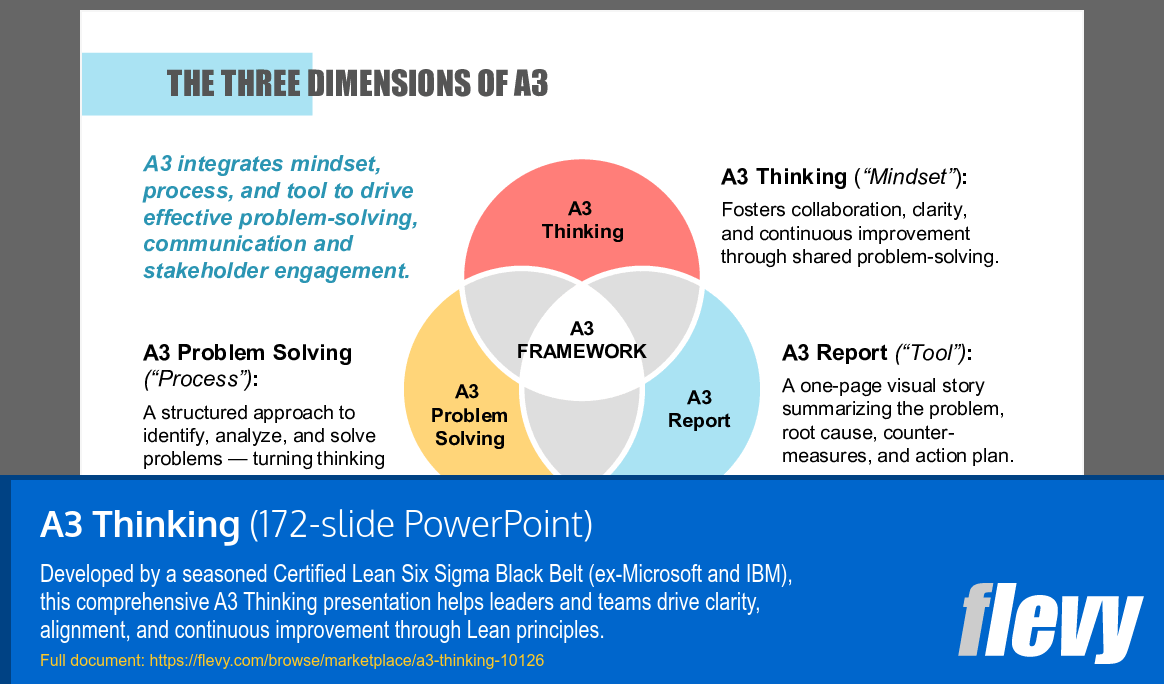
• The three dimensions: Mindset, Process, and Tool
• "Making thinking visible" as a cornerstone of Lean culture
2. The A3 Framework
• PDCA logic and structured flow
• The eight sections of the A3 Problem Solving report
• How A3 promotes shared understanding, alignment, and learning
3. Core Tools for A3 Thinking
• 5W1H and 5W2H for defining and scoping issues
• 5 Whys and Fishbone Diagram for root cause analysis
• Pareto Chart for focusing on the few critical issues
• Visual storytelling for clarity and persuasive communication
4. Form and Style – Communicating with Impact
• Designing clear, concise, and reader-friendly A3 reports
• Common formatting mistakes and how to avoid them
• Creating logical flow and visual hierarchy for engagement
5. Embedding A3 Thinking in Daily Practice
• Coaching and leading A3 teams
• Using A3 for daily management and strategy deployment
• Sustaining learning through feedback and reflection
6. Practical Tips for Success
• Reinforcing A3 habits through leadership example
• Review cycles, mentoring, and continuous learning
• Building a culture of problem-solving excellence
This presentation explores A3 Thinking as a broader discipline of structured reasoning, communication, and leadership. Built on the same PDCA foundation, it emphasizes the mindset, process, and tool aspects of A3 to help leaders and teams make thinking visible, align stakeholders, and coach improvement more effectively. Perfect for leadership development, internal workshops, and organizations promoting continuous learning and collaboration.
Differentiator:Emphasizes the mindset and communication side of A3 for leaders and teams.
Got a question about the product? Email us at support@flevy.com or ask the author directly by using the "Ask the Author a Question" form. If you cannot view the preview above this document description, go here to view the large preview instead.
Executive Summary
The A3 Thinking presentation is a robust framework designed to enhance problem-solving capabilities within organizations. Developed by a seasoned Certified Lean Six Sigma Black Belt, this presentation equips leaders and teams with the tools to drive clarity, alignment, and continuous improvement using Lean principles. By leveraging the A3 framework, participants will learn to effectively structure, communicate, and coach problem-solving discussions, fostering a culture of collaboration and reflection. This presentation serves as a comprehensive guide for implementing A3 Thinking in various contexts, ensuring that teams can address root causes and develop sustainable solutions.
Who This Is For and When to Use
• Team leaders and managers seeking to improve problem-solving processes.
• Cross-functional teams involved in process improvement initiatives.
• Organizations implementing Lean methodologies and continuous improvement practices.
• Training facilitators looking to enhance engagement and clarity in problem-solving discussions.
Best-fit moments to use this deck:
• During Lean training sessions focused on problem-solving and process improvement.
• In workshops aimed at fostering collaboration and alignment among team members.
• When addressing recurring or chronic problems that require in-depth analysis and sustainable solutions.
Learning Objectives
• Understand the principles and significance of A3 Thinking in Lean and PDCA-based problem-solving.
• Apply the A3 framework to structure, communicate, and coach effective problem-solving discussions.
• Guide teams in analyzing causes, developing countermeasures, and following up systematically.
• Strengthen visual thinking and storytelling skills to improve clarity and engagement.
• Foster a culture of reflection, collaboration, and continuous improvement within teams and organizations.
Table of Contents
• Introduction to A3 Thinking (page 1)
• The A3 Framework (page 2)
• Core Tools for A3 Thinking (page 3)
• Form & Style – Making Thinking Visible (page 4)
• Embedding A3 Thinking in Daily Practice (page 5)
• Practical Tips for Success (page 6)
Primary Topics Covered
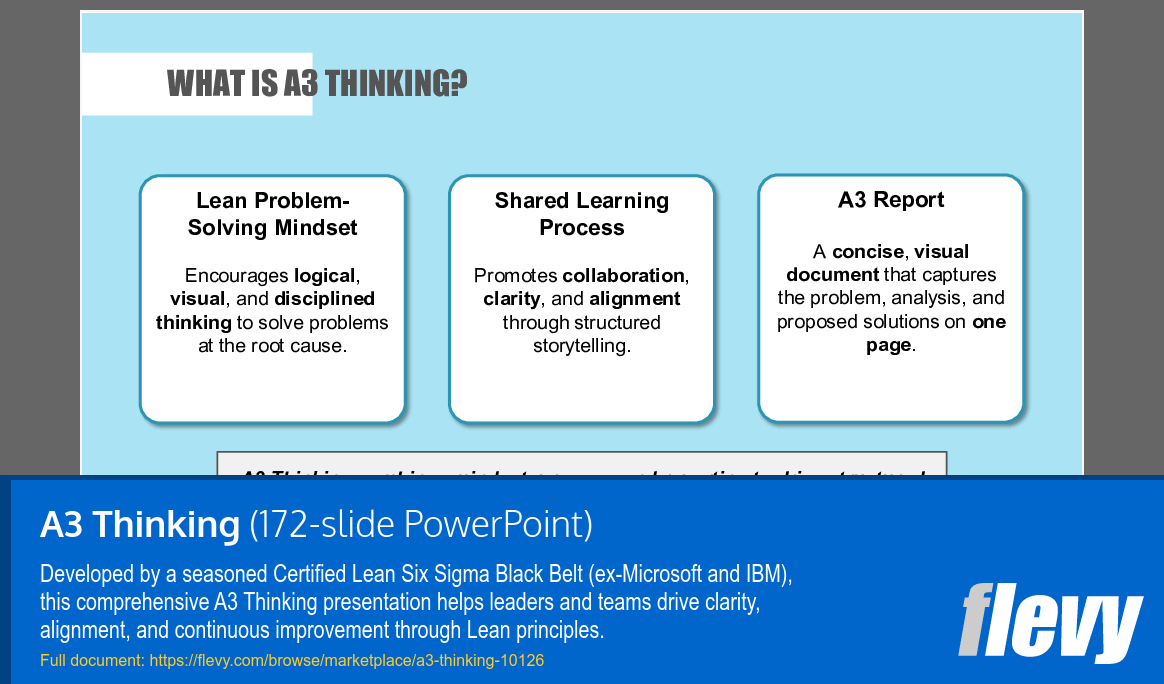
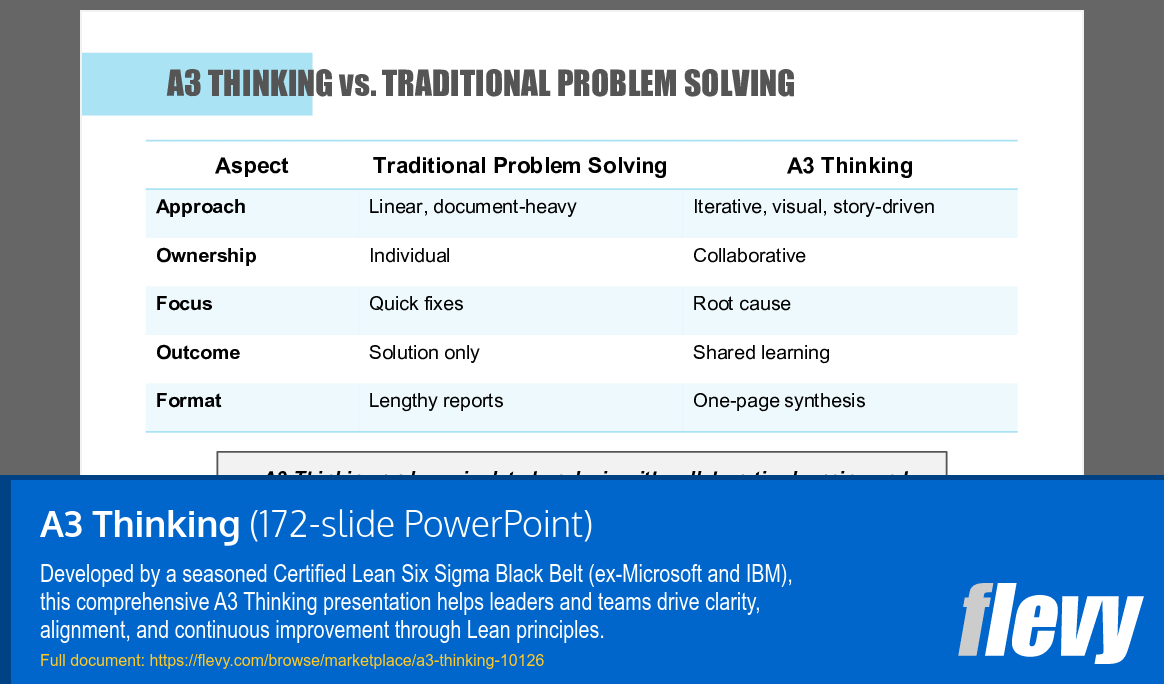
• A3 Thinking - A structured approach that fosters collaboration and clarity through shared problem-solving.
• A3 Report - A concise, visual document that captures the problem, analysis, and proposed solutions on one page.
• Root Cause Analysis - A systematic method to identify and address the fundamental causes of issues rather than just symptoms.
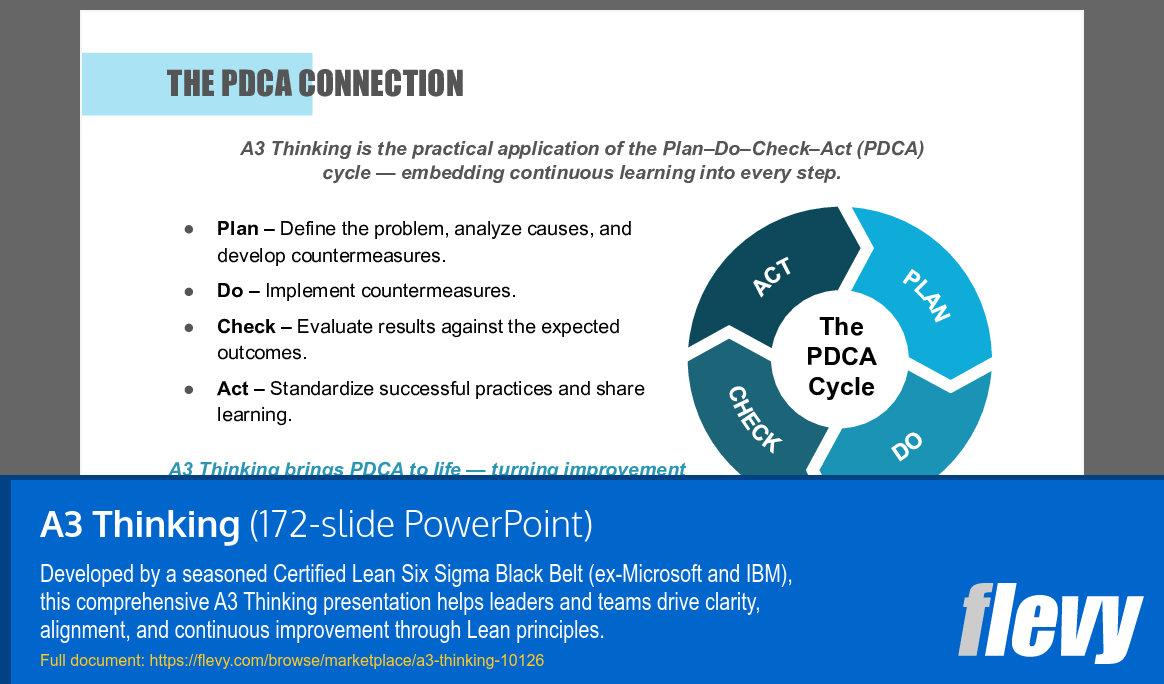
• PDCA Cycle - The Plan-Do-Check-Act framework that underpins A3 Thinking, promoting continuous learning and improvement.
• Visual Communication - Techniques to enhance understanding and engagement through effective visual storytelling.
• Countermeasures - Actionable steps designed to eliminate root causes and drive sustainable performance improvement.
Deliverables, Templates, and Tools
• A3 report template for summarizing problems and countermeasures.
• Visual storytelling tools for enhancing communication and engagement.
• Root cause analysis frameworks, including 5 Whys and Fishbone diagrams.
• PDCA cycle templates to guide structured problem-solving.
• Checklists for effective follow-up and confirmation of results.
Slide Highlights
• Overview of A3 Thinking principles and their significance in Lean methodologies.
• Visual representation of the A3 framework and its components.
• Examples of A3 reports illustrating problem-solving processes.
• Key tools and techniques for effective root cause analysis.
• Practical tips for embedding A3 Thinking into daily practices.
Potential Workshop Agenda
Introduction to A3 Thinking (30 minutes)
• Overview of A3 principles and framework.
• Discussion on the importance of structured problem-solving.
Hands-On A3 Report Creation (60 minutes)
• Participants create their own A3 reports based on real-world problems.
• Group feedback and discussion on each report.
Root Cause Analysis Techniques (45 minutes)
• Introduction to 5 Whys and Fishbone diagrams.
• Group activity to analyze a case study using these techniques.
Embedding A3 Thinking in Daily Practice (30 minutes)
• Strategies for integrating A3 Thinking into team routines.
• Discussion on potential barriers and solutions for implementation.
Customization Guidance
• Tailor the A3 report template to align with specific organizational goals and terminology.
• Adjust the workshop agenda to focus on particular challenges faced by the team.
• Incorporate relevant case studies or examples that resonate with the participants' experiences.
Secondary Topics Covered
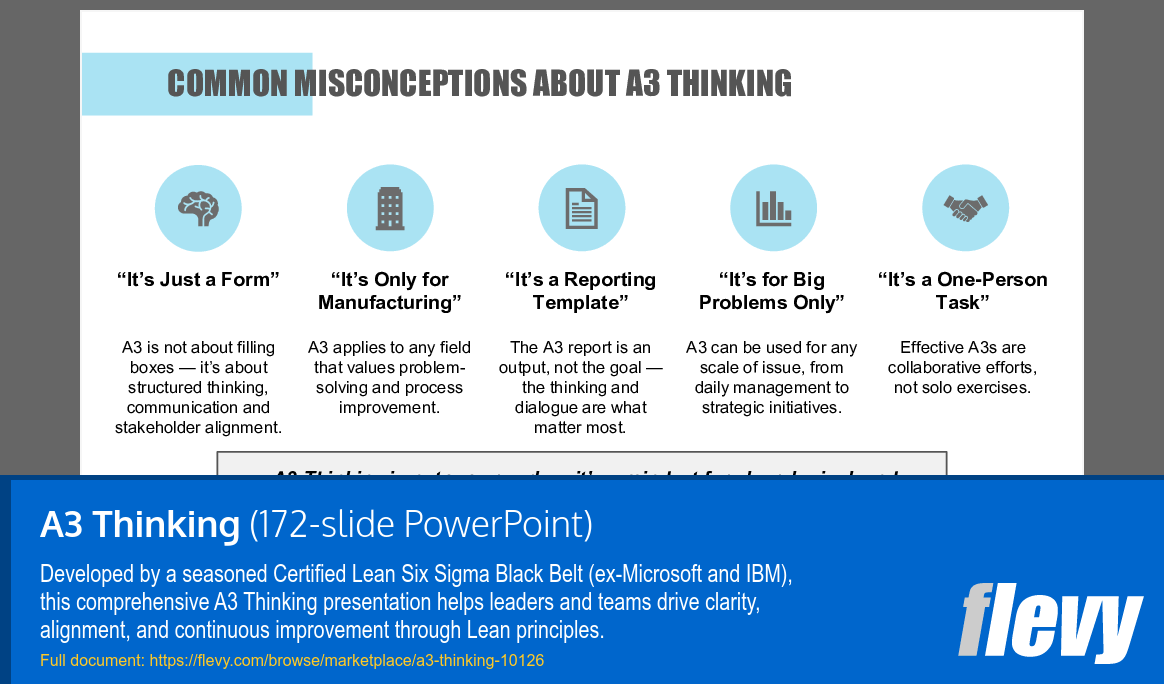
• Common misconceptions about A3 Thinking and its applications.
• The role of leadership in fostering a culture of continuous improvement.
• Strategies for effective communication and stakeholder engagement during problem-solving.Document FAQ
These are questions addressed within this presentation.
What is A3 Thinking?
A3 Thinking is a structured problem-solving approach that emphasizes collaboration, clarity, and continuous improvement through visual storytelling and systematic analysis.
How can A3 Thinking be applied in different industries?
A3 Thinking is versatile and can be applied across various sectors, including manufacturing, healthcare, finance, and technology, to address diverse challenges.
What are the key benefits of using A3 Thinking?
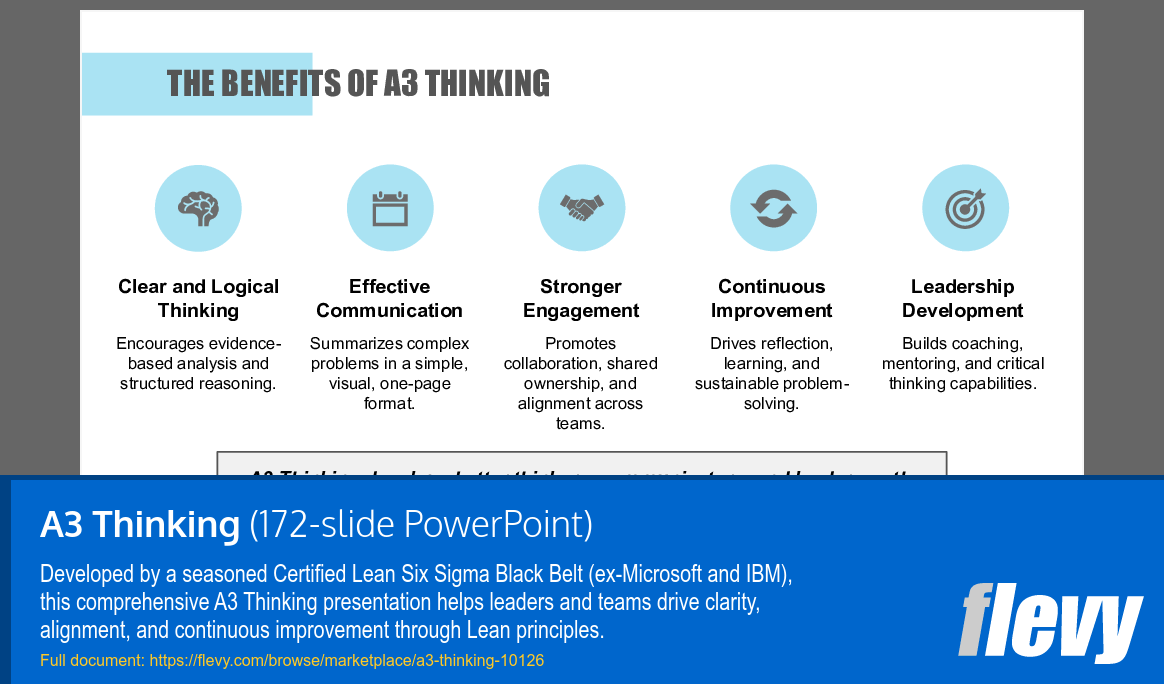
A3 Thinking enhances problem-solving skills, promotes team collaboration, improves communication clarity, and strengthens organizational learning.
How does the PDCA cycle relate to A3 Thinking?
The PDCA cycle is integral to A3 Thinking, providing a framework for continuous learning and improvement through structured planning, execution, evaluation, and adjustment.
Can A3 reports be customized?
Yes, A3 reports can be tailored to fit specific organizational needs, including adjusting the format, content, and focus areas.
What tools are included in the A3 Thinking framework?
Key tools include the A3 report template, root cause analysis techniques (5 Whys, Fishbone diagrams), and visual communication aids.
How can teams ensure successful implementation of A3 Thinking?
Teams can ensure success by fostering a culture of collaboration, providing training, and regularly reviewing and refining their A3 processes.
What common pitfalls should teams avoid when using A3 Thinking?
Common pitfalls include vague problem statements, shallow analysis, and neglecting to follow up on countermeasures.
Glossary
• A3 Thinking - A structured approach to problem-solving that emphasizes collaboration and clarity.
• PDCA Cycle - A continuous improvement framework consisting of Plan, Do, Check, and Act phases.
• Root Cause Analysis - Techniques used to identify the fundamental causes of problems.
• 5 Whys - A questioning technique used to explore the cause-and-effect relationships underlying a problem.
• Fishbone Diagram - A visual tool for categorizing potential causes of a problem.
• Countermeasures - Actions taken to eliminate root causes and improve performance.
• Visual Communication - The use of visual aids to enhance understanding and engagement in problem-solving discussions.
• Continuous Improvement - Ongoing efforts to improve products, services, or processes.
• Stakeholder Engagement - The process of involving individuals or groups who have an interest in the outcome of a project or initiative.
• Team Collaboration - Working together towards a common goal, leveraging diverse perspectives and expertise.
• Standard Operating Procedures (SOPs) - Detailed, written instructions to achieve uniformity in the performance of a specific function.
• Hoshin Planning - A strategic planning process that aligns an organization’s goals with its operational activities.
Source: Best Practices in A3 PowerPoint Slides: A3 Thinking PowerPoint (PPTX) Presentation Slide Deck, Operational Excellence Consulting
|
Receive our FREE presentation on Operational Excellence
This 50-slide presentation provides a high-level introduction to the 4 Building Blocks of Operational Excellence. Achieving OpEx requires the implementation of a Business Execution System that integrates these 4 building blocks. |