
Developed by a Senior Executive and Operational Excellence Coach with experience at organizations including NOKIA, MICROVENTION, and MAGELLAN, this presentation covers the Six Sigma DMAIC Problem Solving Process and Root Cause Analysis.
have a thorough understanding of the Six Sigma DMAIC Problem Solving Process,
be able to describe the purpose and objective of each phase of the DMAIC Problem Solving Process, and
be able to use assessing questions at the end of each phase of the DMAIC Problem Solving Process to ensure proper application of the process and integrated problem solving tools.
PROBLEM SOLVING PPT DESCRIPTION
Six Sigma DMAIC methodology PPT: Learn the Define, Measure, Analyze, Improve & Control process with examples, templates & problem-solving tools. Download now. Six Sigma DMAIC Process & Tools is a 182-slide PPT PowerPoint presentation slide deck (PPTX) with a supplemental Excel document available for immediate download upon purchase.
The Six Sigma – DMAIC Problem Solving Process Training Module includes:
1. MS PowerPoint Presentation including 182 slides covering our DMAIC-based Basic Problem Solving Process, Tools, Case Study and 8 Workshop Exercises.
2. MS Word Problem Solving Process Case Study
3. MS Word DMAIC Problem Solving Process Worksheet Template
4. MS Excel Process Variables Map Template
5. MS Excel Process Failure Mode & Effects Analysis Template
6. MS Excel Process Control Plan Template
"After you have downloaded the training material, you can change any part of the training material and remove all logos and references to Operational Excellence Consulting. You can share the material with your colleagues and clients, and re-use it as you need. The only restriction is that you cannot publicly re-distribute, sell, rent or license the material as though it is your own. Thank you."
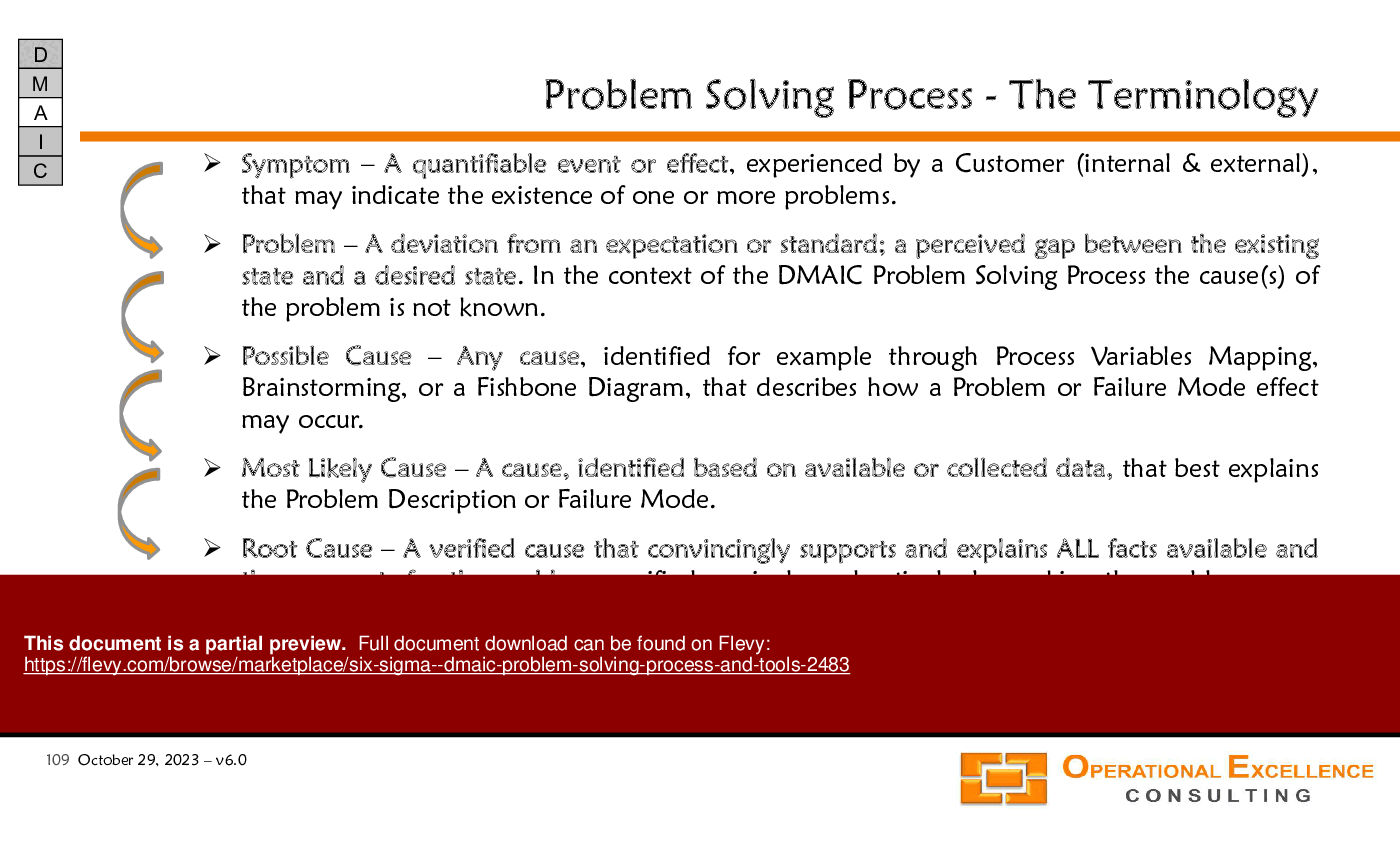
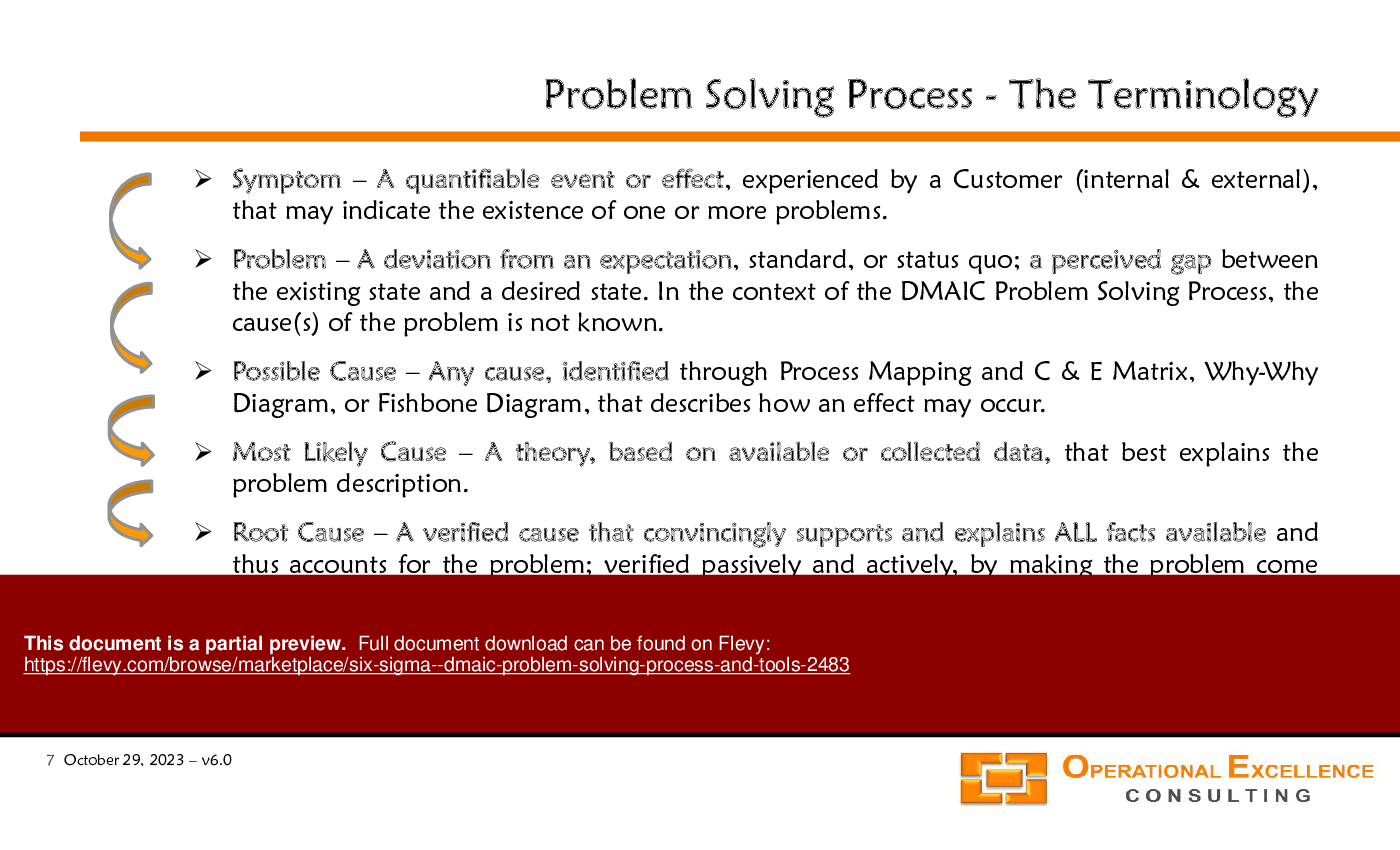
This training module delves deep into the terminology essential for understanding the DMAIC problem-solving process. It covers key concepts such as symptoms, problems, possible causes, most likely causes, and root causes. Each term is clearly defined to ensure your team can identify and address issues effectively. This foundational knowledge is crucial for any Six Sigma practitioner aiming to drive process improvements.
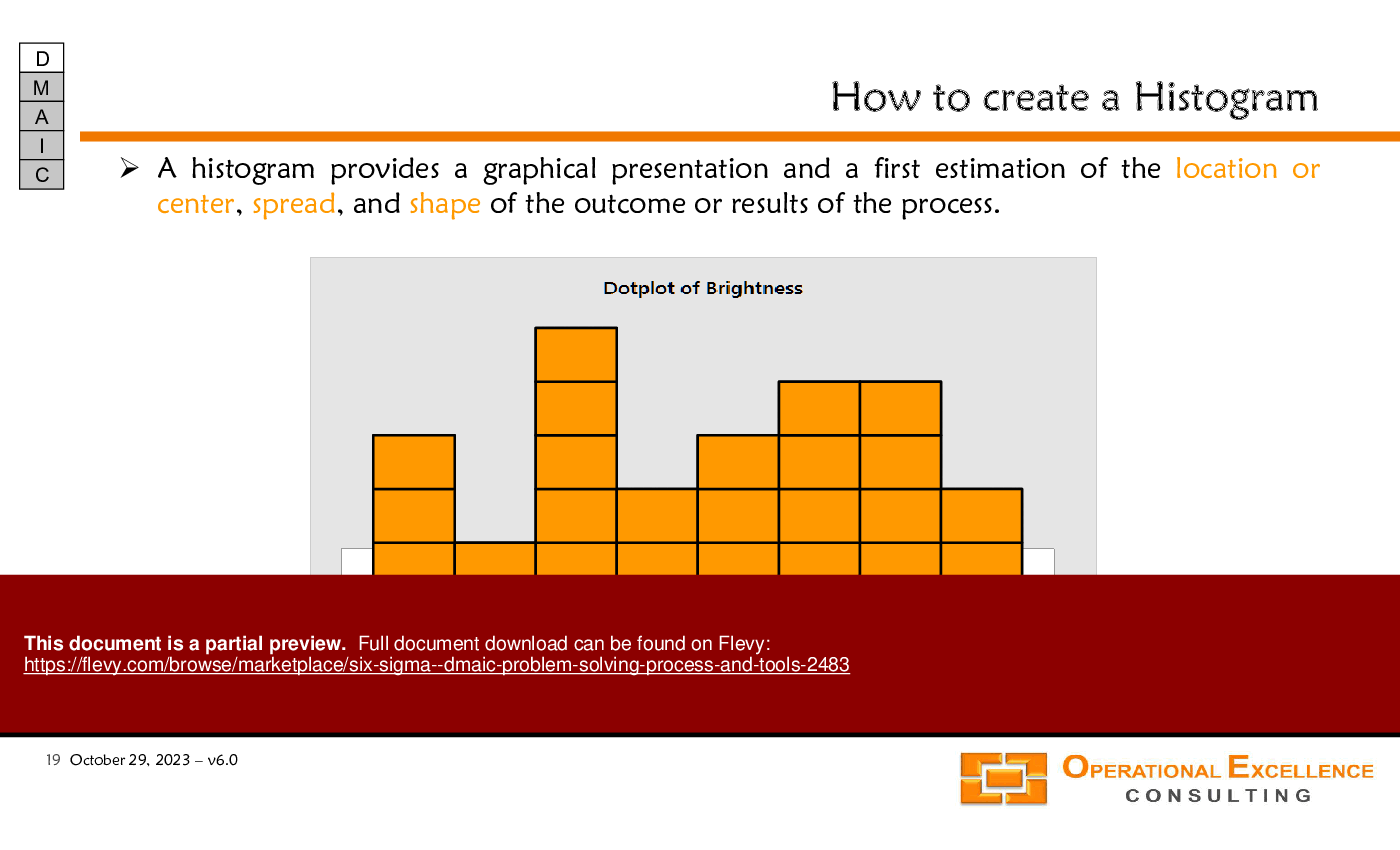
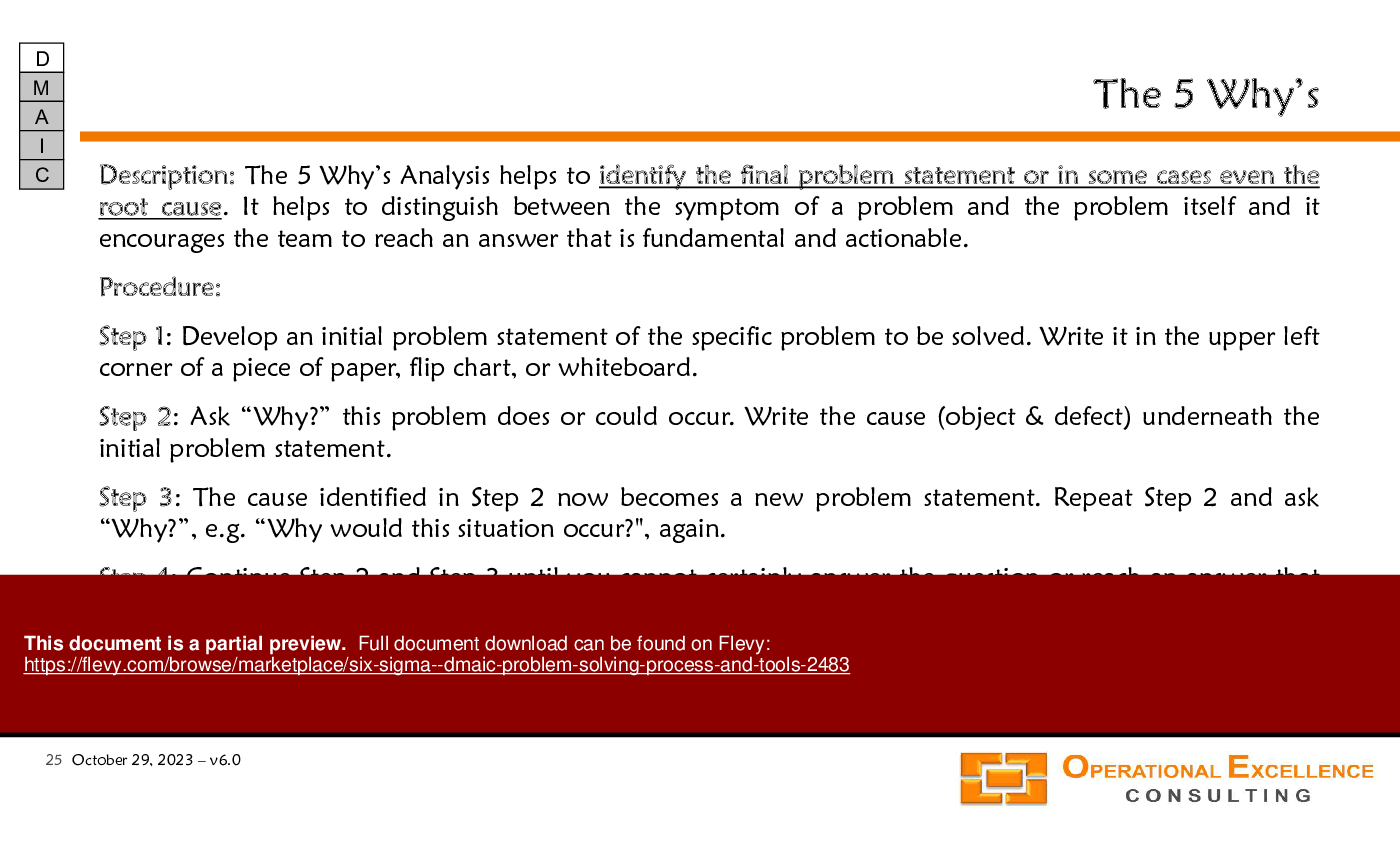
The module includes practical tools like histograms and scatter plots to visualize data and identify trends. These tools are indispensable for making data-driven decisions and understanding the underlying causes of process variations. The training also covers the 5 Why’s Analysis, a technique that helps teams drill down to the root cause of problems by repeatedly asking "Why?" This method is straightforward yet powerful in uncovering the real issues behind process inefficiencies.
The role of team members is also emphasized, outlining their responsibilities in providing technical input, carrying out assignments, and offering ideas. The module includes a checklist to ensure all necessary inputs are considered when forming a problem-solving team. This ensures that every team member is aligned and focused on the common goal of process improvement.
Got a question about the product? Email us at support@flevy.com or ask the author directly by using the "Ask the Author a Question" form. If you cannot view the preview above this document description, go here to view the large preview instead.
MARCUS OVERVIEW
This synopsis was written by Marcus [?] based on the analysis of the full 182-slide presentation.
Executive Summary
This presentation provides a comprehensive overview of the DMAIC (Define, Measure, Analyze, Improve, Control) Problem Solving Process, designed to equip teams with effective methodologies and tools for identifying root causes of problems and performance gaps. Developed by Operational Excellence Consulting LLC, the workshop emphasizes practical application through case studies, enabling participants to understand each phase of the DMAIC process and utilize key problem-solving tools effectively.
Who This Is For and When to Use
• Operational Excellence teams seeking structured problem-solving methodologies
• Quality assurance professionals focused on continuous improvement
• Project managers overseeing process improvement initiatives
• Team leaders responsible for driving operational excellence within their organizations
Best-fit moments to use this deck:
• During process improvement workshops to enhance team capabilities
• When addressing recurring issues that require systematic analysis
• In training sessions aimed at developing problem-solving skills within teams
Learning Objectives
• Understand the DMAIC Problem Solving Process
• Describe the purpose and function of each phase of the DMAIC process
• Identify and utilize key problem-solving tools for each DMAIC phase
• Apply assessing questions effectively at each phase of the DMAIC process
Primary Topics Covered
• Define Phase - Focuses on identifying the problem or improvement opportunity, establishing goals, and developing a project plan.
• Measure Phase - Involves gathering data to understand the problem and its context, including developing a thorough problem description.
• Analyze Phase - Aims to identify root causes through data analysis and verification methods.
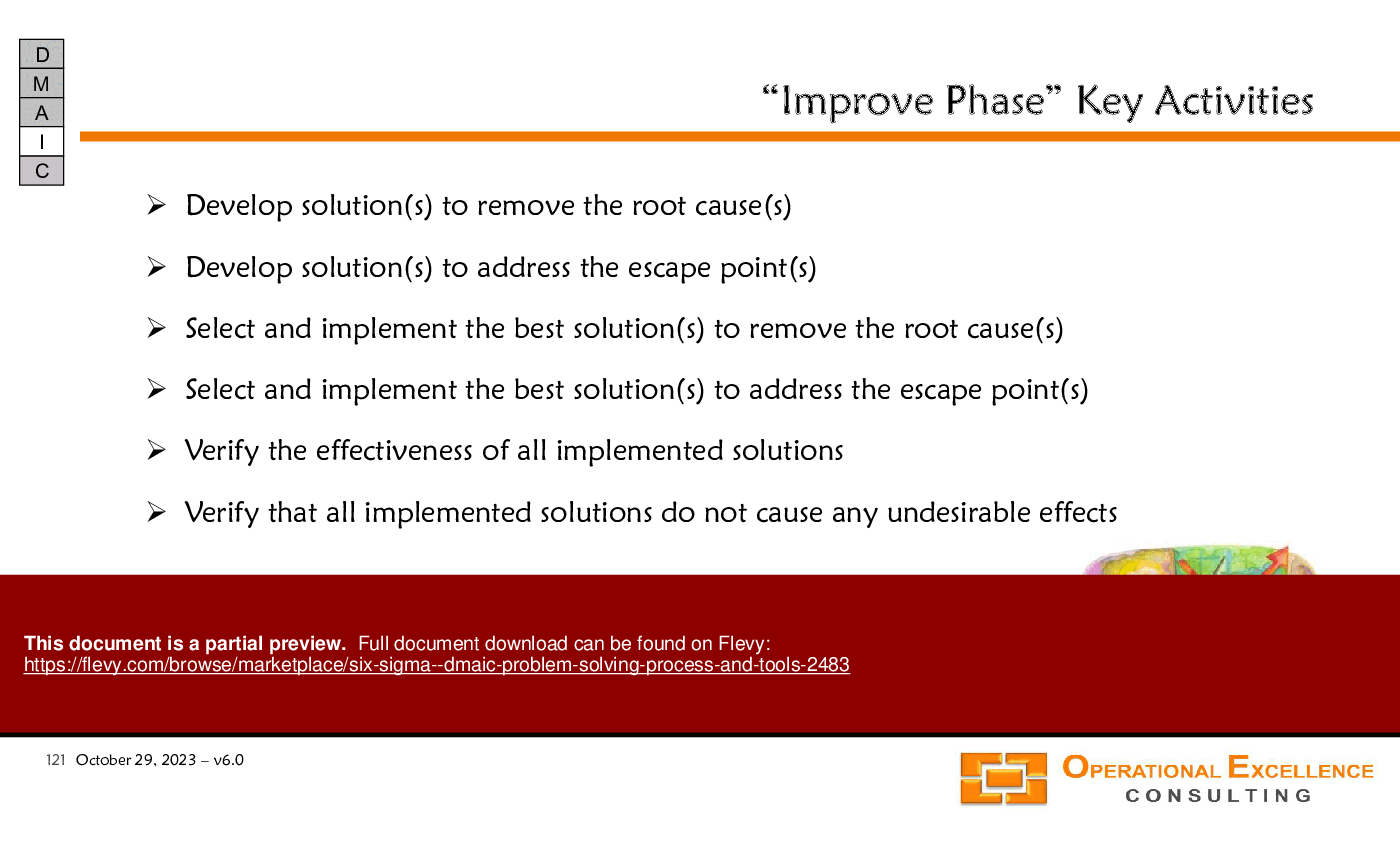
• Improve Phase - Centers on developing and implementing solutions to eliminate root causes and enhance process performance.
• Control Phase - Ensures that improvements are sustained through standardization and monitoring of processes.
Deliverables, Templates, and Tools
• DMAIC Problem Solving Process Worksheet for documenting phases
• IS – IS NOT Matrix for problem description analysis
• Fishbone Diagram for identifying possible causes
• Process Flowchart for visualizing process steps
• Control Plan Template for ongoing process monitoring
Slide Highlights
• Overview of the DMAIC process with a visual representation
• Examples of the IS – IS NOT Matrix for effective problem description
• Case study applications demonstrating real-world problem-solving scenarios
• Key tools like the Fishbone Diagram and Process Flowchart illustrated for clarity
Potential Workshop Agenda
Define Phase Workshop (90 minutes)
• Introduction to the DMAIC process and its importance
• Group exercise: Develop initial problem statements
• Discussion on team roles and responsibilities
Measure Phase Workshop (60 minutes)
• Overview of data collection methods
• Group activity: Create an IS – IS NOT Matrix
• Presentation of findings and insights
Analyze Phase Workshop (90 minutes)
• Introduction to root cause analysis tools
• Group exercise: Utilize the Fishbone Diagram
• Discussion on findings and next steps
Customization Guidance
• Tailor the DMAIC process to fit specific organizational needs and contexts
• Adjust case studies to reflect relevant industry challenges
• Modify templates to align with internal reporting and documentation standards
Secondary Topics Covered
• Root Cause Analysis techniques
• Importance of team dynamics in problem-solving
• Strategies for effective communication during workshops
• Continuous improvement methodologies beyond DMAIC
FAQ What is the DMAIC process?
The DMAIC process is a structured problem-solving methodology used to improve processes by defining, measuring, analyzing, improving, and controlling.
How can this workshop benefit my team?
Participants will gain practical skills in identifying root causes, utilizing problem-solving tools, and implementing effective solutions, leading to enhanced operational performance.
What tools will be covered in the workshop?
Key tools include the IS – IS NOT Matrix, Fishbone Diagram, Process Flowchart, and various data analysis techniques.
Can this process be applied to any industry?
Yes, the DMAIC process is versatile and can be adapted to various industries, including manufacturing, healthcare, and service sectors.
How long does the workshop typically last?
The workshop duration can vary,, but it is generally structured to fit within a full-day session, allowing for in-depth exploration of each phase.
What outcomes can we expect after implementing the DMAIC process?
Participants can expect improved problem-solving capabilities, enhanced team collaboration, and measurable improvements in process performance.
Glossary
• DMAIC - Define, Measure, Analyze, Improve, Control; a structured problem-solving process.
• Root Cause - The fundamental reason for a problem, verified through analysis.
• IS – IS NOT Matrix - A tool for clarifying the problem description by identifying what is and is not occurring.
• Fishbone Diagram - A visual tool for identifying potential causes of a problem.
• Control Plan - A document outlining procedures for maintaining process improvements.
• Poka-Yoke - Mistake-proofing techniques aimed at preventing errors in processes.
• Process Flowchart - A visual representation of the steps in a process.
• Continuous Improvement - Ongoing efforts to enhance products, services, or processes.
• Data Analysis - The process of inspecting, cleansing, and modeling data to discover useful information.
• Team Dynamics - The behavioral relationships between members of a team.
• Stakeholder Engagement - The process of involving individuals or groups who may be affected by or can affect a project.
• Project Champion - An individual who supports and advocates for a project within an organization.
• Measurement System Analysis - Evaluation of the accuracy and reliability of measurement systems used in data collection.
• Standard Operating Procedures (SOPs) - Established procedures to ensure consistent performance of specific operations.
This PPT slide outlines a structured approach to problem identification using the DMAIC framework, integral to Six Sigma methodologies. It begins with a problem statement about the absence of the "right" rework tool and employs the "5 Whys" technique to uncover root causes. The first "Why?" reveals an inventory oversight, while the second points to supply chain failures due to undelivered tools, raising issues about supplier reliability. The third layer highlights a breakdown in the procurement process due to late purchase order submission, and the final "Why?" indicates a lack of clarity in internal processes. This analysis demonstrates that surface-level issues often conceal systemic problems, enabling organizations to identify root causes and implement corrective actions to enhance operational efficiency and drive continuous improvement.
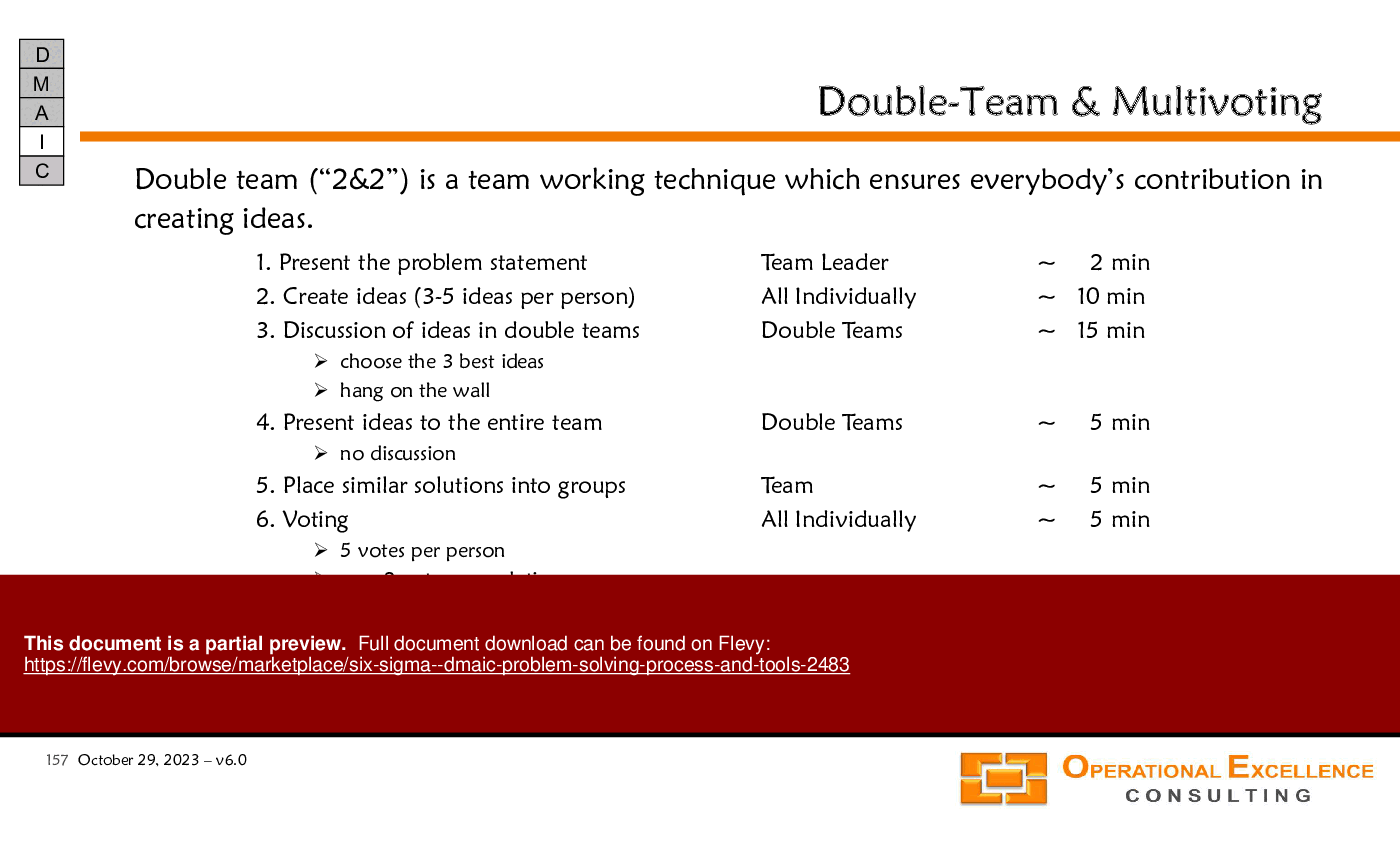
This PPT slide presents a structured problem-solving approach using the Double-Team and Multivoting methods within the Six Sigma DMAIC framework. The goal is to identify 3 to 5 potential solutions through collaboration. Two teams generate 3 solutions each, with a central board displaying 6 potential solutions. The multivoting process allows participants to select the top 2 to 3 solutions based on collective voting, indicated by the number of votes each solution receives. This collaborative method fosters engagement and ensures diverse ideas are considered, simplifying the decision-making process for stakeholders.
This PPT slide focuses on Root Cause Verification within the DMAIC framework, essential for effective problem-solving. It distinguishes between 2 verification methods: Active Verification and Passive Verification. Active Verification manipulates the suspected root cause variable to observe effects, confirming its role. In contrast, Passive Verification relies on observation without altering variables, seeking evidence of the root cause's presence. If the suspected root cause cannot be demonstrated through observation, it is likely not the actual root cause. The slide outlines a two-step process: first, identify and document the chosen verification method; second, continue with the DMAIC process if verification is successful, or develop and test additional Root Cause Theories if not. This structured approach ensures thorough investigation into root causes, vital for long-term solutions and operational excellence.
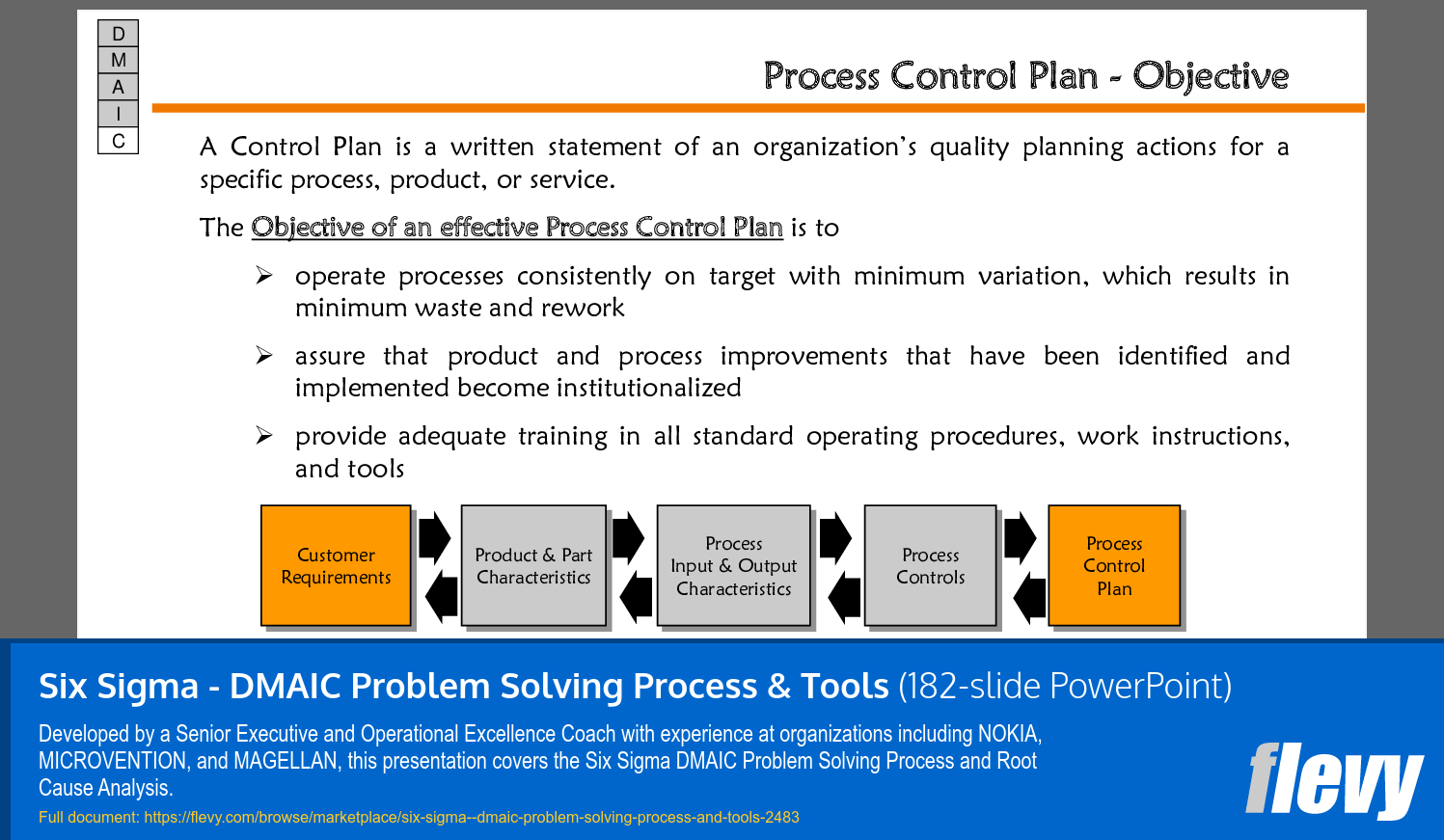
A Control Plan is a formal document outlining an organization’s quality planning for processes, products, or services. Its primary aim is to ensure consistent operations aligned with established targets, minimizing waste and rework, which enhances quality and efficiency.
Key objectives include:
1. Consistent operating processes that reduce waste and rework, leading to cost savings and improved resource allocation.
2. Institutionalizing product and process improvements to integrate enhancements into standard practices, ensuring they become part of operational procedures.
3. Providing adequate training in standard operating procedures and tools to equip employees with the skills necessary for adherence to the Control Plan, fostering a culture of quality and continuous improvement.
The visual flow illustrates the relationship between customer requirements, product characteristics, process inputs and outputs, and process controls, culminating in the Process Control Plan. This structured approach highlights the interconnectedness of elements in achieving quality objectives.
A Box Plot visually represents the relationship between a discrete input variable (X) and a continuous output variable (Y), such as brightness. It segments data into quartiles: the upper 25% indicates the highest values, the median represents the middle 50%, and the lower 25% shows the lowest data points. This segmentation clarifies data distribution, identifies outliers, and reveals variability. Box Plots are essential in performance analysis and quality control, enabling executives to assess how input variations impact output results. By examining quartiles, decision-makers can identify trends, anomalies, and areas for improvement, enhancing operational efficiency and driving data-informed decisions. Understanding Box Plots aids in strategic planning and performance evaluation, making them valuable for leveraging data analytics.
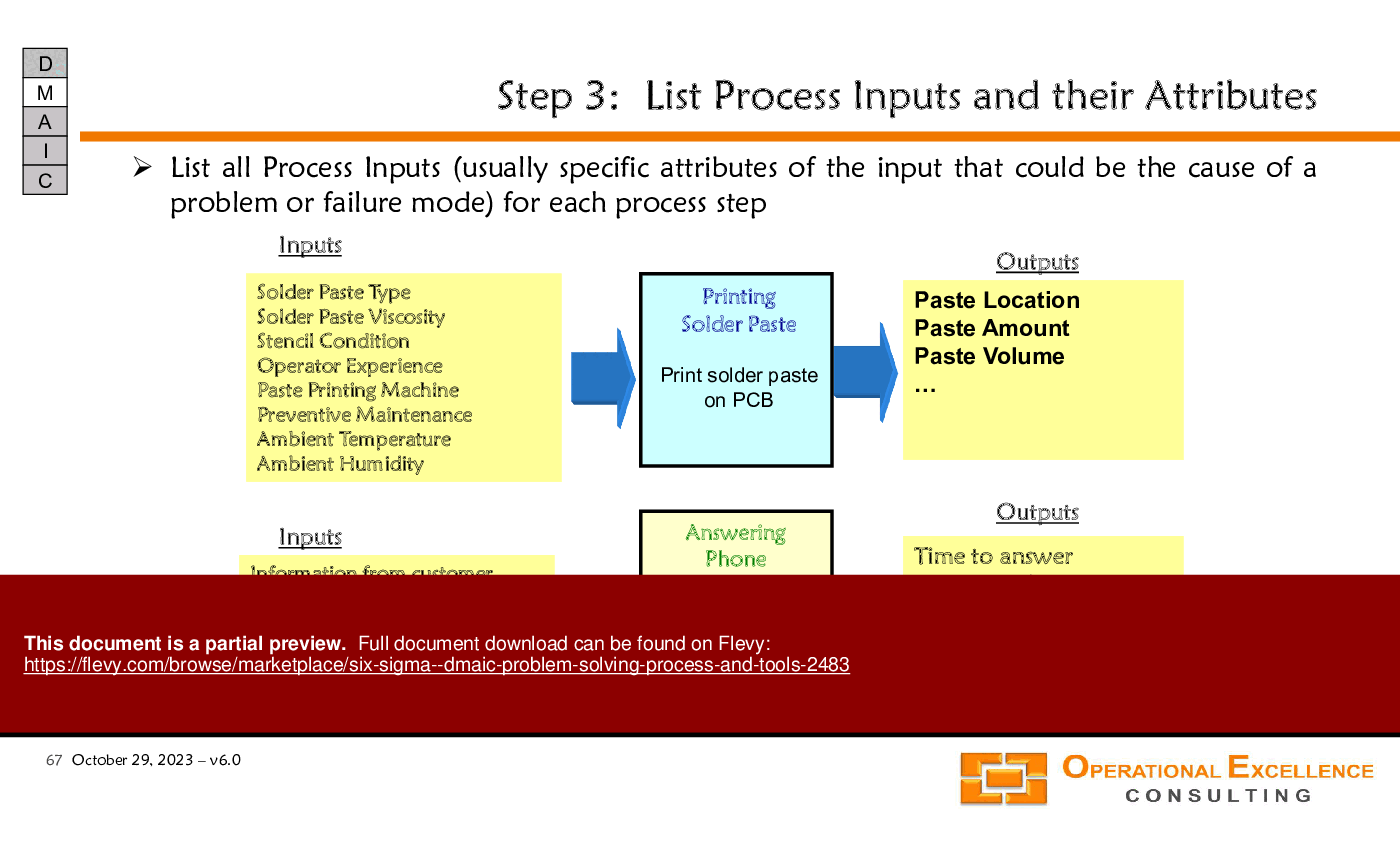
This PPT slide details the DMAIC (Define, Measure, Analyze, Improve, Control) problem-solving process, focusing on Process Failure Mode and Effects Analysis (FMEA). It categorizes process steps, key inputs, potential failure modes, effects, causes, and current controls to identify and mitigate risks in manufacturing. Each failure mode is evaluated for severity (SEV), occurrence (OCC), and detection (DET), resulting in a Risk Priority Number (RPN) that quantifies risk. Higher RPN values indicate greater risk, guiding teams to prioritize the top 2-3 issues. For example, an RPN of 250 highlights significant risk from high ambient temperature, controlled by daily checks. This systematic risk assessment within the DMAIC framework is essential for enhancing process reliability and quality control, particularly in Six Sigma methodologies.
The DMAIC problem-solving process is a structured approach used in Six Sigma methodologies. It begins with developing an initial problem statement, which is essential for framing the issue. The process differentiates between "Change-Induced" and "Day One Deviation" issues, guiding subsequent analysis. Key analytical tools include the Cause & Effect Matrix and Fishbone Diagram, which identify root causes. A Problem Solving Process Worksheet tracks progress throughout the DMAIC phases. Teams test and verify root cause theories; if unconfirmed, the process loops back for further analysis. Once verified, focus shifts to solution development and implementation, ensuring sustainable solutions. Checklists for each phase reinforce thorough documentation and assessment, fostering a culture of continuous improvement and enhancing operational efficiency through the DMAIC process.
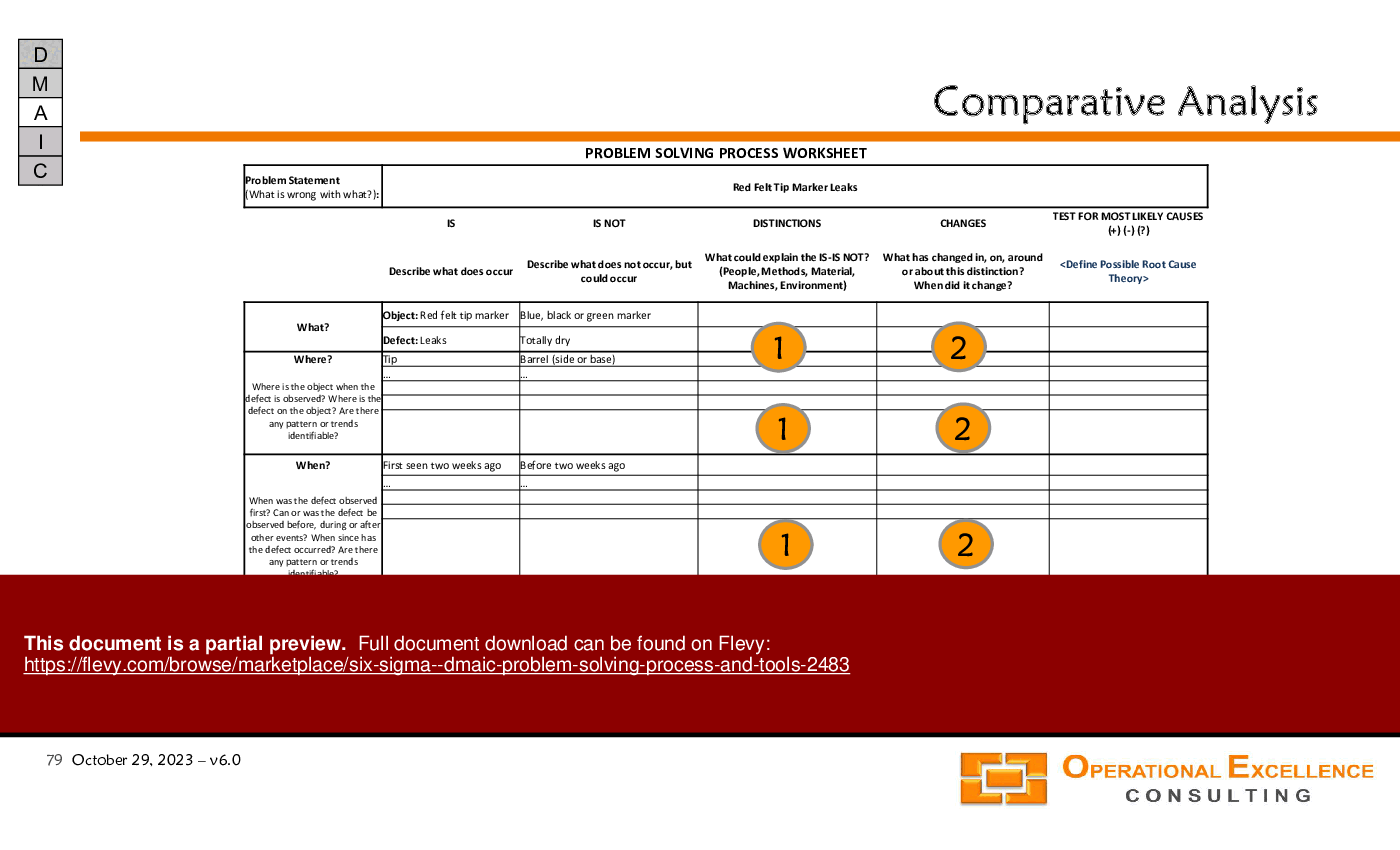
This PPT slide presents a structured worksheet for the DMAIC (Define, Measure, Analyze, Improve, Control) problem-solving process, focusing on leaks in red felt tip markers. The "Problem Statement" section prompts users to identify the core issue. Key questions include: What is the object? (red felt tip marker), Where is the defect located? (tip or barrel), When was the defect first observed? (2 weeks ago), and How significant is the defect? (affects all markers). Additional sections distinguish what the issue is not, note changes, and test for root causes. This worksheet aids teams in applying Six Sigma methodologies for thorough defect analysis and actionable insights.
This PPT slide outlines the DMAIC (Define, Measure, Analyze, Improve, Control) problem-solving methodology, integral to Six Sigma. The "Define" phase identifies over 15 potential causes, emphasizing the need for a clear problem statement and objectives. In the "Measure" phase, this list narrows to 3-5 likely causes through data collection and analysis. The "Analyze" phase focuses on identifying 1-2 verified root causes, ensuring solutions address actual issues. The "Improve" phase targets these root causes for elimination or control, promoting practical solutions. Finally, the "Control" phase institutionalizes changes to sustain improvements, preventing regression. This structured approach enhances operational efficiency through a data-driven methodology and continuous improvement.
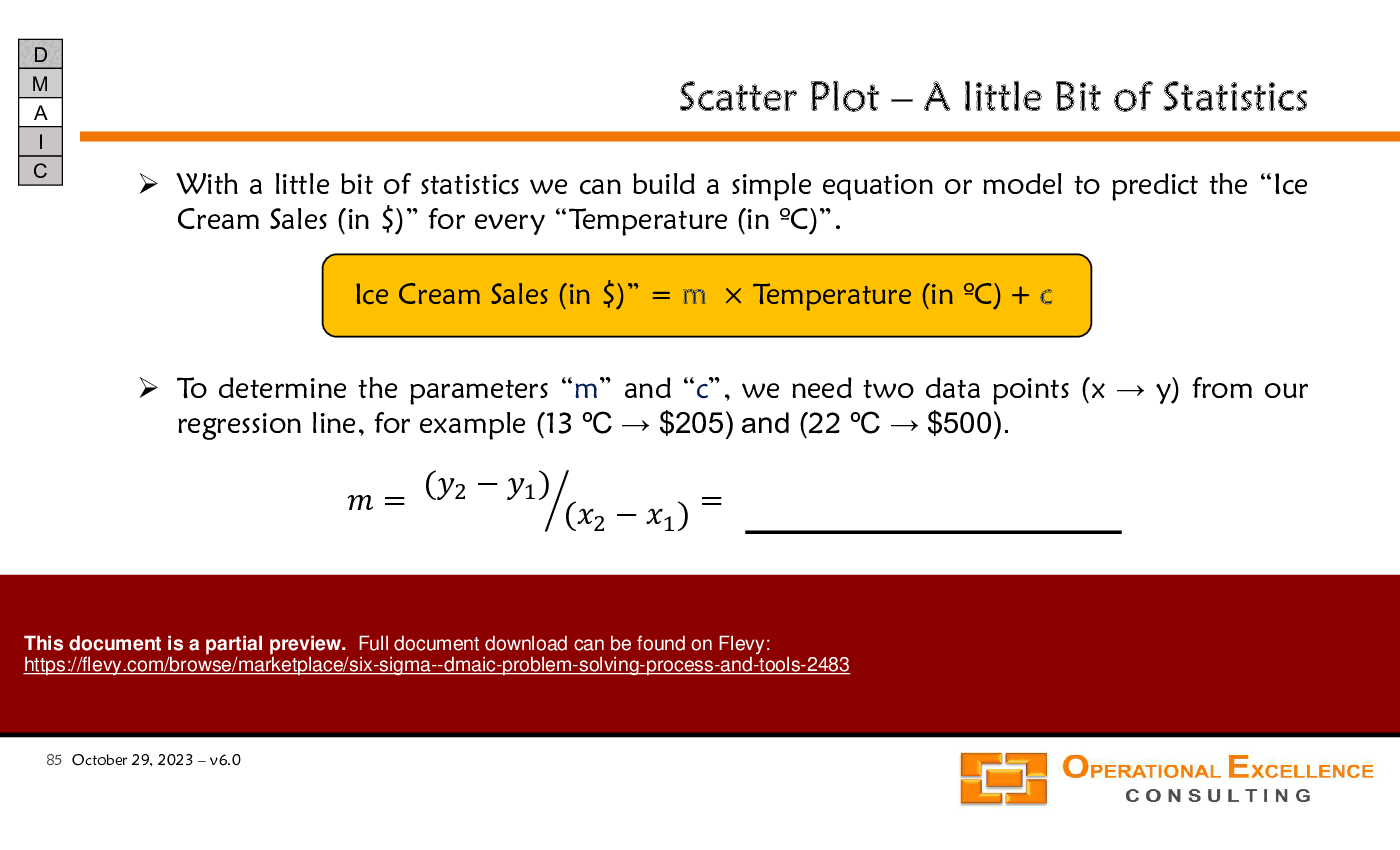
This PPT slide illustrates the relationship between temperature and ice cream sales using a scatter plot. The x-axis represents temperature in degrees Celsius, while the y-axis denotes ice cream sales in dollars. A regression line indicates a correlation between these variables, allowing for sales estimations at specific temperatures, such as 22°C and 13°C. This regression analysis is a key component of the DMAIC (Define, Measure, Analyze, Improve, Control) methodology in Six Sigma, which focuses on data analysis for process optimization. Understanding how environmental factors like temperature impact sales can enhance marketing and inventory management strategies, ultimately driving revenue growth.
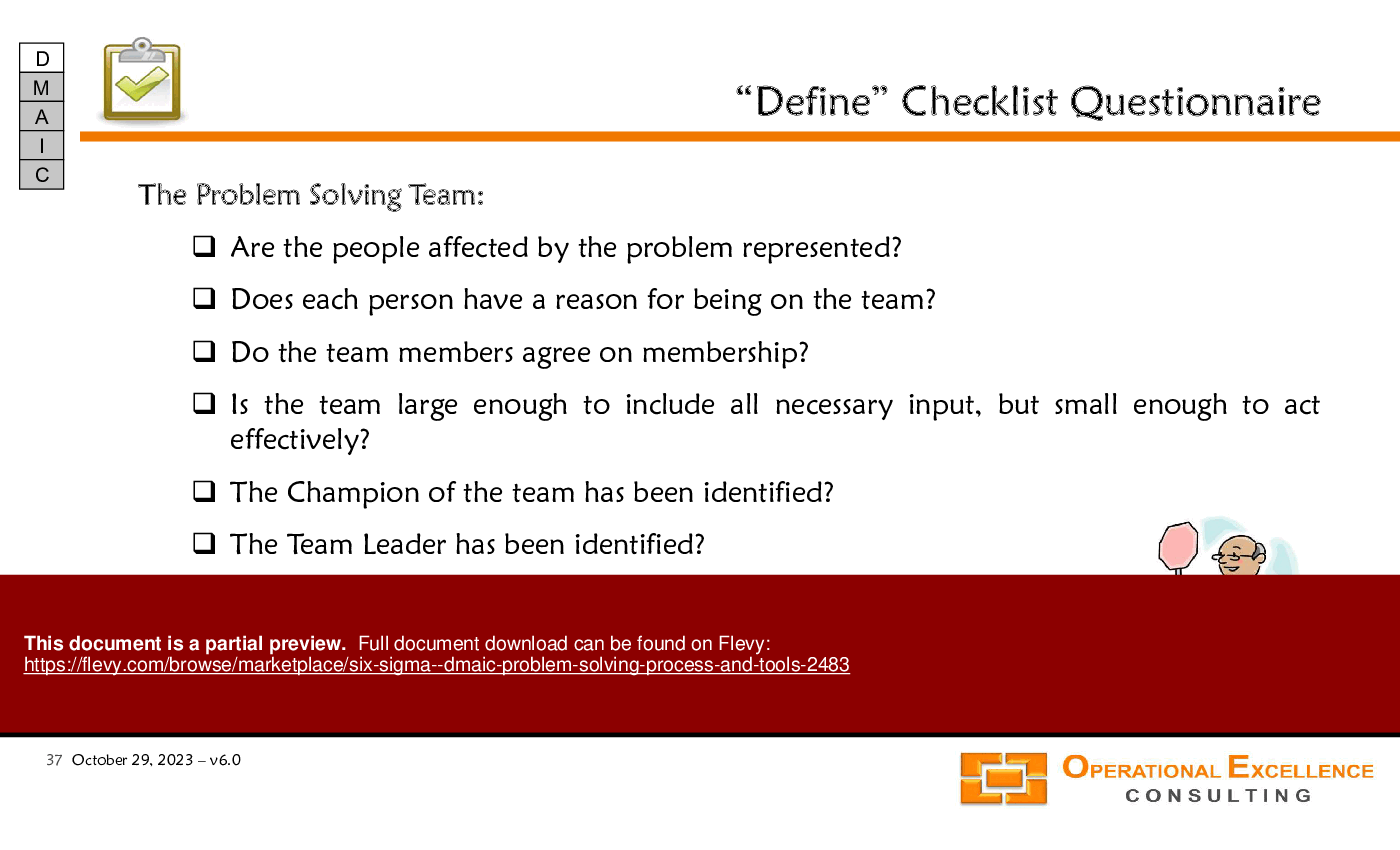
This PPT slide presents a "Define" checklist questionnaire focused on establishing project objectives and a high-level project plan. It emphasizes the need for clearly defined objectives and team alignment on goals to foster collaboration. The checklist questions whether team members have the decision-making authority necessary for effective project execution. It also calls for a structured high-level project plan, including milestones, reviews, and timelines, to track progress and ensure accountability. The problem statement section encourages teams to identify the core issue using the "5 Whys" technique to understand underlying causes. Finally, it stresses the importance of defining, quantifying, and documenting a specific root cause or final problem statement to guide subsequent project phases effectively.
This PPT slide outlines key activities in the Measure Phase of the DMAIC (Define, Measure, Analyze, Improve, Control) methodology used in Six Sigma projects. It emphasizes determining the nature of the problem, distinguishing between changed and unchanged situations. Developing a comprehensive problem description with the "IS – IS NOT Matrix" clarifies the current versus desired state, identifying gaps. Creating a flowchart visualizes the process, pinpointing critical steps related to the problem. Identifying possible causes involves analytical tools such as the Cause & Effect Matrix, Why-Why Diagram, and Fishbone Diagram to uncover underlying factors. Evaluating measurement systems ensures accurate data collection methods, vital for informed decision-making and effective problem-solving. This structured approach lays the groundwork for successful improvement initiatives.
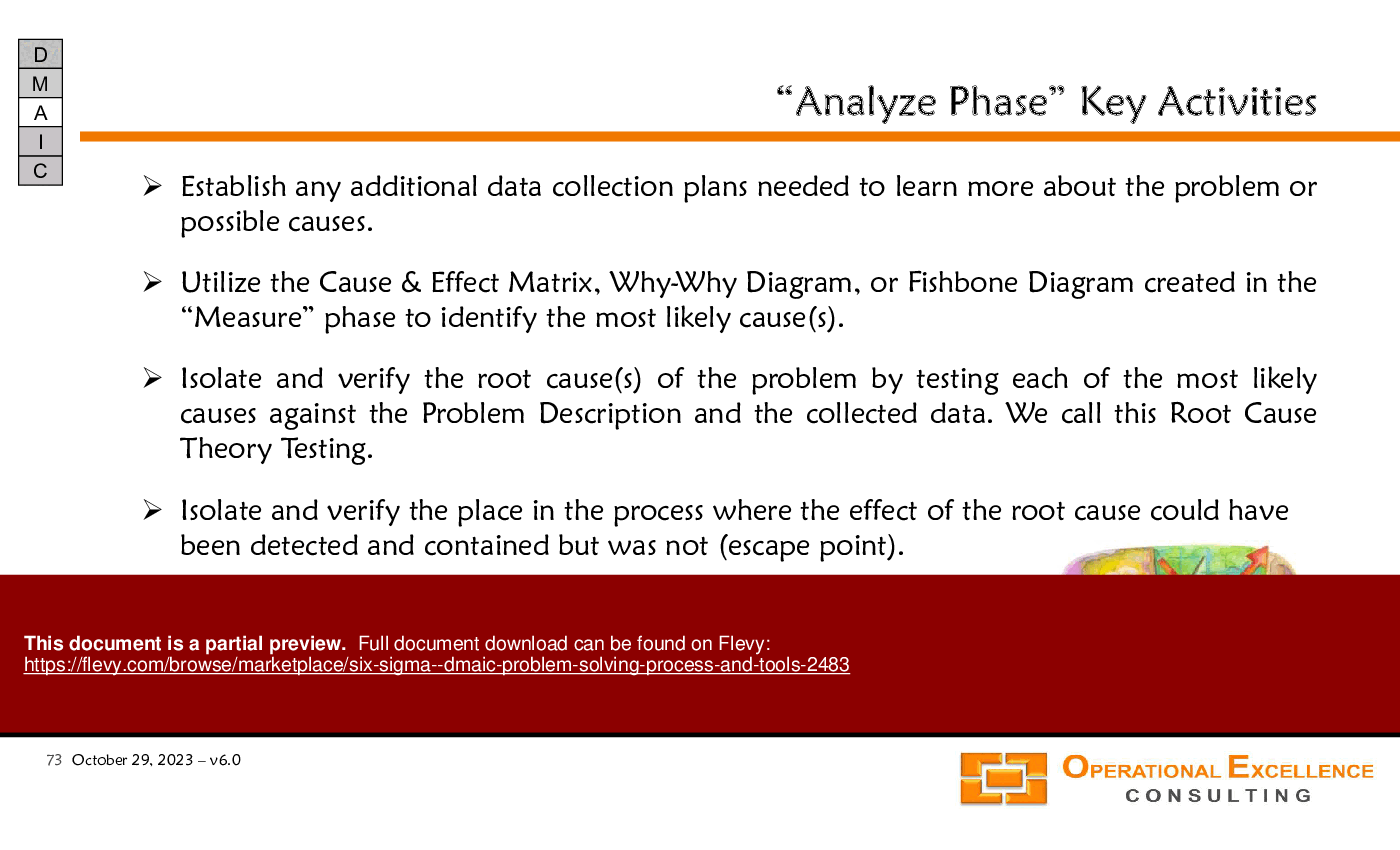
This PPT slide outlines key activities in the "Analyze Phase" of the DMAIC process within Six Sigma methodologies. Establishing data collection plans is essential for understanding problems and their causes. Analytical tools such as the Cause & Effect Matrix, Why-Why Diagram, and Fishbone Diagram, developed in the "Measure" phase, help identify probable root causes. Rigorous testing against the Problem Description and collected data is necessary for Root Cause Theory Testing, confirming underlying issues. Identifying the "escape point" in the process is critical, as it indicates where root causes could have been detected and contained. This understanding aids in preventing future problems and enhances operational efficiency through data-driven decision-making.
This PPT slide presents a structured worksheet for problem-solving within the Six Sigma DMAIC framework, focusing on the "IS - IS NOT" matrix to distinguish current states from potential improvements. The worksheet prompts users to articulate a clear problem statement and analyze defects, such as red felt tip marker leaks. The "IS" column details the current situation, while the "IS NOT" column explores potential occurrences. Key questions guide the analysis: "What?", "Where?", "When?", "How Big?", and potential changes, facilitating a comprehensive examination of defects. The final section emphasizes testing for likely causes and defining root cause theories, promoting a disciplined methodology for continuous improvement and operational excellence.
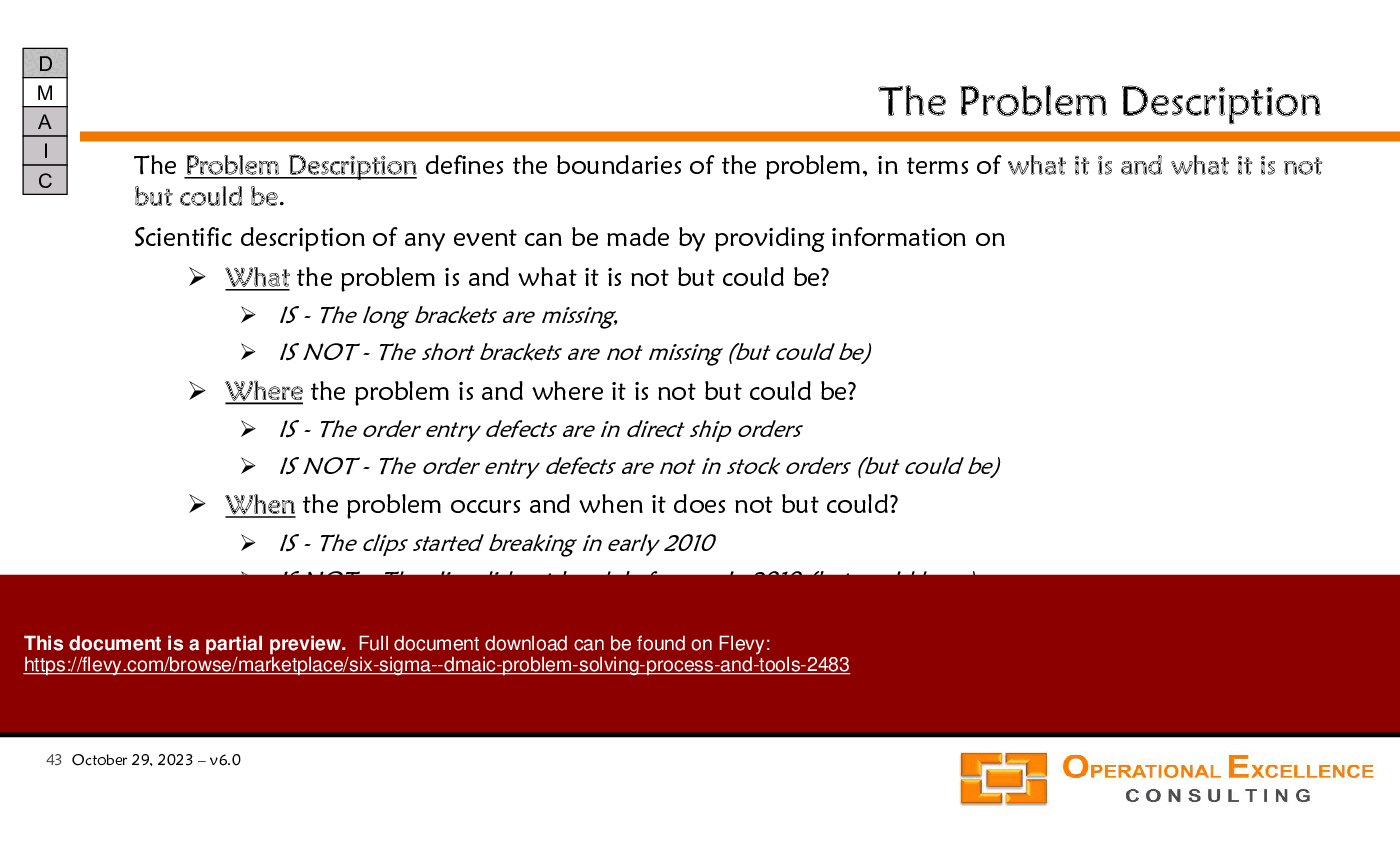
This PPT slide outlines a structured approach to defining problem parameters in organizations, focusing on 4 dimensions: What, Where, When, and How big. The "What" dimension specifies the problem of missing long brackets, clarifying that short brackets are not the issue, which prevents resource misallocation. The "Where" section identifies order entry defects in direct ship orders, excluding stock orders, to target investigation efforts. The "When" aspect notes the issue with clips began in early 2010, providing a timeline for analysis. The "How big" segment quantifies the problem, indicating that approximately 50% of paychecks are affected, while not all paychecks are incorrect. This framework enhances problem-solving capabilities by ensuring teams focus on the right elements for effective solutions.
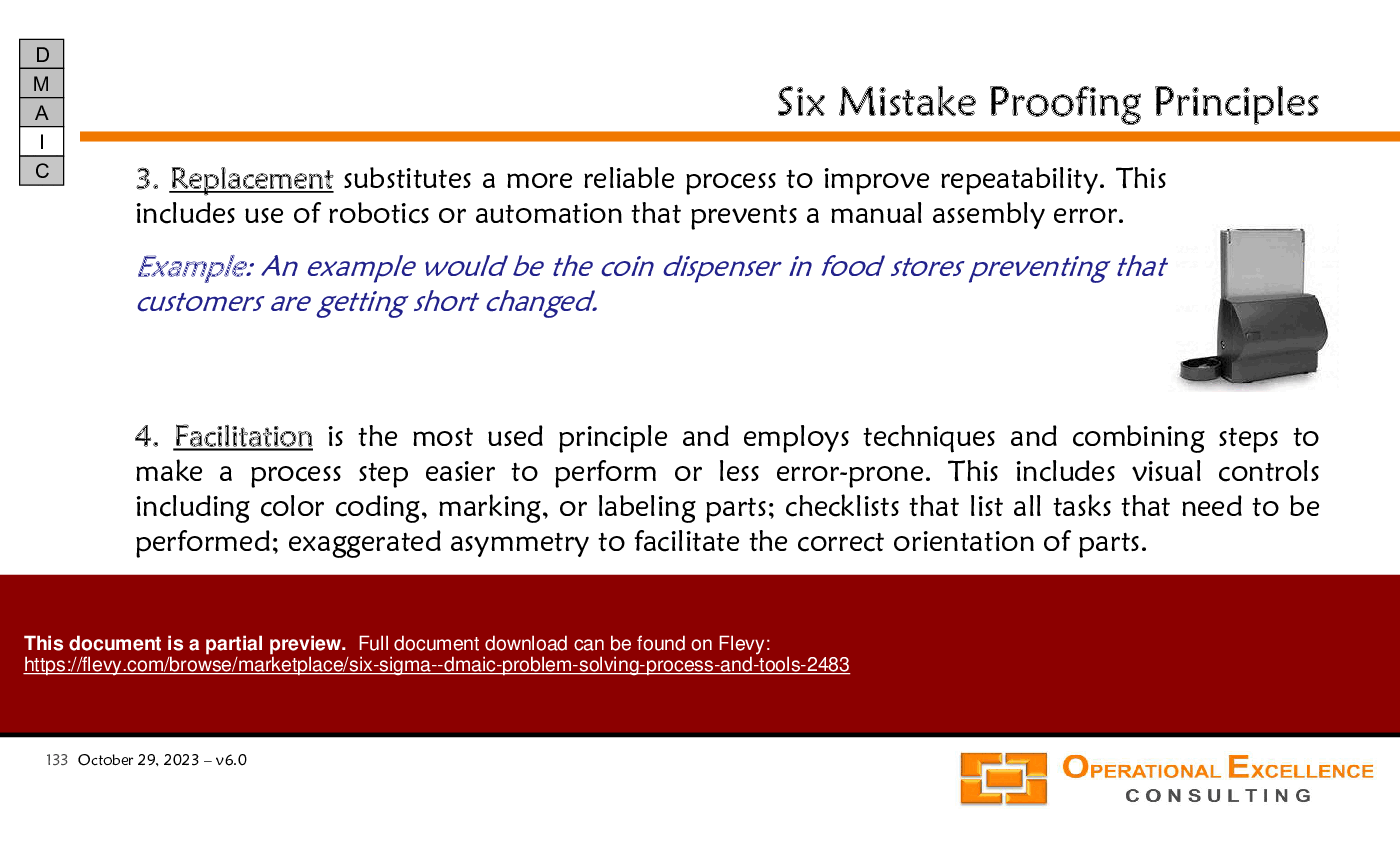
This PPT slide outlines 2 core principles of mistake proofing within the Six Sigma DMAIC framework: Elimination and Prevention. Elimination focuses on removing error-prone steps from processes, exemplified by ambient light sensors that automate outdoor lighting, reducing human error. Prevention involves modifying products or processes to make mistakes impossible, such as changing a manhole cover from rectangular to round, preventing improper placement and defects. Applying these principles enhances operational efficiency and quality, streamlining processes and reducing errors, ultimately improving product quality and process reliability.


Source: Best Practices in Problem Solving, DMAIC PowerPoint Slides: Six Sigma - DMAIC Problem Solving Process & Tools PowerPoint (PPTX) Presentation Slide Deck, Operational Excellence Consulting LLC
Developed by a Senior Executive and Operational Excellence Coach with experience at organizations including NOKIA, MICROVENTION, and MAGELLAN, this presentation covers the Six Sigma DMAIC Problem Solving Process and Root Cause Analysis.
Operational Excellence Consulting LLC provides assessments, training solutions, kaizen event facilitation, and implementation support to enable our clients to achieve superior performance through Operational Excellence - Strategy Deployment & Hoshin Planning, Performance Management & Balanced Scorecards, Process Excellence & Lean Six Sigma, and High
... [read more] Performance Work Teams.
Frank Adler co-founded OEC LLC in 2009 to follow his passion for Operational Excellence and to be able to work with individuals and organizations that share this passion.
He is an accomplished and recognized Operational Excellence, Lean Management, and Six Sigma coach, with over 20 years of domestic and international executive leadership experience in General Management, multi-site Operations & Supply Chain Management, and Quality & Customer Support Management.
Frank is a certified and experienced Lean Six Sigma Master Black Belt with a proven track record of implementing these methods, concepts, and tools in various organizations and industries.
He holds a Master of Science in Mathematics & Physics from the Freie University of Berlin (Germany) and a Doctor of Philosophy in Applied Mathematics & Industrial Economics from the Helsinki University of Technology (Finland).
Since 2012, we have provided business templates to over 10,000 businesses and organizations of all sizes, from startups and small businesses to the Fortune 100, in over 130 countries.
"As a young consulting firm, requests for input from clients vary and it's sometimes impossible to provide expert solutions across a broad spectrum of requirements. That was before I discovered Flevy.com.
Through subscription to this invaluable site of a plethora of topics that are key and crucial to consulting, I
have been able to exceed expectations and deliver quality advice and solutions to my clients. The quality and expertise of the authors are exemplary and gives me great confidence to use as part of my service offerings.
I highly recommend this company for any consultant wanting to apply international best practice standards in their service offerings.
"
– Nishi Singh, Strategist and MD at NSP Consultants
"As a consultant requiring up to date and professional material that will be of value and use to my clients, I find Flevy a very reliable resource.
The variety and quality of material available through Flevy offers a very useful and commanding source for information. Using Flevy saves me time, enhances my expertise and ends up being a good decision."
– Dennis Gershowitz, Principal at DG Associates
"Flevy.com has proven to be an invaluable resource library to our Independent Management Consultancy, supporting and enabling us to better serve our enterprise clients.
The value derived from our [FlevyPro] subscription in terms of the business it has helped to gain far exceeds the investment made, making a subscription a no-brainer for any growing consultancy – or in-house strategy team."
– Dean Carlton, Chief Transformation Officer, Global Village Transformations Pty Ltd.
"One of the great discoveries that I have made for my business is the Flevy library of training materials.
As a Lean Transformation Expert, I am always making presentations to clients on a variety of topics: Training, Transformation, Total Productive Maintenance, Culture, Coaching, Tools, Leadership Behavior, etc. Flevy
It is well worth the money to purchase these presentations. Sure, I have the knowledge and information to make my point. It is another thing to create a presentation that captures what I want to say. Flevy has saved me countless hours of preparation time that is much better spent with implementation that will actually save money for my clients.
"
– Ed Kemmerling, Senior Lean Transformation Expert at PMG
"I like your product. I'm frequently designing PowerPoint presentations for my company and your product has given me so many great ideas on the use of charts, layouts, tools, and frameworks. I really think the templates are a valuable asset to the job."
– Roberto Fuentes Martinez, Senior Executive Director at Technology Transformation Advisory
"Flevy is our 'go to' resource for management material, at an affordable cost. The Flevy library is comprehensive and the content deep, and typically provides a great foundation for us to further develop and tailor our own service offer."
– Chris McCann, Founder at Resilient.World
"As a consulting firm, we had been creating subject matter training materials for our people and found the excellent materials on Flevy, which saved us 100's of hours of re-creating what already exists on the Flevy materials we purchased."
– Michael Evans, Managing Director at Newport LLC
"Flevy is now a part of my business routine. I visit Flevy at least 3 times each month.
Flevy has become my preferred learning source, because what it provides is practical, current, and useful in this era where the business world is being rewritten.
many challenges and there is the need to make the right decisions in a short time, with so much scattered information, we are fortunate to have Flevy. Flevy investigates, selects, and puts at our disposal the best of the best to help us be successful in our work.
"
– Omar Hernán Montes Parra, CEO at Quantum SFE
Save with Bundles
This document is available as part of the following discounted bundle(s):
Receive our FREE whitepaper on the Top 101 Consulting Frameworks
Download our 200+ page guide summarizing the Top 101 Management Consulting Frameworks. Each framework provides a structured approach to analyzing and solving a common business problem.