
This product (Pricing Strategy Implementation Toolkit) is a 63-slide PPT PowerPoint presentation slide deck (PPT), which you can download immediately upon purchase.
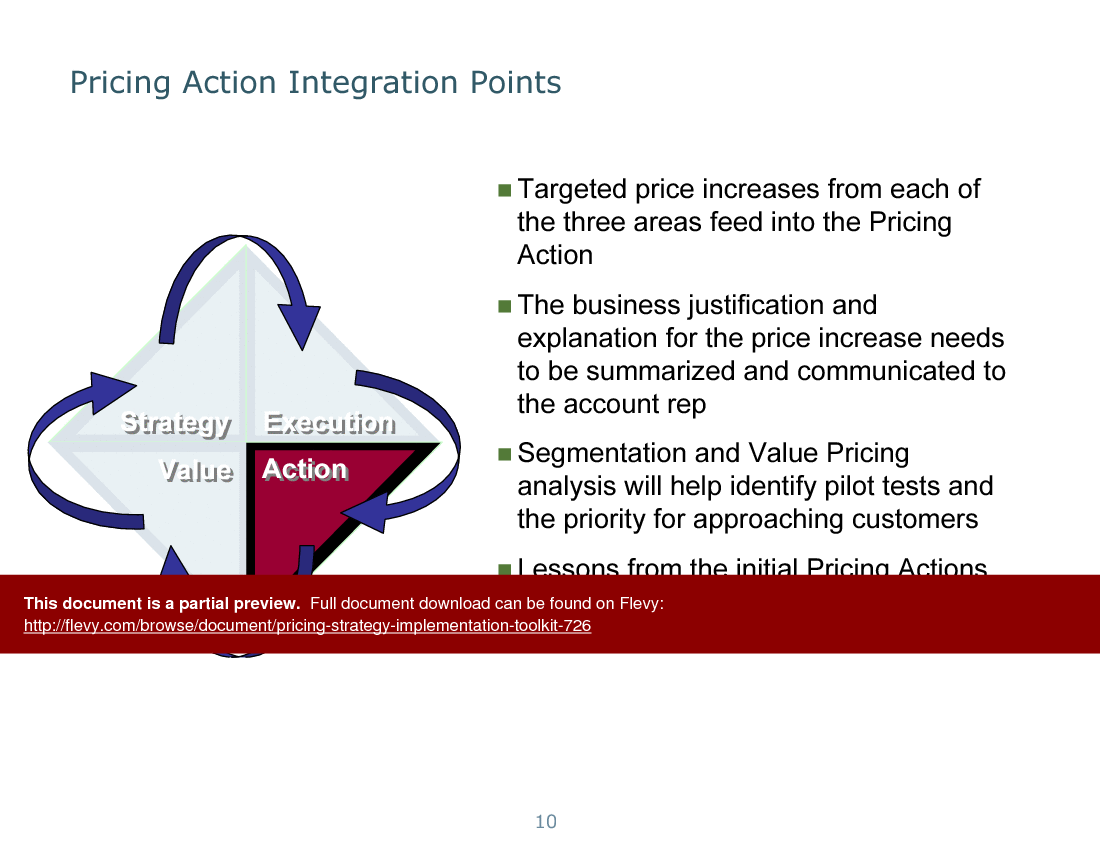
This toolkit is focused on the point at which we actually ask the customer for a price increase. None of the strategic value of a pricing recommendation matters unless we take action with the customer. There are several tools and approaches that could make the increase more successful.
This presentation has 63 slides, covering the following sections:
• Pricing action overall issues &obstacles

• Pricing action Maturity Model
• key pricing action tools, including:
• recommended price movement
• internal &external messaging
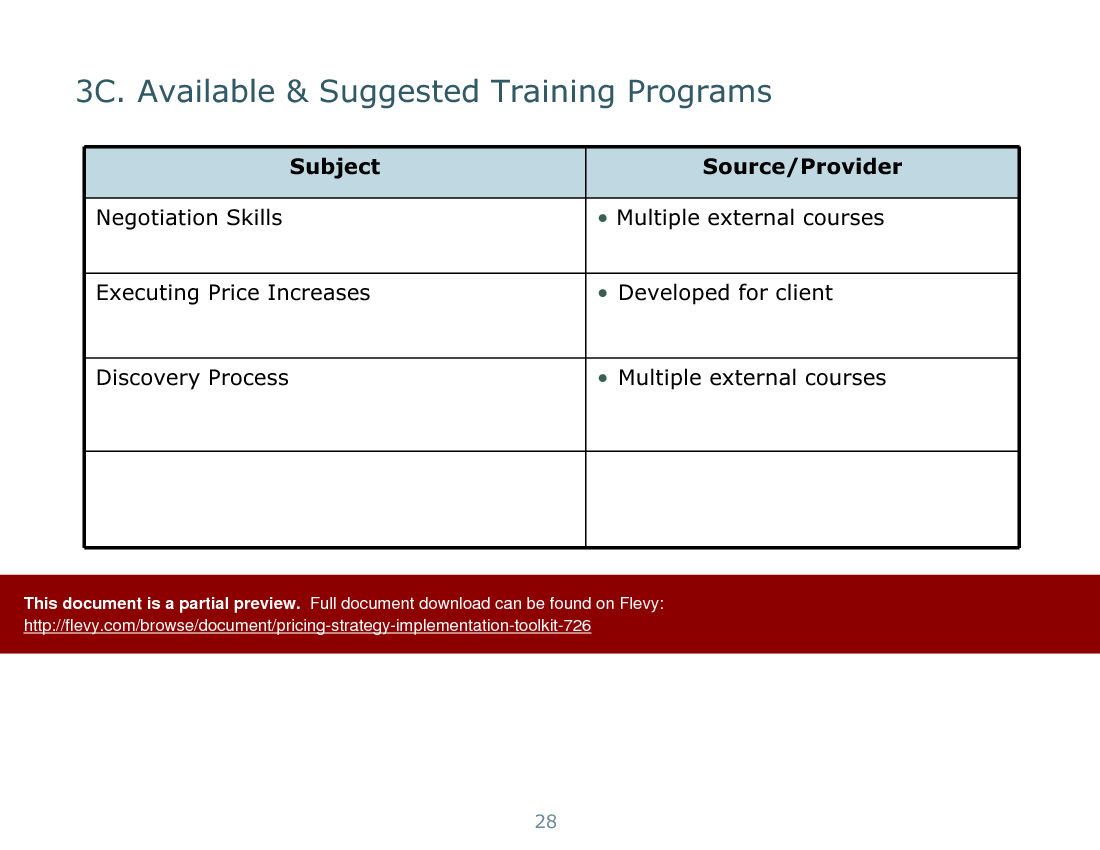
• account rep training
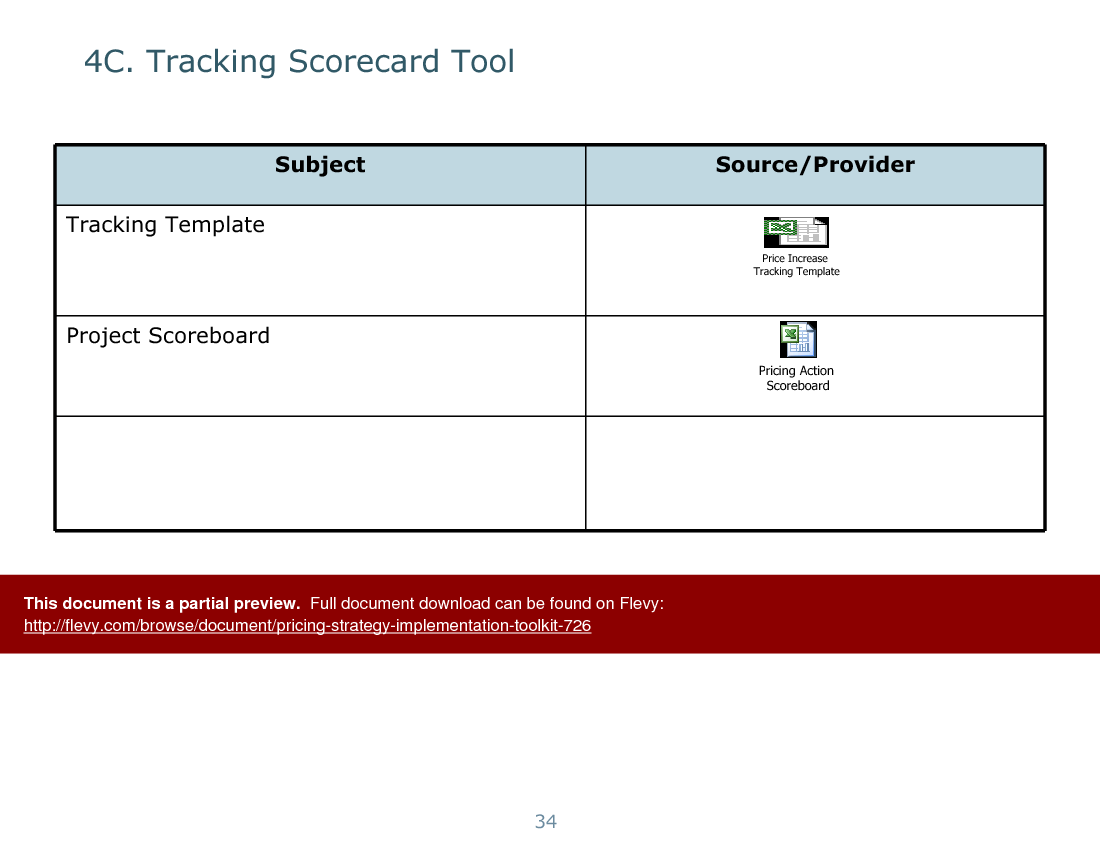
• tracking scorecard
• incentive and rewards
• List of deliverables (supported by 10+ templates embedded in the presentation)

• Roles of project team
• Project work plan
See also "Pricing Strategy Workshop"
See also "Spare Parts Pricing Strategy"
See also "Solutions Pricing Workshop"
See also "Best Practices in Price Increase Execution"
See also "Best Practices in Direct Material Procurement"
The Pricing Strategy Implementation Toolkit also includes a comprehensive Pricing Action Maturity Model, which outlines the progression from basic to superior pricing practices. This model helps organizations identify their current maturity level and provides clear steps to advance their pricing capabilities. The toolkit emphasizes the importance of defined roles and responsibilities, metrics and rewards, and standardized pricing procedures to ensure a structured approach to pricing actions.
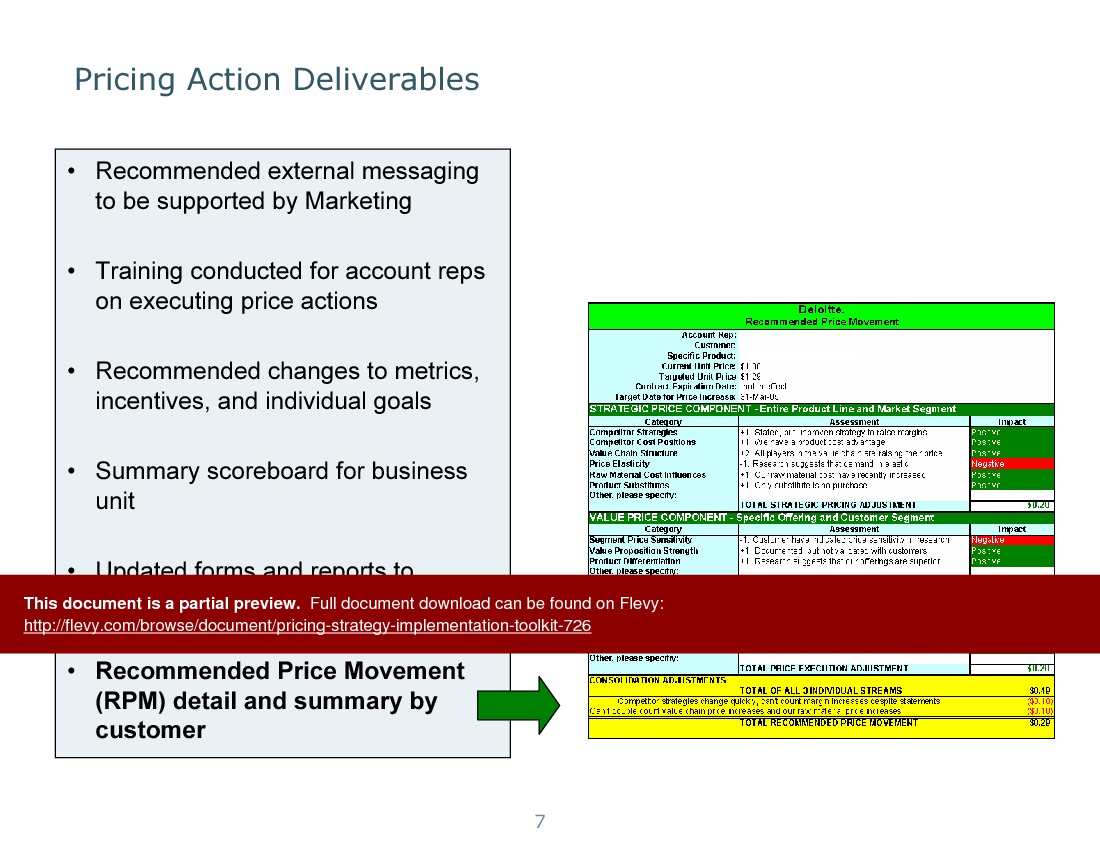
In addition, the toolkit offers detailed guidance on Pricing Action Deliverables, such as recommended external messaging, account rep training, and changes to metrics and incentives. It includes practical tools like a tracking scorecard and a recommended price movement summary, enabling organizations to monitor and evaluate the effectiveness of their pricing strategies. By integrating these deliverables into their pricing processes, companies can achieve more consistent and profitable pricing outcomes.
Got a question about the product? Email us at support@flevy.com or ask the author directly by using the "Ask the Author a Question" form. If you cannot view the preview above this document description, go here to view the large preview instead.
This PPT slide outlines the roles and responsibilities within a Pricing Action Team, emphasizing the collaborative nature of pricing strategy implementation. It categorizes various project roles, detailing their specific functions, typical sources for information, and expected resource workload.
The Pricing Action Leader is positioned as the central figure, tasked with facilitating workshops, coordinating messaging and training, and consolidating price targets. This role is critical, requiring full-time commitment for the duration of the project, indicating the importance of leadership in driving pricing initiatives.
The Communication Coordinator supports the team by crafting both internal and external messages. This role is part-time, suggesting that effective communication is vital, but can be managed alongside other responsibilities. The typical sources for this role include client marketing communications, highlighting the need for alignment with existing marketing strategies.
Human Resources plays a pivotal role in refining and implementing changes related to rewards and compensation, alongside delivering necessary training. This role also demands a part-time commitment, reflecting the ongoing nature of HR involvement in pricing strategy.
The Financial Analyst is responsible for developing and validating scorecards, a task that requires collaboration with client finance teams. This role is less resource-intensive, needing only a 10% commitment, which may indicate that financial oversight is integrated into broader project management.
Lastly, the Sales Manager focuses on refining messaging and validating targets and scorecards, indicating a direct link between pricing strategies and sales performance. This role also requires minimal time, suggesting that sales alignment can be achieved without extensive resource allocation.
Overall, the slide presents a structured approach to pricing strategy implementation, highlighting key roles and their contributions to successful outcomes.
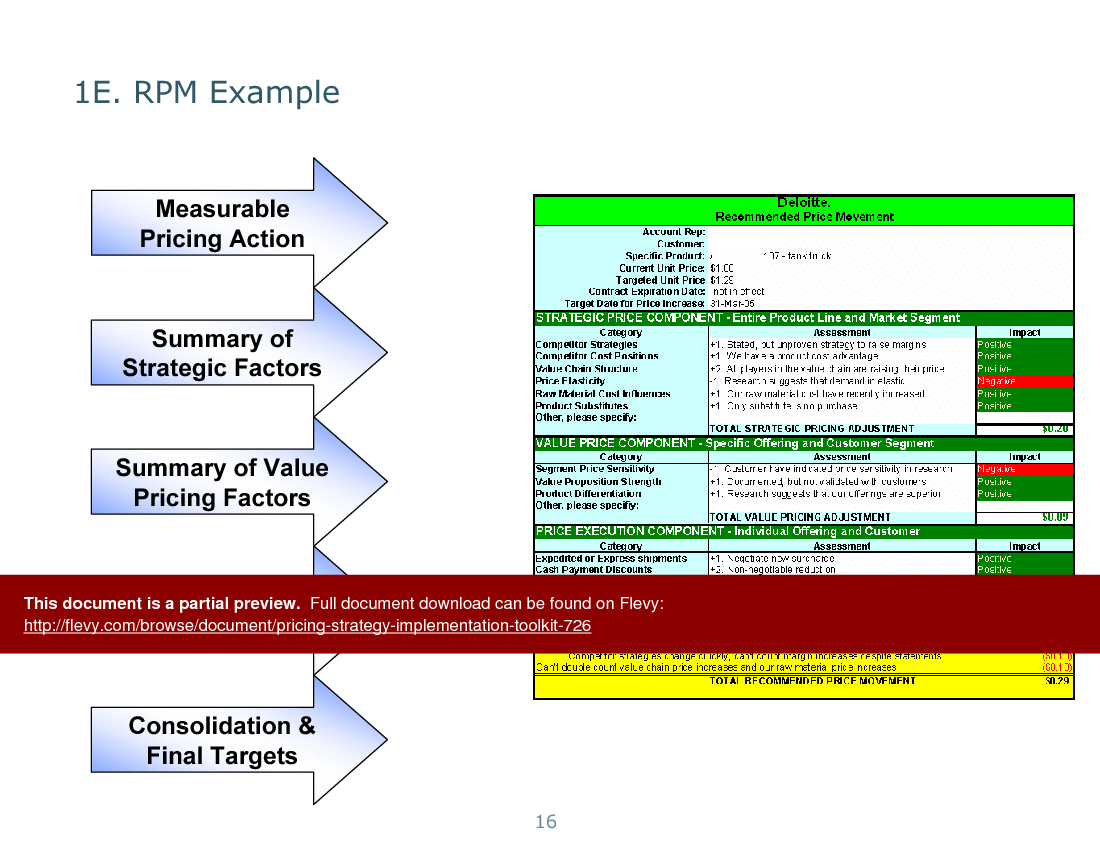
This PPT slide titled "1E. RPM Example" outlines a structured approach to pricing strategy, focusing on various components that contribute to effective price movement. It begins with a clear flowchart indicating the progression from measurable pricing actions to a consolidation of adjustments. This visual representation emphasizes the systematic nature of the pricing strategy.
The first section highlights "Measurable Pricing Action," which serves as the foundation for subsequent analyses. Following this, the slide presents summaries of strategic factors, value pricing factors, and price execution factors. Each of these summaries likely encapsulates critical insights necessary for understanding the broader pricing strategy.
The detailed table on the right provides an assessment of strategic price components, value price components, and execution factors. Each category is broken down into specific elements, such as competitor strategies and customer segment sensitivities. The assessments are accompanied by an impact rating, which appears to indicate the positive or negative implications of each factor on the overall pricing strategy.
The final section, labeled "Consolidation & Adjustments," summarizes the total adjustments derived from the individual assessments. This part of the slide likely serves to synthesize the findings into actionable recommendations for price movement. The total recommended price movement is clearly stated, providing a concise conclusion to the analysis.
Overall, this slide serves as a comprehensive example of how to approach pricing strategy through a structured methodology. It offers valuable insights for decision-makers looking to refine their pricing tactics based on a thorough evaluation of various influencing factors.
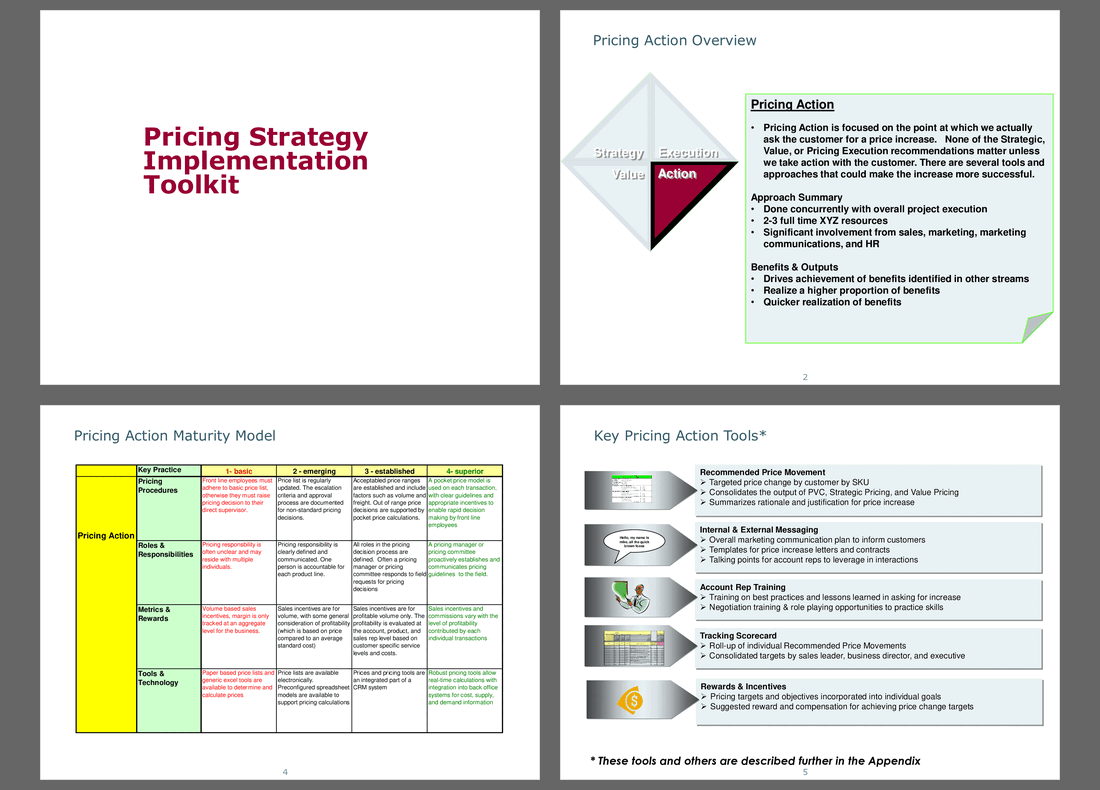
This PPT slide outlines essential tools for implementing pricing actions effectively. It presents 5 key components, each designed to facilitate a structured approach to price adjustments.
The first section, "Recommended Price Movement," emphasizes a targeted strategy for price changes based on specific customers and SKUs. It consolidates insights from various pricing methodologies, including PVC, Strategic Pricing, and Value Pricing. This section aims to provide a clear rationale for price increases, ensuring that stakeholders understand the justification behind these changes.
Next, "Internal & External Messaging" focuses on communication strategies. It includes a comprehensive marketing plan to inform customers about price changes. Templates for letters and contracts are provided, alongside talking points for account representatives. This ensures that all communication is consistent and aligns with the overall pricing strategy.
"Account Rep Training" is crucial for equipping sales teams with the necessary skills. This section highlights best practices and lessons learned in negotiating price increases. It also includes role-playing opportunities to help representatives practice their skills, thereby enhancing their confidence and effectiveness in discussions with clients.
The "Tracking Scorecard" serves as a tool for monitoring individual price movements. It consolidates targets set by various leadership roles, ensuring accountability and alignment across the organization.
Lastly, "Rewards & Incentives" ties pricing objectives to individual performance goals. It suggests a framework for rewarding employees who meet or exceed price change targets, fostering a culture of achievement and motivation.
Overall, this slide provides a structured approach to pricing actions, emphasizing the importance of communication, training, monitoring, and incentives in achieving pricing objectives.
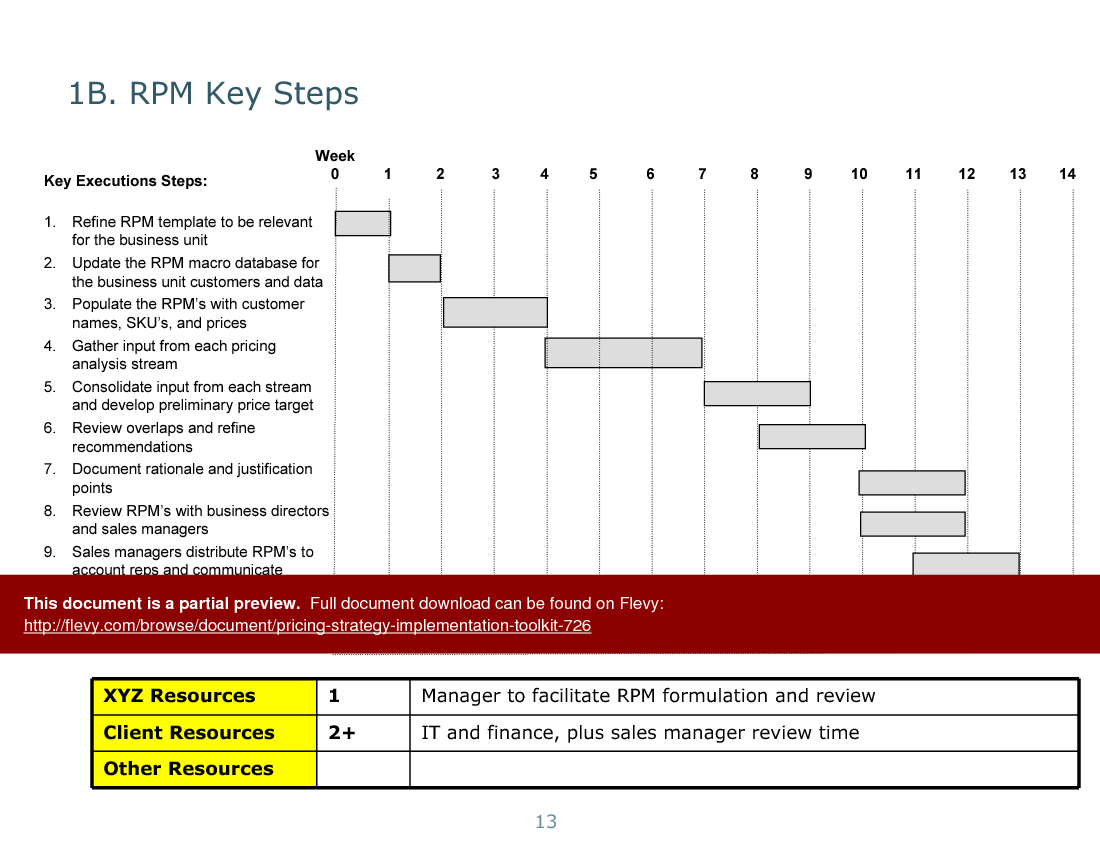
This PPT slide outlines the key execution steps for a Revenue Performance Management (RPM) initiative, structured over a 14-week timeline. Each step is crucial for aligning pricing strategies with business objectives. The first task involves refining the RPM template to ensure it meets the specific needs of the business unit. This is followed by updating the RPM macro database, which is essential for maintaining accurate customer data.
Next, the process includes populating the RPMs with detailed information such as customer names, SKUs, and pricing. Gathering input from various pricing analysis streams is highlighted as a vital step, allowing for a comprehensive understanding of market dynamics. Consolidating this input to develop a preliminary price target is critical for establishing a baseline for pricing strategies.
The slide emphasizes the importance of reviewing overlaps and refining recommendations, which helps in optimizing pricing decisions. Documenting rationale and justification points ensures that all decisions are backed by data and strategic insights. Engaging with business directors and sales managers is also noted, as their perspectives are invaluable for aligning the RPMs with broader business goals.
Sales managers play a key role in distributing RPMs to account representatives, ensuring that expectations are clearly communicated. Finally, conducting weekly reviews with account reps is essential for tracking progress and making necessary adjustments. This structured approach not only facilitates effective RPM formulation, but also ensures that all stakeholders are aligned and informed throughout the process.
This PPT slide outlines a structured tracking process for pricing analysis and RPM (Revenue Performance Management) development. It begins with confirming targets with the sales leader, which is a critical first step in ensuring alignment between pricing strategies and sales objectives. If the targets are confirmed, the process moves on to developing communication materials. This includes creating talking points, FAQs, supporting documents, and customer letters, which are essential for effectively conveying pricing changes to customers.
Once the communication materials are prepared, there’s a review conducted with account representatives. This step is vital for discussing the proposed price increase and refining the communications strategy. The slide emphasizes the importance of collaboration between sales and account management teams to ensure a unified approach.
After mailing customer letters, the process includes initial contact with customers to gauge their reactions. This feedback loop is crucial for understanding customer sentiment and making necessary adjustments. If customers agree with the changes, a face-to-face meeting is scheduled. This meeting serves to address any questions, clarify the changes, and reinforce the messaging, which is key to maintaining customer relationships during transitions.
The tracking process also includes a systematic review of progress through weekly meetings with the sales team. This ensures that customer feedback, competitive responses, and implementation dates are monitored closely. Overall, this slide illustrates a comprehensive approach to managing pricing changes, emphasizing communication and collaboration at every stage to drive successful outcomes.
This PPT slide presents a framework for prioritizing improvement opportunities within an organization. It is structured into 2 main sections: "Improvement Opportunities" and "To-Be Refinement."
The left section categorizes potential areas for enhancement into 3 distinct categories: Potential Fixes, Best Practices, and QFD (Quality Function Deployment) Implications. Each category is represented with yellow boxes, indicating specific opportunities that can be explored further. This segmentation allows for a clearer understanding of where efforts can be directed for maximum effect.
The right section outlines criteria for assessing the impact and feasibility of these opportunities. The impact criteria include Margin Gain, Improve Price, Improve Efficiency, Better Satisfaction, Support Strategy, and Competitive Position, each ranked as High or Medium. This ranking system helps prioritize initiatives based on their potential benefits to the organization.
Feasibility criteria are also listed, evaluating the Probability of Success, Investment Required, Openness to Change, Control, Available Resources, and Technology. These criteria are similarly ranked, providing a balanced view of what can realistically be achieved.
The "To-Be Refinement" quadrant visually represents how these opportunities can be plotted based on their impact and feasibility. This visual aid serves as a decision-making tool, guiding executives in selecting the most promising initiatives to pursue.
Understanding this framework is crucial for organizations looking to streamline their improvement processes. It provides a systematic approach to identifying, evaluating, and prioritizing initiatives that align with strategic goals. This structured methodology can ultimately lead to more effective implementation and better outcomes.
This PPT slide outlines a structured work plan for implementing pricing actions, segmented into ten distinct phases. It begins with a pre-launch phase, focusing on engaging selected businesses and conducting a stakeholder and readiness assessment. This initial step is crucial for understanding the current landscape and preparing for subsequent actions.
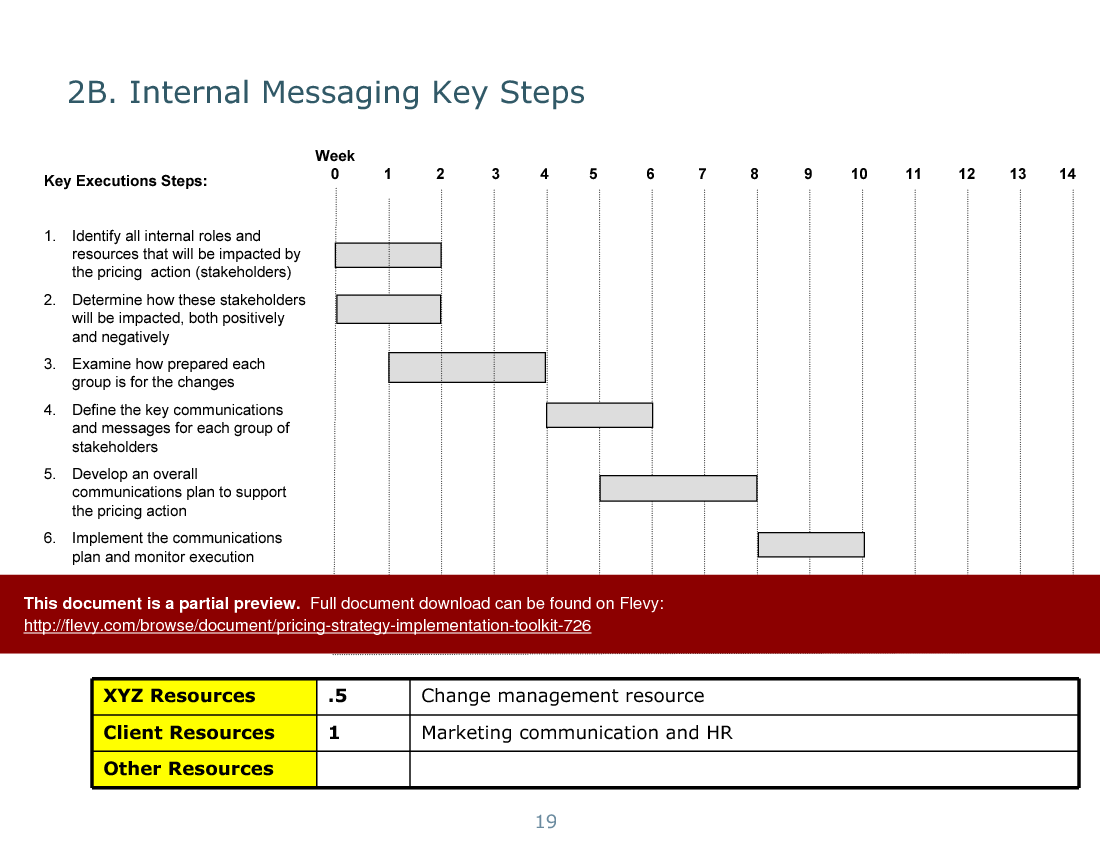
As the timeline progresses, the work plan emphasizes the development of a comprehensive communications strategy. This includes creating a communications plan, launching internal communications, and crafting external messaging. These steps are designed to ensure that all stakeholders are informed and aligned throughout the process.
Training is another key component highlighted in the plan. Assessing training needs and designing a training program are essential to equip teams with the necessary skills and knowledge. Conducting the training ensures that everyone involved is prepared to execute the pricing strategy effectively.
The plan also addresses the importance of incentive structures. Reviewing the existing incentive plan and developing recommendations for improvements are critical to motivating the team and aligning their efforts with the pricing strategy.
Finally, the work plan culminates in the formatting and crafting of recommended price movements, populating the recommended pricing management system (RPMS), and constructing a scorecard for tracking progress. This structured approach not only facilitates a smooth implementation, but also provides a framework for measuring success. Overall, this slide serves as a roadmap for organizations looking to enhance their pricing strategies through a systematic and well-communicated process.
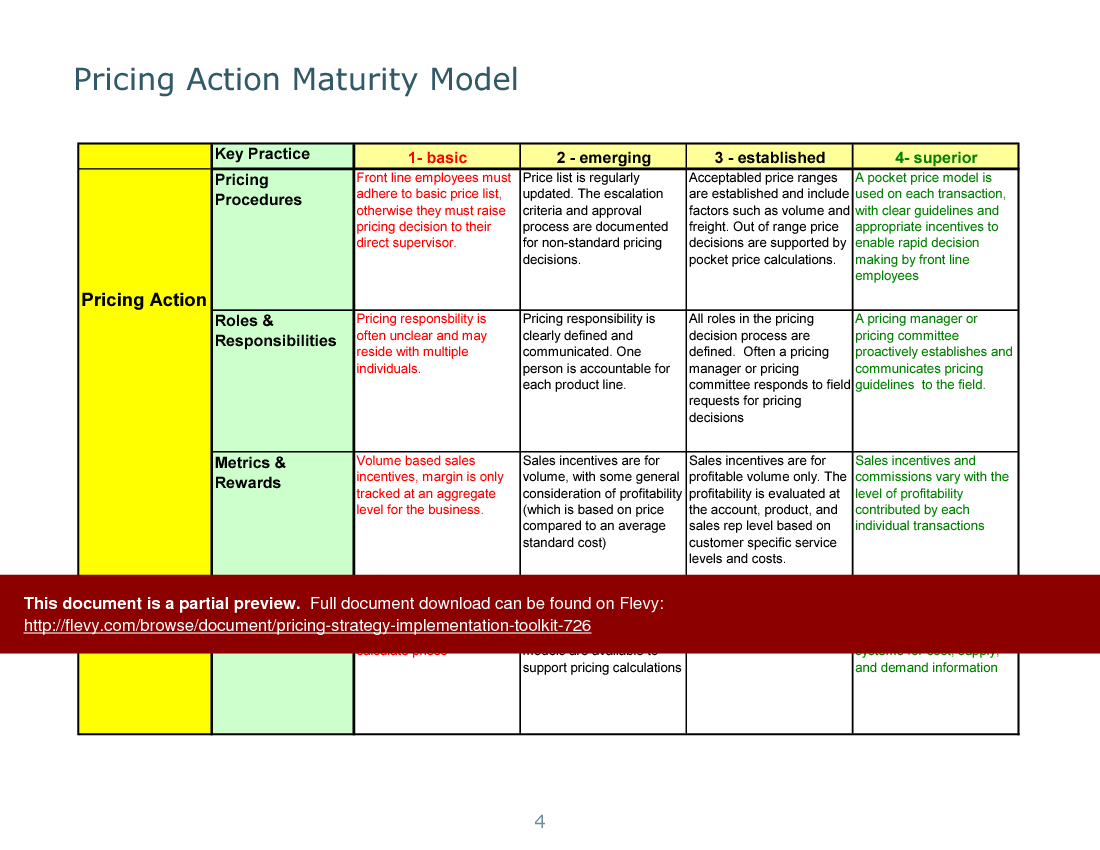
This PPT slide presents a Pricing Action Maturity Model, which categorizes key practices into 4 maturity levels: basic, emerging, established, and superior. Each level outlines specific characteristics across 4 dimensions: Pricing Procedures, Roles & Responsibilities, Metrics & Rewards, and Tools & Technology.
In the Pricing Procedures section, the basic level indicates that employees must follow a fixed price list, requiring supervisor approval for deviations. As organizations progress to the emerging stage, pricing criteria become more defined, allowing for documented escalation processes. At the established level, acceptable price ranges are set, incorporating various factors like volume and freight. The superior level showcases a pocket price model, enabling frontline employees to make rapid pricing decisions with clear guidelines.
Roles & Responsibilities highlight the evolution of accountability in pricing decisions. Initially, responsibility is vague, often shared among multiple individuals. As maturity increases, roles become clearer, with one accountable person per product line. At the superior level, a pricing manager or committee proactively sets and communicates guidelines, enhancing decision-making efficiency.
Metrics & Rewards focus on how sales incentives evolve. The basic level relies on volume-based incentives with aggregate margin tracking. Emerging practices begin to consider profitability, while established metrics evaluate profitability at a more granular level. The superior stage introduces varied incentives based on individual transaction contributions.
Finally, Tools & Technology illustrate the progression from basic paper-based systems to integrated pricing tools within a CRM system. The superior level emphasizes robust pricing tools that allow real-time calculations, integrating back-office systems for comprehensive cost and supply management. This model serves as a roadmap for organizations aiming to enhance their pricing strategies.
This PPT slide titled "Opportunity Quantification Example" outlines a specific improvement opportunity related to special labeling requests from customers. It begins with a brief description, indicating that customers have unique labeling needs that incur setup costs ranging from $200 to $300, depending on customization levels. Notably, these costs are currently not being passed on to the customers, which presents a potential area for revenue enhancement.
The slide is structured to provide a clear breakdown of input values, including the number of customers with special labeling requests and the associated setup costs. It also highlights the current situation, where no costs are transferred to customers. This sets the stage for identifying potential opportunities and estimated improvements, where the percentage of costs that could be passed on to customers is detailed.
The quantification section includes a range of values—minimum, most likely, and maximum—allowing for a nuanced understanding of potential financial impacts. For instance, the estimated dollar benefits are calculated based on these varying scenarios, with total dollar benefits outlined for each case. The weights assigned to these scenarios provide insight into the likelihood of each outcome, reinforcing the importance of strategic decision-making based on data.
The slide concludes with expected values, which are calculated using the previously mentioned inputs and percentages. This structured approach not only aids in understanding the financial implications of the special labeling requests, but also serves as a tool for decision-making regarding pricing strategies. Overall, this slide effectively illustrates how to quantify opportunities in a straightforward manner, making it a valuable resource for executives considering pricing adjustments.
This PPT slide titled "Pricing Action Overview" provides a concise framework for understanding the critical phase of implementing pricing strategies. It emphasizes that the actual request for a price increase is pivotal. The text suggests that prior strategic recommendations become irrelevant unless they are executed effectively with the customer. This highlights the importance of action in the pricing process.
The slide outlines an approach summary that indicates this pricing action should occur alongside overall project execution. It specifies the need for dedicated resources, suggesting that 2-3 full-time personnel are necessary to facilitate this process. Furthermore, it points out that collaboration across various departments—specifically sales, marketing, and HR—is essential for success. This cross-functional involvement is crucial for ensuring that the pricing action is not only well-planned, but also effectively communicated and executed.
The benefits and outputs section underscores the positive outcomes of a well-implemented pricing action. It states that this approach drives the achievement of benefits identified in other areas, implying that pricing is interconnected with broader business objectives. It also mentions realizing a higher proportion of benefits and quicker realization of those benefits, indicating that timely and effective pricing actions can lead to immediate financial gains.
Overall, this slide serves as a strategic guide for executives considering how to approach pricing actions. It emphasizes the necessity of a coordinated effort across teams and the importance of executing pricing strategies to unlock their full potential. The insights provided here can help inform decision-making processes and align resources effectively.
MARCUS OVERVIEW
This synopsis was written by Marcus [?] based on the analysis of the full 63-slide presentation.
Executive Summary
The Pricing Strategy Implementation Toolkit is a consulting-grade presentation designed to enhance your pricing actions and strategies, ensuring effective execution and communication of price increases. Crafted with the rigor of McKinsey, Bain, or BCG-quality frameworks (not affiliated), this toolkit equips corporate executives and consultants with actionable insights and tools to drive pricing initiatives. Users will be able to identify pricing opportunities, train account representatives, and implement a structured approach to price changes that maximizes revenue and minimizes internal resistance.
Who This Is For and When to Use
• Pricing Managers responsible for developing and executing pricing strategies
• Sales Leaders looking to enhance their team's effectiveness in communicating price changes
• Marketing Teams tasked with crafting messaging around price adjustments
• HR Professionals involved in aligning compensation structures with pricing objectives
Best-fit moments to use this deck:
• When preparing for a significant price increase across product lines
• During the rollout of new pricing strategies or adjustments
• In training sessions for account representatives on effective negotiation techniques
Learning Objectives
• Define the key components of a successful pricing action strategy
• Build a comprehensive plan for executing price increases
• Establish metrics and rewards that align with pricing objectives
• Develop effective internal and external messaging for price changes
• Train account representatives on best practices for negotiating price increases
• Create a tracking scorecard to measure the success of pricing actions
Primary Topics Covered
• Pricing Action Overview - Focuses on the critical moment of asking customers for price increases, emphasizing the need for effective execution.
• Common Issues & Obstacles - Identifies typical barriers to successful pricing actions, such as fear of competitive threats and lack of clarity in pricing responsibilities.
• Pricing Action Maturity Model - Outlines the progression from basic pricing procedures to superior pricing practices, detailing roles, responsibilities, and metrics.
• Key Pricing Action Tools - Lists essential tools for implementing pricing actions, including templates for price movements and training resources for account representatives.
• Pricing Action Deliverables - Describes the outputs expected from the pricing action initiative, including messaging, training, and tracking scorecards.
• Stand Alone Workplan - Provides a timeline for executing pricing actions, detailing key steps from stakeholder engagement to external communication.
Deliverables, Templates, and Tools
• Recommended Price Movement (RPM) template for setting target price increases
• Internal messaging framework to prepare sales teams for price changes
• Training materials for account representatives on negotiation techniques
• Tracking scorecard for monitoring price increase execution and results
• Pricing guidelines document to standardize pricing decisions across teams
• External messaging templates for communicating price increases to customers
Slide Highlights
• Overview of common obstacles faced during pricing actions and strategies to overcome them
• Maturity model illustrating the evolution of pricing practices within an organization
• Detailed RPM example showcasing measurable pricing actions and strategic factors
• Comprehensive training agenda for account representatives to enhance their negotiation skills
• Tracking scorecard template designed to consolidate pricing action results at various organizational levels
Potential Workshop Agenda
Pricing Strategy Kickoff (90 minutes)
• Introduce the pricing action framework and objectives
• Discuss common obstacles and strategies to address them
• Review the RPM template and its application
Account Rep Training Session (120 minutes)
• Conduct training on negotiation techniques for price increases
• Role-playing exercises to practice real-world scenarios
• Gather feedback and refine training materials based on participant input
Alignment Workshop (60 minutes)
• Review progress on pricing actions and discuss challenges
• Validate pricing targets and adjust as necessary
• Establish accountability for next steps in the pricing action plan
Customization Guidance
• Tailor the RPM template to reflect specific customer segments and product lines
• Adjust internal messaging to align with organizational culture and communication styles
• Modify training programs to address specific skill gaps identified in account representatives
Secondary Topics Covered
• Strategies for overcoming internal resistance to price increases
• Best practices for crafting compelling value propositions
• Techniques for assessing market conditions and competitive pricing
• Methods for tracking and reporting on pricing action outcomes
FAQ What is the purpose of the Pricing Action Toolkit?
The toolkit is designed to provide structured guidance and tools for implementing effective pricing actions, ensuring alignment across teams and maximizing revenue potential.
Who should be involved in the pricing action process?
Key stakeholders include pricing managers, sales leaders, marketing teams, and HR professionals, all of whom play a role in executing and supporting pricing initiatives.
What common obstacles might arise during pricing actions?
Obstacles can include fears of competitive backlash, uncertainty about the right price to ask for, and lack of accountability among account representatives.
How can account representatives be trained effectively?
Training should focus on negotiation techniques, business justification for price increases, and role-playing scenarios to build confidence in asking for price adjustments.
What metrics should be tracked to measure pricing action success?
Metrics may include the percentage of successful price increases, revenue growth from price adjustments, and account representative performance in executing pricing actions.
How can internal messaging support pricing actions?
Effective internal messaging prepares sales teams by explaining the rationale behind price increases and highlighting the benefits for both the company and the sales representatives.
What is the Recommended Price Movement (RPM)?
The RPM is a structured document that outlines target price increases for each SKU and customer, providing a clear framework for sales representatives to follow.
How often should pricing guidelines be updated?
Pricing guidelines should be reviewed and updated regularly, ideally on a monthly or quarterly basis, to ensure they remain relevant and effective.
Glossary
• Pricing Action - The process of implementing price changes in response to market conditions and strategic objectives.
• Recommended Price Movement (RPM) - A document outlining target price increases for specific products and customers.
• Maturity Model - A framework for assessing the development of pricing practices within an organization.
• Account Rep - A sales representative responsible for managing customer relationships and executing pricing actions.
• Tracking Scorecard - A tool used to monitor the execution and outcomes of pricing actions across the organization.
• Internal Messaging - Communication directed at internal stakeholders to prepare them for pricing actions.
• External Messaging - Communication aimed at customers to inform them about price changes.
• Training Program - A structured approach to developing the skills of account representatives in negotiating price increases.
• Stakeholder Analysis - A process for identifying and assessing the impact of pricing actions on various internal and external stakeholders.
• Value Proposition - A statement that outlines the unique benefits and value of a product or service to customers.
• Compensation Structure - The framework for determining how account representatives are rewarded for their performance, including pricing actions.
• Alignment Workshop - A meeting designed to review and validate pricing strategies and actions with key stakeholders.
• Communication Plan - A strategy for delivering consistent messaging about pricing actions to internal and external audiences.
• Negotiation Techniques - Skills and strategies used by sales representatives to effectively communicate and justify price increases to customers.
• Market Conditions - The external factors that influence pricing strategies, including competition, demand, and economic trends.
• Sales Leader - A person responsible for guiding and managing the sales team in executing pricing actions.
• Customer Feedback - Insights gathered from customers regarding their perceptions of price changes and value received.
• Performance Metrics - Quantifiable measures used to assess the success of pricing actions and account representatives.
• Pricing Guidelines - Documented procedures and reference prices for account representatives to follow when making pricing decisions.
• Change Management - The process of preparing and supporting individuals and teams in making organizational changes, such as pricing actions.
• Training Needs Assessment - An evaluation of the skills and knowledge required by account representatives to effectively execute pricing actions.
Since 2012, we have provided best practices to over 10,000 businesses and organizations of all sizes, from startups and small businesses to the Fortune 100, in over 130 countries.
"One of the great discoveries that I have made for my business is the Flevy library of training materials.
As a Lean Transformation Expert, I am always making presentations to clients on a variety of topics: Training, Transformation, Total Productive Maintenance, Culture, Coaching, Tools, Leadership Behavior, etc. Flevy
It is well worth the money to purchase these presentations. Sure, I have the knowledge and information to make my point. It is another thing to create a presentation that captures what I want to say. Flevy has saved me countless hours of preparation time that is much better spent with implementation that will actually save money for my clients.
"
– Ed Kemmerling, Senior Lean Transformation Expert at PMG
"As a small business owner, the resource material available from FlevyPro has proven to be invaluable. The ability to search for material on demand based our project events and client requirements was great for me and proved very beneficial to my clients. Importantly, being able to easily edit and tailor
the material for specific purposes helped us to make presentations, knowledge sharing, and toolkit development, which formed part of the overall program collateral. While FlevyPro contains resource material that any consultancy, project or delivery firm must have, it is an essential part of a small firm or independent consultant's toolbox.
"
– Michael Duff, Managing Director at Change Strategy (UK)
"As a consultant requiring up to date and professional material that will be of value and use to my clients, I find Flevy a very reliable resource.
The variety and quality of material available through Flevy offers a very useful and commanding source for information. Using Flevy saves me time, enhances my expertise and ends up being a good decision."
– Dennis Gershowitz, Principal at DG Associates
"I like your product. I'm frequently designing PowerPoint presentations for my company and your product has given me so many great ideas on the use of charts, layouts, tools, and frameworks. I really think the templates are a valuable asset to the job."
– Roberto Fuentes Martinez, Senior Executive Director at Technology Transformation Advisory
"If you are looking for great resources to save time with your business presentations, Flevy is truly a value-added resource. Flevy has done all the work for you and we will continue to utilize Flevy as a source to extract up-to-date information and data for our virtual and onsite presentations!"
– Debbi Saffo, President at The NiKhar Group
"As a young consulting firm, requests for input from clients vary and it's sometimes impossible to provide expert solutions across a broad spectrum of requirements. That was before I discovered Flevy.com.
Through subscription to this invaluable site of a plethora of topics that are key and crucial to consulting, I
have been able to exceed expectations and deliver quality advice and solutions to my clients. The quality and expertise of the authors are exemplary and gives me great confidence to use as part of my service offerings.
I highly recommend this company for any consultant wanting to apply international best practice standards in their service offerings.
"
– Nishi Singh, Strategist and MD at NSP Consultants
"Flevy is our 'go to' resource for management material, at an affordable cost. The Flevy library is comprehensive and the content deep, and typically provides a great foundation for us to further develop and tailor our own service offer."
– Chris McCann, Founder at Resilient.World
"My FlevyPro subscription provides me with the most popular frameworks and decks in demand in today’s market. They not only augment my existing consulting and coaching offerings and delivery, but also keep me abreast of the latest trends, inspire new products and service offerings for my practice, and educate me
Download our free compilation of 50+ Strategy & Transformation slides and templates. Frameworks include McKinsey 7-S, Balanced Scorecard, Disruptive Innovation, BCG Curve, and many more.