
 Click main image to view in full screen. Unlock all 12 preview images:
Post-Merger Integration Process Documentation – Word DOCX
Word (DOCX) 15 Pages


BENEFITS OF THIS DOWNLOADABLE WORD DOCUMENT
- Provides a comprehensive framework for managing post-merger integration across governance, workstreams, Day-1 readiness, and operational execution.
- Establishes a structured methodology for accelerating synergy realization, minimizing integration risk, and maintaining business continuity throughout the PMI lifecycle.
- Enables organizations to transition seamlessly from transaction close through stabilization, BAU handover, and formal integration closure.
M&A (MERGERS & ACQUISITIONS) WORD DESCRIPTION
Curated by McKinsey-trained Executives
Post-Merger Integration (PMI) Process Documentation
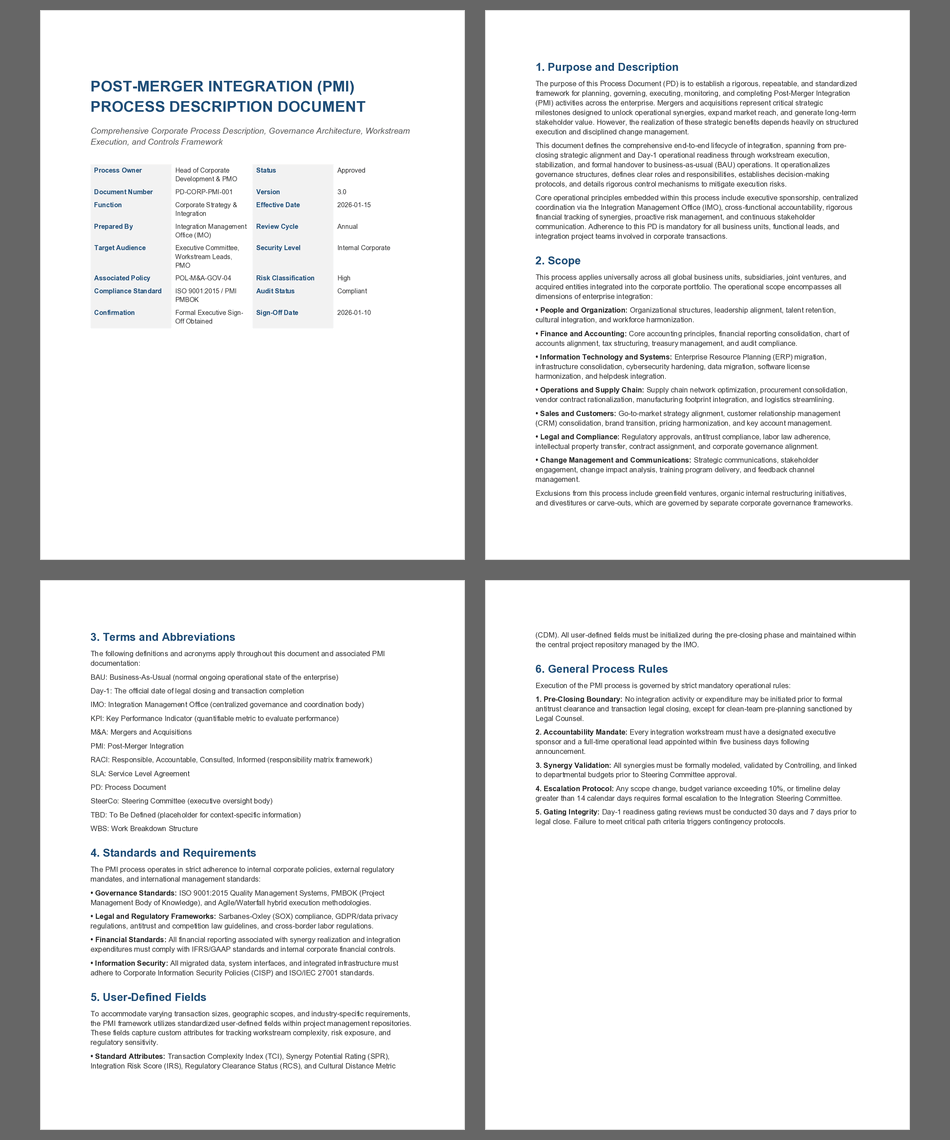
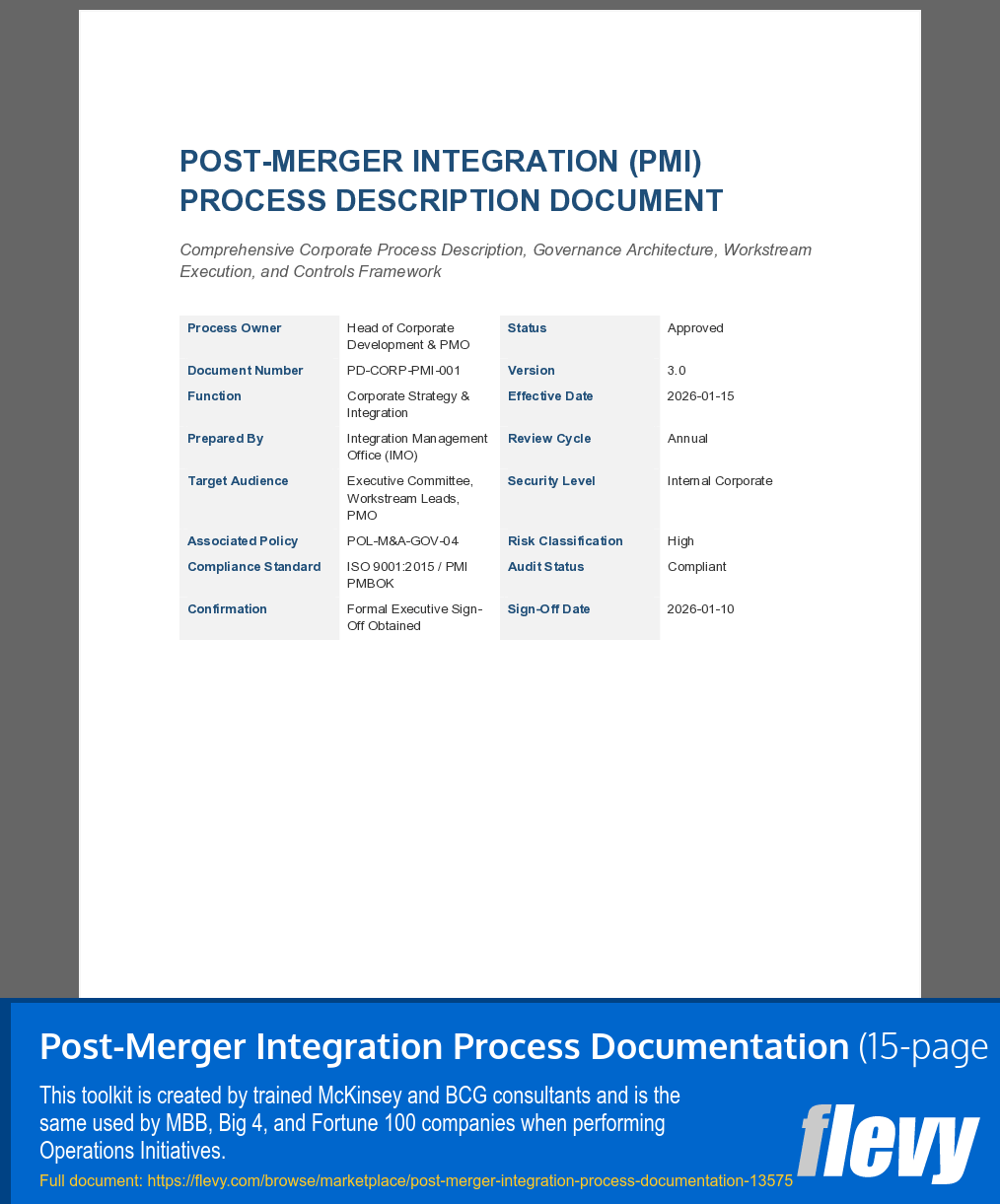
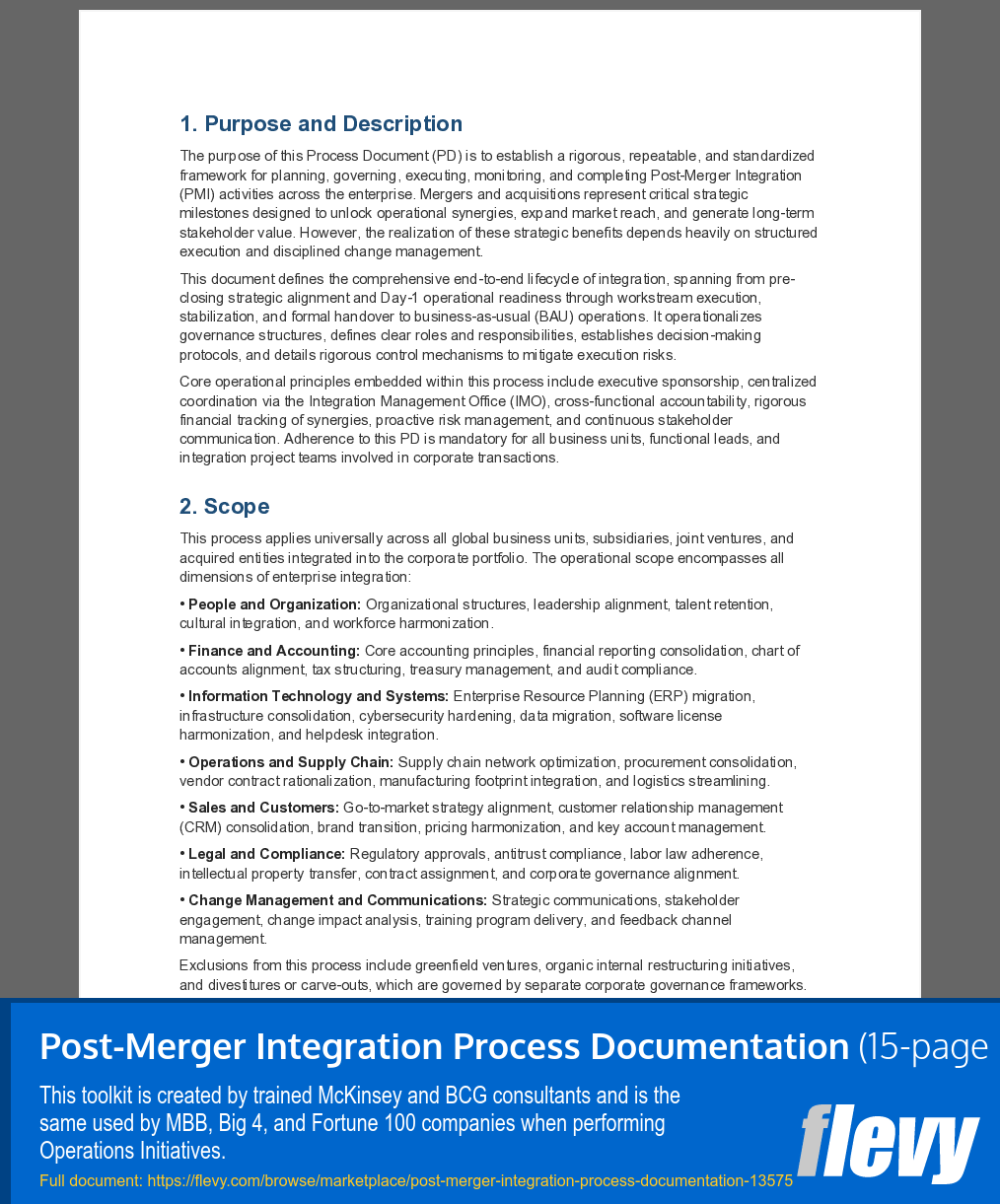
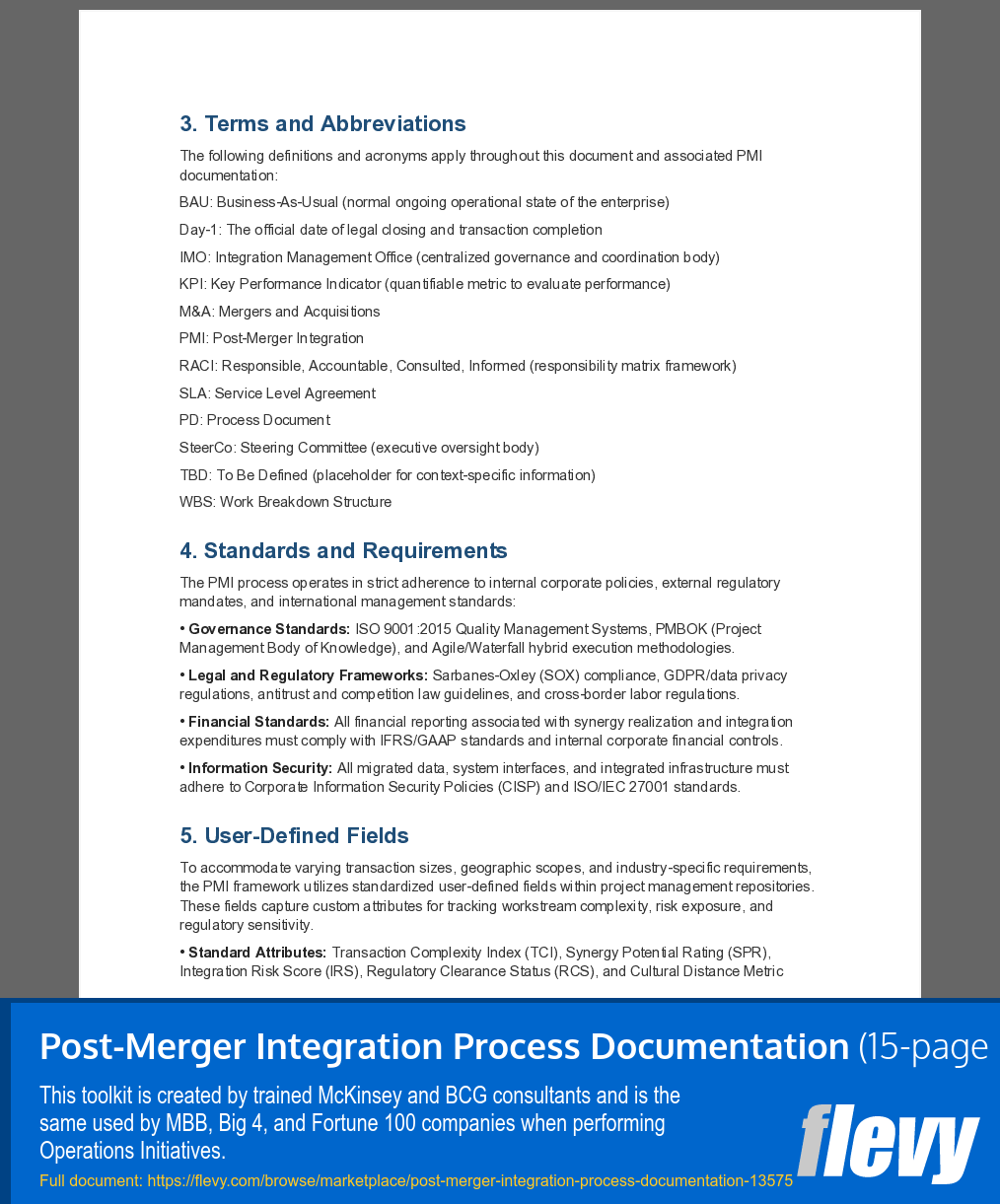
For Corporate Development Leaders, Integration Management Office (IMO) Executives, Private Equity Operating Partners, CEOs, CFOs, COOs, CHROs, CIOs, M&A Integration Leaders, PMO Directors, Workstream Leads, Transaction Advisors, and senior post-merger executives, this comprehensive Post-Merger Integration (PMI) Process Documentation establishes a rigorous, repeatable framework for managing the most execution-critical stages of an M&A transaction—from integration strategy, pre-closing planning, governance establishment, and Day-1 readiness through functional workstream execution, synergy realization, stabilization, BAU handover, and formal integration closure. It is designed to help organizations accelerate value capture, reduce integration risk, maintain operational continuity, strengthen executive accountability, and convert transaction strategy into measurable post-close business outcomes.
Section 1 – PMI Strategy, Integration Architecture & Transaction Alignment
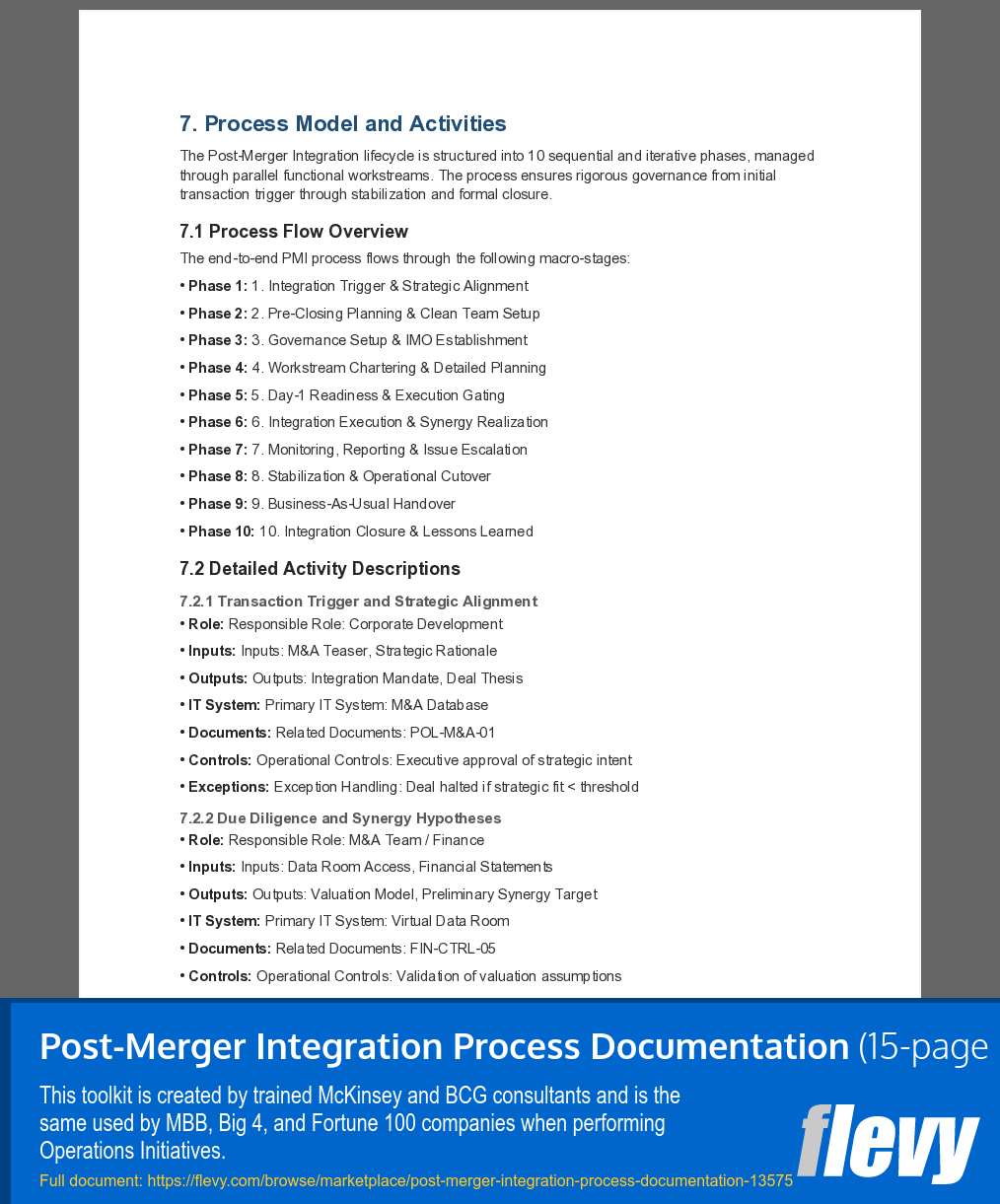
• Comprehensive Post-Merger Integration Strategy Framework designed to translate the transaction thesis into an executable integration roadmap aligned with strategic objectives, value creation priorities, operational requirements, and stakeholder expectations.
• Integration Mandate & Deal Thesis Framework connecting acquisition rationale, strategic objectives, expected synergies, integration ambition, and post-close operating priorities.
• Institutional Integration Scope Definition Framework designed to establish the appropriate level of functional, organizational, technological, commercial, and operational integration for each transaction.
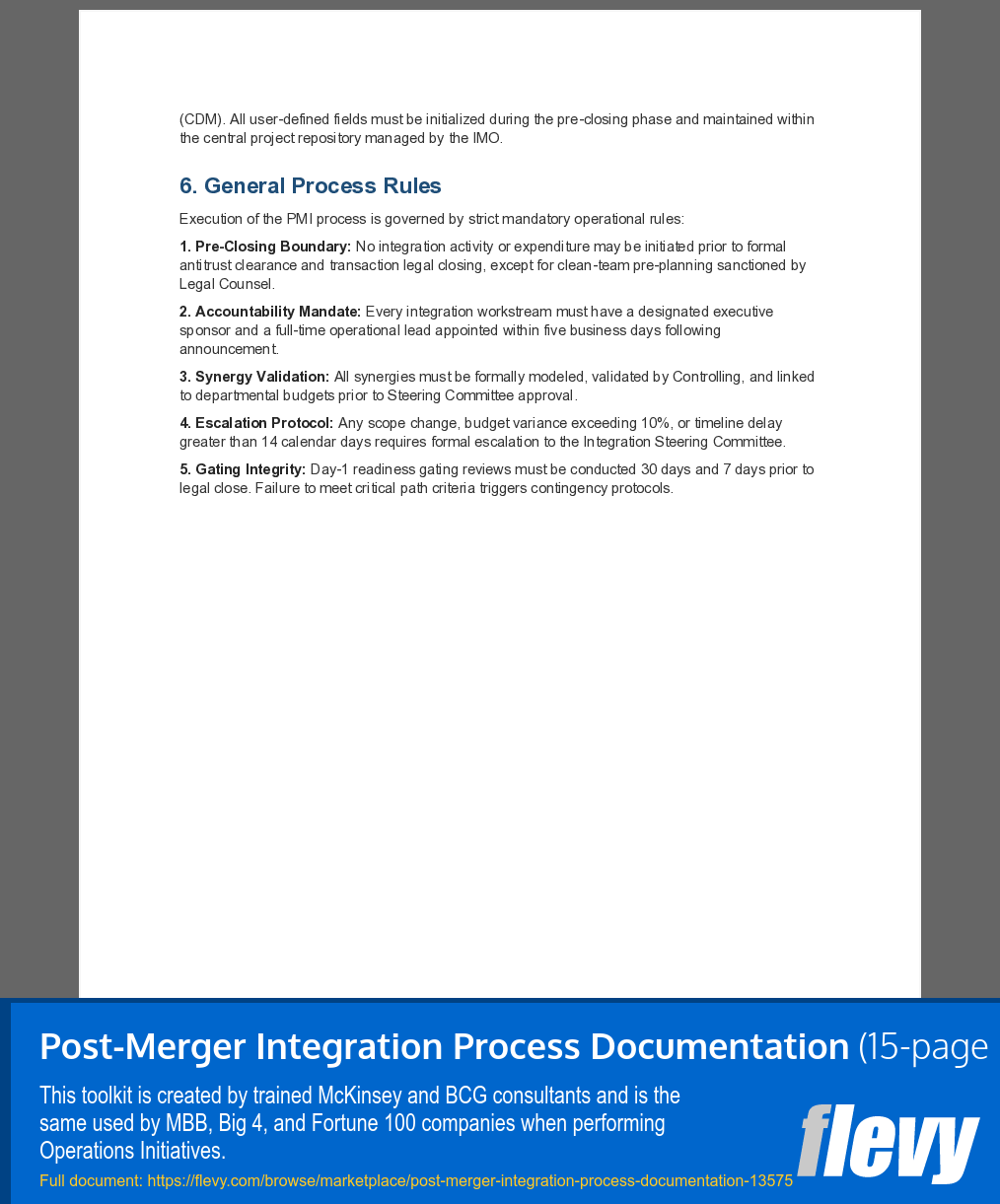
• Integration Complexity Assessment Framework using standardized Transaction Complexity Index (TCI), Synergy Potential Rating (SPR), Integration Risk Score (IRS), Regulatory Clearance Status (RCS), and Cultural Distance Metric (CDM).
• Dedicated Integration Ambition Framework designed to determine whether the transaction requires full absorption, selective integration, preservation of autonomy, phased integration, or hybrid operating-model execution.
• Pre-Closing Strategic Alignment Framework ensuring that integration objectives, critical dependencies, value drivers, and operating-model decisions are identified before legal close.
• Integration Master Plan Architecture connecting strategic objectives, workstreams, milestones, dependencies, resources, budgets, risks, KPIs, and decision gates into one integrated execution framework.
• Integration Decision-Rights Framework establishing clear ownership for strategic, financial, operational, legal, technology, people, and customer decisions.
• Integration Prioritization Matrix designed to distinguish Day-1 critical activities, near-term value drivers, stabilization requirements, and longer-term transformation initiatives.
• Post-Close Value Creation Framework designed to maintain alignment between transaction economics and the operational actions required to achieve the investment thesis.
Section 2 – Pre-Closing Planning, Clean Team & Regulatory Readiness
• Comprehensive Pre-Closing PMI Planning Framework designed to prepare integration activities while respecting legal, regulatory, antitrust, confidentiality, and clean-team boundaries.
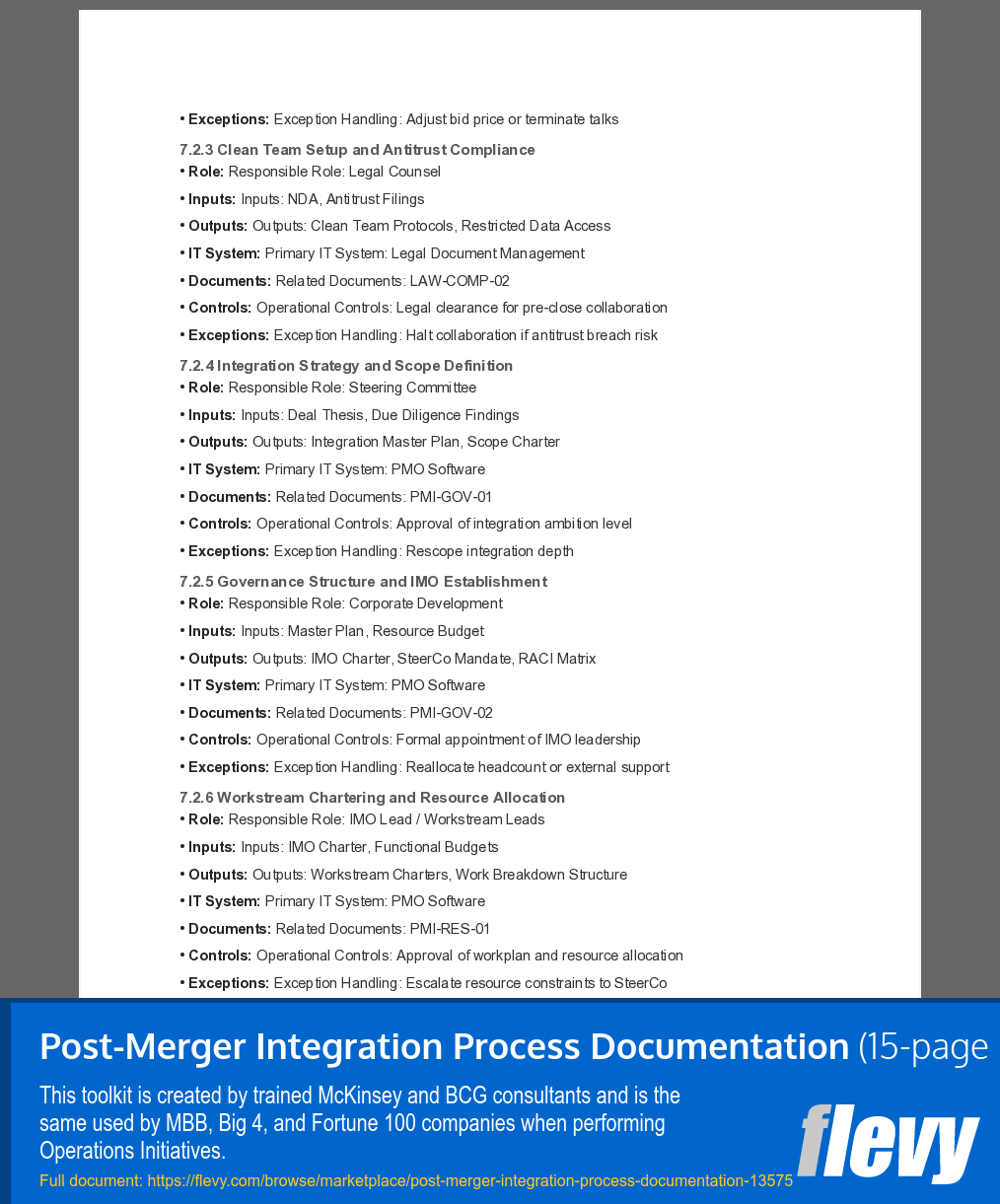
• Clean Team Governance Framework establishing controlled access to sensitive information and defining permissible pre-close collaboration between buyer and target personnel.
• Antitrust Compliance Control Framework designed to prevent unauthorized pre-closing coordination, competitively sensitive information sharing, or premature operational integration.
• Day-1 Planning Readiness Framework designed to identify critical operational requirements before close while preserving strict legal separation where required.
• Regulatory Clearance Tracking Framework covering antitrust, competition law, labor requirements, foreign investment considerations, sector-specific approvals, and other transaction-related clearances.
• Pre-Closing Information Access Matrix defining authorized users, restricted information categories, approval requirements, and clean-team responsibilities.
• Integration Dependency Identification Framework designed to identify activities dependent on legal close, regulatory approval, third-party consent, technology access, employee consultation, or contractual transfer.
• Pre-Closing Risk Assessment Framework designed to identify operational, regulatory, financial, technology, people, customer, and supplier risks before Day-1.
• Close-Readiness Dependency Matrix connecting legal closing conditions with operational integration requirements.
• Pre-Closing Exception Escalation Framework designed to rapidly escalate situations where planned integration activities could create legal, regulatory, operational, or transaction risk.
Section 3 – Governance, IMO Establishment & Executive Accountability
• Institutional Integration Management Office (IMO) Framework establishing centralized coordination, governance, reporting, issue management, dependency management, and execution oversight.
• Steering Committee Governance Framework defining executive oversight, decision rights, escalation thresholds, meeting cadence, approvals, and accountability for major integration decisions.
• PMI Governance Architecture connecting Executive Leadership, SteerCo, IMO, functional workstream leads, line management, Legal, Finance, HR, IT, Operations, and Commercial teams.
• Comprehensive PMI RACI Framework designed to eliminate ambiguity regarding Responsible, Accountable, Consulted, and Informed stakeholders across integration activities.
• Workstream Executive Sponsorship Framework requiring executive ownership of each major integration workstream and clear accountability for business outcomes.
• IMO Charter Framework defining mandate, authority, operating cadence, reporting responsibilities, escalation rights, resources, and governance boundaries.
• Decision Escalation Framework establishing formal escalation for scope changes, material budget variances, significant timeline delays, critical risks, and unresolved cross-functional issues.
• Governance Meeting Architecture covering SteerCo reviews, IMO operating meetings, workstream reviews, risk reviews, synergy reviews, and executive decision forums.
• Integration Decision Log Framework designed to maintain an auditable record of major integration decisions, owners, rationale, dates, dependencies, and required follow-up.
• Executive Reporting Framework designed to provide senior leadership with concise visibility into integration health, value realization, critical risks, milestones, and decisions requiring intervention.
Section 4 – Workstream Chartering, Resource Allocation & Execution Planning
• Comprehensive PMI Workstream Charter Framework defining objectives, scope, deliverables, milestones, dependencies, resources, risks, KPIs, and executive accountability for each functional workstream.
• Work Breakdown Structure (WBS) Framework designed to translate the Integration Master Plan into actionable work packages, activities, milestones, and deliverables.
• Workstream Resource Allocation Framework aligning people, specialist capabilities, budgets, external advisors, technology resources, and operational capacity with integration priorities.
• Cross-Functional Dependency Management Framework designed to identify and actively manage dependencies between Finance, HR, IT, Operations, Sales, Legal, and other integration workstreams.
• Integration Milestone Framework establishing critical-path milestones, target completion dates, dependencies, acceptance criteria, and escalation triggers.
• Workstream Readiness Assessment Framework designed to evaluate whether each functional area is sufficiently prepared to enter execution, cutover, stabilization, and BAU handover.
• Resource Constraint Escalation Framework designed to identify capacity gaps and escalate unresolved resource requirements to the Steering Committee.
• Integrated PMI Schedule Framework connecting workstream activities into a consolidated enterprise-level integration timeline.
• Workstream Deliverable Acceptance Framework requiring formal validation and sign-off of major deliverables before progression through integration gates.
• PMI Execution Cadence Framework combining structured project-management disciplines with Agile and Waterfall execution methods where appropriate.
Section 5 – Day-1 Readiness, Cutover & Transaction Close Execution
• Comprehensive Day-1 Readiness Framework designed to ensure operational, technological, financial, people, customer, legal, and communications readiness at legal close.
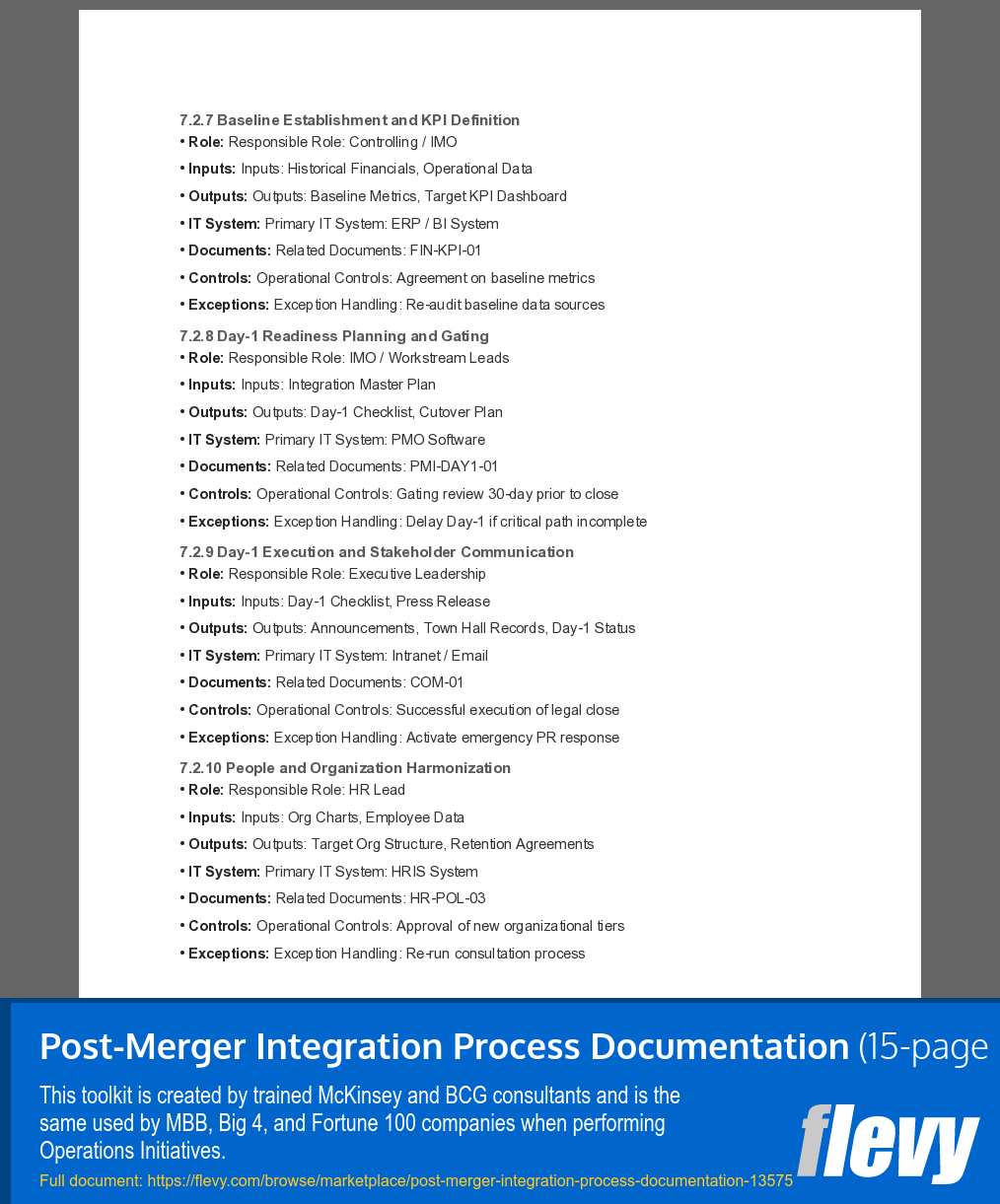
• 30-Day and 7-Day Gating Framework establishing formal readiness reviews before closing and identifying critical-path activities requiring executive intervention.
• Day-1 Critical Path Framework designed to prioritize activities that must be completed to maintain business continuity and transaction readiness.
• Day-1 Checklist Architecture covering people, systems, finance, communications, customer operations, legal requirements, facilities, vendors, and business continuity.
• Cutover Planning Framework designed to coordinate system transitions, organizational changes, customer communications, financial processes, access controls, and operational changes.
• Day-1 Go/No-Go Decision Framework providing formal criteria for determining whether integration activities are sufficiently prepared for close.
• Day-1 Contingency Framework defining escalation and fallback procedures when critical-path activities are incomplete or operational readiness criteria are not satisfied.
• Executive Communication Framework covering employee announcements, leadership messaging, customer communications, town halls, stakeholder updates, and transaction-related communications.
• Day-1 Status Reporting Framework designed to provide executives with real-time visibility into critical activities, exceptions, risks, and operational readiness.
• Emergency Response Framework designed to activate rapid-response procedures for material operational, communications, regulatory, customer, or technology incidents occurring around close.
Section 6 – People, Organization & Change Management Integration
• Comprehensive People & Organization Integration Framework covering organizational design, leadership alignment, talent retention, employee communications, cultural integration, and workforce harmonization.
• Target Operating Model Framework designed to establish future-state organizational structures, reporting lines, responsibilities, decision rights, and functional ownership.
• Key Talent Retention Framework designed to identify critical employees and implement targeted retention mechanisms through the integration period.
• Organizational Harmonization Framework addressing role duplication, leadership alignment, organizational tiers, workforce structures, and functional consolidation.
• Cultural Integration Framework designed to identify cultural differences, establish integration priorities, and reduce employee friction during organizational transition.
• Change Impact Assessment Framework designed to identify affected stakeholder groups, operational impacts, capability requirements, communications needs, and resistance points.
• Employee Communication Framework covering leadership communications, employee announcements, town halls, FAQs, feedback channels, and change-management messaging.
• Talent Risk Escalation Framework designed to identify critical retention risks and escalate emerging leadership or workforce issues.
• HR Integration Readiness Framework connecting HRIS integration, compensation structures, policies, benefits, organizational design, employee records, and workforce communications.
• People Integration KPI Framework linking retention, organizational readiness, employee engagement, leadership continuity, and workforce stabilization to integration performance.
Section 7 – Finance, Synergy Realization & Value Capture
• Comprehensive Finance & Accounting Integration Framework designed to consolidate financial reporting, chart of accounts, ERP structures, controls, treasury processes, tax requirements, and financial governance.
• Financial Baseline Establishment Framework designed to create validated pre-integration financial and operational baselines against which post-close performance can be measured.
• Synergy Business Case Framework connecting identified synergies to accountable owners, financial assumptions, timing, departmental budgets, and measurable realization targets.
• Synergy Tracking & Value Realization Framework designed to monitor cost and revenue synergies against approved business cases and identify deviations from expected value capture.
• Synergy Validation Framework requiring financial validation and Controlling approval before synergy targets are incorporated into formal integration commitments.
• Monthly Synergy Audit Framework designed to distinguish realized, forecast, delayed, at-risk, and unsupported synergies.
• Budget Control Framework monitoring integration expenditures against approved budgets and triggering escalation when defined variance thresholds are exceeded.
• Purchase Accounting & Financial Consolidation Readiness Framework supporting the transition toward consolidated financial reporting and unified accounting processes.
• Financial Variance Analysis Framework designed to identify deviations between integration assumptions, actual financial performance, synergy realization, and integration costs.
• Value Capture Accountability Framework assigning ownership for each material synergy and requiring measurable evidence of realization.
• Integration Economics Dashboard Framework consolidating synergy performance, integration expenditure, budget adherence, financial impact, and value realization into executive reporting.
Section 8 – IT Systems, Cybersecurity & Digital Integration
• Comprehensive IT Integration Framework covering ERP consolidation, infrastructure integration, applications, cybersecurity, data migration, interfaces, licenses, service management, and technology operating models.
• Enterprise Architecture Integration Framework designed to establish the future-state technology landscape and determine which systems should be retained, consolidated, migrated, replaced, or retired.
• ERP Migration Framework covering system mapping, data migration, testing, interfaces, user access, cutover planning, reconciliation, and post-migration stabilization.
• Data Migration Governance Framework designed to protect data integrity, completeness, confidentiality, availability, and regulatory compliance throughout integration.
• Cybersecurity Integration Framework designed to identify vulnerabilities, harden acquired environments, integrate security controls, and protect combined technology infrastructure.
• System Migration Wave Framework organizing technology transitions into controlled migration waves with formal readiness, testing, cutover, and acceptance gates.
• Technology Cutover Checklist Framework covering technical dependencies, data validation, system access, interfaces, backups, rollback plans, business validation, and support readiness.
• IT Service Management Integration Framework connecting helpdesk operations, incident management, service levels, application support, and infrastructure ownership.
• Technology Risk Escalation Framework designed to identify data loss, downtime, cybersecurity, integration defects, and migration delays requiring executive intervention.
• Digital Integration KPI Framework measuring system migration success, downtime, data integrity, security readiness, defect rates, and technology stabilization.
Section 9 – Operations, Supply Chain, Sales & Customer Integration
• Comprehensive Operations & Supply Chain Integration Framework covering procurement, suppliers, manufacturing, logistics, facilities, contracts, inventory, sourcing, and operational footprint optimization.
• Procurement Synergy Framework designed to consolidate supplier spend, rationalize vendors, leverage combined purchasing volumes, and capture scale economies.
• Supplier Rationalization Framework identifying opportunities to consolidate suppliers while maintaining continuity, quality, resilience, and commercial competitiveness.
• Supply Chain Continuity Framework designed to protect critical sourcing and logistics processes during transition and maintain contingency supply where necessary.
• Operations Footprint Integration Framework covering facilities, manufacturing locations, logistics networks, operational capacity, and consolidation opportunities.
• Sales & Customer Integration Framework covering CRM consolidation, account ownership, pricing, branding, customer communications, sales processes, and go-to-market alignment.
• Key Account Transition Framework designed to protect Tier-1 and Tier-2 customer relationships through structured ownership transitions and executive engagement.
• Customer Retention Framework designed to minimize customer disruption caused by billing changes, service interruptions, account-team changes, product transitions, or pricing harmonization.
• Commercial Synergy Framework connecting cross-selling, market expansion, product bundling, customer penetration, and sales enablement opportunities to measurable value targets.
• Customer Experience Protection Framework designed to maintain service continuity and protect revenue during organizational and systems transition.
Section 10 – Legal, Compliance, Risk, Stabilization & BAU Handover
• Comprehensive Legal & Regulatory Integration Framework covering contract assignments, licenses, regulatory obligations, labor requirements, compliance controls, corporate governance, and post-close legal alignment.
• Integration Compliance Matrix designed to map regulatory obligations, responsible owners, required evidence, deadlines, and completion status.
• Contract Harmonization Framework covering assignment requirements, change-of-control provisions, supplier and customer contracts, licenses, and commercial agreements.
• Enterprise PMI Risk Management Framework designed to identify, assess, prioritize, mitigate, monitor, and escalate integration risks throughout the lifecycle.
• Issue Management & Escalation Framework designed to maintain centralized visibility over critical issues and accelerate resolution through structured ownership and escalation.
• Risk Exposure Index Framework measuring the proportion of high-severity risks supported by active and validated mitigation plans.
• Stabilization & Hypercare Framework designed to maintain enhanced operational support following major organizational, technology, customer, finance, or process transitions.
• Operational Cutover Acceptance Framework requiring defined stabilization criteria, defect resolution, service performance, and business validation before transition to BAU.
• 14-Day Stability Control Framework establishing minimum operational stability requirements before formal stabilization sign-off.
• BAU Handover Framework transferring ownership from the IMO and temporary integration structures to permanent line management and functional owners.
• Handover Acceptance Certificate Framework requiring formal acceptance of processes, systems, documentation, outstanding actions, controls, and operational responsibilities.
• Integration Closure Framework designed to confirm completion of deliverables, financial reconciliation, risk disposition, governance closure, lessons learned, and executive acceptance.
• Post-Merger Lessons Learned Framework capturing integration successes, failures, process improvements, governance observations, and reusable best practices for future transactions.
Section 11 – PMI KPIs, Governance Dashboards & Executive Control
• Comprehensive PMI KPI Framework designed to provide objective measurement of integration execution, value realization, operational continuity, risk exposure, and stakeholder outcomes.
• Milestone Achievement Dashboard tracking workstream milestones completed on or ahead of schedule against the approved integration plan.
• Day-1 Operational Readiness Dashboard providing visibility into completion of critical-path readiness activities.
• Synergy Realization Dashboard comparing actual run-rate cost and revenue synergies against approved business cases and targets.
• Issue Resolution Velocity Dashboard measuring the speed at which integration issues are identified, assigned, escalated, and resolved.
• Workstream Completion Dashboard providing executive visibility into deliverable completion and formal workstream sign-off.
• Key Talent Retention Dashboard monitoring retention of designated critical employees throughout the integration period.
• System Migration Success Dashboard measuring successful migration waves, downtime, data integrity, defects, and technology readiness.
• Customer Retention Dashboard monitoring retention of strategic customers and identifying emerging commercial disruption.
• Budget Adherence Dashboard comparing actual integration expenditure with approved budgets and highlighting material variances.
• Risk Exposure Dashboard identifying high-severity risks, mitigation coverage, aging issues, and unresolved executive decisions.
• Executive PMI Scorecard consolidating schedule, cost, synergy, people, technology, customer, risk, and operational indicators into one senior-management view.
Section 12 – PMI Controls, Governance Checklists & Execution Tools
• PMI Master Governance Checklist consolidating strategic approvals, governance requirements, workstream readiness, Day-1 gates, execution controls, stabilization criteria, and closure requirements.
• Day-1 Readiness Master Checklist covering critical operational, financial, people, technology, legal, customer, communications, and contingency requirements.
• Workstream Charter Checklist covering objectives, scope, milestones, resources, dependencies, risks, KPIs, deliverables, and executive ownership.
• Synergy Validation Checklist covering business-case assumptions, financial validation, owners, timing, budgets, measurement methodology, and evidence requirements.
• Integration Risk & Issue Checklist covering identification, severity assessment, mitigation ownership, escalation, aging, resolution, and executive review.
• IT Migration Readiness Checklist covering architecture, data, cybersecurity, testing, access, interfaces, cutover, rollback, and business validation.
• People Integration Checklist covering organizational design, critical talent, retention, employee communications, HR systems, consultation, and change management.
• Finance Integration Checklist covering chart of accounts, reporting, controls, ERP integration, financial consolidation, treasury, tax, and audit requirements.
• Customer Transition Checklist covering key-account ownership, CRM, pricing, communications, service continuity, billing, and customer retention.
• BAU Handover Checklist covering ownership transfer, process documentation, open issues, controls, support arrangements, KPIs, training, and formal acceptance.
• PMI Closure Checklist confirming completion of deliverables, budget reconciliation, synergy status, unresolved risks, lessons learned, documentation, and executive sign-off.
• PMI Decision & Escalation Matrix designed to provide a standardized mechanism for determining which decisions remain within workstreams, require IMO intervention, or require Steering Committee approval.
• Integration Control Matrix linking process activities, risks, controls, evidence requirements, accountable owners, systems, and approval points.
• PMI Audit-Readiness Framework designed to maintain sufficient documentation and evidence to support internal audit, compliance review, financial controls, and governance assurance.
Designed as a complete post-merger execution and governance playbook—not simply a project plan or collection of integration checklists—this PMI Process Documentation provides Corporate Development, Private Equity, executive leadership, IMO teams, PMOs, and functional workstream leaders with a structured framework for converting transaction strategy into disciplined post-close execution. It connects integration strategy, governance, IMO orchestration, workstream planning, Day-1 readiness, people integration, finance consolidation, IT migration, supply chain optimization, customer retention, regulatory compliance, synergy realization, risk management, stabilization, and BAU handover into one integrated operating methodology.
The result is a practical enterprise framework for accelerating post-merger integration, protecting business continuity, increasing synergy realization, strengthening executive accountability, reducing operational and regulatory risk, improving cross-functional coordination, and creating a controlled path from transaction close to sustainable business-as-usual operations. By establishing formal decision rights, readiness gates, KPIs, escalation mechanisms, financial controls, workstream ownership, and closure criteria, the framework enables organizations to manage PMI with greater transparency, consistency, execution discipline, and measurable value creation.
Keywords: Process Audit SOPs, Internal Audit Standard Operating Procedures, Process Audit Framework, Control Testing Procedures, Risk Assessment Methodologies, Audit Governance, Process Audit Strategy, Audit Evidence Collection, Compliance Audit SOPs, Continuous Auditing, Process Mapping, Audit Documentation Standards, Audit Quality Assurance, Process Risk Management, Operational Risk Audit, Enterprise Audit Management, Audit Committee Reporting, Audit Analytics, Process Mining, AI-Assisted Auditing, Audit Technology SOPs, Global Process Audit, Audit Playbooks, Audit Templates, Audit Training Programs, Audit Remediation Management, Audit Excellence, Process Audit Toolkit, McKinsey Audit Framework, Audit Best Practices, Enterprise Governance, Internal Control Assessment, Audit Procedures Manual, Audit Program Design, Audit Resource Planning, Audit Scheduling, Audit Efficiency, Audit Effectiveness, Audit Performance Metrics, Audit KPIs, Audit ROI, Audit Value Creation, Process Optimization, Operational Excellence, Business Process Audit, Functional Audit, Departmental Audit, Transactional Audit, Service Audit, Administrative Process Audit, Supply Chain Process Audit, Finance Process Audit, IT Process Audit, HR Process Audit, Procurement Process Audit, Sales Process Audit, Customer Service Audit, Production Audit, Quality Audit, Compliance Testing, Regulatory Audit, Policy Compliance, Procedure Audit, Documentation Audit, Audit Trail Review, Exception Management, Control Design, Control Effectiveness, Control Testing, Preventive Controls, Detective Controls, Corrective Actions, Root Cause Analysis, Finding Classification, Audit Report Writing, Executive Summaries, Audit Communication, Stakeholder Engagement, Process Owner Engagement, Management Accountability, Audit Committee Governance, Audit Charter, Audit Independence, Auditor Ethics, Professional Skepticism, Audit Competency, Audit Training, Audit Certification, Audit Standards (IIA, IAASB), Audit Best Practices, Audit Methodology, Audit Framework, Audit Operating Model, Process Audit Excellence, Audit Mastery, Fortune 500 Audit, Enterprise Audit Operations, Corporate Audit Function, Strategic Audit Planning, Transformation Audit, Digital Audit, Innovation Audit, Benchmarking Audit, Maturity Assessment, Audit Scaling, Audit Outsourcing, Co-Sourcing Models, Vendor Management, Audit Technology Stack, Audit Tools, Audit Software, Continuous Monitoring, Predictive Analytics, Anomaly Detection, Data Quality, Process Intelligence, Workflow Analytics, Business Process Management, Process Automation, RPA Audit, AI Governance, Responsible AI Audit, Cybersecurity Audit, Data Governance Audit, Privacy Audit, Information Security, Audit Evidence Standards, Working Papers, Audit Documentation, Audit File Management, Audit Records Retention, Audit Trail Integrity, Audit Report Confidentiality, Multi-Site Audit Coordination, Global Audit Strategy, International Audit Standards, Regional Audit Compliance, Cultural Considerations in Audit, Localization of Audit Procedures, Process Transformation Audit, Business Reengineering Audit, Change Audit, Operational Change, Audit Change Management, Audit Communication Plan, Audit Stakeholder Communication, Audit Performance Review, Audit Function Review, Strategic Review Process, Audit Leadership Development, Audit Team Development, Audit Coaching, Audit Supervision, Audit Career Progression, Audit Knowledge Management, Audit Playbook Development, Audit Template Library, Audit Standards Documentation, Audit Policy Manual, Lessons Learned Capture, Best Practice Sharing, Audit Continuous Improvement, Audit Methodology Enhancement, Audit Process Optimization, Audit Efficiency Improvement, Audit Effectiveness Enhancement, Audit Quality Improvement, Audit Risk Management, Audit Risk Register, Audit Issue Management, Audit Action Tracking, Audit Metrics Dashboard, Audit Performance Dashboard, Audit Scorecard, Audit Balanced Scorecard, KPI Framework for Audit, Audit Success Factors, Critical Success Factors in Audit, Audit Strategic Objectives, Audit Vision Statement, Audit Mission Statement, Audit Values and Ethics, Audit Culture, Audit Maturity Model, Audit Capability Model, Audit Competency Framework, Professional Development in Audit, Audit Certification Programs, Internal Audit Standards, Audit Best Practices Guide, Audit Reference Manual, Audit Operating Manual, Audit Procedures Manual, Audit Program Manual, McKinsey Audit Excellence, Deloitte Audit Framework, EY Audit Approach, KPMG Audit Methodology, Big 4 Audit Standards, Audit Industry Benchmarks, Audit Industry Standards, Audit Thought Leadership, Audit Innovation, Audit Transformation Program, Audit Digital Transformation, Audit Process Transformation, Audit Service Transformation, Audit Operating Model Transformation, Audit Function Evolution, Audit Future-Proofing, Emerging Trends in Audit, Audit 2025 Roadmap, Audit Strategic Priorities, Audit Strategic Planning, Audit Strategic Execution, Audit Implementation Plan, Audit Deployment Strategy, Audit Rollout Plan, Audit Quick-Start Guide, Audit Implementation Guide, Audit User Guide, Audit Handbook, Audit Manual, Audit Documentation Standard, Audit Work Standards, Audit Quality Standards, Audit Performance Standards, Audit Excellence Standards, Enterprise Audit Excellence, Audit Mastery Program, Audit Excellence Initiative, Audit Excellence Framework, Audit Excellence Culture, Audit Excellence Mindset, Strategic Audit Excellence, Operational Audit Excellence, Financial Audit Excellence, Compliance Audit Excellence, Quality Audit Excellence, Process Audit Excellence, Audit Excellence ROI, Audit Excellence Value Creation, Audit Excellence Competitive Advantage, Audit Excellence Strategic Advantage, Audit Excellence Performance Advantage, Audit Excellence Organizational Advantage, Inventory Management, Demand Planning, Inventory Optimization, Inventory Control, Supply Chain Management, Warehouse Operations, Replenishment Strategy, Inventory Analytics, WIP Reduction, Inventory Accuracy, Distribution Network, Inventory Forecasting, Supply Chain Excellence, Working Capital, Inventory KPIs, Procurement Strategy, Inventory Governance, Inventory SOPs, Continuous Improvement, Supply Chain Transformation, GenAI deployment SOPs, generative AI operating model, enterprise AI governance framework, AI Center of Excellence, responsible AI, AI risk management, AI use case prioritization, GenAI implementation roadmap, AI vendor selection, prompt engineering standards, AI compliance, AI adoption strategy, generative AI across value chain, AI strategy, enterprise transformation, AI implementation, AI scaling framework
Strategy & Transformation, Growth Strategy, Strategic Planning, Strategy Frameworks, Innovation Management, Pricing Strategy, Core Competencies, Strategy Development, Business Transformation, Marketing Plan Development, Product Strategy, Breakout Strategy, Competitive Advantage, Mission, Vision, Values, Strategy Deployment & Execution, Innovation, Vision Statement, Core Competencies Analysis, Corporate Strategy, Product Launch Strategy, BMI, Blue Ocean Strategy, Breakthrough Strategy, Business Model Innovation, Business Strategy Example, Corporate Transformation, Critical Success Factors, Customer Segmentation, Customer Value Proposition, Distinctive Capabilities, Enterprise Performance Management, KPI, Key Performance Indicators, Market Analysis, Market Entry Example, Market Entry Plan, Market Intelligence, Market Research, Market Segmentation, Market Sizing, Marketing, Michael Porter's Value Chain, Organizational Transformation, Performance Management, Performance Measurement, Platform Strategy, Product Go-to-Market Strategy, Reorganization, Restructuring, SWOT, SWOT Analysis, Service 4.0, Service Strategy, Service Transformation, Strategic Analysis, Strategic Plan Example, Strategy Deployment, Strategy Execution, Strategy Frameworks Compilation, Strategy Methodologies, Strategy Report Example, Value Chain, Value Chain Analysis, Value Innovation, Value Proposition, Vision Statement, Corporate Strategy, Business Development, Business plan pdf, business plan, PDF, Business Plan DOC, Business Plan Template, PPT, Market strategy playbook, strategic market planning, competitive analysis tools, market segmentation frameworks, growth strategy templates, product positioning strategy, market execution toolkit, strategic alignment playbook, KPI and OKR frameworks, business growth strategy guide, cross-functional strategy templates, market risk management, market strategy PowerPoint doc, guide, ebook, e-book ,McKinsey Change Playbook, Organizational change management toolkit, Change management frameworks 2025, Influence model for change, Change leadership strategies, Behavioral change in organizations, Change management PowerPoint templates, Transformational leadership in change, supply chain KPIs, supply chain KPI toolkit, supply chain PowerPoint template, logistics KPIs, procurement KPIs, inventory management KPIs, supply chain performance metrics, manufacturing KPIs, supply chain dashboard, supply chain strategy KPIs, reverse logistics KPIs, sustainability KPIs in supply chain, financial supply chain KPIs, warehouse KPIs, digital supply chain KPIs, 1200 KPIs, supply chain scorecard, KPI examples, supply chain templates, Corporate Finance SOPs, Finance SOP Excel Template, CFO Toolkit, Finance Department Procedures, Financial Planning SOPs, Treasury SOPs, Accounts Payable SOPs, Accounts Receivable SOPs, General Ledger SOPs, Accounting Policies Template, Internal Controls SOPs, Finance Process Standardization, Finance Operating Procedures, Finance Department Excel Template, FP&A Process Documentation, Corporate Finance Template, Finance SOP Toolkit, CFO Process Templates, Accounting SOP Package, Tax Compliance SOPs, Financial Risk Management Procedures.
NOTE: Our digital products are sold on an "as is" basis, making returns and refunds unavailable post-download. Please preview and inquire before purchasing. Please contact us before purchasing if you have any questions! This policy aligns with the standard Flevy Terms of Usage.
Got a question about the product? Email us at support@flevy.com or ask the author directly by using the "Ask the Author a Question" form. If you cannot view the preview above this document description, go here to view the large preview instead.
Source: Best Practices in M&A (Mergers & Acquisitions), Post-merger Integration Word: Post-Merger Integration Process Documentation Word (DOCX) Document, SB Consulting
ABOUT THE AUTHOR
SB Consulting is dedicated to empowering businesses to communicate their ideas with impact. This consulting firm specializes in teaching organizations how to create effective corporate and management presentations. With training from top-tier global consulting firms, including McKinsey, BCG, and Porsche Consulting, extensive expertise in presentation design and ... [read more]
Ask the Author a Question
You must be logged in to contact the author.




























