

 Click main image to view in full screen. Unlock all 12 preview images:
M&A Post-Deal Review & Lessons-Learned SOP – Word DOCX
Word (DOCX) 14 Pages


BENEFITS OF THIS DOWNLOADABLE WORD DOCUMENT
- Provides a structured framework for evaluating post-deal performance and transaction outcomes across your organization.
- Enables systematic tracking of synergy realization, financial variances, integration execution, and talent retention.
- Establishes a repeatable process for capturing lessons learned and strengthening future M&A decisions.
M&A (MERGERS & ACQUISITIONS) WORD DESCRIPTION
Curated by McKinsey-trained Executives
M&A Post-Deal Review & Lessons-Learned Standard Operating Procedure (SOP)
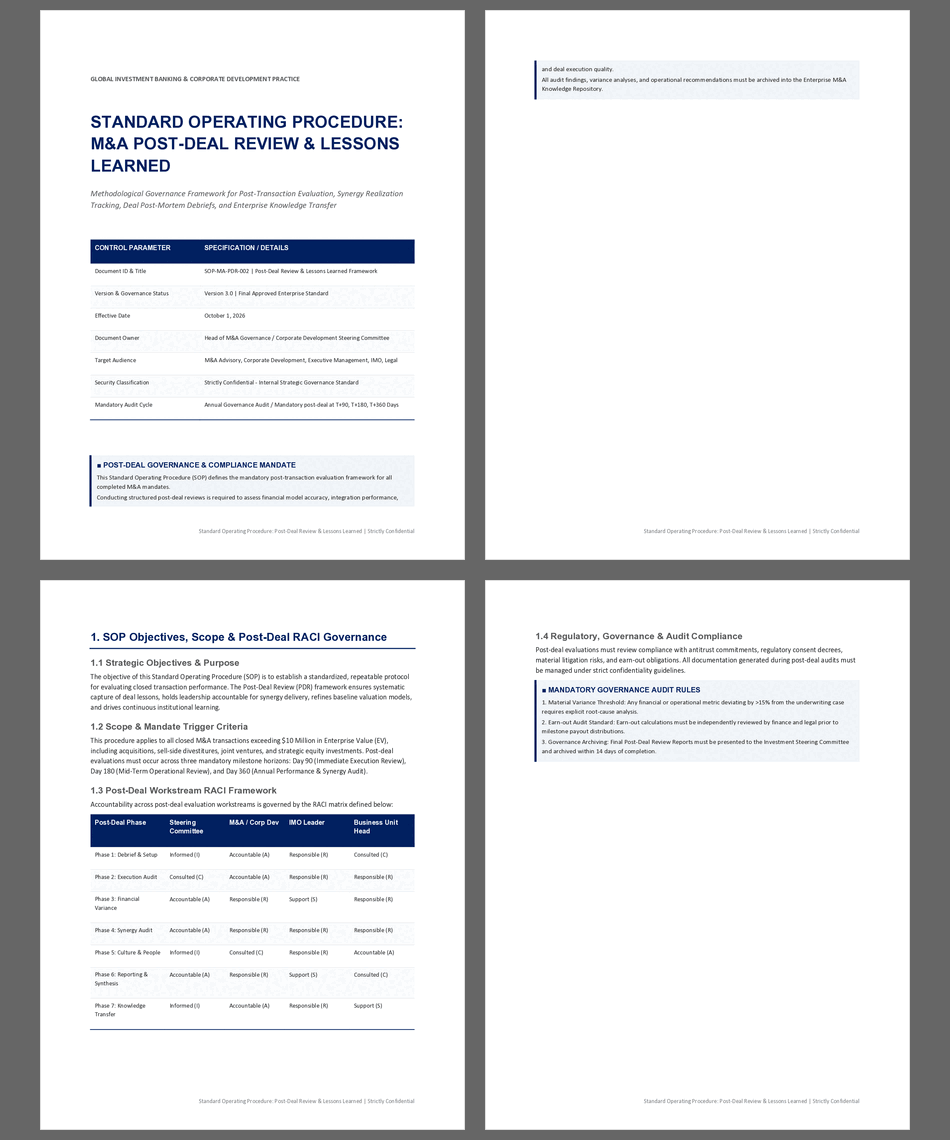
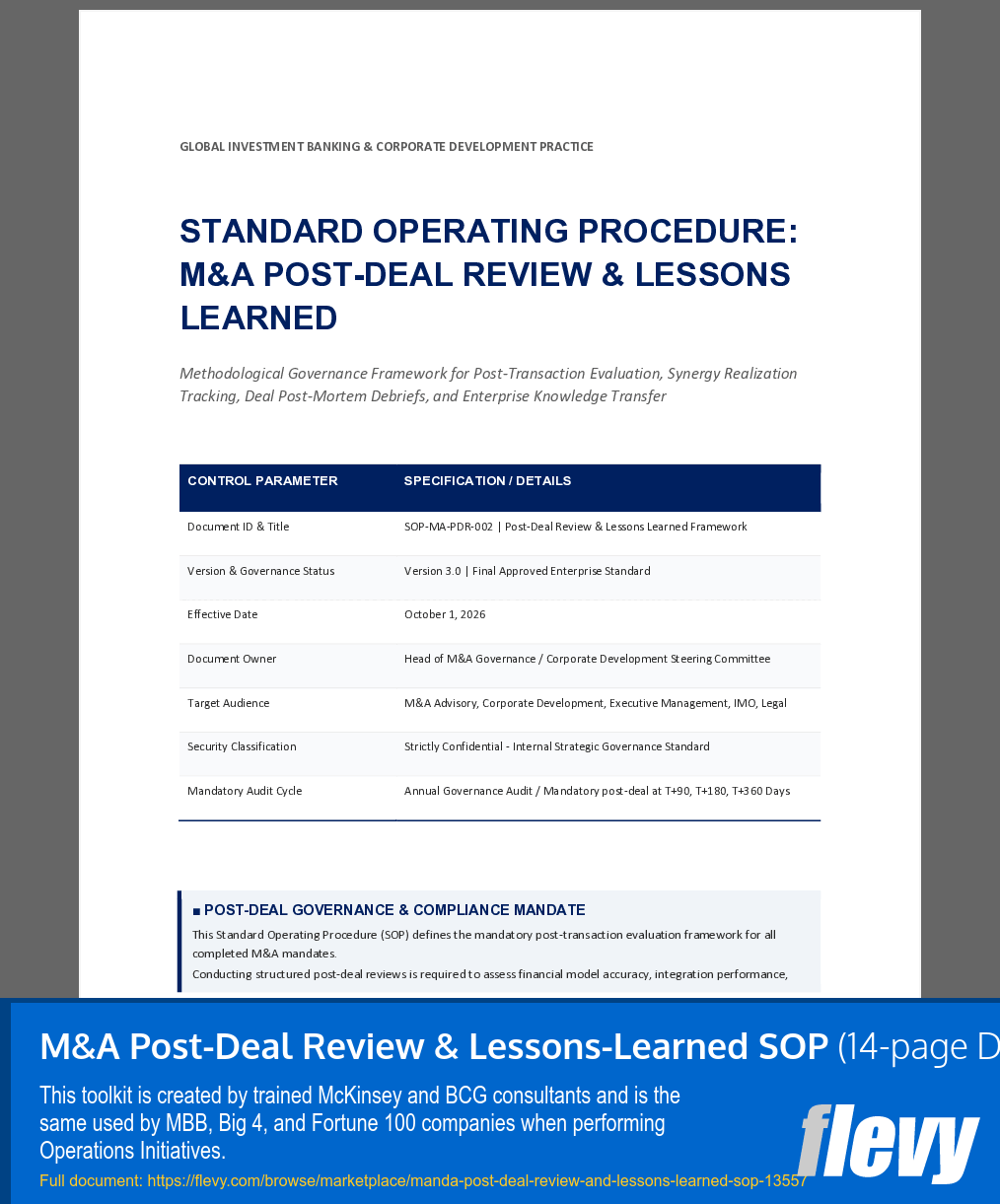
This downloadable Microsoft Word document provides an institutional-grade, end-to-end M&A Post-Deal Review, Synergy Realization & Lessons-Learned Governance Framework covering transaction debriefs, diligence assumption testing, financial model reconciliation, valuation true-ups, synergy tracking, integration performance, talent retention, cultural integration, root-cause analysis, executive scorecards, and enterprise knowledge transfer. Built specifically for M&A Managing Directors, Corporate Development Leaders, Investment Banking Deal Teams, Executive Management, Investment Steering Committees, Integration Management Offices (IMO), Corporate Controllers, Finance Leaders, HR Executives, Legal Counsel, and M&A Governance Teams, it establishes a controlled framework for measuring whether closed transactions delivered against the original investment thesis, identifying sources of value leakage, holding integration leaders accountable for synergy delivery, and converting transaction experience into institutional M&A knowledge.
Section 1 – Post-Deal Governance, Objectives & RACI Framework
• Enterprise-wide M&A Post-Deal Governance Architecture designed to standardize post-transaction evaluation, measure investment thesis performance, identify execution failures, and institutionalize lessons learned across the M&A portfolio.
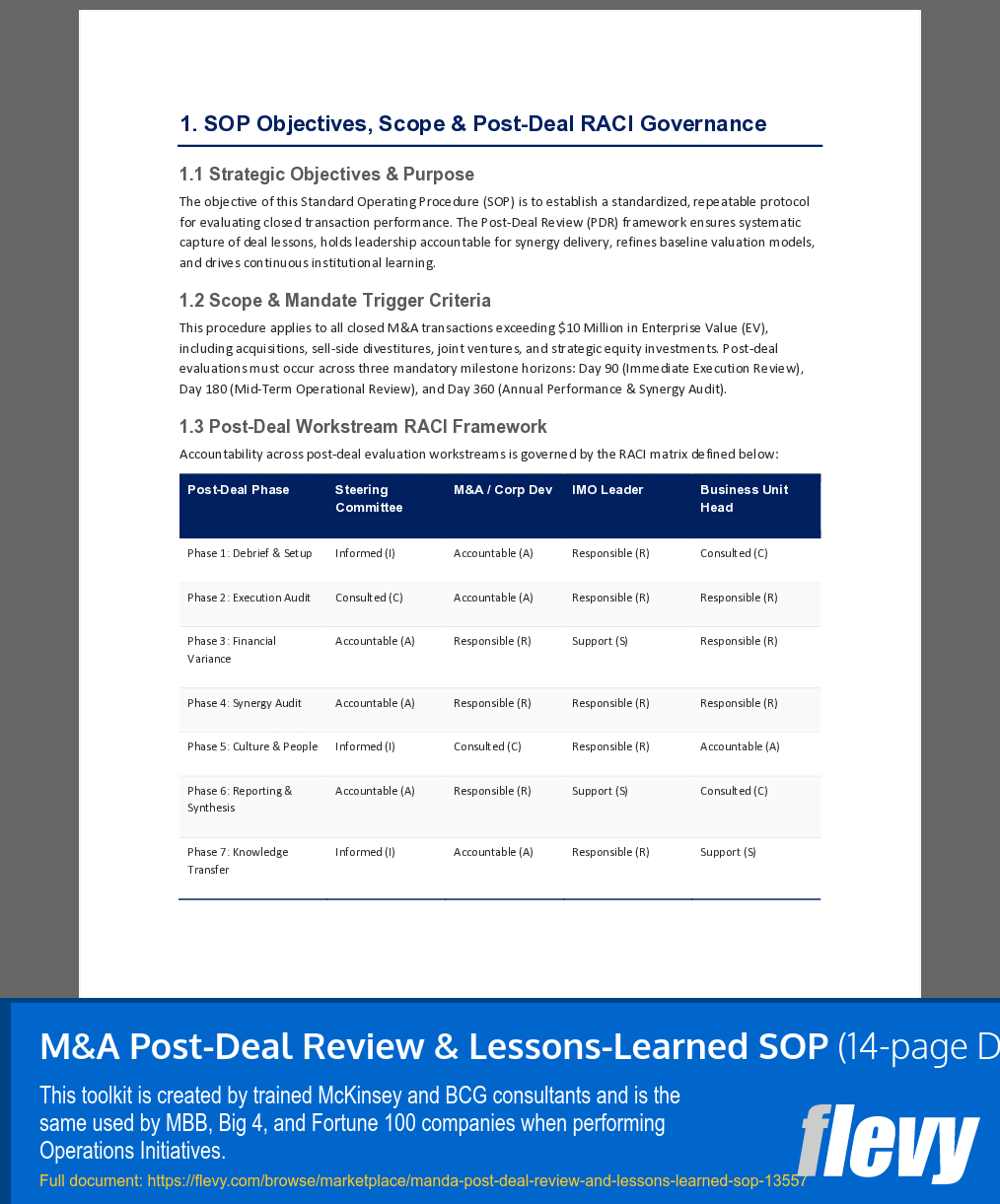
• Comprehensive applicability across acquisitions, sell-side divestitures, joint ventures, strategic equity investments, and other qualifying M&A transactions exceeding $10 Million in Enterprise Value.
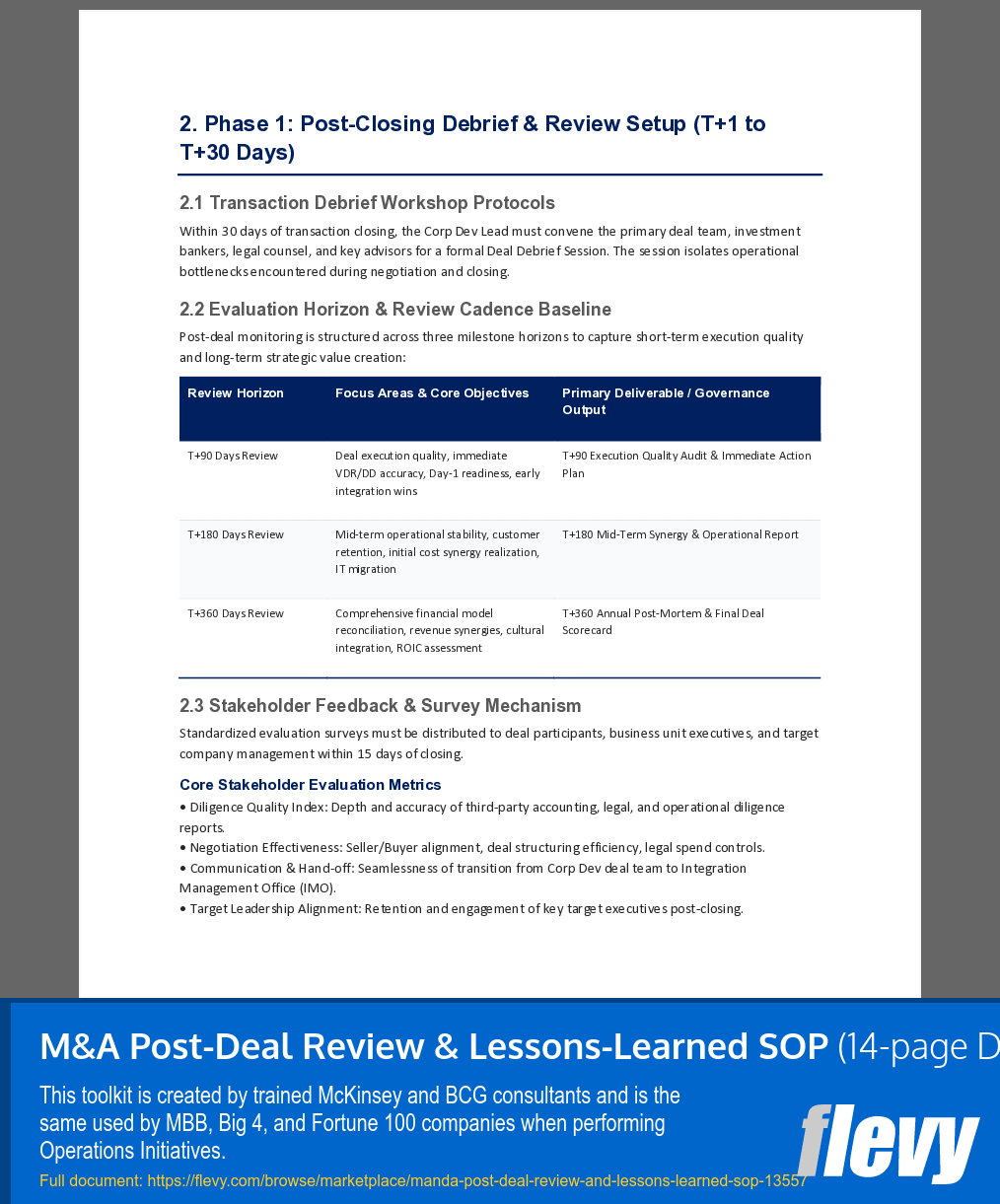
• Mandatory post-deal review cadence across T+90, T+180, and T+360 Days, creating a structured evaluation framework from immediate execution review through annual performance assessment.
• Institutional Post-Deal RACI Matrix assigning accountability across the Steering Committee, M&A / Corporate Development, Integration Management Office, and Business Unit leadership.
• Governance requirements covering financial variance escalation, synergy accountability, regulatory compliance, earn-out verification, audit documentation, executive reporting, and knowledge repository archiving.
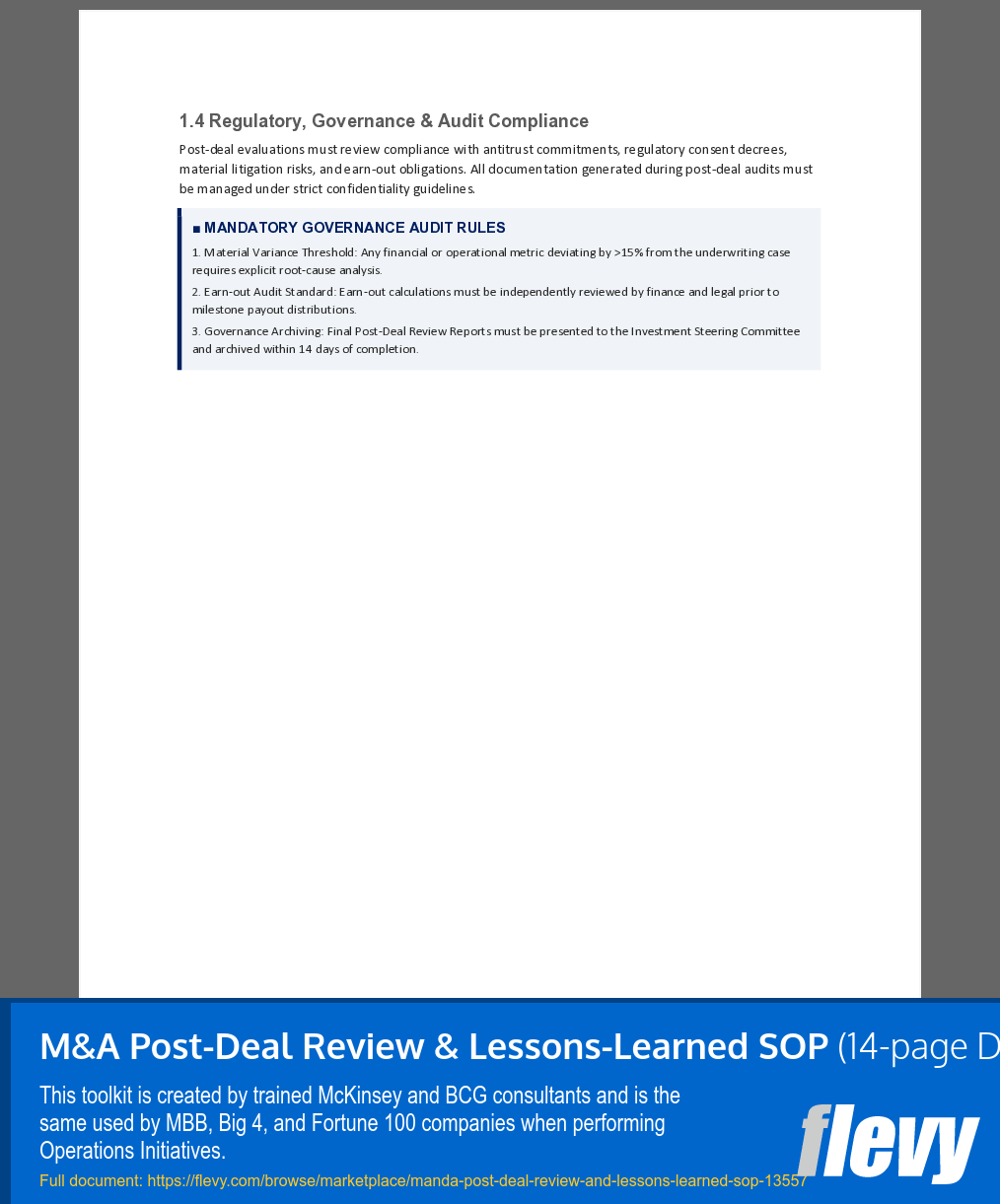
• Mandatory Material Variance Threshold requiring documented root-cause analysis for financial or operational metrics deviating by more than 15% from the original underwriting case.
• Formal Earn-Out Audit Standard requiring independent Finance and Legal review of earn-out calculations before milestone-based distributions.
• Controlled governance archiving requiring final Post-Deal Review Reports to be presented to the Investment Steering Committee and archived within the prescribed governance period.
Section 2 – Post-Closing Debrief, Stakeholder Feedback & Review Setup
• Controlled Post-Closing Deal Debrief Workshop Protocol requiring formal review with the original deal team, investment bankers, legal counsel, advisors, and key transaction stakeholders.
• Structured debrief methodology designed to isolate negotiation bottlenecks, diligence limitations, closing-process issues, communication failures, and transition weaknesses.
• Formal Post-Deal Review Horizon Framework distinguishing T+90 Execution Quality, T+180 Operational & Synergy Performance, and T+360 Annual Performance & Investment Thesis Assessment.
• Standardized Stakeholder Evaluation Survey Mechanism capturing feedback from transaction participants, business unit executives, target management, and other critical stakeholders.
• Diligence Quality Index designed to assess the depth, accuracy, timeliness, and decision-usefulness of financial, legal, operational, commercial, and other diligence workstreams.
• Negotiation Effectiveness Assessment evaluating transaction structure, seller/buyer alignment, legal execution, negotiation efficiency, and transaction-cost discipline.
• Communication & Hand-Off Evaluation measuring the effectiveness of transition from the Corporate Development deal team to the Integration Management Office.
• Target Leadership Alignment Assessment evaluating executive retention, management engagement, decision-making continuity, and post-closing leadership stability.
Section 3 – Diligence Assumption & Underwriting Reality Audit
• Institutional Pre-Deal Assumption vs. Post-Close Reality Verification Framework requiring line-by-line comparison of original diligence conclusions and underwriting assumptions against actual operating conditions.
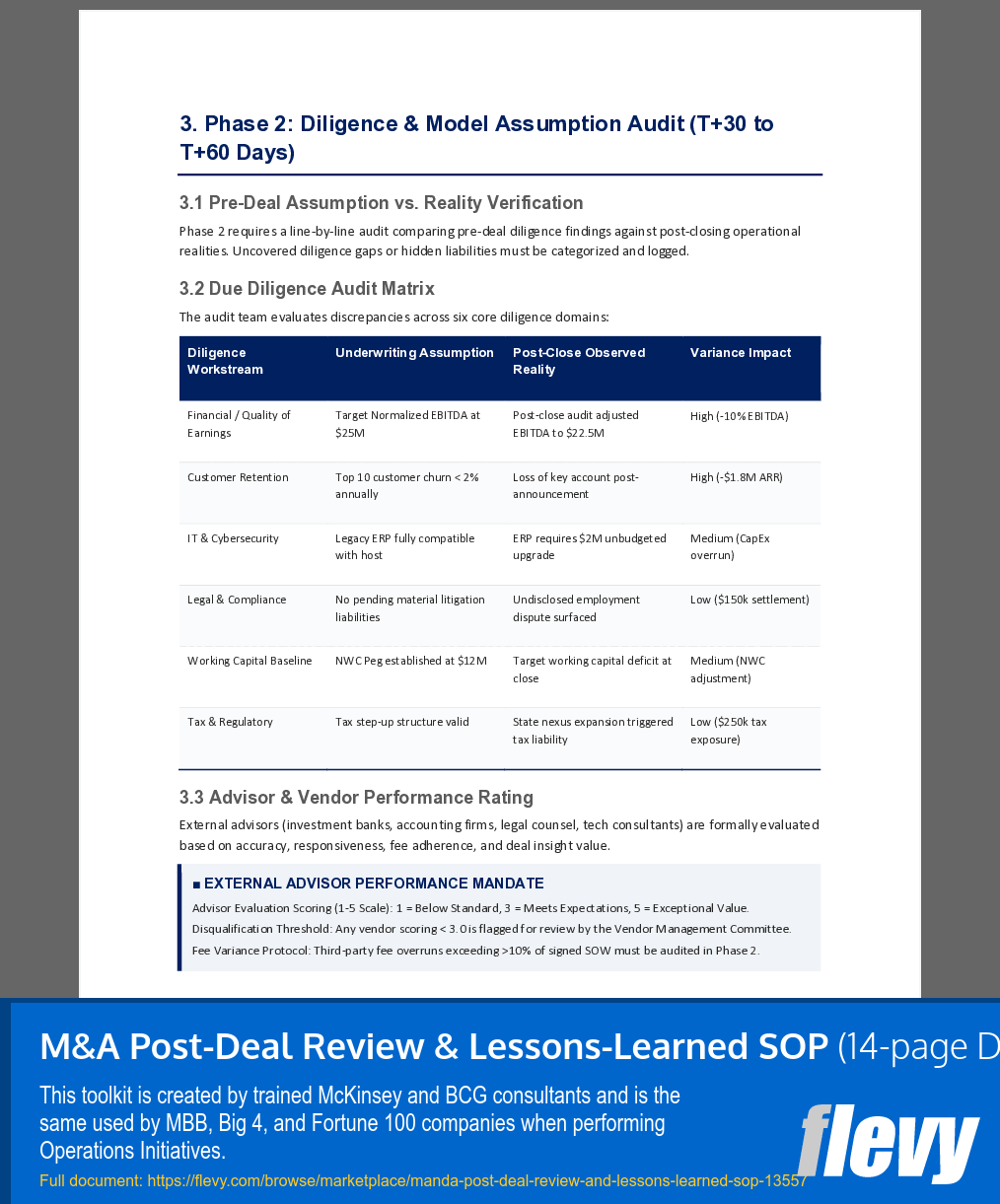
• Comprehensive Diligence Audit Matrix covering Financial / Quality of Earnings, Customer Retention, IT & Cybersecurity, Legal & Compliance, Working Capital, Tax, Regulatory, and other material diligence domains.
• Formal identification and categorization of diligence gaps, hidden liabilities, missed risks, inaccurate assumptions, unsupported adjustments, and post-closing surprises.
• Structured variance-impact methodology linking diligence findings to EBITDA, ARR, CapEx, working capital, tax exposure, enterprise value, and transaction economics.
• Mandatory documentation of whether identified variances resulted from incomplete diligence, inaccurate management representations, insufficient third-party analysis, changing market conditions, execution failures, or underwriting judgment errors.
• Dedicated External Advisor Performance Evaluation Framework covering investment banks, accounting firms, legal counsel, technology consultants, commercial diligence providers, and other transaction advisors.
• Standardized 1–5 Advisor Performance Scoring Model evaluating accuracy, responsiveness, fee adherence, strategic insight, and overall transaction value.
• Mandatory escalation of vendors scoring below the prescribed performance threshold and formal audit requirements for third-party fee overruns exceeding the approved Statement of Work.
Section 4 – Financial Variance, Model True-Up & Valuation Reconciliation
• Institutional Financial Model True-Up Framework comparing actual post-close performance against the original Investment Committee deal model and underwriting case.
• Comprehensive financial variance analysis covering Revenue / ARR, Gross Margin, EBITDA Margin, CapEx, Net Working Capital, cash flow, ROIC, and other transaction-specific investment metrics.
• Mandatory Root-Cause Variance Analysis designed to distinguish temporary transition effects from structural underperformance and permanent changes to the investment thesis.
• Formal reconciliation of original EBITDA assumptions, revenue forecasts, margin expectations, working-capital requirements, capital expenditures, and operating-cost assumptions against actual post-close results.
• Dedicated Valuation Impact Assessment translating observed financial performance into revised enterprise value, equity value, cash-flow expectations, and investment-return implications.
• IRR Sensitivity Recalculation Framework requiring revised base-case and downside-case return analysis using actual Year 1 performance and updated forward assumptions.
• Payback Period Adjustment Analysis comparing original capital recovery expectations against actual and reforecasted cash-flow trajectories.
• Comprehensive Goodwill & Impairment Risk Assessment designed to identify potential impairment indicators and valuation pressure under applicable accounting frameworks.
• Formal recalculation of ROIC and transaction return metrics using updated LTM financial results and revised strategic forecasts.
Section 5 – Synergy Realization & Integration Management Office Performance
• Enterprise Synergy Realization Governance Framework designed to track cost savings, revenue synergies, implementation costs, owners, realization timelines, and confidence levels against the original underwriting case.
• Comprehensive Synergy Tracking Scorecard covering Headcount Optimization, Procurement Consolidation, IT Rationalization, Cross-Selling, Distribution, Facility Consolidation, and other transaction-specific value-creation initiatives.
• Mandatory distinction between underwritten synergy targets, realized synergies, costs to achieve, timing delays, forecast-at-completion, and confidence-to-realize.
• Formal Cost Synergy Governance Protocol designed to identify delayed savings, implementation barriers, organizational resistance, procurement limitations, and technology dependencies.
• Dedicated Revenue Synergy Performance Framework evaluating cross-selling, customer penetration, channel expansion, pricing opportunities, product bundling, and sales-ramp performance.
• Institutional Integration Management Office (IMO) Performance Audit measuring milestone adherence, integration budget compliance, operational continuity, and value-delivery effectiveness.
• Mandatory Milestone Compliance SLA requiring defined integration milestones to be delivered within approved timelines.
• One-Time Integration Budget Control Framework establishing escalation thresholds for costs required to achieve approved synergies.
• Business Continuity Governance Standard designed to protect customer relationships and core operations throughout integration activities.
• Structured escalation for At Risk, Behind Target, Delayed, and materially underperforming synergy workstreams.
Section 6 – Talent Retention, Culture & Organizational Integration
• Comprehensive Human Capital & Talent Retention Audit Framework designed to identify post-closing value leakage caused by executive departures, employee turnover, organizational instability, or ineffective retention programs.
• Formal Key Talent Retention Analysis covering designated executives, R&D personnel, sales teams, critical technical staff, and broader employee populations.
• Standardized retention analysis comparing baseline cohort size, retained personnel, actual turnover, retention targets, and critical-role vacancies.
• Executive Retention Package Effectiveness Assessment evaluating retention incentives, change-of-control arrangements, compensation structures, and leadership continuity.
• Dedicated Organizational Culture Integration Framework measuring cultural alignment between acquiring and target organizations across leadership, communication, decision rights, accountability, and employee engagement.
• Anonymous Employee Pulse Survey Protocol administered at defined post-close milestones to assess integration health and identify emerging cultural friction.
• Employee eNPS & Engagement Tracking Framework designed to identify changes in workforce sentiment and organizational advocacy following transaction close.
• Management Alignment Assessment evaluating strategic clarity, leadership cohesion, decision authority, reporting structures, and organizational accountability.
• Mandatory identification of operational friction points, communication breakdowns, leadership gaps, retention risks, and culture-related integration barriers.
Section 7 – Comprehensive Post-Deal Reporting, Scorecard & Root-Cause Analysis
• Institutional T+360 Post-Deal Executive Synthesis Report consolidating financial, valuation, synergy, integration, talent, culture, diligence, and transaction-execution findings into a single executive governance document.
• Comprehensive Balanced Post-Deal Scorecard Framework evaluating transaction performance across Financial & Valuation, Synergy Capture, Integration Execution, and Talent & Culture dimensions.
• Weighted transaction scoring methodology producing a 100-point composite deal-performance rating and standardized performance classification.
• Formal comparison of investment thesis, underwriting case, realized performance, revised forecasts, and strategic objectives.
• Dedicated Transaction Success Classification Framework designed to distinguish successful transactions, transactions requiring corrective action, underperforming transactions, and transactions requiring executive escalation.
• Mandatory Root-Cause Analysis Protocol for scorecard dimensions falling below prescribed performance thresholds.
• Structured 5-Whys RCA Methodology designed to move beyond surface-level symptoms and identify structural failures in underwriting, diligence, negotiation, integration planning, governance, or execution.
• Mandatory Corrective Action Plan Framework converting root causes into specific process improvements for future transactions.
• Executive reporting designed to provide the CEO, CFO, Investment Steering Committee, and Corporate Development leadership with a concise view of transaction performance, value creation, risks, and required remediation.
Section 8 – Knowledge Transfer, Playbook Refinement & Enterprise Archiving
• Enterprise M&A Lessons-Learned & Knowledge Transfer Framework designed to convert transaction experience into reusable institutional intelligence.
• Mandatory integration of Post-Deal Review findings into the firm's M&A Playbook, valuation templates, diligence checklists, negotiation guidelines, integration planning standards, and governance procedures.
• Structured Continuous Process Improvement Framework categorizing lessons across Valuation & Modeling, Diligence & VDR, Negotiation & SPA, Integration & IMO, Finance, Technology, HR, and other M&A operating domains.
• Formal Playbook Revision Protocol requiring material post-deal findings to result in documented changes to future transaction procedures where appropriate.
• Dedicated M&A Knowledge Repository Archiving Standard covering final post-deal reports, model reconciliations, survey outputs, synergy scorecards, advisor evaluations, RCA findings, and executive scorecards.
• Controlled retention requirements designed to preserve institutional transaction knowledge for future M&A training, benchmarking, underwriting improvement, and transaction execution reference.
• Restricted-access governance framework protecting sensitive transaction information while enabling authorized Corporate Development, IMO, Finance, and Legal stakeholders to leverage historical lessons.
• Structured Enterprise Learning Feedback Loop designed to prevent repeated diligence failures, recurring integration issues, inaccurate synergy assumptions, and avoidable valuation-model errors across future transactions.
Section 9 – Appendices, Master Checklists & Executive Governance Sign-Off
• Appendix A: Master Post-Deal Review Execution Timeline mapping mandatory activities and deliverables from T+30 through T+360 Days.
• Appendix B: Comprehensive Post-Deal Quality Control & Governance Sign-Off Framework covering Corporate Development, Finance, IMO, HR, and executive leadership responsibilities.
• Mandatory milestone deliverables covering Transaction Debrief, Stakeholder Survey, Diligence Audit, Advisor Scorecard, Financial Reconciliation, Synergy Audit, Talent Retention Review, Cultural Integration Assessment, IMO Audit, and Final Executive Post-Deal Review.
• Formal Executive Scorecard Presentation Framework requiring final transaction-performance conclusions to be presented to the Investment Steering Committee.
• Comprehensive Post-Deal Master Checklist designed to verify completion of every required review, variance analysis, governance approval, corrective action, and knowledge-transfer activity.
• Final governance certification and sign-off structure for the Head of Corporate Development, Chief Financial Officer, and Head of Integration Management Office.
• Controlled completion framework establishing the Post-Deal Review as a formal enterprise M&A governance requirement rather than an informal lessons-learned exercise.
Designed as a complete post-transaction governance operating standard—not simply a lessons-learned checklist—this SOP gives investment banking and corporate development teams a structured framework for evaluating the entire M&A value-creation lifecycle after closing, from transaction debrief and diligence assumption testing through financial model reconciliation, valuation true-up, synergy realization, integration execution, talent retention, cultural alignment, root-cause analysis, executive scorecarding, and enterprise knowledge transfer. It transforms post-deal analysis into a repeatable governance discipline that helps leadership identify value leakage, improve underwriting accuracy, strengthen integration accountability, refine transaction processes, and systematically convert every completed deal into actionable institutional M&A intelligence.
Keywords: Process Audit SOPs, Internal Audit Standard Operating Procedures, Process Audit Framework, Control Testing Procedures, Risk Assessment Methodologies, Audit Governance, Process Audit Strategy, Audit Evidence Collection, Compliance Audit SOPs, Continuous Auditing, Process Mapping, Audit Documentation Standards, Audit Quality Assurance, Process Risk Management, Operational Risk Audit, Enterprise Audit Management, Audit Committee Reporting, Audit Analytics, Process Mining, AI-Assisted Auditing, Audit Technology SOPs, Global Process Audit, Audit Playbooks, Audit Templates, Audit Training Programs, Audit Remediation Management, Audit Excellence, Process Audit Toolkit, McKinsey Audit Framework, Audit Best Practices, Enterprise Governance, Internal Control Assessment, Audit Procedures Manual, Audit Program Design, Audit Resource Planning, Audit Scheduling, Audit Efficiency, Audit Effectiveness, Audit Performance Metrics, Audit KPIs, Audit ROI, Audit Value Creation, Process Optimization, Operational Excellence, Business Process Audit, Functional Audit, Departmental Audit, Transactional Audit, Service Audit, Administrative Process Audit, Supply Chain Process Audit, Finance Process Audit, IT Process Audit, HR Process Audit, Procurement Process Audit, Sales Process Audit, Customer Service Audit, Production Audit, Quality Audit, Compliance Testing, Regulatory Audit, Policy Compliance, Procedure Audit, Documentation Audit, Audit Trail Review, Exception Management, Control Design, Control Effectiveness, Control Testing, Preventive Controls, Detective Controls, Corrective Actions, Root Cause Analysis, Finding Classification, Audit Report Writing, Executive Summaries, Audit Communication, Stakeholder Engagement, Process Owner Engagement, Management Accountability, Audit Committee Governance, Audit Charter, Audit Independence, Auditor Ethics, Professional Skepticism, Audit Competency, Audit Training, Audit Certification, Audit Standards (IIA, IAASB), Audit Best Practices, Audit Methodology, Audit Framework, Audit Operating Model, Process Audit Excellence, Audit Mastery, Fortune 500 Audit, Enterprise Audit Operations, Corporate Audit Function, Strategic Audit Planning, Transformation Audit, Digital Audit, Innovation Audit, Benchmarking Audit, Maturity Assessment, Audit Scaling, Audit Outsourcing, Co-Sourcing Models, Vendor Management, Audit Technology Stack, Audit Tools, Audit Software, Continuous Monitoring, Predictive Analytics, Anomaly Detection, Data Quality, Process Intelligence, Workflow Analytics, Business Process Management, Process Automation, RPA Audit, AI Governance, Responsible AI Audit, Cybersecurity Audit, Data Governance Audit, Privacy Audit, Information Security, Audit Evidence Standards, Working Papers, Audit Documentation, Audit File Management, Audit Records Retention, Audit Trail Integrity, Audit Report Confidentiality, Multi-Site Audit Coordination, Global Audit Strategy, International Audit Standards, Regional Audit Compliance, Cultural Considerations in Audit, Localization of Audit Procedures, Process Transformation Audit, Business Reengineering Audit, Change Audit, Operational Change, Audit Change Management, Audit Communication Plan, Audit Stakeholder Communication, Audit Performance Review, Audit Function Review, Strategic Review Process, Audit Leadership Development, Audit Team Development, Audit Coaching, Audit Supervision, Audit Career Progression, Audit Knowledge Management, Audit Playbook Development, Audit Template Library, Audit Standards Documentation, Audit Policy Manual, Lessons Learned Capture, Best Practice Sharing, Audit Continuous Improvement, Audit Methodology Enhancement, Audit Process Optimization, Audit Efficiency Improvement, Audit Effectiveness Enhancement, Audit Quality Improvement, Audit Risk Management, Audit Risk Register, Audit Issue Management, Audit Action Tracking, Audit Metrics Dashboard, Audit Performance Dashboard, Audit Scorecard, Audit Balanced Scorecard, KPI Framework for Audit, Audit Success Factors, Critical Success Factors in Audit, Audit Strategic Objectives, Audit Vision Statement, Audit Mission Statement, Audit Values and Ethics, Audit Culture, Audit Maturity Model, Audit Capability Model, Audit Competency Framework, Professional Development in Audit, Audit Certification Programs, Internal Audit Standards, Audit Best Practices Guide, Audit Reference Manual, Audit Operating Manual, Audit Procedures Manual, Audit Program Manual, McKinsey Audit Excellence, Deloitte Audit Framework, EY Audit Approach, KPMG Audit Methodology, Big 4 Audit Standards, Audit Industry Benchmarks, Audit Industry Standards, Audit Thought Leadership, Audit Innovation, Audit Transformation Program, Audit Digital Transformation, Audit Process Transformation, Audit Service Transformation, Audit Operating Model Transformation, Audit Function Evolution, Audit Future-Proofing, Emerging Trends in Audit, Audit 2025 Roadmap, Audit Strategic Priorities, Audit Strategic Planning, Audit Strategic Execution, Audit Implementation Plan, Audit Deployment Strategy, Audit Rollout Plan, Audit Quick-Start Guide, Audit Implementation Guide, Audit User Guide, Audit Handbook, Audit Manual, Audit Documentation Standard, Audit Work Standards, Audit Quality Standards, Audit Performance Standards, Audit Excellence Standards, Enterprise Audit Excellence, Audit Mastery Program, Audit Excellence Initiative, Audit Excellence Framework, Audit Excellence Culture, Audit Excellence Mindset, Strategic Audit Excellence, Operational Audit Excellence, Financial Audit Excellence, Compliance Audit Excellence, Quality Audit Excellence, Process Audit Excellence, Audit Excellence ROI, Audit Excellence Value Creation, Audit Excellence Competitive Advantage, Audit Excellence Strategic Advantage, Audit Excellence Performance Advantage, Audit Excellence Organizational Advantage, Inventory Management, Demand Planning, Inventory Optimization, Inventory Control, Supply Chain Management, Warehouse Operations, Replenishment Strategy, Inventory Analytics, WIP Reduction, Inventory Accuracy, Distribution Network, Inventory Forecasting, Supply Chain Excellence, Working Capital, Inventory KPIs, Procurement Strategy, Inventory Governance, Inventory SOPs, Continuous Improvement, Supply Chain Transformation, GenAI deployment SOPs, generative AI operating model, enterprise AI governance framework, AI Center of Excellence, responsible AI, AI risk management, AI use case prioritization, GenAI implementation roadmap, AI vendor selection, prompt engineering standards, AI compliance, AI adoption strategy, generative AI across value chain, AI strategy, enterprise transformation, AI implementation, AI scaling framework
Strategy & Transformation, Growth Strategy, Strategic Planning, Strategy Frameworks, Innovation Management, Pricing Strategy, Core Competencies, Strategy Development, Business Transformation, Marketing Plan Development, Product Strategy, Breakout Strategy, Competitive Advantage, Mission, Vision, Values, Strategy Deployment & Execution, Innovation, Vision Statement, Core Competencies Analysis, Corporate Strategy, Product Launch Strategy, BMI, Blue Ocean Strategy, Breakthrough Strategy, Business Model Innovation, Business Strategy Example, Corporate Transformation, Critical Success Factors, Customer Segmentation, Customer Value Proposition, Distinctive Capabilities, Enterprise Performance Management, KPI, Key Performance Indicators, Market Analysis, Market Entry Example, Market Entry Plan, Market Intelligence, Market Research, Market Segmentation, Market Sizing, Marketing, Michael Porter's Value Chain, Organizational Transformation, Performance Management, Performance Measurement, Platform Strategy, Product Go-to-Market Strategy, Reorganization, Restructuring, SWOT, SWOT Analysis, Service 4.0, Service Strategy, Service Transformation, Strategic Analysis, Strategic Plan Example, Strategy Deployment, Strategy Execution, Strategy Frameworks Compilation, Strategy Methodologies, Strategy Report Example, Value Chain, Value Chain Analysis, Value Innovation, Value Proposition, Vision Statement, Corporate Strategy, Business Development, Business plan pdf, business plan, PDF, Business Plan DOC, Business Plan Template, PPT, Market strategy playbook, strategic market planning, competitive analysis tools, market segmentation frameworks, growth strategy templates, product positioning strategy, market execution toolkit, strategic alignment playbook, KPI and OKR frameworks, business growth strategy guide, cross-functional strategy templates, market risk management, market strategy PowerPoint doc, guide, ebook, e-book ,McKinsey Change Playbook, Organizational change management toolkit, Change management frameworks 2025, Influence model for change, Change leadership strategies, Behavioral change in organizations, Change management PowerPoint templates, Transformational leadership in change, supply chain KPIs, supply chain KPI toolkit, supply chain PowerPoint template, logistics KPIs, procurement KPIs, inventory management KPIs, supply chain performance metrics, manufacturing KPIs, supply chain dashboard, supply chain strategy KPIs, reverse logistics KPIs, sustainability KPIs in supply chain, financial supply chain KPIs, warehouse KPIs, digital supply chain KPIs, 1200 KPIs, supply chain scorecard, KPI examples, supply chain templates, Corporate Finance SOPs, Finance SOP Excel Template, CFO Toolkit, Finance Department Procedures, Financial Planning SOPs, Treasury SOPs, Accounts Payable SOPs, Accounts Receivable SOPs, General Ledger SOPs, Accounting Policies Template, Internal Controls SOPs, Finance Process Standardization, Finance Operating Procedures, Finance Department Excel Template, FP&A Process Documentation, Corporate Finance Template, Finance SOP Toolkit, CFO Process Templates, Accounting SOP Package, Tax Compliance SOPs, Financial Risk Management Procedures.
NOTE: Our digital products are sold on an "as is" basis, making returns and refunds unavailable post-download. Please preview and inquire before purchasing. Please contact us before purchasing if you have any questions! This policy aligns with the standard Flevy Terms of Usage.
Got a question about the product? Email us at support@flevy.com or ask the author directly by using the "Ask the Author a Question" form. If you cannot view the preview above this document description, go here to view the large preview instead.
Source: Best Practices in M&A (Mergers & Acquisitions), Post-merger Integration Word: M&A Post-Deal Review & Lessons-Learned SOP Word (DOCX) Document, SB Consulting
ABOUT THE AUTHOR
SB Consulting is dedicated to empowering businesses to communicate their ideas with impact. This consulting firm specializes in teaching organizations how to create effective corporate and management presentations. With training from top-tier global consulting firms, including McKinsey, BCG, and Porsche Consulting, extensive expertise in presentation design and ... [read more]
Ask the Author a Question
You must be logged in to contact the author.




























