This presentation has a total of 82 slides and is split in to 2 parts:
Part 1 comprises of:
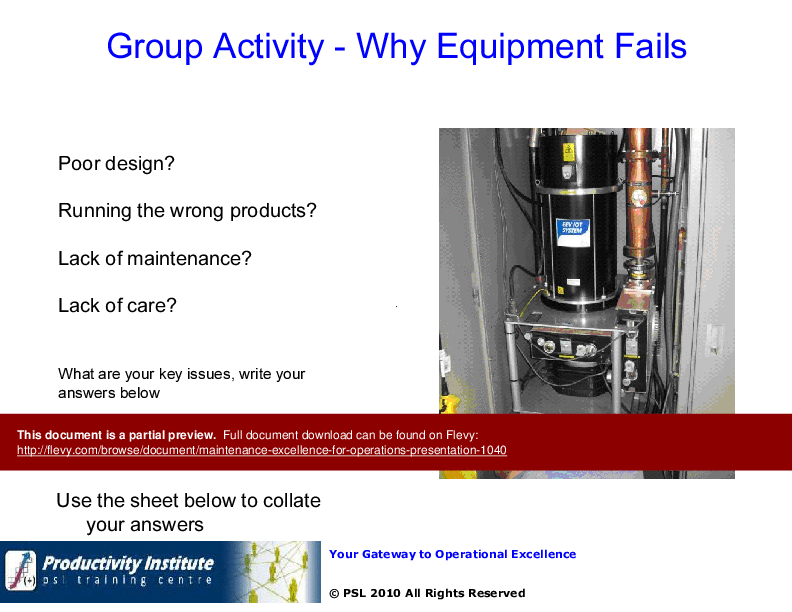
Why Equipment Fails
Measuring Equipment Performance
Getting it under control
Maintenance Strategies
Workplace projects
Part 2 comprises of:
Improving and monitoring equipment
Maintenance standards for operators
Workplace projects
Got a question about the product? Email us at support@flevy.com or ask the author directly by using the "Ask the Author a Question" form. If you cannot view the preview above this document description, go here to view the large preview instead.
Executive Summary
The Maintenance Excellence for Operations presentation is designed to enhance operational efficiency through effective maintenance strategies and equipment performance metrics. Developed by a Lean pioneer and certified LSS Master Black Belt, this presentation provides insights into the causes of equipment failure, measurement of performance, and proactive maintenance techniques. By leveraging this guide, organizations can stabilize equipment, improve team knowledge, and implement effective maintenance strategies to achieve operational excellence.
Who This Is For and When to Use
• Operations Managers focused on optimizing equipment performance
• Maintenance Teams responsible for implementing maintenance strategies
• Quality Assurance Teams monitoring equipment reliability
• Production Supervisors aiming to enhance operational efficiency
Best-fit moments to use this deck:
• During training sessions for maintenance staff and operators
• When developing or revising maintenance strategies
• In workshops focused on equipment performance improvement
• For team meetings aimed at addressing equipment-related challenges
Learning Objectives
• Define the causes of equipment failure and their impact on operations
• Build a framework for measuring equipment performance effectively
• Establish proactive maintenance strategies to enhance equipment reliability
• Identify and prioritize opportunities for equipment improvement
• Implement visual management techniques for maintenance practices
• Develop inspection checklists tailored to specific equipment needs
Table of Contents
• Introduction to Equipment Performance (page 3)
• Measuring Equipment Performance (page 5)
• Proactive Maintenance Solutions (page 10)
• Maintenance Strategies Overview (page 15)
• Group Activities and Discussions (page 20)
• Workplace Projects and Implementation (page 25)
Primary Topics Covered
• Equipment Failure Causes - Identifies major contributors to equipment failure, including contamination, lubrication issues, and vibration.
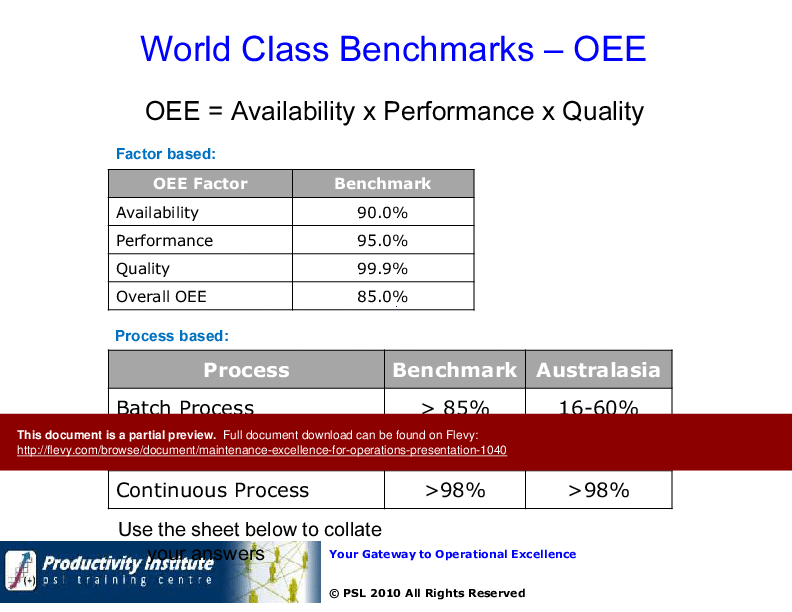
• Measuring Equipment Performance - Discusses metrics such as Overall Equipment Effectiveness (OEE) and its components: availability, performance, and quality.
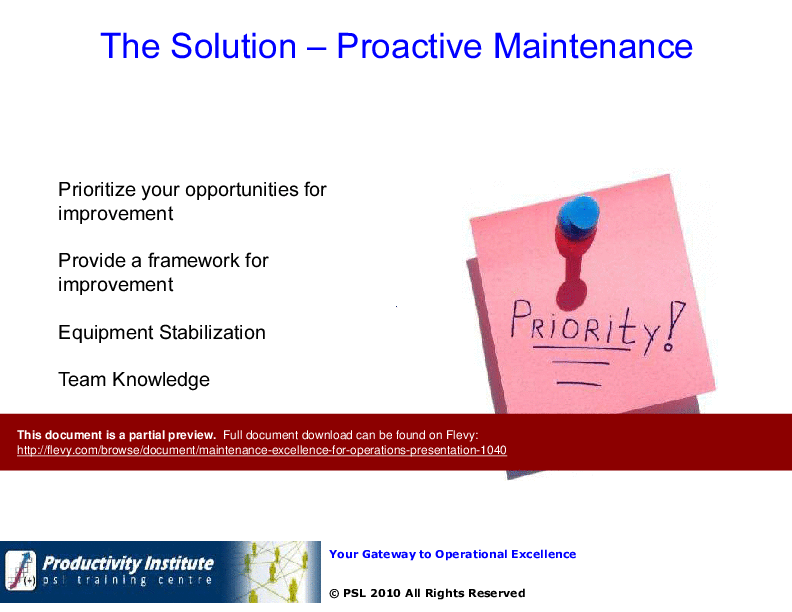
• Proactive Maintenance - Emphasizes the importance of prioritizing maintenance opportunities to stabilize equipment and enhance performance.
• Maintenance Strategies - Covers Total Productive Maintenance (TPM) and Reliability-Centered Maintenance (RCM) as frameworks for effective maintenance.
• Visual Management Techniques - Introduces methods for visualizing maintenance processes to improve operator awareness and response.
• Inspection Checklists - Provides templates for operator inspection checklists to ensure consistent equipment monitoring.
Deliverables, Templates, and Tools
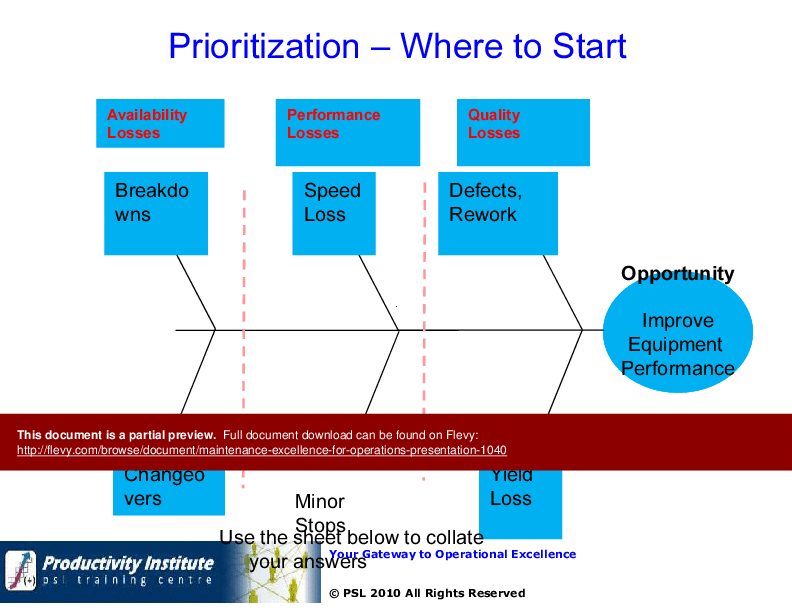
• OEE Fishbone Diagram for visualizing performance issues
• Improvement Opportunity Sheet for tracking potential enhancements
• Action Plan template for implementing maintenance strategies
• Operator Inspection Checklists for systematic equipment evaluation
• Visual Management tools for monitoring lubrication and alignment
• Tagging system for managing maintenance actions during inspections
Slide Highlights
• Overview of the 3 major contributors to equipment failure
• Detailed breakdown of Overall Equipment Effectiveness (OEE) calculations
• Visual aids illustrating lubrication and vibration management techniques
• Examples of effective inspection checklists for critical equipment
• Group activities designed to engage participants in identifying improvement opportunities
Potential Workshop Agenda
Introduction to Equipment Performance (30 minutes)
• Discuss the importance of equipment performance
• Identify major contributors to equipment failure
Measuring Equipment Performance (45 minutes)
• Introduce OEE and its components
• Engage in group activity to calculate OEE
Proactive Maintenance Solutions (60 minutes)
• Explore maintenance strategies like TPM and RCM
• Group discussion on current maintenance practices
Workplace Projects and Implementation (30 minutes)
• Present findings from group activities
• Develop action plans for implementing improvements
Customization Guidance
• Tailor the presentation to focus on specific equipment types relevant to your operations
• Adjust the inspection checklists to reflect unique operational contexts
• Incorporate company-specific terminology and metrics into the framework
• Modify group activities to align with team dynamics and objectives
Secondary Topics Covered
• Equipment stabilization techniques
• Importance of team knowledge in maintenance practices
• Strategies for reducing contamination in equipment
• Methods for managing lubrication effectively
• Visual management principles for maintenance processes
FAQ
What is Overall Equipment Effectiveness (OEE)?
OEE is a metric that measures the efficiency of a manufacturing process, calculated by multiplying availability, performance, and quality rates.
How can we identify the root causes of equipment failure?
Conduct thorough inspections and engage team members in identifying issues related to lubrication, contamination, and maintenance practices.
What are the benefits of proactive maintenance?
Proactive maintenance helps prevent equipment breakdowns, reduces downtime, and enhances overall operational efficiency.
How often should equipment inspections be conducted?
Inspection frequency should be based on equipment usage and manufacturer recommendations, ensuring that critical components are regularly monitored.
What strategies can be implemented to improve lubrication practices?
Develop clear standards, train staff, and utilize visual management techniques to ensure proper lubrication is maintained.
How can visual management improve maintenance processes?
Visual management techniques help operators quickly identify issues, track performance, and maintain awareness of equipment status.
What is the role of team knowledge in maintenance excellence?
A knowledgeable team can effectively identify problems, implement solutions, and maintain equipment reliability through proactive practices.
How do we prioritize maintenance opportunities?
Evaluate equipment performance data, identify critical failure points, and focus on areas that will yield the highest impact on overall efficiency.
Glossary
• OEE - Overall Equipment Effectiveness, a measure of manufacturing efficiency.
• TPM - Total Productive Maintenance, a proactive maintenance strategy aimed at maximizing equipment uptime.
• RCM - Reliability-Centered Maintenance, a strategy focusing on maintaining equipment reliability through predictive analysis.
• Lubrication - The process of applying a substance to reduce friction and wear between moving parts.
• Contamination - The presence of unwanted substances that can degrade equipment performance.
• Visual Management - Techniques used to make information about processes and performance visible to all team members.
• Inspection Checklist - A systematic list used to evaluate equipment condition and performance.
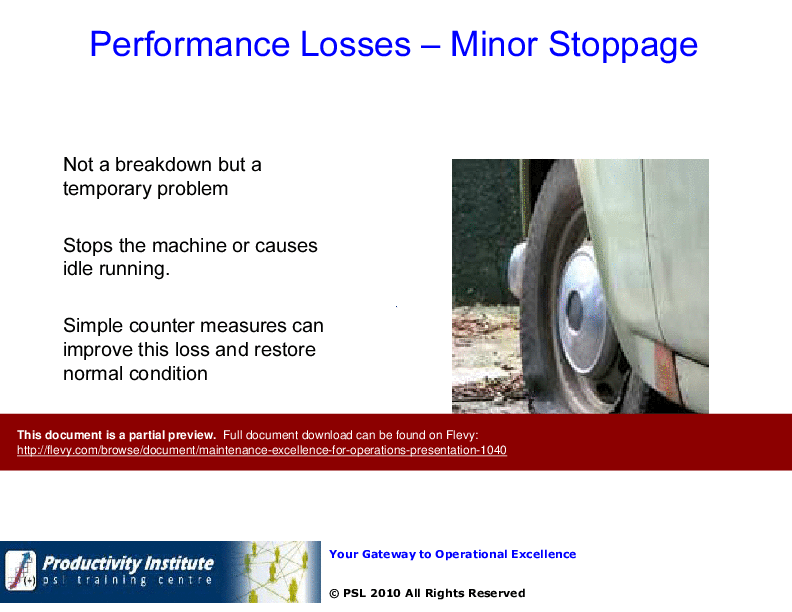
• Performance Losses - Losses incurred due to equipment operating below its designed speed or efficiency.
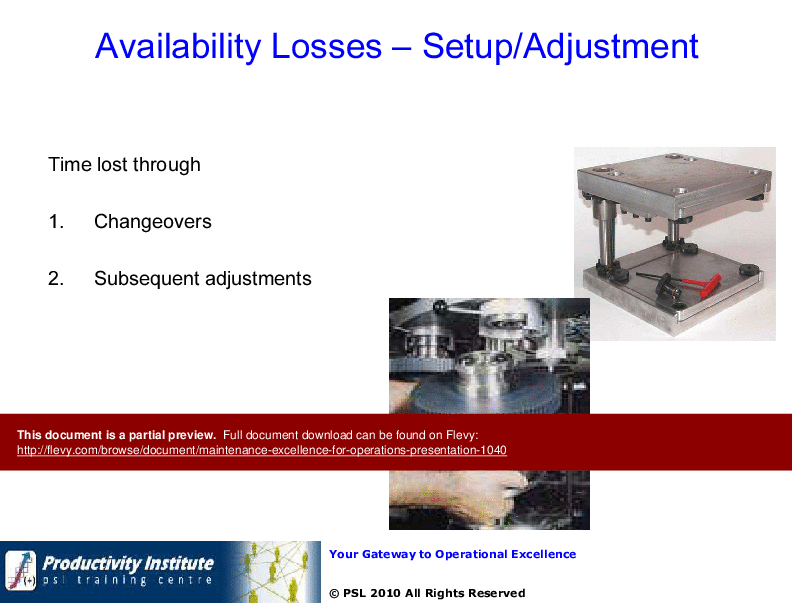
• Availability Losses - Downtime experienced due to equipment breakdowns or maintenance activities.
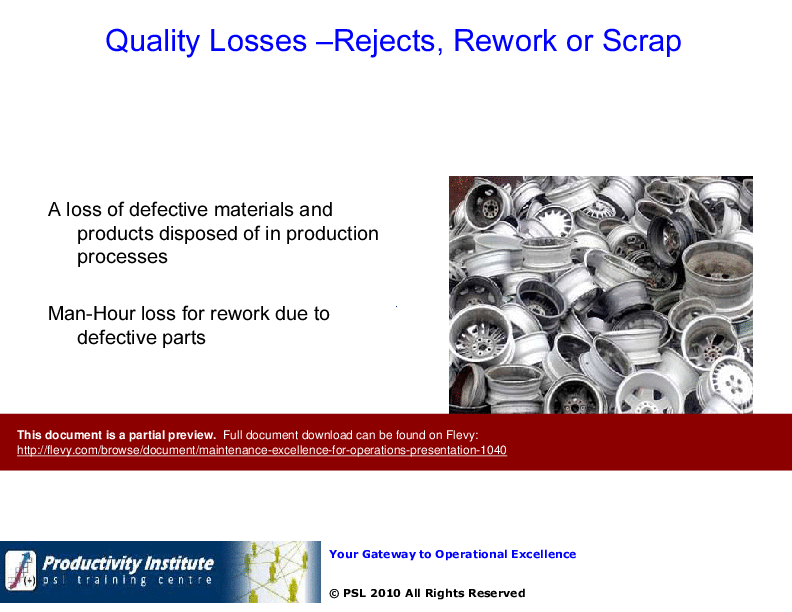
• Quality Losses - Losses associated with defective products or rework requirements.
• Maintenance Strategy - A plan outlining how maintenance activities will be conducted to ensure equipment reliability.
• Equipment Stabilization - The process of ensuring equipment operates consistently and reliably.
• Team Knowledge - The collective understanding and skills of a team related to equipment maintenance and operation.
• Action Plan - A detailed plan outlining steps to achieve specific maintenance goals.
• Improvement Opportunity Sheet - A document used to track potential enhancements in maintenance practices.
• Fishbone Diagram - A visual tool used to identify potential causes of a problem.
• Tagging System - A method for labeling equipment to track maintenance needs and actions.
• Daily Checks - Routine inspections performed to ensure equipment is functioning properly.
• Vibration Management - Techniques used to reduce and monitor vibration in machinery to prevent damage.
• Lubrication Standards - Established criteria for the type and frequency of lubrication required for equipment.
Source: Best Practices in Operational Excellence PowerPoint Slides: Maintenance Excellence for Operations PowerPoint (PPTX) Presentation Slide Deck, OpEx Academy NZ
|
Receive our FREE presentation on Operational Excellence
This 50-slide presentation provides a high-level introduction to the 4 Building Blocks of Operational Excellence. Achieving OpEx requires the implementation of a Business Execution System that integrates these 4 building blocks. |