
 Click main image to view in full screen.
Culture of Security – PowerPoint PPTX Template
PowerPoint (PPTX) 28 Slides FlevyPro Document


RISK MANAGEMENT PPT TEMPLATE DESCRIPTION
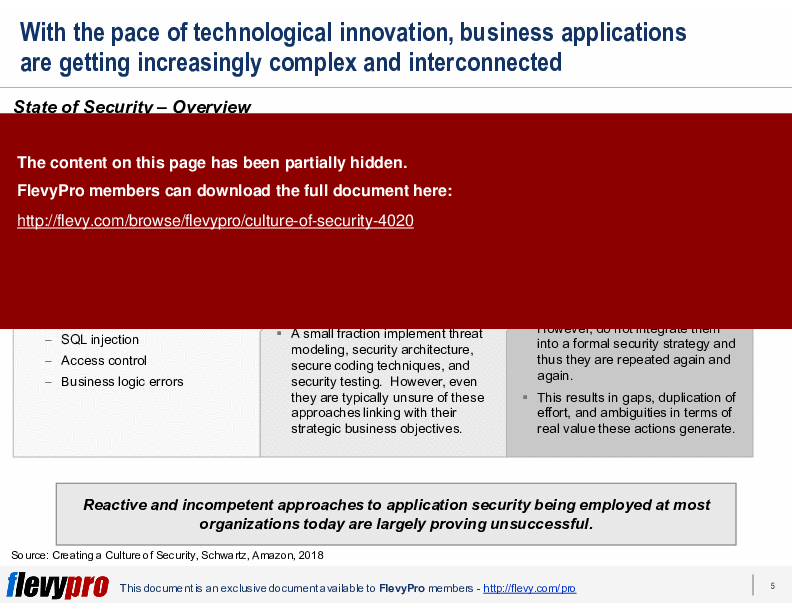
Advancement in technology, unfortunately, has helped attackers be more aggressive and capable of inflicting more damage to IT systems and infrastructure deployed at most enterprises today.
Application security tools and techniques are also evolving continuously. However, they are not up to the mark, as organizations still fall prey to vulnerabilities—e.g., cross-site scripting, SQL injection, access control, and business logic errors. The primary reason is failure to focus on establishing strong defenses against threats, merely doing patch work, and leaving the weaknesses unguarded.
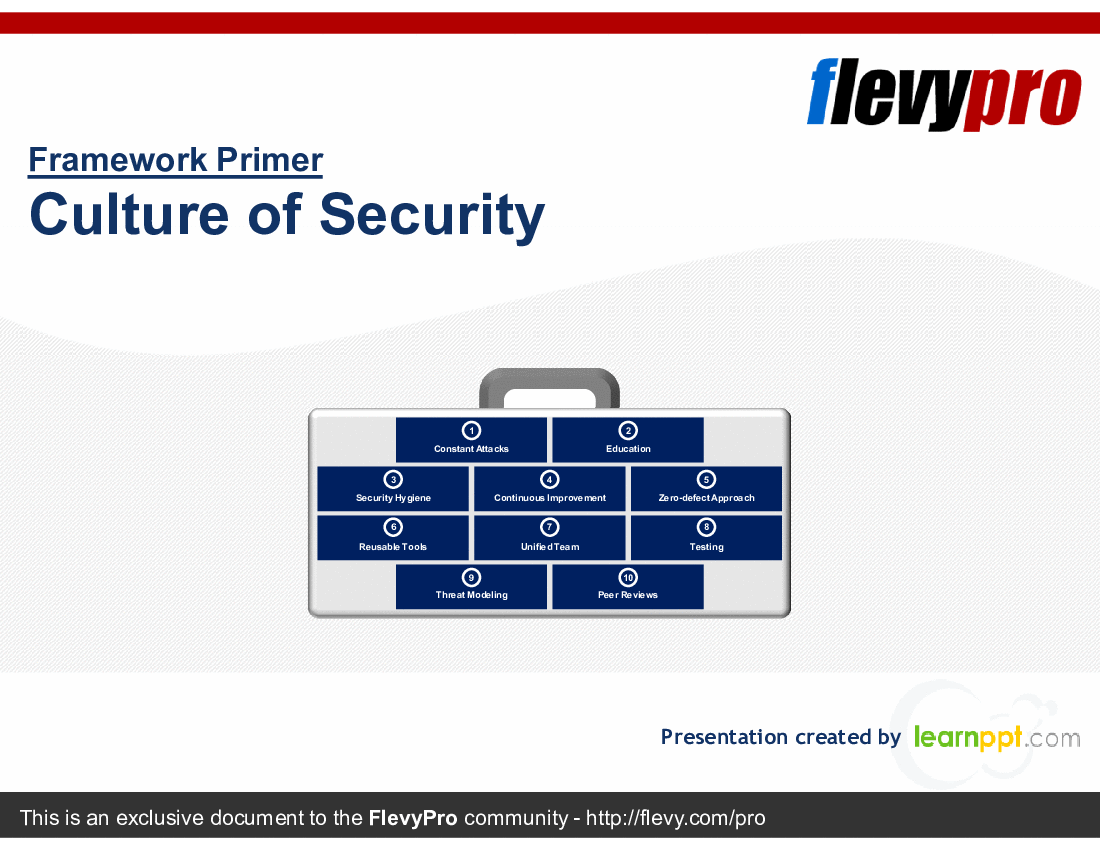
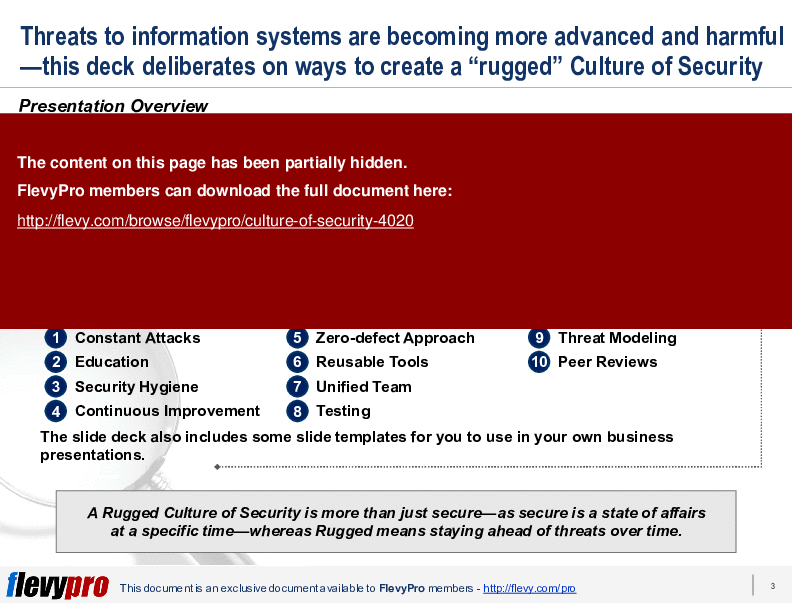
This deck provides a detailed overview of Rugged software, its development, and the guiding principles to enable a Rugged Culture of Security. The 10 guiding principles include:
1. Constant Attacks
2. Education
3. Security Hygiene
4. Continuous Improvement
5. Zero-defect Approach
6. Reusable Tools
7. Unified Team
8. Testing
9. Threat Modeling
10. Peer Reviews
The slide deck also includes some slide templates for you to use in your own business presentations.
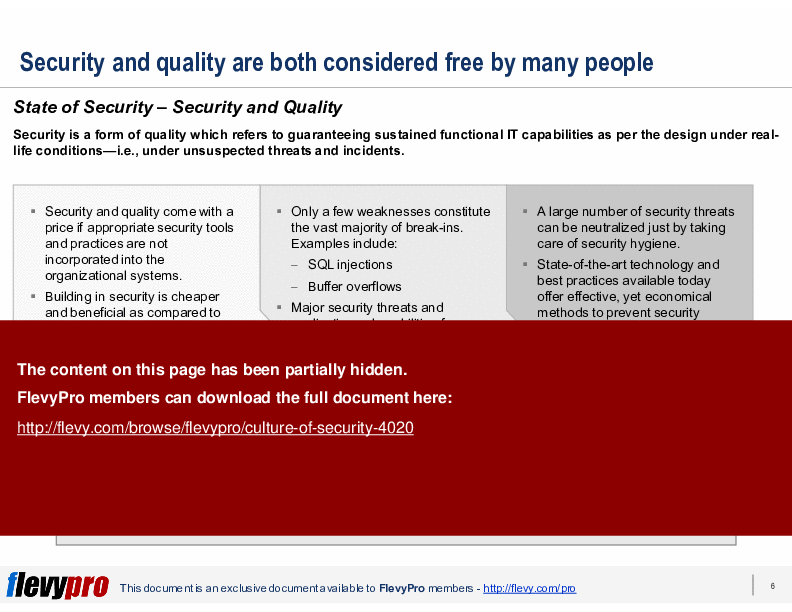
The PPT dives into the current state of security, highlighting the increasing complexity and interconnectedness of business applications. It underscores the importance of integrating security tools and practices into organizational systems to prevent vulnerabilities such as SQL injections, access control issues, and business logic errors. The material emphasizes that security is not just a technical concern, but a strategic business objective that needs to be aligned with overall organizational goals.
A case study on the U.S. Citizenship and Immigration Services (USCIS) illustrates the practical application of these principles. The case study details how the new CIO at USCIS overhauled the existing security culture, implemented multifactor authentication, and incorporated automated security tests into the software development process. This real-world example provides valuable insights into how a proactive approach to security can lead to significant improvements in system resilience and overall security posture.
Got a question about this document? Email us at flevypro@flevy.com.
PRESENTATION DEEP DIVE ANALYSIS
This deep-dive analysis was generated from the full 28-slide PowerPoint presentation.
Executive Summary
The "Culture of Security" presentation provides a robust framework for establishing a resilient security culture within organizations. Developed by seasoned consultants, this deck emphasizes the importance of a proactive approach to security, moving beyond mere compliance to foster a "Rugged Culture of Security." It outlines ten guiding principles that organizations can adopt to enhance their defenses against evolving cyber threats. By integrating these principles into daily operations, executives and security leaders can significantly reduce vulnerabilities and improve overall security posture.
Who This Is For and When to Use
• Chief Information Security Officers (CISOs) looking to enhance organizational security frameworks.
• IT security teams responsible for implementing security protocols and practices.
• Business leaders aiming to foster a culture of security across departments.
• Compliance officers ensuring adherence to security regulations and standards.
Best-fit moments to use this deck:
• During strategic planning sessions focused on security improvements.
• When launching new software development initiatives that require security integration.
• In training sessions aimed at raising security awareness among employees.
• For workshops aimed at aligning security practices with business objectives.
Learning Objectives
• Define the concept of a "Rugged Culture of Security" and its significance.
• Identify the ten guiding principles essential for fostering a culture of security.
• Develop actionable strategies to integrate security into daily operations.
• Assess current security practices and identify areas for improvement.
• Create a framework for continuous security education and awareness.
• Establish metrics to measure the effectiveness of security initiatives.
Table of Contents
• Overview (page 3)
• State of Security (page 5)
• Culture of Security (page 8)
• Case Study (page 15)
• Templates (page 23)
Primary Topics Covered
• Overview of Security Threats - Discusses the evolving landscape of security threats and the need for a proactive approach.
• Culture of Security - Explores the importance of embedding security into the organizational culture.
• Ten Principles of Security - Outlines the ten guiding principles for developing a Rugged Culture of Security.
• Continuous Improvement - Emphasizes the need for ongoing evaluation and enhancement of security practices.
• Case Study: USCIS - Analyzes the implementation of a security culture at the U.S. Citizenship and Immigration Services.
• Templates for Implementation - Provides practical templates for organizations to adopt the principles outlined.
Deliverables, Templates, and Tools
• Framework for assessing current security practices.
• Templates for implementing the ten principles of security.
• Checklist for continuous security improvement measures.
• Guidelines for conducting security training and awareness programs.
• Tools for measuring the effectiveness of security initiatives.
• Resources for threat modeling and peer reviews.
Slide Highlights
• Overview of the "Rugged Culture of Security" and its significance.
• Detailed explanation of the ten guiding principles.
• Visual representation of the current state of security threats.
• Case study insights from USCIS on implementing a culture of security.
• Templates for practical application of the principles discussed.
Potential Workshop Agenda
Introduction to Rugged Culture of Security (30 minutes)
• Overview of security threats and the need for a cultural shift.
• Discussion on the importance of embedding security in daily operations.
Principles of Security Workshop (60 minutes)
• Deep dive into the ten guiding principles.
• Group activities to brainstorm implementation strategies.
Case Study Analysis (45 minutes)
• Review of USCIS's approach to developing a culture of security.
• Discussion on lessons learned and best practices.
Action Planning Session (60 minutes)
• Develop a tailored action plan for implementing the principles.
• Identify metrics for measuring success and accountability.
Customization Guidance
• Adjust the templates to reflect your organization's specific security policies and procedures.
• Incorporate relevant case studies from your industry to enhance relatability.
• Tailor the workshop agenda to focus on specific security challenges faced by your organization.
• Update metrics and evaluation criteria to align with organizational goals.
Secondary Topics Covered
• The role of leadership in fostering a culture of security.
• Best practices for security hygiene and continuous improvement.
• Importance of education and training in maintaining security awareness.
• Strategies for effective threat modeling and peer reviews.
Topic FAQ
What are the core elements of a "Rugged Culture of Security"?
A Rugged Culture of Security is a proactive organizational mindset that embeds security into daily operations, emphasizes continuous improvement, and treats security as a shared responsibility. The approach centers on ten guiding principles, including Constant Attacks, Education, Security Hygiene, Threat Modeling, Testing, and Peer Reviews, captured across the deck's ten guiding principles.How can I integrate security practices into the software development lifecycle (SDLC)?
Integrate security by adding automated security tests into CI/CD pipelines, performing threat modeling during design, applying peer reviews for security-critical code paths, and using reusable tooling and templates to standardize practices. The deck highlights automated security tests, threat modeling, peer reviews, and reusable tools as concrete integration points.Which metrics effectively measure the success of security initiatives?
Typical effectiveness metrics include incident response time, the number of vulnerabilities identified and remediated, and employee security awareness levels. The presentation recommends establishing measurable indicators tied to continuous improvement and tracking incident response times, vulnerability counts, and awareness outcomes.What should I look for when choosing a culture-of-security toolkit or slide deck?
Select a toolkit that provides an assessment framework, implementation templates, checklists for continuous improvement, training guidelines, measurement tools, and at least one case study illustrating practical application. Flevy's Culture of Security includes templates, checklists, measurement guidance, and a USCIS case study as concrete artifacts.How do I shift security from being a compliance checkbox to an organizational priority?
Change requires leadership sponsorship to set the tone, ongoing education and training, security hygiene practices, adoption of a zero-defect mindset, and continuous assessment with metrics. Workshops, action planning, and templates help operationalize change; the deck maps these activities to the ten guiding principles.What is threat modeling and why is it important in a security culture?
Threat modeling is a systematic method to identify and prioritize potential threats to systems and applications, enabling targeted defenses and test plans. Within a security culture it informs testing, peer reviews, and development priorities; Threat Modeling is explicitly listed as one of the ten guiding principles.How much implementation time can templates and slide decks save for security initiatives?
Time savings vary by organization and baseline maturity,, but ready-made frameworks, slide templates, implementation templates, and customization guidance reduce planning and workshop setup time. The Culture of Security deck provides slide templates, implementation templates, and a suggested workshop agenda to accelerate adoption.After a security breach, what immediate cultural actions should leadership take?
Leadership should publicly reframe security priorities, require concrete controls (for example, multifactor authentication), mandate automated security testing in development, run targeted training, and begin regular assessments and peer reviews to prevent recurrence. The USCIS case study highlights implementing multifactor authentication and automated security tests.Document FAQ
These are questions addressed within this presentation.
What is a "Rugged Culture of Security"?
A Rugged Culture of Security refers to an organizational mindset that proactively identifies and mitigates security threats, embedding security practices into daily operations.
How can organizations implement the ten principles of security?
Organizations can implement these principles by integrating them into their existing processes, conducting training sessions, and continuously evaluating their effectiveness.
What role does leadership play in establishing a culture of security?
Leadership is crucial in setting the tone for security priorities, ensuring that security is viewed as a shared responsibility across all levels of the organization.
How can continuous improvement be achieved in security practices?
Continuous improvement can be achieved through regular assessments, feedback mechanisms, and adapting to new threats and vulnerabilities as they arise.
What are some common security vulnerabilities organizations face?
Common vulnerabilities include SQL injections, cross-site scripting, and inadequate access controls.
How does the USCIS case study illustrate the importance of security culture?
The USCIS case study demonstrates how a shift in leadership perspective can transform security from a compliance burden to a core organizational value.
What tools can be used for threat modeling?
Organizations can utilize various threat modeling tools and frameworks to systematically identify and address potential security threats.
How can organizations measure the effectiveness of their security initiatives?
Effectiveness can be measured through metrics such as incident response times, the number of vulnerabilities identified and remediated, and employee awareness levels.
Glossary
• Rugged Culture of Security - An organizational mindset focused on proactive security measures.
• Security Hygiene - Best practices for maintaining security standards in daily operations.
• Continuous Improvement - Ongoing evaluation and enhancement of security practices.
• Threat Modeling - A systematic approach to identifying potential security threats.
• Peer Reviews - Collaborative assessments of security practices among team members.
• Zero-defect Approach - A commitment to eliminating known vulnerabilities immediately.
• Reusable Tools - Tools and practices that can be applied across various projects to enhance security.
• Unified Team - Collaboration among different departments to strengthen security efforts.
• Education - Ongoing training and awareness initiatives to improve security knowledge.
• Constant Attacks - The recognition that threats are persistent and evolving.
• Case Study - An analysis of real-world applications of security principles.
• Templates - Practical resources for implementing security strategies.
Source: Best Practices in Corporate Culture, Cybersecurity, Security PowerPoint Slides: Culture of Security PowerPoint (PPTX) Presentation Slide Deck, LearnPPT Consulting
Did you need more documents?
Consider a FlevyPro subscription from $39/month. View plans here.
For $10.00 more, you can download this document plus 2 more FlevyPro documents. That's just $13 each.