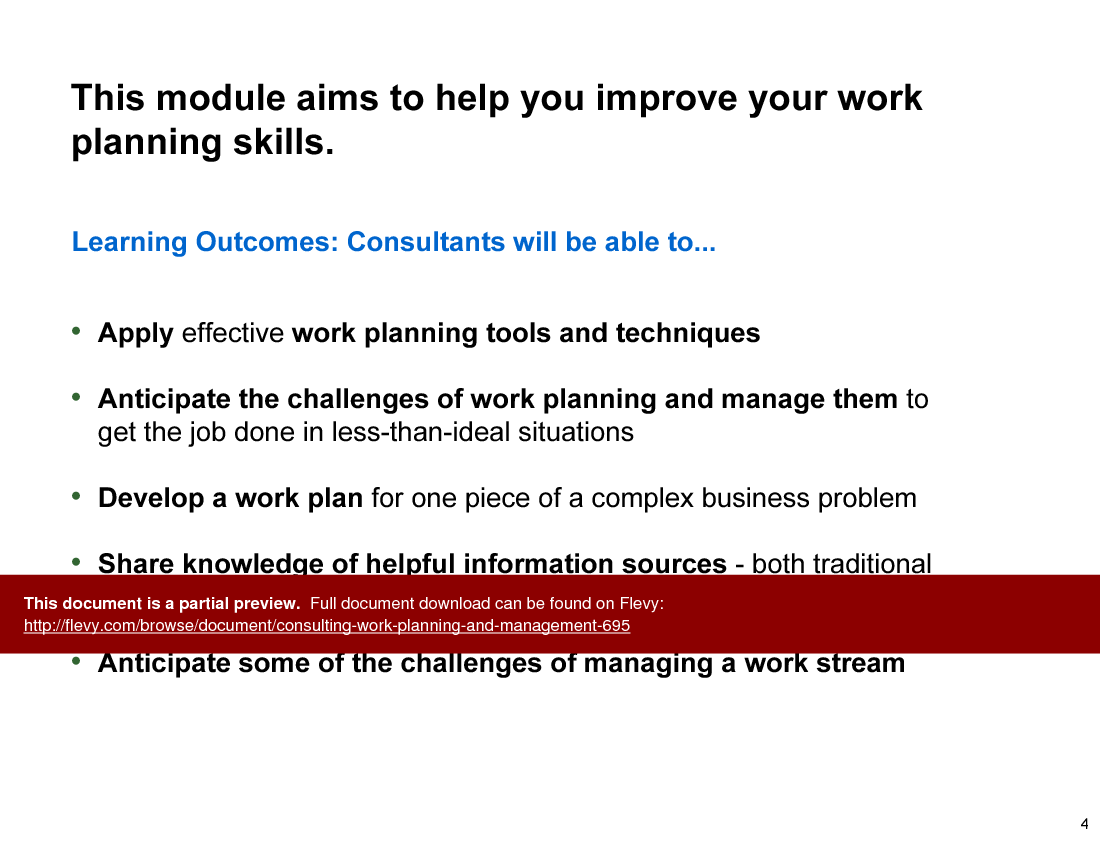

This module aims to help you improve your work planning skills.
• Apply effective work planning tools and techniques
• Anticipate the challenges of work planning and manage them to get the job done in less-than-ideal situations
• Develop a work plan for one piece of a complex business problem
• Share knowledge of helpful information sources – both traditional and new (internet)
• Anticipate some of the challenges of managing a work stream
This document delves into the intricacies of consulting work planning and management, providing a comprehensive guide for consultants aiming to refine their skills. It covers essential topics such as developing a work plan, documenting helpful sources, and managing work streams effectively. The module is designed to equip consultants with the tools and techniques necessary to navigate complex business problems and deliver results in challenging environments.
The content includes practical exercises that engage users in developing and critiquing work plans. These exercises are structured to enhance critical thinking and ensure that consultants can apply theoretical knowledge to real-world scenarios. The document also emphasizes the importance of identifying and leveraging both traditional and new information sources to support work planning and decision-making processes.
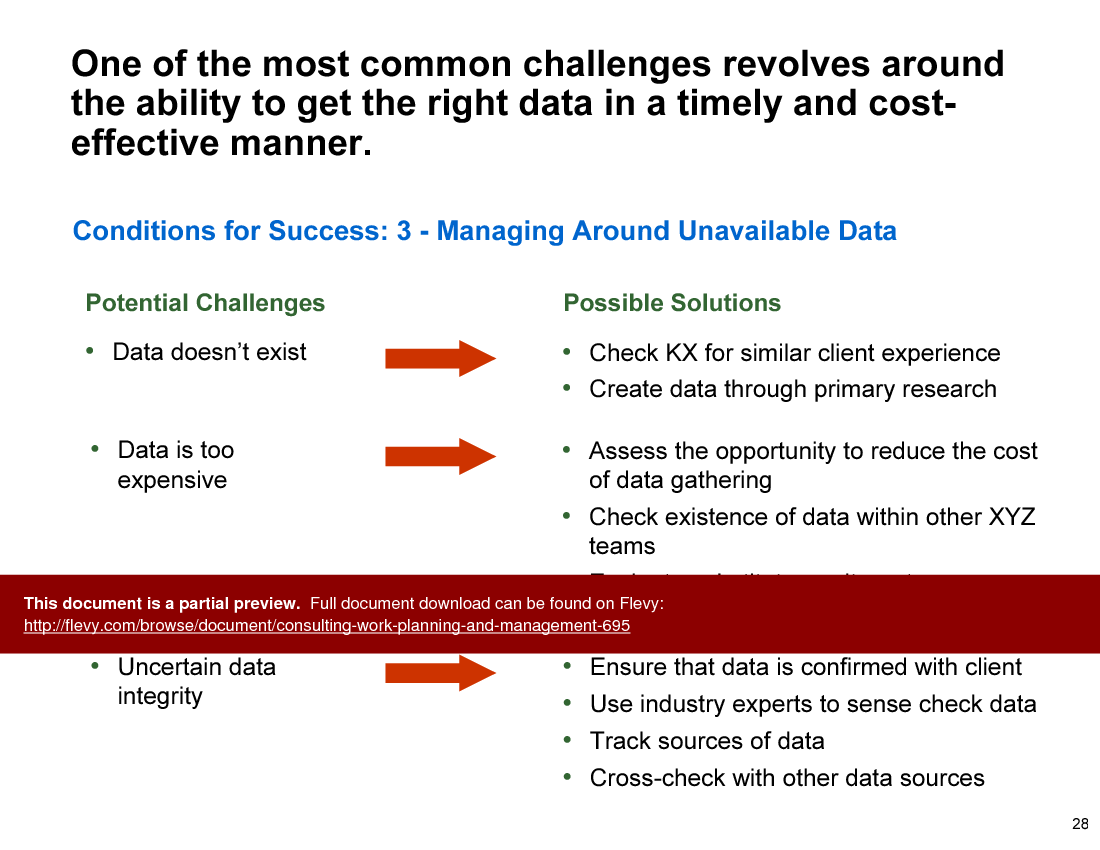
A significant portion of the module is dedicated to addressing common challenges in consulting work planning. It provides strategies for managing data availability issues, ensuring data integrity, and handling client expectations. The document outlines potential challenges and offers actionable solutions, making it a valuable resource for consultants seeking to improve their problem-solving capabilities.
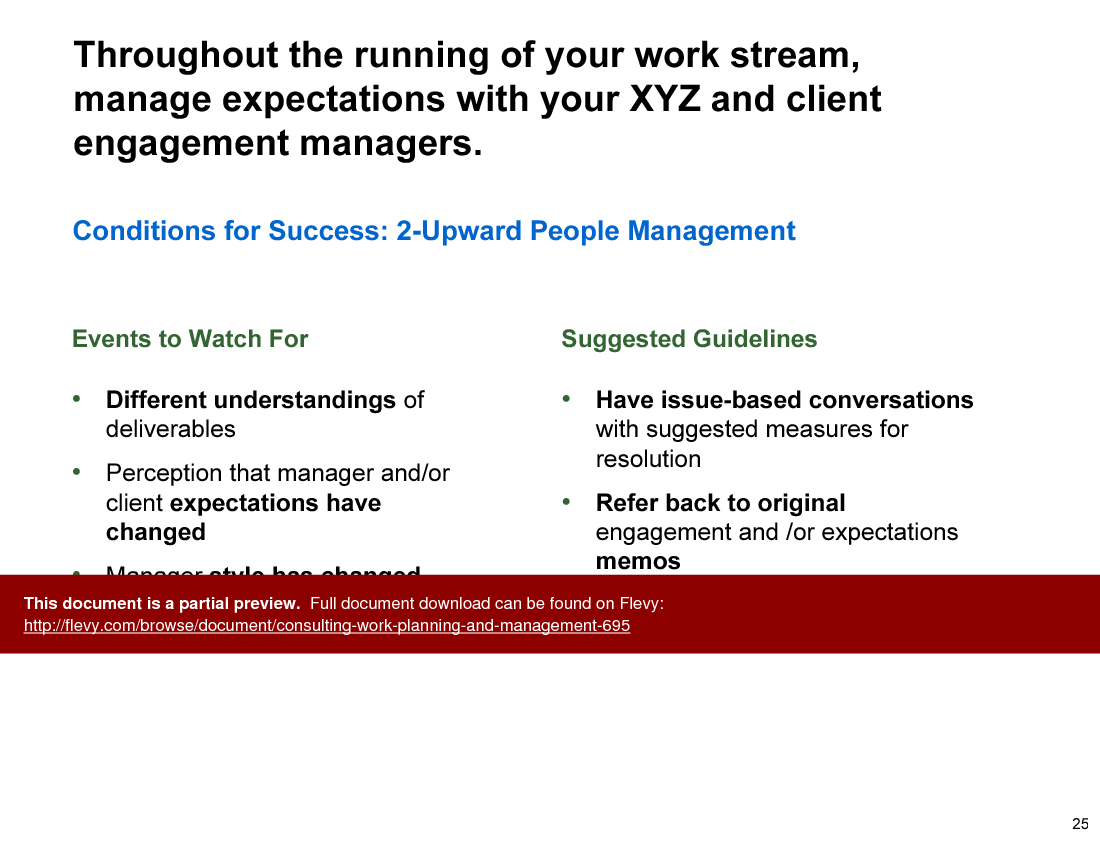
The module also highlights the importance of effective communication and collaboration within consulting teams and with clients. It includes guidelines for managing client relationships, setting clear expectations, and ensuring that all stakeholders are aligned throughout the project lifecycle. This focus on communication is crucial for maintaining client satisfaction and achieving successful project outcomes.
Got a question about the product? Email us at support@flevy.com or ask the author directly by using the "Ask the Author a Question" form. If you cannot view the preview above this document description, go here to view the large preview instead.
Executive Summary
This Consulting Work Planning & Management presentation is designed to enhance the skills of consultants in effectively planning and managing their projects. The content is structured with the rigor and quality expected from a McKinsey, Bain, or BCG-quality presentation (consulting-grade; not affiliated). It provides actionable frameworks and tools that enable consultants to define problems, develop research plans, and manage workstreams efficiently. Users will learn to anticipate challenges, communicate effectively, and synthesize findings to deliver value to clients.
Who This Is For and When to Use
• Consultants involved in project management and work planning
• Project managers seeking to improve team coordination and efficiency
• Analysts responsible for data collection and analysis
• Client engagement managers aiming to align expectations and deliverables
Best-fit moments to use this deck:
• During the initiation phase of a consulting project to establish a work plan
• When developing a research strategy to address complex business problems
• In team meetings to align on project objectives and roles
Learning Objectives
• Apply effective work planning tools and techniques
• Anticipate challenges in work planning and manage them effectively
• Develop a work plan for addressing complex business issues
• Share knowledge of helpful information sources, both traditional and digital
• Manage workstreams effectively to ensure project success
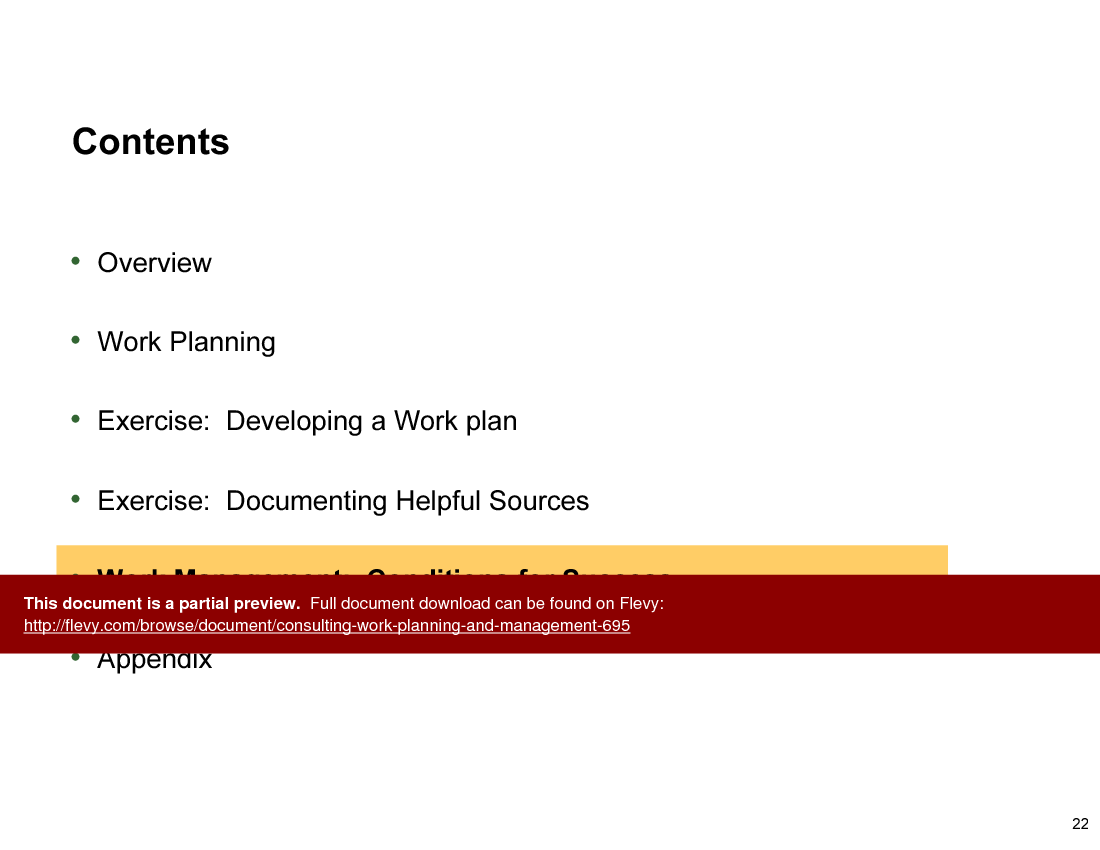
Table of Contents
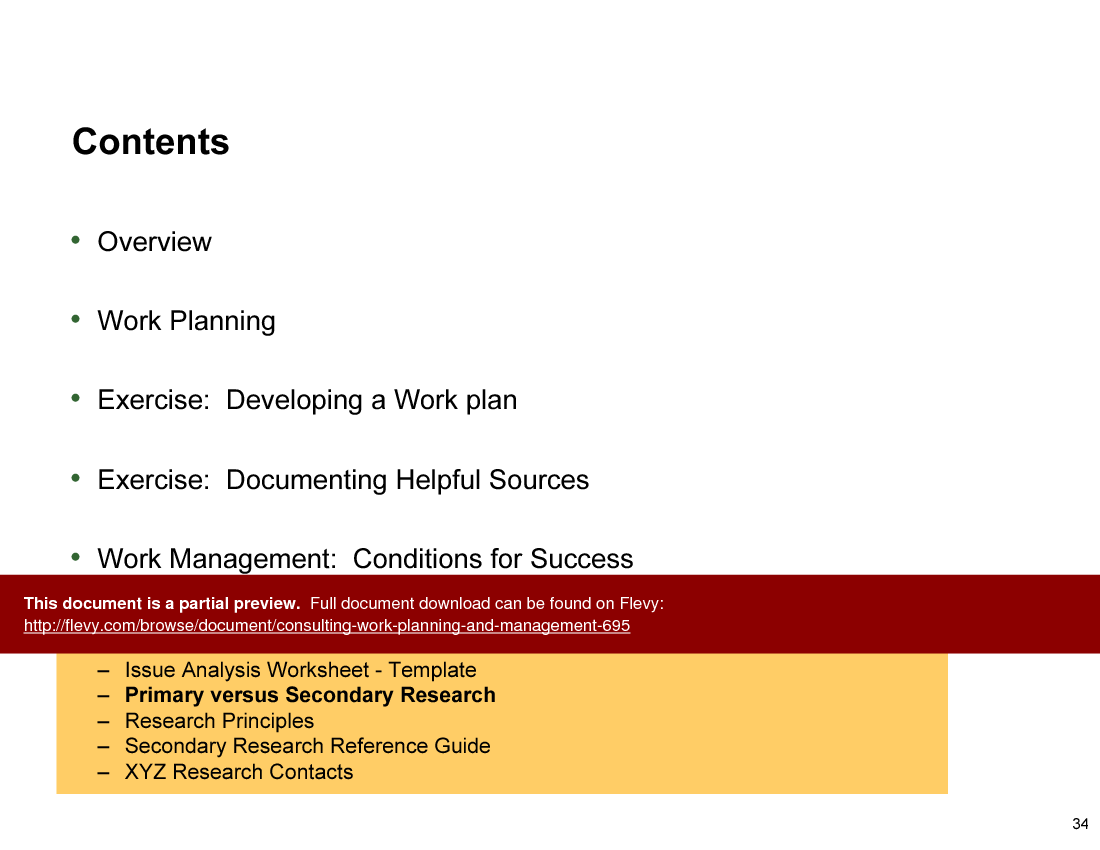
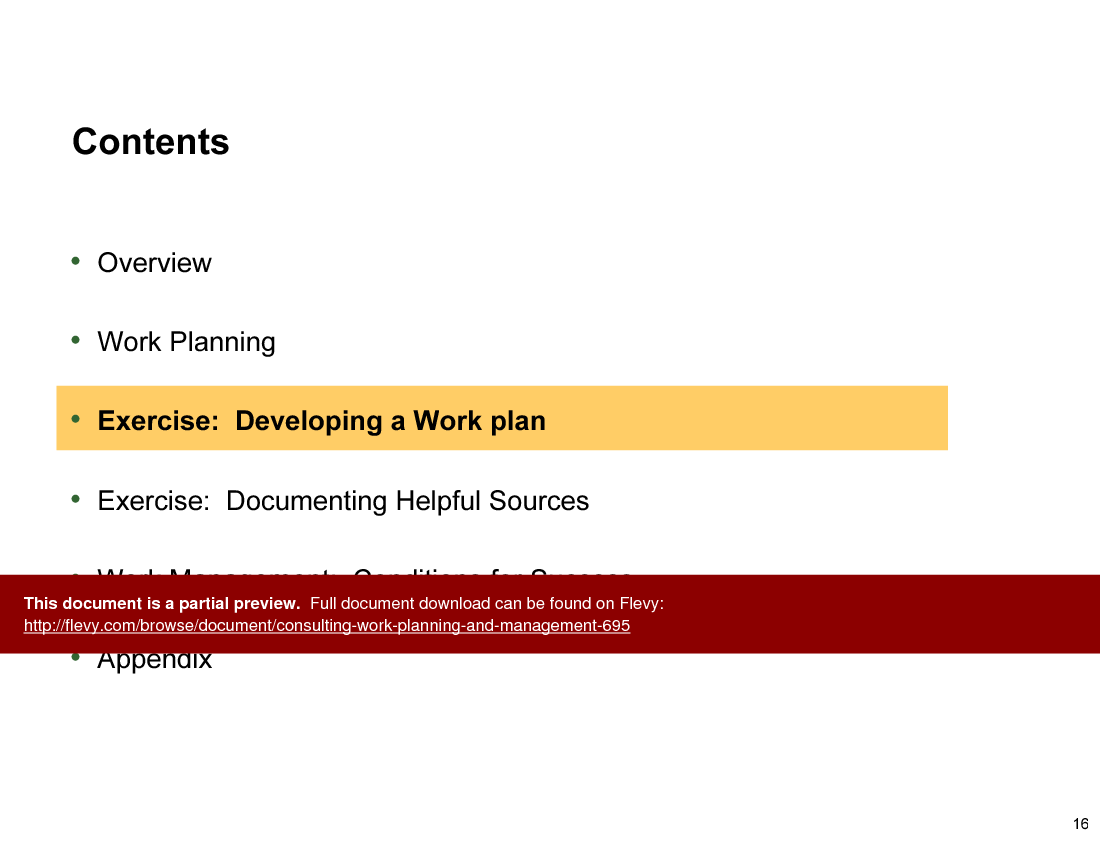
• Overview (page 2)
• Work Planning (page 6)
• Exercise: Developing a Work Plan (page 17)
• Exercise: Documenting Helpful Sources (page 21)
• Work Management: Conditions for Success (page 23)
• Appendix (page 32)
Primary Topics Covered
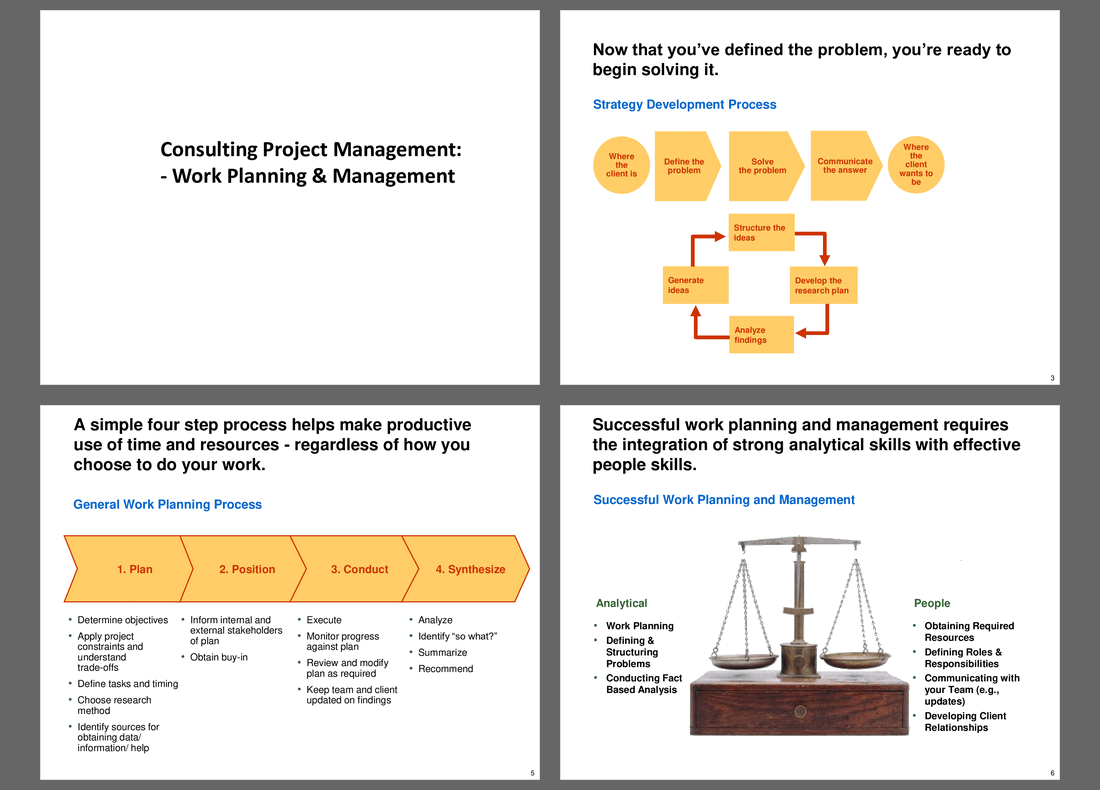
• Work Planning Process - A structured approach to defining objectives, tasks, and timelines for effective project execution.
• Bottom-Up Approach - Emphasizes the importance of critical analyses in developing a work plan that aligns with client expectations.
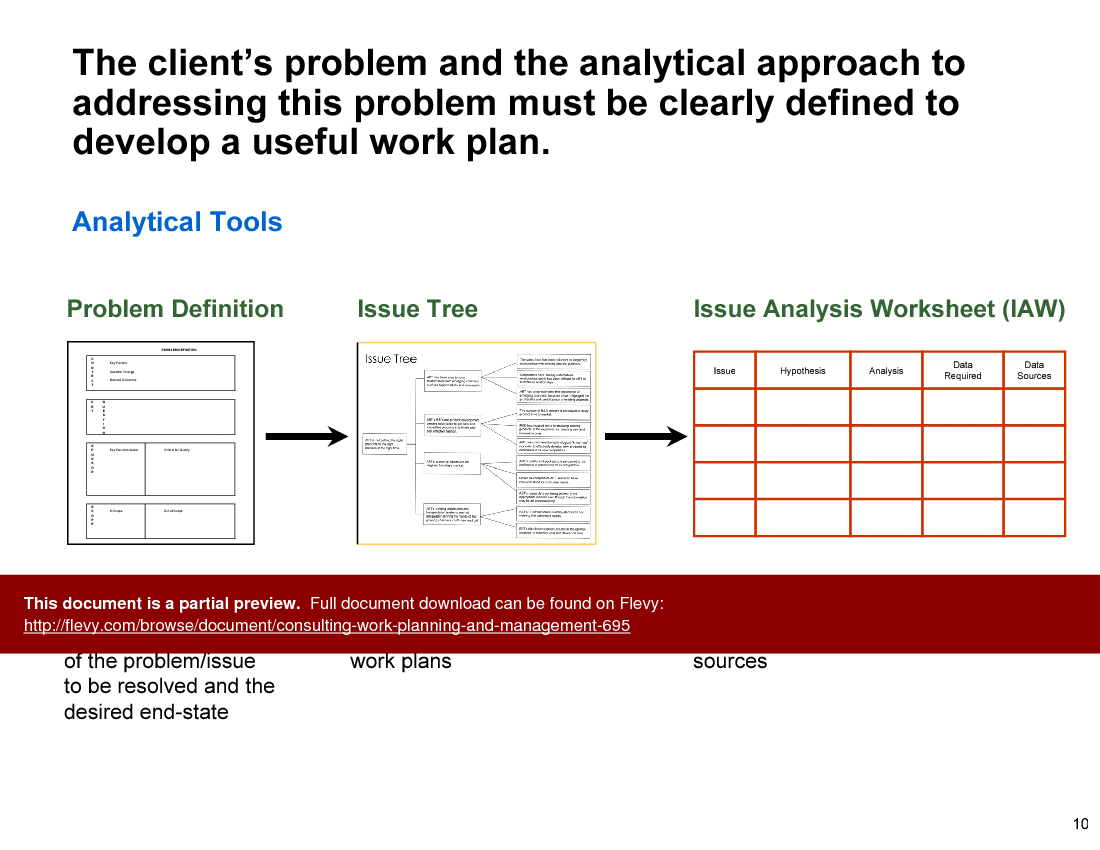
• Analytical Tools - Utilizes frameworks like the Issue Tree and Issue Analysis Worksheet to clarify problems and structure analyses.
• Gantt Chart - A visual representation of the project timeline, detailing tasks, responsibilities, and interdependencies.
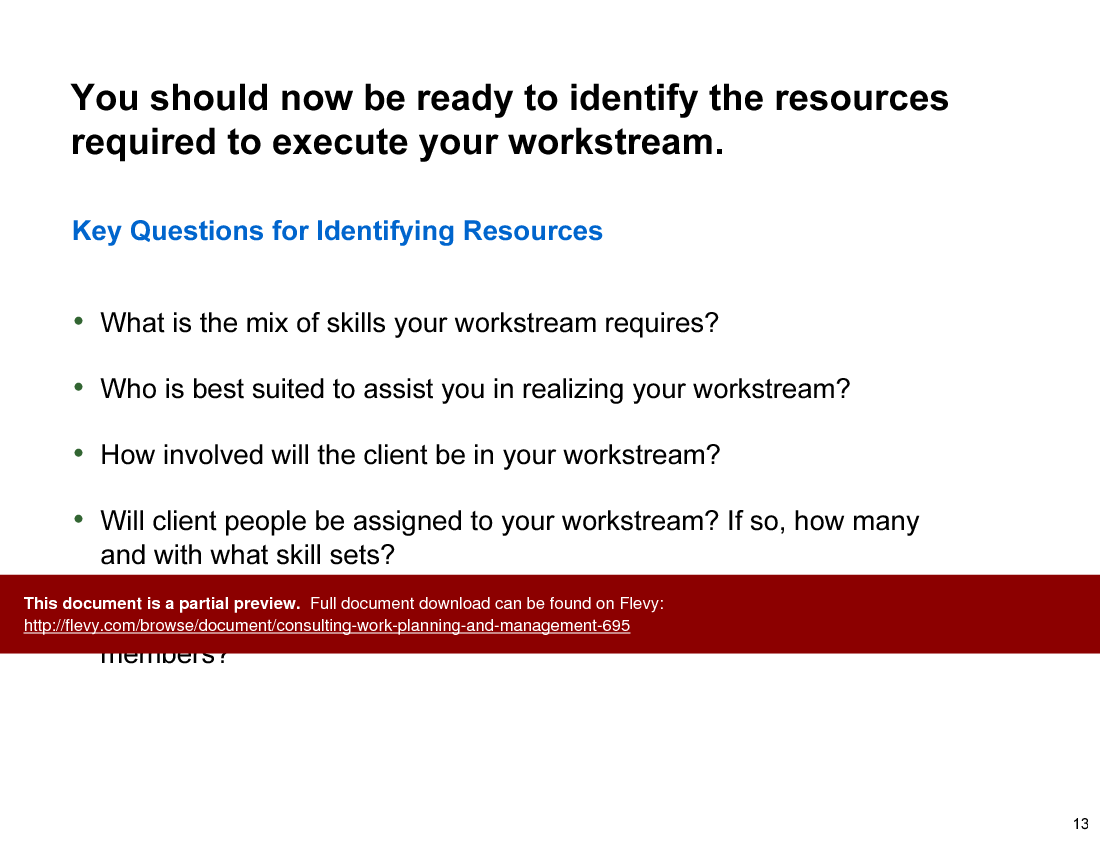
• Resource Identification - Guides on determining the necessary skills and resources required for successful project execution.
• Conditions for Success - Outlines key practices for effective communication and management of project teams.
Deliverables, Templates, and Tools
• Issue Analysis Worksheet template for structured problem analysis
• Gantt Chart template for visualizing project timelines and responsibilities
• Research plan framework to guide data collection and analysis
• Communication guidelines for managing client and team expectations
• Best practices checklist for developing effective work plans
Slide Highlights
• Overview of the work planning process, emphasizing objectives and task definitions
• Example of a Gantt Chart summarizing project steps and resource allocations
• Key conditions for success in work management, focusing on communication and team dynamics
• Detailed explanation of the Bottom-Up Approach to work planning
• Template for the Issue Analysis Worksheet to facilitate problem-solving
Potential Workshop Agenda
Work Planning Fundamentals (60 minutes)
• Introduce the work planning process and its importance
• Discuss the Bottom-Up Approach and its benefits
• Review the Gantt Chart and its application in project management
Hands-On Exercise: Developing a Work Plan (90 minutes)
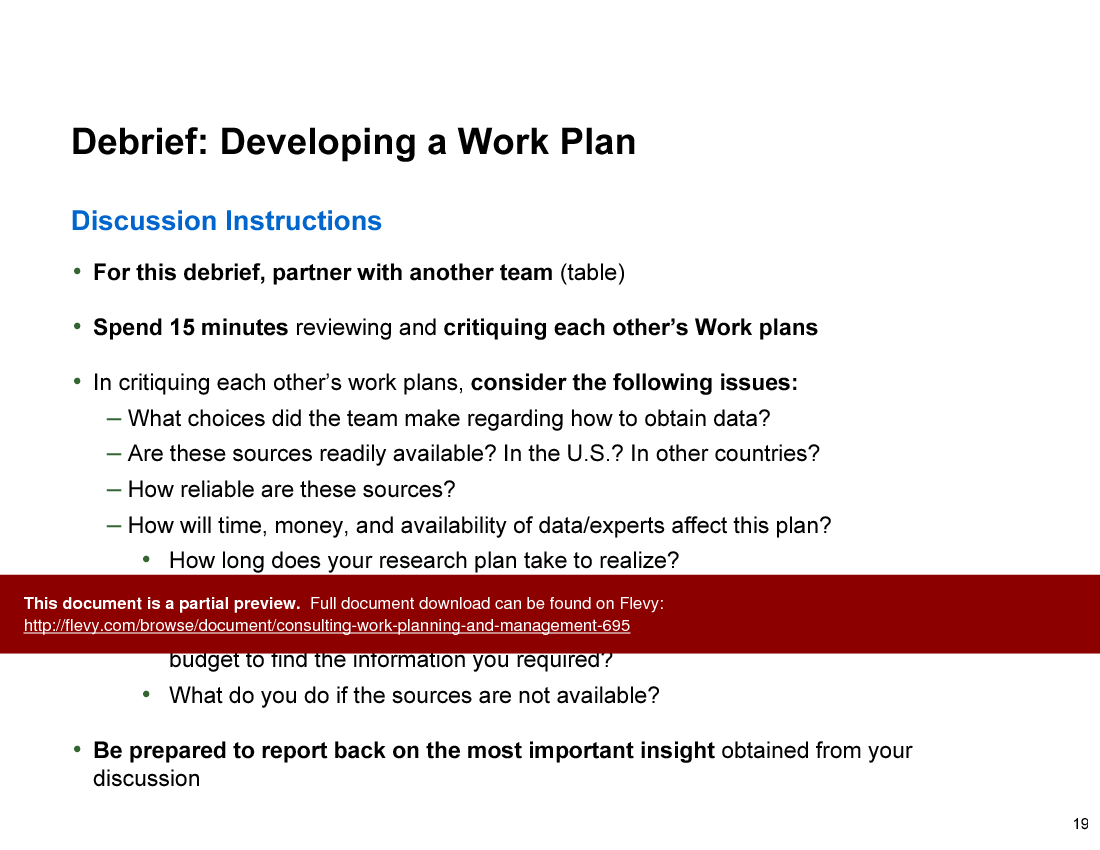
• Break into teams to create a work plan based on a given case study
• Present work plans and receive feedback from peers
Conditions for Success Discussion (30 minutes)
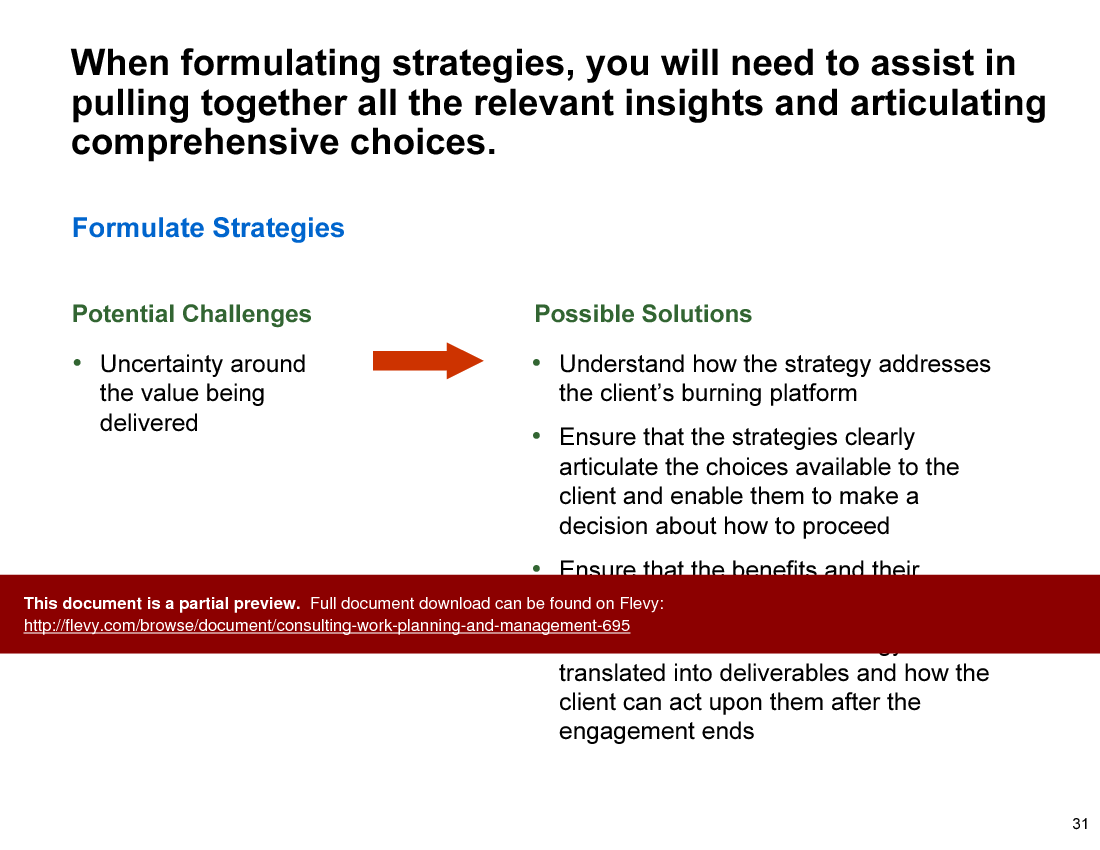
• Explore key challenges in work management
• Share best practices for effective communication and team management
Customization Guidance
• Tailor the Gantt Chart to reflect your project’s specific timelines and milestones
• Adjust the Issue Analysis Worksheet to align with the unique challenges of your client’s business problem
• Incorporate client-specific terminology and frameworks into your work plan
Secondary Topics Covered
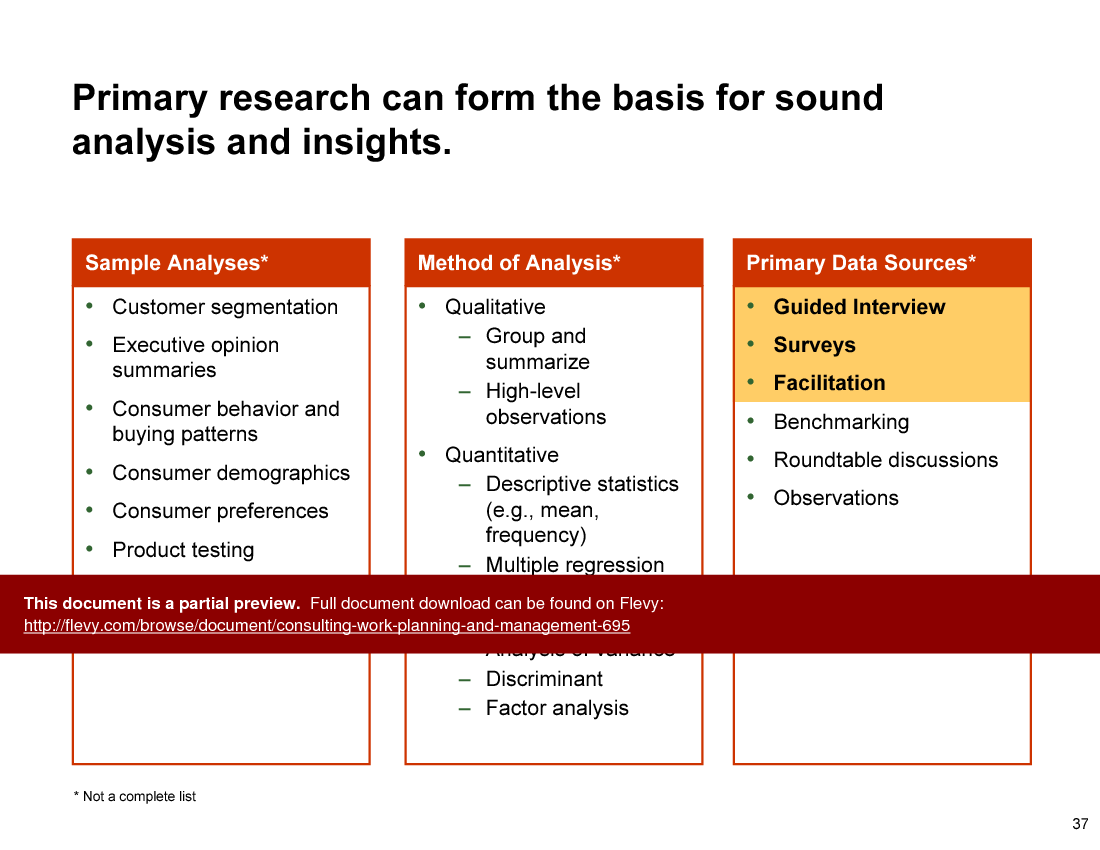
• Primary vs. Secondary Research methodologies
• Techniques for effective data collection and analysis
• Strategies for managing client expectations throughout the project lifecycle
• Best practices for team collaboration and communication
FAQ
What is the Bottom-Up Approach in work planning?
The Bottom-Up Approach emphasizes starting with fundamental analyses to drive the work plan, ensuring alignment with client expectations and critical work activities.
How do I create an effective Gantt Chart?
A Gantt Chart should outline all project tasks, their timelines, responsible team members, and interdependencies to provide a clear visual representation of project progress.
What are the key conditions for successful work management?
Key conditions include maintaining regular communication, managing both upward and downward expectations, and ensuring that data analysis aligns with project objectives.
How can I identify the right resources for my workstream?
Consider the skills required for each task, the involvement of client team members, and the overall resource mix needed to achieve project goals.
What should I do if data is unavailable during my analysis?
Explore alternative data sources, consult with industry experts, and consider primary research methods to gather the necessary information.
How can I ensure my work plan meets client expectations?
Regularly communicate with the client to align on deliverables, update them on progress, and adjust the plan as needed based on their feedback.
What tools can I use for effective research?
Utilize both primary and secondary research methods, including interviews, surveys, and online databases, to gather comprehensive data for your analysis.
How do I handle scope changes during a project?
Revisit the initial issue tree and hypotheses to assess the impact of scope changes, and manage client expectations accordingly.
Glossary
• Gantt Chart - A visual tool used to represent project timelines and task responsibilities.
• Issue Tree - A framework for breaking down complex problems into manageable components.
• Issue Analysis Worksheet (IAW) - A structured template for analyzing issues and identifying data needs.
• Bottom-Up Approach - A work planning method that starts with detailed analyses to inform project direction.
• Primary Research - Data collected firsthand for specific research needs.
• Secondary Research - Information gathered from existing sources that are one step removed from the primary data.
• Workstream - A specific functional area or team responsible for a defined scope within a project.
• Stakeholders - Individuals or groups with an interest in the project's outcome.
• Client Engagement - The process of managing relationships and expectations with the client throughout the project.
• Data Integrity - The accuracy and reliability of data used in analysis.
• Scope Creep - The gradual expansion of project scope without adjustments to time, cost, or resources.
• Trade-offs - Decisions made to balance competing project constraints, such as time, cost, and quality.
• Deliverables - Specific outputs or results expected from a project or workstream.
• Research Plan - A structured approach to gathering data and insights for analysis.
• Communication Guidelines - Best practices for effective information sharing among team members and stakeholders.
• Analytical Skills - The ability to assess and interpret data to inform decision-making.
• People Skills - The interpersonal abilities required to manage team dynamics and client relationships.
• Project Constraints - Limitations that affect project execution, including time, budget, and resources.
• Milestones - Significant points in a project timeline that indicate progress.
• Hypothesis - A proposed explanation for a phenomenon, used as a starting point for investigation.
Source: Best Practices in Work Management PowerPoint Slides: Consulting Work Planning & Management PowerPoint (PPT) Presentation Slide Deck, Documents & Files
This document is available as part of the following discounted bundle(s):
Save %!
Essential Consulting Skill Builder
This bundle contains 19 total documents. See all the documents to the right.
|
Download our FREE Organization, Change, & Culture, Templates
Download our free compilation of 50+ slides and templates on Organizational Design, Change Management, and Corporate Culture. Methodologies include ADKAR, Burke-Litwin Change Model, McKinsey 7-S, Competing Values Framework, etc. |