Your AI assistant becomes a Flevy-powered consultant, with direct access to our full library of frameworks, templates, and case studies. Free to connect. No account, sign-in, or API key required.
STEP 1 · CHOOSE YOUR ASSISTANT
STEP 2 · CONNECT
1
No copying needed. Flevy is in the official Claude Connectors Directory.
2
Click the button below, then click Connect on the Flevy listing.
Provides an iterative 5-phase approach to Business Model Design.
Each phase is explained in depth with supporting frameworks: e.g. Christensen's 4-Box Business Model, the Business Model Canvas (BMC), the Operating Model Canvas (OMC), Business Model Navigator, Balanced Scorecard (BSC), etc.
Emphasizes the importance of a diversified portfolio of business models, a concept that is often underappreciated.
BUSINESS MODEL CANVAS PPT TEMPLATE DESCRIPTION
Editor Summary
168-slide PowerPoint presentation outlining an end-to-end Business Model Design framework developed by former McKinsey, BCG, Deloitte, EY, and Capgemini consultants.
Read moreDescribes an iterative 5-phase methodology: Business Model Portfolio Analysis; Ideation & Pattern Selection; Design (using the Business Model Canvas and Christensen’s 4-Box); Validation & Experimentation; and Deployment. Includes references to tools such as the Business Model Canvas, Operating Model Canvas, Business Model Navigator, and Balanced Scorecard. Targeted at strategy and innovation leaders, corporate executives, and business-model teams. Sold as a digital download on Flevy.
Use this framework when your organization must reassess how it creates, delivers, and captures value—particularly when reallocating capital, diversifying revenue, or pivoting after market disruption.
Chief Strategy Officers assessing existing and potential business models and setting portfolio investment priorities using Business Model Portfolio Analysis.
Innovation leaders generating and filtering new model options with proven patterns during Ideation & Pattern Selection.
Product and operating managers translating top ideas into operational blueprints using the Business Model Canvas and 4‑Box checks.
Growth or corporate development teams running lean experiments and financial simulations in the Validation & Experimentation phase.
The 5-phase, iterative approach reflects an hypothesis-driven, portfolio-focused consulting practice used at firms such as McKinsey and BCG.
Most organizations focus on products or technology, while underinvesting effort and resources in analyzing its business model. The business model is what determines how value is created, delivered, and captured.
The science of Business Model Design is the disciplined process of architecting those value flows—aligning customer promise, revenue logic, resources, and processes into a coherent, testable system. Done well, it turns strategic intent into a repeatable engine for growth and margin expansion while exposing hidden risks before they scale. For leaders, mastering this discipline is the fastest route to reallocating capital toward ideas that win and away from those that silently erode returns.
This comprehensive PPT presentation provides an end-to-end framework on Business Model Design. It also emphasizes the importance of a diversified portfolio of business models, a concept that is often underappreciated or even ignored. Relying on a single business model is the strategic equivalent of holding one stock in a volatile market; a diversified portfolio of models spreads risk, unlocks cross‑model synergies, and ensures the organization can pivot as industry dynamics shift. A portfolio lens lets executives balance today's cash generators with tomorrow's growth options, sustaining performance across cycles and disruptions.
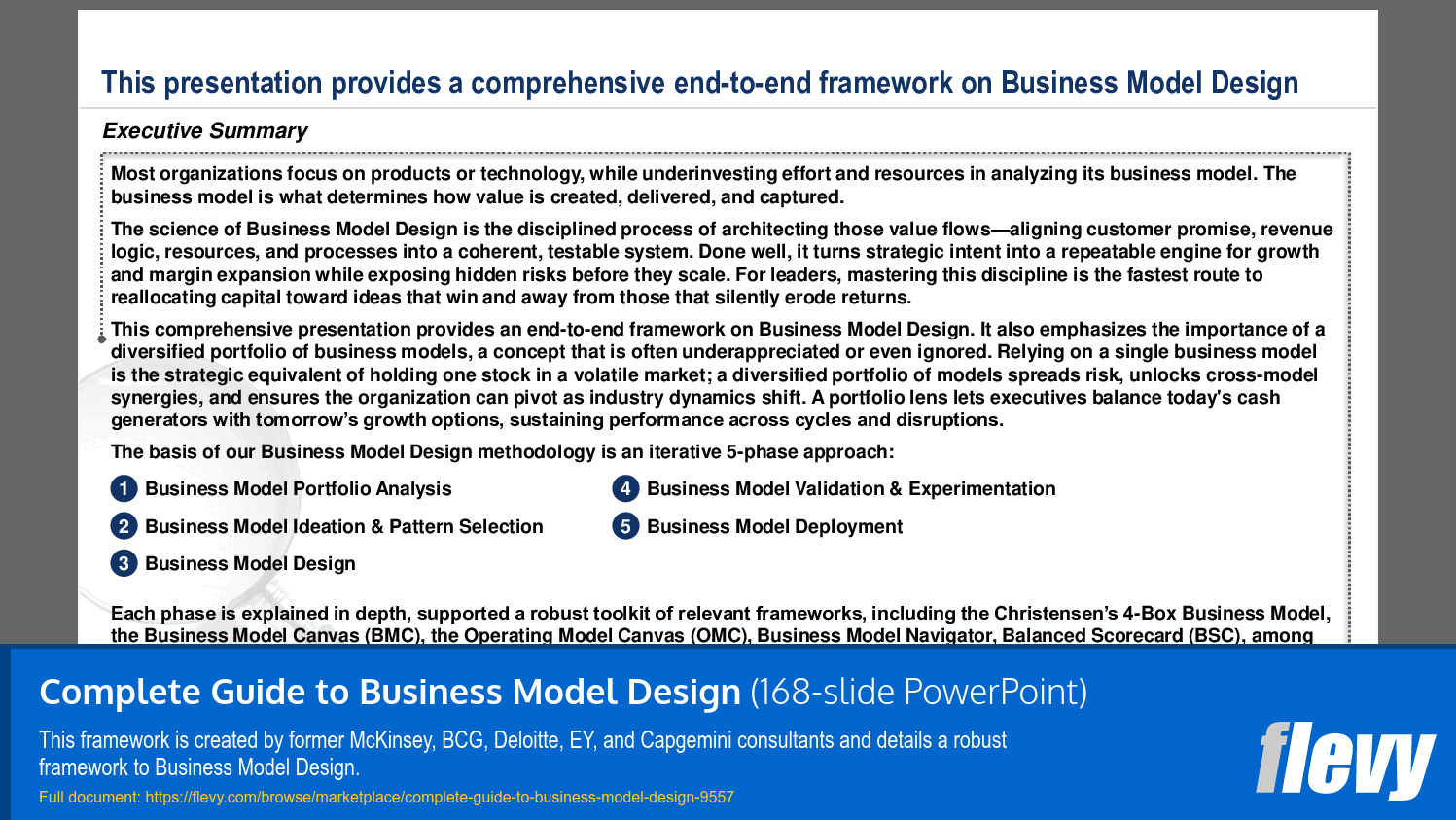
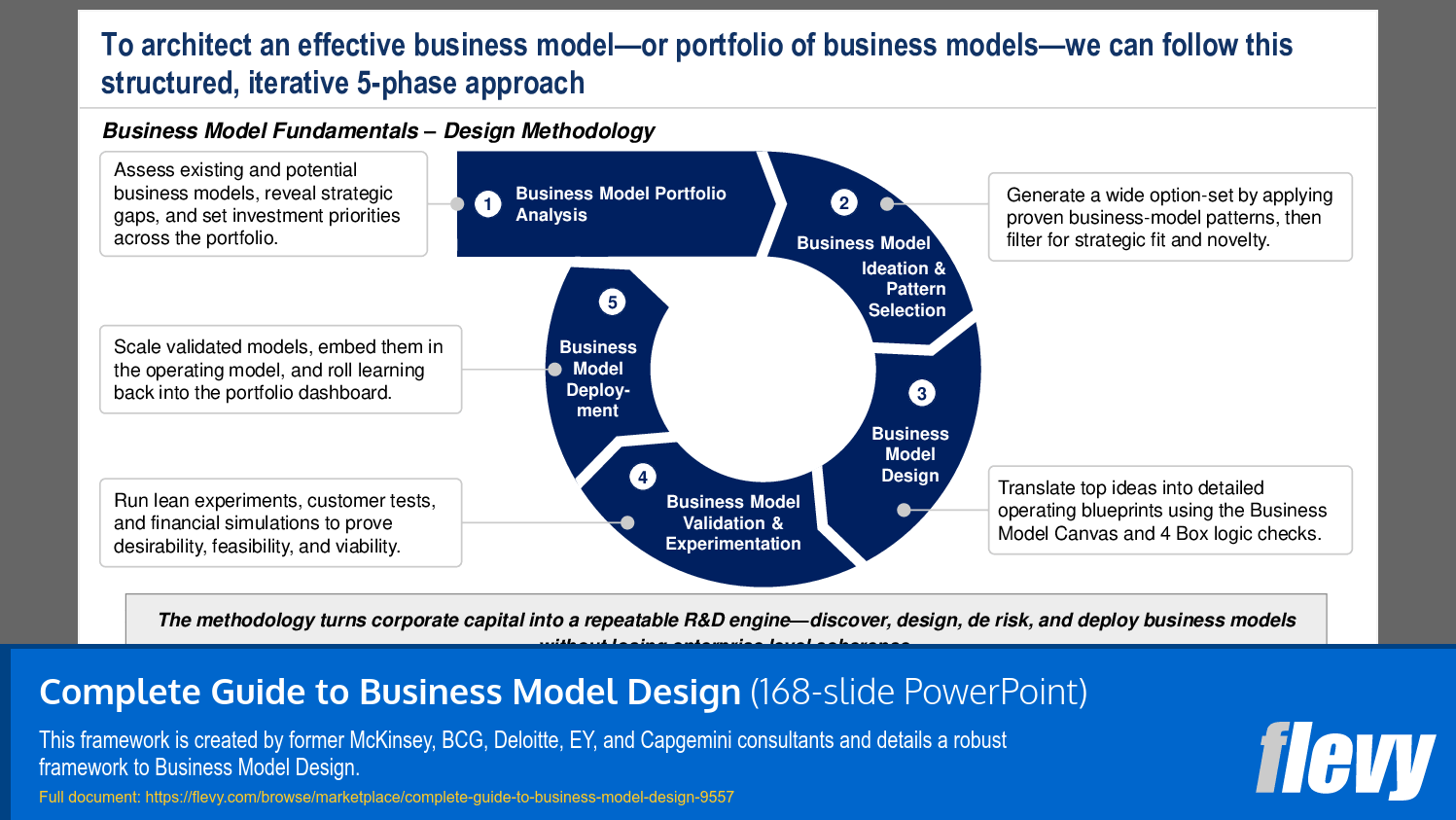
The basis of our Business Model Design methodology is an iterative 5-phase approach:
1. Business Model Portfolio Analysis – Assess existing and potential business models, reveal strategic gaps, and set investment priorities across the portfolio.
2. Business Model Ideation & Pattern Selection – Generate a wide option‑set by applying proven business‑model patterns, then filter for strategic fit and novelty.
3. Business Model Design – Translate top ideas into detailed operating blueprints using the Business Model Canvas and 4 Box logic checks.
4. Business Model Validation & Experimentation – Run lean experiments, customer tests, and financial simulations to prove desirability, feasibility, and viability.
5. Business Model Deployment – Scale validated models, embed them in the operating model, and roll learning back into the portfolio dashboard.
Each phase is explained in depth, supported a robust toolkit of relevant frameworks, including the Christensen's 4-Box Business Model, the Business Model Canvas (BMC), the Operating Model Canvas (OMC), Business Model Navigator (BMN), Balanced Scorecard (BSC), among others.
Got a question about the product? Email us at support@flevy.com or ask the author directly by using the "Ask the Author a Question" form. If you cannot view the preview above this document description, go here to view the large preview instead.
TOPIC FAQ
What are the typical phases in a business model design process?
A disciplined business model design process is often iterative and includes assessing the portfolio of existing and potential models, ideating and selecting patterns, designing detailed operating blueprints, validating via experiments and financial simulation, and deploying scaled models into the operating architecture. These comprise an iterative 5-phase approach.
How does analyzing a business model portfolio help executive decision-making?
A portfolio lens helps executives reveal strategic gaps, set investment priorities, and balance today’s cash generators with tomorrow’s growth options, reducing concentration risk and enabling pivot decisions as industry dynamics shift. This activity is performed during the Business Model Portfolio Analysis phase.
What is the Business Model Canvas and how is it used in model design?
The Business Model Canvas is a structured template to translate top business-model ideas into operating blueprints by mapping value propositions, customer segments, channels, revenue logic, and resources. In practice it’s used during the Design phase to build detailed blueprints, often alongside Christensen’s 4-Box and the Operating Model Canvas.
What should I look for when buying a business model design toolkit?
Buyers should look for resources covering end-to-end phases (portfolio analysis through deployment), tools for ideation and pattern selection, templates for translating ideas into operating blueprints, and guidance on validation experiments and financial simulation; for example, Flevy’s Complete Guide to Business Model Design includes BMC, 4‑Box, OMC, BMN, and BSC.
How much time and what team activities are typically required to validate a new business model?
Validation timelines vary by complexity,, but the process centers on running lean experiments, customer tests, and financial simulations to prove desirability, feasibility, and viability; these activities are concentrated in a distinct Validation & Experimentation phase.
We need to diversify revenue after a market disruption — what framework should we follow?
Start with a portfolio assessment to identify gaps and priorities, then ideate using proven business-model patterns, translate top options into blueprints with the Business Model Canvas and 4-Box checks, run lean experiments and financial simulations, and scale validated options—following an iterative 5-phase methodology.
How do lean experiments and financial simulations fit into business model validation?
Lean experiments and customer tests establish desirability, while financial simulations test viability and feasibility; together they provide evidence to decide whether to scale, iterate, or retire a model. These activities are core to the Validation & Experimentation phase.
Are paid business model templates worth buying versus building frameworks from scratch?
Paid templates can accelerate work by providing ready-made frameworks, checklists, and proven tools for each phase—portfolio analysis, ideation, design, validation, and deployment—reducing setup time and ensuring consistency; for example, Flevy’s Complete Guide to Business Model Design is packaged as a 168-slide PowerPoint.
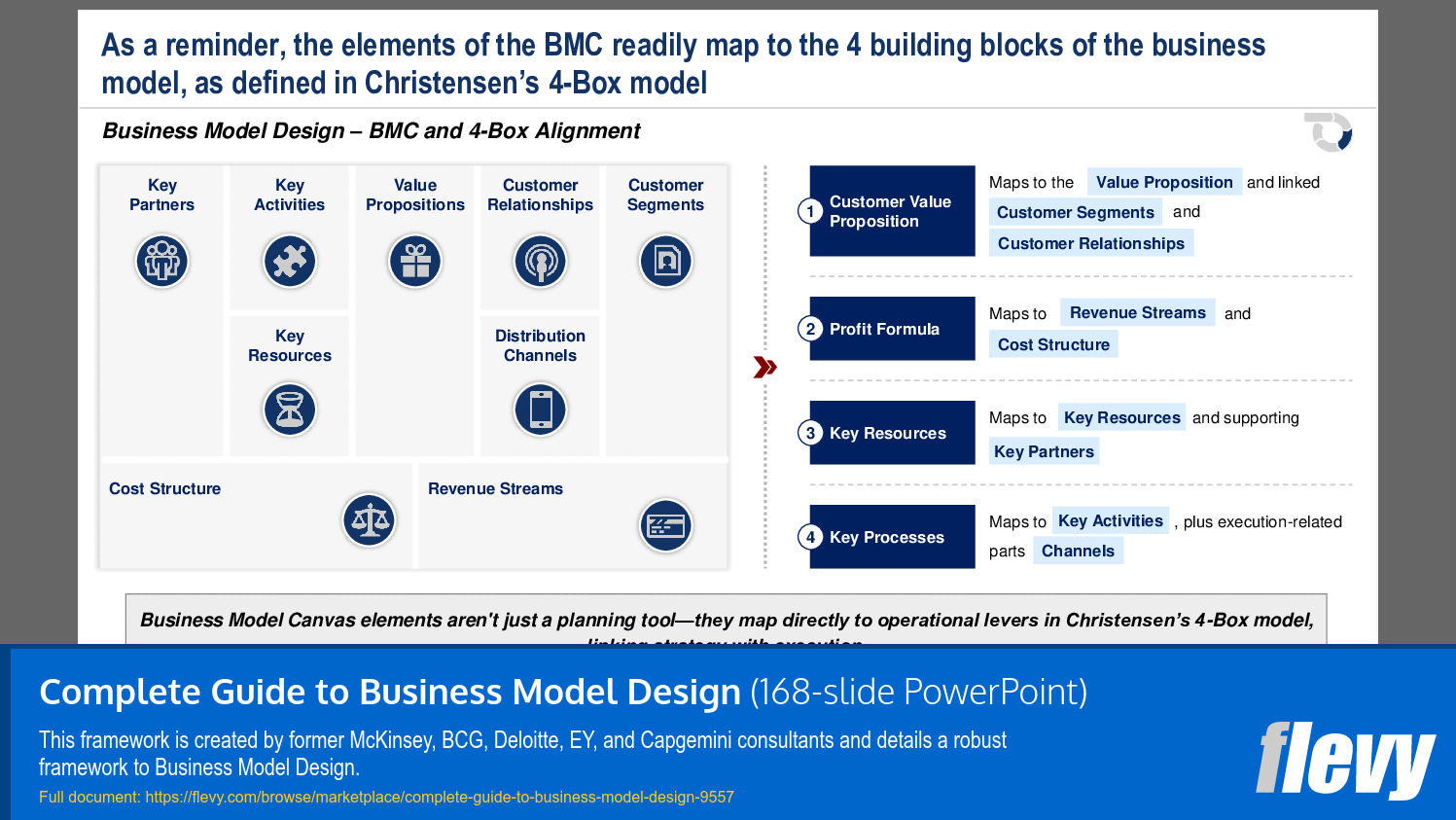
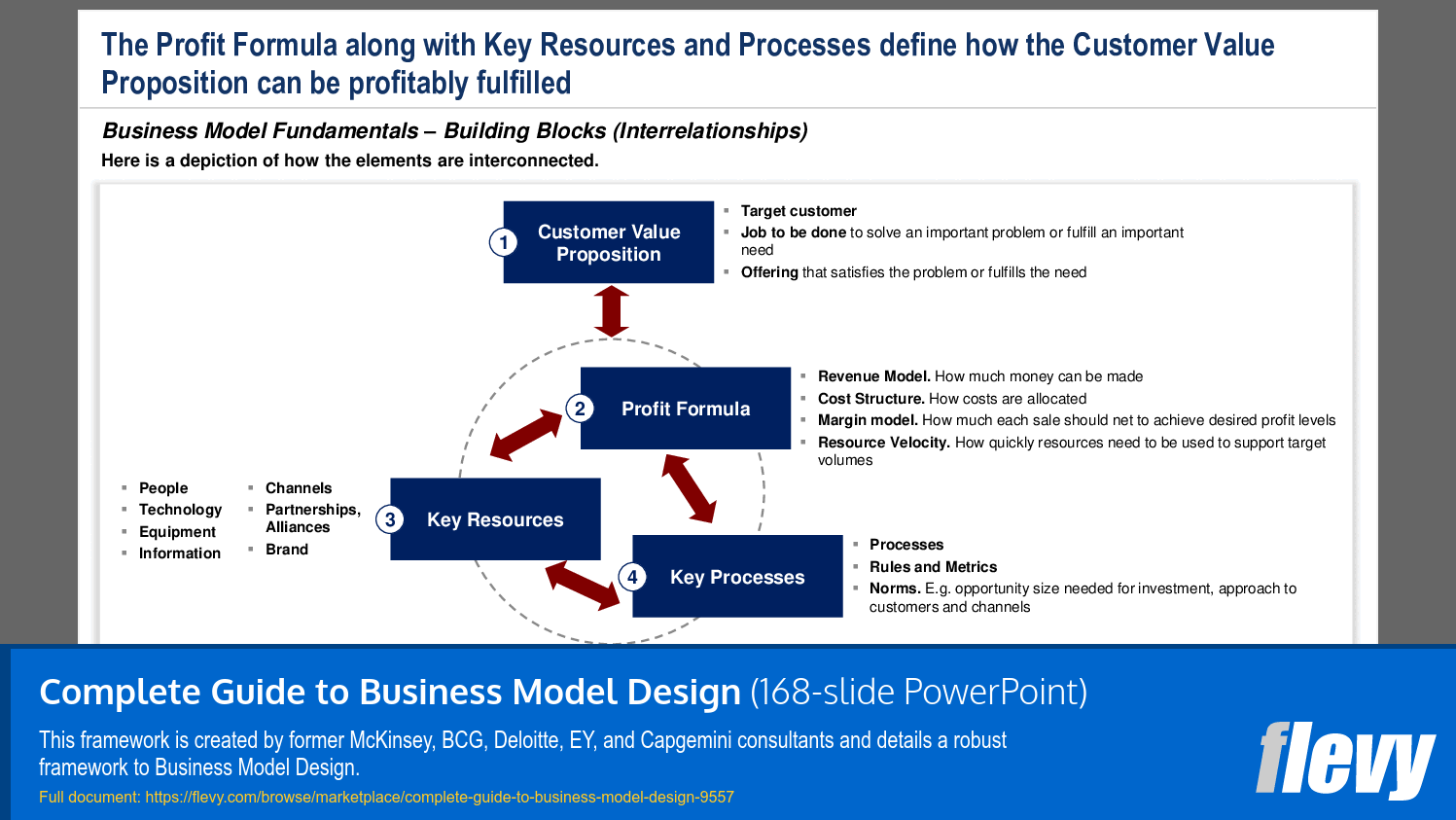
This PPT slide template provides an overview of the Business Model Canvas (BMC) and its alignment with Christensen’s 4-Box model. The BMC consists of Key Partners, Key Activities, Value Propositions, Customer Relationships, Customer Segments, Key Resources, Distribution Channels, Cost Structure, and Revenue Streams. The Customer Value Proposition aligns with Value Propositions, Customer Segments, and Customer Relationships, emphasizing the importance of understanding customer needs. The Profit Formula connects to Revenue Streams and Cost Structure, highlighting financial viability. Key Resources relate to both Key Resources and Key Partners, indicating the significance of partnerships and resource management. Key Processes correspond to Key Activities and Channels, underscoring the role of efficient processes in delivering value. This alignment illustrates how these components collectively contribute to a coherent business strategy.
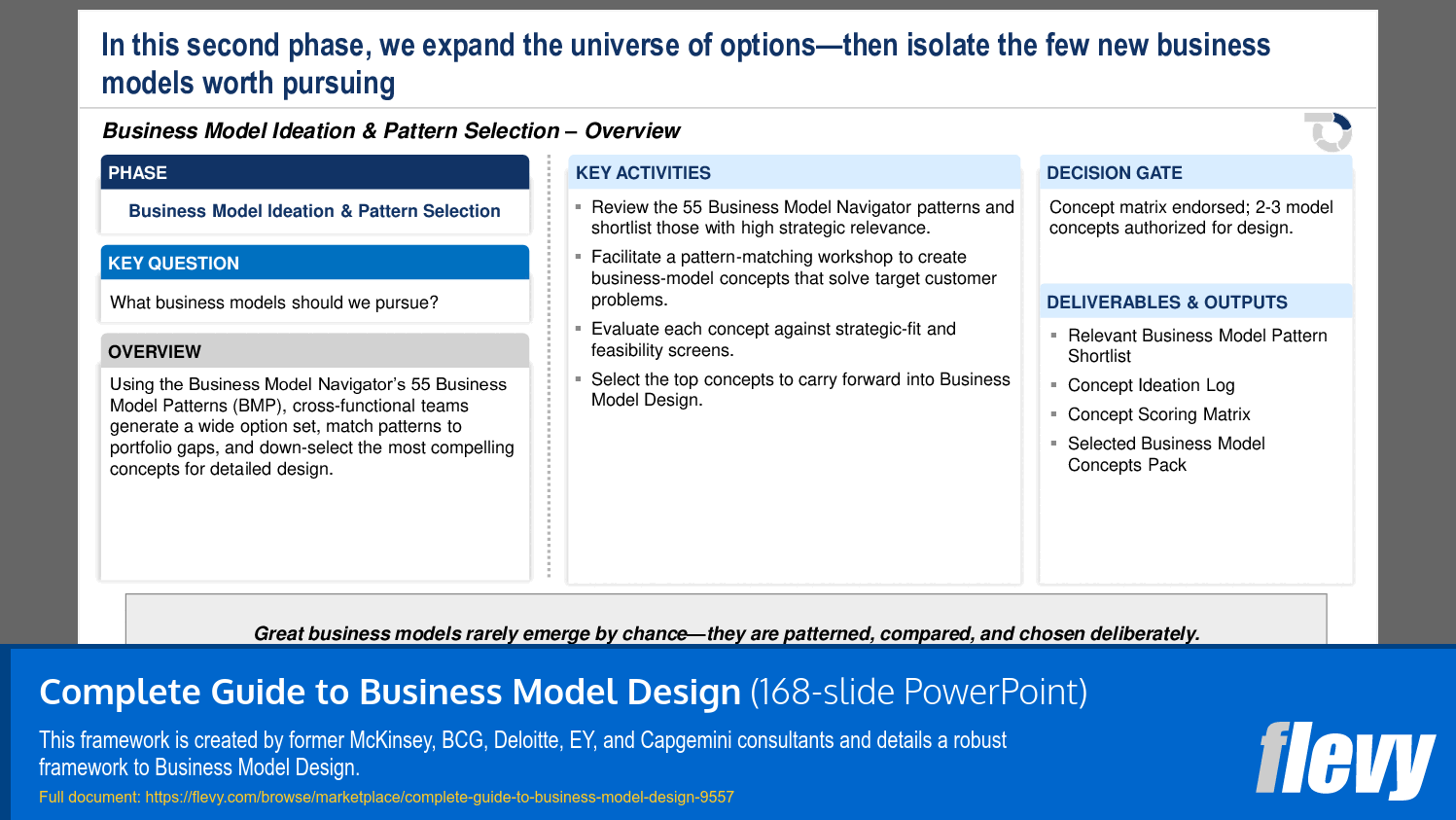
This PPT slide template outlines the second phase of business model ideation using the Business Model Navigator, which features 55 distinct business model patterns. The process involves expanding potential business models before narrowing down to viable options, guided by the question: "What business models should we pursue?" Cross-functional teams generate options, match patterns to portfolio gaps, and select compelling concepts for development. Key activities include reviewing the 55 patterns, conducting workshops for pattern matching, and evaluating concepts based on strategic fit and feasibility. The decision gate formalizes the selection process through a concept matrix, authorizing 2-3 model concepts for design. Deliverables include a shortlist of relevant business model patterns, a concept ideation log, a scoring matrix for evaluation, and a selected concepts pack, providing a framework for subsequent business model design steps.
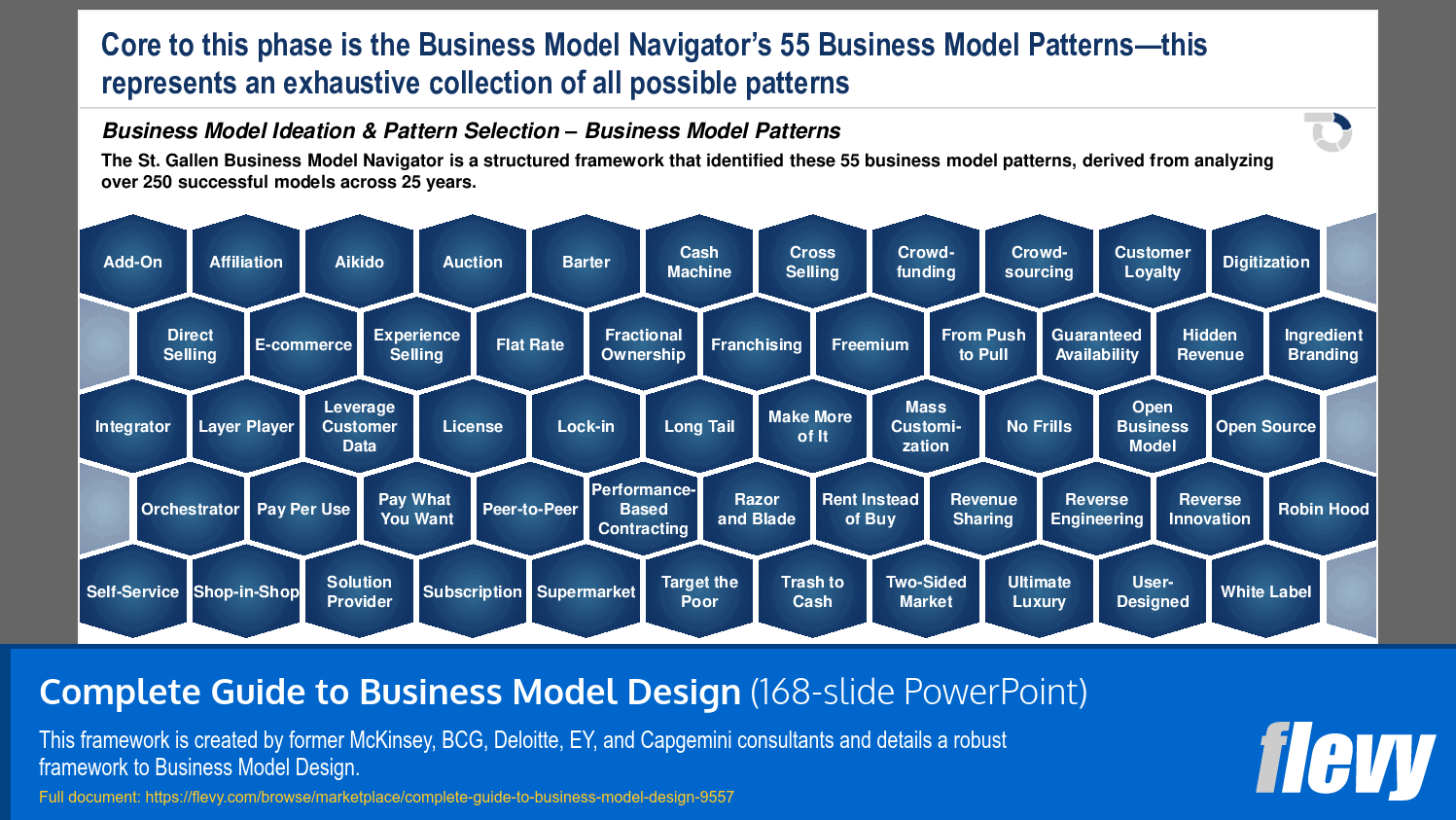
The St. Gallen Business Model Navigator categorizes 55 distinct business model patterns derived from analyzing over 250 successful models over 25 years. These patterns, organized in a hexagonal grid, include "Add-On," "Franchising," "Subscription," "Crowdsourcing," "Direct Selling," "Supermarket," "Robin Hood," and "User-Designed." Selecting the right business model pattern during the ideation phase is critical for value creation and revenue generation. Leveraging these predefined patterns streamlines strategic planning and enhances success rates. This comprehensive toolkit aids executives in innovating or refining business strategies, ensuring informed decision-making in business model selection, and providing suitable approaches for various business types.
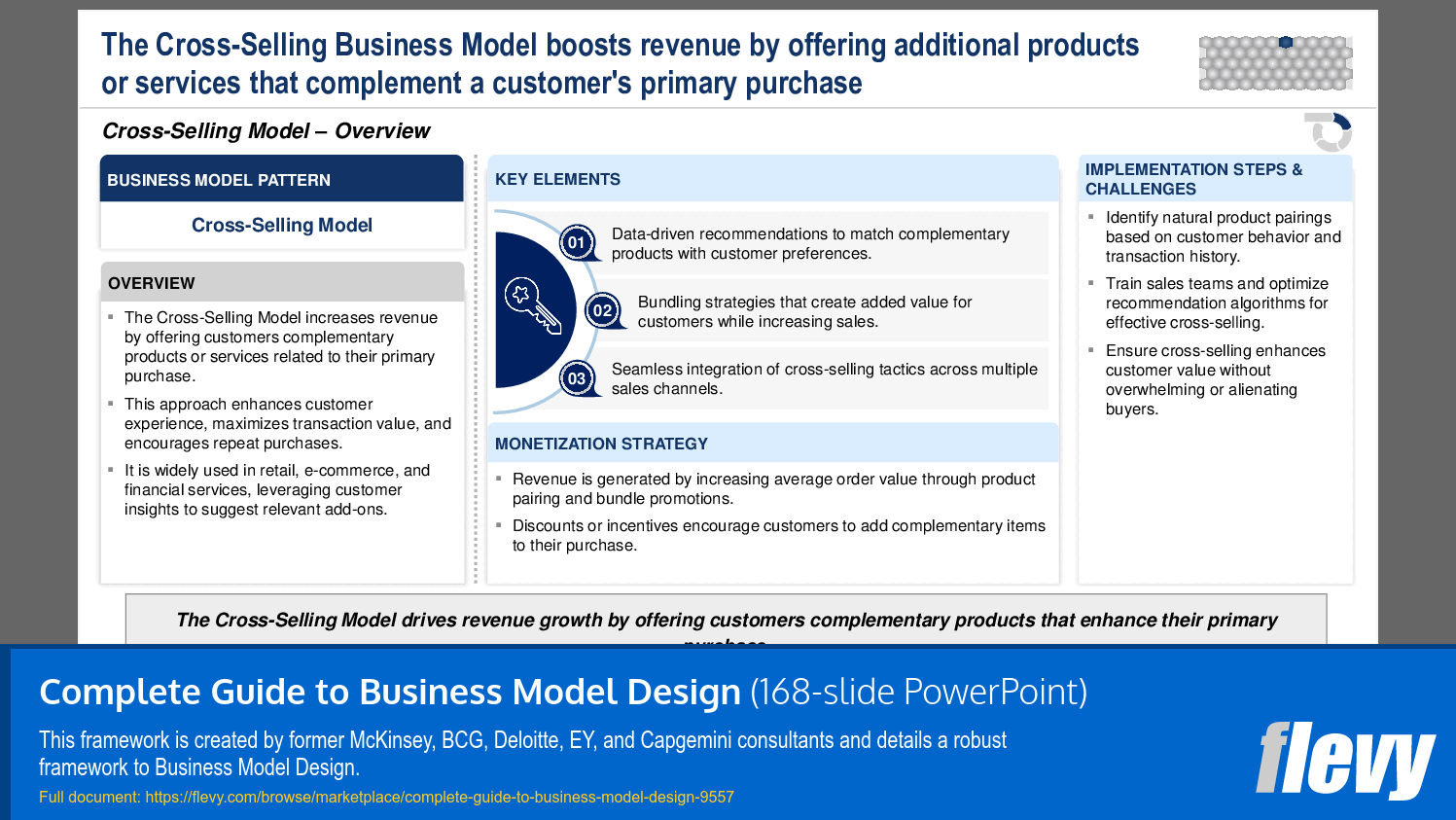
The Cross-Selling Business Model generates additional revenue by offering complementary products or services alongside a customer's primary purchase. Key elements include data-driven recommendations tailored to customer preferences and bundling strategies that create added value while increasing sales. Effective cross-selling integrates tactics across multiple sales channels, ensuring a consistent customer experience. Revenue is generated by increasing average order value through product pairing and bundle promotions, with discounts or incentives used to encourage additional purchases. Implementation requires identifying natural product pairings based on customer behavior, training sales teams, and optimizing recommendation algorithms, ensuring that cross-selling enhances customer value without overwhelming buyers.
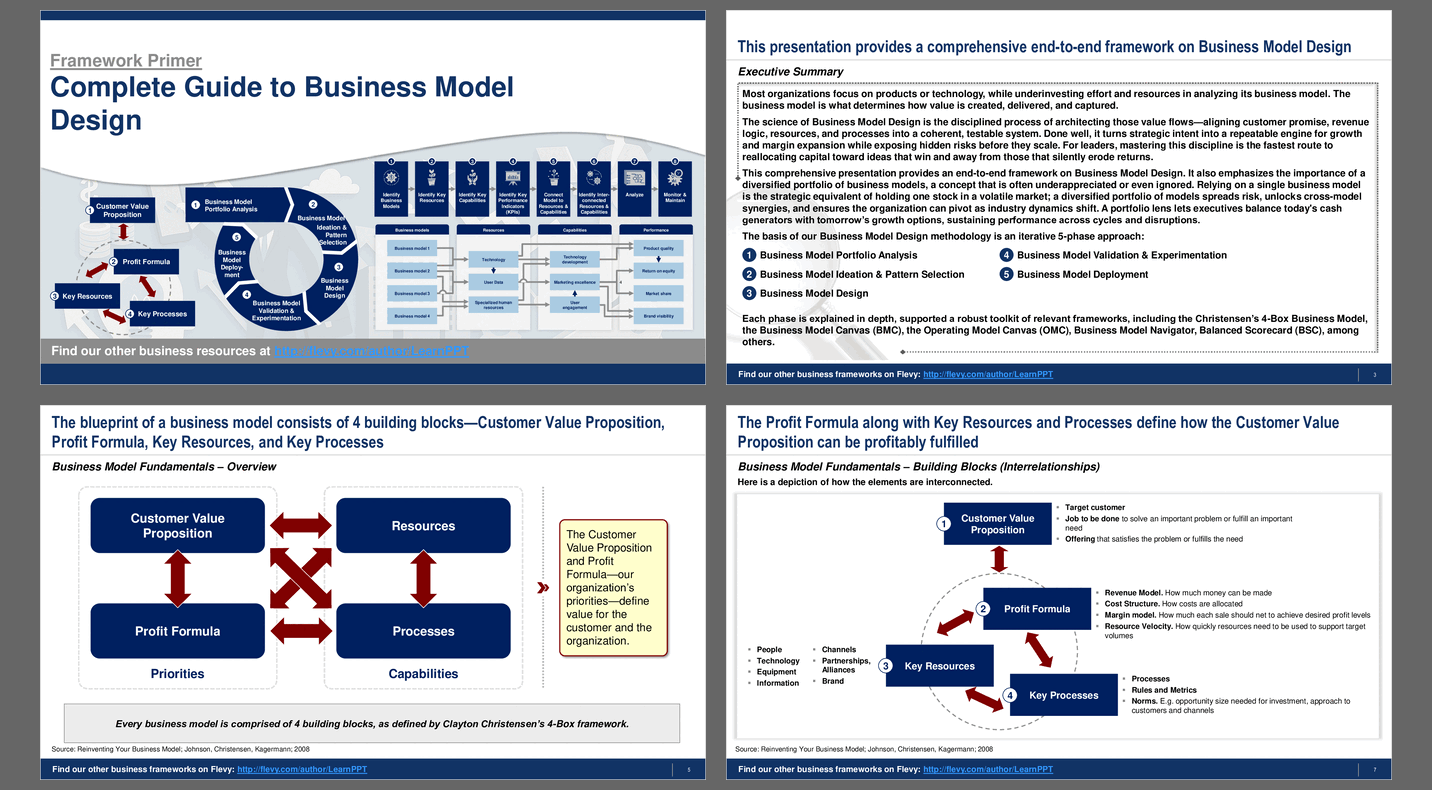
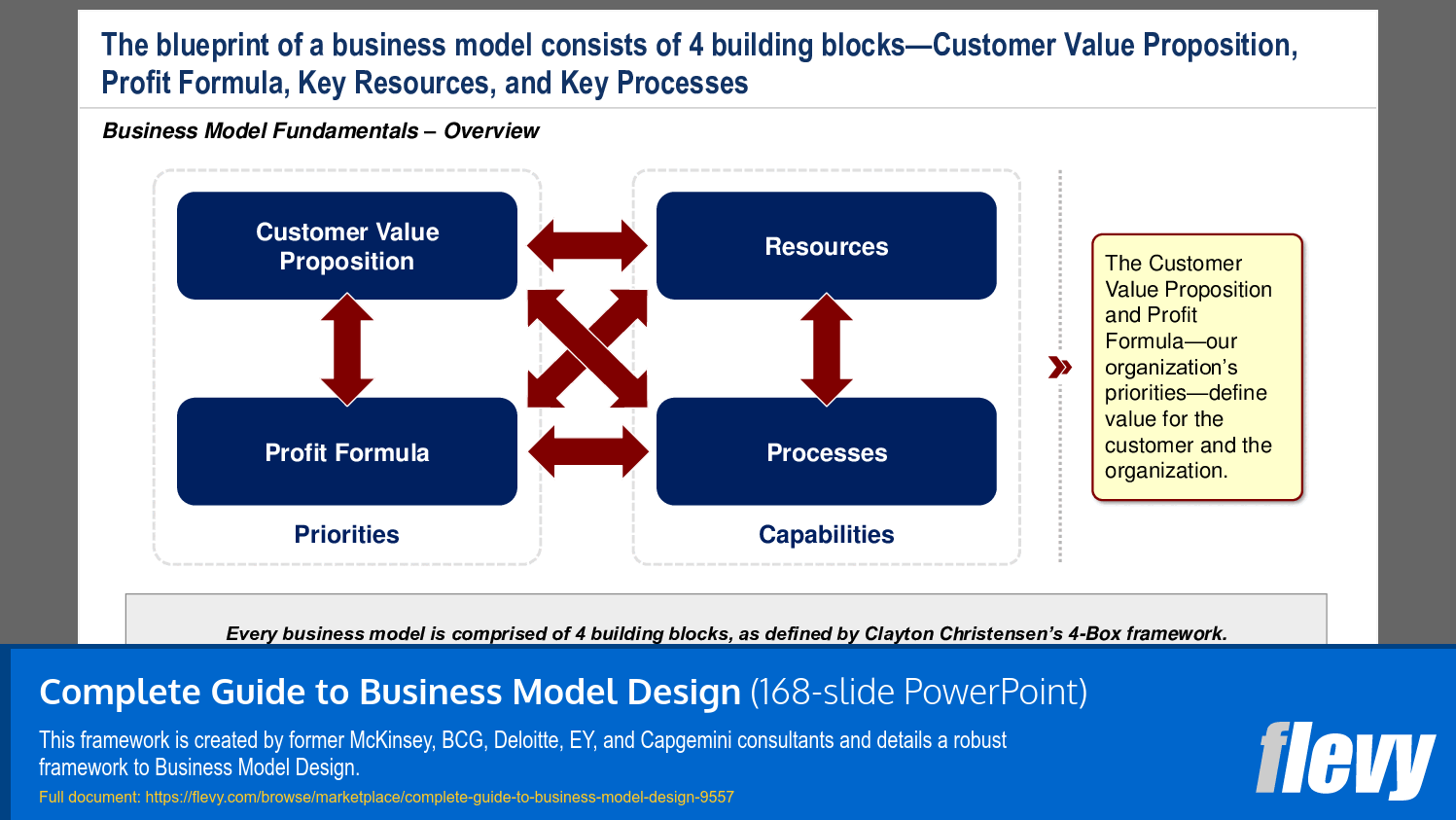
This PPT slide template outlines a business model framework featuring 4 essential components: Customer Value Proposition, Profit Formula, Key Resources, and Key Processes. The Customer Value Proposition defines what the organization offers to customers, while the Profit Formula details revenue generation and cost management. Key Resources include the necessary assets and capabilities to deliver value, and Key Processes refer to operational workflows for efficiency. The dynamic relationships among these components suggest that changes in one area, such as enhancing the Customer Value Proposition, may require adjustments in Processes or Resources. This framework, based on Clayton Christensen's 4-Box model, helps organizations assess the interactions of these elements to refine their strategic approach.
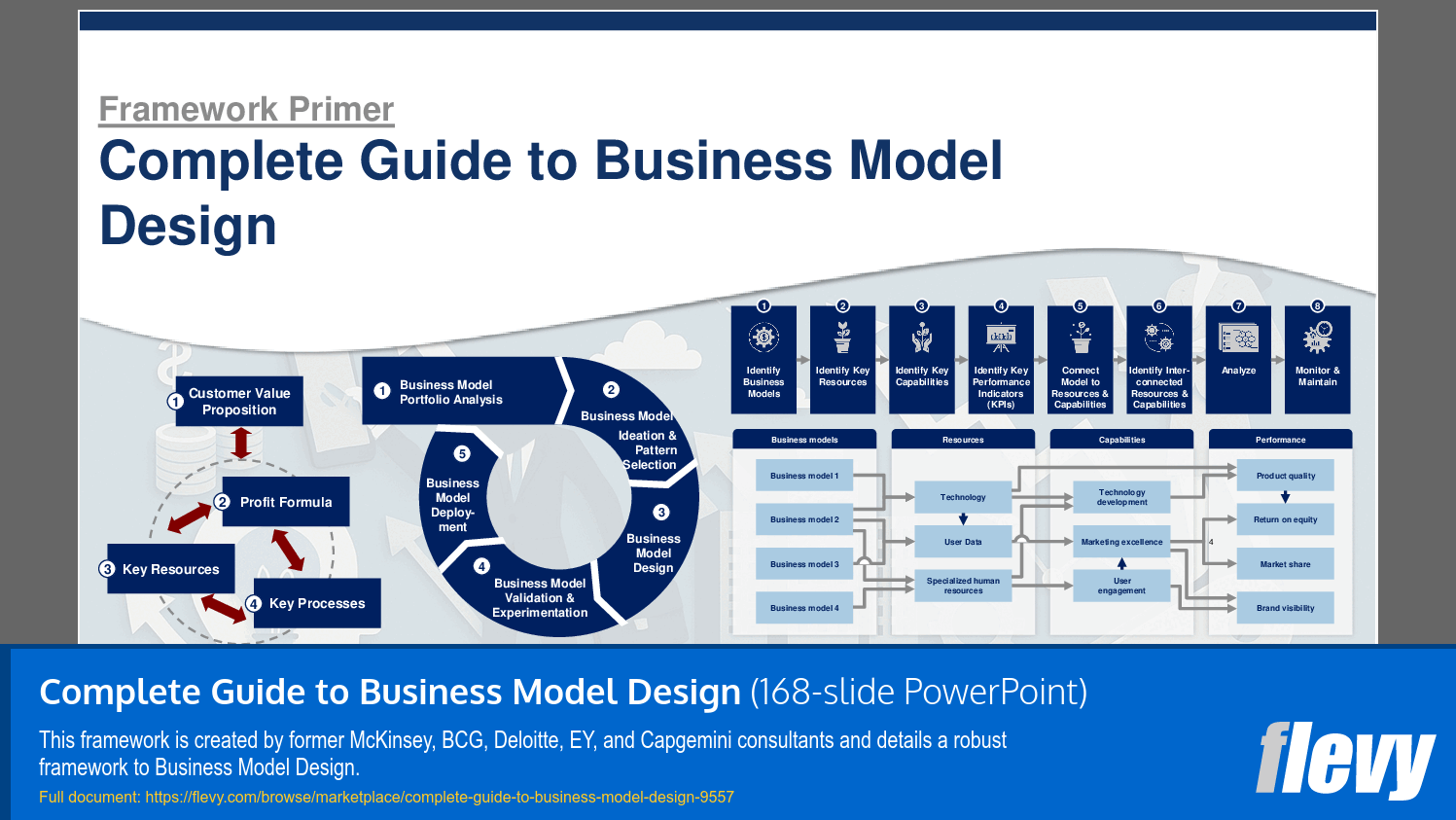
This PPT slide template outlines a five-phase approach for developing effective business models. The first phase, Business Model Portfolio Analysis, assesses existing and potential models to identify strategic gaps and prioritize investments. The second phase, Business Model Ideation & Pattern Selection, generates options using established business model patterns, filtering for strategic fit and novelty. The third phase, Business Model Design, translates top ideas into operational blueprints using frameworks like the Business Model Canvas. The fourth phase, Business Model Validation & Experimentation, involves lean experiments and financial simulations to test desirability, feasibility, and viability. Finally, the fifth phase, Business Model Deployment, executes validated models within the operational framework, embedding insights into the portfolio dashboard. This methodology transforms corporate capital into a repeatable R&D engine, enhancing strategic alignment and fostering innovation.
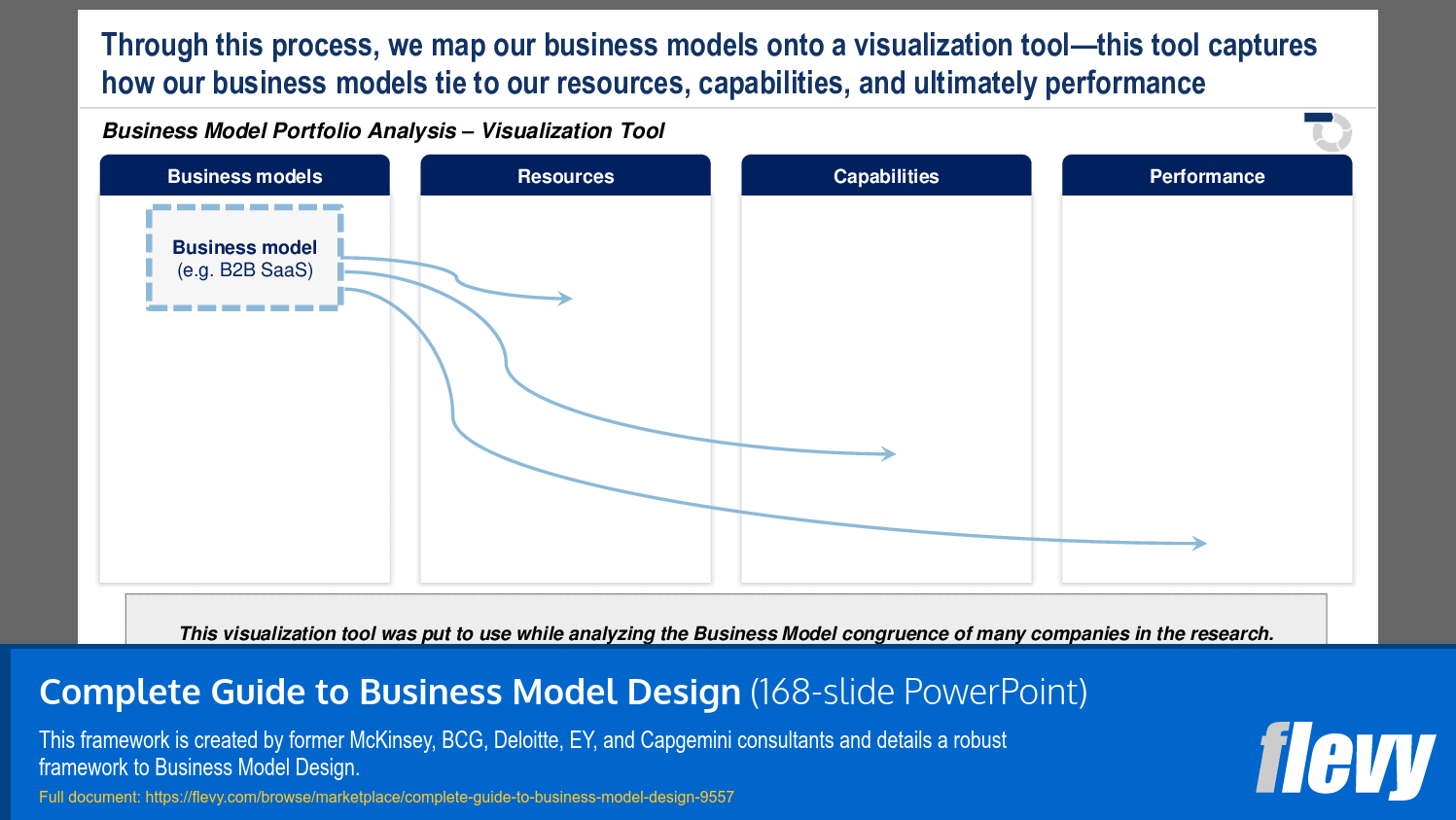
This PPT slide template presents a framework for analyzing business models using a visual mapping tool that connects business models to key organizational elements: resources, capabilities, and performance. The leftmost column identifies the business model, exemplified by B2B SaaS, indicating the framework's applicability across various business types. Arrows illustrate the influence of the business model on required resources and necessary capabilities. The resources likely include assets, technology, and human capital, while capabilities refer to the skills and processes essential for executing strategy. The performance column, currently empty, suggests the framework measures the success of the business model in achieving outcomes. This visualization tool has practical applications for analyzing the alignment of business models with operational strengths and market performance, facilitating informed strategic decisions.
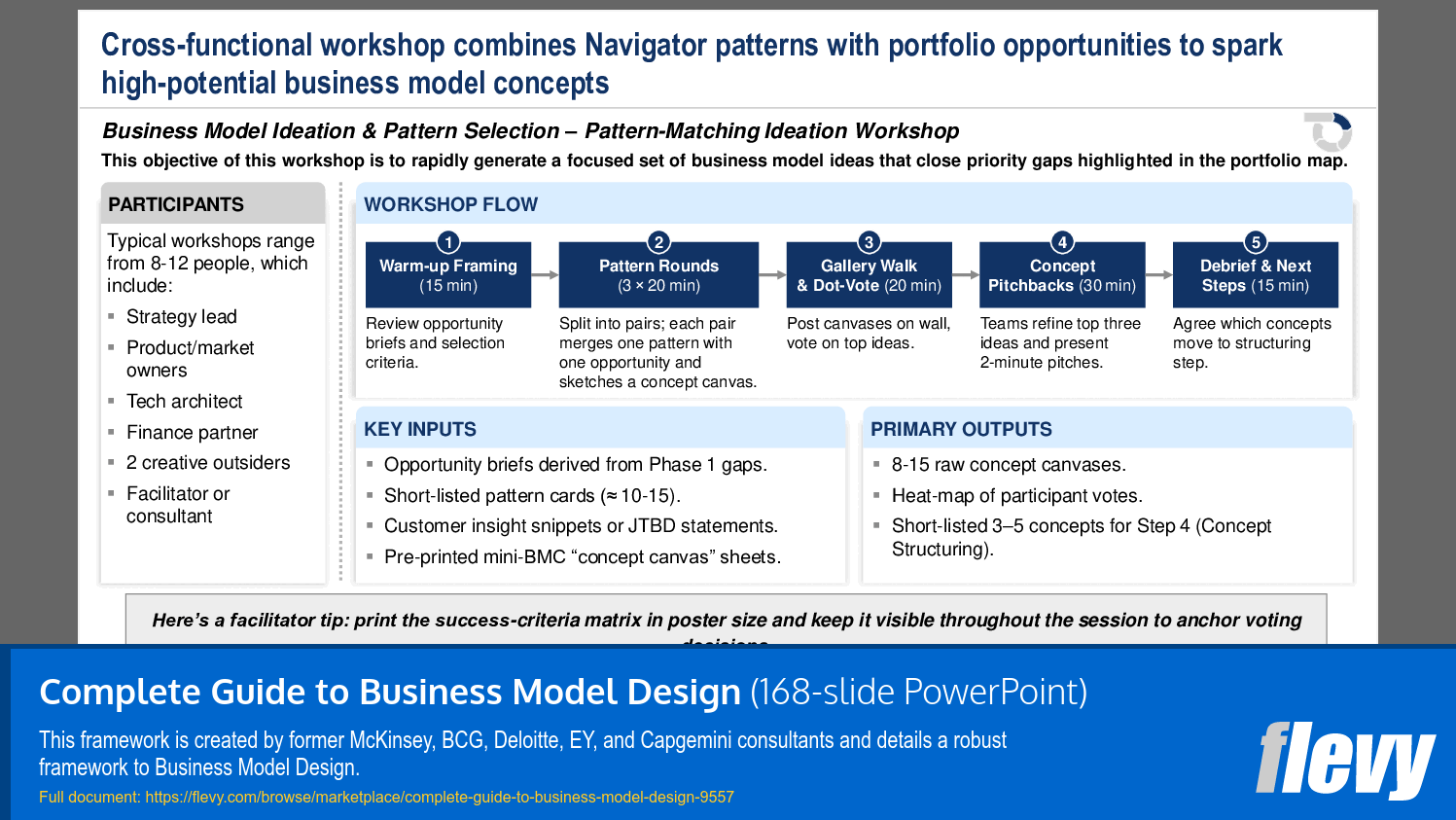
This PPT slide template outlines a structured workshop for generating innovative business model ideas using Navigator patterns and portfolio opportunities. The workshop includes 8 to 12 participants, such as strategy leads, product owners, tech architects, finance partners, and creative outsiders. It consists of 5 phases: "Warm-up Framing," where opportunity briefs and selection criteria are reviewed; "Pattern Rounds," where participants merge patterns with opportunities; "Gallery Walk & Dot-Vote," enabling visual sharing and voting on concepts; "Concept Pitchbacks," allowing teams to refine and present their top ideas; and "Debrief & Next Steps," determining which concepts advance. Key inputs include opportunity briefs, pattern cards, and customer insights, while outputs consist of raw concept canvases, a heat-map of votes, and a shortlist of actionable concepts. This structured approach enhances creativity and aligns ideas with strategic priorities.
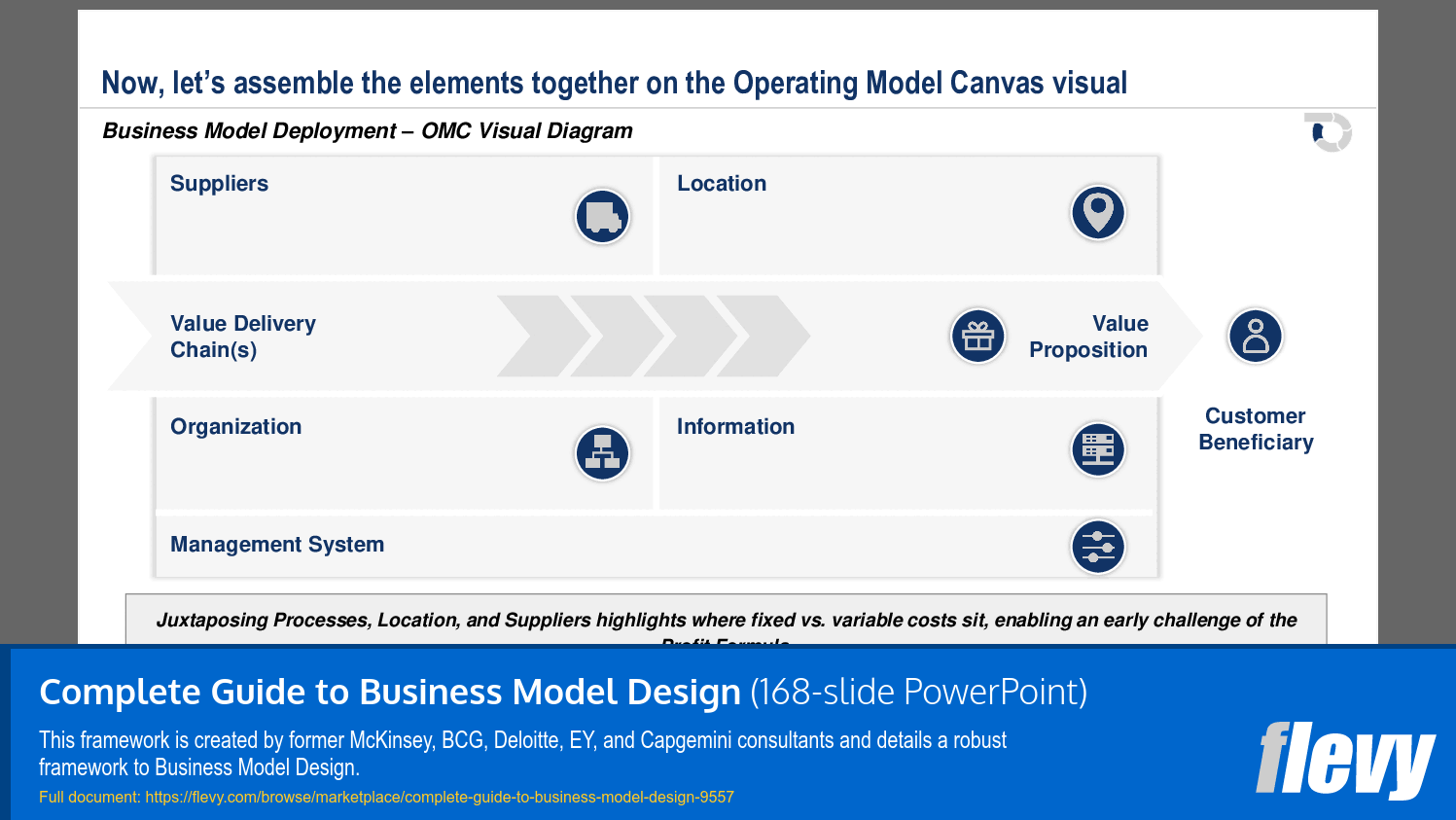
This PPT slide template presents the Operating Model Canvas (OMC) for business model deployment, highlighting key components: Suppliers, Value Delivery Chain(s), Organization, Management System, Location, Information, Value Proposition, and Customer Beneficiary. Suppliers form the foundation of the supply chain, while the Value Delivery Chain(s) illustrates how value flows from suppliers to customers. The Organization section details the internal structure supporting these processes, and the Management System addresses governance and operational oversight. Location and Information emphasize logistical considerations and data management. The Value Proposition articulates unique customer benefits, linking directly to the Customer Beneficiary. Additionally, the slide hints at analyzing cost structures, distinguishing between fixed and variable costs for financial planning and sustainability.
This PPT slide template outlines the fundamental components of a business model: Customer Value Proposition, Profit Formula, Key Resources, and Key Processes. The Customer Value Proposition defines the target customer and the specific problem the offering addresses. The Profit Formula includes the Revenue Model, Cost Structure, and Margin Model, emphasizing the importance of Resource Velocity for efficient resource utilization. Key Resources encompass essential assets such as technology, people, and partnerships necessary for delivering value. Key Processes focus on operational aspects, including performance metrics and customer interaction norms. This framework aids businesses in assessing and improving their models to fulfill customer needs profitably.
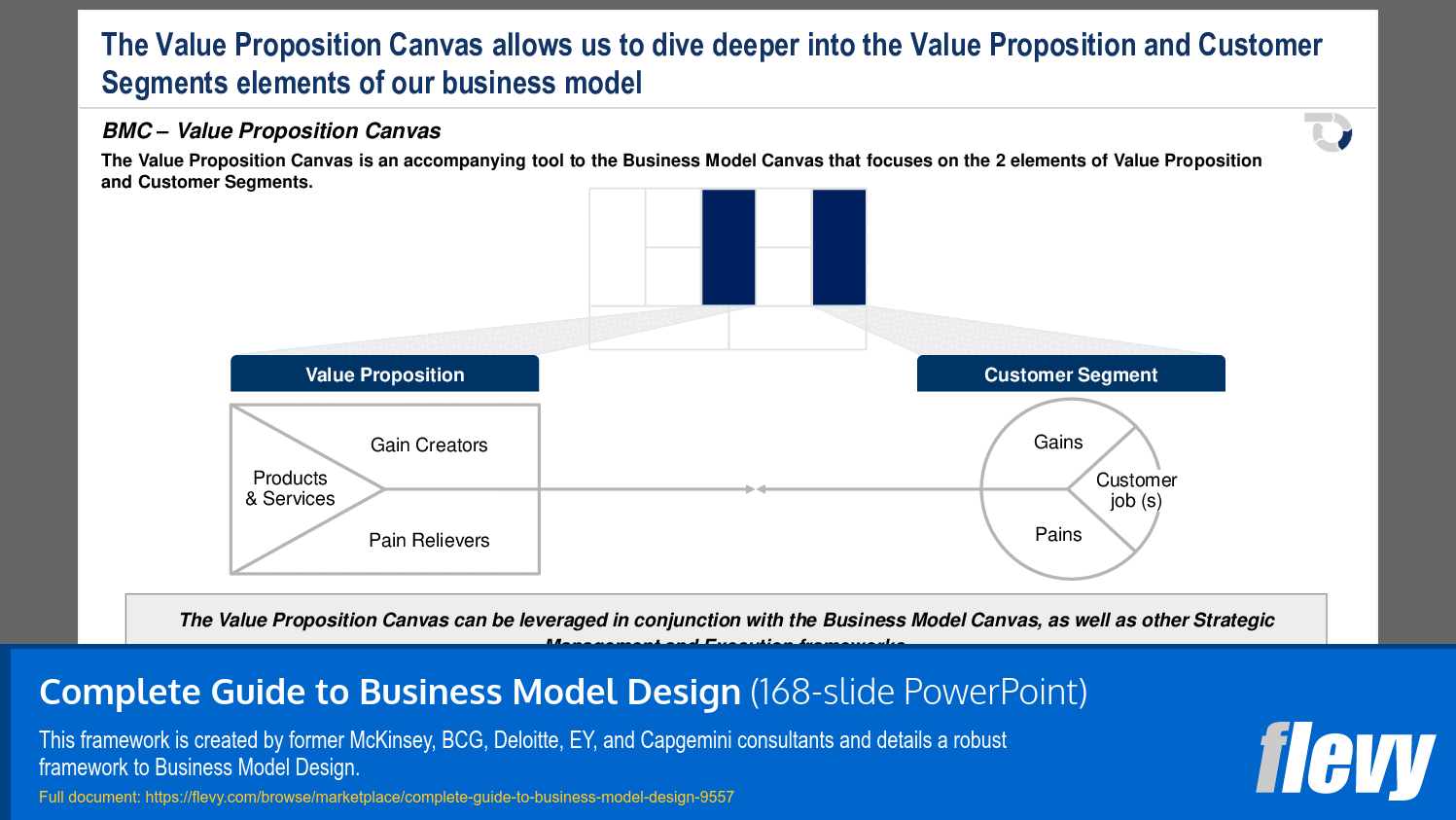
The Value Proposition Canvas enhances understanding of Value Proposition and Customer Segments within a business model framework. It illustrates the relationship between business offerings and customer needs. The Value Proposition section includes Gain Creators, which generate positive outcomes for customers, and Pain Relievers, which alleviate customer challenges. The Customer Segment is divided into Gains, Pains, and Customer Jobs, allowing businesses to identify specific customer needs and tasks. The Value Proposition Canvas can be utilized alongside the Business Model Canvas and other strategic frameworks, promoting a comprehensive approach to business model design and market positioning. This structured approach helps develop value propositions that exceed customer expectations, driving business success.
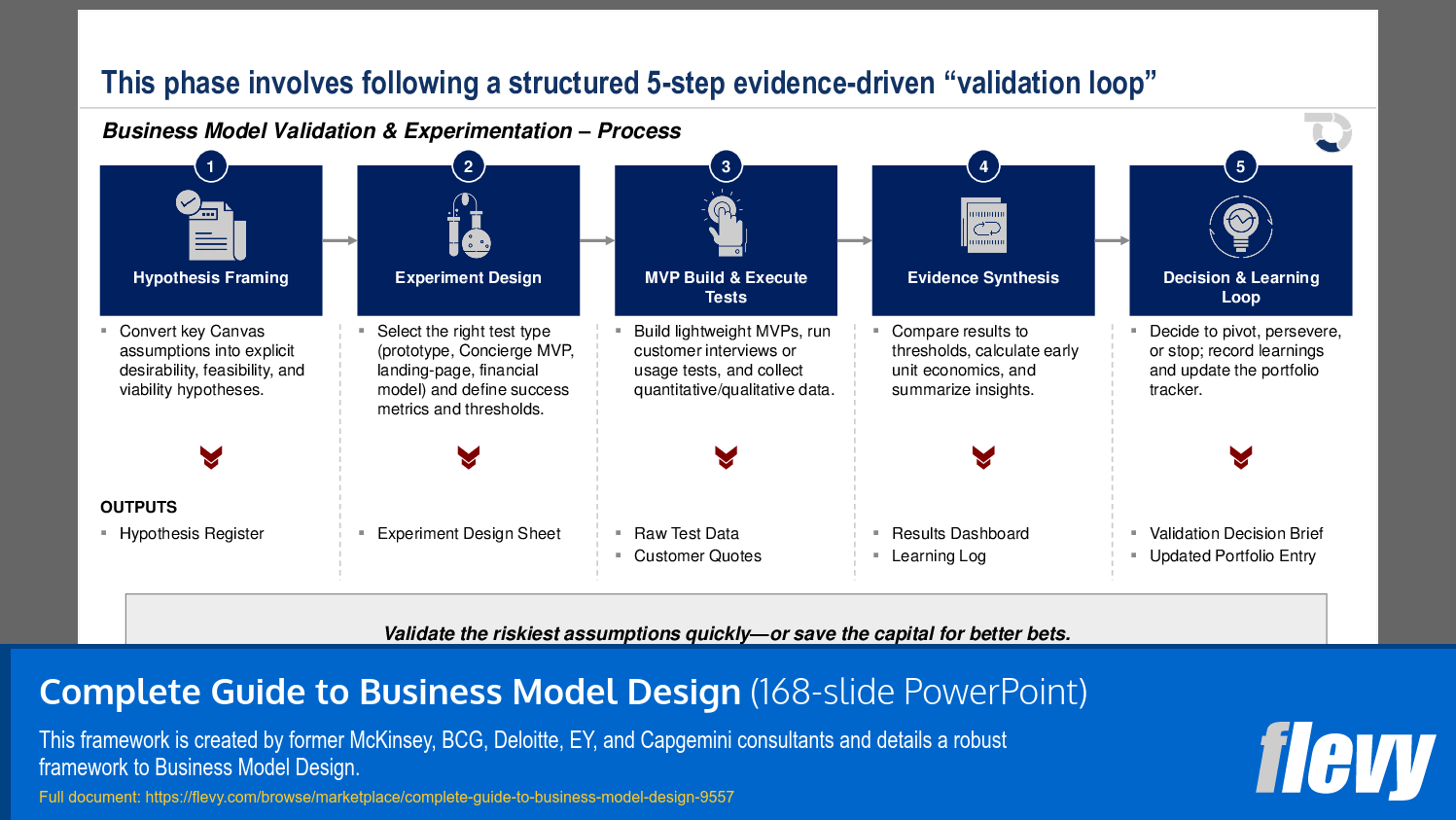
This PPT slide template outlines a five-step process for business model validation and experimentation. The first step, "Hypothesis Framing," translates key assumptions into explicit hypotheses about desirability, feasibility, and viability, resulting in a "Hypothesis Register." The second step, "Experiment Design," focuses on selecting test types and methodologies, producing an "Experiment Design Sheet." The third step, "MVP Build & Execute Tests," involves creating Minimum Viable Products (MVPs) and gathering quantitative and qualitative data, yielding "Raw Test Data" and "Customer Quotes." In "Evidence Synthesis," test results are compared against thresholds, calculating early unit economics and summarizing insights through a "Results Dashboard" and "Learning Log." The final step, "Decision & Learning Loop," guides informed decisions on whether to pivot, persevere, or halt the project, updating the "Validation Decision Brief" and "Portfolio Entry." This structured approach optimizes resource allocation and strategic direction.
Source: Best Practices in Business Model Canvas, Business Model Design PowerPoint Slides: Complete Guide to Business Model Design PowerPoint (PPTX) Presentation Slide Deck, LearnPPT Consulting
We are a team of management consultants trained by top tier global consulting firms (including McKinsey, BCG, Deloitte, EY, Capgemini) with a collective experience of several decades. We specialize in business frameworks based on real-life consulting engagements.
We have served 100s of clients that range from Fortune 500 companies to tech startups to
... [read more] $1B+ private companies.
Utilize our consulting frameworks to apply structured thinking & analysis to address your business challenges, uncover strategic insights, and implement workable solutions. Our PowerPoint presentations follow traditional consulting slide design formats, starting with a clear slide headline. Easily customize and repurpose our slides for your own business presentations.
Beyond business frameworks & methodologies, we also offer PowerPoint templates and other business templates. Our templates are professionally designed and have been used in thousands of deliverables & work products across hundreds of clients.
The average daily rate of a McKinsey consultant is $6,625 (not including expenses). The average price of a Flevy document is $65.
Trusted by over 10,000+ Client Organizations
Since 2012, we have provided business templates to over 10,000 businesses and organizations of all sizes, from startups and small businesses to the Fortune 100, in over 130 countries.
Read Customer Testimonials
"The wide selection of frameworks is very useful to me as an independent consultant. In fact, it rivals what I had at my disposal at Big 4 Consulting firms in terms of efficacy and organization."
– Julia T., Consulting Firm Owner (Former Manager at Deloitte and Capgemini)
"Flevy.com has proven to be an invaluable resource library to our Independent Management Consultancy, supporting and enabling us to better serve our enterprise clients.
The value derived from our [FlevyPro] subscription in terms of the business it has helped to gain far exceeds the investment made, making a subscription a no-brainer for any growing consultancy – or in-house strategy team."
– Dean Carlton, Chief Transformation Officer, Global Village Transformations Pty Ltd.
"I am extremely grateful for the proactiveness and eagerness to help and I would gladly recommend the Flevy team if you are looking for data and toolkits to help you work through business solutions."
– Trevor Booth, Partner, Fast Forward Consulting
"FlevyPro has been a brilliant resource for me, as an independent growth consultant, to access a vast knowledge bank of presentations to support my work with clients. In terms of RoI, the value I received from the very first presentation I downloaded paid for my subscription many times over! The
quality of the decks available allows me to punch way above my weight – it's like having the resources of a Big 4 consultancy at your fingertips at a microscopic fraction of the overhead.
"
– Roderick Cameron, Founding Partner at SGFE Ltd
"I have used Flevy services for a number of years and have never, ever been disappointed. As a matter of fact, David and his team continue, time after time, to impress me with their willingness to assist and in the real sense of the word. I have concluded in fact
that it is not at all just a repository of documents/resources but, in the way that David and his team manage the firm, it is like dealing with consultants always ready to assist, advise and direct you to what you really need, and they always get it right.
I am an international hospitality accomplished senior executive who has worked and lived during the past 35 years in 23 countries in 5 continents and I can humbly say that I know what customer service is, trust me.
Aside from the great and professional service that Flevy's team provide, their wide variety of material is of utmost great quality, professionally put together and most current.
Well done Flevy, keep up the great work and I look forward to continue working with you in the future and to recommend you to a variety of colleagues around the world.
"
– Roberto Pelliccia, Senior Executive in International Hospitality
"FlevyPro provides business frameworks from many of the global giants in management consulting that allow you to provide best in class solutions for your clients."
– David Harris, Managing Director at Futures Strategy
"As a consulting firm, we had been creating subject matter training materials for our people and found the excellent materials on Flevy, which saved us 100's of hours of re-creating what already exists on the Flevy materials we purchased."
– Michael Evans, Managing Director at Newport LLC
"I have used FlevyPro for several business applications. It is a great complement to working with expensive consultants. The quality and effectiveness of the tools are of the highest standards."
– Moritz Bernhoerster, Global Sourcing Director at Fortune 500

 Click main image to view in full screen. Unlock all 17 preview images: