
Introduction:
From the ambitious vision of the Dartmouth Conference in 1956, which proclaimed that "Every aspect of learning or other feature of intelligence can, in principle, be so precisely described that a machine can be made to simulate it," to Larry Page's futuristic dream of AI as the ultimate version of Google, and Andrew Ng's assertion that AI will revolutionize nearly every industry, the journey of artificial intelligence (AI) has been nothing short of remarkable.
1. The Historical Landscape of AI:
• Centuries of Contemplation: Delve into the centuries-old pondering of philosophers and mathematicians regarding the potential of machine-based intelligence.
• AI in Popular Culture: Explore the pervasive presence of AI in popular culture, from Futurama at the 1939 World's Fair to modern films and media.
2. The Turing Test and the Birth of AI:
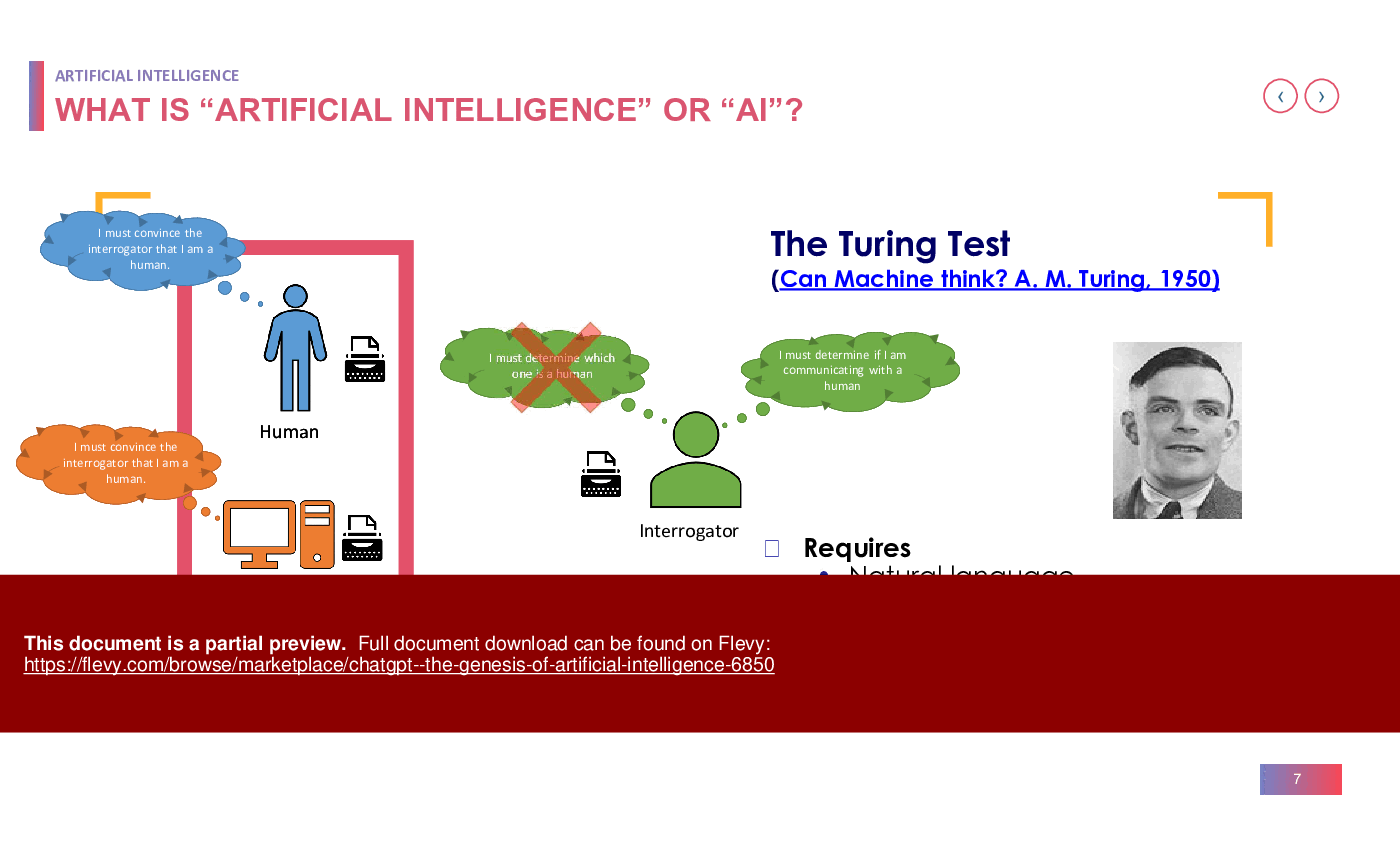
• Alan Turing's Vision: Uncover Alan Turing's seminal 1950 paper, "Computing Machinery and Intelligence," which laid the foundation for modern AI.
• The Turing Test: Explore Turing's proposition of when machines could be deemed intelligent, challenging them to deceive humans into believing they were human.
3. The Emergence of AI:
• The Coined Term: Learn how John McCarthy coined the term "AI" in 1956, marking a pivotal moment in AI history.
• Evolution of Approaches: Trace the evolution of AI approaches, from early calculating machines to expert systems, and later, machine learning.
4. AI's Contemporary Landscape:
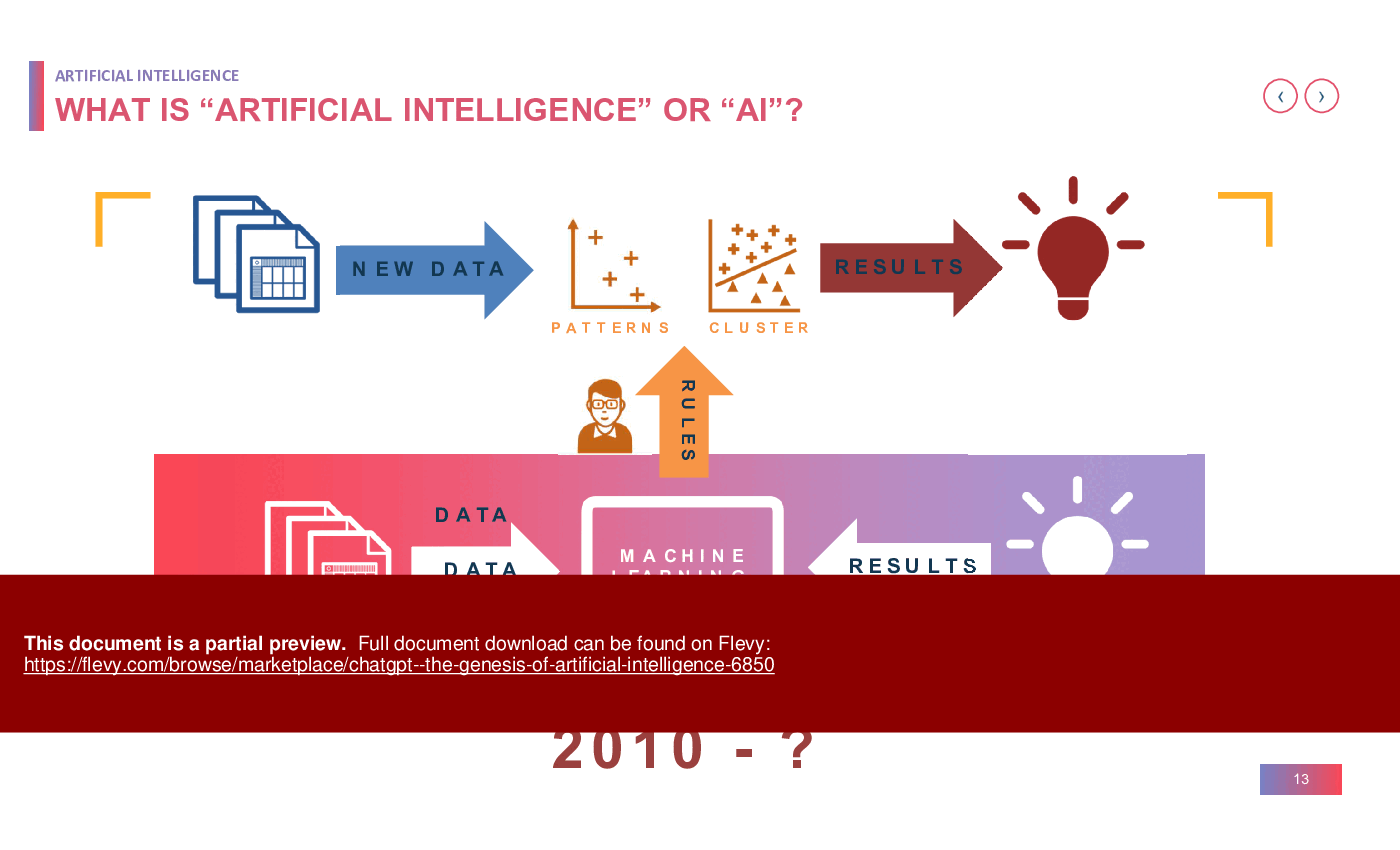
• Machine Learning Revolution: Understand how machine learning has become a cornerstone of AI, enabling machines to acquire new understanding based on experience.
• Exponential Growth: Explore the vast and diverse applications of AI in today's world, with its exponential growth.
5. The ChatGPT Revolution:
• OpenAI's Contribution: Learn about ChatGPT, a chatbot developed by OpenAI and launched in November 2022, as a testament to AI's rapid advancements.
• ChatGPT's Capabilities: Discover how ChatGPT, a variant of the GPT-3 model, is specifically designed for chatbot applications, with the ability to maintain coherent conversations.
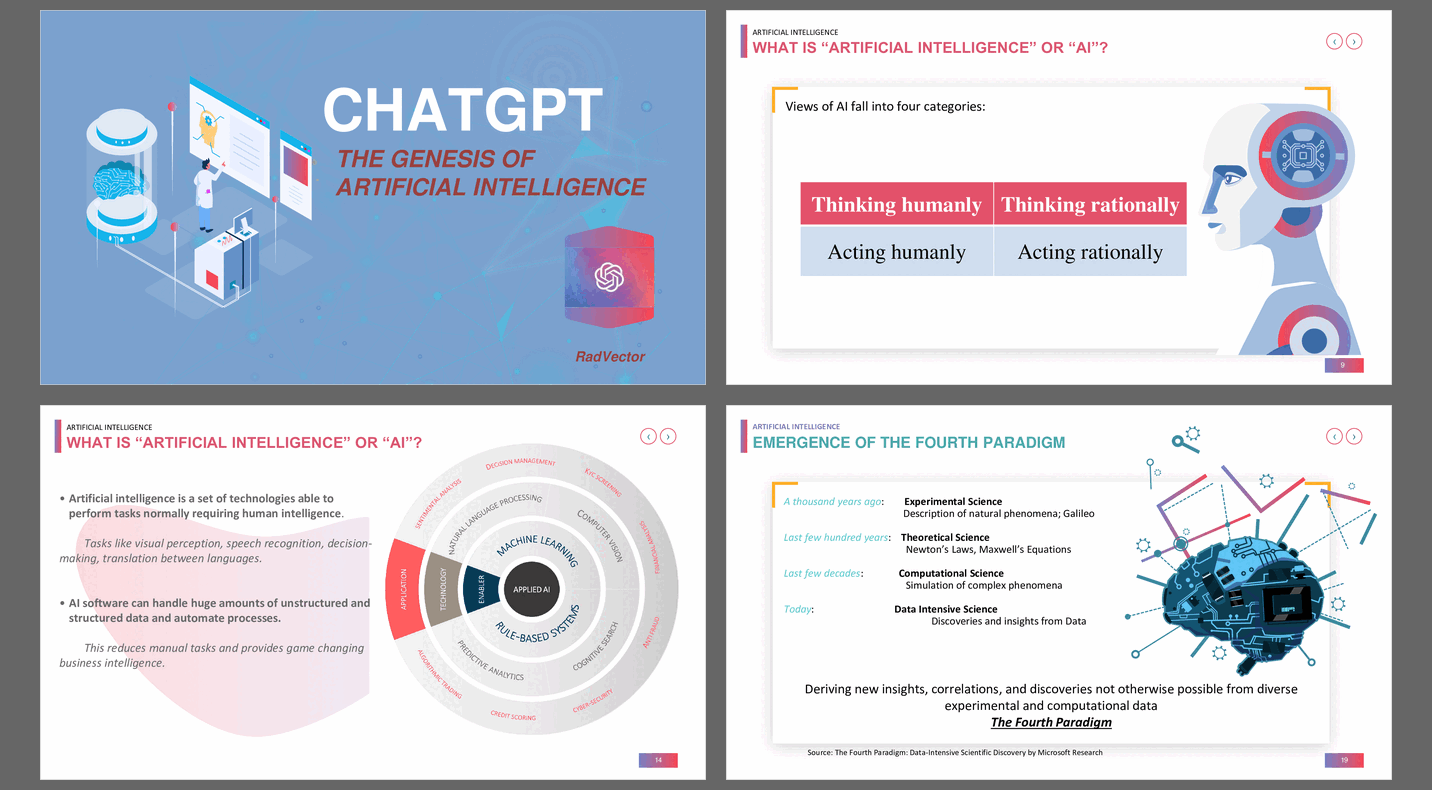
This 116-slide PowerPoint presentation serves as a comprehensive primer on artificial intelligence and the inception of ChatGPT as a Large Language Model (LLM). It addresses philosophical questions surrounding Artificial General Intelligence (AGI) and offers valuable insights into the evolving world of AI and chatbots. The document is fully customizable and includes compelling diagrams, ice-breakers, images, and other engaging content to provide a holistic understanding of key AI and chatbot concepts.
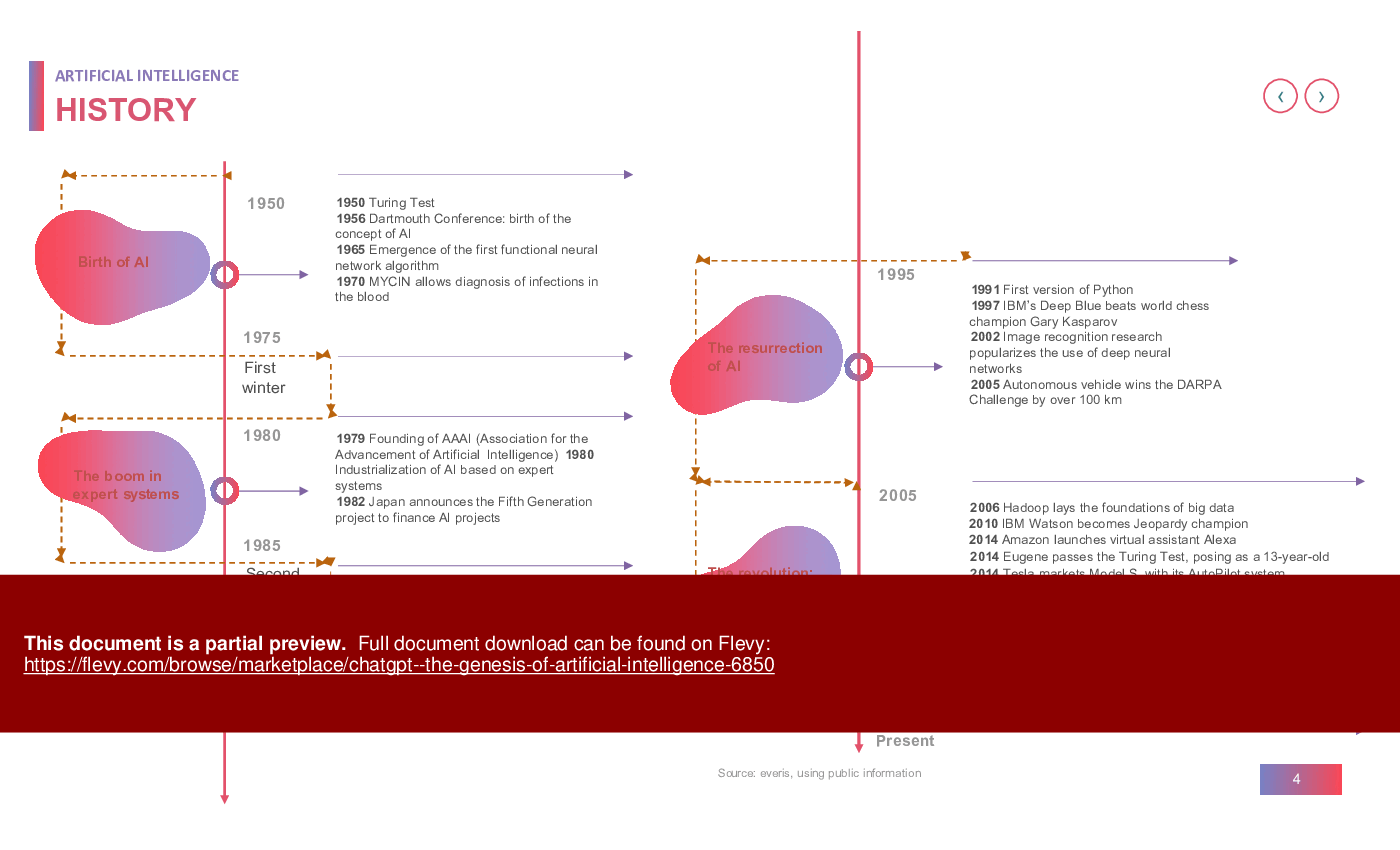
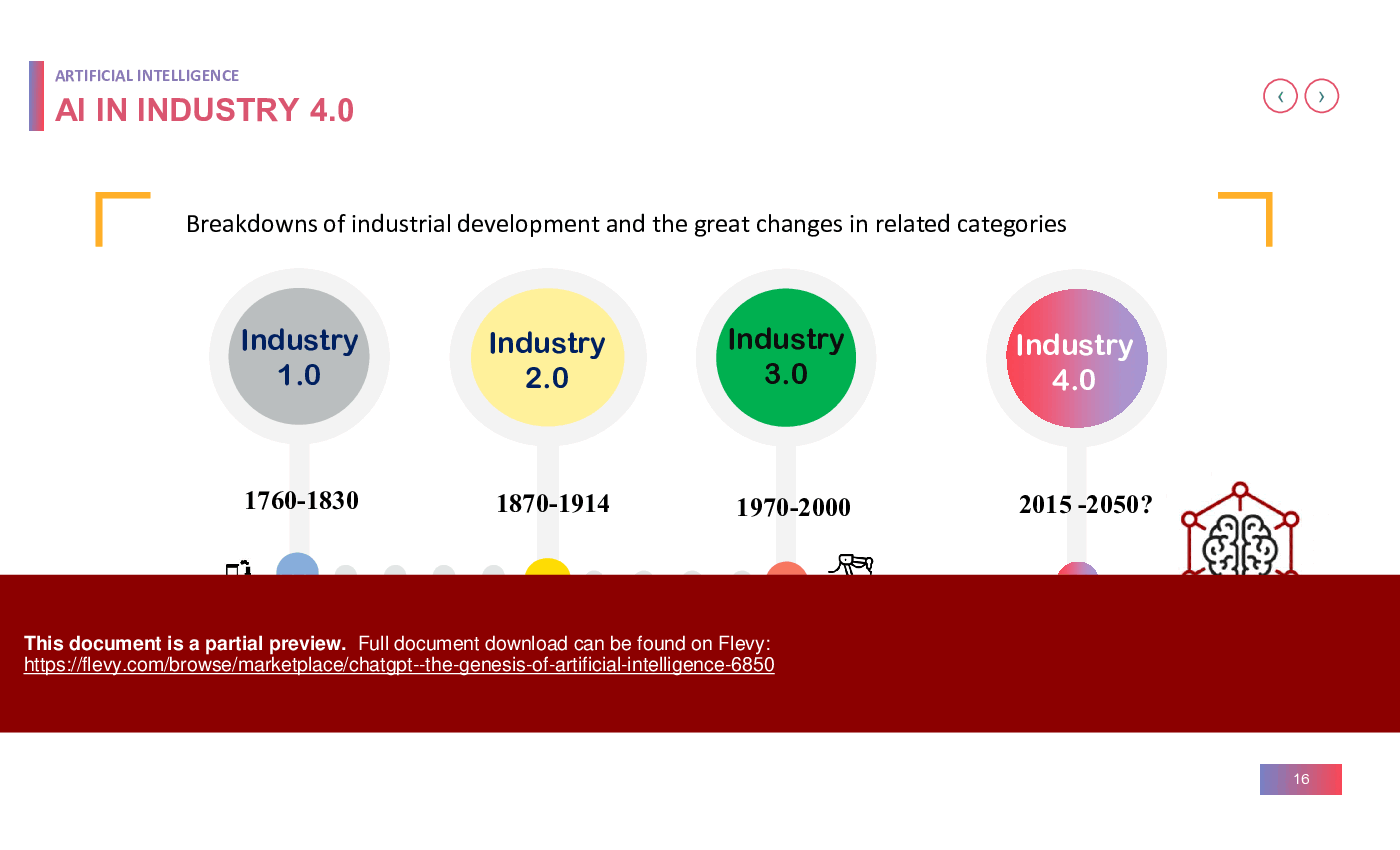
The presentation includes a detailed timeline of AI's evolution from the Turing Test to the rise of deep learning. It also examines the pivotal role of natural language processing in the development of advanced AI systems.
Got a question about the product? Email us at support@flevy.com or ask the author directly by using the "Ask the Author a Question" form. If you cannot view the preview above this document description, go here to view the large preview instead.
Executive Summary
The "ChatGPT - The Genesis of Artificial Intelligence" presentation is a comprehensive exploration of the evolution and implications of artificial intelligence, particularly focusing on ChatGPT. Developed by experts with extensive consulting backgrounds at McKinsey, Deloitte, and Capgemini, this presentation delves into the historical milestones of AI, the mechanics of machine learning, and the transformative capabilities of ChatGPT. Buyers will gain insights into AI's market potential, its applications across various sectors, and the ethical considerations surrounding its deployment. This deck equips corporate executives and consultants with the knowledge to leverage AI technologies effectively in their organizations.
Who This Is For and When to Use
• Corporate executives seeking to understand AI's strategic implications for their organizations
• Integration leaders looking to implement AI solutions in operational workflows
• Consultants advising clients on AI adoption and transformation strategies
• Technology teams exploring the integration of AI tools in existing systems
Best-fit moments to use this deck:
• Strategy sessions focused on digital transformation and AI integration
• Workshops aimed at educating teams on AI capabilities and applications
• Client presentations discussing the impact of AI on business operations
Learning Objectives
• Define artificial intelligence and its core components, including machine learning and natural language processing
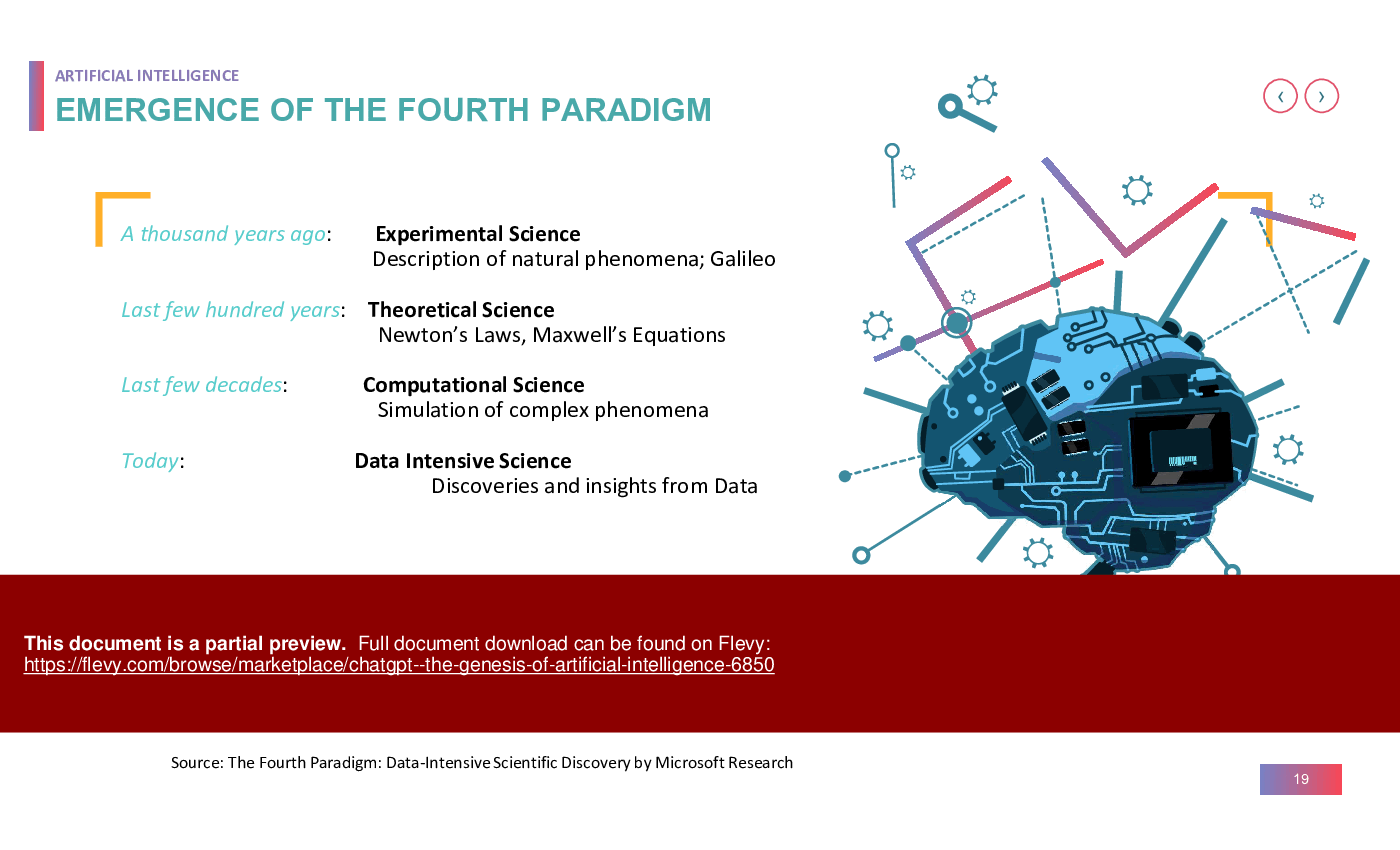
• Analyze the historical evolution of AI and its key milestones
• Evaluate the market potential and applications of AI technologies across industries
• Assess the implications of deploying ChatGPT in various business contexts
• Identify the risks and ethical considerations associated with AI development and usage
• Develop strategies for integrating AI solutions into existing business processes
Table of Contents
• Overview of AI (page 3)
• History (page 4)
• AI is a Market (page 5)
• What is “Artificial Intelligence” or “AI”? (page 6)
• Moving AI Forward (page 14)
• ChatGPT Genesis (page 29)
• Applications of ChatGPT (page 97)
• ChatGPT Limitations (page 104)
• The Impact of ChatGPT on the Future (page 106)
• Conclusion (page 114)
• Takeaways (page 115)
Primary Topics Covered
• Overview of AI - An introduction to artificial intelligence, its definitions, and its significance in modern technology.
• History - A timeline highlighting pivotal moments in AI development from the Turing Test to the launch of ChatGPT.
• AI Market Potential - Analysis of the growing market for AI technologies, including projected revenue growth.
• ChatGPT Applications - Detailed exploration of various sectors utilizing ChatGPT, including healthcare, customer service, and creative writing.
• Ethical Considerations - Discussion on the risks and challenges associated with AI deployment, emphasizing the need for responsible development.
• Future Implications - Insights into how ChatGPT and similar technologies will shape future interactions between humans and machines.
Deliverables, Templates, and Tools
• AI implementation strategy framework
• ChatGPT deployment checklist for various industries
• Risk assessment template for AI projects
• Case study examples of successful AI integration
• Ethical guidelines for AI usage in business
• Performance metrics for evaluating AI effectiveness
Slide Highlights
• Historical timeline of AI milestones from the Turing Test to ChatGPT
• Market growth projections for AI technologies
• Visual representation of ChatGPT's architecture and training process
• Comparative analysis of AI applications across different sectors
• Ethical considerations and challenges in AI development
Potential Workshop Agenda
Introduction to AI and ChatGPT (60 minutes)
• Overview of AI concepts and history
• Discussion on the significance of ChatGPT in the AI landscape
AI Applications and Market Potential (90 minutes)
• Exploration of ChatGPT's applications across industries
• Group activity to identify potential use cases in participants' organizations
Ethical Considerations and Future Implications (60 minutes)
• Discussion on the risks and challenges of AI deployment
• Brainstorming session on responsible AI practices
Customization Guidance
• Tailor the presentation to include specific industry examples relevant to the audience
• Adjust the focus on ethical considerations based on organizational values and policies
• Incorporate case studies that align with the audience's business objectives
Secondary Topics Covered
• Machine learning and deep learning fundamentals
• Natural language processing techniques and applications
• The role of big data in AI development
• Future trends in AI technology and its societal impact
FAQ
What is the primary focus of this presentation?
The presentation focuses on the evolution of AI, particularly ChatGPT, its applications, and the ethical considerations surrounding its use.
Who developed this presentation?
It was developed by a team of experts with consulting experience at McKinsey, Deloitte, and Capgemini.
How can this presentation help my organization?
It provides insights into AI technologies, helping organizations understand their potential applications and implications for business strategy.
What are the limitations of ChatGPT?
ChatGPT has limitations in common-sense reasoning, causal inference, and lacks grounding in the real world.
How can we ensure ethical AI deployment?
By following established guidelines, conducting risk assessments, and engaging in transparent practices, organizations can promote responsible AI usage.
What industries can benefit from ChatGPT?
Industries such as healthcare, finance, customer service, and creative sectors can leverage ChatGPT for various applications.
What are the future implications of AI technologies?
AI technologies like ChatGPT are expected to transform industries, improve efficiency, and enhance human-computer interaction.
How does ChatGPT compare to traditional AI models?
ChatGPT utilizes advanced transformer architecture, enabling it to generate more coherent and contextually relevant responses compared to traditional models.
Glossary
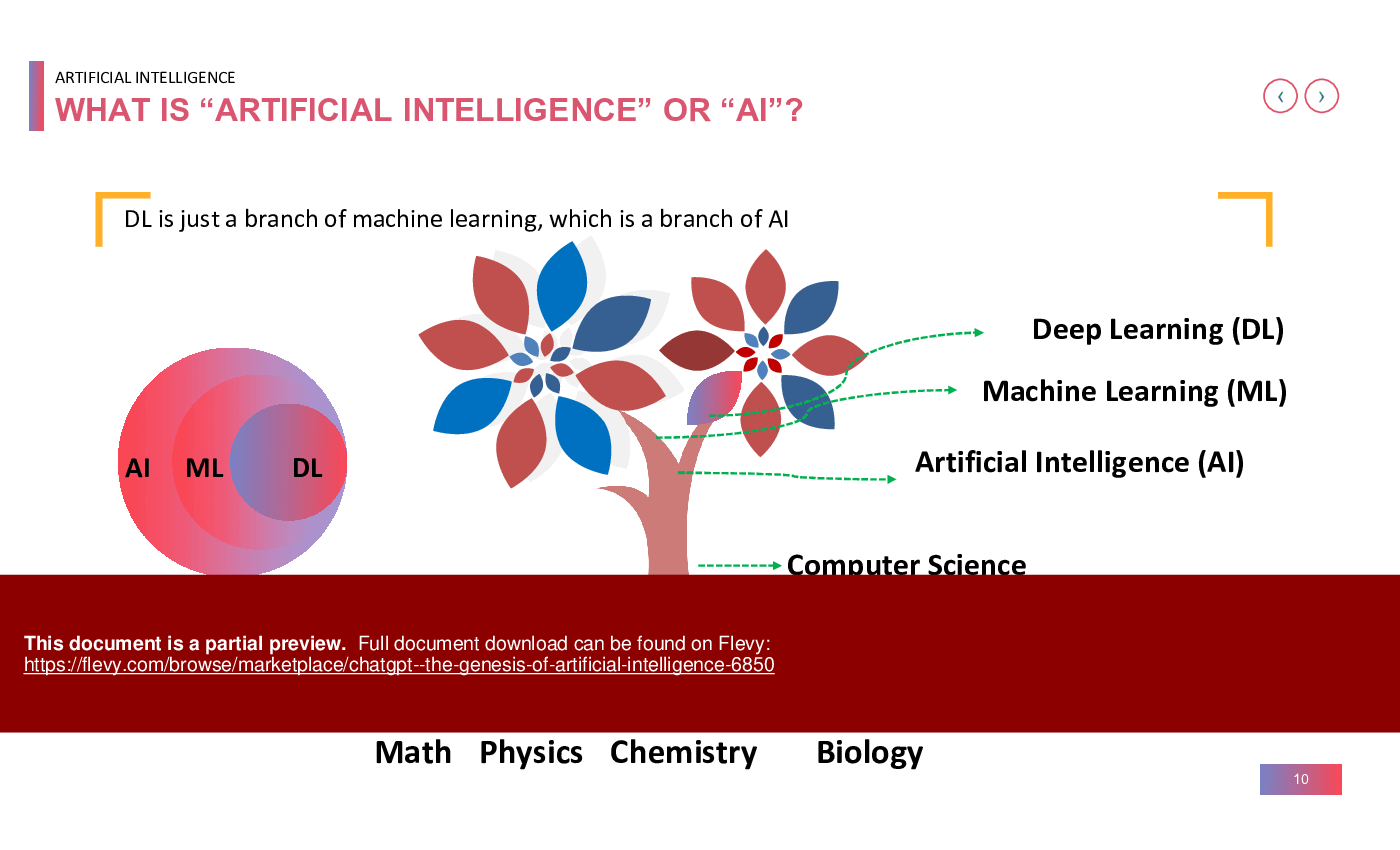
• Artificial Intelligence (AI) - The simulation of intelligent behavior in computers.
• Machine Learning (ML) - A subset of AI that enables machines to learn from data without explicit programming.
• Natural Language Processing (NLP) - Techniques for processing and understanding human language.
• Chatbot - A program designed to simulate conversation with human users.
• Transformer - A model architecture used in NLP that relies on self-attention mechanisms.
• Reinforcement Learning from Human Feedback (RLHF) - A training method that uses human feedback to improve AI responses.
• Ethical AI - The practice of developing and deploying AI technologies responsibly and transparently.
• Big Data - Large and complex data sets that traditional data processing software cannot handle efficiently.
• Deep Learning - A subset of machine learning that uses neural networks with many layers.
• Contextual Understanding - The ability of AI to comprehend the context of a conversation or text.
• Bias in AI - The presence of systematic errors in AI outputs due to flawed training data or algorithms.
• Human-Computer Interaction (HCI) - The study of how people interact with computers and to design technologies that let humans interact with computers in novel ways.
• Conversational AI - AI systems designed to engage in dialogue with users in a natural manner.
• Generative AI - AI that can create new content, such as text, images, or music, based on learned patterns.
• AI Ethics - The field of study that examines the moral implications and responsibilities of AI technologies.
• Algorithm - A set of rules or processes to be followed in calculations or problem-solving operations, typically by a computer.
• Data Privacy - The aspect of information technology that deals with the proper handling of data concerning consent, notice, and regulatory compliance.
• User Experience (UX) - The overall experience of a person using a product, especially in terms of how pleasant or efficient it is.
Source: Best Practices in Artificial Intelligence, ChatGPT, Machine Learning, NLP PowerPoint Slides: ChatGPT - The Genesis of Artificial Intelligence PowerPoint (PPTX) Presentation Slide Deck, RadVector Consulting
|
Download our FREE Digital Transformation Templates
Download our free compilation of 50+ Digital Transformation slides and templates. DX concepts covered include Digital Leadership, Digital Maturity, Digital Value Chain, Customer Experience, Customer Journey, RPA, etc. |










