
Digital Transformation: Artificial Intelligence (AI) Strategy   27-slide PPT PowerPoint presentation slide deck (PPT)
$29.00

Digital Transformation: Artificial Intelligence (AI) Strategy (27-slide PPT PowerPoint presentation slide deck (PPT)) Preview Image
Log in to unlock full preview.
Digital Transformation: Artificial Intelligence (AI) Strategy (27-slide PPT PowerPoint presentation slide deck (PPT)) Preview Image
Arrow   Click main image to view in full screen.

Digital Transformation: Artificial Intelligence (AI) Strategy (PowerPoint PPT Slide Deck)

PowerPoint (PPT) 27 Slides FlevyPro Document

Top 100 Best Practice $29.00
FlevyPro price: FREE (included in subscription)
This framework is developed by a team of former McKinsey and Big 4 consultants. The presentation follows the headline-body-bumper slide format used by global consulting firms.
Add to Cart


Immediate download
Free lifetime updates

ARTIFICIAL INTELLIGENCE PPT DESCRIPTION

Editor Summary 27-slide PowerPoint presentation outlining a strategic framework for AI in digital transformation, developed by ex-McKinsey consultants. Read more

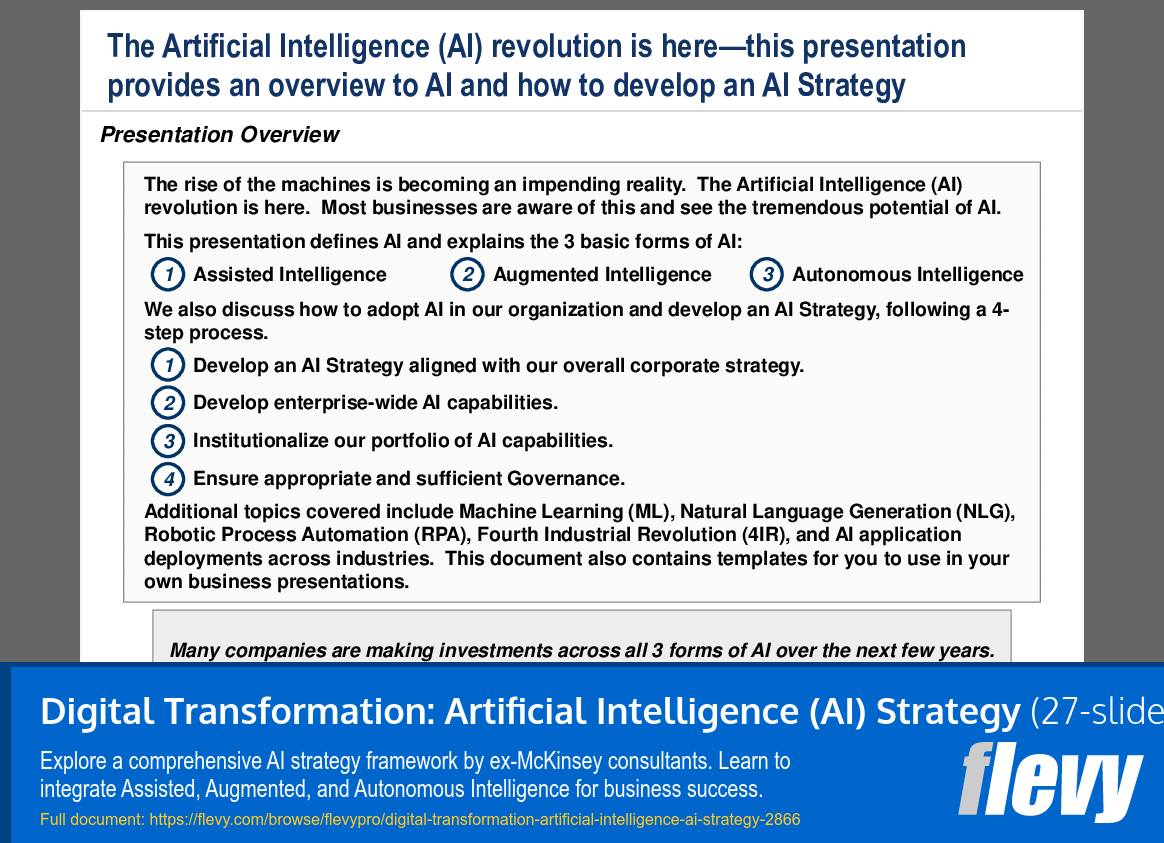
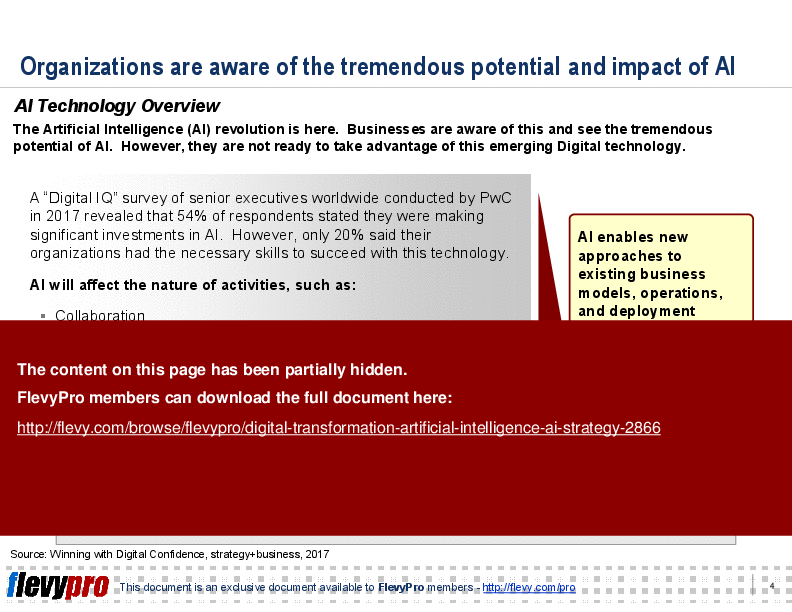
The rise of the machines is becoming an impending reality. The Artificial Intelligence (AI) revolution is here. Most businesses are aware of this and see the tremendous potential of AI.

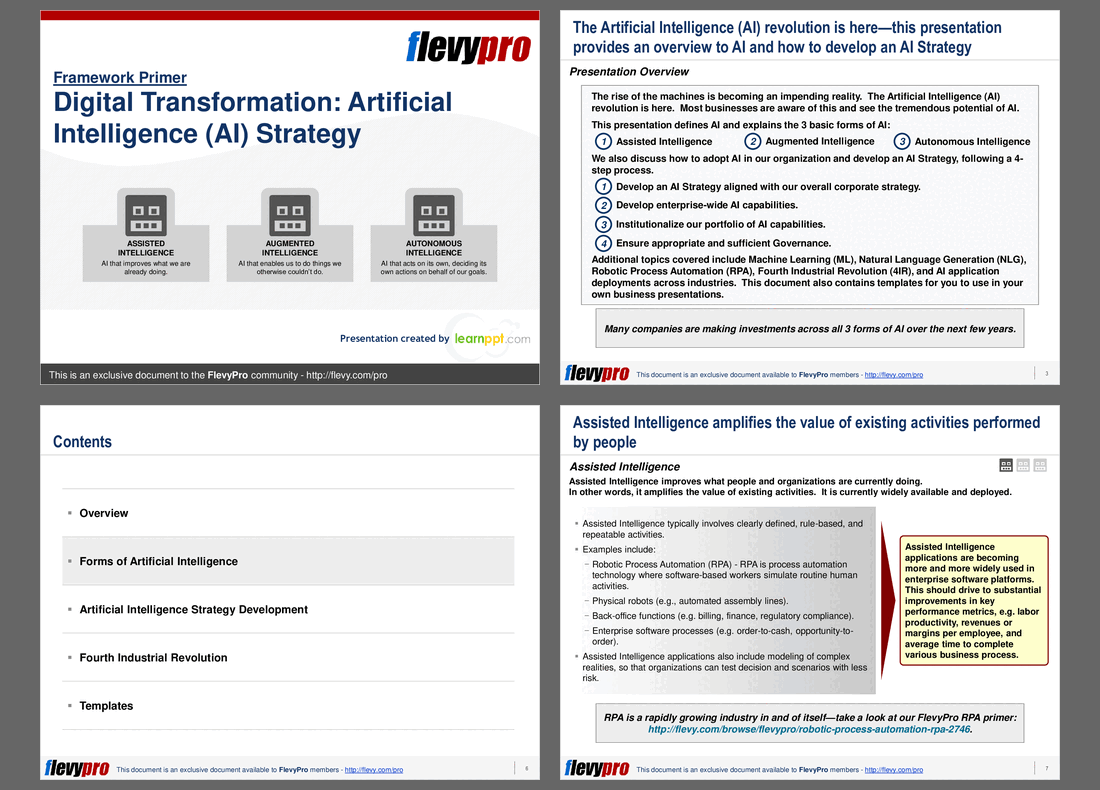
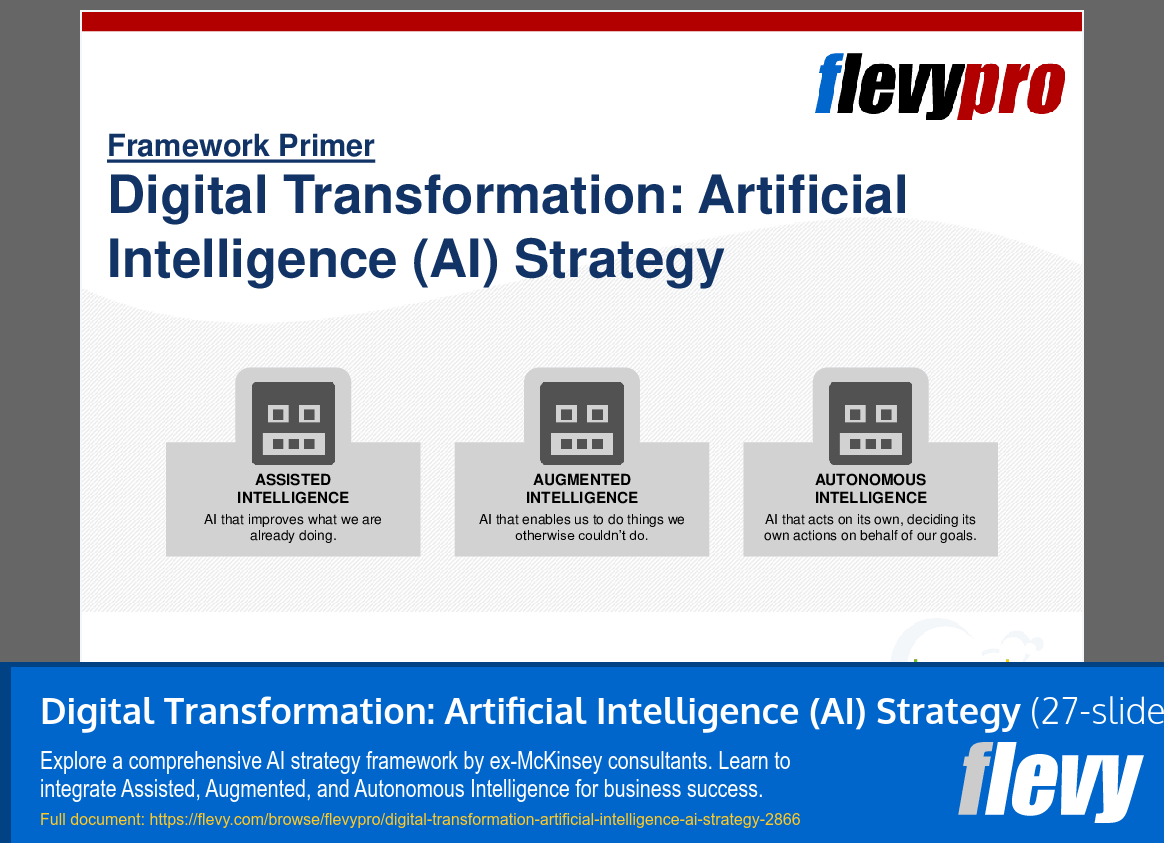
This presentation defines AI and explains the 3 basic forms of AI:

1. Assisted Intelligence
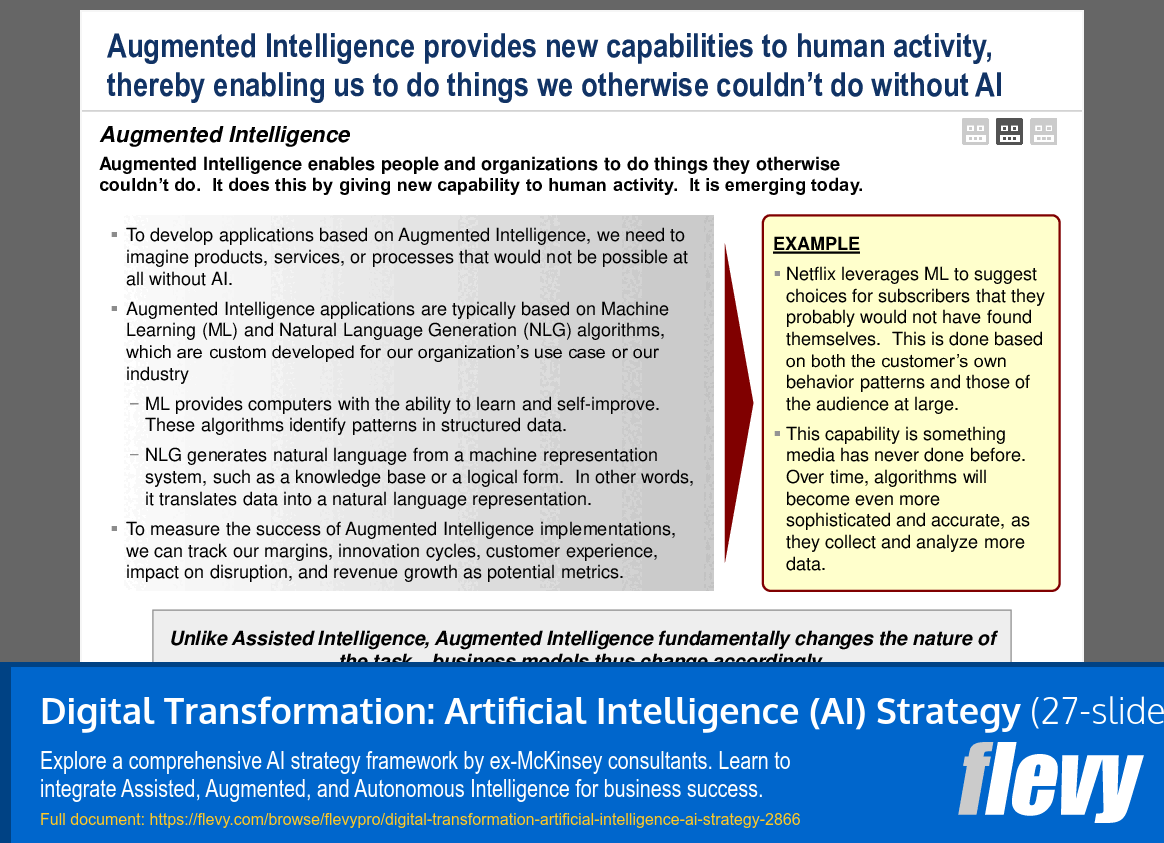
2. Augmented Intelligence
3. Autonomous Intelligence

Many companies are making investments across all 3 forms of AI over the next few years.

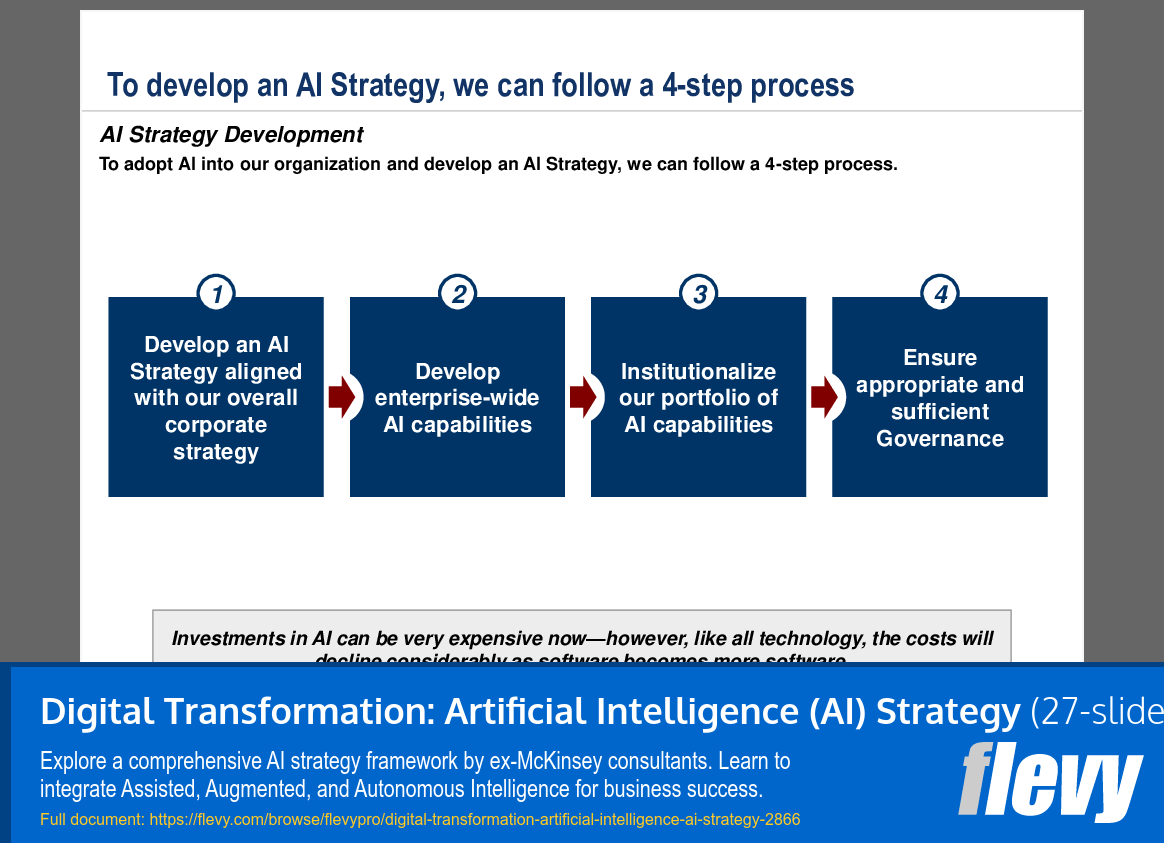
We also discuss how to adopt AI in our organization and develop an AI Strategy, following a 4-step process.

1. Develop an AI Strategy aligned with our overall corporate strategy.
2. Develop enterprise-wide AI capabilities.
3. Institutionalize our portfolio of AP capabilities.
4. Ensure appropriate and sufficient Governance.

Additional topics covered include Machine Learning (ML), Natural Language Generation (NLG), Robotic Process Automation (RPA), Fourth Industrial Revolution (4IR), and AI application deployments across industries. This document also contains templates for you to use in your own business presentations.

This PPT provides a comprehensive overview of the three forms of AI—Assisted, Augmented, and Autonomous Intelligence. It delves into how each form can be strategically deployed to enhance business operations. Assisted Intelligence amplifies existing activities, Augmented Intelligence introduces new capabilities, and Autonomous Intelligence represents the future of AI, acting independently to achieve organizational goals.

The presentation also includes a detailed 4-step process to develop an AI strategy that aligns with corporate objectives. It emphasizes the importance of embedding AI throughout business processes and establishing clear governance policies. With insights into Machine Learning, Natural Language Generation, and Robotic Process Automation, this document is an essential resource for executives looking to leverage AI for competitive advantage.

Got a question about this document? Email us at flevypro@flevy.com.

MARCUS OVERVIEW

This synopsis was written by Marcus [?] based on the analysis of the full 27-slide presentation.


Executive Summary
This presentation provides a strategic framework for organizations looking to harness the potential of Artificial Intelligence (AI) in their digital transformation efforts. Developed by ex-McKinsey consultants, it outlines a comprehensive approach to integrating Assisted, Augmented, and Autonomous Intelligence into business operations. The framework guides executives through a four-step process to develop an AI strategy that aligns with corporate goals, institutionalizes AI capabilities, and ensures effective governance. By leveraging this presentation, corporate leaders can drive innovation, improve productivity, and adapt to the evolving landscape of the Fourth Industrial Revolution.

Who This Is For and When to Use
•  Corporate executives seeking to implement AI strategies within their organizations
•  Integration leaders responsible for overseeing digital transformation initiatives
•  Consultants advising businesses on AI adoption and strategy development
•  Technology and innovation teams tasked with enhancing operational efficiency through AI

Best-fit moments to use this deck:
•  During strategic planning sessions focused on digital transformation
•  When assessing the organization’s readiness to adopt AI technologies
•  In workshops aimed at developing a comprehensive AI strategy
•  For presentations to stakeholders about the benefits and implementation of AI

Learning Objectives
•  Define the 3 forms of AI: Assisted, Augmented, and Autonomous Intelligence
•  Develop an AI strategy that aligns with overall corporate objectives
•  Institutionalize AI capabilities across the organization
•  Ensure governance structures are in place for AI initiatives
•  Identify key metrics for measuring the success of AI implementations
•  Explore the implications of AI on business models and operational processes

Table of Contents
•  Overview (page 3)
•  Forms of Artificial Intelligence (page 5)
•  Artificial Intelligence Strategy Development (page 11)
•  Fourth Industrial Revolution (page 17)
•  Templates (page 25)

Primary Topics Covered
•  Overview of AI - This section introduces AI and its significance in modern business, outlining its potential to transform operations and decision-making.
•  Forms of AI - Describes the 3 types of AI: Assisted Intelligence, which improves existing processes; Augmented Intelligence, which enables new capabilities; and Autonomous Intelligence, which operates independently.
•  AI Strategy Development - Details a four-step process for creating an AI strategy that aligns with corporate goals and integrates AI capabilities throughout the organization.
•  Fourth Industrial Revolution - Discusses the impact of AI and automation on industries, highlighting the ongoing transformation driven by technological advancements.
•  Templates - Provides practical templates for organizations to utilize in developing their AI strategies and presentations.

Deliverables, Templates, and Tools
•  AI strategy development template for aligning corporate and AI objectives
•  Framework for institutionalizing AI capabilities across business functions
•  Governance structure template for overseeing AI initiatives
•  Metrics tracking template for evaluating AI implementation success
•  Presentation templates for communicating AI strategy to stakeholders
•  Case study examples illustrating successful AI deployments across industries

Slide Highlights
•  Overview slide that succinctly summarizes the AI revolution and its relevance to businesses
•  Detailed breakdown of the 3 forms of AI, including definitions and examples
•  Step-by-step guide for developing an AI strategy, emphasizing alignment with corporate goals
•  Visual representation of the Fourth Industrial Revolution and its implications for businesses
•  Templates section showcasing practical tools for immediate application

Potential Workshop Agenda
AI Strategy Development Workshop (90 minutes)
•  Introduction to AI and its forms
•  Discussion on aligning AI strategy with corporate objectives
•  Group activity to draft initial AI strategy outlines

Governance and Implementation Session (60 minutes)
•  Overview of governance structures for AI
•  Best practices for institutionalizing AI capabilities
•  Q&A session to address specific organizational challenges

Customization Guidance
•  Tailor the AI strategy development template to reflect specific corporate objectives and industry context
•  Adjust governance structures to fit organizational culture and operational frameworks
•  Incorporate relevant metrics that align with business goals and industry standards

Secondary Topics Covered
•  Machine Learning (ML) and its applications in business
•  Natural Language Generation (NLG) as a tool for enhancing customer interactions
•  Robotic Process Automation (RPA) and its role in operational efficiency
•  Industry-specific AI applications and case studies

Topic FAQ

What are the main forms of AI businesses should consider when planning adoption?

Businesses should consider 3 forms of AI: Assisted Intelligence (improves existing processes), Augmented Intelligence (enables new capabilities), and Autonomous Intelligence (operates independently on organizational goals). These distinctions help prioritize pilot projects and investments across short-, medium-, and long-term horizons for the 3 types of AI.

How should an organization structure the work to develop an enterprise AI strategy?

A common approach is to follow a staged process: align AI to corporate strategy, build enterprise-wide capabilities, institutionalize AI across processes, and establish governance. Those stages guide priorities from scoping to deployment; Flevy's Digital Transformation: Artificial Intelligence (AI) Strategy presents this as a four-step process.

What governance elements are important to include when overseeing AI initiatives?

Effective governance typically includes clear data privacy policies, defined decision rights, transparency requirements, and monitoring structures to detect errors and biases. These elements support accountable deployment and ongoing oversight and are reflected in a governance structure template provided in the described materials.

Which performance metrics should organizations track to evaluate AI implementations?

Common metrics include productivity improvement, cost reduction, customer satisfaction scores, and innovation-cycle measures. Selecting metrics should map back to corporate objectives so outcomes are comparable to business targets; the materials include a metrics tracking template to operationalize that measurement approach.

What practical criteria should I use to choose an AI strategy toolkit or template on the market?

Choose materials that help align AI initiatives to corporate strategy, include templates for governance and metrics, provide institutionalization guidance, and offer industry case studies for context. Look for a toolkit that bundles strategy and implementation tools, such as presentation templates and case studies for stakeholder briefings.

What timeline and session structure can I expect for initial AI strategy workshops?

Initial workshops can be concise: an AI strategy development session around 90 minutes to introduce forms of AI and draft strategy outlines, followed by a 60-minute governance/implementation session to design oversight and institutionalization steps. These session lengths reflect the suggested workshop agenda.

After a merger, how can we integrate AI capabilities across combined businesses?

Post-merger integration should start by aligning an AI roadmap with the combined corporate strategy, building enterprise-wide capabilities, embedding AI into key processes, and establishing shared governance to manage data and decision rights. The approach is supported by a framework for institutionalizing AI capabilities.

How do RPA, NLG, and Machine Learning typically fit into an operational AI roadmap?

RPA, NLG, and ML are applied by mapping use cases to processes, assessing readiness, and prioritizing pilots that align with business objectives; adoption is then scaled via institutionalization and governance. The referenced presentation addresses these technologies and provides presentation templates to structure the roadmap.

Document FAQ
These are questions addressed within this presentation.

What are the 3 forms of AI?
The 3 forms of AI are Assisted Intelligence, which improves existing processes; Augmented Intelligence, which enables new capabilities; and Autonomous Intelligence, which operates independently.

How can we develop an AI strategy?
An AI strategy can be developed by following a four-step process: aligning with corporate strategy, developing enterprise-wide capabilities, institutionalizing AI, and ensuring governance.

What metrics should we track for AI success?
Metrics may include productivity improvements, cost reductions, customer satisfaction scores, and innovation cycles.

How does AI impact business models?
AI enables new approaches to existing business models, enhancing operational efficiency and creating opportunities for innovation.

What is the Fourth Industrial Revolution?
The Fourth Industrial Revolution refers to the current era of technological advancements characterized by the fusion of physical, digital, and biological systems, driven by AI and automation.

How can we ensure effective governance for AI initiatives?
Establish clear policies regarding data privacy, decision rights, and transparency, and set up structures to monitor AI-related decisions and potential errors.

What are some examples of AI applications in industries?
Examples include automated trading in finance, personalized medicine in healthcare, and customer service chatbots across various sectors.

How can we institutionalize AI capabilities in our organization?
Embed AI throughout business processes, embrace cloud platforms, and foster a culture that encourages decision-making supported by AI insights.

Glossary
•  Assisted Intelligence - AI that improves existing activities.
•  Augmented Intelligence - AI that enables new capabilities.
•  Autonomous Intelligence - AI that acts independently on behalf of organizational goals.
•  AI Strategy - A plan to integrate AI into business operations aligned with corporate objectives.
•  Fourth Industrial Revolution - The current era characterized by advancements in AI and automation.
•  Machine Learning (ML) - A subset of AI that enables systems to learn and improve from experience.
•  Natural Language Generation (NLG) - AI that converts data into human-readable text.
•  Robotic Process Automation (RPA) - Technology that automates routine tasks using software robots.
•  Governance - The framework for overseeing AI initiatives and ensuring compliance with policies.
•  Metrics - Measurements used to evaluate the success of AI implementations.
•  Digital Transformation - The integration of digital technology into all areas of business.
•  Cloud Platforms - Online services that provide computing resources and storage.
•  Data Privacy - Policies and practices to protect personal and sensitive information.
•  Decision Rights - The authority to make decisions within an organization.
•  Innovation Cycles - The process of developing new ideas and bringing them to market.
•  Customer Experience - The overall perception of a customer’s interaction with a brand.
•  Operational Efficiency - The ability to deliver products or services in the most cost-effective manner.
•  Business Models - The framework for how a company creates, delivers, and captures value.
•  Industry 4.0 - The current trend of automation and data exchange in manufacturing technologies.
•  Digital IQ - A measure of an organization’s digital capabilities and readiness.
•  Governance Structures - Systems and processes for overseeing and managing AI initiatives.

ARTIFICIAL INTELLIGENCE PPT SLIDES

Four-Step Framework for AI Strategy Development

Leveraging Augmented Intelligence for Enhanced Organizational Capability

Aligning AI Strategy with Corporate Objectives

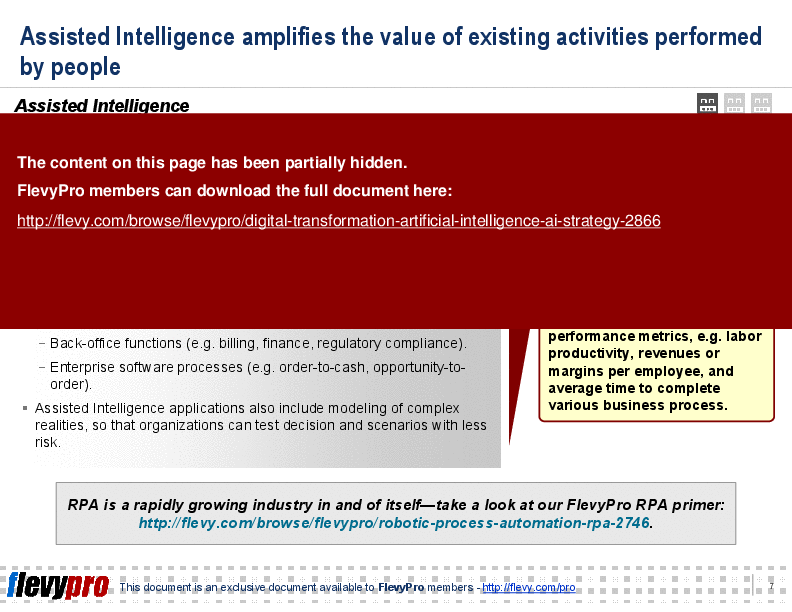
Enhancing Operational Efficiency through Assisted Intelligence

Source: Best Practices in Fourth Industrial Revolution, Artificial Intelligence, Robotic Process Automation PowerPoint Slides: Digital Transformation: Artificial Intelligence (AI) Strategy PowerPoint (PPT) Presentation Slide Deck, LearnPPT Consulting


$29.00
FlevyPro price: FREE (included in subscription)
This framework is developed by a team of former McKinsey and Big 4 consultants. The presentation follows the headline-body-bumper slide format used by global consulting firms.
Add to Cart
  

Did you need more documents?

Consider a FlevyPro subscription from $39/month. View plans here.

For $10.00 more, you can download this document plus 2 more FlevyPro documents. That's just $13 each.

ABOUT FLEVYPRO

This document is part of the FlevyPro Library, a curated knowledge base of documents for our FlevyPro subscribers.

FlevyPro is a subscription service for on-demand business frameworks and analysis tools. FlevyPro subscribers receive access to an exclusive library of curated business documents—business framework primers, presentation templates, Lean Six Sigma tools, and more—among other exclusive benefits.

Click here to learn more about FlevyPro and its benefits.

Did you know?
The average daily rate of a McKinsey consultant is $6,625 (not including expenses). The average price of a Flevy document is $65.


Trusted by over 10,000+ Client Organizations
Since 2012, we have provided business templates to over 10,000 businesses and organizations of all sizes, from startups and small businesses to the Fortune 100, in over 130 countries.
AT&T GE Cisco Intel IBM Coke Dell Toyota HP Nike Samsung Microsoft Astrazeneca JP Morgan KPMG Walgreens Walmart 3M Kaiser Oracle SAP Google E&Y Volvo Bosch Merck Fedex Shell Amgen Eli Lilly Roche AIG Abbott Amazon PwC T-Mobile Broadcom Bayer Pearson Titleist ConEd Pfizer NTT Data Schwab


Read Customer Testimonials

 
"I like your product. I'm frequently designing PowerPoint presentations for my company and your product has given me so many great ideas on the use of charts, layouts, tools, and frameworks. I really think the templates are a valuable asset to the job."

– Roberto Fuentes Martinez, Senior Executive Director at Technology Transformation Advisory
 
"[Flevy] produces some great work that has been/continues to be of immense help not only to myself, but as I seek to provide professional services to my clients, it gives me a large "tool box" of resources that are critical to provide them with the quality of service and outcomes they are expecting."

– Royston Knowles, Executive with 50+ Years of Board Level Experience
 
"FlevyPro has been a brilliant resource for me, as an independent growth consultant, to access a vast knowledge bank of presentations to support my work with clients. In terms of RoI, the value I received from the very first presentation I downloaded paid for my subscription many times over! The "

– Roderick Cameron, Founding Partner at SGFE Ltd
 
"As an Independent Management Consultant, I find Flevy to add great value as a source of best practices, templates and information on new trends. Flevy has matured and the quality and quantity of the library is excellent. Lastly the price charged is reasonable, creating a win-win value for "

– Jim Schoen, Principal at FRC Group
 
"FlevyPro provides business frameworks from many of the global giants in management consulting that allow you to provide best in class solutions for your clients."

– David Harris, Managing Director at Futures Strategy
 
"As a niche strategic consulting firm, Flevy and FlevyPro frameworks and documents are an on-going reference to help us structure our findings and recommendations to our clients as well as improve their clarity, strength, and visual power. For us, it is an invaluable resource to increase our impact and value."

– David Coloma, Consulting Area Manager at Cynertia Consulting
 
"I have used FlevyPro for several business applications. It is a great complement to working with expensive consultants. The quality and effectiveness of the tools are of the highest standards."

– Moritz Bernhoerster, Global Sourcing Director at Fortune 500
 
"Flevy.com has proven to be an invaluable resource library to our Independent Management Consultancy, supporting and enabling us to better serve our enterprise clients.

The value derived from our [FlevyPro] subscription in terms of the business it has helped to gain far exceeds the investment made, making a subscription a no-brainer for any growing consultancy – or in-house strategy team."

– Dean Carlton, Chief Transformation Officer, Global Village Transformations Pty Ltd.


Customers Also Bought These Documents


Customers Also Like These Documents

Explore Templates on Related Management Topics


Your Recently Viewed Documents
Download our FREE Digital Transformation Templates

Download our free compilation of 50+ Digital Transformation slides and templates. DX concepts covered include Digital Leadership, Digital Maturity, Digital Value Chain, Customer Experience, Customer Journey, RPA, etc.