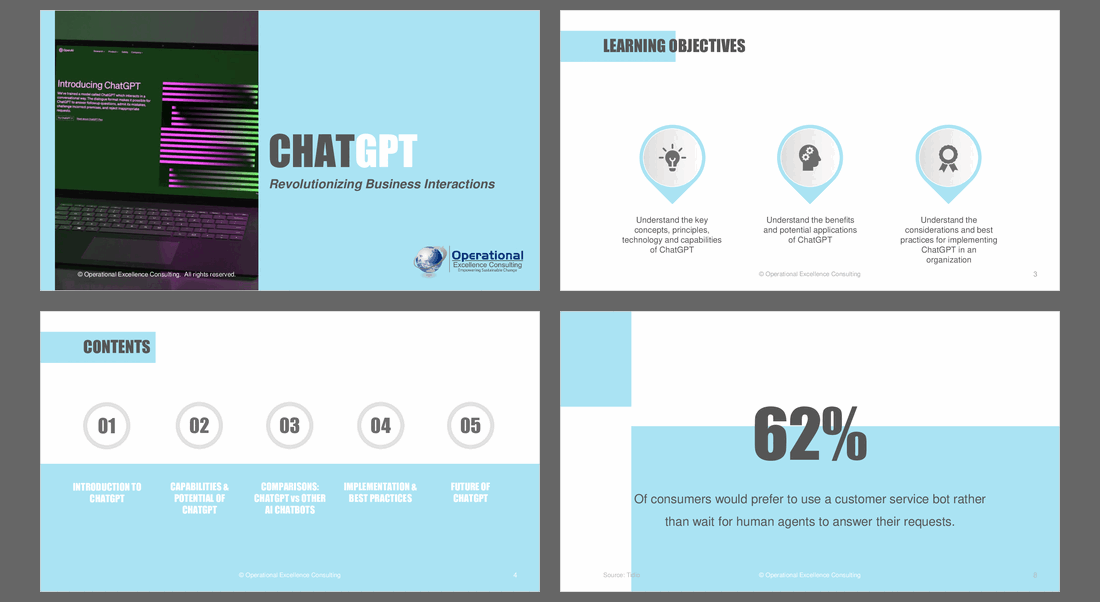

ChatGPT (Generative Pre-trained Transformer), OpenAI's advanced AI language model, utilizes transformer architecture and supervised learning to process and generate human-like language. Trained on a vast text corpus, it excels in tasks like answering questions, creating diverse text, and language translation, extending to writing essays, poems, social media content, academic papers, and code.

Its natural language processing proficiency makes ChatGPT versatile across industries. In customer service, it enhances responses, improving query handling. In marketing, it aids lead generation and personalized interactions, while in education, it assists students in learning and research.
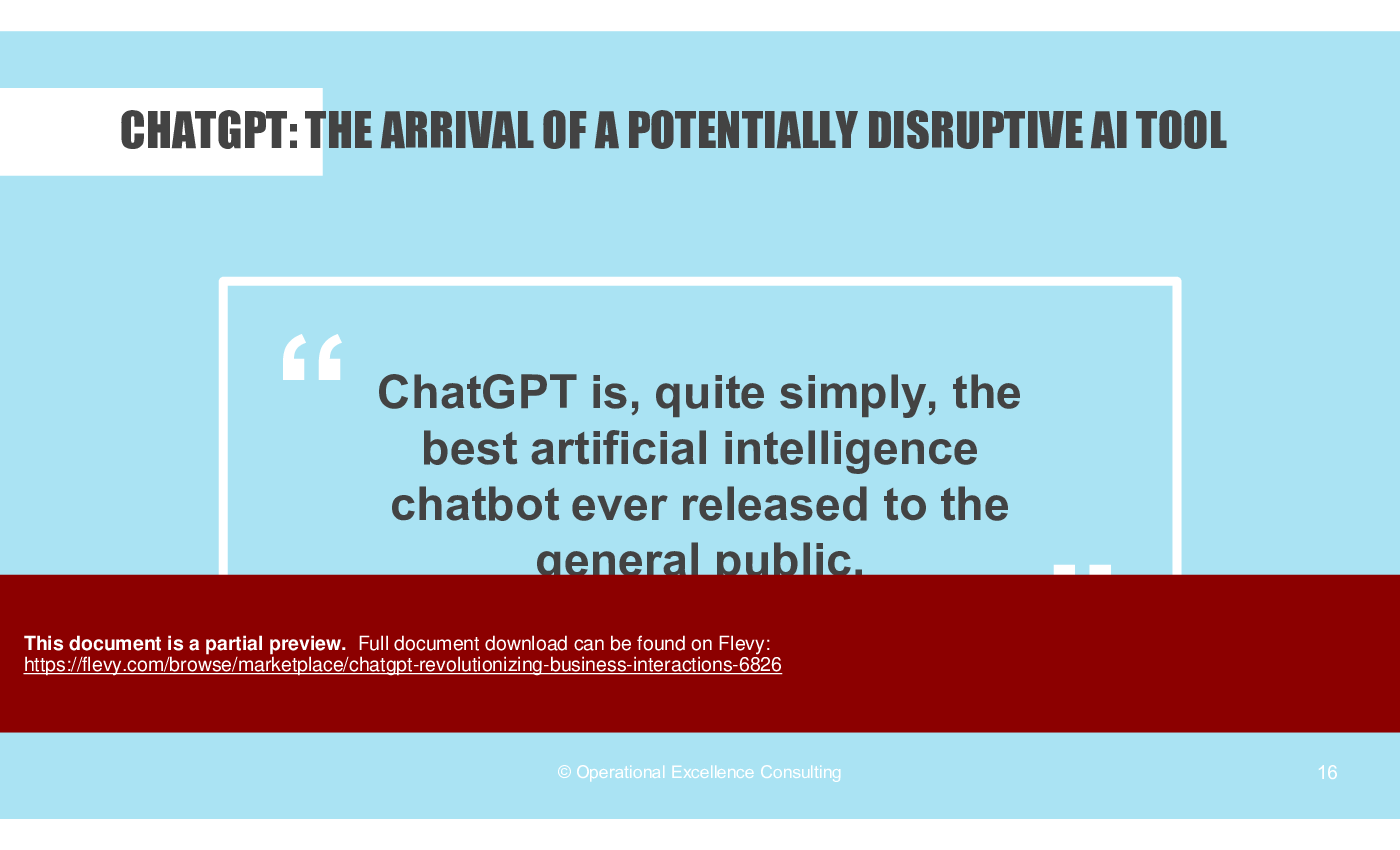
With potential applications in revolutionizing communication and information processing, ChatGPT garnered positive reviews since its November 2022 launch. The New York Times hailed it as "the best AI chatbot," and UBS reported rapid user growth, potentially making it the fastest-growing app in history.
This presentation aims to educate on ChatGPT's functionalities, applications, and benefits, covering its history, key concepts, advantages, and market potential. Designed to engage and garner support, it serves as a tool to introduce ChatGPT's integration across various industries.
LEARNING OBJECTIVES
1. Understand the key concepts, principles, technology and capabilities of ChatGPT.
2. Understand the benefits and potential applications of ChatGPT.
3. Understand the considerations and best practices for implementing ChatGPT in an organization.
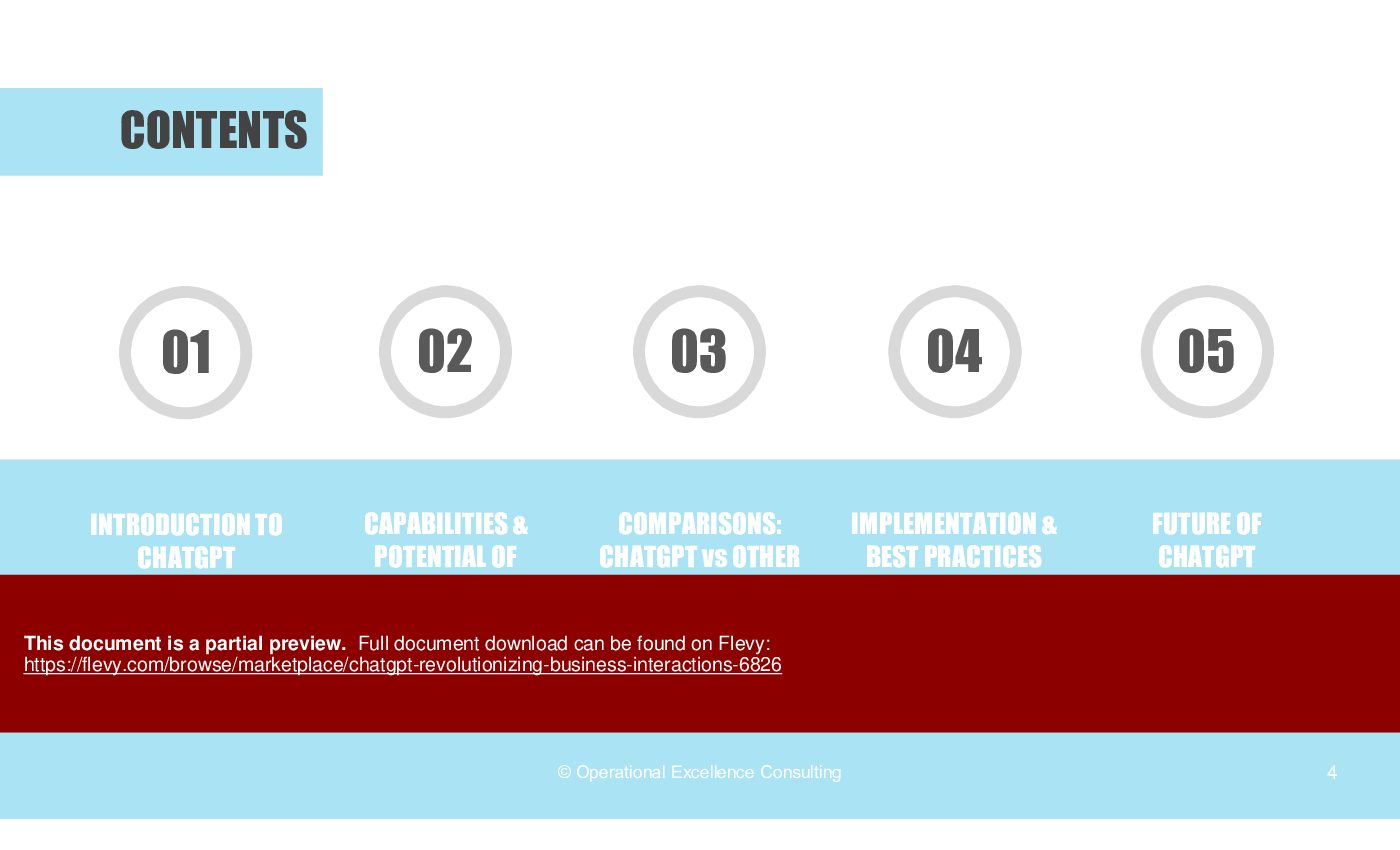
CONTENTS
1. Introduction to ChatGPT
• What is Artificial Intelligence?
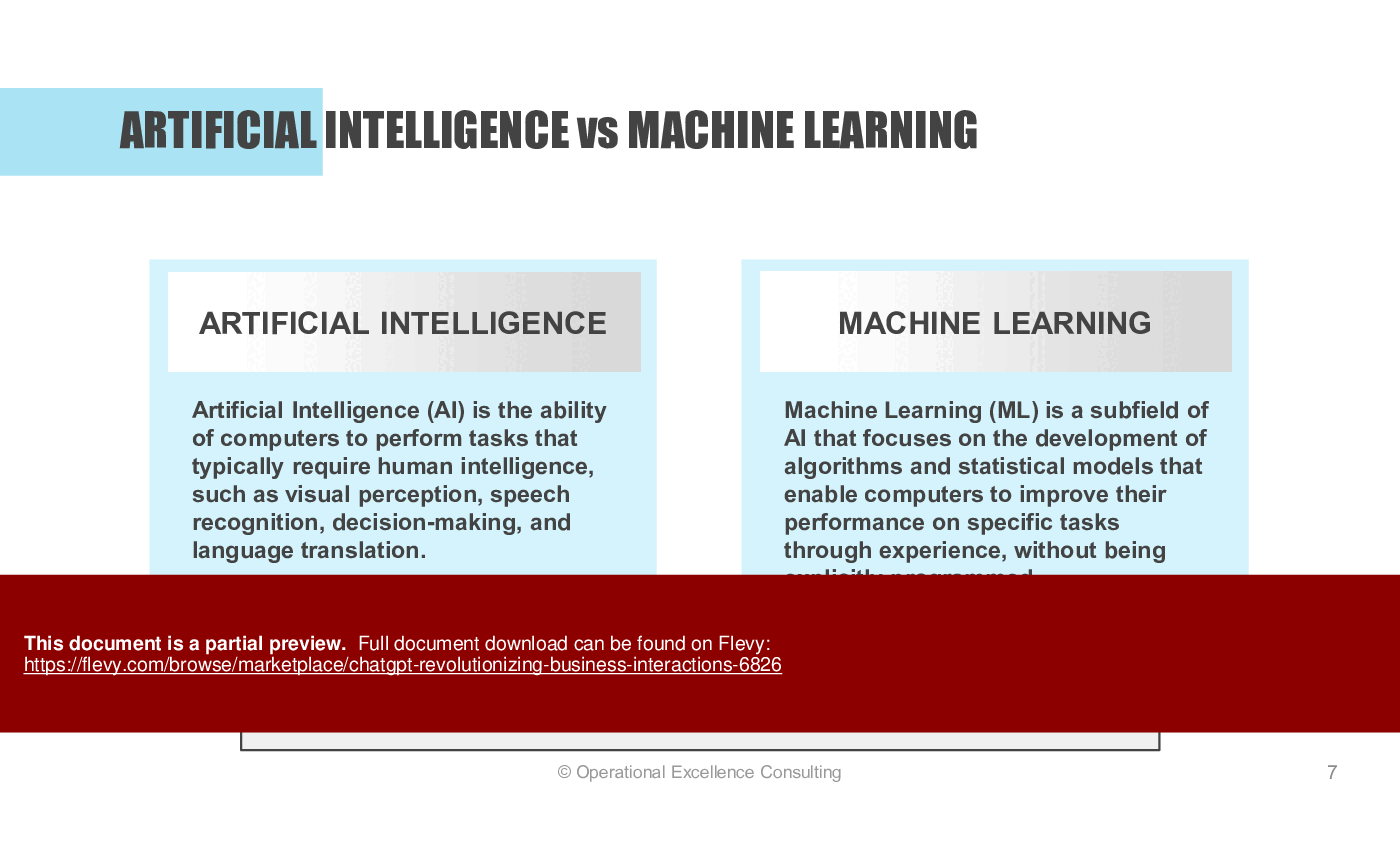
• Artificial Intelligence vs Machine Learning
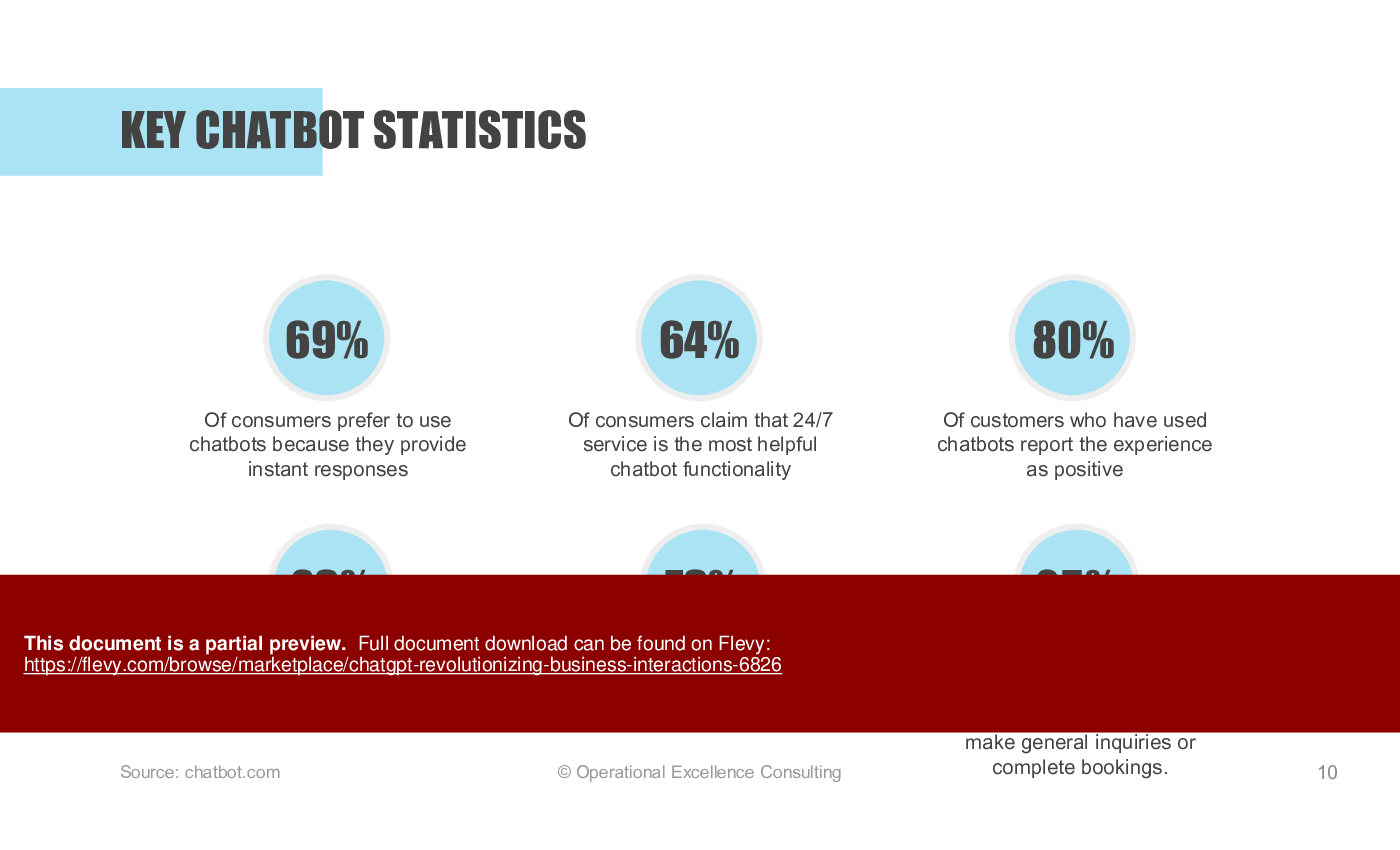
• Key Chatbot Statistics
• Difference Between a Chatbot and AI Chatbot
• Brief History of Chatbots and AI Chatbots
• NLP vs NLU vs NLG Summary
• Advantages of Using AI Chatbots
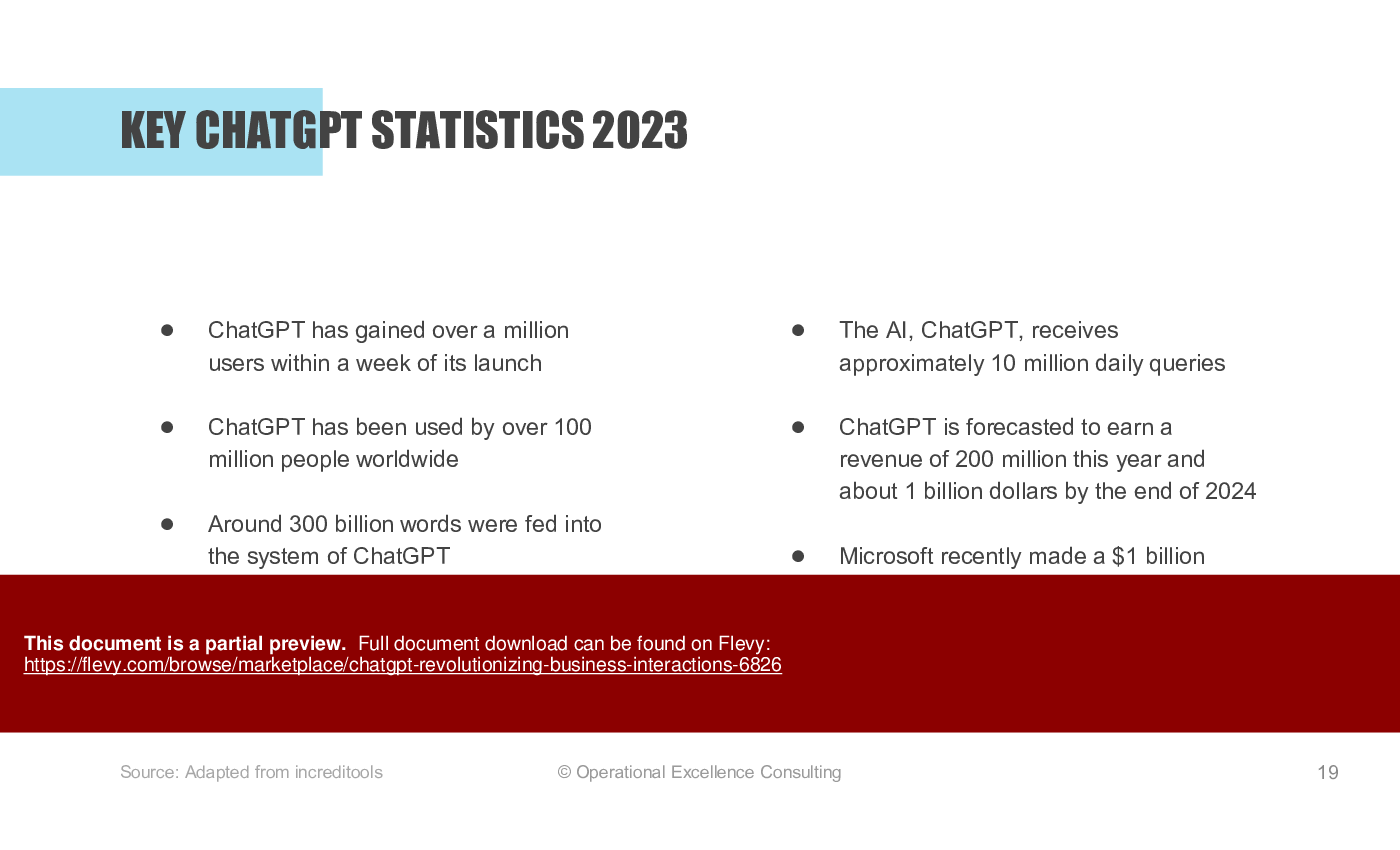
• Key ChatGPT Statistics 2023
• Definition of ChatGPT
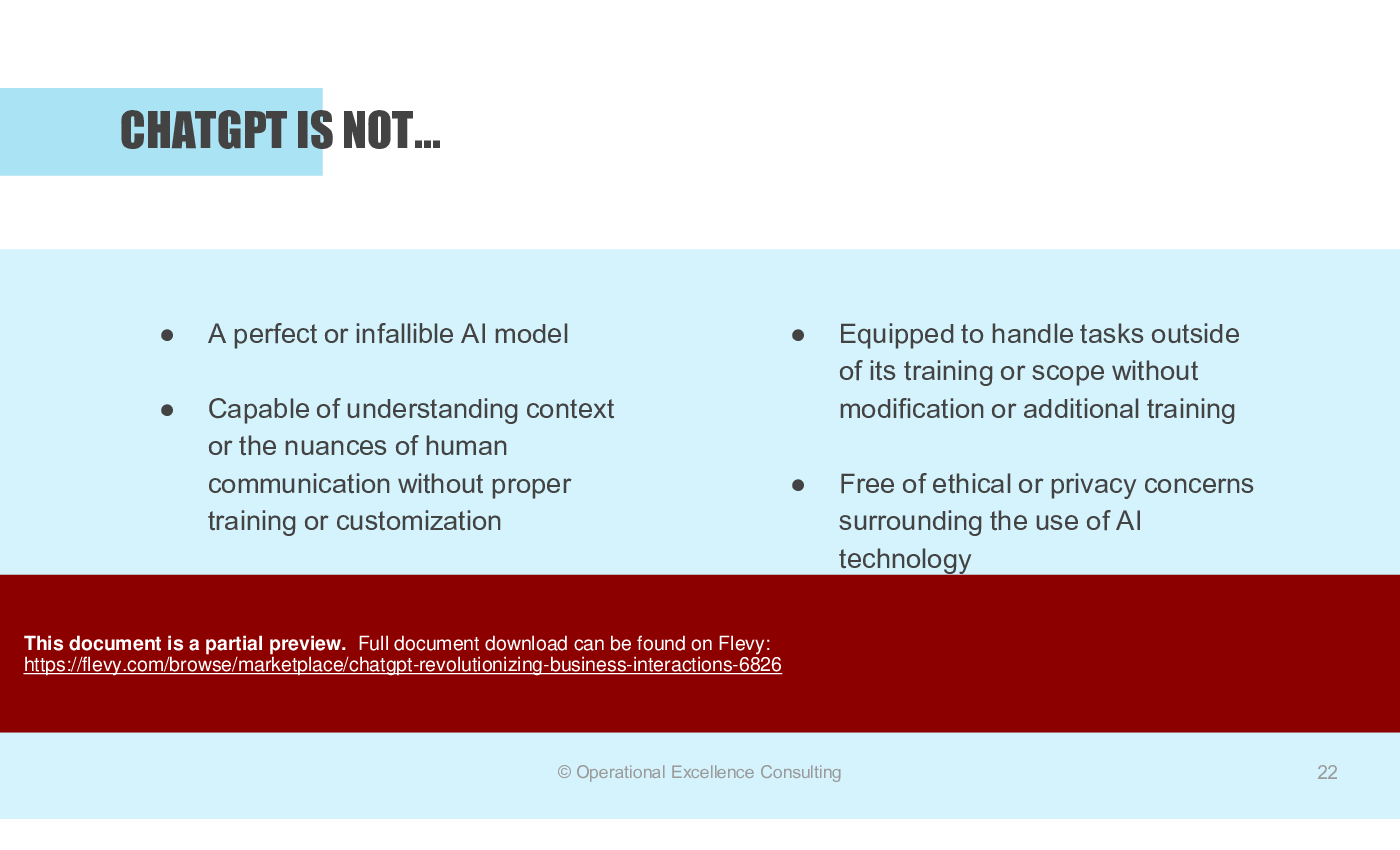
• ChatGPT Is and Is Not
• Myths Associated with ChatGPT
• Capabilities and Potential of ChatGPT
• Benefits of Using ChatGPT
• How Does ChatGPT Works?
• Supervised Learning and Reinforcement Learning
• ChatGPT is Based on Design Thinking Principles
• Key Concepts and Principles of ChatGPT
• Overview of the Technology Behind ChatGPT
• How to Use ChatGPT
• Useful Tips to Prompt ChatGPT to Provide Highly Accurate Responses
2. Capabilities and Potential of ChatGPT
• Applications of ChatGPT
• Use Cases of ChatGPT in Marketing & Sales, Customer Service & Support, Human Resources, E-Commerce, Financial Services Industry, Education Industry, Healthcare Industry, Government & Public Administration, Manufacturing Industry, Travel Industry, Hospitality Industry and IT Services Industry
• How to Measure the Success of ChatGPT
3. Comparisons: ChatGPT vs. Other AI Chatbots
• Strengths and Weaknesses of Different AI Chatbot Models
• Rule-based Chatbots
• Retrieval-based Chatbots
• Generative Chatbots
• Transformer-based Chatbots (e.g., GPT Models)
• Hybrid Approaches
4. Implementation and Best Practices
• Requirements and Prerequisites
• Steps for Implementation
• Key Personnel and their Roles
• Best Practices for Using ChatGPT
• Common Mistakes in Implementation
• Ethical and Privacy Concerns
• Technical Limitations
• Guidelines for the Responsible Use of ChatGPT
• Using ChatGPT – Do's and Don'ts
• When to Use ChatGPT and When to Use Search Engines
5. Future of ChatGPT
• Market Potential and Growth Trends
• Emerging Trends and Innovations
• Impact on Various Industries
• Conclusion
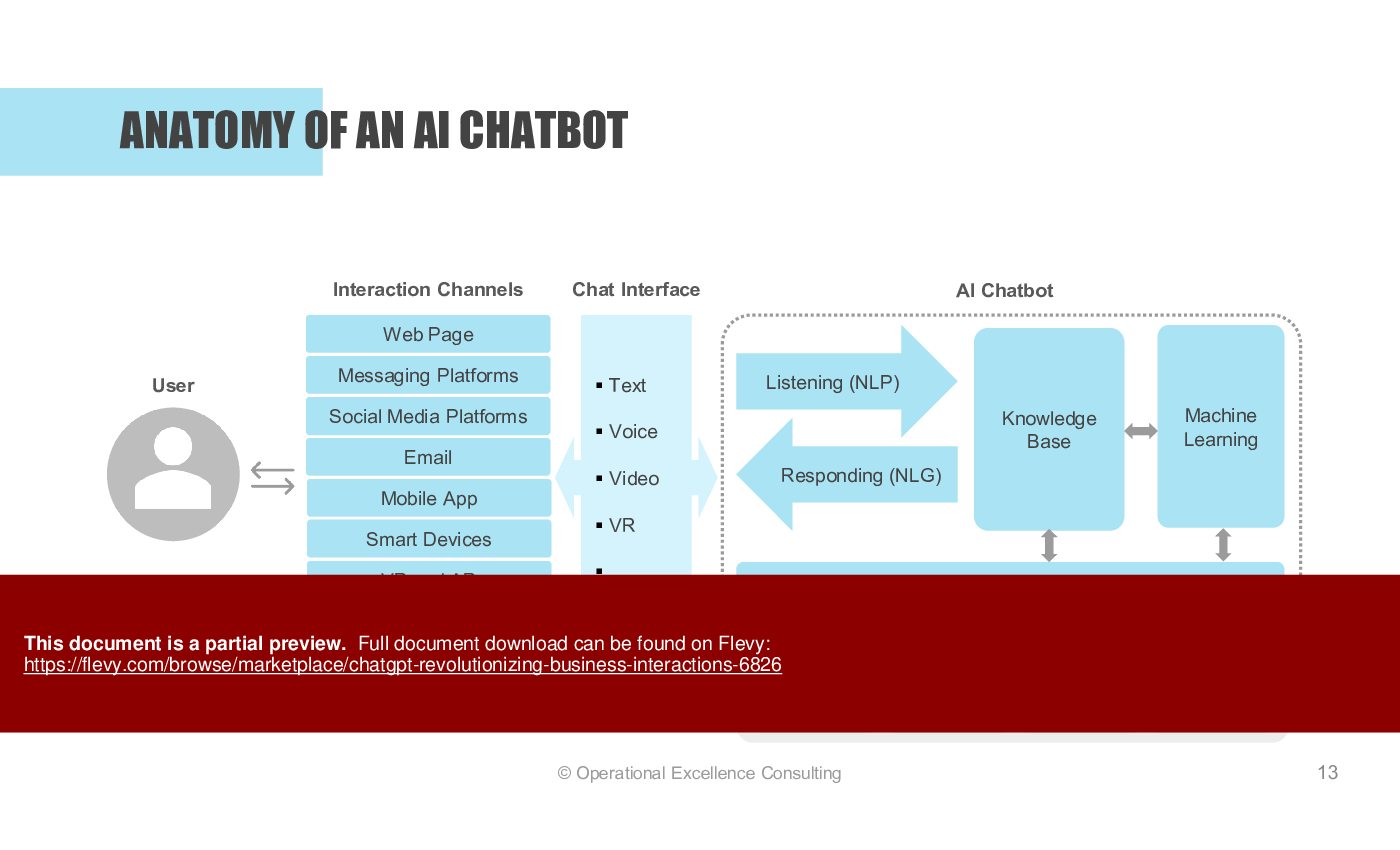
This comprehensive presentation delves into the distinctions between artificial intelligence and machine learning, providing key insights into their applications. It also includes critical chatbot statistics and explores the anatomy of AI chatbots, offering a thorough understanding of their functionality.
Got a question about the product? Email us at support@flevy.com or ask the author directly by using the "Ask the Author a Question" form. If you cannot view the preview above this document description, go here to view the large preview instead.
Executive Summary
This presentation, titled "ChatGPT: Revolutionizing Business Interactions," serves as a comprehensive guide for organizations looking to leverage ChatGPT technology to enhance customer engagement and operational efficiency. Developed by a Digital Strategy Consultant with extensive experience at industry leaders like Microsoft and IBM, this deck provides insights into the capabilities, implementation strategies, and future potential of ChatGPT. By utilizing this presentation, corporate executives and integration leaders can effectively integrate ChatGPT into their business processes, improving customer service and driving innovation.
Who This Is For and When to Use
• Corporate executives seeking to enhance customer experience through AI
• Integration leaders responsible for implementing new technologies
• Marketing and sales teams aiming to improve lead generation and customer engagement
• Human resources professionals looking to streamline employee support and onboarding
Best-fit moments to use this deck:
• During strategic planning sessions focused on digital transformation
• When evaluating AI solutions for customer service enhancement
• In workshops aimed at training teams on AI implementation best practices
• For presentations to stakeholders on the benefits of adopting ChatGPT
Learning Objectives
• Understand the key concepts, principles, and capabilities of ChatGPT
• Define best practices for implementing ChatGPT in an organization
• Identify the benefits and potential applications of ChatGPT across various industries
• Evaluate the differences between ChatGPT and other AI chatbots
• Develop a roadmap for integrating ChatGPT into existing business processes
• Measure the success of ChatGPT implementations through relevant metrics
Table of Contents
• Introduction to ChatGPT (page 5)
• Capabilities & Potential of ChatGPT (page 27)
• Comparisons: ChatGPT vs Other AI Chatbots (page 57)
• Implementation & Best Practices (page 64)
• Future of ChatGPT (page 79)
Primary Topics Covered
• Introduction to ChatGPT - Overview of ChatGPT as an AI-powered language model and its significance in business interactions.
• Capabilities of ChatGPT - Exploration of ChatGPT's vast capabilities, including customer service automation and content generation.
• Implementation Best Practices - Guidelines for effectively integrating ChatGPT into organizational workflows.
• Comparative Analysis - Examination of strengths and weaknesses of ChatGPT relative to other AI chatbot models.
• Future Trends - Insights into the evolving landscape of ChatGPT and its potential impact on various industries.
Deliverables, Templates, and Tools
• Implementation roadmap template for integrating ChatGPT
• Best practices checklist for AI chatbot deployment
• Metrics dashboard for measuring ChatGPT performance
• Case study examples showcasing successful ChatGPT applications
• Training materials for staff on using ChatGPT effectively
Slide Highlights
• Visual representation of ChatGPT's architecture and functionality
• Key statistics illustrating the growing adoption of AI chatbots
• Comparative charts detailing the strengths and weaknesses of various chatbot models
• Flowcharts outlining the steps for successful ChatGPT implementation
• Infographics summarizing the benefits of using ChatGPT in customer service
Potential Workshop Agenda
Introduction to ChatGPT (30 minutes)
• Overview of ChatGPT and its capabilities
• Discussion on the importance of AI in business interactions
Implementation Strategies (60 minutes)
• Identify use cases for ChatGPT in your organization
• Develop a tailored implementation plan
Performance Measurement (30 minutes)
• Establish metrics for evaluating ChatGPT effectiveness
• Review case studies of successful implementations
Customization Guidance
• Tailor the implementation roadmap to align with specific organizational goals
• Adjust use cases based on industry-specific challenges and opportunities
• Incorporate company branding and terminology into training materials
Secondary Topics Covered
• Ethical considerations in AI deployment
• Technical limitations of ChatGPT and how to address them
• Future innovations in AI technology and their implications for businessesDocument FAQ
These are questions addressed within this presentation.
What is ChatGPT?
ChatGPT is an AI-powered language model developed by OpenAI that generates human-like text responses based on user prompts.
How can ChatGPT improve customer service?
ChatGPT can provide 24/7 support, automate routine inquiries, and deliver personalized responses, enhancing overall customer satisfaction.
What industries can benefit from ChatGPT?
Industries such as healthcare, finance, retail, and education can leverage ChatGPT for improved customer interactions and operational efficiency.
What are the key challenges in implementing ChatGPT?
Challenges include data privacy concerns, ensuring accuracy in responses, and integrating ChatGPT with existing systems.
How do I measure the success of ChatGPT?
Success can be measured through metrics such as user engagement, response accuracy, and return on investment.
Is ChatGPT suitable for small businesses?
Yes, ChatGPT can be tailored to meet the needs of organizations of all sizes, providing significant benefits even to small businesses.
What are the ethical considerations when using ChatGPT?
Organizations must ensure data privacy, avoid bias in responses, and maintain transparency in AI interactions.
Can ChatGPT replace human workers?
While ChatGPT can automate certain tasks, it is designed to assist human workers, not replace them entirely.
Glossary
• AI (Artificial Intelligence) - Simulation of human intelligence in machines.
• Chatbot - A program designed to simulate conversation with human users.
• NLP (Natural Language Processing) - Techniques used to analyze and manipulate human language.
• Generative Model - A model that can generate new text based on input data.
• Machine Learning - A subfield of AI focused on algorithms that improve through experience.
• User Engagement - Interaction levels between users and the chatbot.
• Data Privacy - Protection of personal information in AI systems.
• Bias - Prejudice in AI responses due to training data.
• ROI (Return on Investment) - Measure of the profitability of an investment.
• Deployment - The process of implementing the ChatGPT system in a live environment.
• Integration - Combining ChatGPT with existing business systems.
• Feedback Loop - Continuous improvement process based on user feedback.
• User Adoption Rate - Percentage of users actively utilizing ChatGPT.
• Performance Metrics - Standards for measuring the effectiveness of ChatGPT.
• Ethical AI - Principles guiding the responsible use of artificial intelligence.
• Conversational AI - Technology enabling machines to engage in human-like dialogue.
• Customization - Tailoring ChatGPT to meet specific organizational needs.
• Training Data - Data used to train the AI model for better performance.
• Scalability - The ability of ChatGPT to handle increasing amounts of work.
• Technical Skills - Expertise required to implement and maintain ChatGPT systems.
Source: Best Practices in Artificial Intelligence, ChatGPT, Deep Learning PowerPoint Slides: ChatGPT: Revolutionizing Business Interactions PowerPoint (PPTX) Presentation Slide Deck, Operational Excellence Consulting
|
Download our FREE Digital Transformation Templates
Download our free compilation of 50+ Digital Transformation slides and templates. DX concepts covered include Digital Leadership, Digital Maturity, Digital Value Chain, Customer Experience, Customer Journey, RPA, etc. |