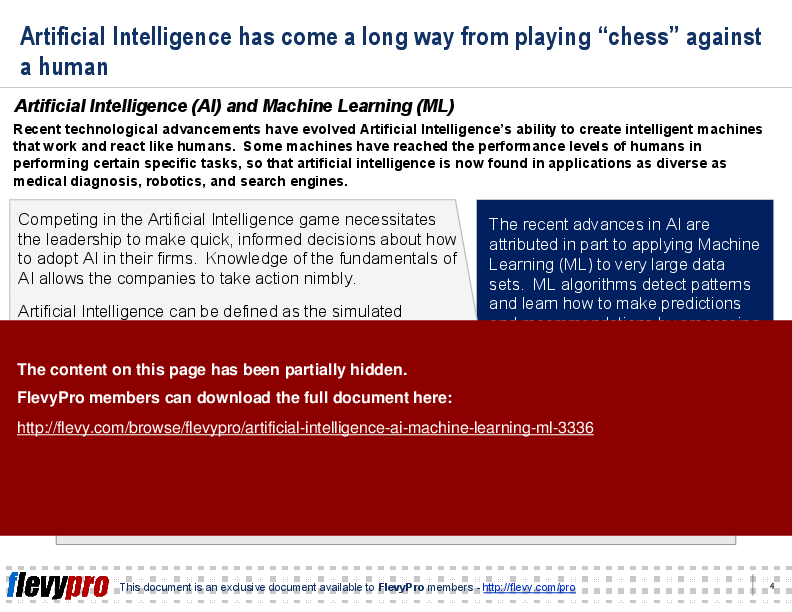

Technological innovation has developed Artificial Intelligence's ability to create intelligent machines that work and react like humans. Some machines have reached the performance levels of humans in performing certain specific tasks, so that artificial intelligence is now found in applications as diverse as medical diagnosis, robotics, search engines, and voice or handwriting recognition.
Competing in the Artificial Intelligence (AI) game necessitates the leadership to make quick, informed decisions about how to employ AI in their organizations. It is critical for the organizations to develop a solid know-how of the fundamentals of AI to take prompt action.
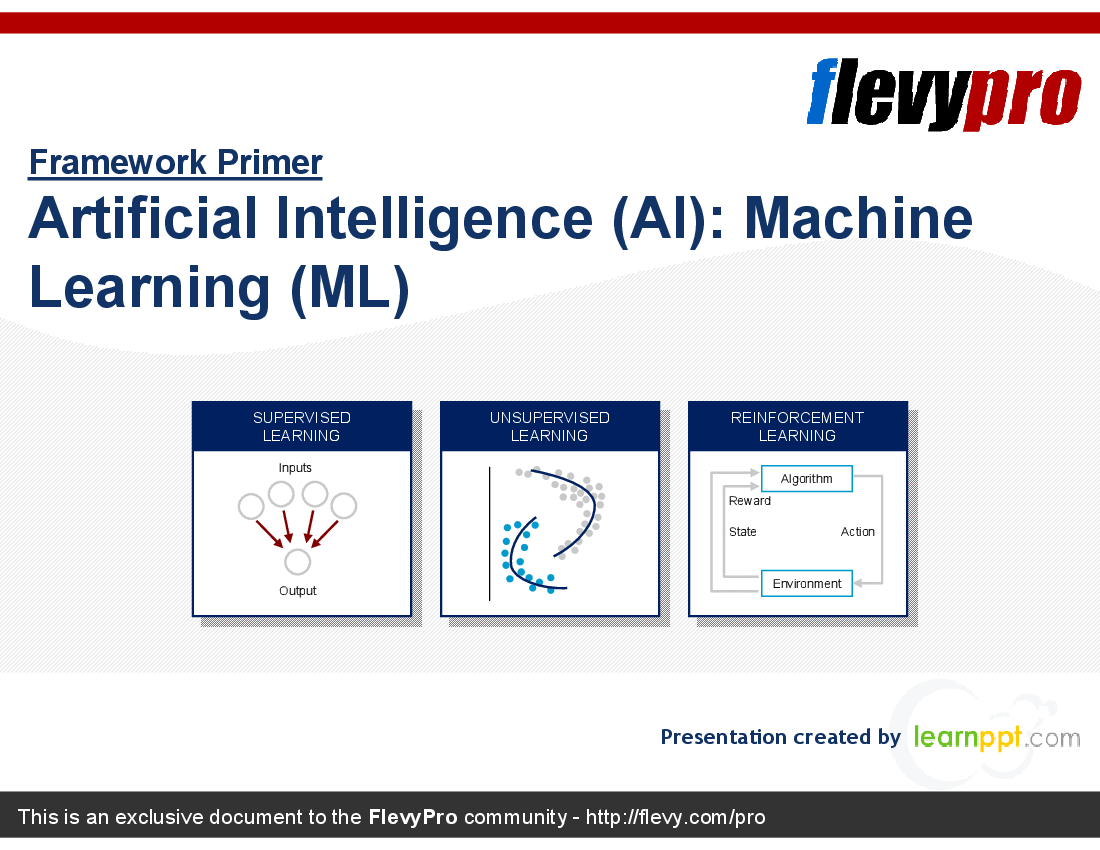
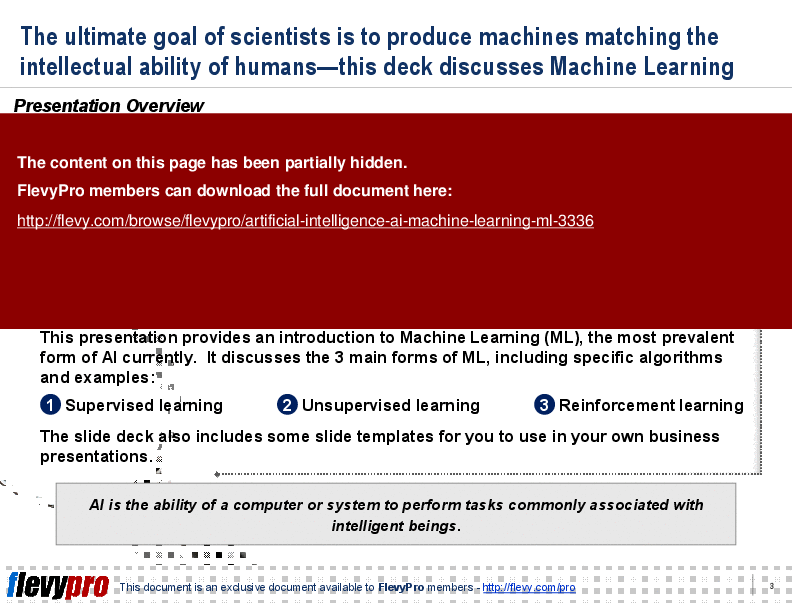
This presentation provides an introduction to Machine Learning (ML), the most prevalent form of AI currently. It discusses the 3 main forms of ML, including specific algorithms and examples:
1. Supervised learning
2. Unsupervised learning
3. Reinforcement learning
The slide deck also includes some slide templates for you to use in your own business presentations.
This comprehensive presentation delves into the intricacies of Supervised, Unsupervised, and Reinforcement Learning, providing detailed explanations and real-world examples of each. It outlines how algorithms like Decision Trees, Naive Bayes, and Support Vector Machines are applied in business contexts to solve complex problems and optimize operations. The PPT also emphasizes the importance of data-driven decision-making and predictive analytics in modern enterprises.
The slide deck is designed to equip executives with actionable insights and practical tools to leverage AI and ML in their strategic initiatives. It includes customizable templates to facilitate the integration of these concepts into your own presentations, ensuring that your team can communicate the value and application of AI effectively. This resource is essential for leaders aiming to stay ahead in the competitive landscape by harnessing the power of machine learning.
Got a question about this document? Email us at flevypro@flevy.com.
Executive Summary
This presentation on Artificial Intelligence (AI) and Machine Learning (ML) serves as a comprehensive introduction to the core concepts and applications of AI technologies. It provides a structured overview of the 3 primary types of ML: Supervised Learning, Unsupervised Learning, and Reinforcement Learning. Executives and teams will gain insights into how these technologies can be leveraged to solve complex business problems, enhance decision-making, and drive operational efficiency. The deck includes practical examples and algorithms, enabling users to apply these concepts in real-world scenarios.
Who This Is For and When to Use
• Corporate executives seeking to understand AI and ML fundamentals
• Data scientists and analysts looking to enhance their knowledge of machine learning techniques
• Business leaders aiming to implement AI solutions in their organizations
• Consultants focused on advising clients on AI strategy and implementation
Best-fit moments to use this deck:
• During strategic planning sessions focused on technology adoption
• In training sessions for teams new to AI and ML concepts
• When developing proposals for AI-driven projects
Learning Objectives
• Define the key concepts of Artificial Intelligence and Machine Learning
• Identify the 3 main types of Machine Learning and their applications
• Explain the algorithms used in Supervised, Unsupervised, and Reinforcement Learning
• Analyze real-world examples where AI and ML have been successfully implemented
• Develop a foundational understanding of how to leverage AI in business decision-making
Table of Contents
• Overview (page 3)
• Supervised Learning (page 8)
• Unsupervised Learning (page 12)
• Reinforcement Learning (page 15)
• Templates (page 18)
Primary Topics Covered
• Overview of AI and ML - An introduction to the capabilities of AI and the significance of ML in modern applications across various industries.
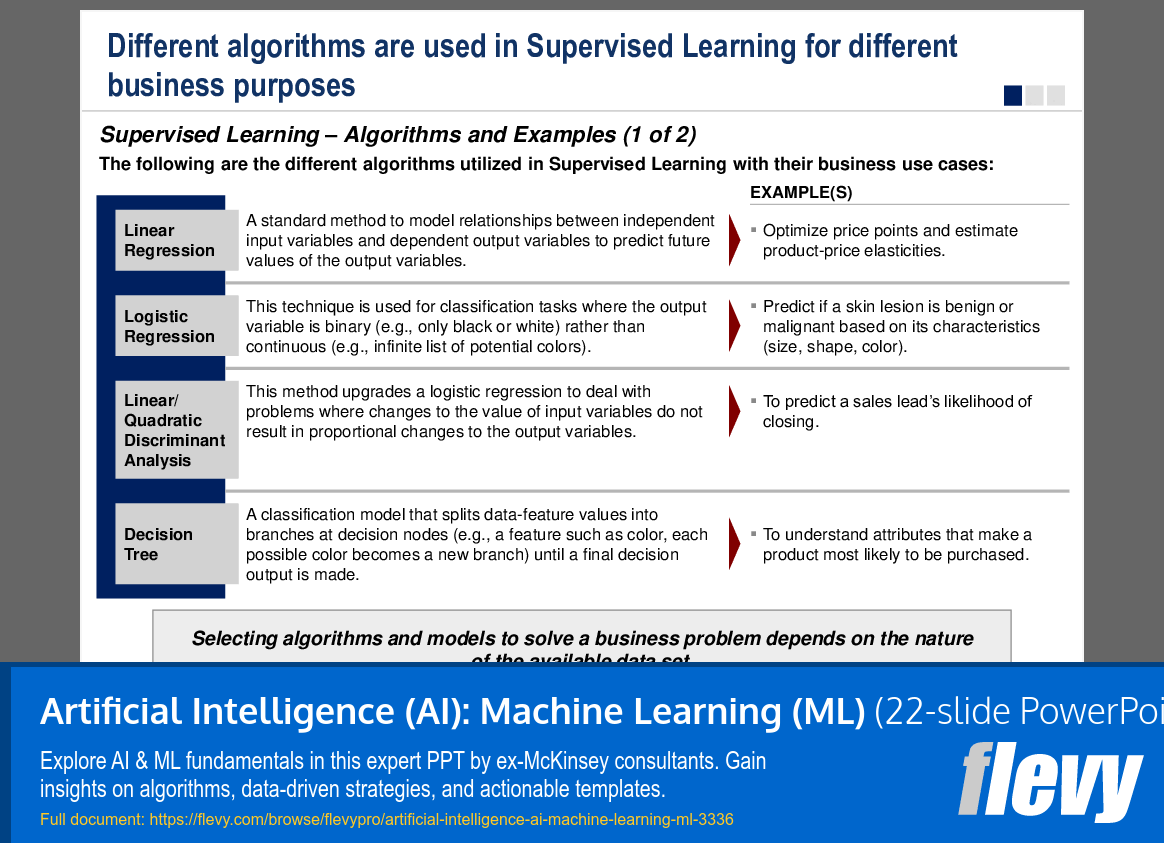
• Supervised Learning - A method where algorithms learn from labeled data to predict outcomes, with applications in fields such as finance and healthcare.
• Unsupervised Learning - Techniques that analyze unlabeled data to identify patterns and groupings, useful for market segmentation and customer analysis.
• Reinforcement Learning - A learning paradigm where algorithms optimize actions based on feedback from the environment, applicable in robotics and game development.
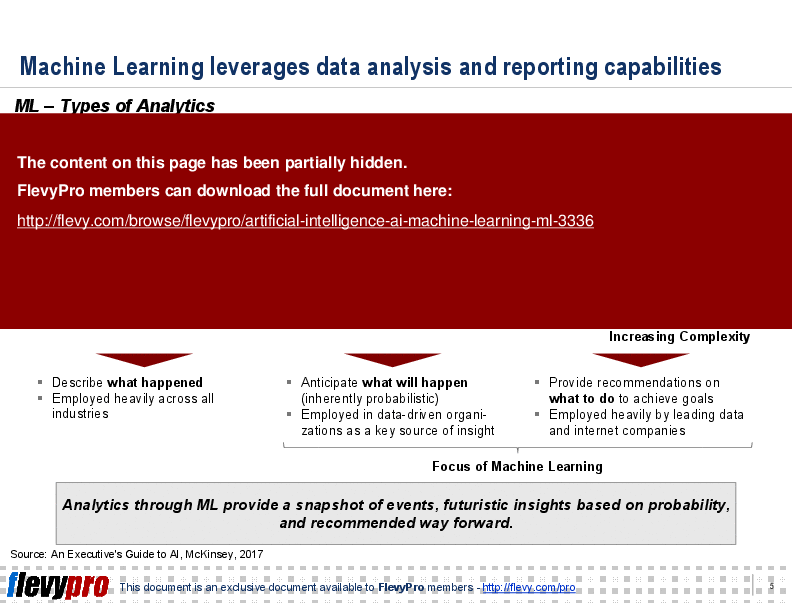
• Machine Learning Analytics - Descriptive, predictive, and prescriptive analytics capabilities that enhance decision-making through data insights.
• Algorithms and Examples - A detailed examination of various algorithms used in each type of ML, including practical business applications.
Deliverables, Templates, and Tools
• Overview template for presenting AI and ML concepts
• Supervised Learning algorithm selection guide
• Unsupervised Learning data analysis framework
• Reinforcement Learning application scenarios
• Analytics capability assessment template
• Case study examples for practical application
Slide Highlights
• Overview slide detailing the evolution and significance of AI
• Supervised Learning slide with algorithm examples and business applications
• Unsupervised Learning slide showcasing clustering techniques
• Reinforcement Learning slide illustrating the feedback loop in decision-making
• Analytics types slide categorizing Descriptive, Predictive, and Prescriptive analytics
Potential Workshop Agenda
Introduction to AI and ML (30 minutes)
• Overview of AI capabilities and significance
• Discussion on the impact of AI on business
Deep Dive into Supervised Learning (60 minutes)
• Explanation of algorithms and their applications
• Group activity on selecting appropriate algorithms for case studies
Exploring Unsupervised Learning (45 minutes)
• Techniques for data analysis and pattern recognition
• Hands-on exercise with clustering algorithms
Understanding Reinforcement Learning (45 minutes)
• Overview of the feedback mechanism in learning
• Real-world examples and applications in various industries
Customization Guidance
• Tailor the presentation with specific industry examples relevant to your audience
• Adjust the algorithms and examples based on the data available within your organization
• Incorporate company-specific metrics and objectives to align with strategic goals
Secondary Topics Covered
• The role of AI in digital transformation
• Ethical considerations in AI implementation
• Future trends in AI and Machine Learning
• Integration of AI with existing business processes
Topic FAQ
Document FAQ
These are questions addressed within this presentation.
What is the difference between Supervised and Unsupervised Learning?
Supervised Learning uses labeled data to train algorithms, while Unsupervised Learning analyzes unlabeled data to find patterns without predefined outcomes.
How can businesses benefit from Reinforcement Learning?
Reinforcement Learning optimizes decision-making by learning from interactions with the environment, making it ideal for dynamic scenarios like trading and robotics.
What are some common algorithms used in Supervised Learning?
Common algorithms include Linear Regression, Logistic Regression, Decision Trees, and Support Vector Machines, each suited for different types of predictive tasks.
How does Unsupervised Learning help in market segmentation?
Unsupervised Learning identifies natural groupings in data, allowing businesses to segment customers based on shared characteristics for targeted marketing.
What industries are leveraging AI and ML technologies?
Industries such as healthcare, finance, retail, and automotive are increasingly adopting AI and ML to improve efficiency, enhance customer experiences, and drive innovation.
Can this presentation be customized for specific business needs?
Yes, the content can be tailored to focus on particular algorithms, case studies, or industry-specific applications relevant to your organization.
What resources are available for further learning about AI and ML?
Numerous online courses, webinars, and literature are available for those looking to deepen their understanding of AI and ML concepts and applications.
How can organizations ensure ethical AI implementation?
Establishing guidelines and frameworks for ethical AI use, including transparency, accountability, and fairness, is crucial for responsible implementation.
What metrics should be tracked to measure the success of AI initiatives?
Key performance indicators (KPIs) may include accuracy of predictions, return on investment (ROI), customer satisfaction, and operational efficiency improvements.
Glossary
• Artificial Intelligence (AI) - The simulation of human intelligence processes by machines.
• Machine Learning (ML) - A subset of AI that enables systems to learn from data and improve over time.
• Supervised Learning - A type of ML where algorithms learn from labeled data.
• Unsupervised Learning - A type of ML that identifies patterns in unlabeled data.
• Reinforcement Learning - A type of ML where algorithms learn through trial and error to maximize rewards.
• Algorithm - A set of rules or instructions for solving a problem or performing a task.
• Descriptive Analytics - Analysis that describes past events and data.
• Predictive Analytics - Analysis that forecasts future outcomes based on historical data.
• Prescriptive Analytics - Analysis that recommends actions to achieve desired outcomes.
• Clustering - A technique in Unsupervised Learning that groups similar data points.
• Regression - A statistical method used in Supervised Learning to predict continuous outcomes.
• Classification - A method in Supervised Learning that assigns labels to data points.
• Data Set - A collection of related data used for analysis.
• Feedback Loop - A process where the output of a system is used as input for future actions.
• Pattern Recognition - The identification of patterns and regularities in data.
• Natural Language Processing (NLP) - A field of AI focused on the interaction between computers and human language.
• Computer Vision - A field of AI that enables machines to interpret and make decisions based on visual data.
• Deep Learning - A subset of ML that uses neural networks to analyze various factors of data.
• Neural Network - A computational model inspired by the way biological neural networks in the human brain process information.
• Data Mining - The practice of examining large datasets to uncover hidden patterns and insights.
• Artificial Neural Network (ANN) - A computational model based on the structure and function of biological neural networks.
• Big Data - Extremely large data sets that may be analyzed computationally to reveal patterns, trends, and associations.
Source: Best Practices in Digital Transformation, Artificial Intelligence, Machine Learning PowerPoint Slides: Artificial Intelligence (AI): Machine Learning (ML) PowerPoint (PPTX) Presentation Slide Deck, LearnPPT Consulting
Did you need more documents?
Consider a FlevyPro subscription from $39/month. View plans here.
For $10.00 more, you can download this document plus 2 more FlevyPro documents. That's just $13 each.
|
Download our FREE Digital Transformation Templates
Download our free compilation of 50+ Digital Transformation slides and templates. DX concepts covered include Digital Leadership, Digital Maturity, Digital Value Chain, Customer Experience, Customer Journey, RPA, etc. |