
Structured Problem Solving: Modified A3   26-slide PPT PowerPoint presentation slide deck (PPTX)
$29.00

Structured Problem Solving: Modified A3 (26-slide PPT PowerPoint presentation slide deck (PPTX)) Preview Image
Log in to unlock full preview.
Structured Problem Solving: Modified A3 (26-slide PPT PowerPoint presentation slide deck (PPTX)) Preview Image
Arrow   Click main image to view in full screen.

Structured Problem Solving: Modified A3 (PowerPoint PPTX Slide Deck)

PowerPoint (PPTX) 26 Slides FlevyPro Document

Top 1,000 Best Practice $29.00
FlevyPro price: FREE (included in subscription)
This framework is developed by a team of former McKinsey and Big 4 consultants. The presentation follows the headline-body-bumper slide format used by global consulting firms.
Add to Cart


Immediate download
Free lifetime updates

PROBLEM SOLVING PPT DESCRIPTION

Editor Summary Structured Problem Solving: Modified A3 is a 26-slide PowerPoint presenting a six-step problem-solving methodology based on Toyota's Modified A3 Form. Read more

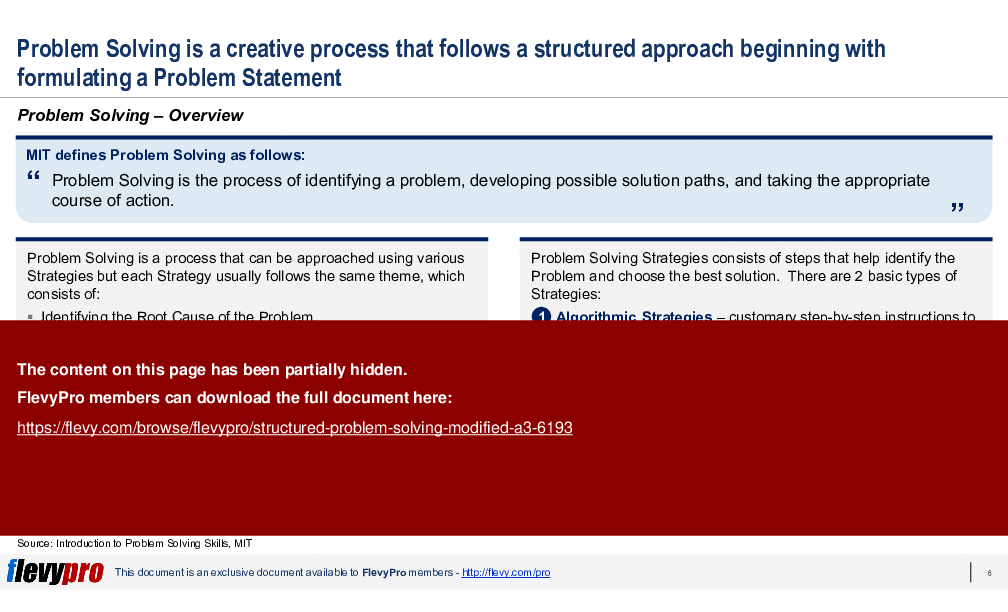
Solving problems, complex problems at that, involves not only good problem formulation but also a structured approach to complement it. Structured Problem Solving is simply an iterative sequence of framing hypotheses and trying them via controlled experimentation revamped for the intricacies of the world beyond the laboratory.

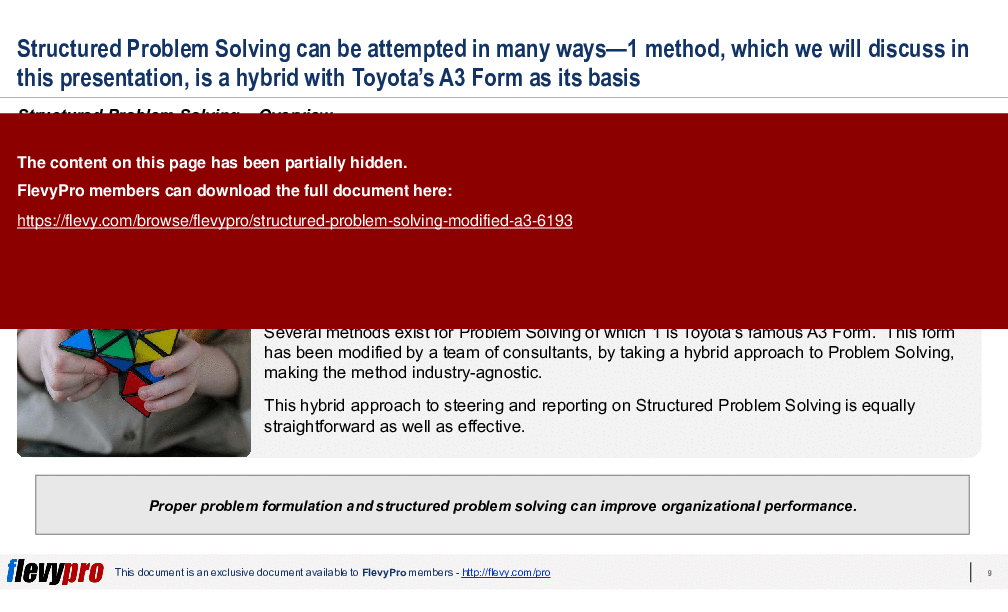
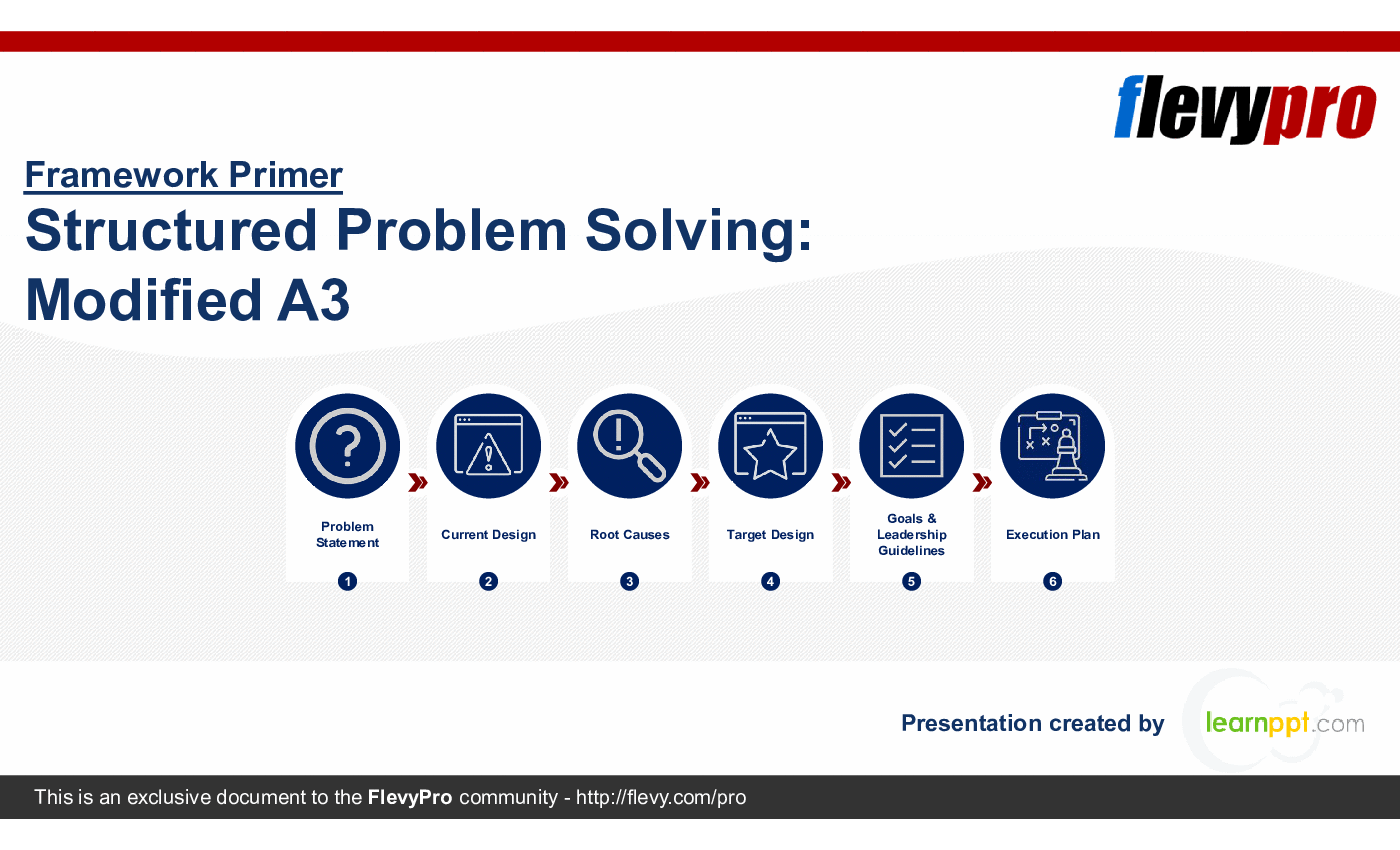
The following 6-step approach for Structured Problem Solving has been developed by experienced consultants using Toyota's Modified A3 Form as its base:

1. Problem Statement
2. Current Design
3. Root Causes
4. Target Design
5. Goals & Leadership Guidelines
6. Execution Plan

This approach leads to directing and communicating the organized problem resolution effort in such a way that it is both uncomplicated and efficient. An effective Problem Solving process is a result of several small, incremental changes.

The slide deck also includes some slide templates for you to use in your own business presentations.

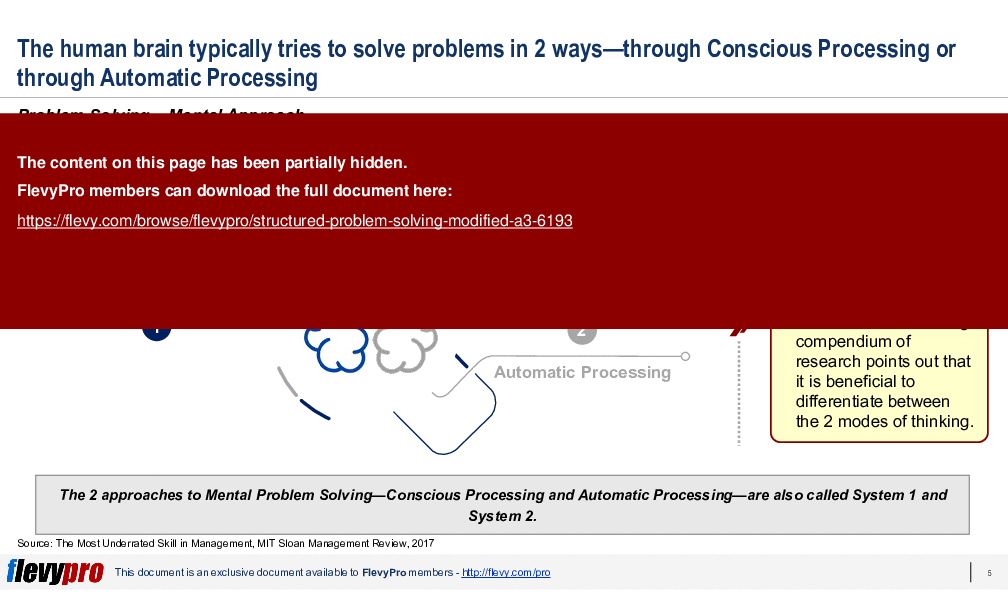
This PPT delves into the cognitive processes involved in problem-solving, distinguishing between conscious and automatic processing. It emphasizes the importance of understanding how the human brain approaches problem-solving to enhance the effectiveness of the structured approach. This insight is crucial for leaders aiming to foster a culture of continuous improvement and innovation within their organizations.

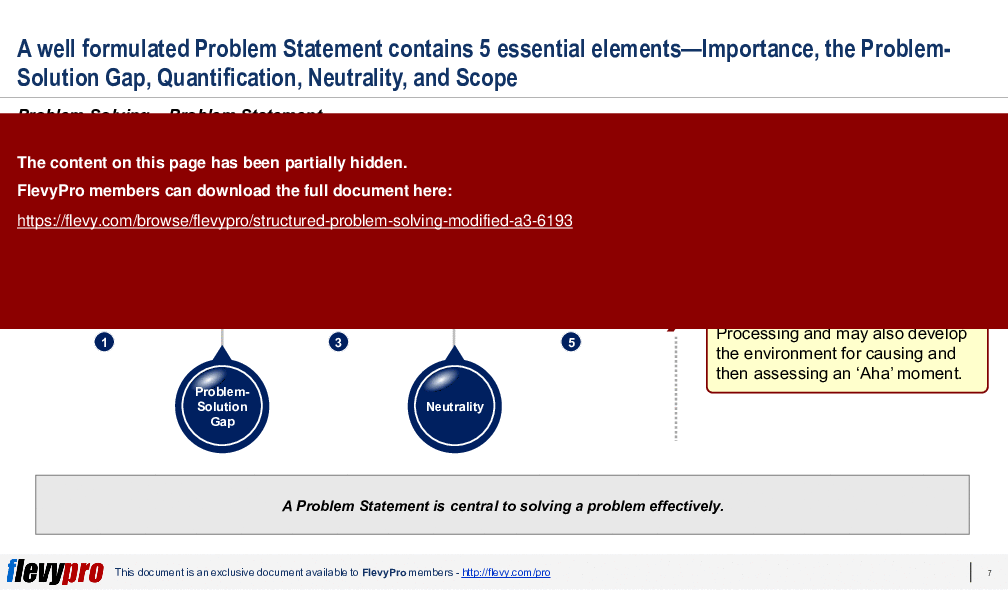
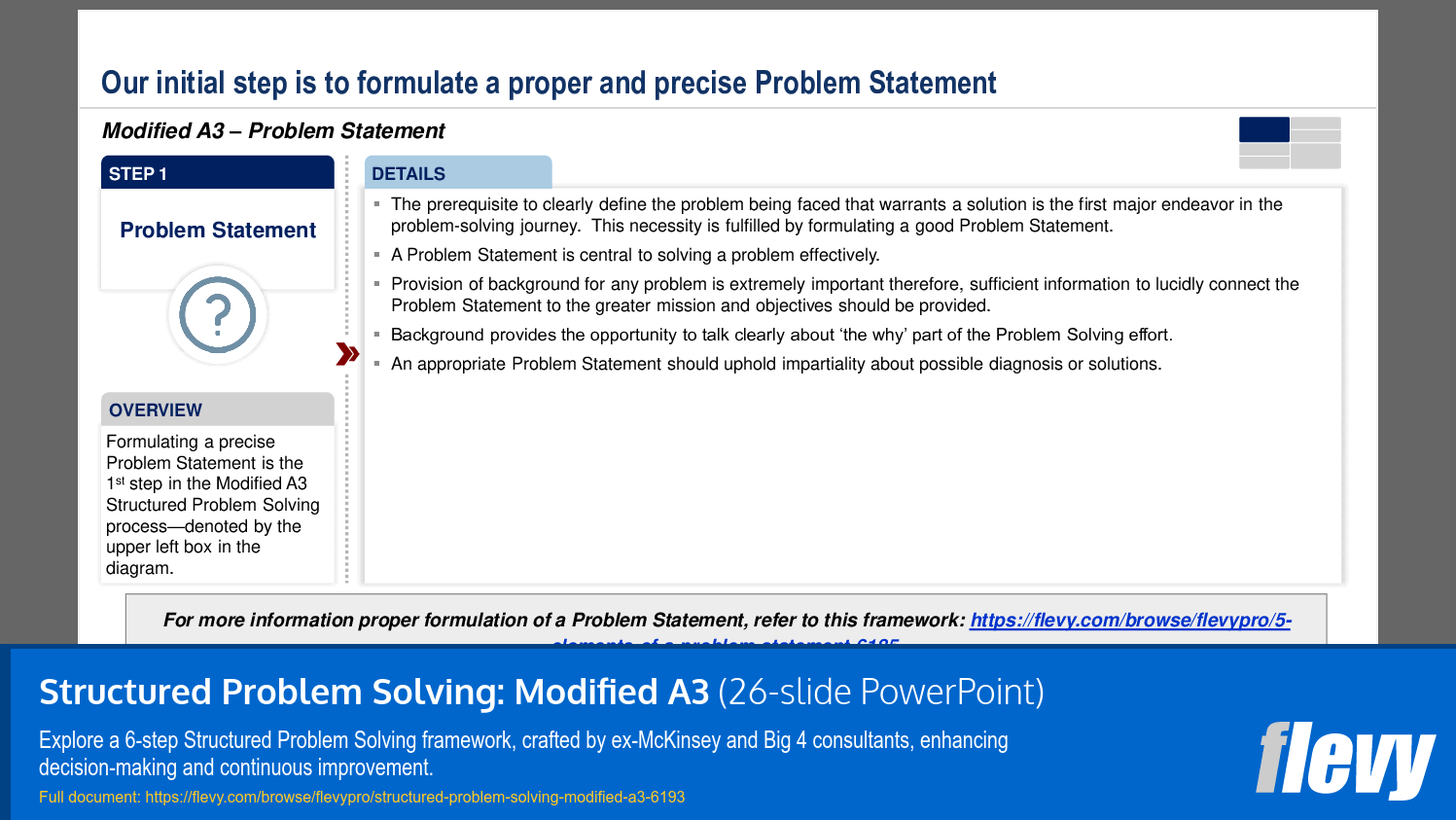
The presentation also covers the formulation of a precise problem statement, highlighting its five essential elements: importance, problem-solution gap, quantification, neutrality, and scope. This foundational step ensures that the problem is clearly understood and framed correctly, setting the stage for a successful resolution. The document provides detailed guidance on capturing the current state of work through direct observation, a critical step for identifying improvement opportunities.

Root cause analysis is another key focus, stressing the need for thorough examination to uncover underlying issues rather than surface symptoms. By connecting observations to the problem statement, this step ensures that solutions address the real causes of problems. The document concludes with a comprehensive execution plan, outlining specific activities, ownership, and timelines to ensure effective implementation and tracking of results.

Got a question about this document? Email us at flevypro@flevy.com.

MARCUS OVERVIEW

This synopsis was written by Marcus [?] based on the analysis of the full 26-slide presentation.


Executive Summary
The "Structured Problem Solving: Modified A3" presentation provides a robust framework designed to enhance decision-making and continuous improvement through a systematic approach to problem-solving. Developed by seasoned consultants, this six-step methodology is based on Toyota's Modified A3 Form, guiding users through a structured process that includes defining the problem, analyzing current and target designs, identifying root causes, and executing a comprehensive plan. This deck is ideal for corporate executives and consultants looking to streamline problem-solving efforts and foster effective communication within their teams.

Who This Is For and When to Use
•  Corporate executives seeking to improve organizational problem-solving capabilities
•  Integration leaders tasked with implementing structured methodologies
•  Consultants aiming to enhance client decision-making processes
•  Project managers overseeing complex problem resolution efforts

Best-fit moments to use this deck:
•  During strategic planning sessions to establish a clear problem-solving framework
•  When addressing recurring operational issues that require structured analysis
•  In workshops focused on team alignment around problem identification and resolution

Learning Objectives
•  Define the six-step Structured Problem Solving framework and its components
•  Build a comprehensive Problem Statement that effectively communicates the issue
•  Analyze Current Design to identify inefficiencies and areas for improvement
•  Conduct Root Cause analysis to uncover underlying issues
•  Develop a clear Target Design that outlines desired outcomes
•  Establish Goals and Leadership Guidelines to ensure project alignment and success
•  Create an actionable Execution Plan with defined responsibilities and timelines

Table of Contents
•  Overview (page 1)
•  Problem Solving (page 3)
•  Structured Problem Solving (page 9)
•  Modified A3 (page 10)
•  Templates (page 20)

Primary Topics Covered
•  Problem Statement - A clear articulation of the issue at hand, serving as the foundation for effective problem-solving.
•  Current Design - An analysis of existing processes to identify inefficiencies and areas for improvement.
•  Root Causes - A thorough investigation into the underlying factors contributing to the problem, utilizing methods such as the "5 Whys" technique.
•  Target Design - A proposed framework for an improved system that addresses identified issues and enhances performance.
•  Goals & Leadership Guidelines - Defined objectives and parameters that guide the problem-solving process and ensure alignment among stakeholders.
•  Execution Plan - A detailed roadmap outlining specific actions, responsibilities, and timelines for implementing the proposed solutions.

Deliverables, Templates, and Tools
•  Problem Statement template to guide the formulation of clear and effective problem descriptions
•  Current Design analysis framework to document existing processes and identify inefficiencies
•  Root Cause analysis tools, including the "5 Whys" and Fishbone diagram techniques
•  Target Design outline for structuring proposed improvements
•  Goals and Leadership Guidelines framework to ensure project alignment and accountability
•  Execution Plan template for tracking progress and measuring outcomes

Slide Highlights
•  Overview of the six-step Structured Problem Solving process
•  Detailed breakdown of the Problem Statement and its essential components
•  Visual representation of Root Cause analysis methodologies
•  Framework for developing a clear Target Design
•  Execution Plan slide illustrating action items and accountability

Potential Workshop Agenda
Introduction to Structured Problem Solving (30 minutes)
•  Overview of the six-step framework
•  Discussion on the importance of structured problem-solving

Problem Statement Development (60 minutes)
•  Group exercise to formulate effective Problem Statements
•  Review and feedback session

Root Cause Analysis Workshop (90 minutes)
•  Hands-on practice using the "5 Whys" and Fishbone diagram techniques
•  Group presentations of findings

Target Design and Execution Planning (60 minutes)
•  Collaborative session to outline Target Design and Execution Plans
•  Assign responsibilities and set timelines

Customization Guidance
•  Adapt the Problem Statement template to reflect specific organizational contexts and challenges
•  Modify the Current Design analysis to align with unique operational processes
•  Tailor the Execution Plan to include specific metrics and KPIs relevant to your organization
•  Update Goals and Leadership Guidelines to reflect organizational priorities and constraints

Secondary Topics Covered
•  The role of Conscious and Automatic Processing in problem-solving
•  Strategies for effective communication during the problem-solving process
•  Techniques for fostering team collaboration and alignment

Topic FAQ

What are the key steps in a Structured Problem Solving process?

Structured Problem Solving follows 6 steps: Problem Statement, Current Design, Root Causes, Target Design, Goals & Leadership Guidelines, and Execution Plan. The sequence emphasizes framing the issue, observing the current state, diagnosing root causes, defining desired outcomes, aligning leadership, and assigning implementation activities across 6 steps.

How do you write an effective Problem Statement for a complex issue?

An effective Problem Statement includes 5 elements: Importance, Quantification, Scope, Problem-Solution Gap, and Neutrality. It should clearly articulate why the issue matters, measure its impact, define boundaries, show the gap to desired performance, and avoid prescribing solutions; use the Problem Statement template to capture these 5 elements.

What root cause analysis techniques should I use to find underlying problems?

Common techniques are the "5 Whys" for iterative probing and the Fishbone (Ishikawa) diagram for categorizing potential causes. These tools help move beyond symptom-level fixes to underlying issues; the deck provides both 5 Whys and Fishbone diagram tools for structured analysis.

How should I capture the Current Design when assessing a process?

Capture the Current Design through direct observation and documentation of existing processes to identify inefficiencies and deviations from expected flow. The goal is to link observed behavior back to the Problem Statement; the presentation includes a Current Design analysis framework to record observations and inefficiencies.

What should I look for in a problem-solving toolkit if I have a tight timeline and small team?

Prioritize ready-to-use templates for Problem Statement, Current Design, Root Cause analysis, Target Design, and Execution Plan, plus a concise workshop agenda to guide sessions. These elements reduce preparation time and facilitate focused team work; this deck includes templates and a sample workshop agenda and an Execution Plan template.

Are pre-built slide decks for structured problem solving worth buying versus building templates from scratch?

Pre-built decks that bundle templates, root-cause tools, and sample agendas can save time for teams preparing workshops or strategic sessions. If you need repeatable materials for rapid deployment and alignment, a slide set with templates and a workshop agenda can be practical—this offering is a 26-slide deck.

I need to run a team workshop to align on problem solving—what agenda works?

A practical workshop agenda starts with a 30-minute overview of the six-step framework, a 60-minute Problem Statement development session, a 90-minute Root Cause Analysis workshop using 5 Whys and Fishbone, and a 60-minute Target Design and Execution Planning session, as shown in the provided sample agenda.

How does the Modified A3 approach differ from ad-hoc problem solving for recurring operational issues?

The Modified A3 formalizes the process into an iterative, hypothesis-driven sequence that links clear Problem Statements, Current Design observation, Root Cause analysis, Target Design, Leadership Guidelines, and an Execution Plan—ensuring solutions address root causes rather than symptoms via a six-step Modified A3 approach.

Document FAQ
These are questions addressed within this presentation.

What is the Modified A3 approach?
The Modified A3 approach is a structured problem-solving framework based on Toyota's A3 Form, adapted for use across various industries to enhance decision-making and communication.

How can this framework improve organizational performance?
By providing a systematic method for identifying and addressing problems, organizations can enhance efficiency, reduce waste, and foster a culture of continuous improvement.

What tools are included in the presentation?
The presentation includes templates for Problem Statements, Current Design analysis, Root Cause analysis, Target Design, and Execution Plans.

Can this framework be used for team workshops?
Yes, the framework is designed to facilitate team workshops, promoting collaboration and alignment around problem-solving efforts.

How do I implement the Execution Plan?
The Execution Plan outlines specific actions, responsibilities, and timelines, ensuring that all team members are aware of their roles in the problem-solving process.

What are the key elements of a good Problem Statement?
A well-formulated Problem Statement should include Importance, Quantification, Scope, Problem-Solution Gap, and Neutrality.

How does Root Cause analysis differ from surface-level problem identification?
Root Cause analysis delves deeper into underlying issues, while surface-level identification often only addresses symptoms without resolving the core problem.

What are Leadership Guidelines?
Leadership Guidelines are parameters that define the limits and expectations for achieving project goals, ensuring alignment and accountability among stakeholders.

Glossary
•  Problem Statement - A clear articulation of the issue that needs to be addressed.
•  Current Design - The existing state of processes and systems before improvements.
•  Root Cause - The fundamental reason for a problem, identified through analysis.
•  Target Design - A proposed framework for an improved system that addresses identified issues.
•  Goals - Specific objectives that guide the problem-solving process.
•  Leadership Guidelines - Parameters that define the limits and expectations for project success.
•  Execution Plan - A detailed roadmap for implementing proposed solutions.
•  5 Whys - A technique for identifying root causes by asking "why" multiple times.
•  Fishbone Diagram - A visual tool for categorizing potential causes of a problem.
•  Continuous Improvement - Ongoing efforts to enhance products, services, or processes.
•  Stakeholders - Individuals or groups with an interest in the outcome of a project.
•  Metrics - Measurements used to assess progress and success.
•  Collaboration - Working together to achieve a common goal.
•  Communication - The process of sharing information effectively among team members.
•  Efficiency - The ability to accomplish a task with minimal waste of resources.
•  Incremental Changes - Small, gradual improvements made over time.
•  Systems Thinking - An approach that views problems as part of a larger system.
•  Operational Performance - The effectiveness and efficiency of an organization's operations.
•  Decision-Making - The process of making choices based on analysis and judgment.
•  Framework - A structured approach to problem-solving or decision-making.
•  Consultants - Professionals who provide expert advice in a particular area.
•  Executive - A high-level manager responsible for strategic decision-making.

PROBLEM SOLVING PPT SLIDES

Toyota's A3 Form: Streamlined Problem-Solving Framework

Structured Approaches to Effective Problem Solving

Essential Elements of a Problem Statement for Leaders

Deep Dive into Root Cause Analysis Techniques

Formulating an Effective Problem Statement in A3 Process

Source: Best Practices in Problem Solving, A3 PowerPoint Slides: Structured Problem Solving: Modified A3 PowerPoint (PPTX) Presentation Slide Deck, LearnPPT Consulting


$29.00
FlevyPro price: FREE (included in subscription)
This framework is developed by a team of former McKinsey and Big 4 consultants. The presentation follows the headline-body-bumper slide format used by global consulting firms.
Add to Cart
  

Did you need more documents?

Consider a FlevyPro subscription from $39/month. View plans here.

For $10.00 more, you can download this document plus 2 more FlevyPro documents. That's just $13 each.

ABOUT FLEVYPRO

This document is part of the FlevyPro Library, a curated knowledge base of documents for our FlevyPro subscribers.

FlevyPro is a subscription service for on-demand business frameworks and analysis tools. FlevyPro subscribers receive access to an exclusive library of curated business documents—business framework primers, presentation templates, Lean Six Sigma tools, and more—among other exclusive benefits.

Click here to learn more about FlevyPro and its benefits.

Did you know?
The average daily rate of a McKinsey consultant is $6,625 (not including expenses). The average price of a Flevy document is $65.


Trusted by over 10,000+ Client Organizations
Since 2012, we have provided business templates to over 10,000 businesses and organizations of all sizes, from startups and small businesses to the Fortune 100, in over 130 countries.
AT&T GE Cisco Intel IBM Coke Dell Toyota HP Nike Samsung Microsoft Astrazeneca JP Morgan KPMG Walgreens Walmart 3M Kaiser Oracle SAP Google E&Y Volvo Bosch Merck Fedex Shell Amgen Eli Lilly Roche AIG Abbott Amazon PwC T-Mobile Broadcom Bayer Pearson Titleist ConEd Pfizer NTT Data Schwab


Read Customer Testimonials

 
"My FlevyPro subscription provides me with the most popular frameworks and decks in demand in today’s market. They not only augment my existing consulting and coaching offerings and delivery, but also keep me abreast of the latest trends, inspire new products and service offerings for my practice, and educate me "

– Bill Branson, Founder at Strategic Business Architects
 
"As a niche strategic consulting firm, Flevy and FlevyPro frameworks and documents are an on-going reference to help us structure our findings and recommendations to our clients as well as improve their clarity, strength, and visual power. For us, it is an invaluable resource to increase our impact and value."

– David Coloma, Consulting Area Manager at Cynertia Consulting
 
"As a young consulting firm, requests for input from clients vary and it's sometimes impossible to provide expert solutions across a broad spectrum of requirements. That was before I discovered Flevy.com.

Through subscription to this invaluable site of a plethora of topics that are key and crucial to consulting, I "

– Nishi Singh, Strategist and MD at NSP Consultants
 
"As a small business owner, the resource material available from FlevyPro has proven to be invaluable. The ability to search for material on demand based our project events and client requirements was great for me and proved very beneficial to my clients. Importantly, being able to easily edit and tailor "

– Michael Duff, Managing Director at Change Strategy (UK)
 
"I am extremely grateful for the proactiveness and eagerness to help and I would gladly recommend the Flevy team if you are looking for data and toolkits to help you work through business solutions."

– Trevor Booth, Partner, Fast Forward Consulting
 
"Last Sunday morning, I was diligently working on an important presentation for a client and found myself in need of additional content and suitable templates for various types of graphics. Flevy.com proved to be a treasure trove for both content and design at a reasonable price, considering the time I "

– M. E., Chief Commercial Officer, International Logistics Service Provider
 
"FlevyPro provides business frameworks from many of the global giants in management consulting that allow you to provide best in class solutions for your clients."

– David Harris, Managing Director at Futures Strategy
 
"As a consulting firm, we had been creating subject matter training materials for our people and found the excellent materials on Flevy, which saved us 100's of hours of re-creating what already exists on the Flevy materials we purchased."

– Michael Evans, Managing Director at Newport LLC


Customers Also Bought These Documents


Customers Also Like These Documents

Explore Templates on Related Management Topics


Your Recently Viewed Documents
Receive our FREE whitepaper on the Top 101 Consulting Frameworks

Download our 200+ page guide summarizing the Top 101 Management Consulting Frameworks. Each framework provides a structured approach to analyzing and solving a common business problem.