
The 8D Problem Solving Process has become a standard in many industries as problem solving or improvement process, as internal Corrective Action Request (CAR) Process or as Supplier Corrective Action Request (SCAR) Process.

The 8D Problem Solving Process Training Module includes:
1. MS PowerPoint Presentation including 207 slides covering our Global 8D Problem Solving Process Tools, a Case Study and 7 Workshop Exercises.
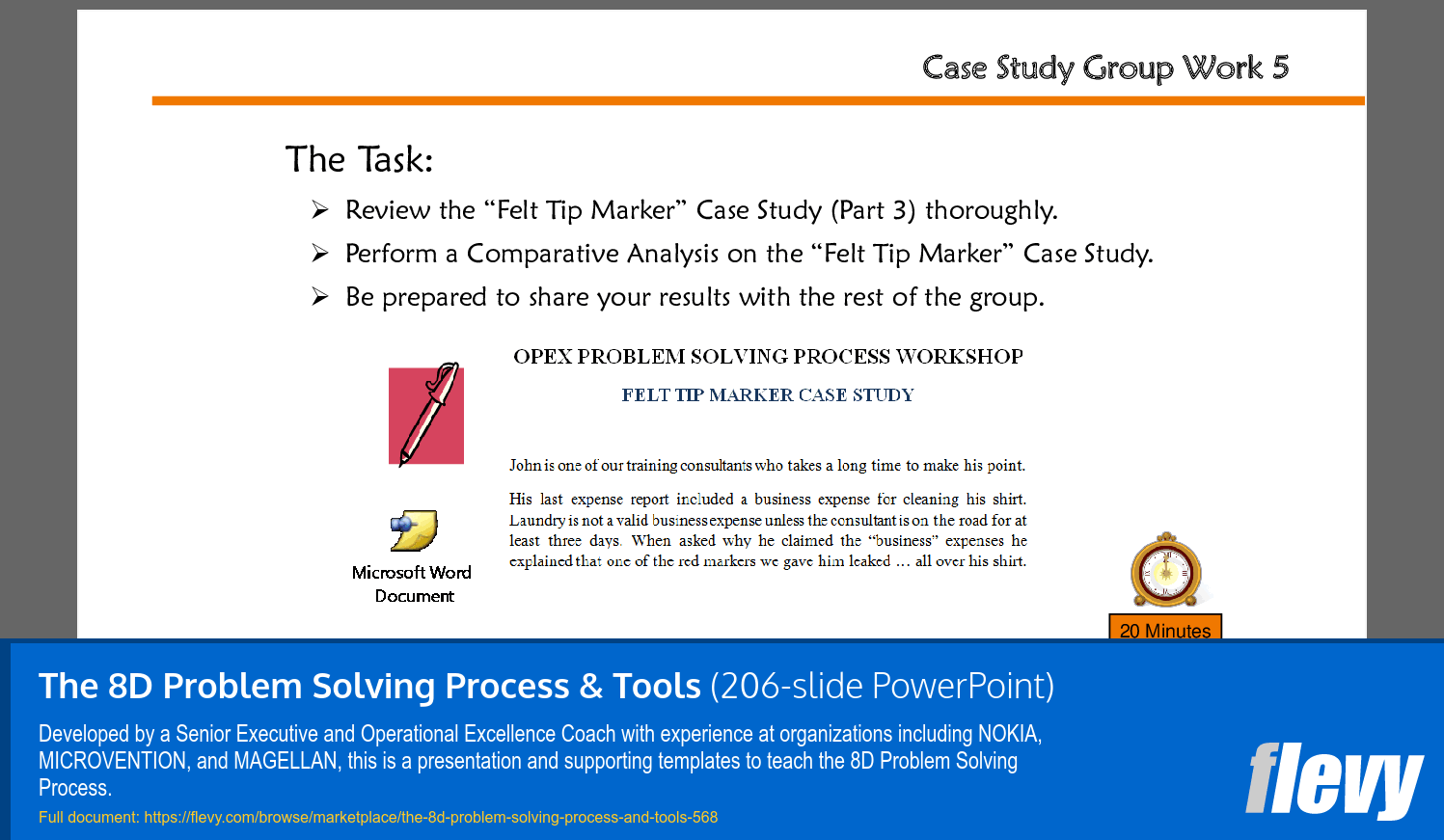
2. MS Word Problem Solving Process Case Study (imbedded as part of the exercises in slide 50, 53, 56, and 99)
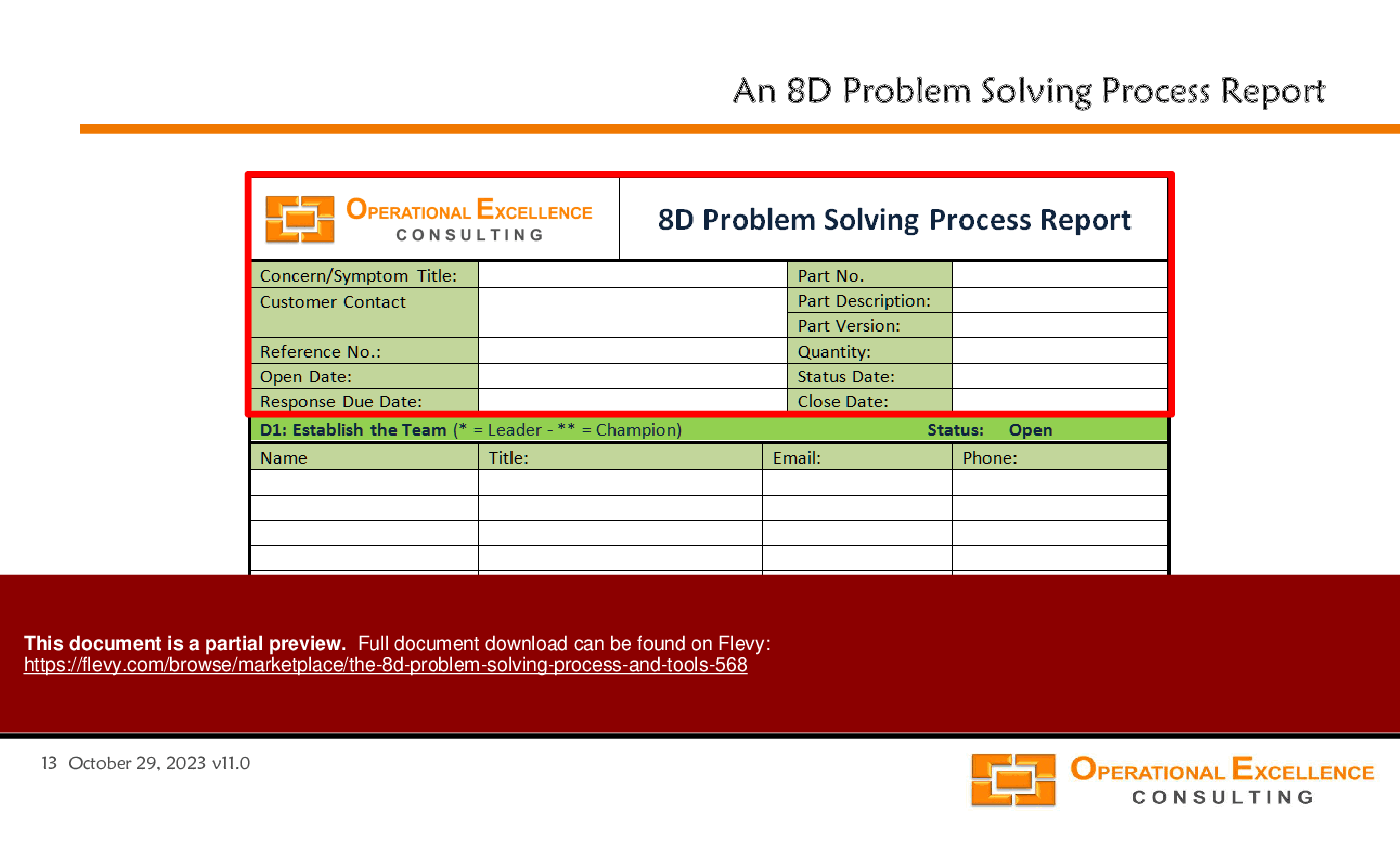
3. MS Word 8D Problem Solving Report Template (imbedded in slide 15)
4. MS Excel 8D Problem Solving Process Worksheet Template & Example
5. MS Excel Process Variables Map Template & Example, Process FMEA Template & Example, and Process Control Plan Template
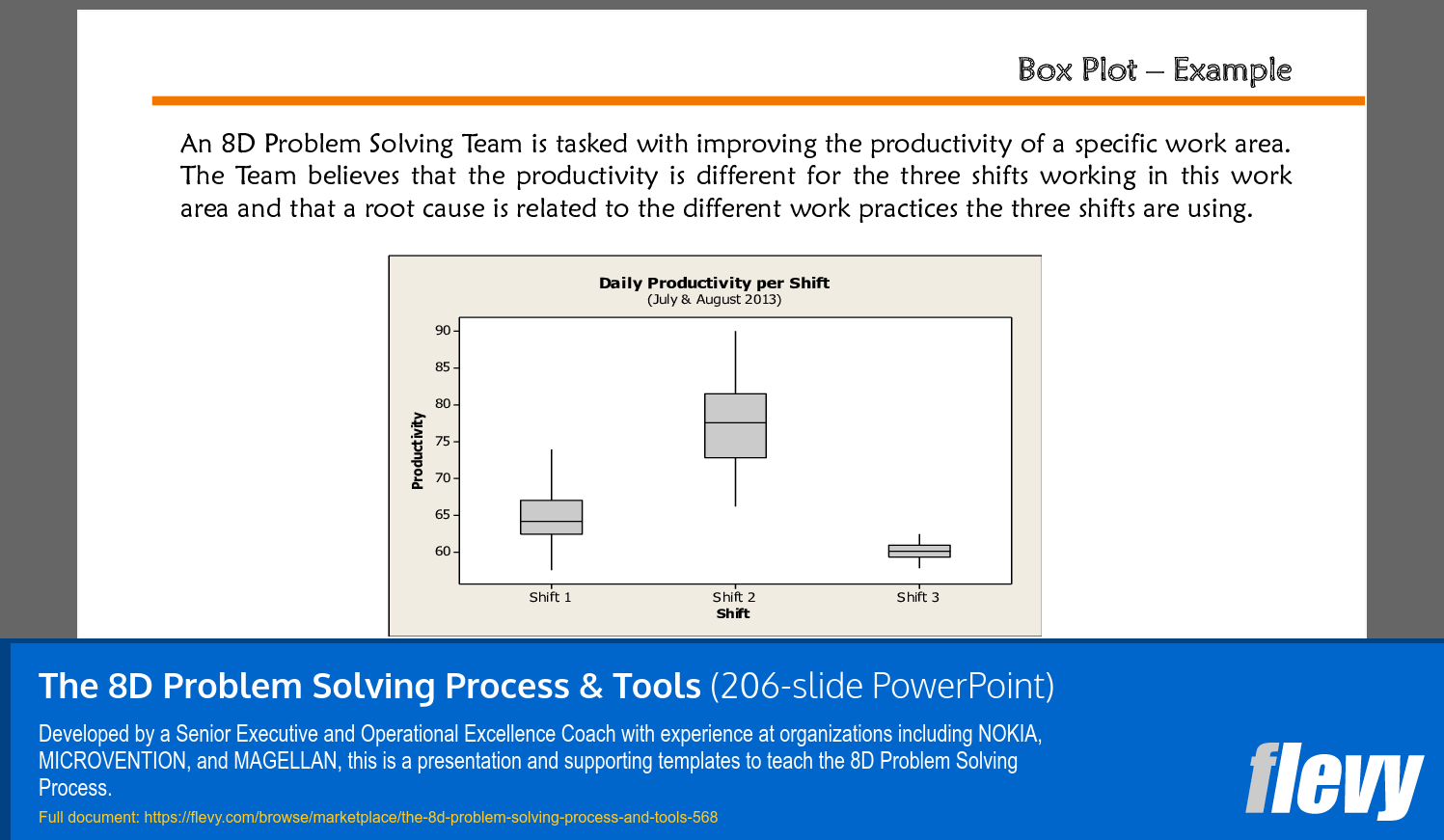
The key problem-solving tools included in the 8D Problem Solving Process are, Pareto Chart, Histogram, Run Chart, 5 Whys, Is-Is Not Matrix, Process Flow Chart, Process Variables Map, Fishbone Diagram, Comparative Analysis, Scatter Plot, Box Plot, Process Failure Mode and Effects Analysis (FMEA), Root Cause Theory Testing, Mistake Proofing, and Process Control Plan.
"After you have downloaded the training material, you can change any part of the training material and remove all logos and references to Operational Excellence Consulting. You can share the material with your colleagues and clients, and re-use it as you need. The only restriction is that you cannot publicly re-distribute, sell, rent or license the material as though it is your own. Thank you."
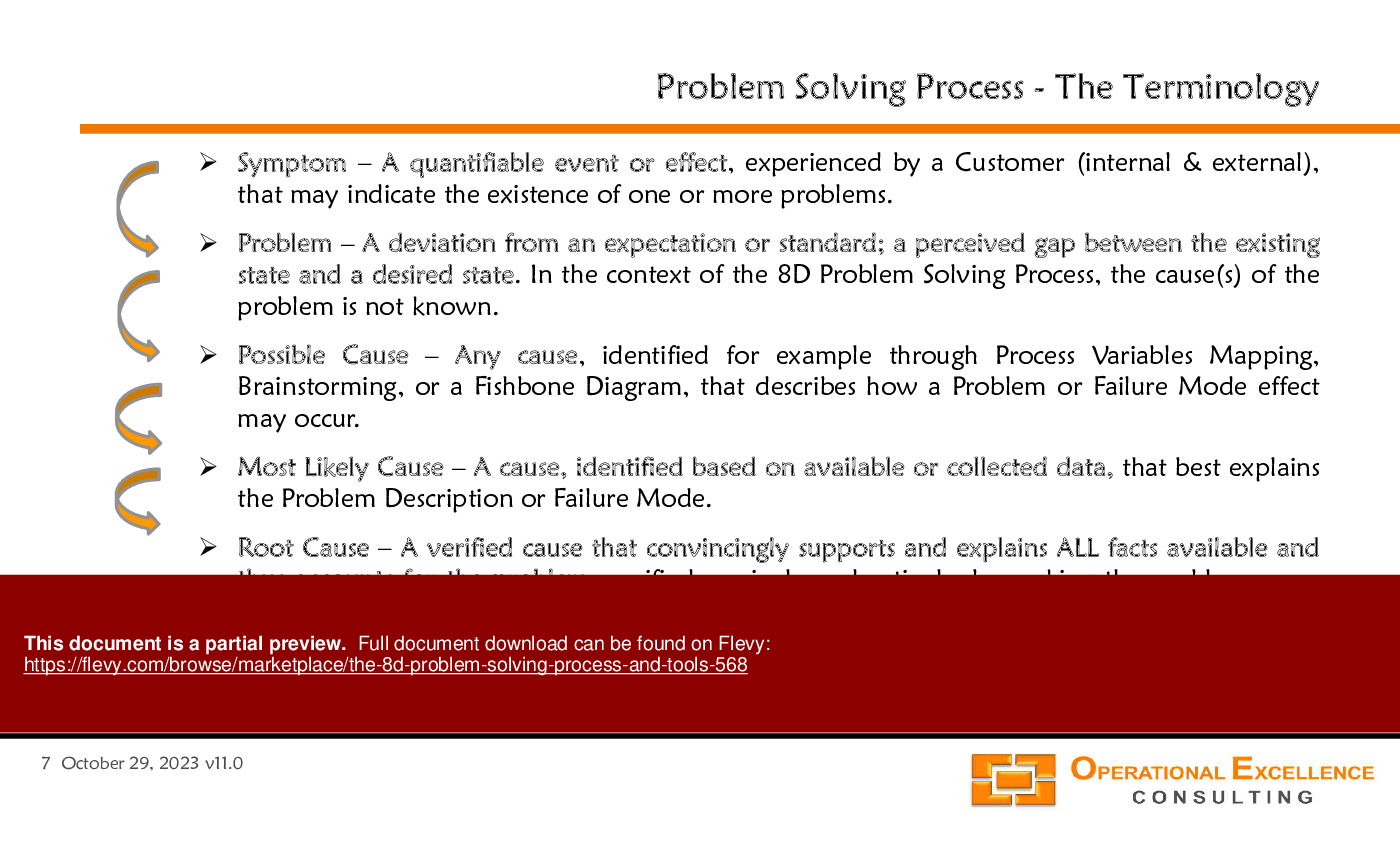
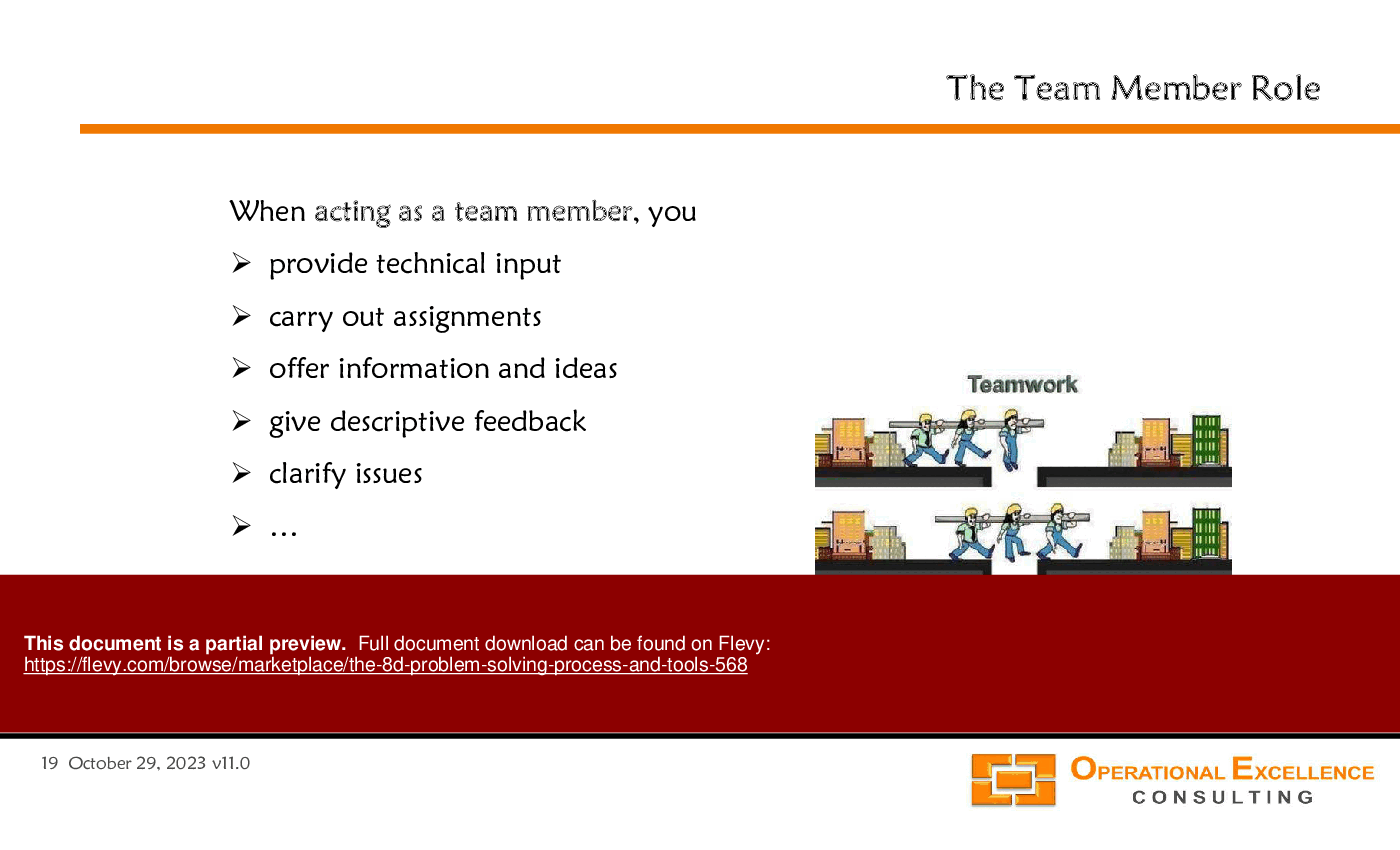
The 8D Problem Solving Process document also delves into the critical terminology and roles essential for effective problem-solving. It provides detailed definitions of key terms such as symptom, problem, possible cause, most likely cause, and root cause. The document outlines the responsibilities of team members, emphasizing the importance of technical input and descriptive feedback. It includes comprehensive examples of tools like the IS-IS NOT Matrix, Fishbone Diagram, and Process Flowchart Map. The training module also covers interim containment actions, highlighting their cost implications and necessity for customer protection.
Got a question about the product? Email us at support@flevy.com or ask the author directly by using the "Ask the Author a Question" form. If you cannot view the preview above this document description, go here to view the large preview instead.
Executive Summary
The 8D Problem Solving Process presentation is designed to equip teams with a structured methodology for identifying and addressing the root causes of problems within an organization. Developed by an experienced Operational Excellence Coach, this training module provides insights into the origins of the 8D process, its application across various industries, and the critical tools necessary for effective problem-solving. Participants will engage with case studies, practical exercises, and templates that facilitate the implementation of the 8D methodology, ultimately leading to enhanced performance and customer satisfaction.
Who This Is For and When to Use
• Quality Assurance Managers focused on improving product reliability and customer satisfaction.
• Operations Managers seeking to streamline processes and reduce waste.
• Team Leaders responsible for guiding problem-solving initiatives within their teams.
• Continuous Improvement Professionals aiming to implement Lean and Six Sigma methodologies.
Best-fit moments to use this deck:
• During team workshops aimed at addressing recurring quality issues.
• When initiating a project focused on process improvement or corrective actions.
• In training sessions for new team members on problem-solving methodologies.
Learning Objectives
• Define the 8D Problem Solving Process and its significance in operational excellence.
• Describe the purpose and objectives of each phase of the 8D Problem Solving Process.
• Understand and apply key problem-solving tools relevant to each phase of the 8D process.
• Utilize assessing questions to evaluate the effectiveness of solutions at the end of each phase.
Table of Contents
• Introduction to the 8D Problem Solving Process (page 3)
• History of the 8D Methodology (page 5)
• Key Learning Points (page 6)
• Problem Solving Terminology (page 7)
• Overview of the 8D Process Steps (page 12)
• Establishing the Team (page 15)
• Describing the Problem (page 24)
• Developing Interim Containment Actions (page 76)
• Defining and Verifying Root Causes (page 85)
• Choosing and Verifying Permanent Corrective Actions (page 134)
• Implementing and Validating Corrective Actions (page 176)
• Preventing Recurrence (page 185)
• Recognizing Team Contributions (page 202)
Primary Topics Covered
• 8D Process Overview - A comprehensive introduction to the 8D methodology, detailing its phases and objectives.
• Team Establishment - Guidelines for forming effective problem-solving teams, including roles and responsibilities.
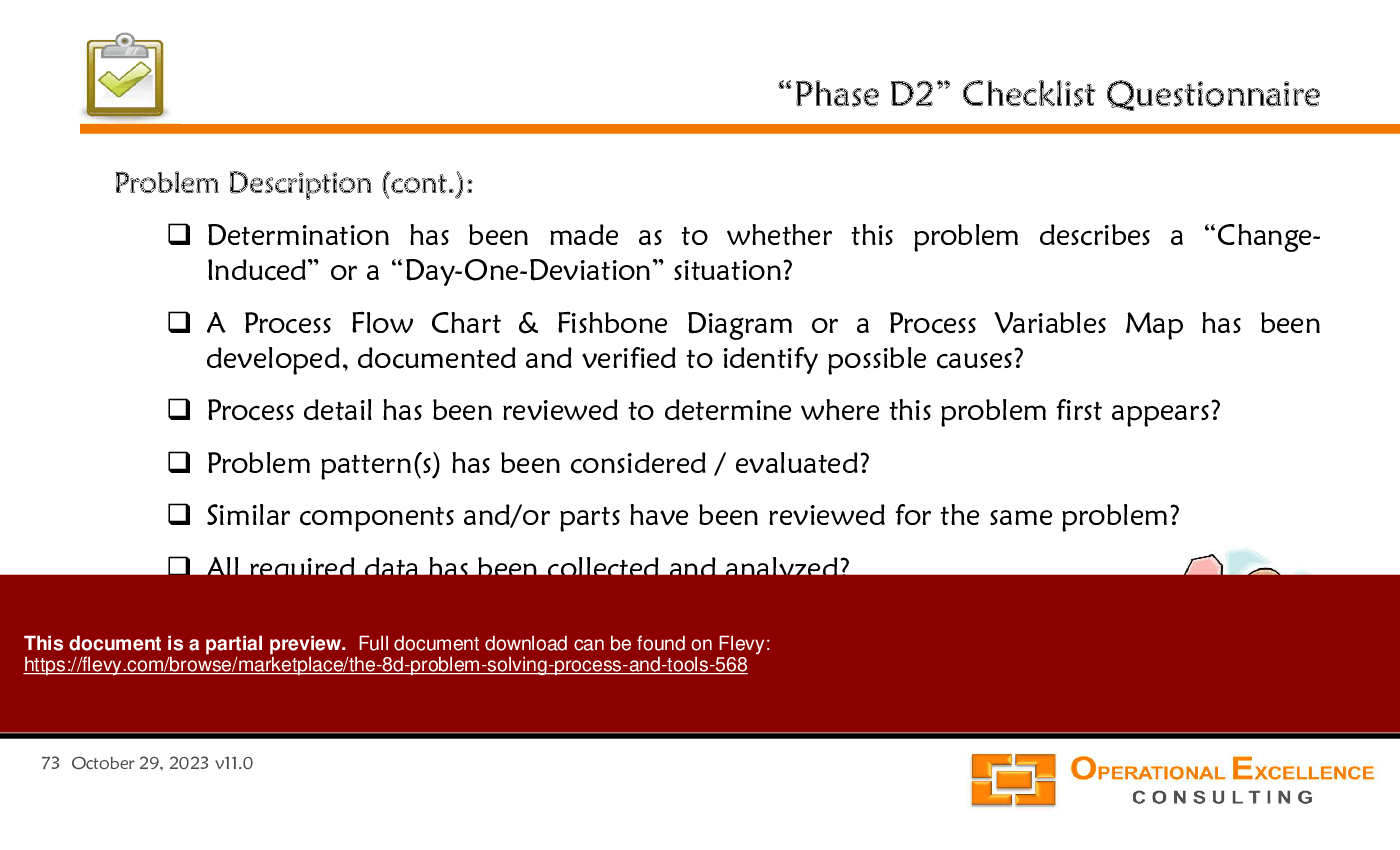
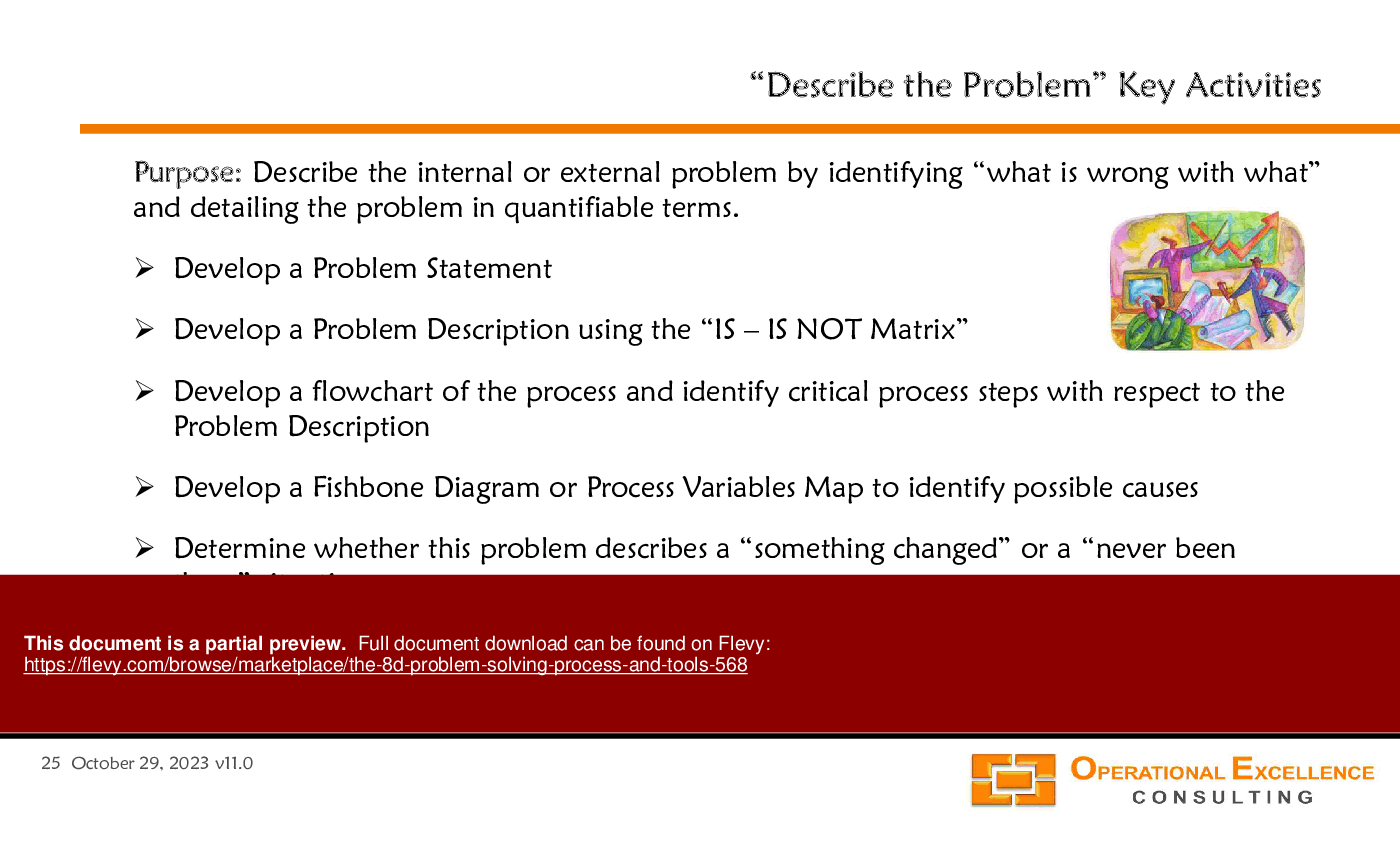
• Problem Description - Techniques for accurately defining problems using tools like the IS-IS NOT Matrix and Fishbone Diagrams.
• Root Cause Analysis - Methods for identifying and verifying root causes through data analysis and team collaboration.
• Corrective Action Implementation - Steps for selecting and validating permanent corrective actions to prevent recurrence.
• Continuous Improvement - Strategies for embedding the 8D process into organizational culture for ongoing operational excellence.
Deliverables, Templates, and Tools
• 8D Problem Solving Process Worksheet for documenting findings and actions.
• Fishbone Diagram template for identifying potential causes of problems.
• IS-IS NOT Matrix for clarifying problem boundaries.
• Process Flowchart for visualizing process steps and identifying escape points.
• Interim Containment Action Plan template for immediate response strategies.
• Permanent Corrective Action Plan template for long-term solutions.
Slide Highlights
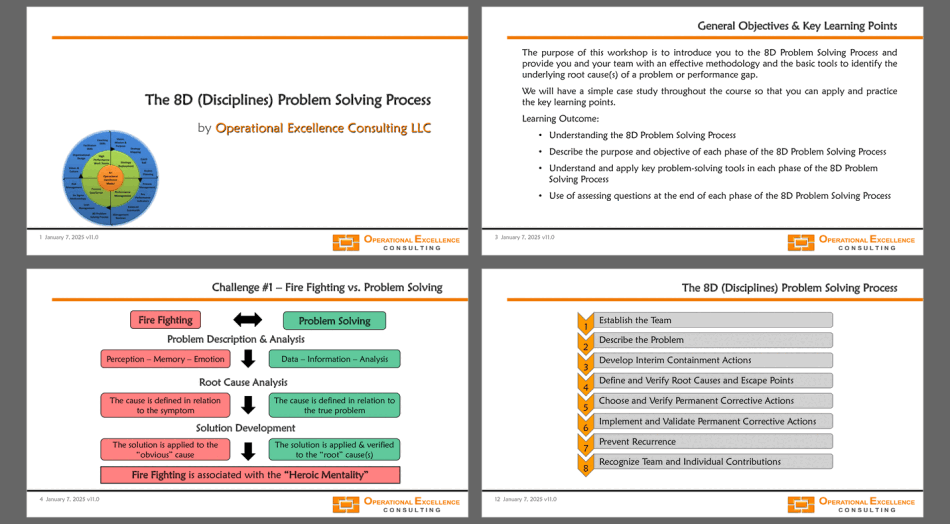
• Overview of the 8D Problem Solving Process highlighting each phase.
• Visual representation of the Fishbone Diagram for cause analysis.
• Examples of effective Interim Containment Actions and their validation.
• Case study examples illustrating the application of the 8D methodology.
• Summary of the SCAMPER technique for generating innovative solutions.
Potential Workshop Agenda
Introduction to 8D Process (30 minutes)
• Overview of the 8D methodology and its history.
• Discussion on the importance of problem-solving in operational excellence.
Team Establishment Session (60 minutes)
• Identify team roles and responsibilities.
• Establish team guidelines and objectives.
Problem Description Workshop (90 minutes)
• Utilize the IS-IS NOT Matrix to define the problem.
• Develop a Fishbone Diagram to identify potential causes.
Root Cause Analysis and Action Planning (90 minutes)
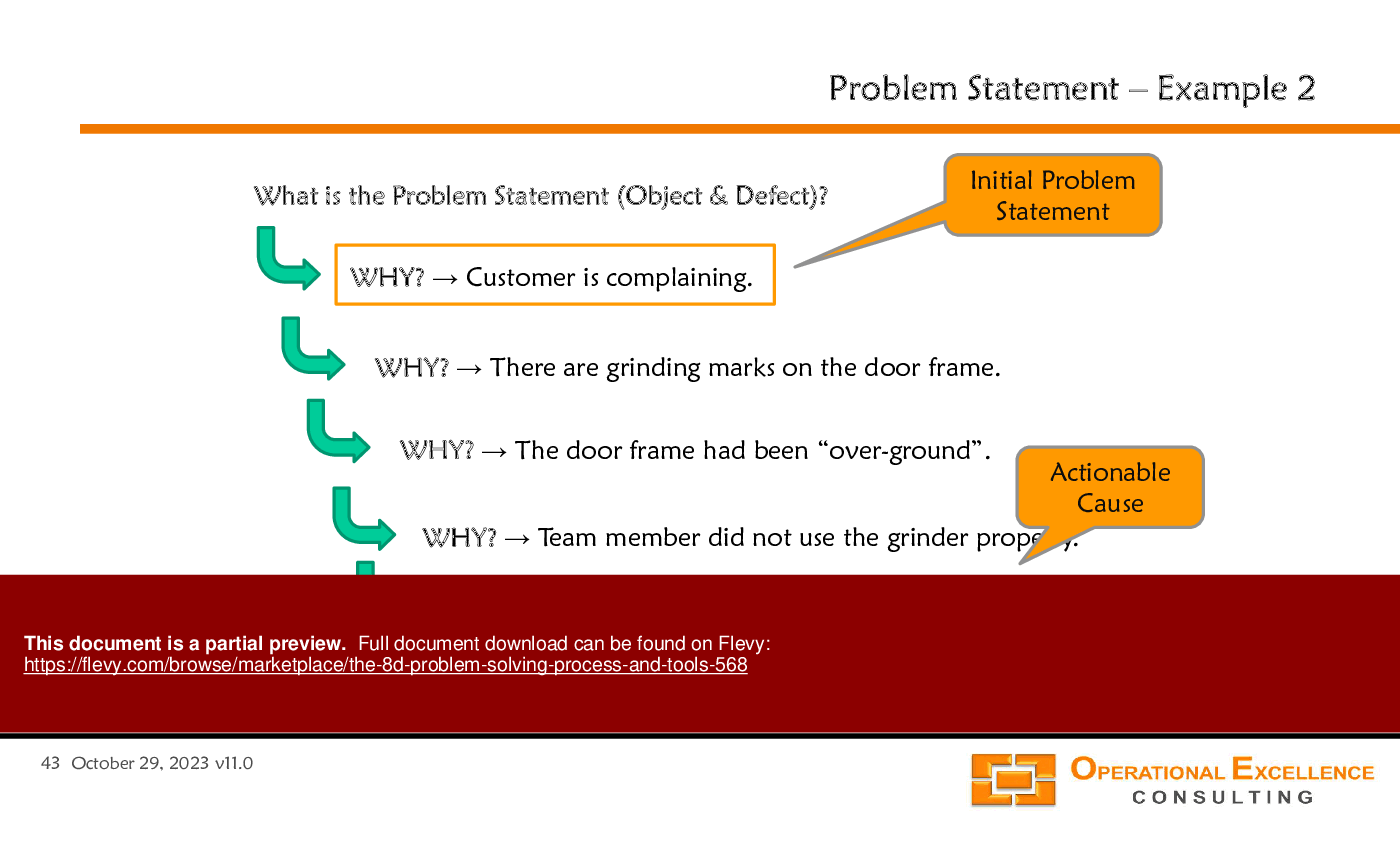
• Analyze root causes using the 5 Whys technique.
• Develop and validate Interim Containment Actions.
Customization Guidance
• Tailor the templates to reflect organizational terminology and specific processes.
• Adjust the case studies to align with industry-specific challenges faced by the team.
• Incorporate relevant metrics and KPIs to measure the effectiveness of implemented solutions.
Secondary Topics Covered
• The role of leadership in supporting problem-solving initiatives.
• Techniques for fostering a culture of continuous improvement.
• Best practices for documenting and sharing lessons learned.
FAQ
What is the 8D Problem Solving Process?
The 8D Problem Solving Process is a structured approach to identifying, analyzing, and resolving problems, focusing on root cause analysis and corrective actions.
How can this presentation help my team?
This presentation provides a comprehensive framework and practical tools for effectively addressing problems, leading to improved operational performance and customer satisfaction.
What industries can benefit from the 8D methodology?
The 8D methodology is applicable across various industries, including manufacturing, healthcare, and service sectors, where quality improvement is essential.
What tools are included in the training?
The training includes templates for the 8D Problem Solving Process Worksheet, Fishbone Diagrams, and Process Flowcharts, among others.
How do we measure the success of implemented solutions?
Success can be measured through defined metrics and KPIs, tracking improvements in performance and reductions in defects or issues.
Is this methodology suitable for small teams?
Yes, the 8D methodology can be effectively applied by teams of any size, adapting the process to fit the specific context and resources available.
What is the role of the team leader in the 8D process?
The team leader facilitates discussions, ensures objectives are met, and guides the team through the problem-solving phases.
How do we ensure team engagement during the process?
Engagement can be fostered through collaborative activities, clear communication, and recognition of individual contributions throughout the process.
Glossary
• 8D - A structured problem-solving methodology consisting of eight disciplines.
• Root Cause - The fundamental reason for a problem, verified through analysis.
• Fishbone Diagram - A visual tool for identifying potential causes of a problem.
• Interim Containment Action - Temporary measures taken to mitigate the impact of a problem while permanent solutions are developed.
• IS-IS NOT Matrix - A tool for clarifying the boundaries of a problem by identifying what is and is not affected.
• SCAMPER - A creative thinking technique used to generate ideas by modifying existing processes or products.
• Process Flowchart - A visual representation of the steps in a process, used to identify critical points and potential issues.
• Continuous Improvement - Ongoing efforts to enhance products, services, or processes through incremental improvements.
• KPI - Key Performance Indicator, a measurable value that demonstrates how effectively a company is achieving key business objectives.
• Team Guidelines - Established norms and expectations for team behavior and collaboration.
• Problem Statement - A clear description of the issue that needs to be addressed.
• Champion - A person who supports and advocates for the problem-solving process within the organization.
Source: Best Practices in Problem Solving, Operational Excellence, Lean, 8D PowerPoint Slides: 8D Problem Solving Process & Tools PowerPoint (PPTX) Presentation Slide Deck, Operational Excellence Consulting LLC
This document is available as part of the following discounted bundle(s):
Save %!
OPERATIONAL EXCELLENCE Training Module Library
This bundle contains 18 total documents. See all the documents to the right.
|
Receive our FREE whitepaper on the Top 101 Consulting Frameworks
Download our 200+ page guide summarizing the Top 101 Management Consulting Frameworks. Each framework provides a structured approach to analyzing and solving a common business problem. |