
This framework is developed by a team of former McKinsey and Big 4 consultants. The presentation follows the headline-body-bumper slide format used by global consulting firms.
Explore the Value Grid Analysis Model, crafted by ex-McKinsey and Big 4 consultants, to enhance supply chain strategies and drive competitive advantage. Value Grid Analysis is a 25-slide PPT PowerPoint presentation slide deck (PPTX) available for immediate download upon purchase.
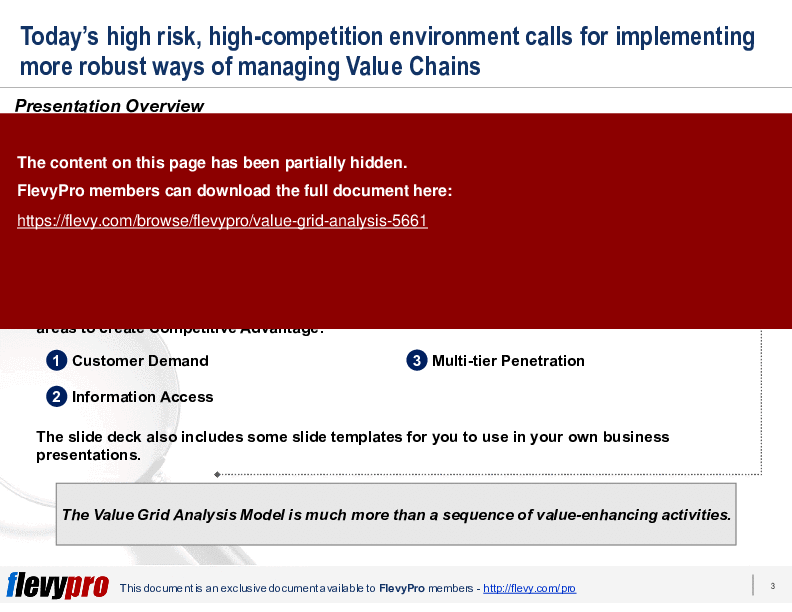
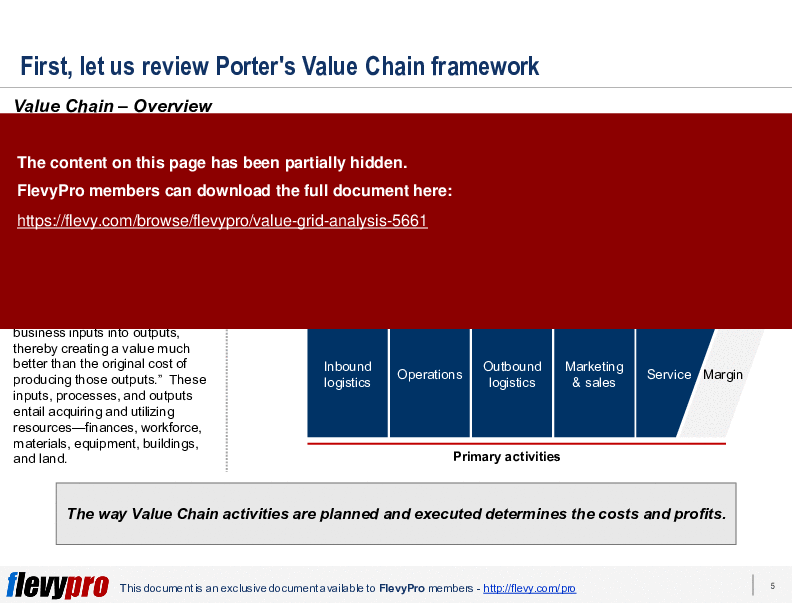
A traditional Value Chain involves a sequence of activities—from conversion of raw materials into components which are then assembled into products. The products are then distributed, marketed, sold, and serviced. This linear progression, however, provides little protection from risks of being outperformed by cutthroat competition in today's disruptive markets.
This deck outlines the Value Grid Analysis Model, which is an effective approach to deal with today's Supply Chain challenges. The Value Grid approach provides a perspective beyond traditional linear progression of activities. It is much more than a sequence of value-enhancing activities. The Value Grid Analysis helps define other sources of Value Creation (even from totally different industries), deploy resources, and influence demand patterns.
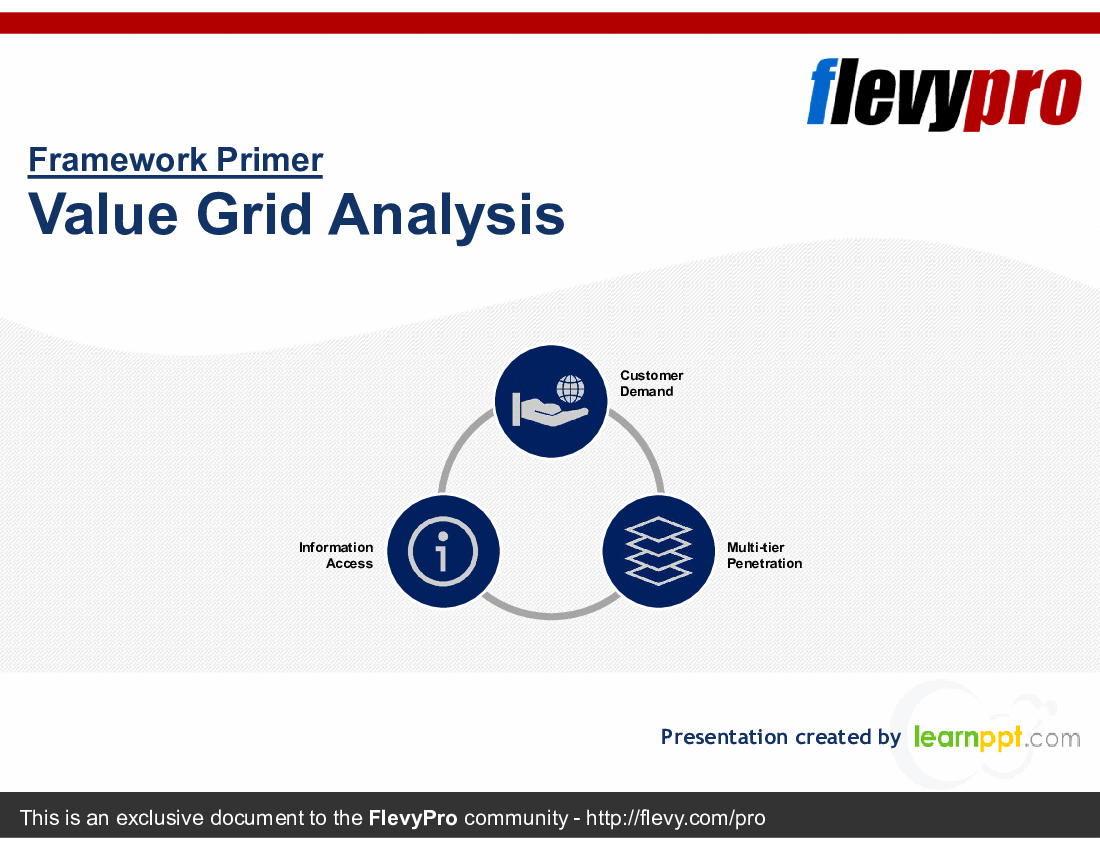
The Value Grid Analysis Model necessitates diverting leadership attention on 3 key opportunity areas to create Competitive Advantage:
1. Customer Demand
2. Information Access
3. Multi-tier Penetration
The slide deck also includes some slide templates for you to use in your own business presentations.
The Value Grid Analysis Model is a strategic tool that goes beyond the traditional Value Chain framework, addressing the complexities of modern supply chains. It emphasizes the importance of non-linear thinking and multi-dimensional approaches to uncover hidden opportunities and mitigate risks. By leveraging vertical, horizontal, and diagonal pathways, organizations can enhance performance, drive innovation, and achieve sustainable growth.
This comprehensive slide deck provides actionable insights into managing customer demand, optimizing information access, and achieving multi-tier penetration. It includes practical templates to facilitate the implementation of the Value Grid Analysis Model in your organization. Equip your team with the knowledge to navigate today's high-risk, high-competition environment and stay ahead of the curve.
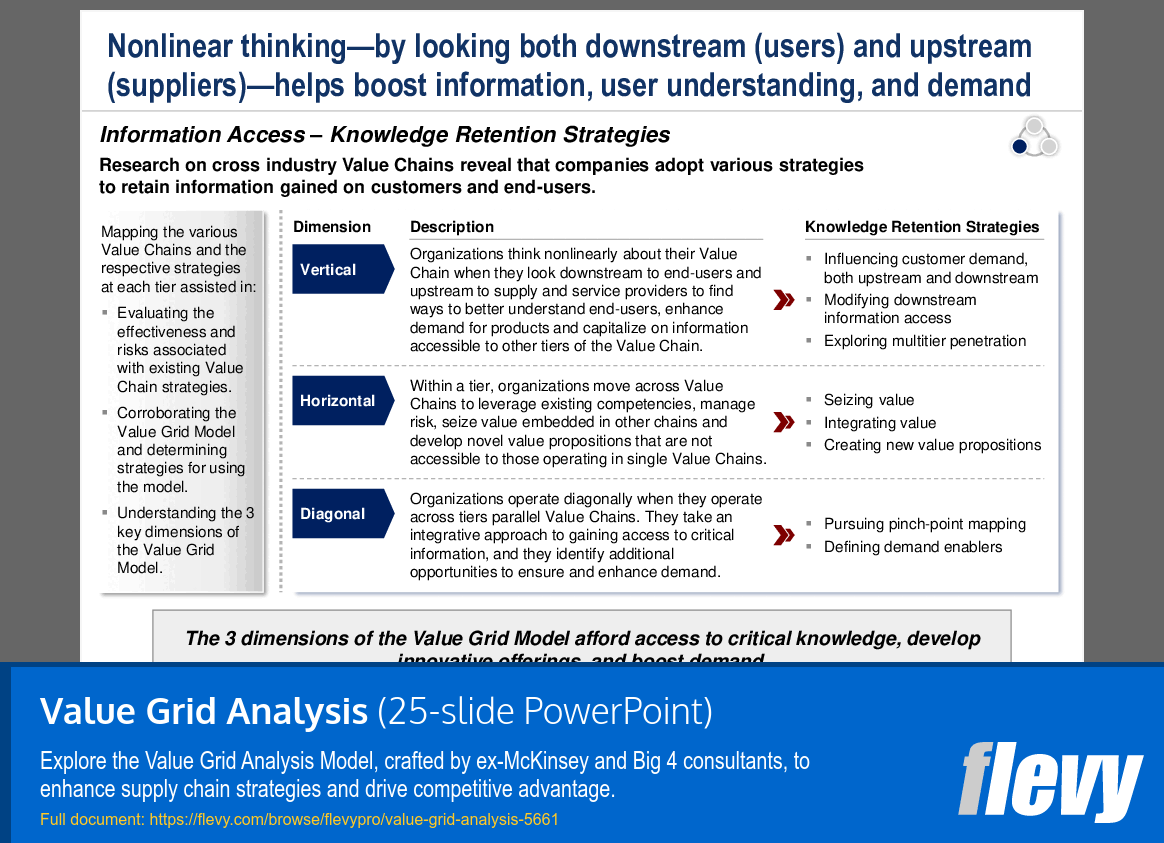
This PPT slide analyzes information access and knowledge retention strategies within Value Chains, categorized into 3 dimensions: Vertical, Horizontal, and Diagonal. The Vertical dimension encourages nonlinear thinking by examining upstream and downstream elements to enhance understanding of end-users and suppliers, thereby improving product demand. The Horizontal dimension focuses on leveraging competencies within a single tier to manage risks and create unique value propositions. The Diagonal dimension integrates parallel Value Chains to access critical information and identify new opportunities, emphasizing pinch-point mapping and demand enablers. Specific strategies include influencing customer demand and multitier penetration in the Vertical dimension, value integration in the Horizontal dimension, and new value proposition creation in the Diagonal dimension.
This PPT slide outlines a strategic approach to managing customer demand, emphasizing control over upstream and downstream demand. A trilateral strategy used by pharmaceuticals includes targeting consumers through advertisements, engaging physicians, and incentivizing healthcare professionals to recommend products, creating a ripple effect that drives demand. Organizations can influence demand upstream by adjusting research and development efforts and introducing complementary products to enhance perceived value. Examples include Intel's strategy of raising awareness about its chipsets to drive demand and Nokia's branding approach, influencing sales through partnerships with telecom providers. This comprehensive view highlights the importance of a proactive, multifaceted strategy in managing customer demand and influencing purchasing decisions.
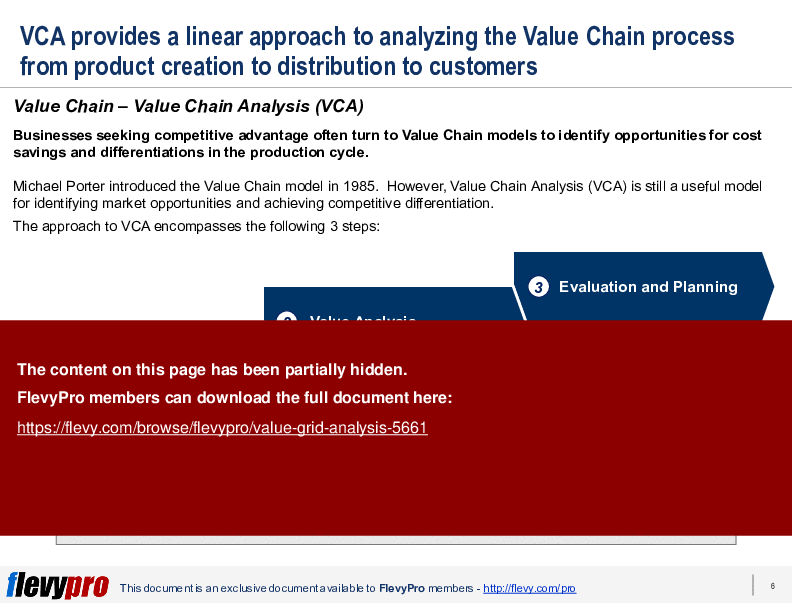
This PPT slide outlines the Value Chain Analysis (VCA) framework, introduced by Michael Porter in 1985, for enhancing production processes and delivering greater customer value. VCA consists of 3 steps:
1. Activity Analysis identifies all activities involved in creating a product or service, establishing how each component contributes to the overall value proposition.
2. Value Analysis examines tasks associated with each activity to maximize customer value, refining processes to ensure meaningful contributions.
3. Evaluation and Planning focuses on analyzing activities and making adjustments, leading to actionable plans for improving efficiency and effectiveness.
By following these steps, organizations can systematically enhance production cycles and improve customer satisfaction, ultimately leading to better strategic outcomes.
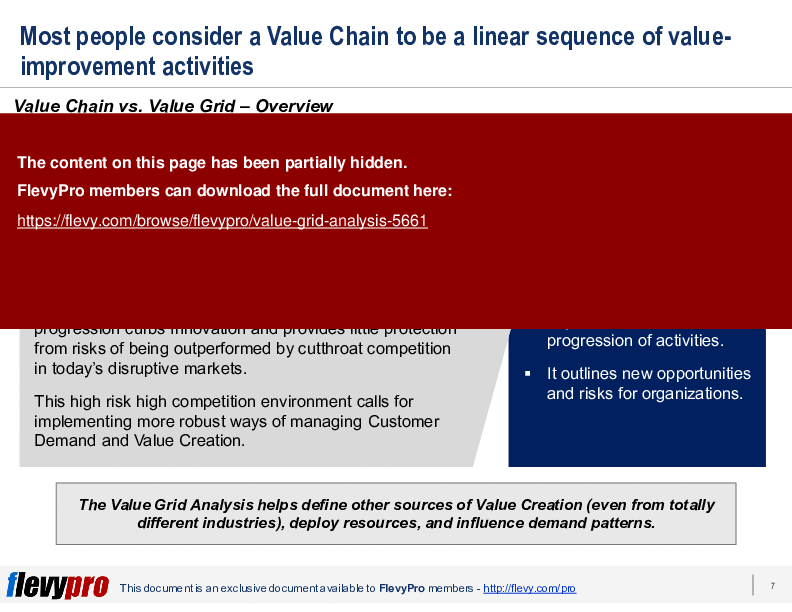
This PPT slide compares the traditional Value Chain and Value Grid Analysis, highlighting the limitations of a linear approach in dynamic markets. The Value Chain, characterized by a sequential process transforming raw materials into finished products, has historically guided management strategies, but now restricts innovation and fails to protect against agile competitors. Its linearity creates vulnerabilities in disruptive markets where rapid adaptation is essential. In contrast, the Value Grid Analysis offers a broader perspective, encouraging organizations to explore new opportunities and recognize risks in an interconnected operational framework. This approach aims to redefine value creation, leading to more robust and adaptable strategies necessary for thriving in competitive environments.
The Value Grid Model is a framework for identifying and leveraging opportunities across organizational operations, outlining 3 pathways: vertical, horizontal, and diagonal. The vertical pathway utilizes traditional value chain analysis to explore upstream and downstream opportunities, optimizing processes and enhancing the supply chain. The horizontal pathway seeks synergies within similar tiers across multiple value chains, uncovering growth avenues. The diagonal pathway connects different value chains and tiers, identifying cross-industry opportunities and innovative integrations. The accompanying diagram illustrates how primary inputs flow through the value grid, emphasizing the interconnectedness of operational aspects. This model enhances performance and mitigates risks, encouraging a multifaceted view of value creation in a dynamic market.
Source: Best Practices in Value Creation, Supply Chain Management, Value Chain Analysis PowerPoint Slides: Value Grid Analysis PowerPoint (PPTX) Presentation Slide Deck, LearnPPT Consulting
This framework is developed by a team of former McKinsey and Big 4 consultants. The presentation follows the headline-body-bumper slide format used by global consulting firms.
For $10.00 more, you can download this document plus 2 more FlevyPro documents. That's just $13 each.
ABOUT FLEVYPRO
This document is part of the FlevyPro Library, a curated knowledge base of documents for our FlevyPro subscribers.
FlevyPro is a subscription service for on-demand business frameworks and analysis tools. FlevyPro subscribers receive access to an exclusive library of curated business documents—business framework primers, presentation templates, Lean Six Sigma tools, and more—among other exclusive benefits.
The average daily rate of a McKinsey consultant is $6,625 (not including expenses). The average price of a Flevy document is $65.
Trusted by over 10,000+ Client Organizations
Since 2012, we have provided business templates to over 10,000 businesses and organizations of all sizes, from startups and small businesses to the Fortune 100, in over 130 countries.
"The wide selection of frameworks is very useful to me as an independent consultant. In fact, it rivals what I had at my disposal at Big 4 Consulting firms in terms of efficacy and organization."
– Julia T., Consulting Firm Owner (Former Manager at Deloitte and Capgemini)
"I like your product. I'm frequently designing PowerPoint presentations for my company and your product has given me so many great ideas on the use of charts, layouts, tools, and frameworks. I really think the templates are a valuable asset to the job."
– Roberto Fuentes Martinez, Senior Executive Director at Technology Transformation Advisory
"As a consultant requiring up to date and professional material that will be of value and use to my clients, I find Flevy a very reliable resource.
The variety and quality of material available through Flevy offers a very useful and commanding source for information. Using Flevy saves me time, enhances my expertise and ends up being a good decision."
– Dennis Gershowitz, Principal at DG Associates
"Flevy is now a part of my business routine. I visit Flevy at least 3 times each month.
Flevy has become my preferred learning source, because what it provides is practical, current, and useful in this era where the business world is being rewritten.

many challenges and there is the need to make the right decisions in a short time, with so much scattered information, we are fortunate to have Flevy. Flevy investigates, selects, and puts at our disposal the best of the best to help us be successful in our work.
"
– Omar Hernán Montes Parra, CEO at Quantum SFE
"FlevyPro provides business frameworks from many of the global giants in management consulting that allow you to provide best in class solutions for your clients."
– David Harris, Managing Director at Futures Strategy
"Flevy.com has proven to be an invaluable resource library to our Independent Management Consultancy, supporting and enabling us to better serve our enterprise clients.
The value derived from our [FlevyPro] subscription in terms of the business it has helped to gain far exceeds the investment made, making a subscription a no-brainer for any growing consultancy – or in-house strategy team."
– Dean Carlton, Chief Transformation Officer, Global Village Transformations Pty Ltd.
"I am extremely grateful for the proactiveness and eagerness to help and I would gladly recommend the Flevy team if you are looking for data and toolkits to help you work through business solutions."
– Trevor Booth, Partner, Fast Forward Consulting
"I have found Flevy to be an amazing resource and library of useful presentations for lean sigma, change management and so many other topics. This has reduced the time I need to spend on preparing for my performance consultation. The library is easily accessible and updates are regularly provided. A wealth of great information."
– Cynthia Howard RN, PhD, Executive Coach at Ei Leadership
Receive our FREE presentation on Operational Excellence
This 50-slide presentation provides a high-level introduction to the 4 Building Blocks of Operational Excellence. Achieving OpEx requires the implementation of a Business Execution System that integrates these 4 building blocks.