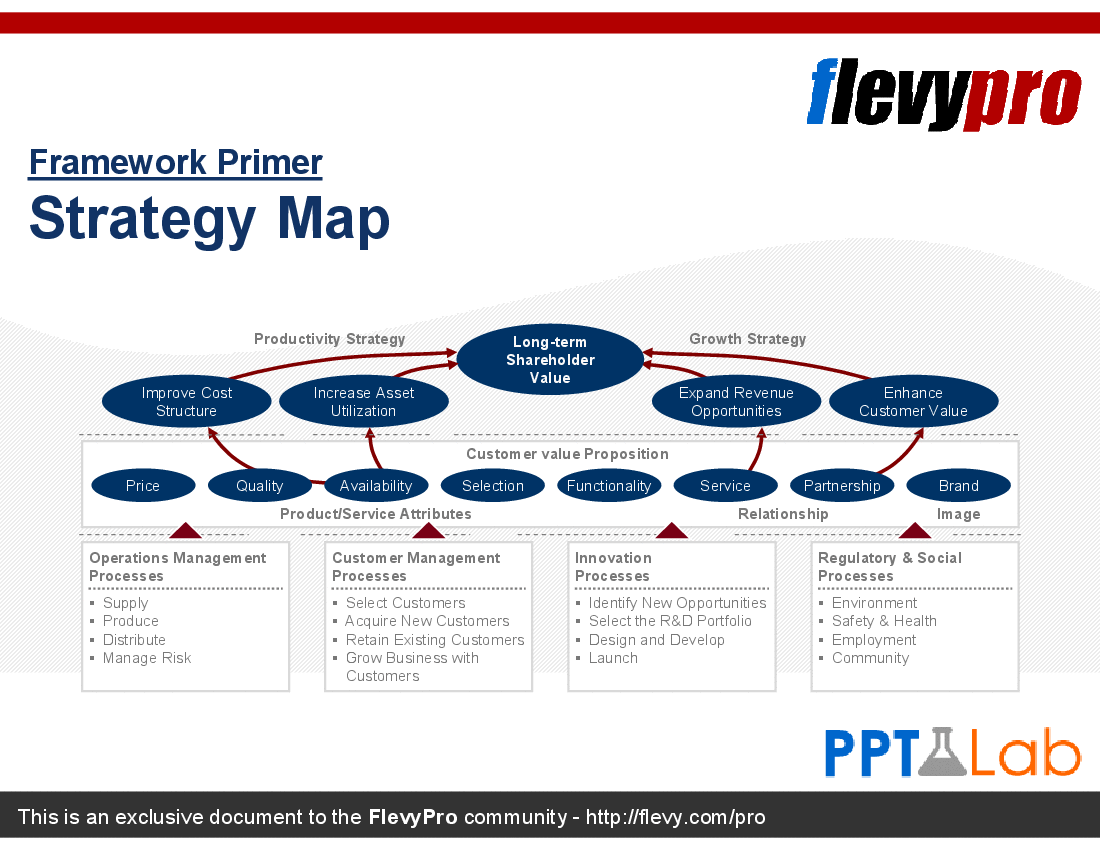
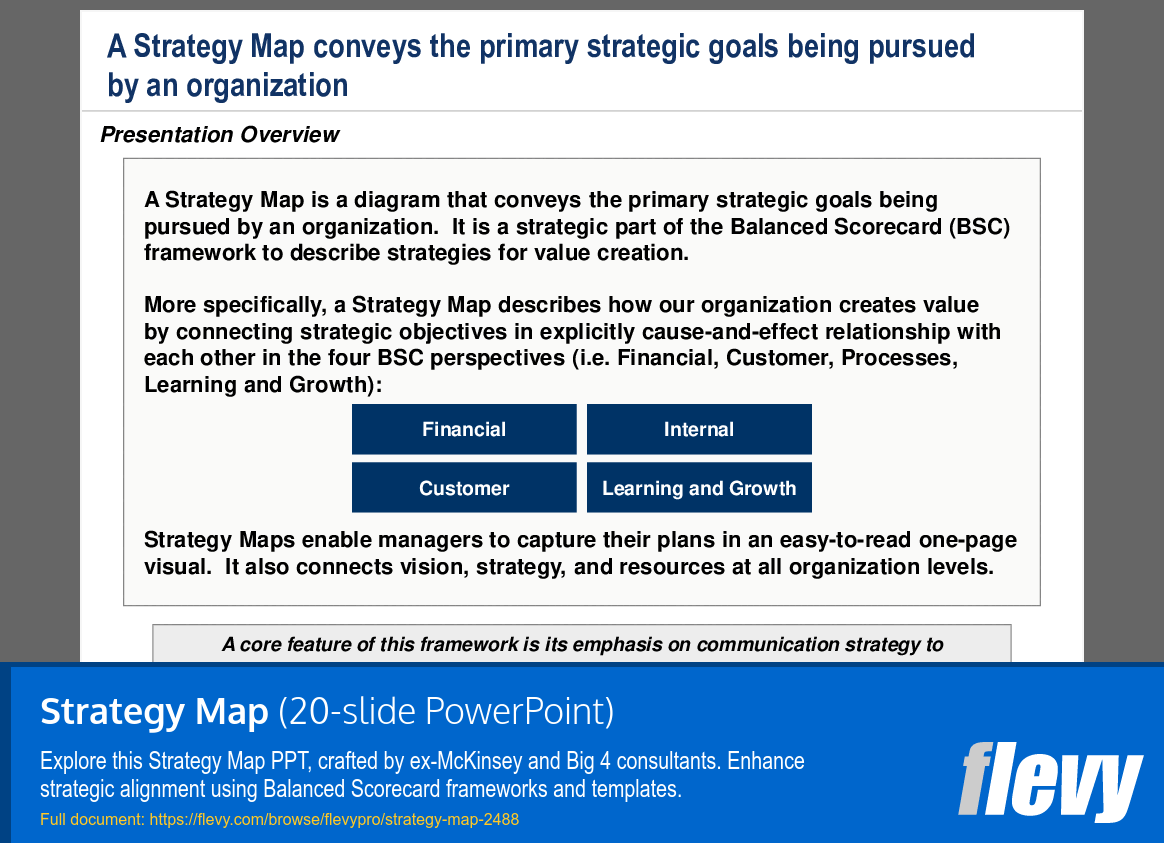

A Strategy Map is a diagram that conveys the primary strategic goals being pursued by an organization. It is a strategic part of the Balanced Scorecard (BSC) framework to describe strategies for value creation. More specifically, a Strategy Map describes how our organization creates value by connecting strategic objectives in explicitly cause-and-effect relationship with each other in the four BSC objectives Financial, Customer, Processes, Learning and Growth).
Strategy Maps enable managers to capture their plans in an easy-to-read one-page visual. It also connects vision, strategy, and resources at all organization levels. A core feature of this framework is its emphasis on communication strategy to the whole workforce.
This document provides an introduction to Strategy Maps, Balanced Scorecards, and also includes Strategy Map templates you can use in your own presentations.
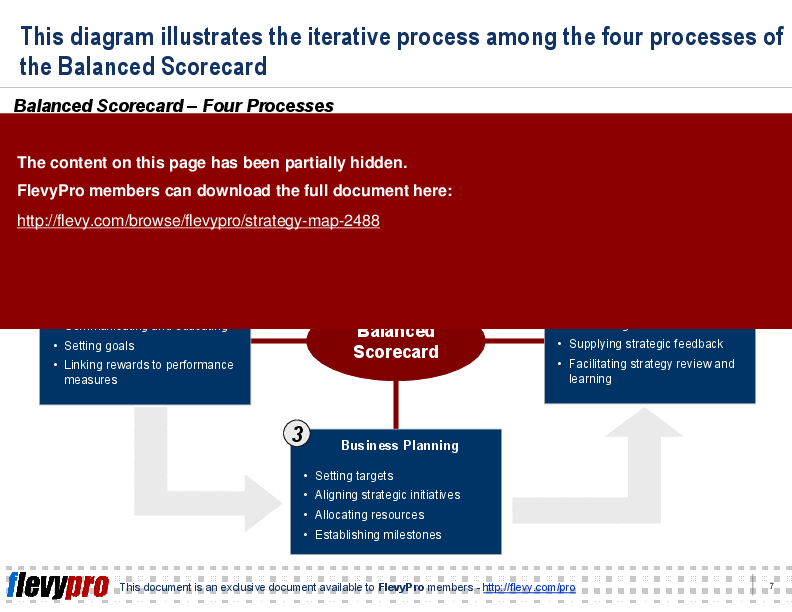
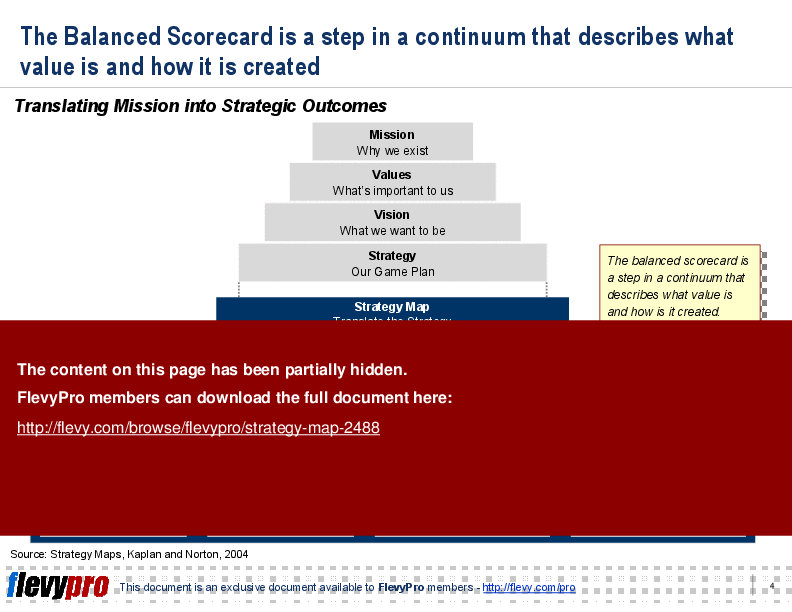
This PPT delves deep into the Balanced Scorecard framework, providing a comprehensive overview of its core components and processes. It includes a detailed examination of how to translate mission and values into strategic outcomes, ensuring alignment across all organizational levels. The Strategy Map is presented as a critical tool for visualizing and communicating these strategic objectives, linking intangible assets and processes to tangible financial and customer outcomes.
The Strategy Map templates included are meticulously designed to help you create a clear and concise visual representation of your strategic goals. These templates cover various perspectives, including financial, customer, internal processes, and learning and growth, making it easier to align your strategic initiatives with your overall business objectives. The guidelines provided ensure that your Strategy Map is not only effective, but also easy to understand and communicate across your organization.
This resource is essential for executives looking to streamline their strategic planning process. By using these templates and guidelines, you can ensure that your strategic objectives are clearly defined and effectively communicated, driving better alignment and execution across your organization. This document is a valuable asset for any leader aiming to enhance their strategic management capabilities.
Got a question about this document? Email us at flevypro@flevy.com.
Executive Summary
The Strategy Map (PPT) is designed to facilitate strategic alignment within organizations by visually representing primary strategic goals and their interconnections. Developed by experienced consultants, this presentation leverages the Balanced Scorecard (BSC) framework to articulate how organizations create value through a clear cause-and-effect relationship among strategic objectives across 4 perspectives: Financial, Customer, Internal Processes, and Learning & Growth. By utilizing this Strategy Map, executives can effectively communicate their vision and strategy, ensuring all levels of the organization are aligned and focused on achieving long-term shareholder value.
Who This Is For and When to Use
• Corporate executives responsible for strategic planning and execution
• Strategy teams looking to enhance organizational alignment
• Consultants advising clients on strategic frameworks and performance management
• Business leaders aiming to communicate strategy effectively across teams
Best-fit moments to use this deck:
• During strategic planning sessions to visualize and align objectives
• In workshops focused on developing or refining organizational strategies
• When presenting strategic initiatives to stakeholders for buy-in and clarity
Learning Objectives
• Define the components and purpose of a Strategy Map within the BSC framework
• Build a comprehensive Strategy Map that aligns with organizational goals
• Establish clear cause-and-effect relationships among strategic objectives
• Communicate strategic initiatives effectively to all organizational levels
• Identify key performance indicators (KPIs) for tracking strategic progress
• Foster a culture of strategic alignment and accountability across teams
Table of Contents
• Overview (page 3)
• Balanced Scorecard (page 6)
• Strategy Map Deep Dive (page 9)
• Templates (page 16)
Primary Topics Covered
• Strategy Map Overview - A visual representation of strategic goals that connects objectives across the BSC perspectives, facilitating communication and alignment.
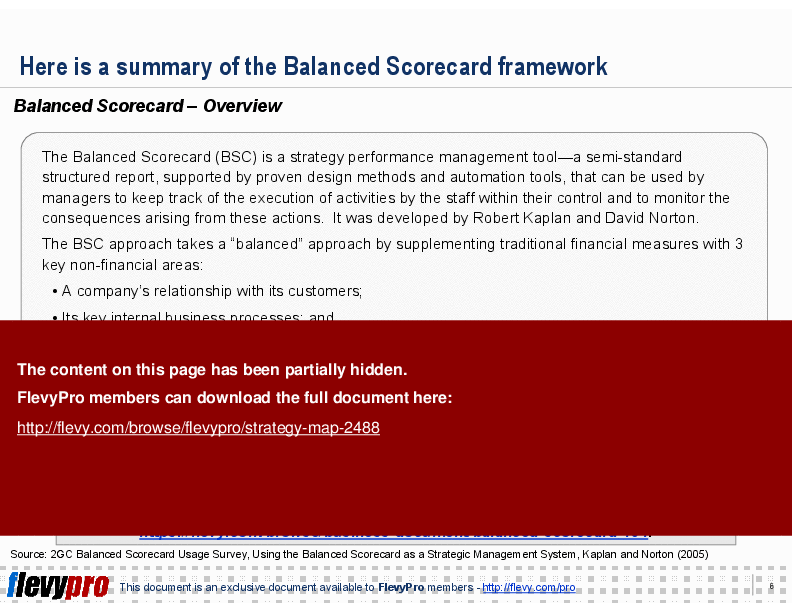
• Balanced Scorecard Framework - An overview of the BSC as a performance management tool that integrates financial and non-financial measures to track organizational performance.
• Cause-and-Effect Relationships - Explanation of how strategic objectives are interlinked, demonstrating the impact of one objective on another within the Strategy Map.
• Strategic Alignment - The importance of aligning all organizational activities with the overarching strategy to achieve long-term shareholder value.
• Communication Strategy - Techniques for effectively communicating the Strategy Map to ensure understanding and buy-in from all stakeholders.
• Implementation Guidelines - Best practices for constructing and utilizing a Strategy Map to enhance strategic execution and monitoring.
Deliverables, Templates, and Tools
• Strategy Map template for visualizing strategic objectives
• Balanced Scorecard framework template for performance tracking
• Guidelines for establishing cause-and-effect relationships among objectives
• Communication plan template for presenting the Strategy Map to stakeholders
• KPI development framework to measure strategic progress
• Workshop agenda template for Strategy Map development sessions
Slide Highlights
• Overview of the Strategy Map and its role within the BSC framework
• Visual representation of the cause-and-effect relationships among strategic objectives
• Detailed explanation of the 4 perspectives of the Balanced Scorecard
• Guidelines for constructing an effective Strategy Map
• Examples of strategic objectives linked to performance measures
Potential Workshop Agenda
Strategy Map Development Session (90 minutes)
• Introduce the concept of the Strategy Map and its importance
• Collaboratively identify strategic objectives across the 4 BSC perspectives
• Establish cause-and-effect relationships among identified objectives
Balanced Scorecard Overview (60 minutes)
• Discuss the components of the Balanced Scorecard
• Align organizational goals with performance measures
• Develop a plan for tracking and reporting on strategic progress
Customization Guidance
• Tailor the Strategy Map template to reflect specific organizational goals and objectives
• Adjust performance measures and KPIs to align with industry standards and organizational priorities
• Incorporate organizational terminology and branding into the Strategy Map for consistency
Secondary Topics Covered
• Importance of stakeholder engagement in strategy development
• Techniques for fostering a culture of accountability and performance tracking
• Role of leadership in driving strategic alignment and execution
• Best practices for revising and updating the Strategy Map as organizational needs evolve
Topic FAQ
Document FAQ
These are questions addressed within this presentation.
What is a Strategy Map?
A Strategy Map is a visual representation of an organization's strategic goals and the relationships among them, designed to enhance understanding and alignment across the organization.
How does the Balanced Scorecard relate to the Strategy Map?
The Balanced Scorecard provides a framework for measuring organizational performance across multiple perspectives, while the Strategy Map visually connects strategic objectives within that framework.
What are the benefits of using a Strategy Map?
Using a Strategy Map helps organizations communicate their strategy clearly, align activities with strategic goals, and track progress toward achieving long-term objectives.
How can I customize the Strategy Map for my organization?
You can customize the Strategy Map by incorporating specific organizational goals, adjusting performance measures, and using relevant terminology that resonates with your team.
What are the key components of the Balanced Scorecard?
The Balanced Scorecard includes 4 perspectives: Financial, Customer, Internal Processes, and Learning & Growth, each providing insights into different aspects of organizational performance.
How do I establish cause-and-effect relationships in the Strategy Map?
Identify how achieving one strategic objective impacts others, and use arrows to connect these objectives visually within the Strategy Map.
What role do KPIs play in the Strategy Map?
KPIs are used to measure progress toward achieving strategic objectives outlined in the Strategy Map, ensuring accountability and performance tracking.
How often should the Strategy Map be updated?
The Strategy Map should be reviewed and updated regularly, especially during strategic planning sessions or when significant organizational changes occur.
Glossary
• Balanced Scorecard - A strategic performance management tool that integrates financial and non-financial measures.
• Strategy Map - A visual representation of an organization's strategic objectives and their interconnections.
• KPI - Key Performance Indicator, a measurable value that demonstrates how effectively an organization is achieving key business objectives.
• Strategic Alignment - The process of aligning organizational activities with strategic goals to ensure coherence and focus.
• Cause-and-Effect Relationship - A connection that shows how one strategic objective influences another.
• Stakeholder Engagement - The process of involving individuals or groups who have an interest in the organization's strategy and performance.
• Performance Measures - Metrics used to assess the effectiveness and efficiency of organizational activities.
• Organizational Capital - The intangible assets that contribute to an organization's value, including culture, leadership, and teamwork.
• Strategic Objectives - Specific goals that an organization aims to achieve as part of its overall strategy.
• Communication Strategy - A plan for effectively conveying the organization's strategy to stakeholders.
• Workshop Agenda - A structured outline of topics and activities to be covered during a workshop session.
• Customization Guidance - Recommendations for tailoring templates and frameworks to meet specific organizational needs.
Source: Best Practices in Balanced Scorecard, Strategy Map PowerPoint Slides: Strategy Map PowerPoint (PPT) Presentation Slide Deck, PPT Lab
Did you need more documents?
Consider a FlevyPro subscription from $39/month. View plans here.
For $10.00 more, you can download this document plus 2 more FlevyPro documents. That's just $13 each.
|
Receive our FREE presentation on Operational Excellence
This 50-slide presentation provides a high-level introduction to the 4 Building Blocks of Operational Excellence. Achieving OpEx requires the implementation of a Business Execution System that integrates these 4 building blocks. |