
This framework is developed by a team of former McKinsey and Big 4 consultants. The presentation follows the headline-body-bumper slide format used by global consulting firms.
Explore a strategic framework for university partnerships, crafted by ex-McKinsey and Big 4 consultants, to drive innovation and enhance R&D efforts. Strategic University Partnerships is a 33-slide PPT PowerPoint presentation slide deck (PPTX) available for immediate download upon purchase.
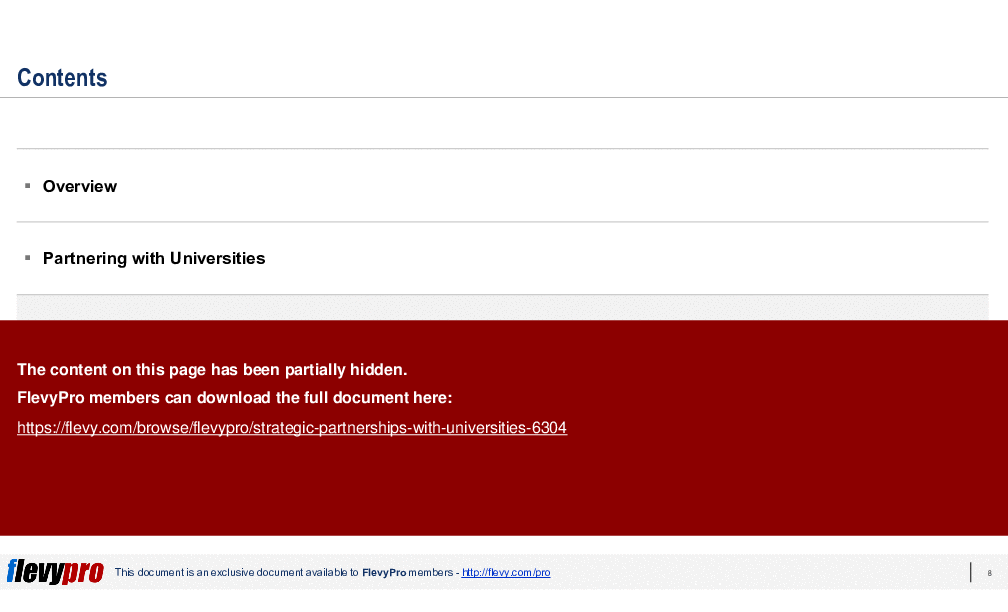
Partnerships among companies and universities are important drivers of the Innovation economy. Fruitful partnering with universities comprises of having the appropriate people, processes, and organizational backing to guarantee success and to detect and manage sources of conflict.
This framework discusses the questions of why universities and industry should partner, how to partner, and how to design the finest partnership.
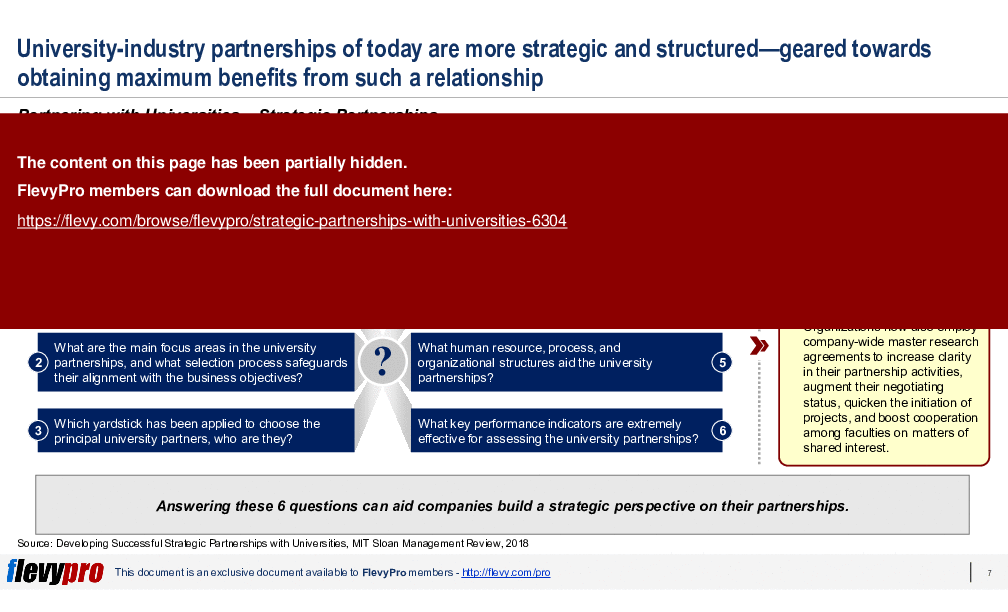
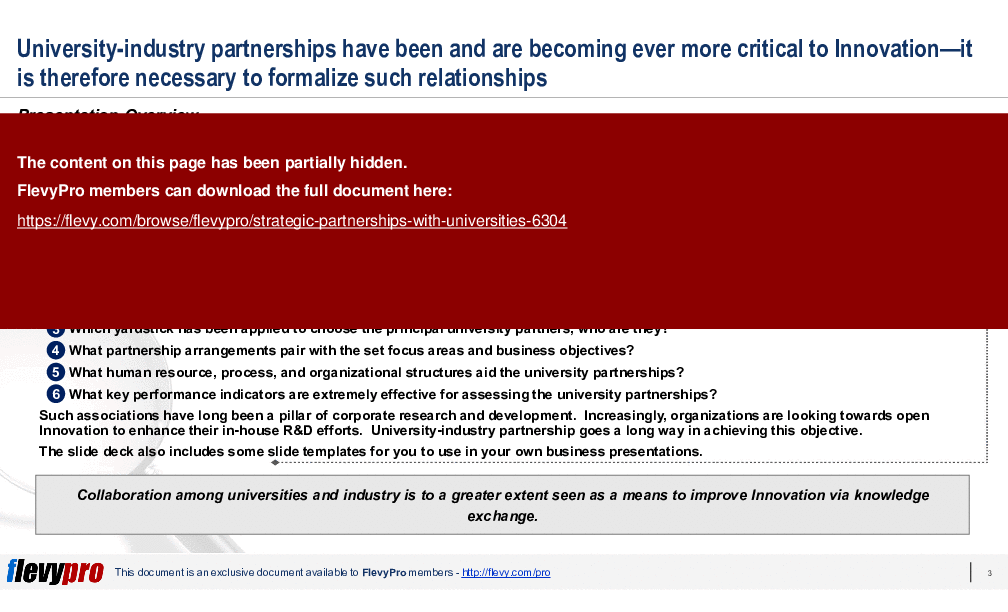
Research spanning several years has brought to light following 6 critical questions whose answers help assess the viability of and improvement in the university-company partnership:
1. What are the business objectives that necessitate the university partnerships?
2. What are the main focus areas in the university partnerships, and what selection process safeguards their alignment with the business objectives?
3. Which yardstick has been applied to choose the principal university partners, who are they?
4. What partnership arrangements pair with the set focus areas and business objectives?
5. What human resource, process, and organizational structures aid the university partnerships?
6. What key performance indicators are extremely effective for assessing the university partnerships?
We dive into each question in depth within this presentation, as such associations have long been a pillar of corporate research and development.
Increasingly, organizations are looking towards open Innovation to enhance their in-house R&D efforts. University-industry partnership goes a long way in achieving this objective.
The slide deck also includes some slide templates for you to use in your own business presentations.
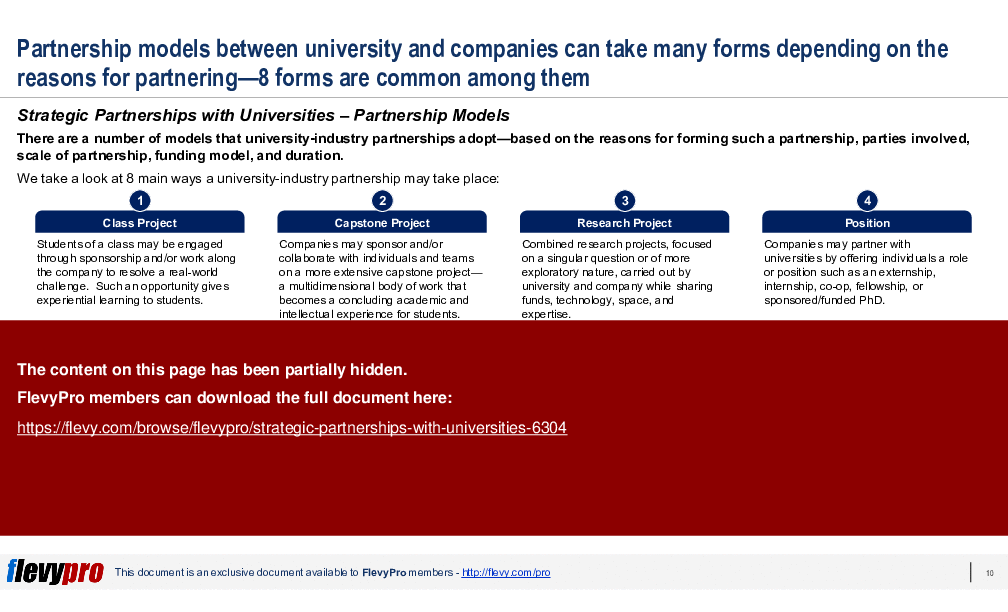
The presentation also explores various partnership models, including class projects, capstone projects, research projects, and sponsored positions. It highlights the importance of clear outcomes, curriculum relevance, and the scale and duration of collaborations. The PPT provides a comprehensive guide on structuring these partnerships to maximize benefits, ensuring alignment with business objectives and effective performance assessment through KPIs. This resource is essential for executives aiming to leverage academic collaborations for innovation and growth.
This PPT slide outlines critical considerations for establishing strategic partnerships with universities, focusing on 4 main areas: location/environment, type of content, ownership structure of intellectual property (IP), and partnership management. Selecting the right location impacts workflow, liability, and IP issues, with options including on-campus settings or client sites. Clarifying the type of content is essential for determining if new knowledge will be generated. The ownership structure of IP must be defined, determining whether ownership lies with the university, faculty, or sponsors, which affects commercialization rights. Effective partnership management involves defining roles, capabilities, and communication methods, while understanding cultural alignment and trust levels is vital for successful collaboration.
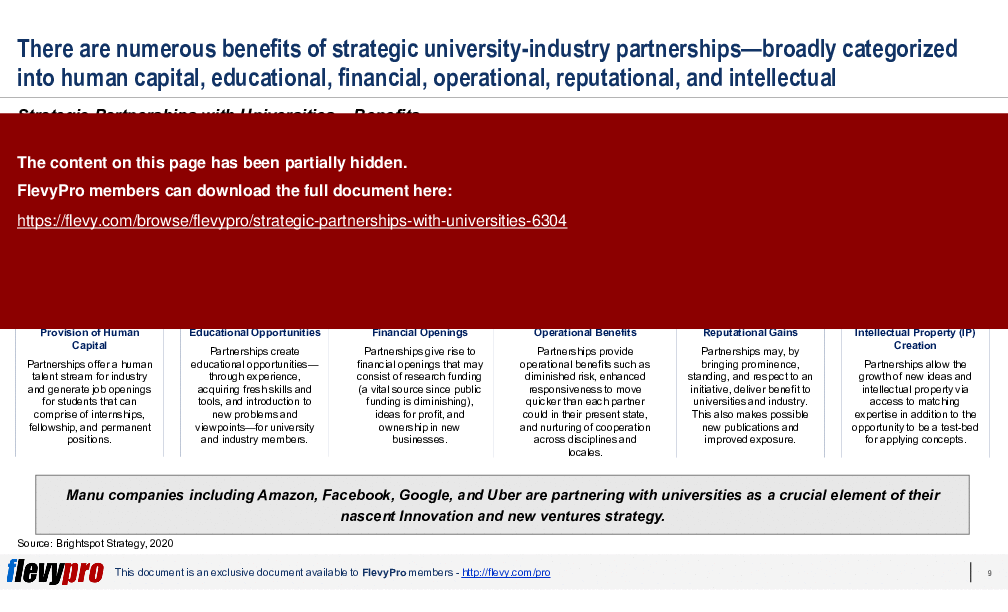
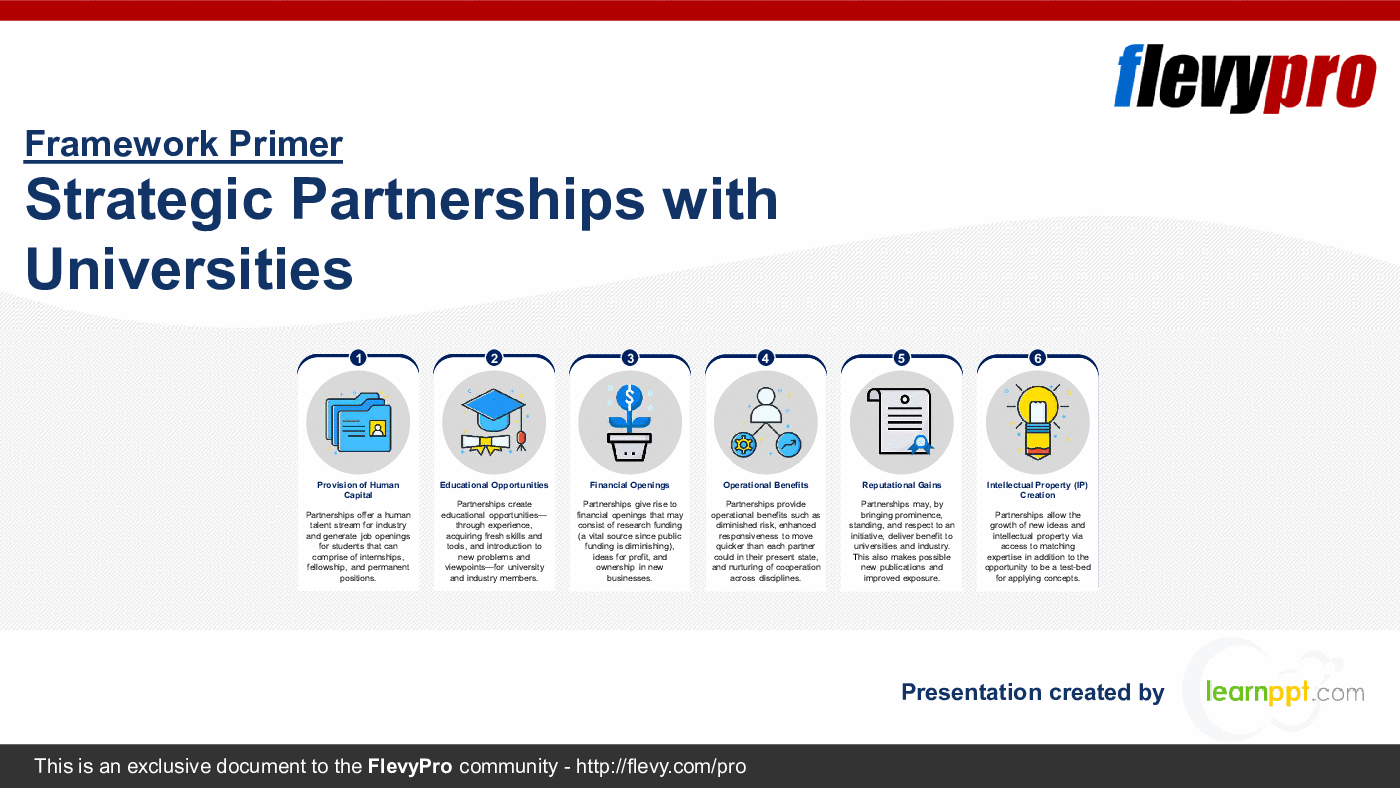
This PPT slide outlines the advantages of strategic partnerships between universities and industries, categorized into 6 key areas. The first benefit is human capital, where companies access a talent pool through internships and job openings. The second area focuses on educational opportunities, providing students with hands-on experience and essential skills while informing universities of industry needs. Financial openings represent the third advantage, enabling businesses to explore new funding sources and innovative financial models as public funding decreases. Operational benefits enhance responsiveness and agility, improving cooperation across disciplines. Reputational gains arise from aligning with reputable universities, elevating company visibility and leading to new publications. Lastly, partnerships facilitate the creation of intellectual property, fostering innovation and effective application of new ideas.
This PPT slide outlines critical considerations for effective university-company partnerships, framing them as organizational design challenges. Key points include:
1. Clear Delineation of Outcome: Specify expected results for accountability and performance measurement.
2. Relevance to Curriculum: Align partnership objectives with university educational offerings to enhance academic experience.
3. Decision on Scale of Collaboration: Determine engagement extent, impacting resource allocation and strategic focus.
4. Time Period of Collaboration: Define partnership duration, influencing commitment levels and project outcomes.
5. Location/Environment: Consider the physical or virtual setting's effect on partnership dynamics.
6. Type of Content: Ensure the exchanged knowledge or skills are relevant and beneficial.
7. Ownership Structure of Intellectual Property: Clarify rights and responsibilities regarding innovations.
8. Partnership Management: Implement effective oversight to navigate complexities and ensure mutual value.
These considerations guide organizations in designing and managing university partnerships for substantial benefits.
This PPT slide presents a framework for enhancing university-industry partnerships, shifting from addressing incremental problems to tackling complex challenges. Universities are evolving from mere resources to integral partners in exploratory issues. Establishing dedicated units within corporations to manage these partnerships aligns with senior management's strategic objectives. Organizations should consider 6 critical questions when forming partnerships, focusing on core business objectives, partnership focus areas, and selection processes. The criteria for identifying principal university partners emphasize a rigorous evaluation process. Subsequent questions address partnership arrangements, organizational structures, and key performance indicators for measuring success. Companies are increasingly selective about university partners based on strategic relevance, with master research agreements enhancing clarity and cooperation, indicating a formalized approach to these collaborations. This structured methodology improves the effectiveness of university partnerships.
This PPT slide outlines a framework for evaluating partnerships between corporations and universities, focusing on business objectives that drive these collaborations. Many organizations struggle to clearly articulate their goals, which can hinder partnership effectiveness. The framework identifies 5 primary motivations for forming university partnerships:
1. Short-term, Incremental Problem-Solving - Seeking immediate solutions to specific challenges.
2. Talent Identification and Hiring - Creating a pipeline for recruiting skilled graduates.
3. Long-term Development of New Technologies - Leveraging university research for innovation.
4. Systematic Exposure to Startups - Gaining insights into emerging startups for innovation and investment.
5. Publicity and Political Influence - Enhancing public image and influencing policy discussions.
This structured approach helps organizations align partnerships with broader business strategies, leading to more fruitful collaborations and better resource allocation.
This PPT slide addresses the internal structures necessary for successful university partnerships. Organizations must establish dedicated human resources, processes, and frameworks to facilitate collaborations. Key considerations include the types of frameworks that enable effective partnerships, skills required by university relationship managers, and processes that align technical expertise with management objectives. A strategic shift from an ad hoc approach to dedicated units focused on university partnerships is essential for aligning these collaborations with broader business goals. The decision to centralize these units within research and development or integrate them into decentralized business units has significant strategic implications. Research indicates that success does not rely solely on a centralized reporting structure, but on aligning business objectives with partnership management decisions, emphasizing clarity in roles and responsibilities to maximize benefits from university collaborations.
Source: Best Practices in Innovation, Partnerships, Education PowerPoint Slides: Strategic Partnerships with Universities PowerPoint (PPTX) Presentation Slide Deck, LearnPPT Consulting
This framework is developed by a team of former McKinsey and Big 4 consultants. The presentation follows the headline-body-bumper slide format used by global consulting firms.
For $10.00 more, you can download this document plus 2 more FlevyPro documents. That's just $13 each.
ABOUT FLEVYPRO
This document is part of the FlevyPro Library, a curated knowledge base of documents for our FlevyPro subscribers.
FlevyPro is a subscription service for on-demand business frameworks and analysis tools. FlevyPro subscribers receive access to an exclusive library of curated business documents—business framework primers, presentation templates, Lean Six Sigma tools, and more—among other exclusive benefits.
The average daily rate of a McKinsey consultant is $6,625 (not including expenses). The average price of a Flevy document is $65.
Trusted by over 10,000+ Client Organizations
Since 2012, we have provided business templates to over 10,000 businesses and organizations of all sizes, from startups and small businesses to the Fortune 100, in over 130 countries.
"Flevy.com has proven to be an invaluable resource library to our Independent Management Consultancy, supporting and enabling us to better serve our enterprise clients.
The value derived from our [FlevyPro] subscription in terms of the business it has helped to gain far exceeds the investment made, making a subscription a no-brainer for any growing consultancy – or in-house strategy team."
– Dean Carlton, Chief Transformation Officer, Global Village Transformations Pty Ltd.
"[Flevy] produces some great work that has been/continues to be of immense help not only to myself, but as I seek to provide professional services to my clients, it gives me a large "tool box" of resources that are critical to provide them with the quality of service and outcomes they are expecting."
– Royston Knowles, Executive with 50+ Years of Board Level Experience
"I am extremely grateful for the proactiveness and eagerness to help and I would gladly recommend the Flevy team if you are looking for data and toolkits to help you work through business solutions."
– Trevor Booth, Partner, Fast Forward Consulting
"FlevyPro has been a brilliant resource for me, as an independent growth consultant, to access a vast knowledge bank of presentations to support my work with clients. In terms of RoI, the value I received from the very first presentation I downloaded paid for my subscription many times over! The
quality of the decks available allows me to punch way above my weight – it's like having the resources of a Big 4 consultancy at your fingertips at a microscopic fraction of the overhead.
"
– Roderick Cameron, Founding Partner at SGFE Ltd
"I have used Flevy services for a number of years and have never, ever been disappointed. As a matter of fact, David and his team continue, time after time, to impress me with their willingness to assist and in the real sense of the word. I have concluded in fact
that it is not at all just a repository of documents/resources but, in the way that David and his team manage the firm, it is like dealing with consultants always ready to assist, advise and direct you to what you really need, and they always get it right.
I am an international hospitality accomplished senior executive who has worked and lived during the past 35 years in 23 countries in 5 continents and I can humbly say that I know what customer service is, trust me.
Aside from the great and professional service that Flevy's team provide, their wide variety of material is of utmost great quality, professionally put together and most current.
Well done Flevy, keep up the great work and I look forward to continue working with you in the future and to recommend you to a variety of colleagues around the world.
"
– Roberto Pelliccia, Senior Executive in International Hospitality
"My FlevyPro subscription provides me with the most popular frameworks and decks in demand in today’s market. They not only augment my existing consulting and coaching offerings and delivery, but also keep me abreast of the latest trends, inspire new products and service offerings for my practice, and educate me
in a fraction of the time and money of other solutions. I strongly recommend FlevyPro to any consultant serious about success.
"
– Bill Branson, Founder at Strategic Business Architects
"Flevy is now a part of my business routine. I visit Flevy at least 3 times each month.
Flevy has become my preferred learning source, because what it provides is practical, current, and useful in this era where the business world is being rewritten.

many challenges and there is the need to make the right decisions in a short time, with so much scattered information, we are fortunate to have Flevy. Flevy investigates, selects, and puts at our disposal the best of the best to help us be successful in our work.
"
– Omar Hernán Montes Parra, CEO at Quantum SFE
"As a consulting firm, we had been creating subject matter training materials for our people and found the excellent materials on Flevy, which saved us 100's of hours of re-creating what already exists on the Flevy materials we purchased."
Download our free compilation of 50+ Strategy & Transformation slides and templates. Frameworks include McKinsey 7-S, Balanced Scorecard, Disruptive Innovation, BCG Curve, and many more.