
This framework is developed by a team of former McKinsey and Big 4 consultants. The presentation follows the headline-body-bumper slide format used by global consulting firms.
Discover a structured 4-step approach to calculate Return on Training Investment (ROTI) developed by ex-McKinsey & Big 4 consultants. Optimize training ROI. Return on Training Investment (ROTI) is a 24-slide PPT PowerPoint presentation slide deck (PPTX) available for immediate download upon purchase.
The concept of Return on Investment (ROI) originated in the Manufacturing sector, where it's simple to measure time and output. Next to adopt the concept was the Banking industry, where it is used consistently. ROI calculation is now a common feature in every type, industry, and function of business.
Training necessitates spending a lot of effort and resources. Deliberating if the Training Program is going to be worth all its costs is a valid concern.
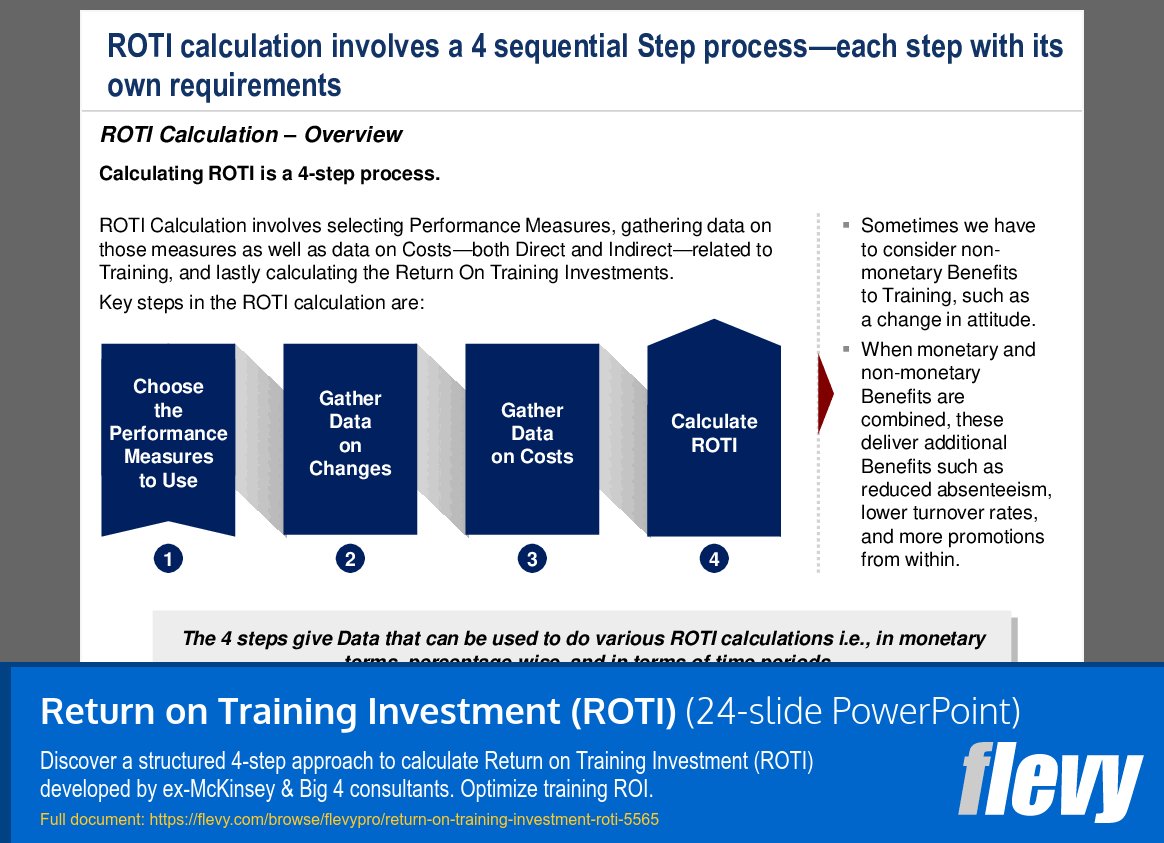
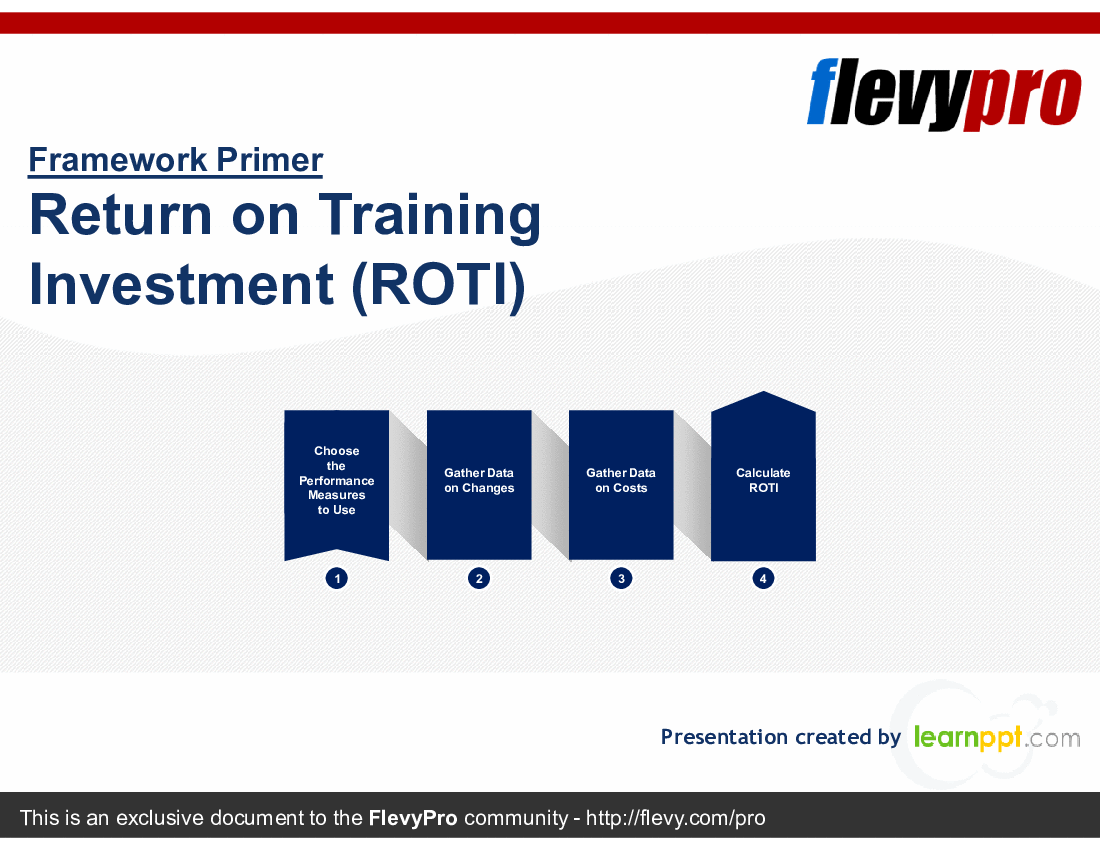
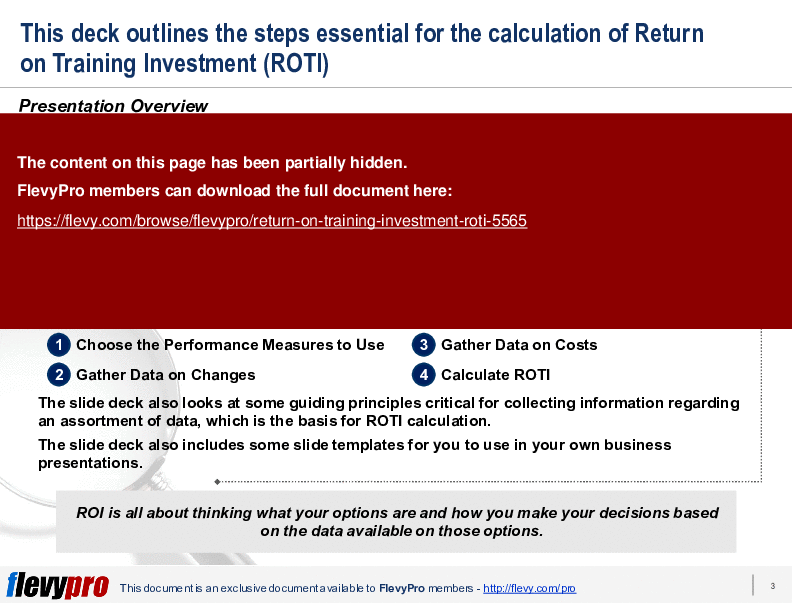
This presentation provides a detailed overview of the 4-step process for the calculation of Return on Training Investment (ROTI). This method of ROTI calculation is simple yet effective to ascertain the value derived—or failure to derive any financial benefits—from a Training Program. The 4-step of the ROTI calculation process are:
1. Choose the Performance Measures to Use
2. Gather Data on Changes
3. Gather Data on Costs
4. Calculate ROTI
The slide deck also looks at some guiding principles critical for collecting information regarding an assortment of data, which is the basis for ROTI calculation.
The slide deck also includes some slide templates for you to use in your own business presentations.
This comprehensive slide deck delves into the intricacies of calculating Return on Training Investment (ROTI), offering a structured 4-step approach to measure the financial impact of training programs. The methodology is designed to be straightforward yet robust, ensuring that executives can make informed decisions based on empirical data. The presentation also emphasizes the importance of selecting relevant performance measures, meticulous data gathering, and accurate cost classification, which are pivotal for a precise ROTI calculation.
The PPT further explores various types of ROTI calculations, including percentage-based and benefit-cost ratio methods, providing clear formulas and practical examples. It highlights the significance of considering both monetary and non-monetary factors, such as training effectiveness and behavioral changes, in the analysis. The inclusion of slide templates facilitates customization for your specific business needs, making this an invaluable resource for any organization aiming to optimize its training investments.
This PPT slide outlines a four-step process for calculating Return on Training Investment (ROTI). The first step involves selecting performance measures, which guide the analysis. The second step focuses on gathering data on changes in employee performance or organizational outcomes due to training. The third step entails collecting data on costs, including direct and indirect expenses associated with training initiatives. The final step is the calculation of ROTI, synthesizing previous steps into a quantifiable measure of training effectiveness. The process also considers non-monetary benefits, such as changes in employee attitudes, reduced absenteeism, and lower turnover rates, indicating that a comprehensive evaluation of training outcomes extends beyond financial metrics.
The Payback Period (PP) is a key metric indicating the time, in months, required to recover training investment costs. It is calculated by comparing monetary benefits from training to incurred costs. A shorter Payback Period increases the likelihood of further investment in training programs, alleviating management concerns about large upfront costs and improving financial reporting perceptions. The Monthly Benefit is calculated by dividing total benefits by 12 months, while the Payback Period is determined by dividing total costs by the Monthly Benefit. This framework aids in evaluating the financial viability of training investments, guiding executives in making informed decisions that align with organizational goals and financial health.
This PPT slide outlines the second step in the Return on Training Investment (ROTI) calculation, focusing on data collection for changes resulting from training initiatives. It details the types of financial data needed, specifically performance metrics, and emphasizes estimating training's influence on these metrics. A formula is provided to apportion total financial benefits attributed to training by comparing benefits due to training against adjusted performance changes. Key requirements for effective data collection include a comprehensive plan specifying what data to gather, when, and how. It highlights potential challenges in accessing new information, necessitating careful planning and collaboration. The slide notes that data collection may need to occur after a certain period post-training to accurately assess the impact on performance metrics.
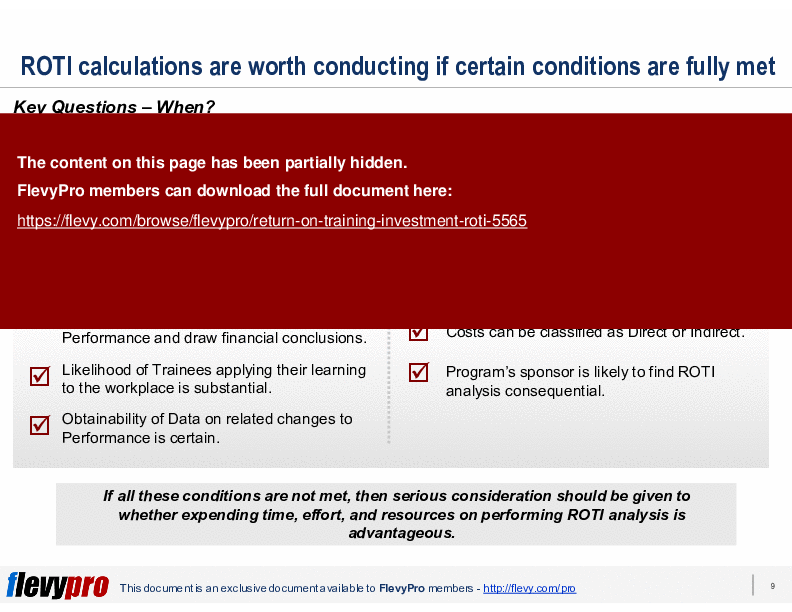
This PPT slide outlines critical conditions for conducting a Return on Training Investment (ROTI) analysis. A substantial financial commitment to the training program is necessary to justify a thorough evaluation of returns. Clearly defined training objectives must align with strategic goals to measure impact effectively. A significant number of trainees is essential for deriving meaningful insights into business performance and financial outcomes. The likelihood of trainees applying new skills in the workplace is crucial; low application questions the training's effectiveness and ROI. Data availability on performance changes post-training is vital for a credible ROTI analysis. Stakeholder involvement is critical for assigning reliable financial values to performance changes. Training elements must be distinguishable from non-training elements for clear financial benefit allocation, with costs categorized as direct or indirect. The program's sponsor must find the ROTI analysis significant; otherwise, investing resources may not yield actionable insights.
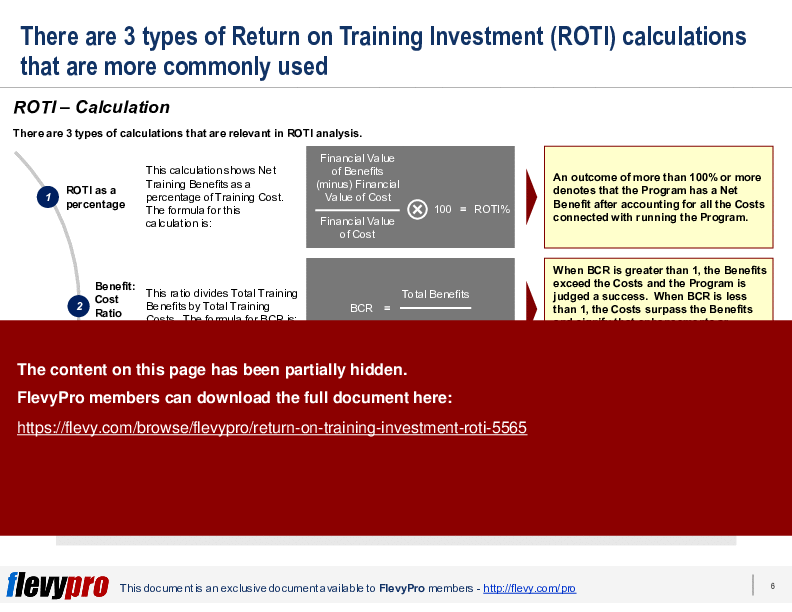
This PPT slide details 3 key calculations for Return on Training Investment (ROTI) analysis. First, ROTI as a percentage quantifies net training benefits relative to costs, calculated by subtracting costs from benefits and dividing by costs. A ROTI greater than 100% indicates a net benefit from the training program. Second, the Benefit-Cost Ratio (BCR) compares total training benefits to costs; a BCR exceeding 1 signifies successful training, while below 1 suggests a need for reassessment. Lastly, the Payback Period estimates the time to recoup training investment, calculated by dividing total costs by monthly benefits. These calculations enhance decision-making regarding training investments and facilitate communication with stakeholders.
This PPT slide focuses on evaluating non-monetary factors in Training Investments through Return on Training Investment (ROTI). Key questions highlight the significance of ROTI calculations, especially when training programs entail substantial financial commitments. The attainment of strategic or operational objectives is closely tied to training initiatives, revealing ambiguity in the financial benefits derived from these programs. While ROTI analysis is essential, it may not fully justify a training program or persuade management, indicating ROTI is part of a broader evaluation framework. Critical factors for decision-makers include the trainee's perspective, actual learning outcomes, and the effectiveness of training application in the workplace. A comprehensive approach to assessing training value is vital for maximizing investment impact.
Source: Best Practices in Training, ROI PowerPoint Slides: Return on Training Investment (ROTI) PowerPoint (PPTX) Presentation Slide Deck, LearnPPT Consulting
This framework is developed by a team of former McKinsey and Big 4 consultants. The presentation follows the headline-body-bumper slide format used by global consulting firms.
For $10.00 more, you can download this document plus 2 more FlevyPro documents. That's just $13 each.
ABOUT FLEVYPRO
This document is part of the FlevyPro Library, a curated knowledge base of documents for our FlevyPro subscribers.
FlevyPro is a subscription service for on-demand business frameworks and analysis tools. FlevyPro subscribers receive access to an exclusive library of curated business documents—business framework primers, presentation templates, Lean Six Sigma tools, and more—among other exclusive benefits.
The average daily rate of a McKinsey consultant is $6,625 (not including expenses). The average price of a Flevy document is $65.
Trusted by over 10,000+ Client Organizations
Since 2012, we have provided business templates to over 10,000 businesses and organizations of all sizes, from startups and small businesses to the Fortune 100, in over 130 countries.
"Last Sunday morning, I was diligently working on an important presentation for a client and found myself in need of additional content and suitable templates for various types of graphics. Flevy.com proved to be a treasure trove for both content and design at a reasonable price, considering the time I
saved. I encountered a download issue during the ordering process. However, a quick email to Flevy's support team, even on a Sunday (!!!), resulted in assistance within less than an hour, allowing me to download the content I needed. Fantastic job, Flevy! I give 5 stars for both content/price and customer service. Thank you!
"
– M. E., Chief Commercial Officer, International Logistics Service Provider
"I like your product. I'm frequently designing PowerPoint presentations for my company and your product has given me so many great ideas on the use of charts, layouts, tools, and frameworks. I really think the templates are a valuable asset to the job."
– Roberto Fuentes Martinez, Senior Executive Director at Technology Transformation Advisory
"[Flevy] produces some great work that has been/continues to be of immense help not only to myself, but as I seek to provide professional services to my clients, it gives me a large "tool box" of resources that are critical to provide them with the quality of service and outcomes they are expecting."
– Royston Knowles, Executive with 50+ Years of Board Level Experience
"As a niche strategic consulting firm, Flevy and FlevyPro frameworks and documents are an on-going reference to help us structure our findings and recommendations to our clients as well as improve their clarity, strength, and visual power. For us, it is an invaluable resource to increase our impact and value."
– David Coloma, Consulting Area Manager at Cynertia Consulting
"As a consultant requiring up to date and professional material that will be of value and use to my clients, I find Flevy a very reliable resource.
The variety and quality of material available through Flevy offers a very useful and commanding source for information. Using Flevy saves me time, enhances my expertise and ends up being a good decision."
– Dennis Gershowitz, Principal at DG Associates
"Flevy is now a part of my business routine. I visit Flevy at least 3 times each month.
Flevy has become my preferred learning source, because what it provides is practical, current, and useful in this era where the business world is being rewritten.

many challenges and there is the need to make the right decisions in a short time, with so much scattered information, we are fortunate to have Flevy. Flevy investigates, selects, and puts at our disposal the best of the best to help us be successful in our work.
"
– Omar Hernán Montes Parra, CEO at Quantum SFE
"The wide selection of frameworks is very useful to me as an independent consultant. In fact, it rivals what I had at my disposal at Big 4 Consulting firms in terms of efficacy and organization."
– Julia T., Consulting Firm Owner (Former Manager at Deloitte and Capgemini)
"One of the great discoveries that I have made for my business is the Flevy library of training materials.
As a Lean Transformation Expert, I am always making presentations to clients on a variety of topics: Training, Transformation, Total Productive Maintenance, Culture, Coaching, Tools, Leadership Behavior, etc. Flevy
It is well worth the money to purchase these presentations. Sure, I have the knowledge and information to make my point. It is another thing to create a presentation that captures what I want to say. Flevy has saved me countless hours of preparation time that is much better spent with implementation that will actually save money for my clients.
"
– Ed Kemmerling, Senior Lean Transformation Expert at PMG
Download our free compilation of 50+ slides and templates on Organizational Design, Change Management, and Corporate Culture. Methodologies include ADKAR, Burke-Litwin Change Model, McKinsey 7-S, Competing Values Framework, etc.