
This framework is developed by a team of former McKinsey and Big 4 consultants. The presentation follows the headline-body-bumper slide format used by global consulting firms.
Explore specialized PMI challenges post-merger with insights from ex-McKinsey & Big 4 consultants. Enhance customer focus, manage carve-outs, and navigate RDE complexities. Post-merger Integration (PMI): Specialized Issues is a 25-slide PPT PowerPoint presentation slide deck (PPT) available for immediate download upon purchase.
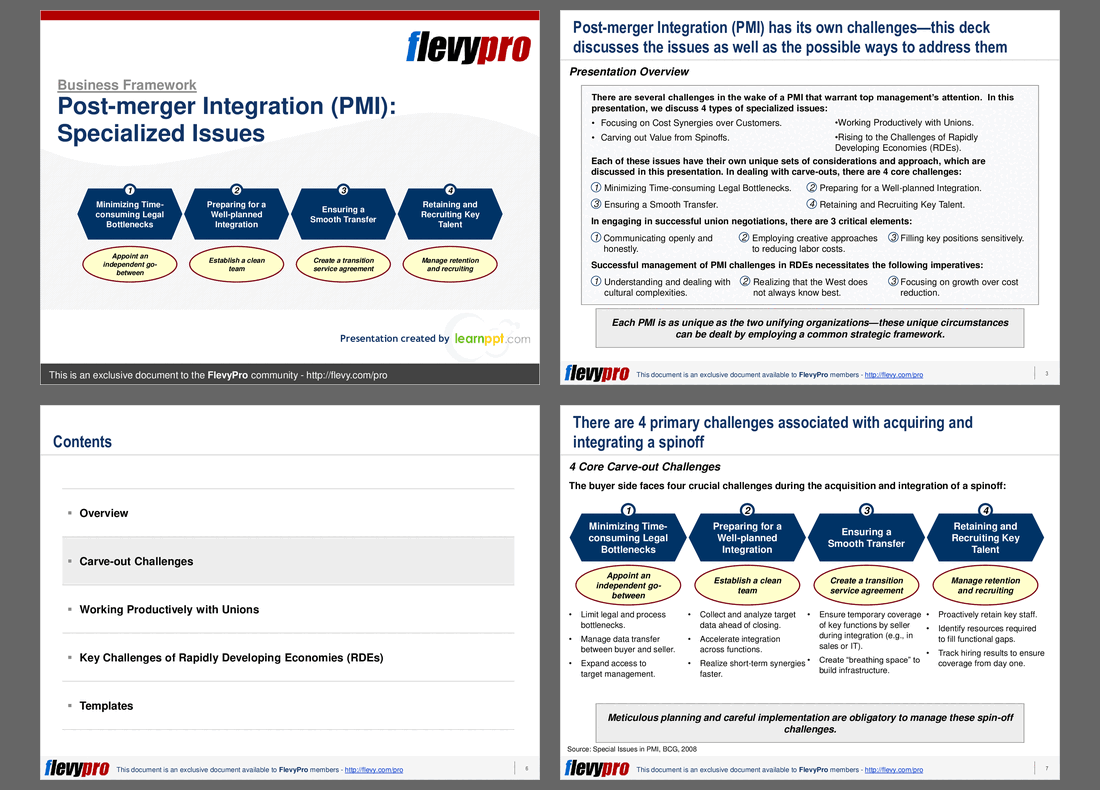
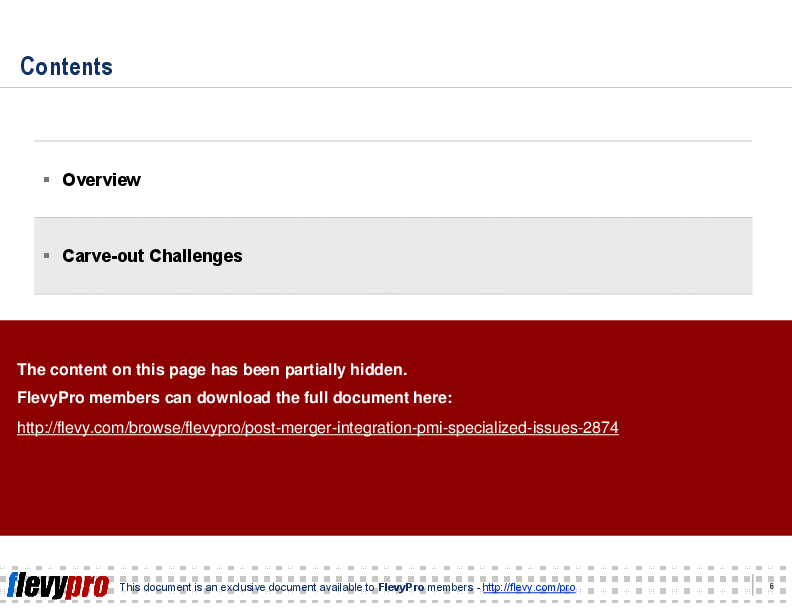
There are several challenges in the wake of a PMI that warrant top management’s attention. In this presentation, we discuss 4 types of specialized issues:
• Focusing on Cost Synergies over Customers.
• Carving out Value from Spinoffs.
• Working Productively with Unions.
• Rising to the Challenges of Rapidly Developing Economies (RDEs).
Each of these issues have their own unique sets of considerations and approach, which are discussed in this presentation. In dealing with carve-outs, there are 4 core challenges:
1. Minimizing Time-consuming Legal Bottlenecks.
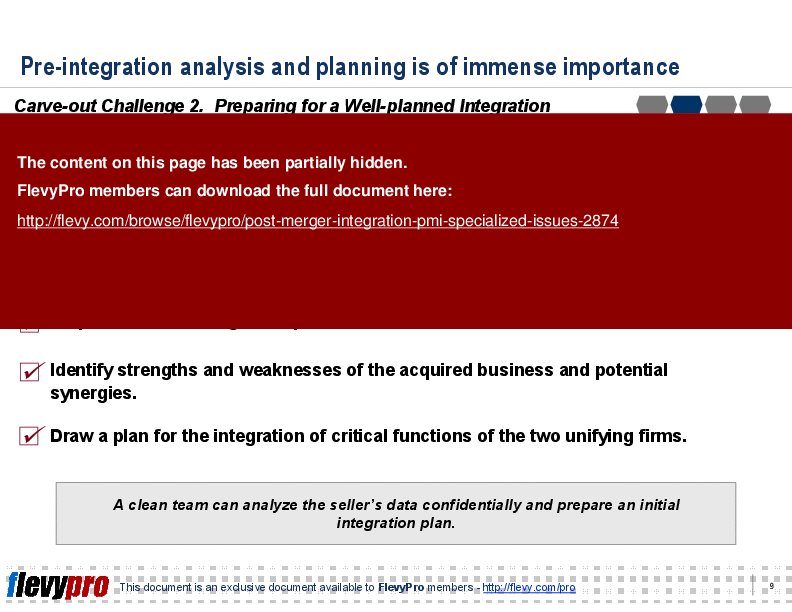
2. Preparing for a Well-planned Integration.
3. Ensuring a Smooth Transfer.
4. Retaining and Recruiting Key Talent.
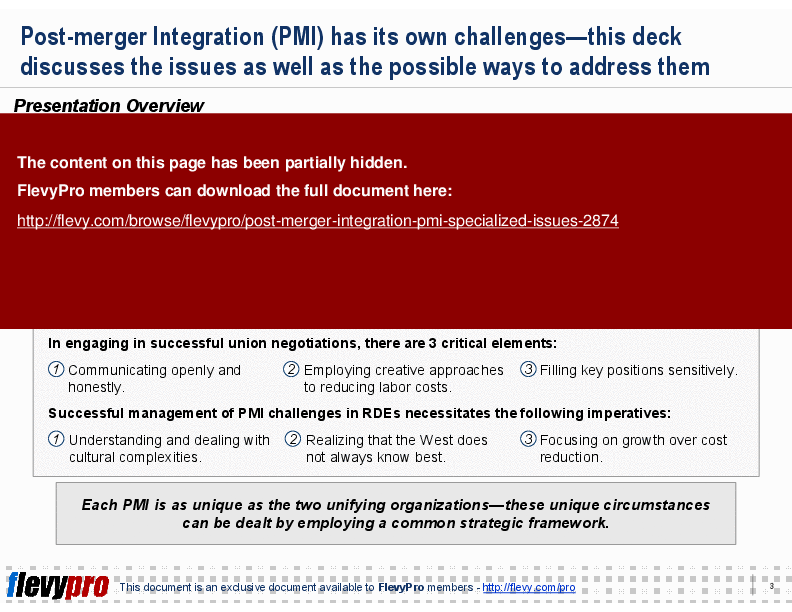
In engaging in successful union negotiations, there are 3 critical elements:
1. Communicating openly and honestly.
2. Employing creative approaches to reducing labor costs.
3. Filling key positions sensitively.
Successful management of PMI challenges in RDEs necessitates the following imperatives:
1. Understanding and dealing with cultural complexities.
2. Realizing that the West does not always know best.
3. Focusing on growth over cost reduction.
Each PMI is as unique as the two unifying organizations. These unique circumstances can be dealt by employing a common strategic framework.
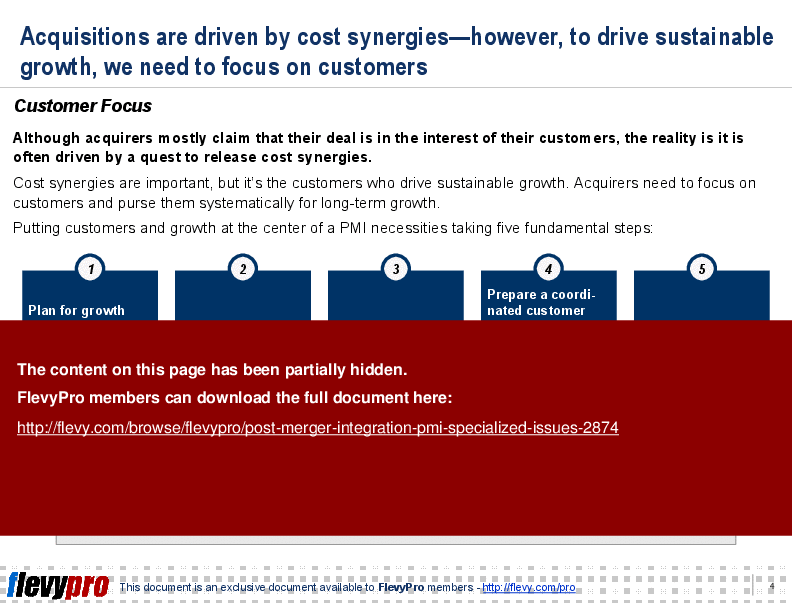
This presentation underscores the importance of focusing on customer-centric strategies to drive sustainable growth post-merger. Acquirers often prioritize cost synergies,, but this PPT emphasizes the necessity of systematically pursuing customer growth to achieve long-term success. It outlines five fundamental steps to place customers at the center of the PMI process, ensuring that growth plans are well-coordinated and effectively executed.
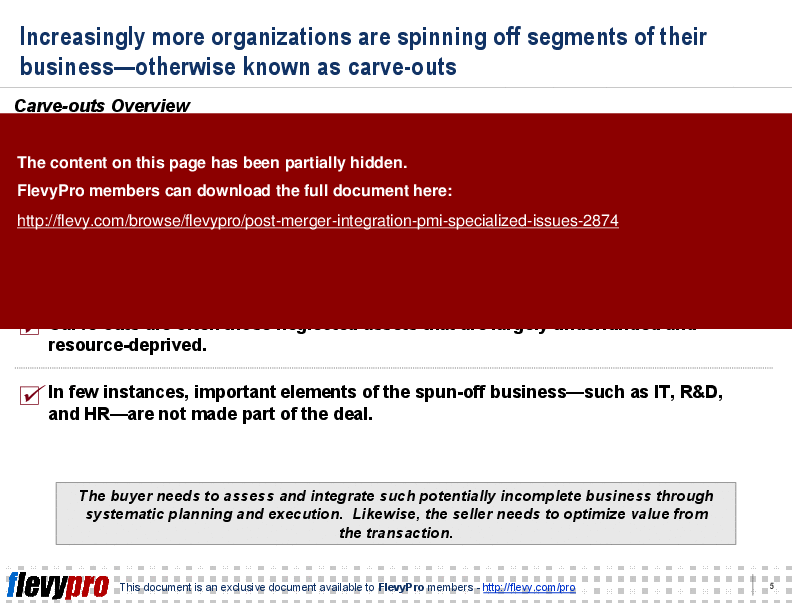
Carve-outs present their own set of challenges, particularly in managing legal complexities and ensuring smooth transitions. This document provides a detailed analysis of the primary challenges associated with carve-outs, including minimizing legal bottlenecks, preparing for well-planned integration, ensuring smooth transfers, and retaining key talent. It offers practical solutions and strategic frameworks to navigate these challenges, making it an invaluable resource for executives involved in post-merger integration.
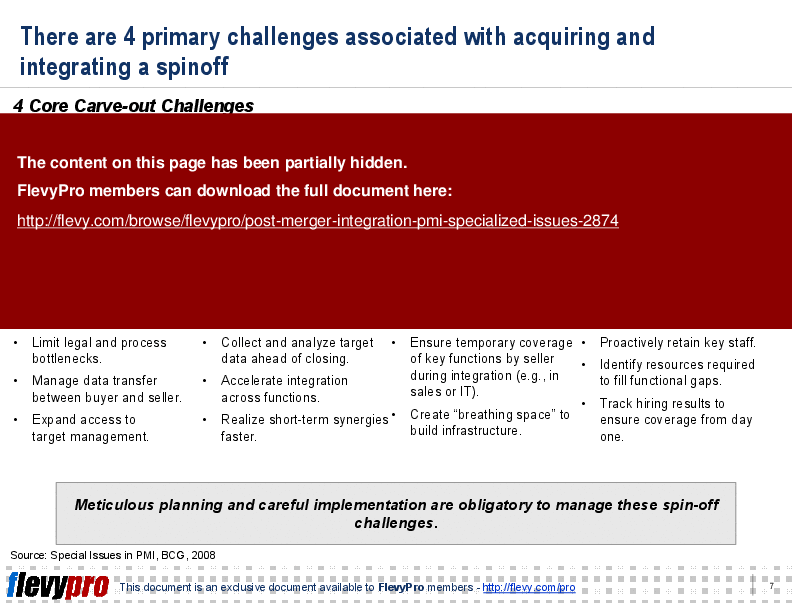
This PPT slide outlines 4 primary challenges in spinoff acquisition and integration. The first challenge is minimizing legal bottlenecks by appointing an independent go-between to manage legal processes, facilitating data transfer, and enhancing access to management. The second challenge emphasizes the need for a well-planned integration, requiring a clean team to analyze target data pre-closing and accelerate integration across functions for quicker realization of synergies. The third challenge involves ensuring smooth operations transfer through a transition service agreement, providing temporary coverage of key functions during integration. Lastly, retaining and recruiting key talent necessitates proactive strategies to maintain essential staff and track hiring results from day one, ensuring operational continuity.
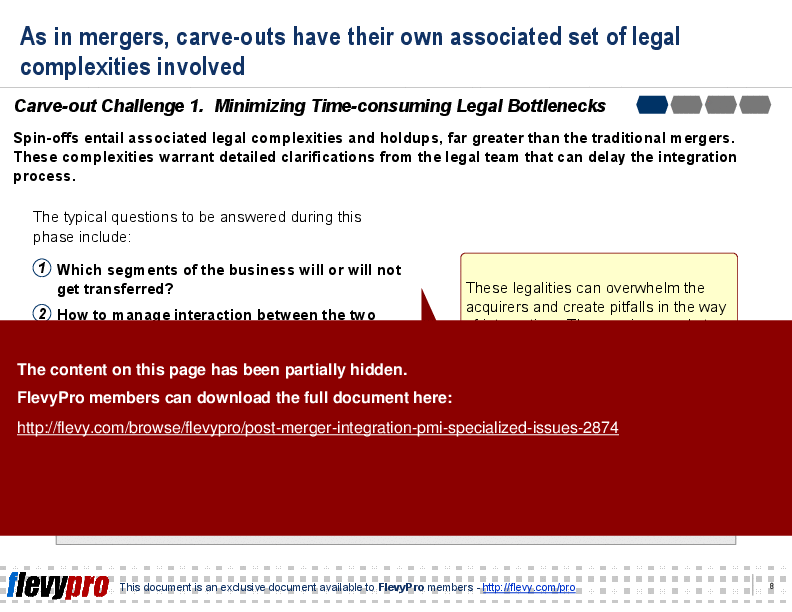
This PPT slide addresses the complexities of carve-outs, emphasizing that spin-offs often present greater legal challenges than traditional mergers. Key considerations include determining which business segments to transfer, impacting the structure and operations of both entities. Managing interactions between the acquiring and divested firms is critical for regulatory compliance to prevent legal violations during the transition. Data management is essential, identifying which information is accessible and which remains confidential to protect sensitive data. Additionally, critical HR elements that will not be included in the transfer must be considered. To mitigate legal complexities and streamline communication, appointing a go-between for legal teams is recommended, ensuring a smoother carve-out process.
This PPT slide addresses the complexities of retaining and recruiting key employees during carve-outs, highlighting essential HR initiatives. Carve-outs can create uncertainty, leading to higher turnover rates. Buyers must develop a structured financial plan to allocate resources effectively and create an organizational hierarchy. Finalizing a comprehensive human resource inventory is crucial for identifying workforce capabilities and gaps. Identifying functional gaps for recruitment ensures critical roles are filled during the transition. Proactive retention strategies are necessary to keep key employees engaged. Effective communication through workshops and meetings can alleviate employee concerns and foster stability. Early recruitment efforts should align with a detailed plan, including budgets and job specifications. Sellers must create a compelling equity story to attract buyers, addressing employee concerns and showcasing future investments and retention incentives for a successful transition.
This PPT slide addresses key challenges faced by Regional Development Entities (RDEs) during post-merger integration, focusing on the Western approach to acquisitions. It highlights the importance of treating acquisitions as partnerships, emphasizing open-mindedness, collaboration, and effective communication to foster trust and credibility. The prevalent mindset of prioritizing cost reduction in mergers can be counterproductive; instead, a focus on growth allows for flexibility and better integration outcomes. Guidelines for optimizing post-merger integration include selecting experienced senior members for the integration team and motivating local managers with performance-based incentives. Gradual adoption of new systems and processes is recommended to avoid disruptions in customer-facing operations. This perspective promotes a shift from cost-cutting to growth-oriented strategies in diverse regional contexts.
Trade unions play a significant role in post-merger integration (PMI) processes, particularly in the public sector. Successful negotiations with unions hinge on 3 critical elements: open communication, creative labor cost reduction strategies, and sensitive filling of key positions. Transparency in communication is essential, especially in Europe’s regulatory environment, where legal processes must be meticulously followed. In tightly regulated markets, unions can exert considerable influence, while less regulated areas still require proactive engagement. Informing unions about potential layoffs and broader social strategies can mitigate employee concerns and foster a favorable negotiation atmosphere. Candid communication alleviates uncertainties, creating a conducive environment for negotiations, while managing the risk of detrimental information leaks to the press.
This PPT slide addresses challenges in cross-border acquisitions in Rapidly Developing Economies (RDEs), highlighting findings from a BCG study that identifies diverse risks as a primary concern. M&A experts emphasize the importance of acquiring reliable information to evaluate target potential and navigate regulatory hurdles. Key challenges include limited deal structure options and unfamiliarity with the M&A process in these regions. It outlines 3 imperatives for managing post-merger integration (PMI) challenges: addressing cultural complexities, recognizing that Western perspectives may not apply, and prioritizing growth over cost reduction to avoid missed opportunities. Organizations must adapt strategies and understand local dynamics to navigate these complexities effectively.
Source: Best Practices in Acquisition, PMI PowerPoint Slides: Post-merger Integration (PMI): Specialized Issues PowerPoint (PPT) Presentation Slide Deck, LearnPPT Consulting
This framework is developed by a team of former McKinsey and Big 4 consultants. The presentation follows the headline-body-bumper slide format used by global consulting firms.
For $10.00 more, you can download this document plus 2 more FlevyPro documents. That's just $13 each.
ABOUT FLEVYPRO
This document is part of the FlevyPro Library, a curated knowledge base of documents for our FlevyPro subscribers.

FlevyPro is a subscription service for on-demand business frameworks and analysis tools. FlevyPro subscribers receive access to an exclusive library of curated business documents—business framework primers, presentation templates, Lean Six Sigma tools, and more—among other exclusive benefits.
The average daily rate of a McKinsey consultant is $6,625 (not including expenses). The average price of a Flevy document is $65.
Trusted by over 10,000+ Client Organizations
Since 2012, we have provided business templates to over 10,000 businesses and organizations of all sizes, from startups and small businesses to the Fortune 100, in over 130 countries.
"I have used FlevyPro for several business applications. It is a great complement to working with expensive consultants. The quality and effectiveness of the tools are of the highest standards."
– Moritz Bernhoerster, Global Sourcing Director at Fortune 500
"If you are looking for great resources to save time with your business presentations, Flevy is truly a value-added resource. Flevy has done all the work for you and we will continue to utilize Flevy as a source to extract up-to-date information and data for our virtual and onsite presentations!"
– Debbi Saffo, President at The NiKhar Group
"I am extremely grateful for the proactiveness and eagerness to help and I would gladly recommend the Flevy team if you are looking for data and toolkits to help you work through business solutions."
– Trevor Booth, Partner, Fast Forward Consulting
"The wide selection of frameworks is very useful to me as an independent consultant. In fact, it rivals what I had at my disposal at Big 4 Consulting firms in terms of efficacy and organization."
– Julia T., Consulting Firm Owner (Former Manager at Deloitte and Capgemini)
"My FlevyPro subscription provides me with the most popular frameworks and decks in demand in today’s market. They not only augment my existing consulting and coaching offerings and delivery, but also keep me abreast of the latest trends, inspire new products and service offerings for my practice, and educate me
in a fraction of the time and money of other solutions. I strongly recommend FlevyPro to any consultant serious about success.
"
– Bill Branson, Founder at Strategic Business Architects
"As an Independent Management Consultant, I find Flevy to add great value as a source of best practices, templates and information on new trends. Flevy has matured and the quality and quantity of the library is excellent. Lastly the price charged is reasonable, creating a win-win value for
the customer, Flevy and the various authors. This is truly a service that benefits the consulting industry and associated clients. Thanks for providing this service.
"
– Jim Schoen, Principal at FRC Group
"I like your product. I'm frequently designing PowerPoint presentations for my company and your product has given me so many great ideas on the use of charts, layouts, tools, and frameworks. I really think the templates are a valuable asset to the job."
– Roberto Fuentes Martinez, Senior Executive Director at Technology Transformation Advisory
"One of the great discoveries that I have made for my business is the Flevy library of training materials.
As a Lean Transformation Expert, I am always making presentations to clients on a variety of topics: Training, Transformation, Total Productive Maintenance, Culture, Coaching, Tools, Leadership Behavior, etc. Flevy
It is well worth the money to purchase these presentations. Sure, I have the knowledge and information to make my point. It is another thing to create a presentation that captures what I want to say. Flevy has saved me countless hours of preparation time that is much better spent with implementation that will actually save money for my clients.
"
– Ed Kemmerling, Senior Lean Transformation Expert at PMG
Receive our FREE presentation on Operational Excellence
This 50-slide presentation provides a high-level introduction to the 4 Building Blocks of Operational Excellence. Achieving OpEx requires the implementation of a Business Execution System that integrates these 4 building blocks.