
This framework is developed by a team of former McKinsey and Big 4 consultants. The presentation follows the headline-body-bumper slide format used by global consulting firms.
Explore Phase 2 of the Organic Growth Framework (OGF) by ex-McKinsey consultants. Master propensity-based segmentation to drive targeted, sustainable growth. Organic Growth Framework (OGF) Series: Phase 2 is a 23-slide PPT PowerPoint presentation slide deck (PPTX) available for immediate download upon purchase.
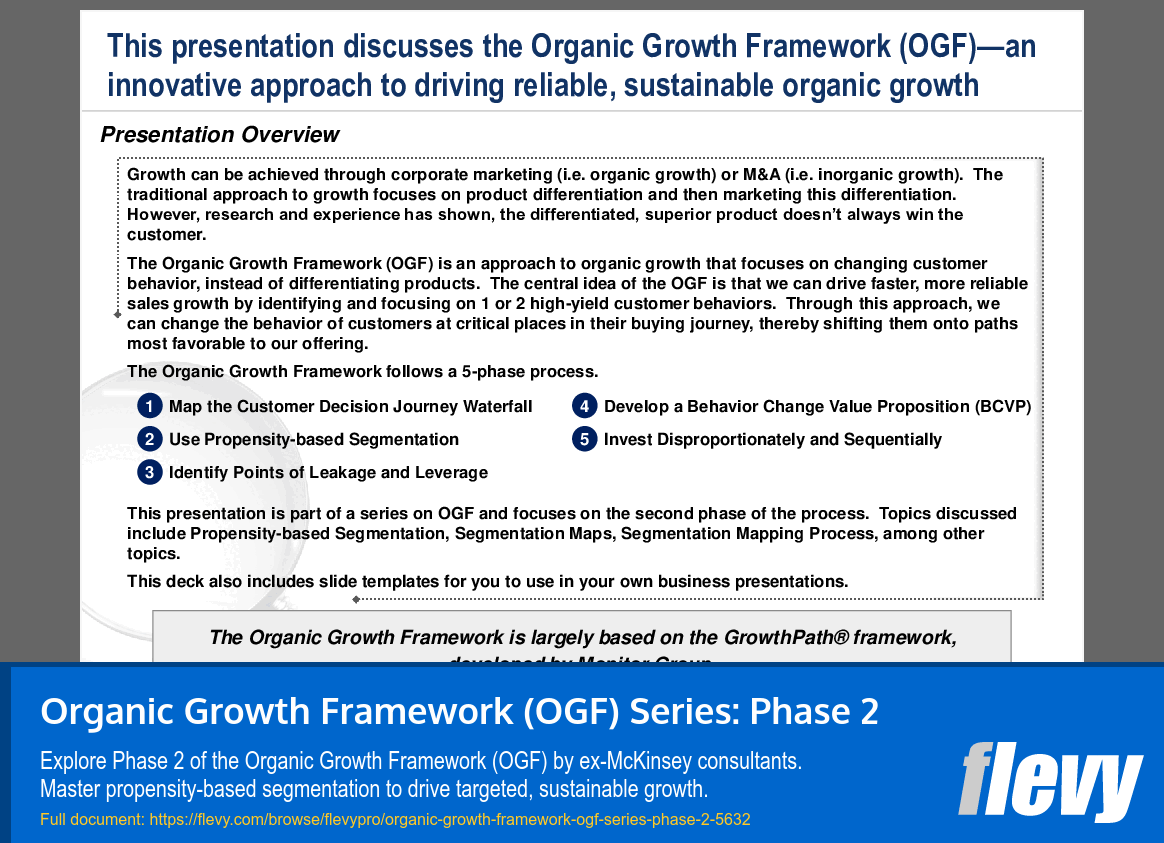
Growth can be achieved through corporate marketing (i.e. organic growth) or M&A (i.e. inorganic growth). The traditional approach to growth focuses on product differentiation and then marketing this differentiation. However, research and experience has shown, the differentiated, superior product doesn't always win the customer.
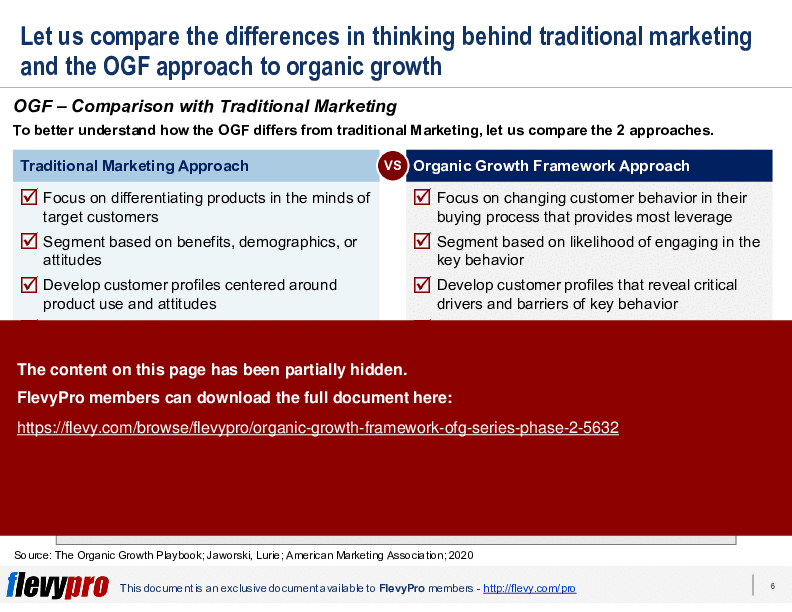
The Organic Growth Framework (OGF) is an approach to organic growth that focuses on changing customer behavior, instead of differentiating products. The central idea of the OGF is that we can drive faster, more reliable sales growth by identifying and focusing on 1 or 2 high-yield customer behaviors. Through this approach, we can change the behavior of customers at critical places in their buying journey, thereby shifting them onto paths most favorable to our offering.
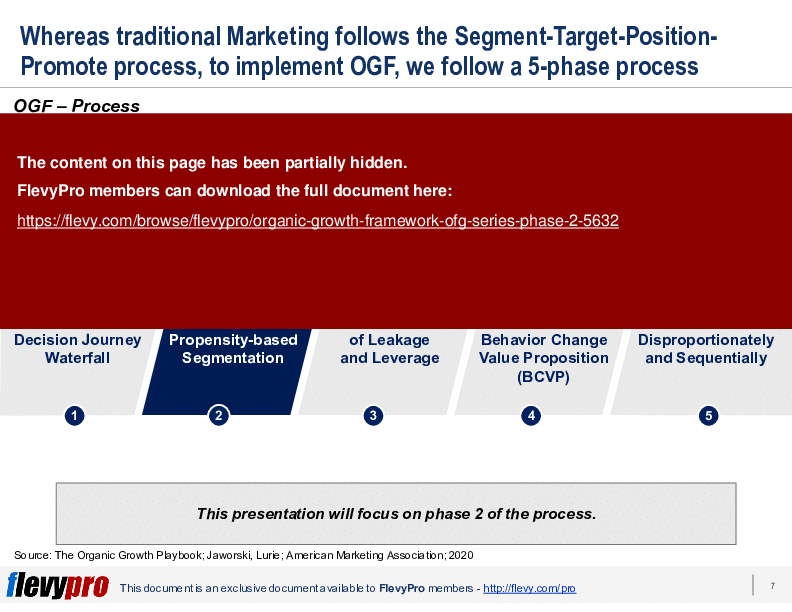
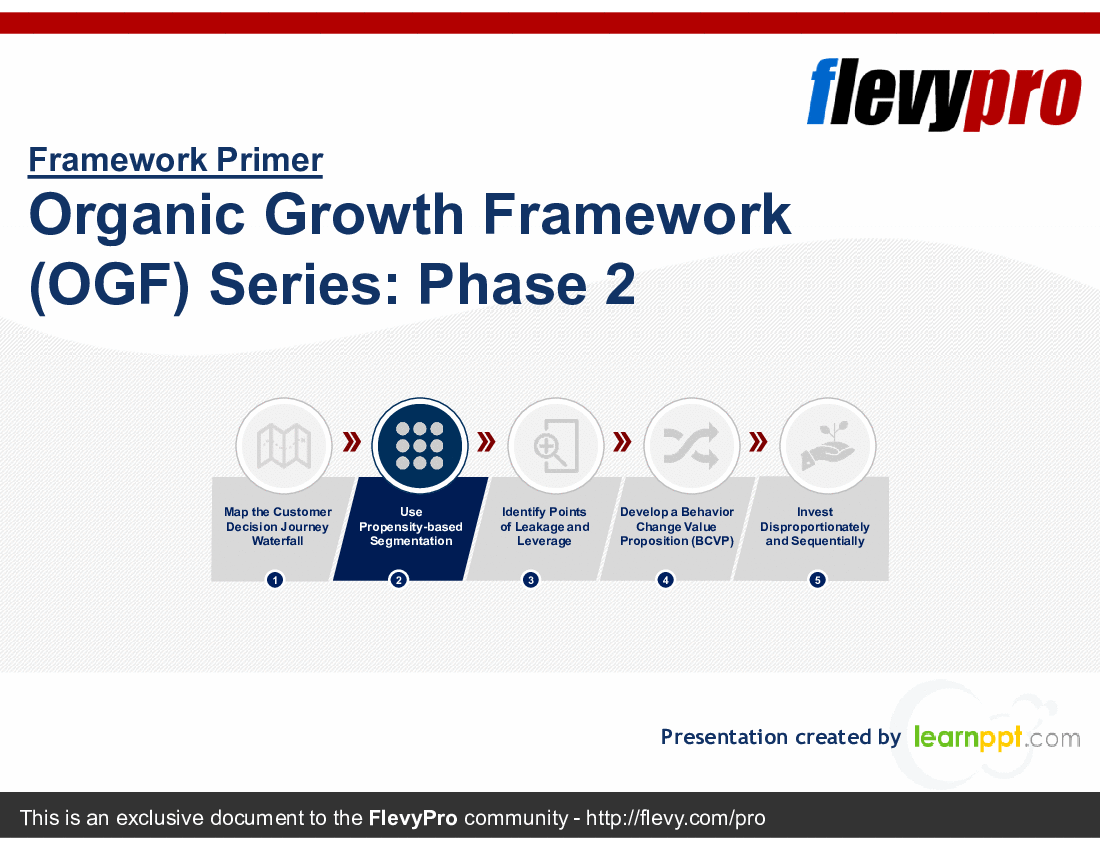
The Organic Growth Framework follows a 5-phase process.
1. Map the Customer Decision Journey Waterfall
2. Use Propensity-based Segmentation
3. Identify Points of Leakage and Leverage
4. Develop a Behavior Change Value Proposition (BCVP)
5. Invest Disproportionately and Sequentially
This presentation is part of a series on OGF and focuses on the second phase of the process. Topics discussed include the Customer Decision Journey, the Marketing Strategy Process, Strategic Objectives, Propensity-based Segmentation, among topics.
This deck also includes slide templates for you to use in your own business presentations.
Phase 2 of the Organic Growth Framework (OGF) delves into Propensity-based Segmentation, a critical step for identifying and targeting high-yield customer behaviors. This phase emphasizes the creation of a segmentation map, leveraging observable characteristics to pinpoint actionable customer segments. By focusing on propensity, we can align marketing strategies with behaviors that drive growth, ensuring resources are allocated efficiently. This approach not only identifies attractive segments, but also provides a competitive edge by utilizing proprietary segmentation methodologies. The deck includes detailed processes and templates to facilitate implementation in your organization.
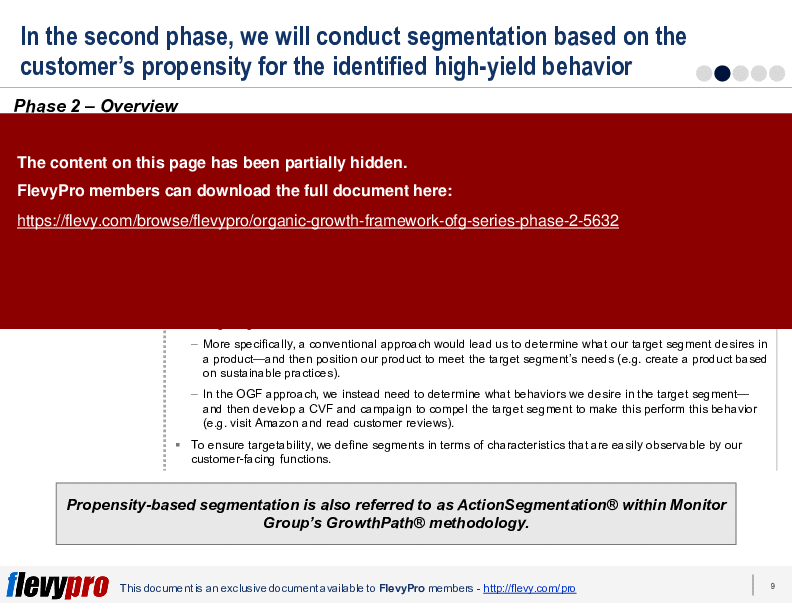
This PPT slide outlines a strategic framework for customer segmentation based on propensity for high-yield behaviors. It emphasizes segmenting customers by their willingness or resistance to change, suggesting resource allocation towards those likely to adopt these behaviors. The Organic Growth Framework (OGF) shifts the focus from product-centric to behavior-driven segmentation, utilizing a Customer Value Framework (CVF) to encourage specific customer actions, such as website visits or reading reviews. Defining segments by observable characteristics enhances targetability and aligns marketing strategies with actual customer behaviors, leading to improved engagement and sustainable growth.
This PPT slide outlines the second phase of the Organic Growth Framework, focusing on propensity-based segmentation mapping. The first step is constructing a segmentation frame by arranging short-list variables to select the most insightful ones. Each market cell is populated with estimates reflecting the propensity for high-yield behavior. Next, propensity-based segments are identified by grouping market cells with similar propensities, enhancing the understanding of customer behavior. The final step involves prioritizing segments by adding data on market size and growth potential, which aids in evaluating and ranking segments for effective resource allocation. This structured approach enables organizations to leverage data-driven insights for refined market segmentation and informed decision-making.
This PPT slide outlines a three-step process for developing a propensity-based segmentation map, essential for targeted marketing. The first step, "Identify Segmentation Variables," involves generating and screening potential variables for observability and actionability, correlating them with behavioral objectives to refine the list. The second step, "Construct and Populate Segmentation Frame," focuses on building a framework that incorporates selected variables, facilitating customer segment analysis. The final step, "Define the Segments," emphasizes identifying and prioritizing propensity-based segments, ensuring efficient resource allocation for growth. This process enhances segmentation efforts by integrating behavioral insights, refining marketing strategies, and improving customer engagement.
This PPT slide outlines the benefits of propensity-based segmentation, highlighting 3 key advantages. First, propensity-based segments are actionable and meaningful, allowing for targeted strategies across corporate functions by selecting observable customer characteristics. Second, this segmentation directs focus toward the easiest sources of growth, aiding in resource allocation and steering efforts away from less fruitful areas. Lastly, propensity-based segmentation is proprietary, enabling companies to tailor their approaches based on unique customer behaviors, thus gaining a competitive edge over organizations using similar, generic methodologies. This strategic tool enhances market engagement and drives sustainable growth.
This framework is developed by a team of former McKinsey and Big 4 consultants. The presentation follows the headline-body-bumper slide format used by global consulting firms.
For $10.00 more, you can download this document plus 2 more FlevyPro documents. That's just $13 each.
ABOUT FLEVYPRO
This document is part of the FlevyPro Library, a curated knowledge base of documents for our FlevyPro subscribers.
FlevyPro is a subscription service for on-demand business frameworks and analysis tools. FlevyPro subscribers receive access to an exclusive library of curated business documents—business framework primers, presentation templates, Lean Six Sigma tools, and more—among other exclusive benefits.
The average daily rate of a McKinsey consultant is $6,625 (not including expenses). The average price of a Flevy document is $65.
Trusted by over 10,000+ Client Organizations
Since 2012, we have provided business templates to over 10,000 businesses and organizations of all sizes, from startups and small businesses to the Fortune 100, in over 130 countries.
Read Customer Testimonials
"Flevy is our 'go to' resource for management material, at an affordable cost. The Flevy library is comprehensive and the content deep, and typically provides a great foundation for us to further develop and tailor our own service offer."
– Chris McCann, Founder at Resilient.World
"As an Independent Management Consultant, I find Flevy to add great value as a source of best practices, templates and information on new trends. Flevy has matured and the quality and quantity of the library is excellent. Lastly the price charged is reasonable, creating a win-win value for
the customer, Flevy and the various authors. This is truly a service that benefits the consulting industry and associated clients. Thanks for providing this service.
"
– Jim Schoen, Principal at FRC Group
"FlevyPro provides business frameworks from many of the global giants in management consulting that allow you to provide best in class solutions for your clients."
– David Harris, Managing Director at Futures Strategy
"As a consultant requiring up to date and professional material that will be of value and use to my clients, I find Flevy a very reliable resource.
The variety and quality of material available through Flevy offers a very useful and commanding source for information. Using Flevy saves me time, enhances my expertise and ends up being a good decision."
– Dennis Gershowitz, Principal at DG Associates
"Flevy is now a part of my business routine. I visit Flevy at least 3 times each month.
Flevy has become my preferred learning source, because what it provides is practical, current, and useful in this era where the business world is being rewritten.

many challenges and there is the need to make the right decisions in a short time, with so much scattered information, we are fortunate to have Flevy. Flevy investigates, selects, and puts at our disposal the best of the best to help us be successful in our work.
"
– Omar Hernán Montes Parra, CEO at Quantum SFE
"One of the great discoveries that I have made for my business is the Flevy library of training materials.
As a Lean Transformation Expert, I am always making presentations to clients on a variety of topics: Training, Transformation, Total Productive Maintenance, Culture, Coaching, Tools, Leadership Behavior, etc. Flevy
It is well worth the money to purchase these presentations. Sure, I have the knowledge and information to make my point. It is another thing to create a presentation that captures what I want to say. Flevy has saved me countless hours of preparation time that is much better spent with implementation that will actually save money for my clients.
"
– Ed Kemmerling, Senior Lean Transformation Expert at PMG
"As a consulting firm, we had been creating subject matter training materials for our people and found the excellent materials on Flevy, which saved us 100's of hours of re-creating what already exists on the Flevy materials we purchased."
– Michael Evans, Managing Director at Newport LLC
"The wide selection of frameworks is very useful to me as an independent consultant. In fact, it rivals what I had at my disposal at Big 4 Consulting firms in terms of efficacy and organization."
– Julia T., Consulting Firm Owner (Former Manager at Deloitte and Capgemini)
Download our free compilation of 50+ Strategy & Transformation slides and templates. Frameworks include McKinsey 7-S, Balanced Scorecard, Disruptive Innovation, BCG Curve, and many more.