
This framework is developed by a team of former McKinsey and Big 4 consultants. The presentation follows the headline-body-bumper slide format used by global consulting firms.
Editor Summary
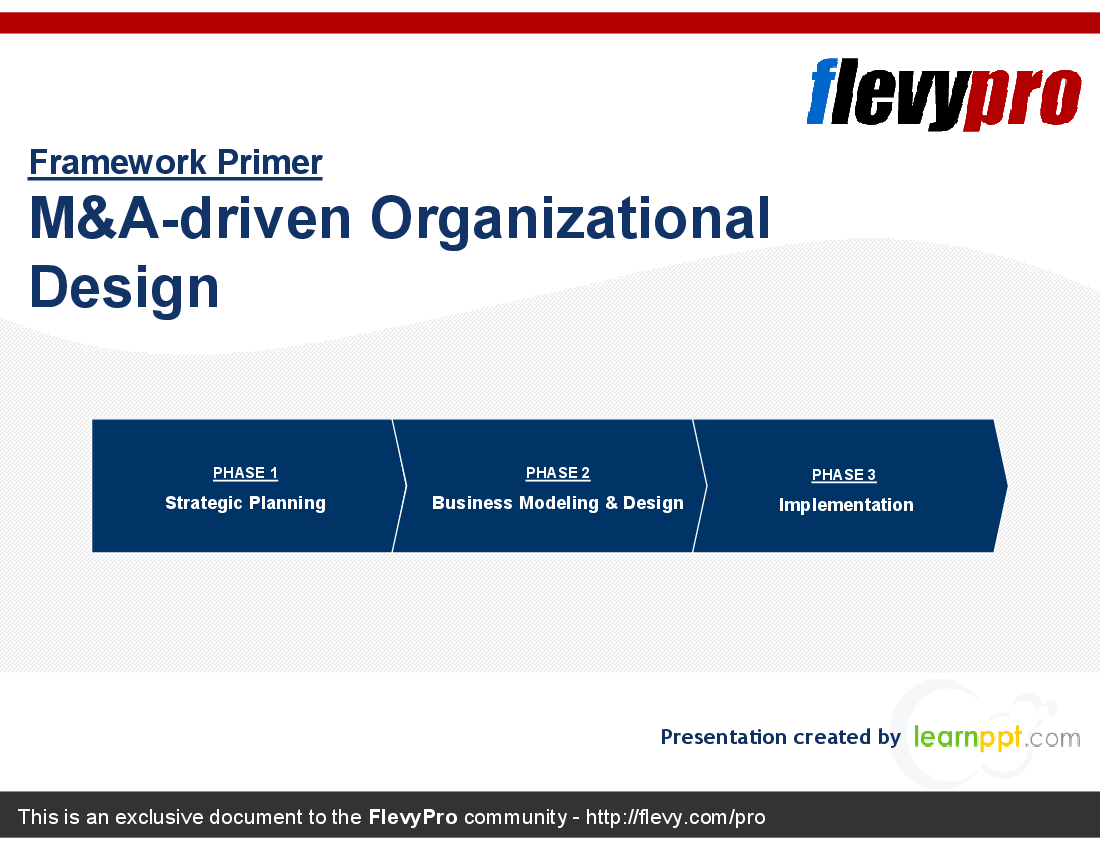
21-slide PowerPoint on M&A-driven organizational design by LearnPPT Consulting outlining a 3-phase methodology: Strategic Planning, Business Modeling and Design, and Implementation.
Read moreIncludes 7 leading practices (agree on what you can afford; evaluate transition options; determine which positions to transition, and when; keep it efficient; get ahead of the transition; solidify leadership early; establish the rules) and editable slide templates. Intended for HR leaders, M&A integration leads, corporate development, and management consultants; sold as a digital download on Flevy.
Use when an acquisition or divestiture requires redesigning reporting lines, roles, and operating models to protect deal value and enable integration across planning, design, and execution.
HR business partners building a transition plan that specifies which positions to move and the timing during integration.
M&A integration leads aligning cost constraints with transition options and timing decisions.
Business unit leaders mapping a new operating model and confirming leadership for post-close execution.
Management consultants developing implementation roadmaps and governance rules for handover.
The three-phase approach separates strategic planning, business-model design, and implementation consistent with common M&A integration practice.
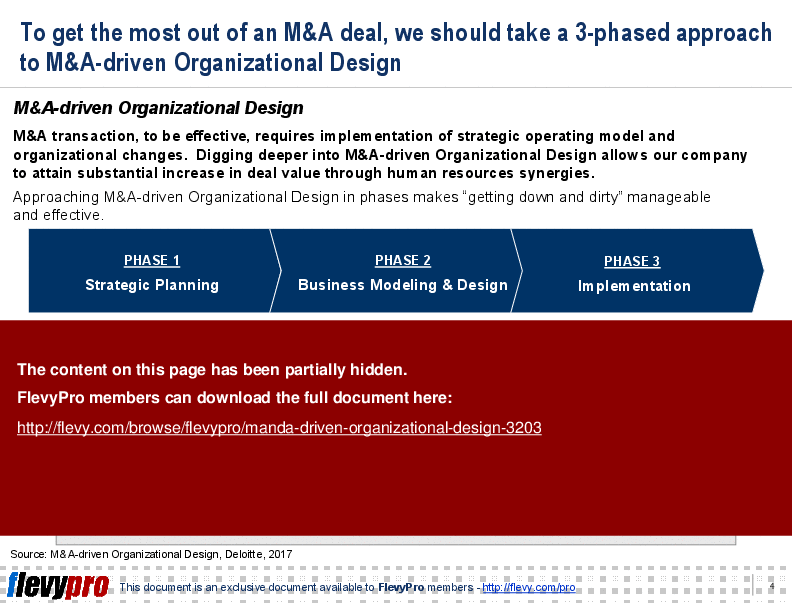
M&A-driven Organizational Design must be done in three strategic phases to increase deal value. It makes the complexity of the design process manageable and effective.
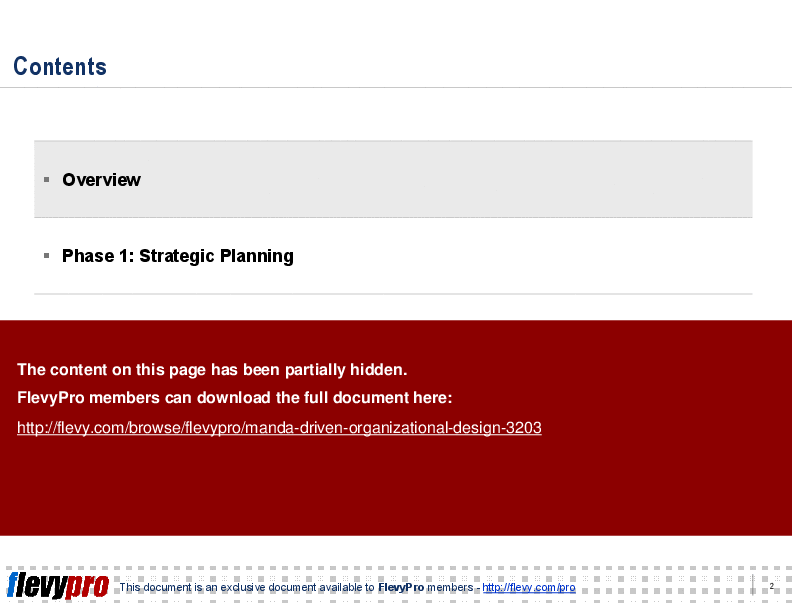
• Phase 1: Strategic Planning
• Phase 2: Business Modeling and Design
• Phase 3: Implementation
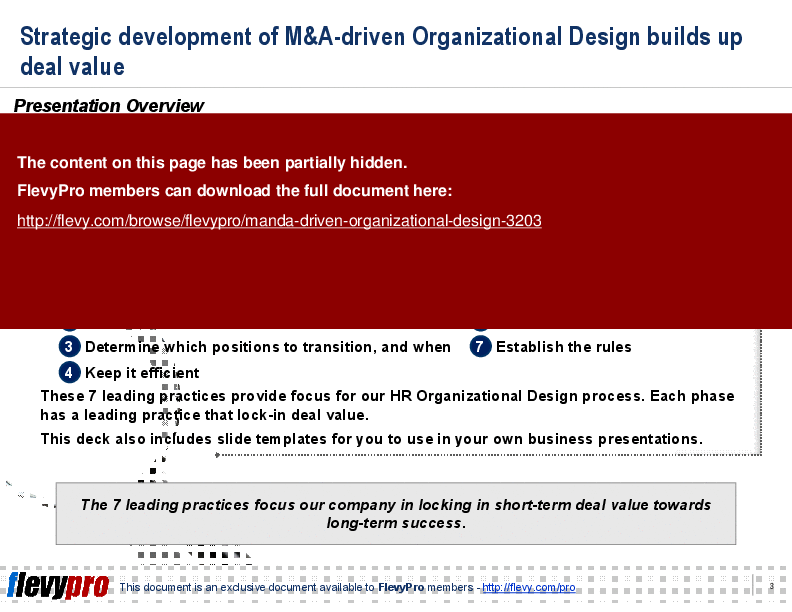
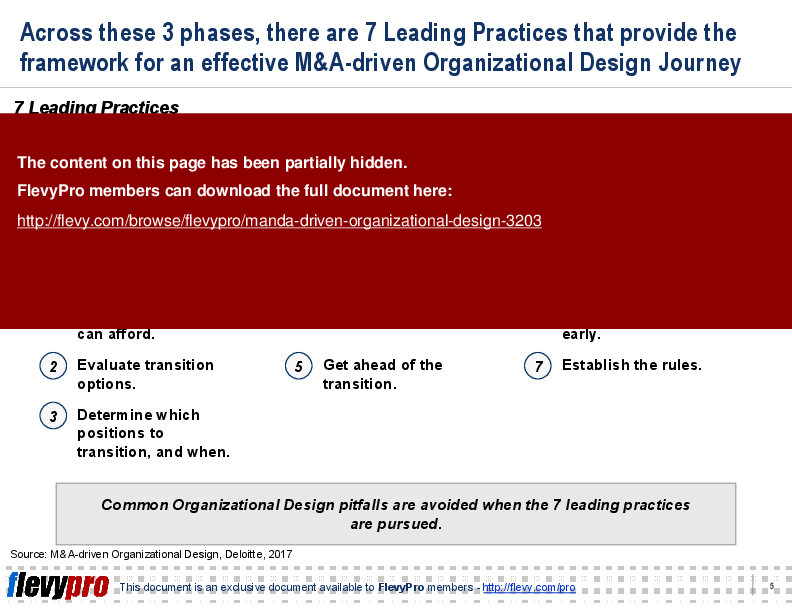
The 3 phases are guided by 7 leading practices:
1. Agree on what you can afford.
2. Evaluate transition options.
3. Determine which positions to transition, and when.
4. Keep it efficient.
5. Get ahead of the transition.
6. Solidify leadership early.
7. Establish the rules.
These 7 leading practices provide focus for our HR Organizational Design process. The 7 leading practices focus our company in locking in short-term deal value towards long-term success. Each phase has a leading practice that lock-in deal value.
This deck also includes slide templates for you to use in your own business presentations.
The PPT provides a comprehensive roadmap for navigating the complexities of M&A-driven organizational design. It emphasizes strategic planning, business modeling, and implementation as the three critical phases. Each phase is meticulously broken down with actionable insights and leading practices to ensure seamless integration and value creation. The strategic planning phase sets the foundation by aligning financial goals and leadership roles, ensuring that the transition is efficient and effective.
Business modeling and design focus on developing a robust operating model that aligns with the company's strategic objectives. This phase ensures that the business model is not only efficient, but also scalable, providing a solid foundation for future growth. The document outlines key practices such as keeping the process efficient and evaluating transition options to maximize cost-saving opportunities.
The final phase, implementation, is where the rubber meets the road. It emphasizes the importance of solidifying leadership early and establishing clear, replicable rules to facilitate organizational design. The document also highlights the role of HR in managing the transition and ensuring that the morale of remaining employees is maintained. This phase is crucial for institutionalizing structural changes and realizing the full potential of the M&A deal.
What are the main phases of an M&A organizational design process?
An M&A organizational design process is structured in 3 sequential phases: Strategic Planning, Business Modeling and Design, and Implementation. Each phase targets different objectives—from setting financial and leadership alignment in planning, through constructing the operating model in design, to executing changes during implementation—three phases.
What are typical leading practices used to protect deal value during integration?
Leading practices focus decisions and actions that protect deal value: agree on what you can afford; evaluate transition options; determine which positions to transition and when; keep the process efficient; get ahead of the transition; solidify leadership early; and establish clear rules. These are organized as 7 leading practices.
How should HR be involved in M&A-driven organizational design?
HR should lead decisions about which roles transfer, timing, and how to manage remaining-employee morale while operational changes are implemented. HR activities include applying the leading practices to lock in short-term deal value and set conditions for long-term success, such as determining which positions to transition, and when.
How do you decide which positions to transition during integration?
Decisions use a structured evaluation of transition options against affordability, operational needs, and timing. The process emphasizes efficiency, early leadership decisions, and established rules to minimize disruption while securing deal value—summarized in the directive to determine which positions to transition, and when.
What should I look for when choosing an org-design toolkit for M&A work?
Choose a toolkit that maps the full integration lifecycle (planning, design, implementation), embeds explicit leading practices for protecting deal value, and provides presentation-ready templates to communicate decisions. Flevy's M&A-driven Organizational Design offers a 3-phase roadmap with 7 leading practices and editable slide templates across 21 slides.
How should financial constraints influence the org design approach after an acquisition?
Financial constraints should be set early to shape permissible transition options and scope; the guidance begins with agreeing what you can afford, then evaluating options that fit that envelope while prioritizing efficiency and leadership stability. Start by defining the affordability boundary—agree on what you can afford.
I need to restructure my acquired business quickly — which practical framework can I apply?
Apply a phased framework: start with Strategic Planning to align finances and leadership, move to Business Modeling and Design to define roles and the operating model, then use Implementation to enact changes while solidifying leaders and governance. Flevy's M&A-driven Organizational Design presents this 3-phase approach.
How does the implementation phase help lock in deal value after a merger?
Implementation locks in value by executing the designed operating model, solidifying leadership early to ensure accountability, establishing governance rules to prevent drift, and proactively managing transitions to preserve operations and morale—actions captured by the emphasis to solidify leadership early and establish the rules.
This PPT slide outlines the third phase of the Organizational Design implementation process, focusing on solidifying leadership early in the transition. Key attributes of effective leadership include alignment with the proposed organizational structure, commitment to completing the design process, and possessing the authority to enact structural changes swiftly. Aligning leadership is vital for institutionalizing structural change, as a cohesive leadership front is essential for successful implementation. The mention of "Organizational Design champions" highlights individuals who play critical roles in navigating the change management process, ensuring practical realization of the new design. Strong, aligned leadership is a cornerstone for effective organizational design implementation.
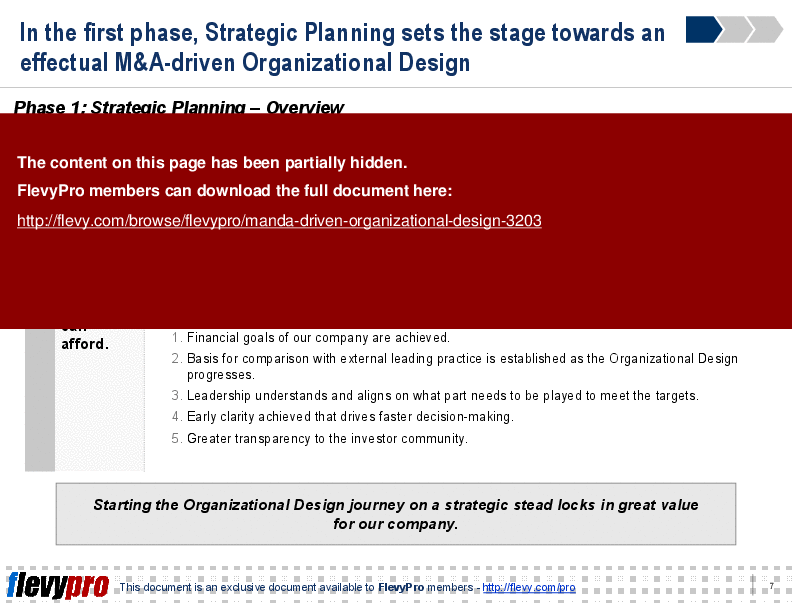
This PPT slide outlines the initial phase of an M&A-driven Organizational Design process, focusing on Strategic Planning. Key elements include defining the company's strategic direction, establishing financial parameters for a cost envelope, and identifying leadership roles during the transition. Five essential components for effective post-deal HR Organizational Design are highlighted: achieving financial goals, comparing with industry practices, ensuring leadership alignment, promoting clarity for decision-making, and enhancing transparency for investors. A well-structured Strategic Planning phase aligns internal stakeholders and sets expectations for external parties, driving value creation and fostering a robust integration process that leads to successful transformation.
This PPT slide outlines critical steps in the strategic planning phase of organizational design, focusing on evaluating transition options and identifying key positions for transition. Evaluating transition options is essential to avoid a "big bang" integration scenario, which can hinder cost-saving objectives. Key transition strategies include Shared Services, Outsourcing, and Centers of Excellence (CoEs), which, while complex, can yield greater organizational value. Identifying which positions to transition and when is crucial, as early identification of qualified individuals to lead integration efforts drives success. Prioritizing high-value roles ensures the retention and motivation of key personnel, aligning resources with strategic goals for effective transitions.
This PPT slide outlines a structured approach for HR Organizational Design during mergers and acquisitions, emphasizing 7 leading practices for successful transitions. Key practices include agreeing on financial parameters for realistic planning, evaluating transition options to weigh integration strategies, and determining the timing of position transitions to retain talent effectively. Efficiency is prioritized by avoiding unnecessary complexities, while proactive planning is essential to mitigate disruptions. Establishing strong leadership early fosters stability, and clear rules set expectations for decision-making. Practical applications include embedding decision-making milestones in project timelines and collaborating with business leaders to align the design process with organizational goals. Continuous evaluation of objectives and effectiveness is crucial throughout all project stages.
This framework is developed by a team of former McKinsey and Big 4 consultants. The presentation follows the headline-body-bumper slide format used by global consulting firms.
For $10.00 more, you can download this document plus 2 more FlevyPro documents. That's just $13 each.
ABOUT FLEVYPRO
This document is part of the FlevyPro Library, a curated knowledge base of documents for our FlevyPro subscribers.

FlevyPro is a subscription service for on-demand business frameworks and analysis tools. FlevyPro subscribers receive access to an exclusive library of curated business documents—business framework primers, presentation templates, Lean Six Sigma tools, and more—among other exclusive benefits.
The average daily rate of a McKinsey consultant is $6,625 (not including expenses). The average price of a Flevy document is $65.
Trusted by over 10,000+ Client Organizations
Since 2012, we have provided business templates to over 10,000 businesses and organizations of all sizes, from startups and small businesses to the Fortune 100, in over 130 countries.
"As a young consulting firm, requests for input from clients vary and it's sometimes impossible to provide expert solutions across a broad spectrum of requirements. That was before I discovered Flevy.com.
Through subscription to this invaluable site of a plethora of topics that are key and crucial to consulting, I
have been able to exceed expectations and deliver quality advice and solutions to my clients. The quality and expertise of the authors are exemplary and gives me great confidence to use as part of my service offerings.
I highly recommend this company for any consultant wanting to apply international best practice standards in their service offerings.
"
– Nishi Singh, Strategist and MD at NSP Consultants
"As a consulting firm, we had been creating subject matter training materials for our people and found the excellent materials on Flevy, which saved us 100's of hours of re-creating what already exists on the Flevy materials we purchased."
– Michael Evans, Managing Director at Newport LLC
"I like your product. I'm frequently designing PowerPoint presentations for my company and your product has given me so many great ideas on the use of charts, layouts, tools, and frameworks. I really think the templates are a valuable asset to the job."
– Roberto Fuentes Martinez, Senior Executive Director at Technology Transformation Advisory
"I have used FlevyPro for several business applications. It is a great complement to working with expensive consultants. The quality and effectiveness of the tools are of the highest standards."
– Moritz Bernhoerster, Global Sourcing Director at Fortune 500
"Last Sunday morning, I was diligently working on an important presentation for a client and found myself in need of additional content and suitable templates for various types of graphics. Flevy.com proved to be a treasure trove for both content and design at a reasonable price, considering the time I
saved. I encountered a download issue during the ordering process. However, a quick email to Flevy's support team, even on a Sunday (!!!), resulted in assistance within less than an hour, allowing me to download the content I needed. Fantastic job, Flevy! I give 5 stars for both content/price and customer service. Thank you!
"
– M. E., Chief Commercial Officer, International Logistics Service Provider
"Flevy.com has proven to be an invaluable resource library to our Independent Management Consultancy, supporting and enabling us to better serve our enterprise clients.
The value derived from our [FlevyPro] subscription in terms of the business it has helped to gain far exceeds the investment made, making a subscription a no-brainer for any growing consultancy – or in-house strategy team."
– Dean Carlton, Chief Transformation Officer, Global Village Transformations Pty Ltd.
"I have used Flevy services for a number of years and have never, ever been disappointed. As a matter of fact, David and his team continue, time after time, to impress me with their willingness to assist and in the real sense of the word. I have concluded in fact
that it is not at all just a repository of documents/resources but, in the way that David and his team manage the firm, it is like dealing with consultants always ready to assist, advise and direct you to what you really need, and they always get it right.
I am an international hospitality accomplished senior executive who has worked and lived during the past 35 years in 23 countries in 5 continents and I can humbly say that I know what customer service is, trust me.
Aside from the great and professional service that Flevy's team provide, their wide variety of material is of utmost great quality, professionally put together and most current.
Well done Flevy, keep up the great work and I look forward to continue working with you in the future and to recommend you to a variety of colleagues around the world.
"
– Roberto Pelliccia, Senior Executive in International Hospitality
"[Flevy] produces some great work that has been/continues to be of immense help not only to myself, but as I seek to provide professional services to my clients, it gives me a large "tool box" of resources that are critical to provide them with the quality of service and outcomes they are expecting."
– Royston Knowles, Executive with 50+ Years of Board Level Experience
Download our free compilation of 50+ slides and templates on Organizational Design, Change Management, and Corporate Culture. Methodologies include ADKAR, Burke-Litwin Change Model, McKinsey 7-S, Competing Values Framework, etc.