
Editor Summary
Valuation Training is a 164-slide PowerPoint training deck that teaches valuation techniques and delivers templates and tools for financial analysis.
Read moreThe deck covers Discounted Cash Flow (DCF), valuation using multiples, projected earnings valuation, and risk assessment, and includes a valuation model template, comparative analysis template, risk assessment framework, case study examples, financial forecasting models, and guidelines. Structured in a consulting-grade format akin to McKinsey, Bain, or BCG-quality presentations (not affiliated). Target users include financial analysts, corporate finance professionals, consultants, MBA students, and business leaders. Sold as a digital download on Flevy.
Use this training when teams must value businesses for transactions, investment proposals, or internal strategic decisions—especially in M&A, fundraising, or forecasting exercises.
Financial analysts building a DCF model and forecasting free cash flows for intrinsic value assessment.
Corporate finance professionals preparing investment proposals and projecting earnings to support capital allocation decisions.
Consultants advising on M&A who need comparable-company multiples and comparative analysis for deal valuation.
MBA instructors or finance trainers running hands-on workshops using case studies and valuation templates.
Business leaders evaluating strategic options by analyzing ROIC, growth assumptions, and terminal value impacts.
The deck’s structured coverage of DCF, multiples, projected earnings, and case-study application reflects the analytical, presentation-focused approach associated with McKinsey, Bain, and BCG.
This is a training document on business valuation. It gives an overview of major valuation concepts and issues, discusses alternative valuation methods and provides practical examples for business valuation.
It is particularly useful to financial analysts, MBA students, and consultants.
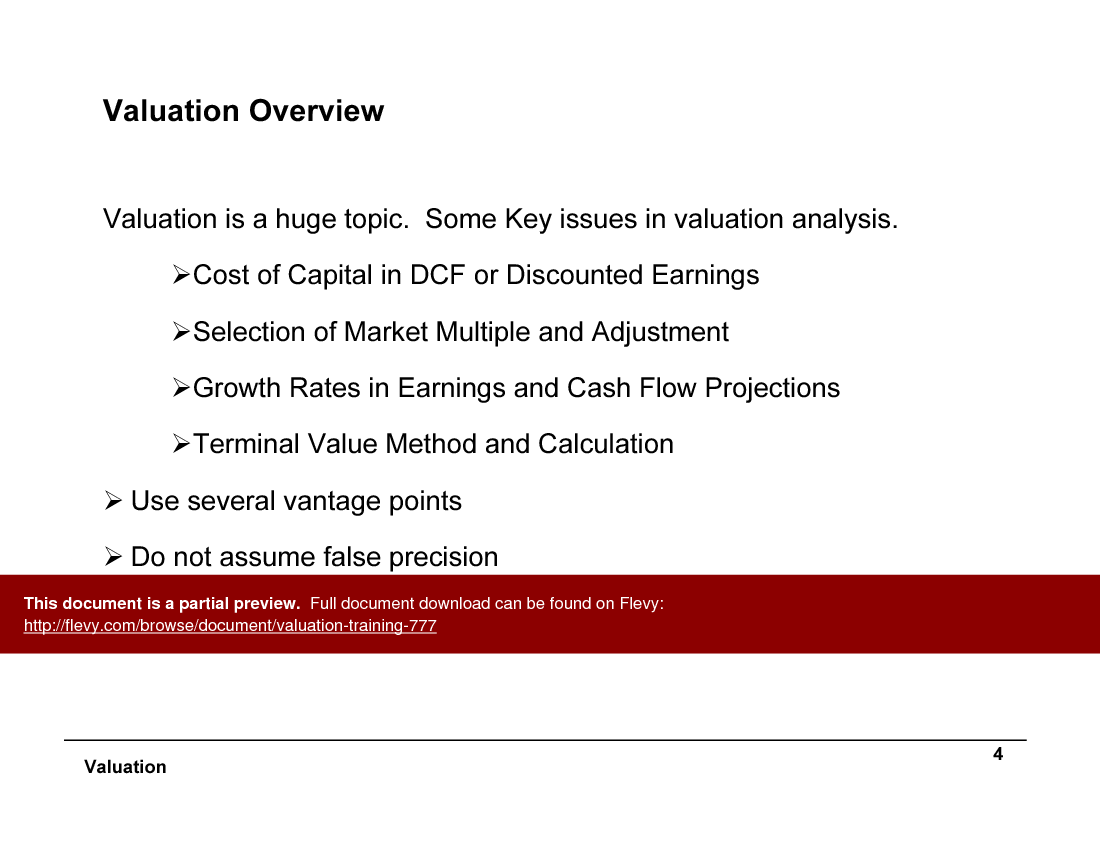
Valuation is a huge topic with many key issues to consider. This document dives deep into the cost of capital in DCF or discounted earnings, selection of market multiples, and adjustments. It also covers growth rates in earnings and cash flow projections, terminal value method, and calculation. Using several vantage points and avoiding false precision are emphasized to ensure robust valuation.
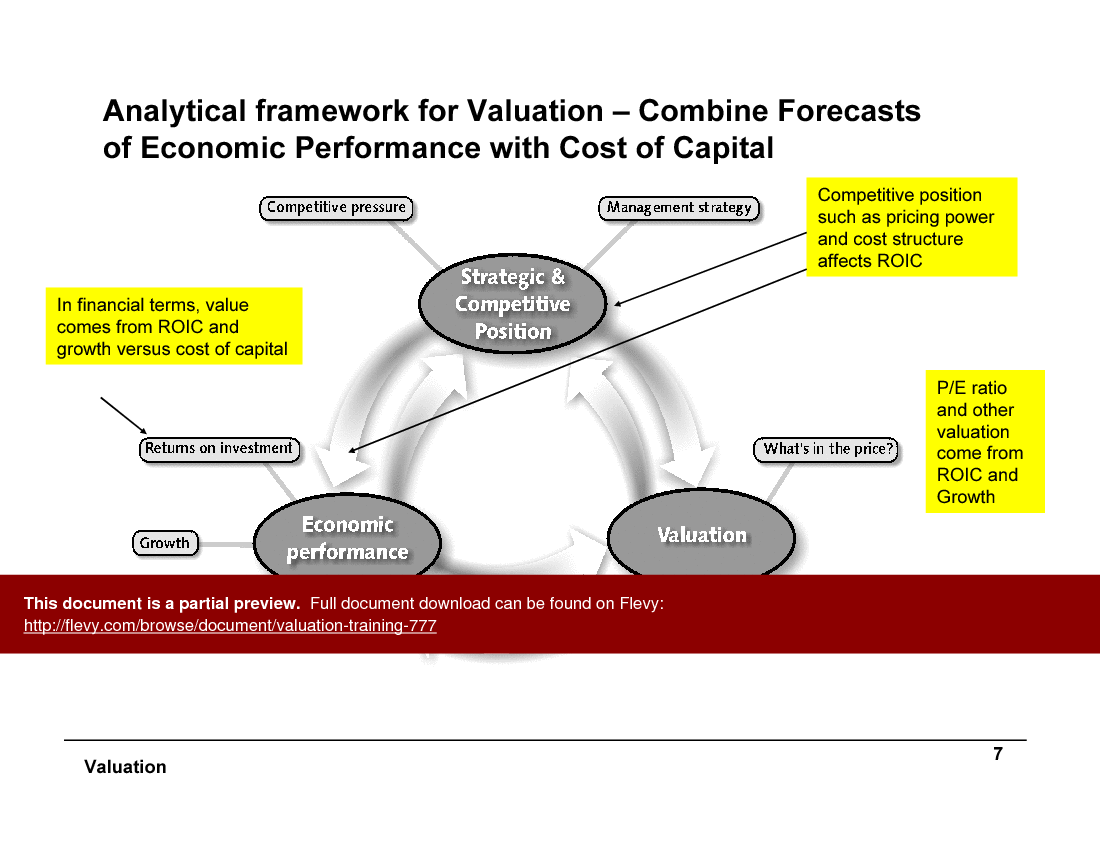
The analytical framework for valuation combines forecasts of economic performance with the cost of capital. Competitive position and management strategy significantly affect ROIC. This framework helps in understanding how strategic and competitive positioning impacts economic performance and valuation. The P/E ratio and other valuation metrics are derived from ROIC and growth.
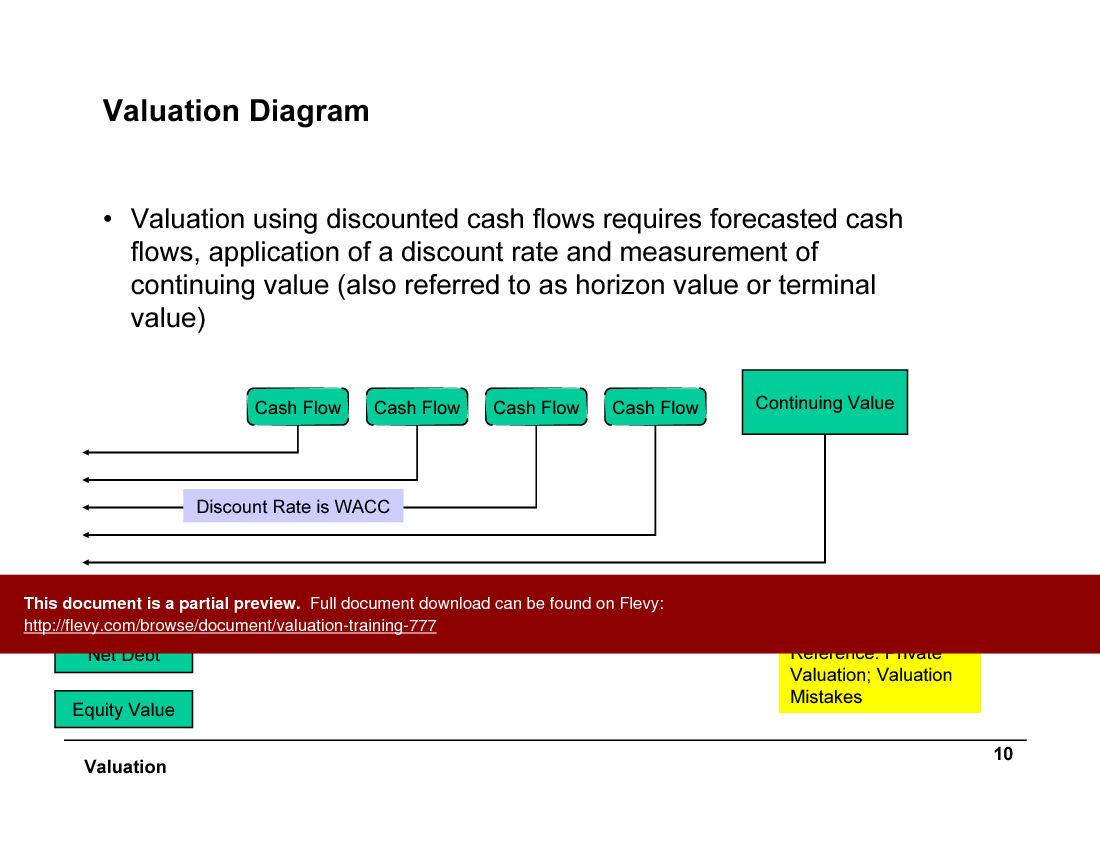
Valuation using discounted cash flows (DCF) involves forecasted cash flows, application of a discount rate, and measurement of continuing value. The discount rate is typically the weighted average cost of capital (WACC). This method provides a clear picture of equity value by considering net debt and other factors.
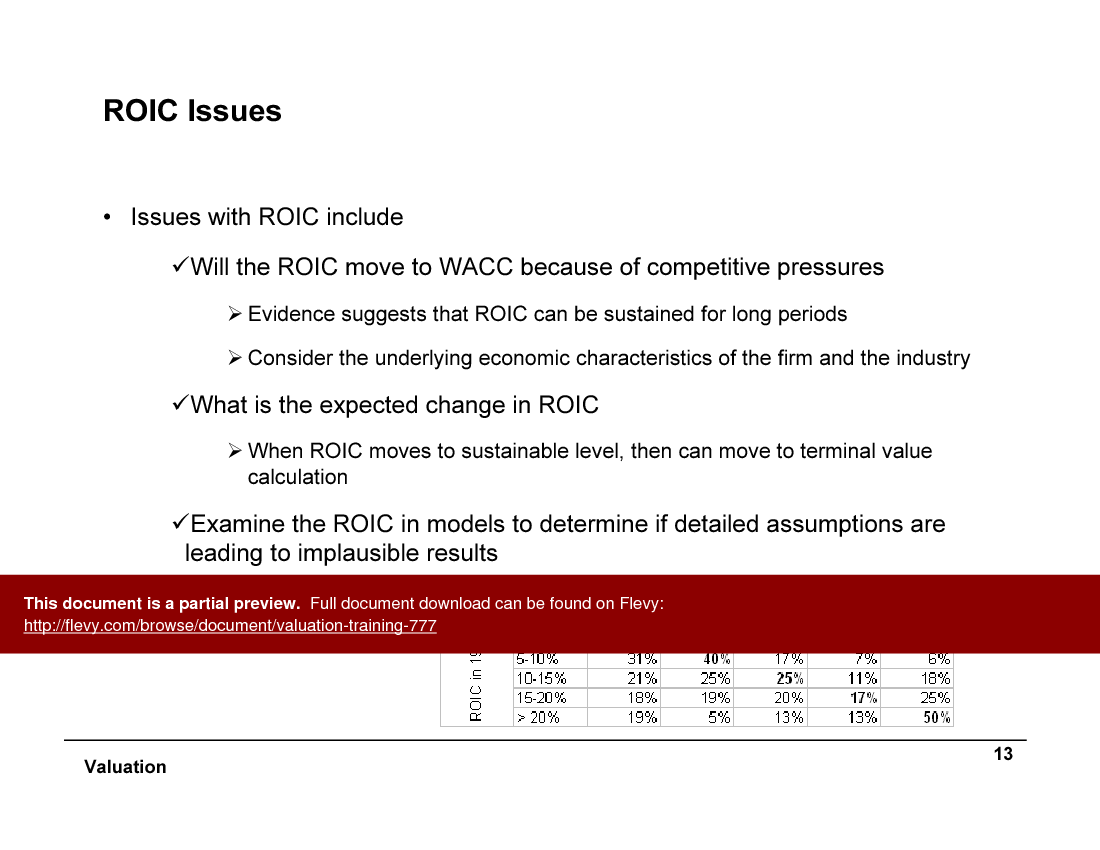
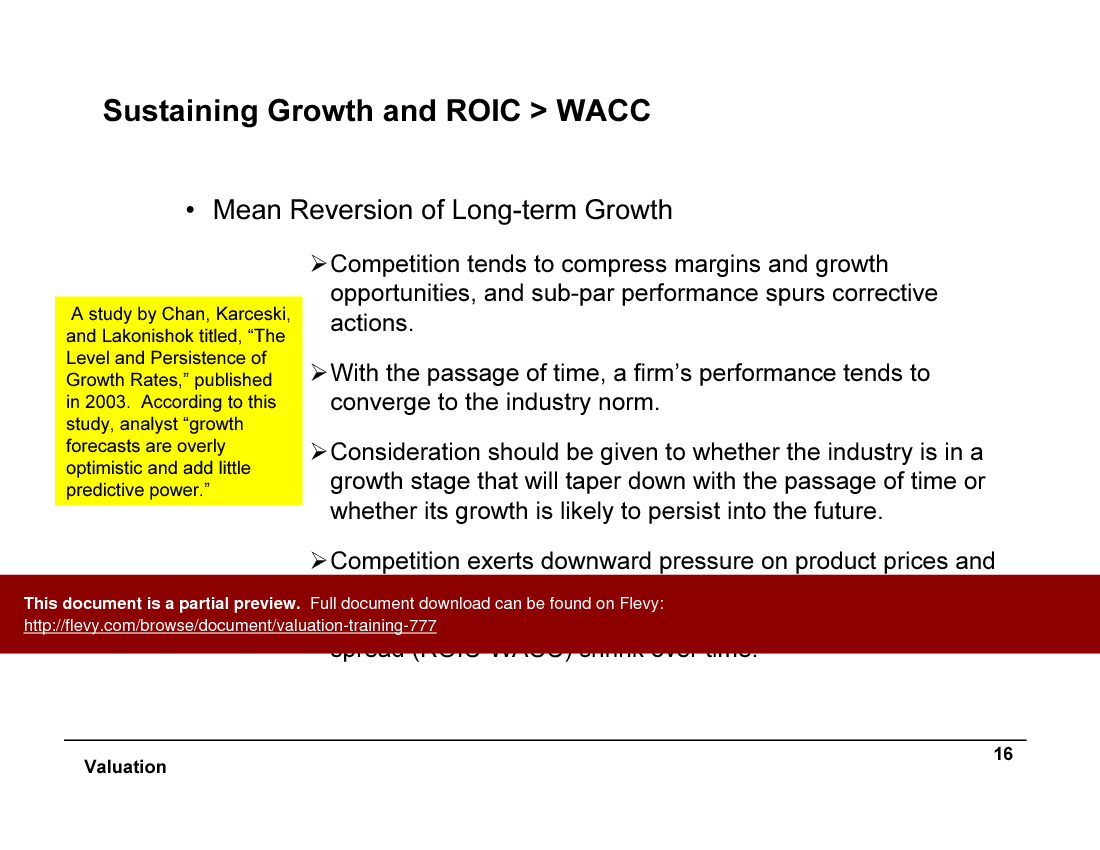
Issues with ROIC include competitive pressures and expected changes in ROIC. The document examines how ROIC might move to WACC and the implications for terminal value calculation. It also looks at the sustainability of ROIC and growth, considering industry norms and competitive pressures over time. This section provides a detailed analysis of how to maintain growth and ROIC above WACC.
Got a question about the product? Email us at support@flevy.com or ask the author directly by using the "Ask the Author a Question" form. If you cannot view the preview above this document description, go here to view the large preview instead.
MARCUS OVERVIEW
This synopsis was written by Marcus [?] based on the analysis of the full 164-slide presentation.
Executive Summary
This Valuation Training presentation provides a robust framework for understanding and applying various valuation techniques, essential for financial analysts and consultants. It is structured in a consulting-grade format, akin to what you would expect from McKinsey, Bain, or BCG-quality presentations (not affiliated). The training covers critical valuation methods such as Discounted Cash Flow (DCF), valuation using multiples, and projected earnings, enabling users to make informed financial decisions based on intrinsic value assessments.
Who This Is For and When to Use
• Financial analysts seeking to enhance their valuation skills
• Corporate finance professionals involved in investment analysis
• Consultants advising clients on mergers and acquisitions
• Business leaders making strategic decisions based on valuation metrics
Best-fit moments to use this deck:
• During financial analysis for mergers and acquisitions
• When preparing investment proposals or business valuations
• In training sessions for finance teams on valuation methodologies
Learning Objectives
• Define intrinsic value and its significance in financial decision-making
• Build a comprehensive valuation model using DCF and multiples
• Establish a clear understanding of risk assessment in valuation
• Analyze case studies to apply valuation techniques in real-world scenarios
• Compare different valuation methods and their applicability
• Identify key drivers of value and how to forecast them
Table of Contents
• Introduction – Where Value Comes From (page 2)
• Discounting Basics (page 33)
• Overview of Alternative Valuation Methods (page 17)
• Valuation Using Multiples (page 41)
• Valuation Using Projected Earnings (page 101)
• Case Studies (page 130)
Primary Topics Covered
• Valuation Fundamentals - Valuation is rooted in understanding future cash flows and the associated risks, crucial for making sound financial decisions.
• Discounted Cash Flow (DCF) - DCF involves forecasting cash flows and applying a discount rate to determine present value, essential for intrinsic value calculations.
• Valuation Using Multiples - This method leverages market comparables to derive value, providing a quick assessment of a company's worth relative to its peers.
• Projected Earnings Valuation - This approach focuses on estimating future earnings and applying a growth rate to determine value, particularly useful for growth companies.
• Risk Assessment in Valuation - Understanding the risks associated with cash flows is vital for accurate valuation and decision-making.
• Case Studies - Real-world examples illustrate the application of various valuation methods, enhancing practical understanding.
Deliverables, Templates, and Tools
• Valuation model template for DCF analysis
• Comparative analysis template for valuation multiples
• Risk assessment framework for evaluating cash flow uncertainties
• Case study examples for practical application of valuation techniques
• Financial forecasting models for projected earnings
• Guidelines for selecting appropriate valuation methods
Slide Highlights
• Overview of valuation fundamentals emphasizing cash flow and risk
• Detailed explanation of DCF methodology with practical examples
• Comparative analysis of valuation multiples with industry benchmarks
• Case studies demonstrating the application of valuation techniques
• Visual aids illustrating the relationship between risk and return in valuation
Potential Workshop Agenda
Valuation Fundamentals Session (90 minutes)
• Introduction to valuation concepts and importance
• Discussion on cash flow forecasting and risk assessment
• Overview of valuation methods and their applications
Practical Valuation Techniques Session (120 minutes)
• Hands-on training on building a DCF model
• Group activity on valuation using multiples
• Case study analysis to apply learned techniques
Customization Guidance
• Tailor the valuation model template to reflect specific industry metrics
• Adjust case studies to align with the audience's sector for relevance
• Incorporate company-specific data into comparative analysis templates
Secondary Topics Covered
• Economic profit and its role in valuation
• The impact of market conditions on valuation multiples
• Adjustments for liquidity and control premiums in valuations
• Challenges in valuing private firms versus public companies
• The importance of normalized earnings in valuation
Topic FAQ
What are the main valuation methods I should know and when is each appropriate?
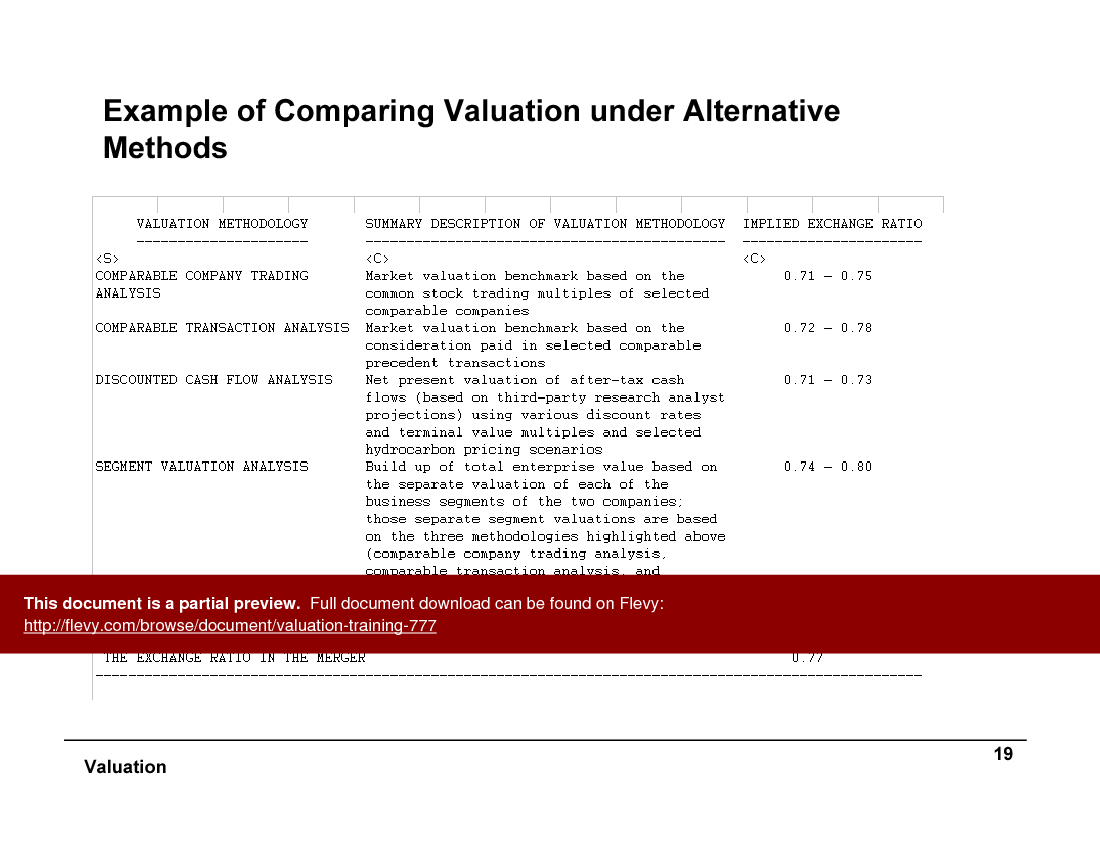
Core valuation methods include Discounted Cash Flow (DCF) for intrinsic value via future cash-flow forecasts, valuation using multiples for market-comparable quick assessments, and projected earnings valuation for growth companies. Supplementary methods in practice include Dividend Discount Model, Residual Income, and the Venture Capital Method as noted in the glossary. Concrete methods: DCF, multiples, projected earnings.
How does a Discounted Cash Flow model work and what components are essential?
A DCF model projects future free cash flows, applies a discount rate to convert to present value, and includes a terminal value to capture value beyond the explicit forecast. The discount rate is typically the Weighted Average Cost of Capital (WACC), and terminal value selection is a critical component in valuation. Key components: projected cash flows, WACC, terminal value.
What is the role of WACC and ROIC in valuation analysis?
WACC serves as the discount rate in DCF and helps convert future cash flows into present value, while ROIC influences sustainable returns and growth assumptions. Valuation analysis examines how ROIC may converge toward WACC over time and the implications for terminal value and long-term forecasts. Relevant concepts: WACC and ROIC impact on terminal value.
How should I assess and incorporate risk into a valuation?
Risk assessment involves identifying uncertainties in projected cash flows and reflecting them through discount rate selection, scenario analysis, and adjustments to forecasts. The training includes a risk assessment framework to evaluate cash-flow uncertainties and integrate those considerations into valuation outputs. Specific tool: risk assessment framework for cash flow uncertainties.
What should I look for when buying a valuation template or training deck?
Buyers should verify inclusion of a DCF valuation model template, comparative analysis template for multiples, guidance on discount-rate selection (WACC), risk assessment approaches, and case studies for practical application. Valuation Training specifically lists a valuation model template and comparative analysis template among its deliverables. Key items: valuation model template and comparative analysis template.
How much time should I allocate to train a finance team using a valuation deck?
Training time depends on depth; a suggested agenda in the material allocates a 90-minute Valuation Fundamentals session and a 120-minute Practical Valuation Techniques session that covers hands-on DCF building, multiples exercises, and case-study analysis. Example timings: 90 minutes and 120 minutes.
Are there templates available for multiples and comparable company analysis?
Yes—comparable company analysis and multiples are covered, and the materials include a comparative analysis template designed for valuation multiples and industry benchmark comparison. The product Valuation Training explicitly lists a comparative analysis template for valuation multiples. Specific deliverable: comparative analysis template.
How should I value a private company with negative earnings or volatile cash flows?
For negative earnings, valuation practice recommends normalizing earnings by adjusting for non-recurring items and using historical performance or industry averages to estimate future potential; private-company valuation also considers liquidity and control adjustments. Concrete approach: normalize earnings using historical performance or industry averages.
Document FAQ
These are questions addressed within this presentation.
What are the key components of a DCF model?
A DCF model includes projected cash flows, a discount rate, and a terminal value calculation to determine present value.
How do I select the appropriate valuation multiple?
Choose multiples based on industry standards and the specific financial characteristics of the company being valued.
What is the significance of risk assessment in valuation?
Risk assessment helps in understanding the uncertainties associated with cash flows, which is crucial for accurate valuation.
How can I apply these valuation techniques in real-world scenarios?
Use case studies and practical exercises provided in the training to practice applying valuation methods in various contexts.
What are the common pitfalls in valuation?
Common pitfalls include overestimating growth rates, misapplying multiples, and neglecting to account for risk factors.
How do I normalize earnings for valuation?
Normalize earnings by adjusting for non-recurring items and using industry averages to reflect true earnings potential.
What is the role of terminal value in DCF?
Terminal value represents the value of a company beyond the explicit forecast period and is crucial for capturing long-term growth potential.
How do I handle negative earnings in valuation?
For negative earnings, use normalized earnings based on historical performance or industry averages to estimate future potential.
Glossary
• Discounted Cash Flow (DCF) - A valuation method that estimates the value of an investment based on its expected future cash flows.
• Valuation Multiple - A financial metric used to compare a company's value relative to a financial performance measure.
• Terminal Value - The estimated value of a business at the end of a forecast period, often calculated using a perpetuity growth model.
• Intrinsic Value - The perceived or calculated value of an asset, based on fundamental analysis without reference to its market value.
• Economic Profit - The difference between a company's total revenue and its total costs, including opportunity costs.
• Normalized Earnings - Adjusted earnings that exclude non-recurring items to reflect the true earning potential of a company.
• Risk Assessment - The process of identifying and analyzing potential issues that could negatively impact key business initiatives or projects.
• Weighted Average Cost of Capital (WACC) - The average rate of return a company is expected to pay its security holders to finance its assets.
• Free Cash Flow (FCF) - Cash generated by a company's operations after accounting for capital expenditures.
• Return on Invested Capital (ROIC) - A measure of a company's efficiency at allocating the capital under its control to profitable investments.
• Price-to-Earnings Ratio (P/E) - A valuation ratio calculated by dividing the current share price by its earnings per share (EPS).
• Market-to-Book Ratio - A financial valuation metric used to compare a company's current market price to its book value.
• Growth Rate - The rate at which a company's earnings or revenue is expected to grow over a specific period.
• Control Premium - The amount that an acquirer is willing to pay over the current market price to gain control of a company.
• Liquidity Discount - A reduction in the value of an asset due to the lack of marketability or the difficulty of selling it quickly.
• Comparable Company Analysis - A valuation method that compares a company’s financial metrics to those of similar companies in the industry.
• Dividend Discount Model (DDM) - A method for valuing a stock by using the predicted dividends and discounting them back to present value.
• Residual Income Model - A valuation method that calculates the intrinsic value of a company based on its expected future residual income.
• Venture Capital Method - A valuation technique used primarily for startups, focusing on projected cash flows and exit values.
• Replacement Cost - The cost to replace an asset with a similar one at current market prices.
• Real Options - The application of option pricing theory to real-life business decisions, allowing for flexibility in investment choices.
• Earnings Before Interest and Taxes (EBIT) - A measure of a firm's profit that includes all expenses except interest and income tax expenses.
• Net Present Value (NPV) - The difference between the present value of cash inflows and outflows over a period of time.
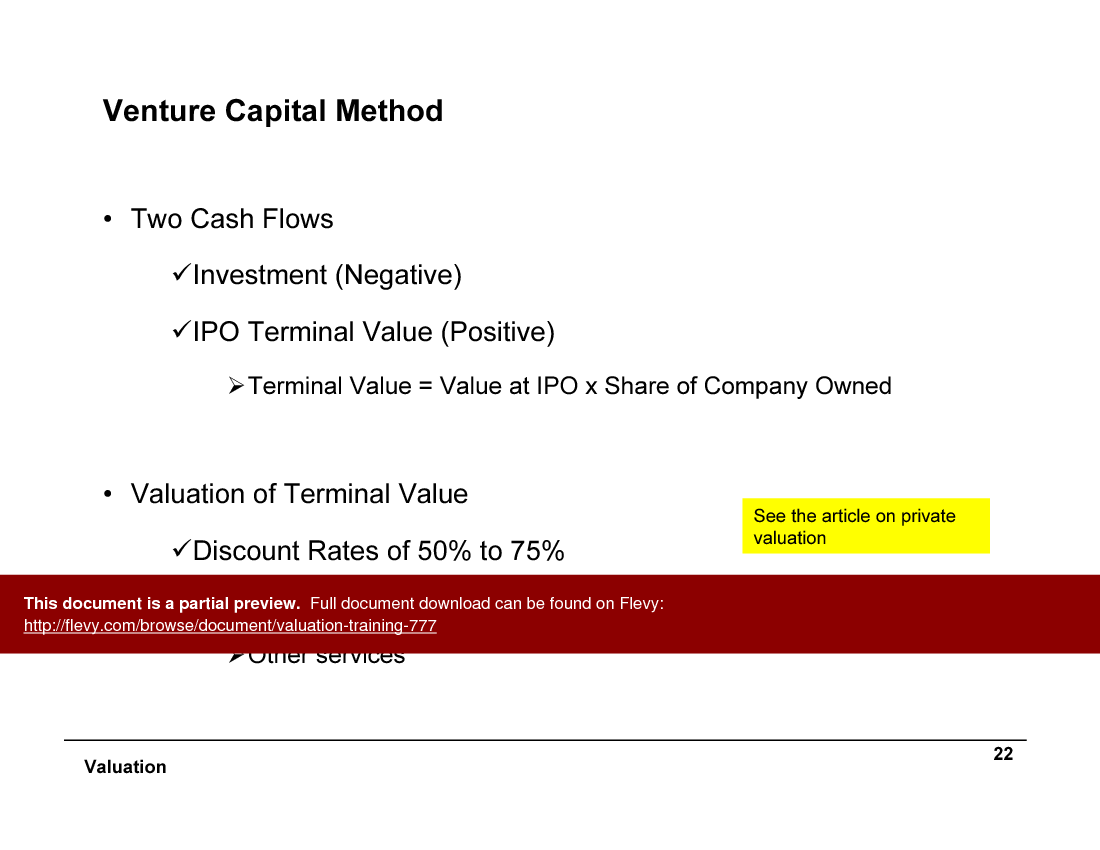
This PPT slide presents a valuation framework for venture capital, focusing on key components influencing exit valuation. "Enterprise Value" and "Equity Value" are foundational in determining a company's worth and the investor's share. "Discount Rates" are essential for calculating present value and assessing future cash flows. The crossed-out "Cash Flow" indicators suggest that traditional metrics may not fully capture venture capital complexities. "Continuing Value" reflects the residual value beyond the forecast period, crucial for exit strategies and potential returns. The impact of equity retention and ownership dilution is emphasized, particularly in extreme scenarios of significant ownership transfer. This framework guides investors in understanding the interplay between exit value, discount rates, and equity ownership in venture capital.
This PPT slide outlines a framework for growth projections across 3 time horizons: short term, medium term, and long run. In the short term, growth estimates rely on current data and trends, indicating volatility due to immediate market conditions. The medium term emphasizes assessing industry outlook and company positioning, noting that Return on Invested Capital (ROIC) converges towards the cost of capital, leading to stabilized growth rates. Growth is expected to fade towards GDP, limiting outsized expectations. In the long run, ROIC equals the cost of capital, with real growth projected at zero, suggesting challenges in achieving growth beyond capital maintenance. Valuation work often incorporates growth estimates, with high price-to-earnings ratios reflecting high growth expectations.
This PPT slide presents an analytical framework for valuation that integrates economic performance forecasts with the cost of capital. Central to this framework is "Valuation," influenced by returns on investment, growth, and cost of capital. Financial value arises from comparing Return on Invested Capital (ROIC) and growth against the cost of capital, highlighting the effectiveness of a company in generating returns relative to capital costs. The strategic position of a business, including pricing power and cost structure, directly impacts ROIC. Additionally, valuation metrics like the Price-to-Earnings (P/E) ratio are linked to ROIC and growth, reinforcing the importance of sound financial performance for favorable valuation. The cyclical relationship among these factors indicates that improvements in economic performance can enhance valuation outcomes, influencing strategic decisions.
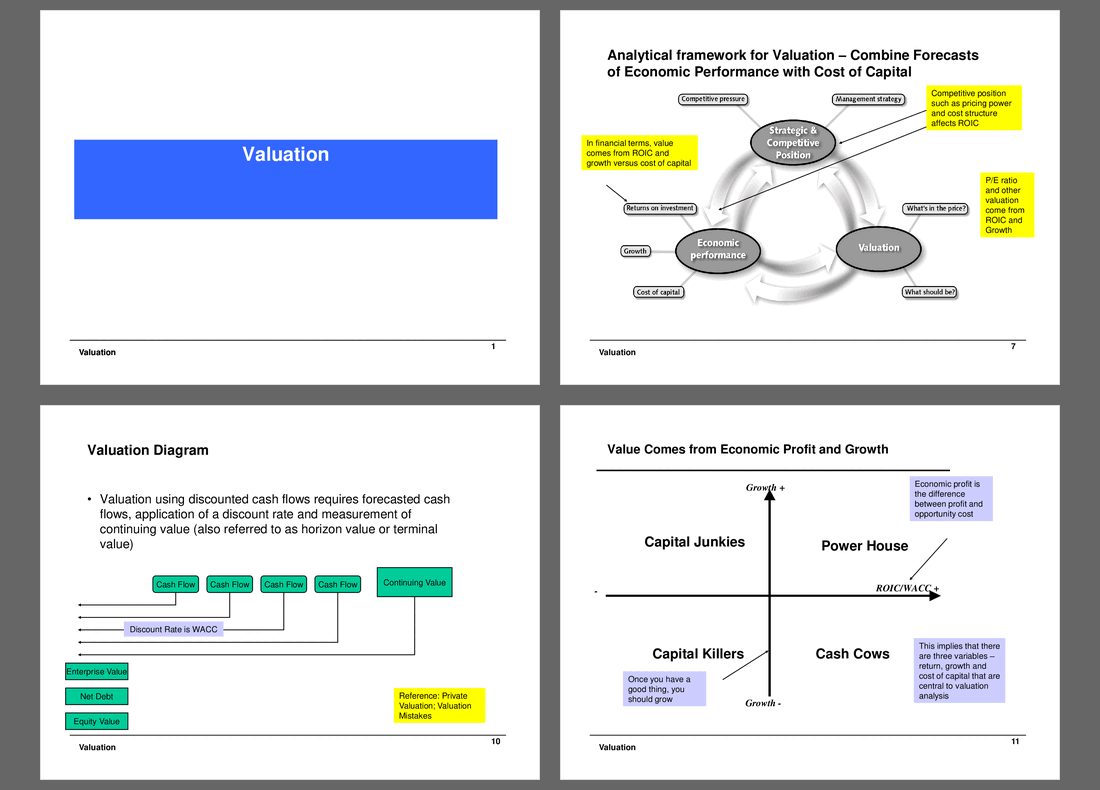
This PPT slide presents a four-quadrant matrix for analyzing value derived from economic profit and growth. The vertical axis represents growth, while the horizontal axis shows the relationship between return on invested capital (ROIC) and weighted average cost of capital (WACC).
In the "Power House" quadrant, firms achieve high growth and economic profit, indicating optimal performance. The "Capital Junkies" quadrant features companies with high growth, but low economic profit, suggesting misaligned capital allocation. The "Capital Killers" quadrant represents firms with low growth and economic profit, indicating unsustainability; these companies should focus on growth strategies. Lastly, "Cash Cows" denotes firms with high economic profit, but low growth, often in a mature phase with steady cash flow, but limited expansion opportunities. Understanding the interplay of return, growth, and capital cost is vital for valuation analysis and strategic decision-making.
The Valuation Diagram focuses on the discounted cash flow (DCF) method, a key approach in financial analysis. It details valuing an entity by forecasting cash flows, applying a discount rate (WACC), and calculating the continuing value (horizon or terminal value). The diagram illustrates the sequential flow of cash across multiple periods leading to the continuing value, emphasizing accurate cash flow forecasting. Key financial metrics such as Enterprise Value, Net Debt, and Equity Value are integrated, indicating that valuation extends beyond cash flow analysis to encompass overall financial health. Effective valuation relies on precise forecasting and the appropriate application of these metrics for informed decision-making in investment and strategic planning contexts.
This PPT slide presents a framework for categorizing stocks based on growth potential and return on invested capital (ROIC) relative to the weighted average cost of capital (WACC). The 4 quadrants are: Power House, Cash Cows, Perennial Underachiever or Future Prospects, and Capital Killers.
In the Power House quadrant, stocks show high industry growth, franchise value, and pricing power, necessitating an evaluation of the sustainability of these advantages. The Cash Cows quadrant includes stocks with low industry growth, but strong cash generation, focusing on diversification and robust cash flow.
The Perennial Underachiever or Future Prospects quadrant contains stocks that may appear expensive, often burdened by a stretched balance sheet, indicating caution in continued investment. The Capital Killers quadrant identifies stocks that seem cheap, but are affected by cyclical downturns, suggesting a need to exit these positions.
This matrix serves as a strategic tool for evaluating stock investments based on growth potential and financial health.
Source: Best Practices in M&A, Valuation PowerPoint Slides: Valuation Training PowerPoint (PPT) Presentation Slide Deck, Documents & Files
The average daily rate of a McKinsey consultant is $6,625 (not including expenses). The average price of a Flevy document is $65.
Trusted by over 10,000+ Client Organizations
Since 2012, we have provided business templates to over 10,000 businesses and organizations of all sizes, from startups and small businesses to the Fortune 100, in over 130 countries.

"As a consulting firm, we had been creating subject matter training materials for our people and found the excellent materials on Flevy, which saved us 100's of hours of re-creating what already exists on the Flevy materials we purchased."
– Michael Evans, Managing Director at Newport LLC
"As a niche strategic consulting firm, Flevy and FlevyPro frameworks and documents are an on-going reference to help us structure our findings and recommendations to our clients as well as improve their clarity, strength, and visual power. For us, it is an invaluable resource to increase our impact and value."
– David Coloma, Consulting Area Manager at Cynertia Consulting
"Flevy is our 'go to' resource for management material, at an affordable cost. The Flevy library is comprehensive and the content deep, and typically provides a great foundation for us to further develop and tailor our own service offer."
– Chris McCann, Founder at Resilient.World
"I have found Flevy to be an amazing resource and library of useful presentations for lean sigma, change management and so many other topics. This has reduced the time I need to spend on preparing for my performance consultation. The library is easily accessible and updates are regularly provided. A wealth of great information."
– Cynthia Howard RN, PhD, Executive Coach at Ei Leadership
"I have used Flevy services for a number of years and have never, ever been disappointed. As a matter of fact, David and his team continue, time after time, to impress me with their willingness to assist and in the real sense of the word. I have concluded in fact
that it is not at all just a repository of documents/resources but, in the way that David and his team manage the firm, it is like dealing with consultants always ready to assist, advise and direct you to what you really need, and they always get it right.
I am an international hospitality accomplished senior executive who has worked and lived during the past 35 years in 23 countries in 5 continents and I can humbly say that I know what customer service is, trust me.
Aside from the great and professional service that Flevy's team provide, their wide variety of material is of utmost great quality, professionally put together and most current.
Well done Flevy, keep up the great work and I look forward to continue working with you in the future and to recommend you to a variety of colleagues around the world.
"
– Roberto Pelliccia, Senior Executive in International Hospitality
"My FlevyPro subscription provides me with the most popular frameworks and decks in demand in today’s market. They not only augment my existing consulting and coaching offerings and delivery, but also keep me abreast of the latest trends, inspire new products and service offerings for my practice, and educate me
in a fraction of the time and money of other solutions. I strongly recommend FlevyPro to any consultant serious about success.
"
– Bill Branson, Founder at Strategic Business Architects
"I am extremely grateful for the proactiveness and eagerness to help and I would gladly recommend the Flevy team if you are looking for data and toolkits to help you work through business solutions."
– Trevor Booth, Partner, Fast Forward Consulting
"I have used FlevyPro for several business applications. It is a great complement to working with expensive consultants. The quality and effectiveness of the tools are of the highest standards."
– Moritz Bernhoerster, Global Sourcing Director at Fortune 500
Download our free compilation of 50+ Strategy & Transformation slides and templates. Frameworks include McKinsey 7-S, Balanced Scorecard, Disruptive Innovation, BCG Curve, and many more.









