
This framework is developed by a team of former McKinsey and Big 4 consultants. The presentation follows the headline-body-bumper slide format used by global consulting firms.
Explore the transformative impact of logistics automation, crafted by ex-McKinsey & Big 4 consultants. Gain insights on trends, challenges, and strategies for operational excellence. Logistics Automation is a 28-slide PPT PowerPoint presentation slide deck (PPTX) available for immediate download upon purchase.
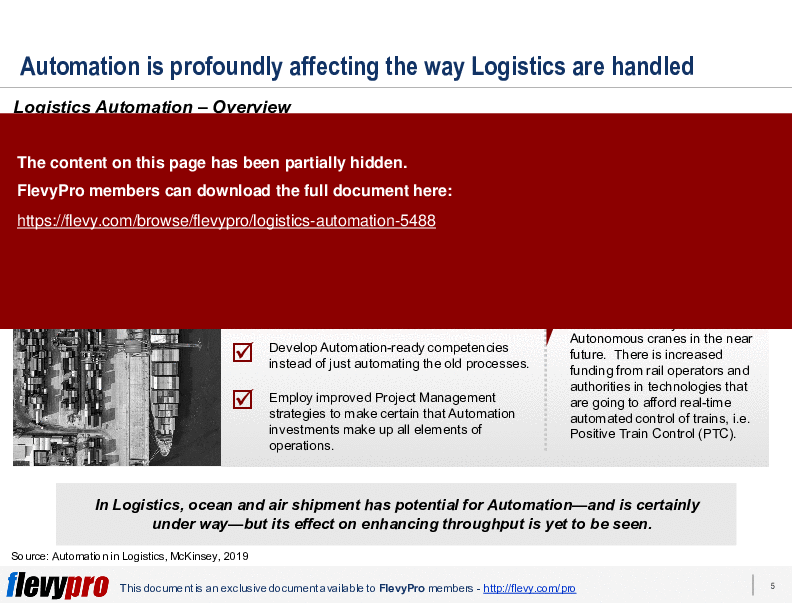
Automation is disrupting the entire Logistics Supply Chain, not just the warehousing, picking, and sorting functions. The impact of Automation on roads, rails, and ports is immense. Automation is assisting in reducing operating expenses of ports by 15 to 35%, yet output is diminishing by 7 to 15%.
To enhance throughput, organizations should develop Automation-ready competencies instead of just automating the old processes and employ improved project management strategies to make certain that Automation investments make up all elements of operations.
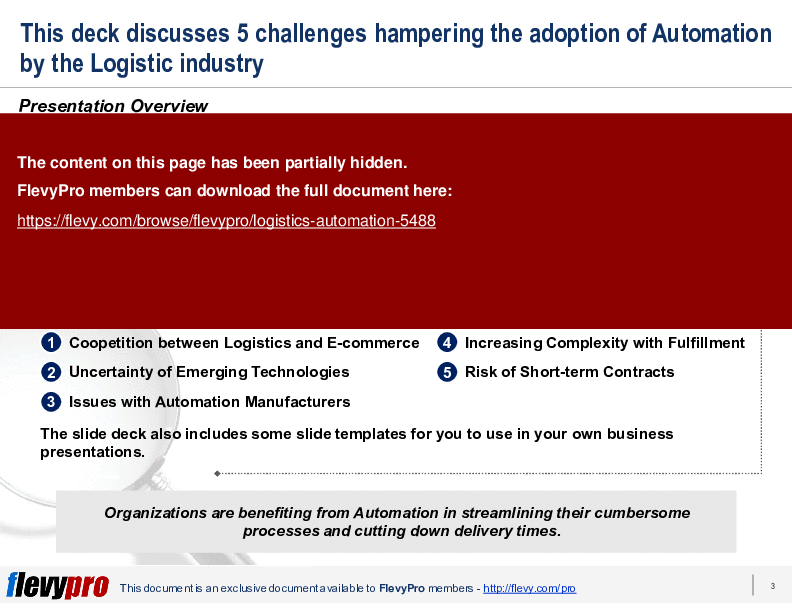
This deck discusses 3 key trends driving Automation in Logistics, as well as 5 key challenges hindering the adoption of Automation in Logistics. Additional topics discussed include the impact of Automation across the Global Logistics Chain, Automation Technologies, the Technology Development Lifecycle, E-commerce, among other topics.
The slide deck also includes some slide templates for you to use in your own business presentations.
This presentation delves into the profound impact of Automation on the logistics sector, emphasizing the necessity for businesses to adapt to the evolving technological landscape. It highlights the importance of developing Automation-ready competencies and employing advanced project management strategies to ensure that investments cover all operational aspects. The PPT provides a comprehensive overview of how Automation is reshaping logistics, from warehousing to transportation.
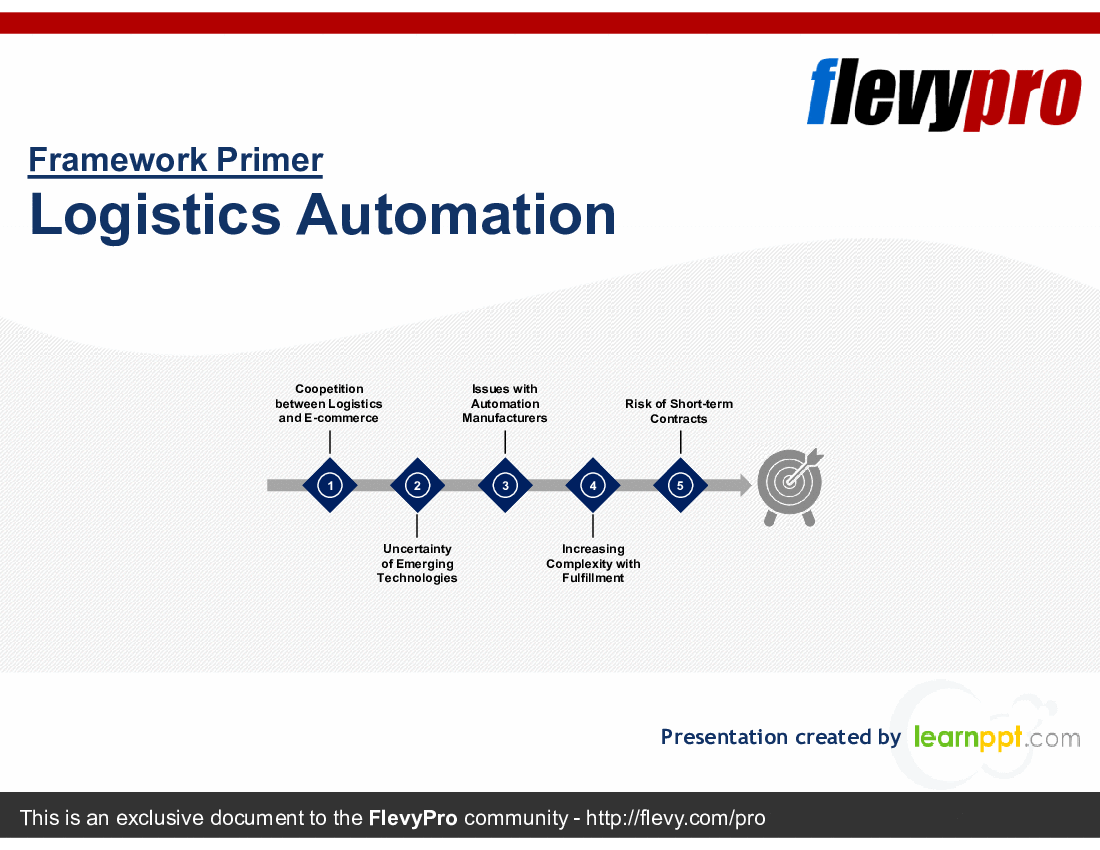
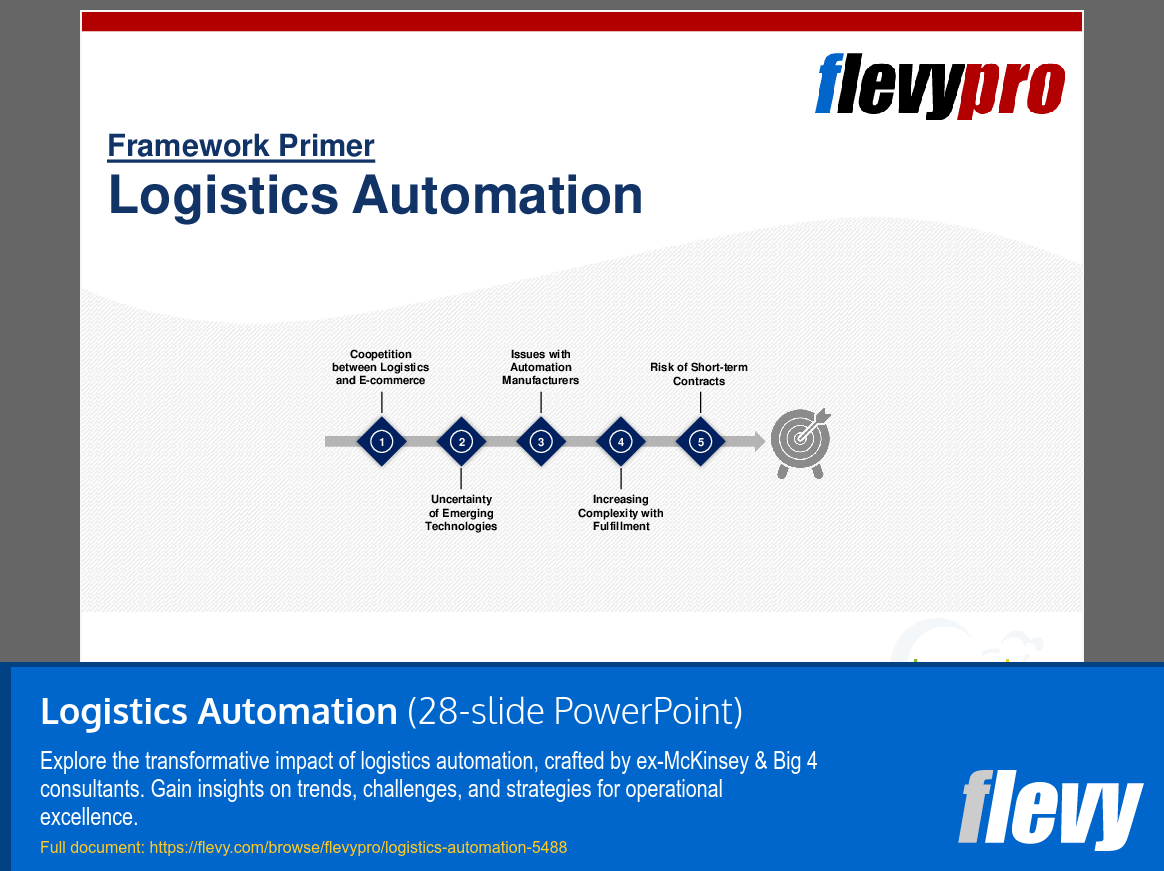
The deck also explores the challenges faced by the logistics industry in adopting Automation, such as the uncertainty of emerging technologies and the increasing complexity of fulfillment processes. It discusses the dynamics between logistics companies and e-commerce giants, the issues with Automation manufacturers, and the risks associated with short-term contracts. These insights are crucial for organizations looking to navigate the complexities of Automation and stay competitive in a rapidly changing market.
Included in the presentation are templates that can be utilized for internal business presentations, providing a practical tool for executives to communicate strategies and plans effectively. The document is a valuable resource for C-level executives seeking to streamline operations, reduce costs, and enhance throughput through the strategic implementation of Automation technologies.
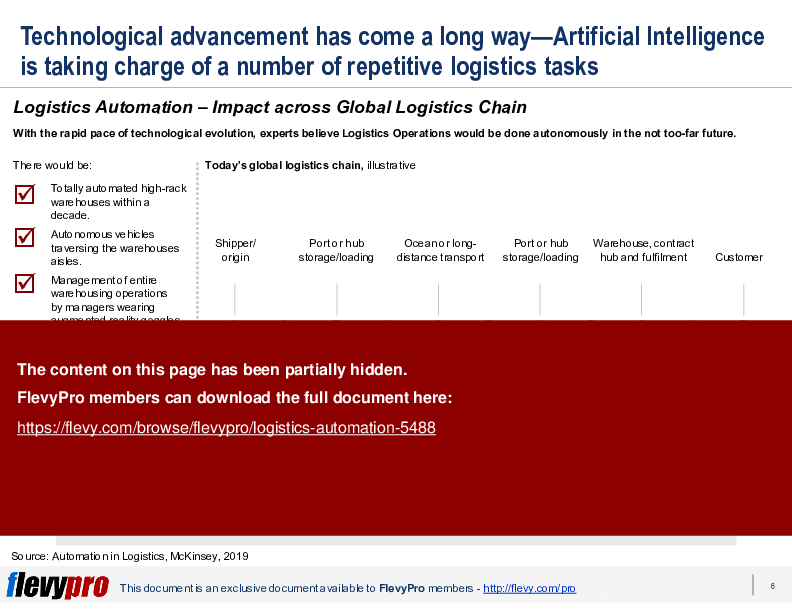
Logistics automation is transforming operations through technological advancements, particularly artificial intelligence. Key anticipated developments in the next decade include fully automated high-rack warehouses, autonomous vehicles for warehouse navigation, and augmented reality for operational oversight. Real-time inventory management systems and 3D printing for on-demand spare parts are also highlighted. The global logistics chain is illustrated, showing automation's role in streamlining processes from first-mile transport to delivery. The rapid evolution of logistics operations necessitates that businesses adapt to remain competitive, informing strategic planning and operational adjustments for effective technology leverage in logistics.
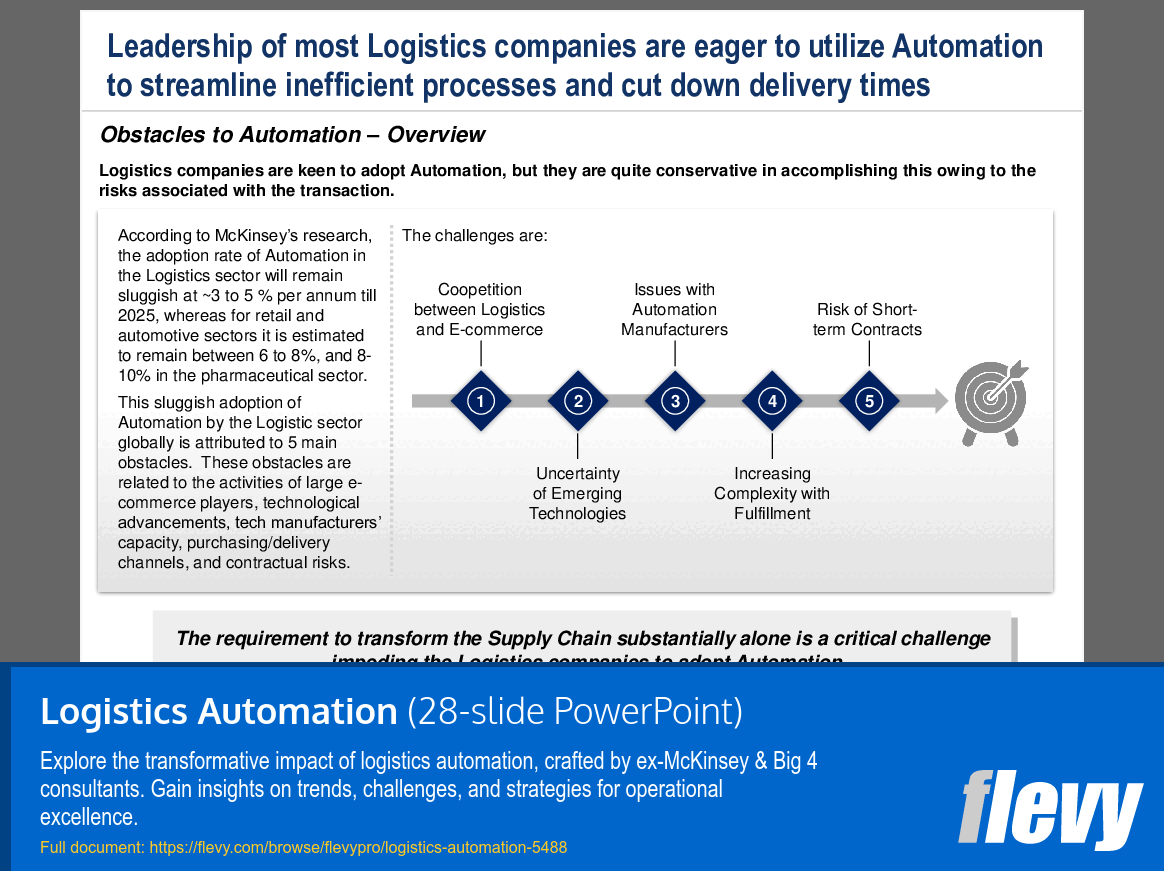
Logistics companies face significant challenges in adopting automation technologies, with growth projected at only 3% to 5% annually until 2025, compared to higher rates in sectors like retail and automotive. Key obstacles include: 1) cooperativity issues between logistics firms and e-commerce platforms complicating automation integration; 2) reliability concerns with automation manufacturers; 3) uncertainty about emerging technologies leading to investment hesitance; 4) increasing complexity of fulfillment processes that automation aims to simplify; and 5) risks associated with short-term contracts deterring long-term automation investments. The necessity to transform supply chains creates a complex interplay between the desire for efficiency and caution in technological investments.
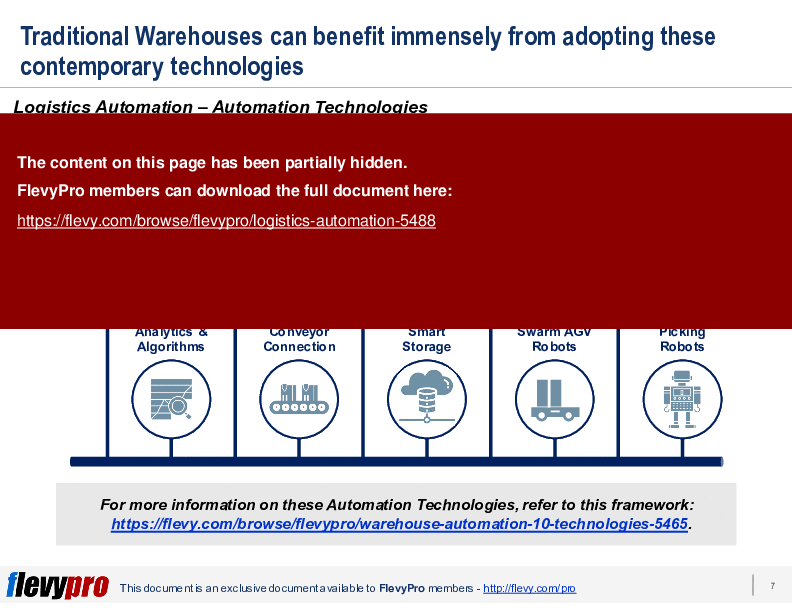
Traditional warehouses can enhance operations through automation technologies, fundamentally changing warehousing dynamics. Leading companies in logistics are experiencing substantial benefits from these innovations. Key transformative technologies include Multi-shuttle Systems, Optical Recognition, Warehouse Management Systems, Analytics & Algorithms, Conveyor Connection, Smart Storage, 3-D Printing, Smart Glasses, Swarm AGV Robots, and Picking Robots. The arrangement of these technologies suggests a systematic framework, indicating interdependencies in their implementation. For example, Analytics & Algorithms are foundational for optimizing other technologies, while Smart Glasses and Picking Robots enhance human efficiency and accuracy. Embracing these automation technologies is essential for traditional warehouses to streamline processes and maintain competitiveness in a rapidly evolving market.
This PPT slide outlines the technology development lifecycle in logistics automation, highlighting growth potential through innovative technologies. It categorizes technologies like autonomous trucks and exoskeletons as closer to widespread implementation, while small parcel lockers remain in the pilot phase, indicating low market penetration. The adoption rate is plotted against technology maturity, showing a trajectory from low adoption to broader use. A key challenge is the hesitance to invest in automation due to uncertainty about return on investment, compounded by rapid technological advancement that risks obsolescence. Businesses must navigate these complexities, balancing early adoption risks with potential benefits, making informed choices based on each technology's maturity curve.
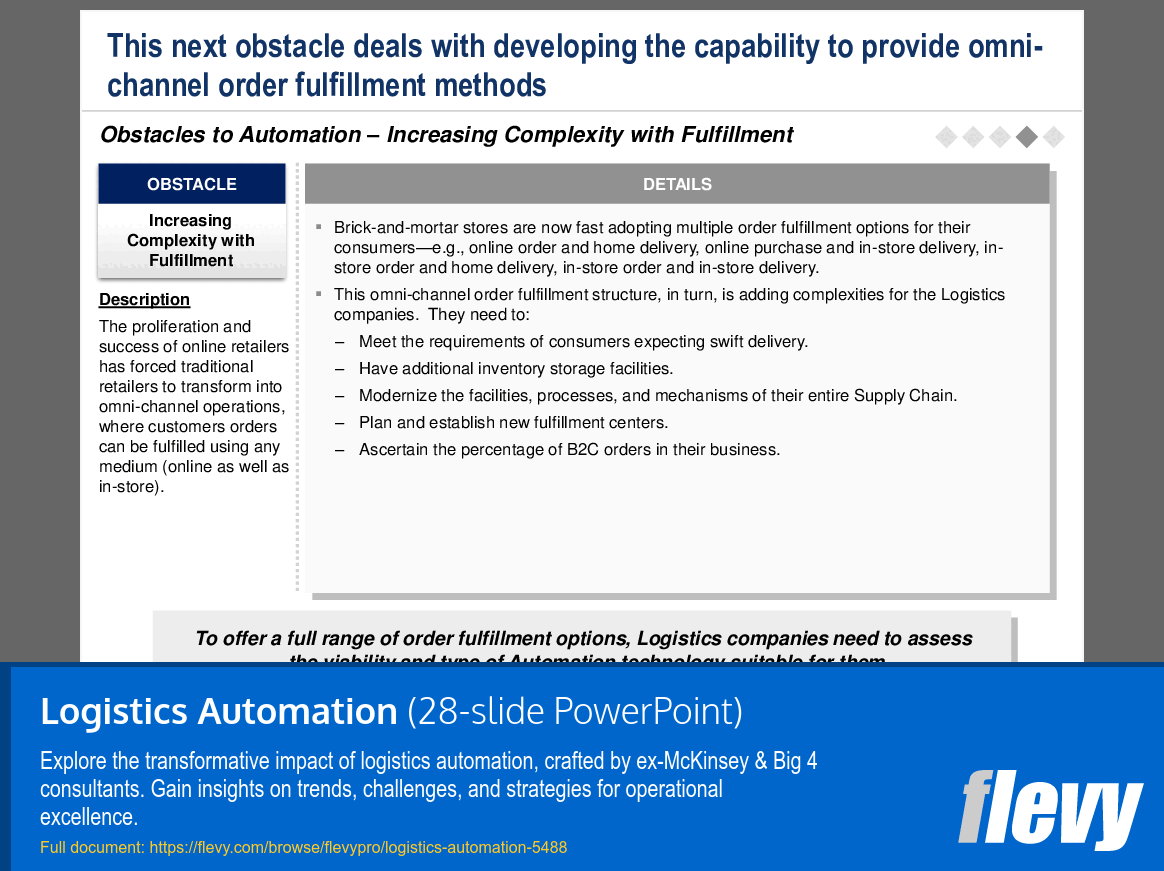
Traditional retailers face challenges adapting to omni-channel order fulfillment as online retail grows. Brick-and-mortar stores must implement multiple fulfillment options, including online orders, home delivery, and in-store pickups. This shift necessitates additional inventory storage facilities and modernization of existing processes to maintain supply chain efficiency. Companies should establish new fulfillment centers to enhance operational capabilities. Understanding the proportion of business-to-consumer (B2C) orders is vital for tailoring strategies to consumer behavior. Logistics companies must evaluate automation technologies to integrate into their systems, ensuring a comprehensive range of fulfillment options. The complexities of omni-channel fulfillment require strategic planning and investment in technology to remain competitive.
Labor shortages in the global market are creating challenges for businesses in securing skilled workers, particularly in tight labor markets with low unemployment and rising wages. Online retailers face increased demand for skilled labor during peak seasons, such as holidays. In the U.S., approximately 4 million workers are employed in supply chain roles, leading to an estimated $100 billion in payroll costs. Automation is proposed as a solution to reduce these costs, expected to create new roles for overseeing automated systems rather than mass layoffs. However, workforce changes due to automation may cause disruptions within organizations and the broader economy, presenting both opportunities and risks for decision-makers navigating the evolving labor landscape.
Source: Best Practices in Automation, Warehousing, Logistics PowerPoint Slides: Logistics Automation PowerPoint (PPTX) Presentation Slide Deck, LearnPPT Consulting
This framework is developed by a team of former McKinsey and Big 4 consultants. The presentation follows the headline-body-bumper slide format used by global consulting firms.
For $10.00 more, you can download this document plus 2 more FlevyPro documents. That's just $13 each.
ABOUT FLEVYPRO
This document is part of the FlevyPro Library, a curated knowledge base of documents for our FlevyPro subscribers.

FlevyPro is a subscription service for on-demand business frameworks and analysis tools. FlevyPro subscribers receive access to an exclusive library of curated business documents—business framework primers, presentation templates, Lean Six Sigma tools, and more—among other exclusive benefits.
The average daily rate of a McKinsey consultant is $6,625 (not including expenses). The average price of a Flevy document is $65.
Trusted by over 10,000+ Client Organizations
Since 2012, we have provided business templates to over 10,000 businesses and organizations of all sizes, from startups and small businesses to the Fortune 100, in over 130 countries.
"If you are looking for great resources to save time with your business presentations, Flevy is truly a value-added resource. Flevy has done all the work for you and we will continue to utilize Flevy as a source to extract up-to-date information and data for our virtual and onsite presentations!"
– Debbi Saffo, President at The NiKhar Group
"As a niche strategic consulting firm, Flevy and FlevyPro frameworks and documents are an on-going reference to help us structure our findings and recommendations to our clients as well as improve their clarity, strength, and visual power. For us, it is an invaluable resource to increase our impact and value."
– David Coloma, Consulting Area Manager at Cynertia Consulting
"As a consulting firm, we had been creating subject matter training materials for our people and found the excellent materials on Flevy, which saved us 100's of hours of re-creating what already exists on the Flevy materials we purchased."
– Michael Evans, Managing Director at Newport LLC
"FlevyPro provides business frameworks from many of the global giants in management consulting that allow you to provide best in class solutions for your clients."
– David Harris, Managing Director at Futures Strategy
"I am extremely grateful for the proactiveness and eagerness to help and I would gladly recommend the Flevy team if you are looking for data and toolkits to help you work through business solutions."
– Trevor Booth, Partner, Fast Forward Consulting
"The wide selection of frameworks is very useful to me as an independent consultant. In fact, it rivals what I had at my disposal at Big 4 Consulting firms in terms of efficacy and organization."
– Julia T., Consulting Firm Owner (Former Manager at Deloitte and Capgemini)
"I have used Flevy services for a number of years and have never, ever been disappointed. As a matter of fact, David and his team continue, time after time, to impress me with their willingness to assist and in the real sense of the word. I have concluded in fact
that it is not at all just a repository of documents/resources but, in the way that David and his team manage the firm, it is like dealing with consultants always ready to assist, advise and direct you to what you really need, and they always get it right.
I am an international hospitality accomplished senior executive who has worked and lived during the past 35 years in 23 countries in 5 continents and I can humbly say that I know what customer service is, trust me.
Aside from the great and professional service that Flevy's team provide, their wide variety of material is of utmost great quality, professionally put together and most current.
Well done Flevy, keep up the great work and I look forward to continue working with you in the future and to recommend you to a variety of colleagues around the world.
"
– Roberto Pelliccia, Senior Executive in International Hospitality
"[Flevy] produces some great work that has been/continues to be of immense help not only to myself, but as I seek to provide professional services to my clients, it gives me a large "tool box" of resources that are critical to provide them with the quality of service and outcomes they are expecting."
– Royston Knowles, Executive with 50+ Years of Board Level Experience
Receive our FREE presentation on Operational Excellence
This 50-slide presentation provides a high-level introduction to the 4 Building Blocks of Operational Excellence. Achieving OpEx requires the implementation of a Business Execution System that integrates these 4 building blocks.