
This framework is developed by a team of former McKinsey and Big 4 consultants. The presentation follows the headline-body-bumper slide format used by global consulting firms.
Editor Summary
Jobs-to-Be-Done (JTBD) Growth Strategy Matrix is a 32-slide PowerPoint framework by LearnPPT Consulting that presents a decision matrix and slide templates for selecting customer and product strategies.
Read moreThe deck explains the JTBD premise (make the job quicker, better, more affordable) and details 5 Growth Strategies: Differentiated, Dominant, Disruptive, Discrete, and Sustaining. Used by product managers, innovation leads, strategy executives, and management consultants to choose target segments and strategic approach after customer-group identification. Available on Flevy with immediate digital download.
Use this resource when leadership must choose which customer group to target and which product strategy to pursue after customer-segmentation or JTBD research reveals underserved or over-served needs. Typical users include:
Product managers prioritizing whether to add a new feature, build a lower-cost variant, or reposition an offering for a specific segment.
Innovation leads designing lower-cost or alternative value propositions for over-served customers or non-consumers.
Strategy executives defining go-to-market positioning and value propositions across multiple customer groups.
Management consultants preparing decision-ready slides comparing strategic options.
The matrix’s structured choice among 5 explicit strategy types reflects a hypothesis-driven, matrix-based approach to strategy selection used in consulting practice.
After the identification of a customer group, it is time for the organization to decide which of them it should target and how. It needs to ascertain the full range of customer jobs that have to be completed (including both underserved and over-served needs).
Leadership must consider and select the approach needed to win in a market. They need to decide if they want to add a new feature to an existing product, develop a less expensive version of a product, or take an alternative path.
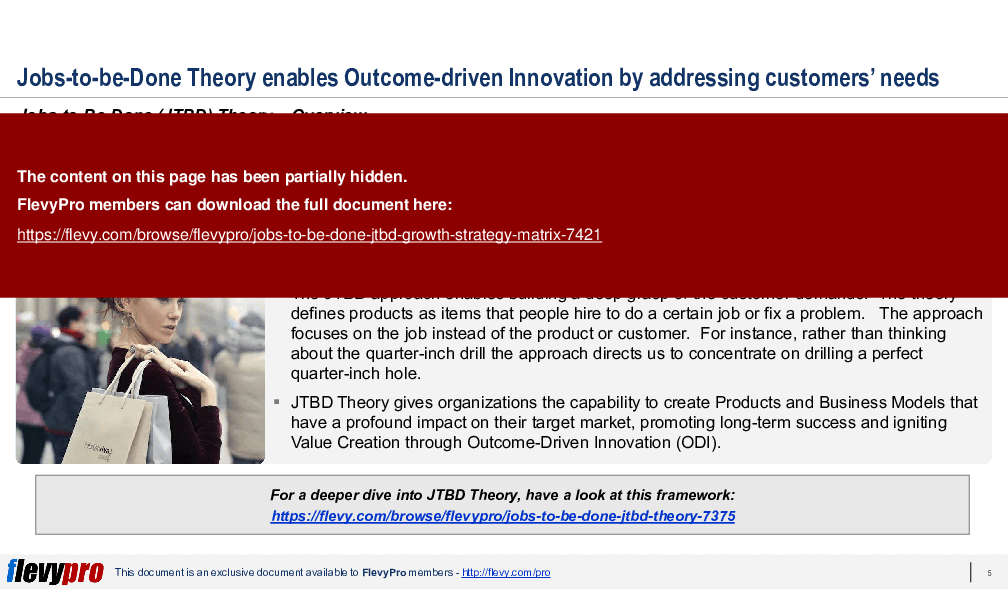
The JTBD Growth Strategy Matrix aids in narrowing down the best possible strategies for a particular situation. The basic premise is that the product should complete a customer's job quicker, better, and more affordably.
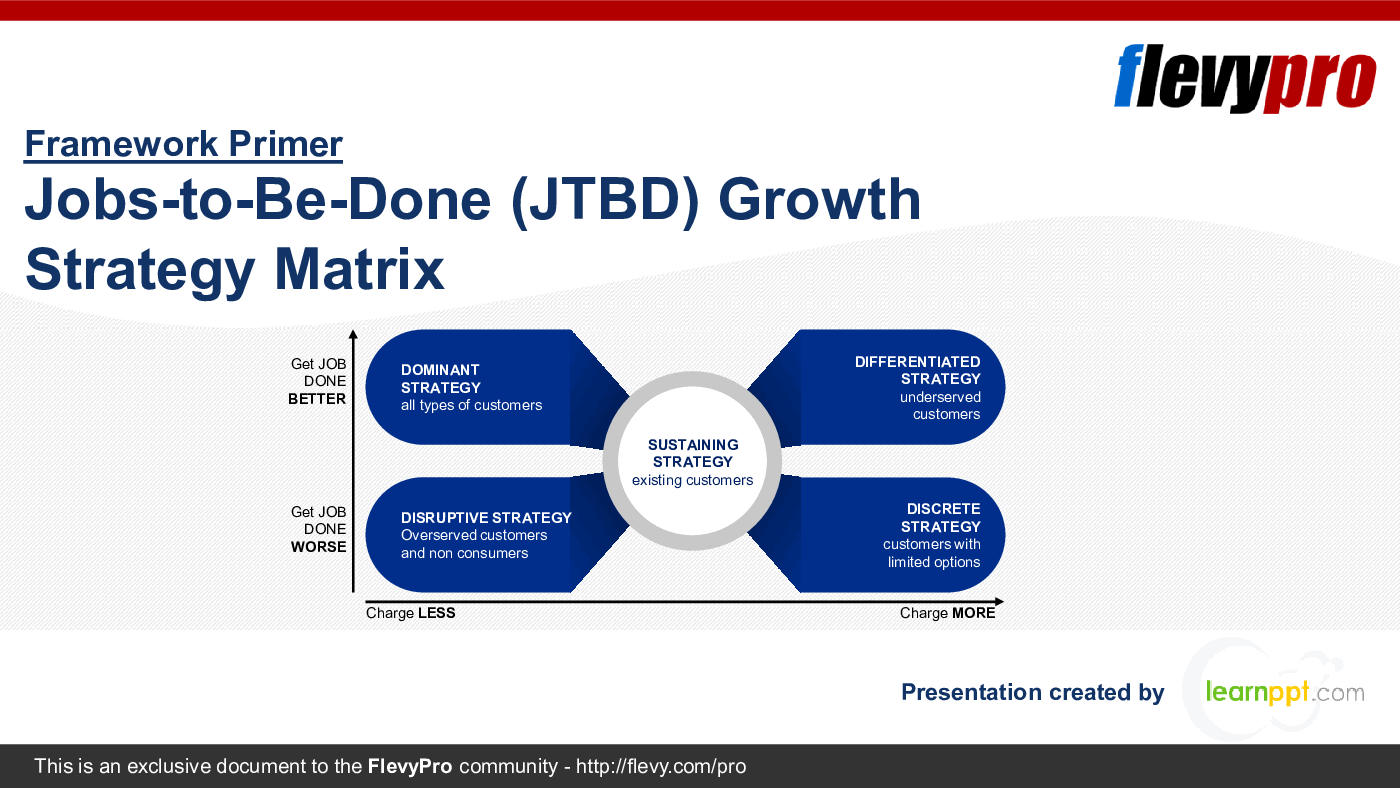
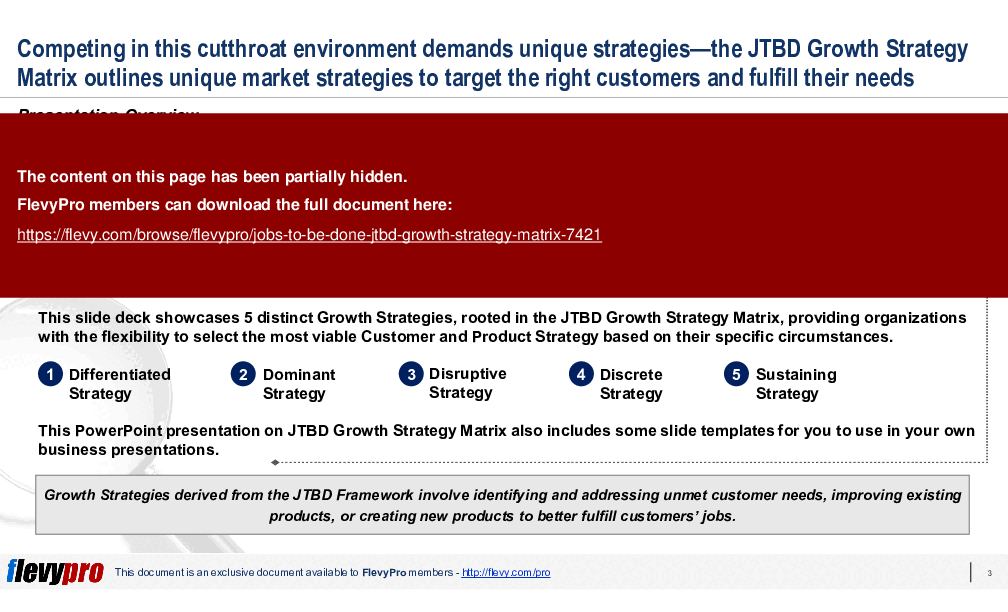
This slide deck showcases 5 distinct Growth Strategies, rooted in the JTBD Growth Strategy Matrix, providing organizations with the flexibility to select the most viable Customer and Product Strategy based on their specific circumstances.
1. Differentiated Strategy – Adopted when an organization identifies underserved consumer groups and targets them with a new product or service that performs a job (or several jobs) much better yet costs significantly more.
2. Dominant Strategy – Adopted by those businesses that focus on every customer in a market with a new product or service that does the job noticeably better and cheaper.
3. Disruptive Strategy – Used when an organization identifies and targets a group of over-served customers or non-consumers with a new Value Proposition that enables them to complete a job more affordably but less effectively than competing offerings.
4. Discrete Strategy – Used when a customer's options for completing a job are limited by law, the physical world, their emotions, or other factors.
5. Sustaining Strategy – Adopted when an organization offers a new product or service that only marginally performs better and/or costs marginally less.
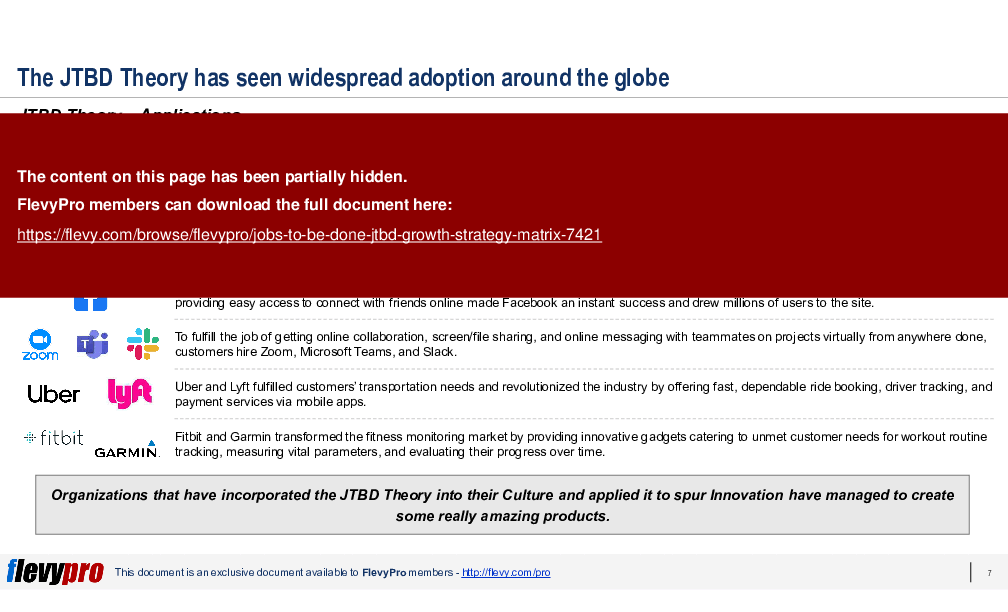
Each of these Growth Strategies is discussed in depth, including provided examples. Growth Strategies derived from the JTBD Framework involve identifying and addressing unmet customer needs, improving existing products, or creating new products to better fulfill customers' jobs. These 5 strategies cover every scenario a business can encounter when considering a product or service strategy.
This PowerPoint presentation on JTBD Growth Strategy Matrix also includes some slide templates for you to use in your own business presentations.
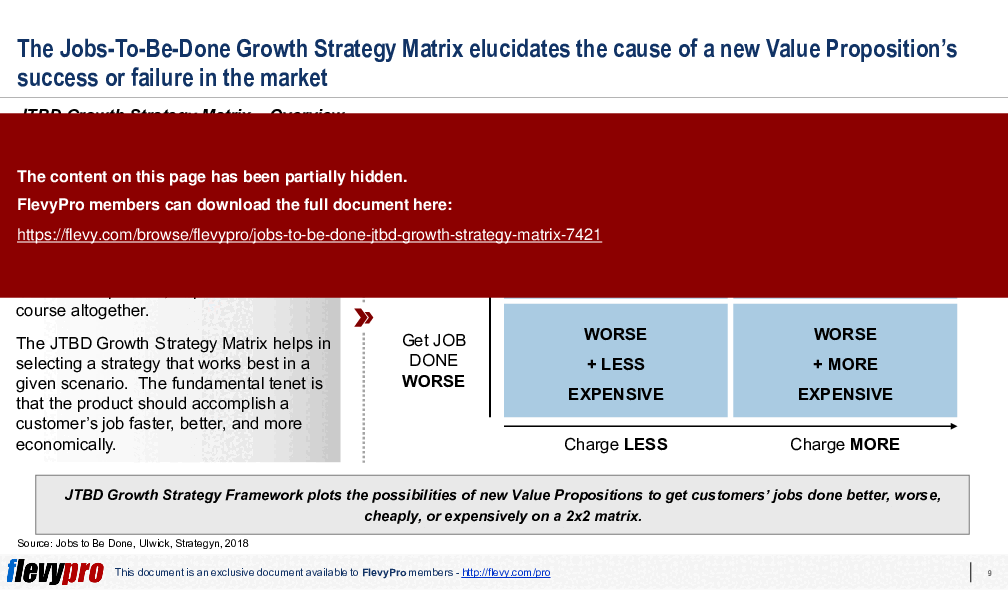
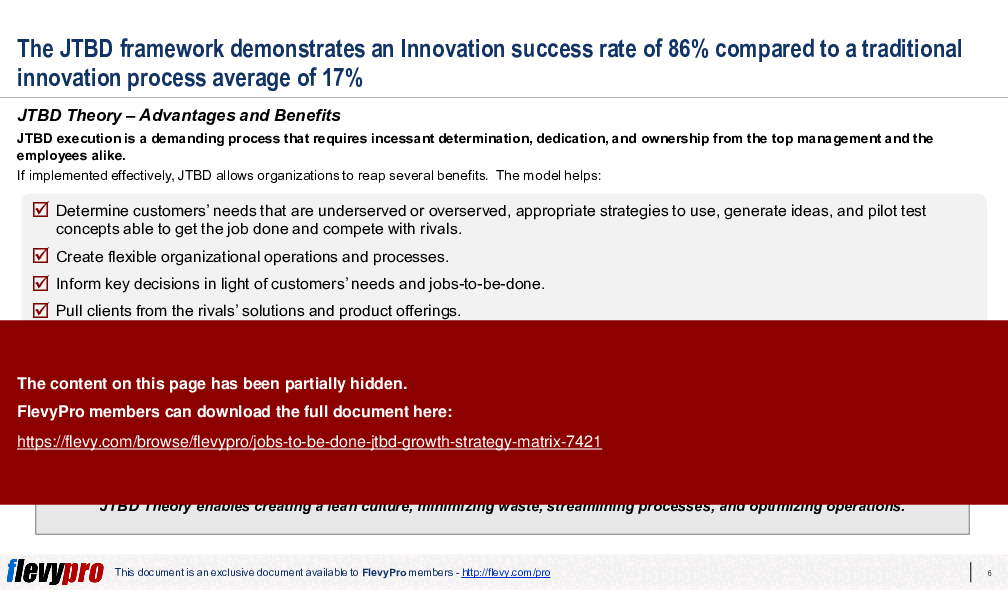
The JTBD Growth Strategy Matrix elucidates the cause of a new Value Proposition's success or failure in the market. This framework demonstrates an innovation success rate of 86% compared to a traditional innovation process average of 17%.
What is the JTBD Growth Strategy Matrix and what problem does it solve?
The JTBD Growth Strategy Matrix is a decision framework that helps organizations choose which customer groups to target and which product approach to take after customer-job identification. It guides assessment of underserved and over-served needs and narrows strategy choices into 5 distinct Growth Strategies, supporting targeted product and customer strategy selection across 5 options.
What are the 5 Growth Strategies described in the JTBD approach?
The 5 Growth Strategies are Differentiated (serve underserved groups with much better, but costlier offerings), Dominant (serve all customers with better and cheaper offerings), Disruptive (target over-served or non-consumers with cheaper, but less effective options), Discrete (constraints-based choices), and Sustaining (marginal improvements). These 5 strategies are the framework’s core options.
When is a Disruptive Strategy appropriate according to JTBD thinking?
A Disruptive Strategy is appropriate when an organization identifies over-served customers or non-consumers and can introduce a value proposition that enables job completion more affordably, but less effectively than incumbents. The approach prioritizes affordability and new market access over performance improvements as described in the framework.
How should I evaluate JTBD strategy templates before buying one?
Evaluate whether a template helps decide between product and customer strategies, explicitly covers underserved and over-served job identification, lists alternative strategic paths, and includes presentable slides or examples. The Jobs-to-Be-Done (JTBD) Growth Strategy Matrix includes coverage of 5 Growth Strategies and slide templates in a 32-slide PowerPoint format.
What format and deliverables can I expect from a JTBD growth-strategy slide deck?
A typical JTBD growth-strategy deliverable is a PowerPoint slide deck that defines the matrix, explains strategy options, and supplies templates for presentation. The Jobs-to-Be-Done (JTBD) Growth Strategy Matrix is delivered as a 32-slide PowerPoint by LearnPPT Consulting that includes strategy descriptions and reusable slide templates.
If I’m deciding between adding a feature vs creating a cheaper variant, which JTBD strategies apply?
Decisions between higher-performance features and lower-cost variants map to multiple JTBD strategies: Differentiated (much better at higher cost), Dominant (better and cheaper across customers), Disruptive (cheaper, but less effective for over-served/non-consumers), and Sustaining (marginal improvements). The framework enumerates these 4 strategic options among its 5 strategies.
How do I use the JTBD matrix after segmenting customers by jobs?
After identifying customer groups and the full range of jobs (including underserved and over-served needs), apply the JTBD Growth Strategy Matrix to determine whether to pursue Differentiated, Dominant, Disruptive, Discrete, or Sustaining approaches. The matrix narrows the choice to one of the 5 Growth Strategies.
What should I expect in terms of innovation success evidence when using JTBD frameworks?
The JTBD Growth Strategy Matrix materials reference a comparative innovation-success claim, stating a new value proposition driven by this framework shows an 86% innovation success rate versus a traditional innovation process average of 17%, as presented in the deck.
The Jobs-To-Be-Done (JTBD) Growth Strategy Matrix is a framework for evaluating market strategies based on customer needs. It emphasizes understanding customer segments and their specific jobs to be done. The matrix consists of 4 quadrants representing strategies based on product effectiveness and pricing. The vertical axis measures job fulfillment effectiveness, while the horizontal axis reflects pricing strategy. The top left quadrant focuses on delivering better results at a lower cost, while the bottom right quadrant may involve higher costs with inferior results. This matrix helps organizations assess offerings, identify improvement opportunities, and make informed decisions about product development and market positioning, ultimately addressing gaps in customer satisfaction for targeted growth strategies.
The JTBD (Jobs-to-Be-Done) Growth Strategy Matrix categorizes customers into 4 quadrants based on their needs and value propositions. The vertical axis measures customer satisfaction with job performance, while the horizontal axis indicates pricing strategy. The upper left quadrant targets customers with underserved needs, presenting opportunities for premium pricing through superior products. The lower left quadrant includes customers with limited options, allowing companies to charge more despite lacking distinct advantages. The upper right quadrant addresses customers with underserved or overserved needs, where better-performing, lower-priced products can attract them. Identifying customer placement within this matrix enables organizations to refine product development and pricing strategies, enhancing satisfaction and driving growth.
The Discrete Strategy within the JTBD (Jobs-to-Be-Done) Growth Strategy Matrix targets clients with restricted options for completing a job due to legal, physical, or emotional barriers. This strategy is effective when a higher-priced product is accepted by a captive customer base lacking alternatives. For example, individuals without access to traditional banking may use costly check-cashing services, and airline passengers pay premium prices for food due to security regulations. Venues like movie theaters and theme parks also capitalize on restrictions such as baggage limitations. While the Discrete Strategy can yield significant profits, it may attract criticism for being exploitative, challenging businesses to balance profitability with customer perception and ethical considerations.
The Dominant Strategy within the JTBD (Jobs-to-Be-Done) Growth Strategy framework is particularly advantageous for new market entrants. It focuses on delivering offerings that are at least 20% superior in quality and 20% less expensive than competitors, establishing a clear benchmark for success. Established players face challenges defending against new entrants using this strategy due to significant margin reductions and the need for investments in new platforms and talent. Real-world examples include Netflix, which disrupted the movie rental market by eliminating late fees and enhancing accessibility, and Vanguard Group, known for its innovative personal investment services that offer a compelling value proposition. The Dominant Strategy can be a powerful approach for new entrants delivering a strong value proposition.
This framework is developed by a team of former McKinsey and Big 4 consultants. The presentation follows the headline-body-bumper slide format used by global consulting firms.
For $10.00 more, you can download this document plus 2 more FlevyPro documents. That's just $13 each.
ABOUT FLEVYPRO
This document is part of the FlevyPro Library, a curated knowledge base of documents for our FlevyPro subscribers.

FlevyPro is a subscription service for on-demand business frameworks and analysis tools. FlevyPro subscribers receive access to an exclusive library of curated business documents—business framework primers, presentation templates, Lean Six Sigma tools, and more—among other exclusive benefits.
The average daily rate of a McKinsey consultant is $6,625 (not including expenses). The average price of a Flevy document is $65.
Trusted by over 10,000+ Client Organizations
Since 2012, we have provided business templates to over 10,000 businesses and organizations of all sizes, from startups and small businesses to the Fortune 100, in over 130 countries.
"Flevy.com has proven to be an invaluable resource library to our Independent Management Consultancy, supporting and enabling us to better serve our enterprise clients.
The value derived from our [FlevyPro] subscription in terms of the business it has helped to gain far exceeds the investment made, making a subscription a no-brainer for any growing consultancy – or in-house strategy team."
– Dean Carlton, Chief Transformation Officer, Global Village Transformations Pty Ltd.
"As a small business owner, the resource material available from FlevyPro has proven to be invaluable. The ability to search for material on demand based our project events and client requirements was great for me and proved very beneficial to my clients. Importantly, being able to easily edit and tailor
the material for specific purposes helped us to make presentations, knowledge sharing, and toolkit development, which formed part of the overall program collateral. While FlevyPro contains resource material that any consultancy, project or delivery firm must have, it is an essential part of a small firm or independent consultant's toolbox.
"
– Michael Duff, Managing Director at Change Strategy (UK)
"As a niche strategic consulting firm, Flevy and FlevyPro frameworks and documents are an on-going reference to help us structure our findings and recommendations to our clients as well as improve their clarity, strength, and visual power. For us, it is an invaluable resource to increase our impact and value."
– David Coloma, Consulting Area Manager at Cynertia Consulting
"My FlevyPro subscription provides me with the most popular frameworks and decks in demand in today’s market. They not only augment my existing consulting and coaching offerings and delivery, but also keep me abreast of the latest trends, inspire new products and service offerings for my practice, and educate me
in a fraction of the time and money of other solutions. I strongly recommend FlevyPro to any consultant serious about success.
"
– Bill Branson, Founder at Strategic Business Architects
"Last Sunday morning, I was diligently working on an important presentation for a client and found myself in need of additional content and suitable templates for various types of graphics. Flevy.com proved to be a treasure trove for both content and design at a reasonable price, considering the time I
saved. I encountered a download issue during the ordering process. However, a quick email to Flevy's support team, even on a Sunday (!!!), resulted in assistance within less than an hour, allowing me to download the content I needed. Fantastic job, Flevy! I give 5 stars for both content/price and customer service. Thank you!
"
– M. E., Chief Commercial Officer, International Logistics Service Provider
"I have found Flevy to be an amazing resource and library of useful presentations for lean sigma, change management and so many other topics. This has reduced the time I need to spend on preparing for my performance consultation. The library is easily accessible and updates are regularly provided. A wealth of great information."
– Cynthia Howard RN, PhD, Executive Coach at Ei Leadership
"As a young consulting firm, requests for input from clients vary and it's sometimes impossible to provide expert solutions across a broad spectrum of requirements. That was before I discovered Flevy.com.
Through subscription to this invaluable site of a plethora of topics that are key and crucial to consulting, I
have been able to exceed expectations and deliver quality advice and solutions to my clients. The quality and expertise of the authors are exemplary and gives me great confidence to use as part of my service offerings.
I highly recommend this company for any consultant wanting to apply international best practice standards in their service offerings.
"
– Nishi Singh, Strategist and MD at NSP Consultants
"FlevyPro provides business frameworks from many of the global giants in management consulting that allow you to provide best in class solutions for your clients."
– David Harris, Managing Director at Futures Strategy
Download our free compilation of 50+ Strategy & Transformation slides and templates. Frameworks include McKinsey 7-S, Balanced Scorecard, Disruptive Innovation, BCG Curve, and many more.