
This framework is developed by a team of former McKinsey and Big 4 consultants. The presentation follows the headline-body-bumper slide format used by global consulting firms.
Explore actionable strategies for CIOs to navigate economic downturns, crafted by ex-McKinsey & Big 4 consultants. Focus on cost reduction, investment optimization, and IT transformation. IT Transformation: 5 Focus Areas is a 26-slide PPT PowerPoint presentation slide deck (PPT) available for immediate download upon purchase.
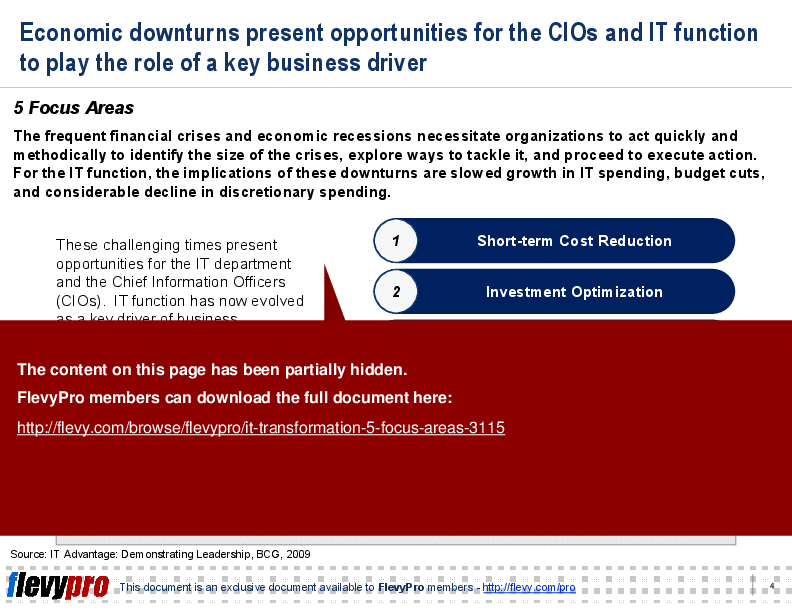
Economic recessions force the organizations to act quickly and methodically to identify the size of the crises, explore ways to react, and proceed to execute action. For the IT function, the implications of these recessions are declining growth in IT expenditure, budget slashes, and considerable drop in discretionary spending.
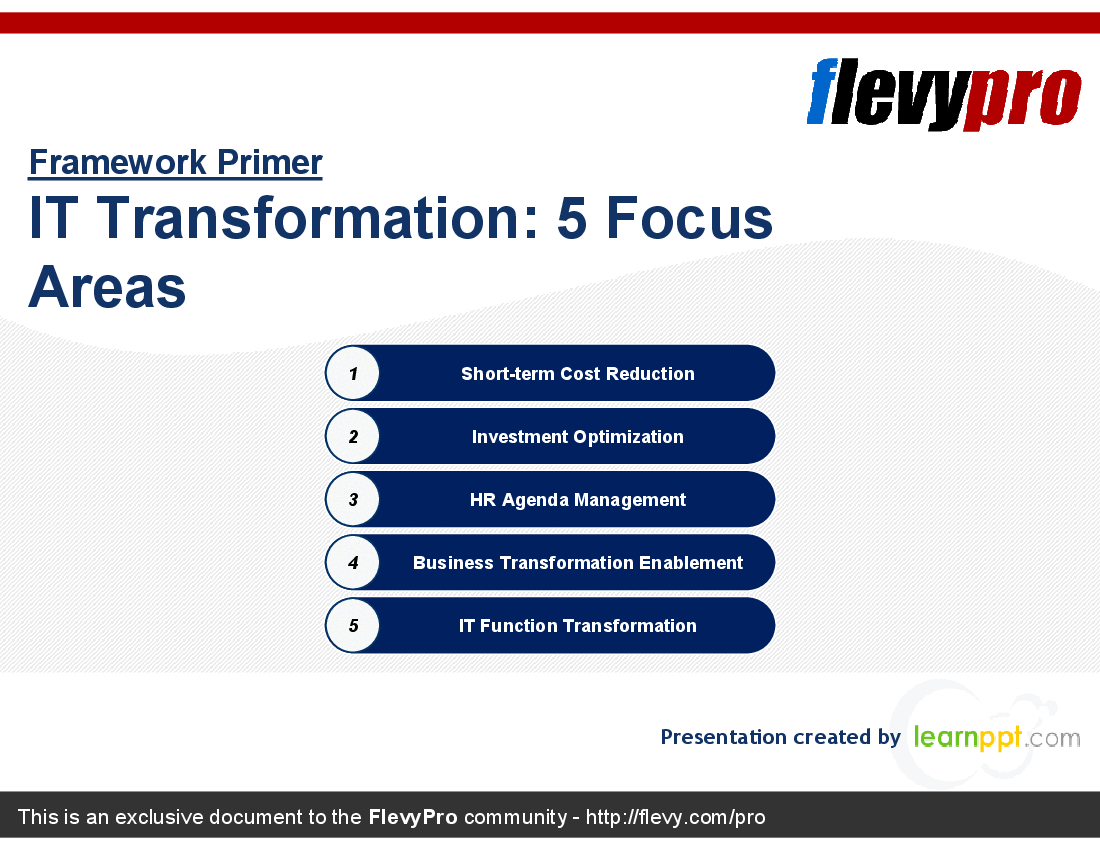
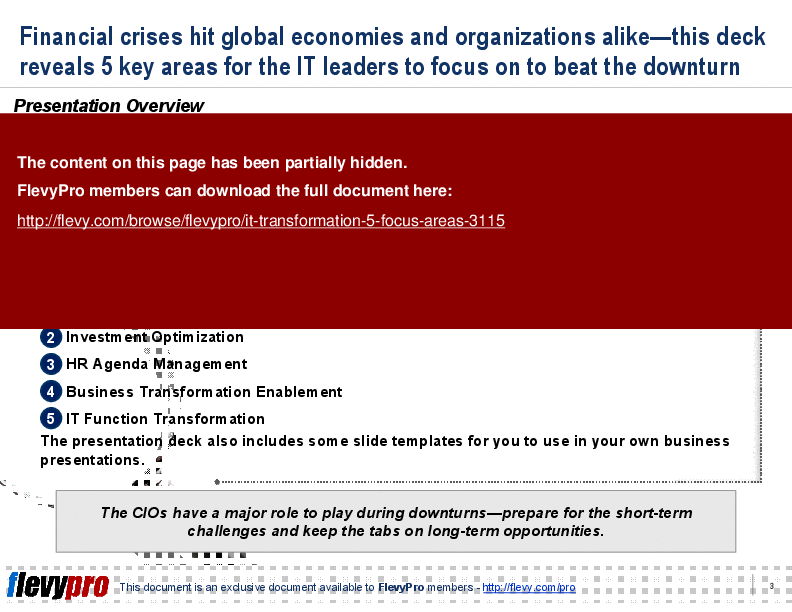
In spite of this, these challenging times present opportunities for the Chief Information Officers (CIOs). IT has now evolved as a key driver of business transformation, and can even help firms survive recessions and thrive when the boom resumes. To enable this, the CIOs should consider 5 Focus Areas to work on and make them part of a carefully-planned action plan:
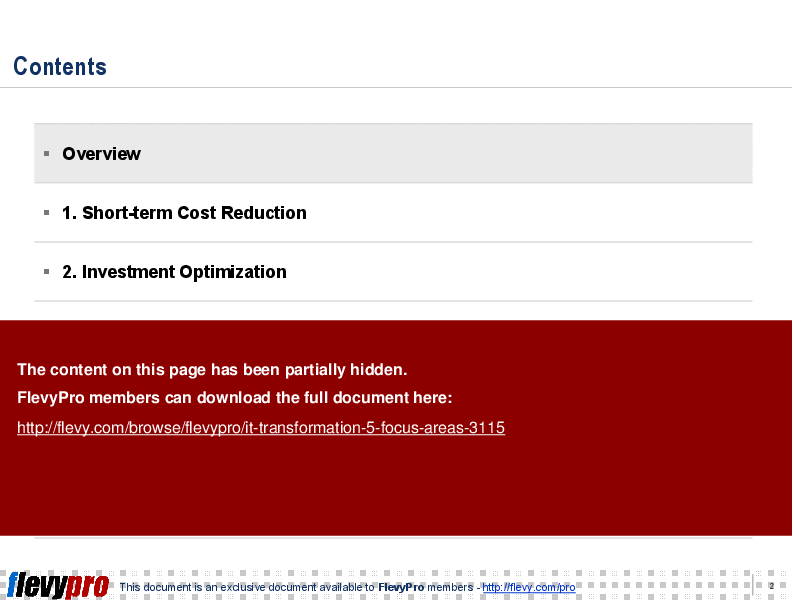
1. Short-term Cost Reduction
2. Investment Optimization
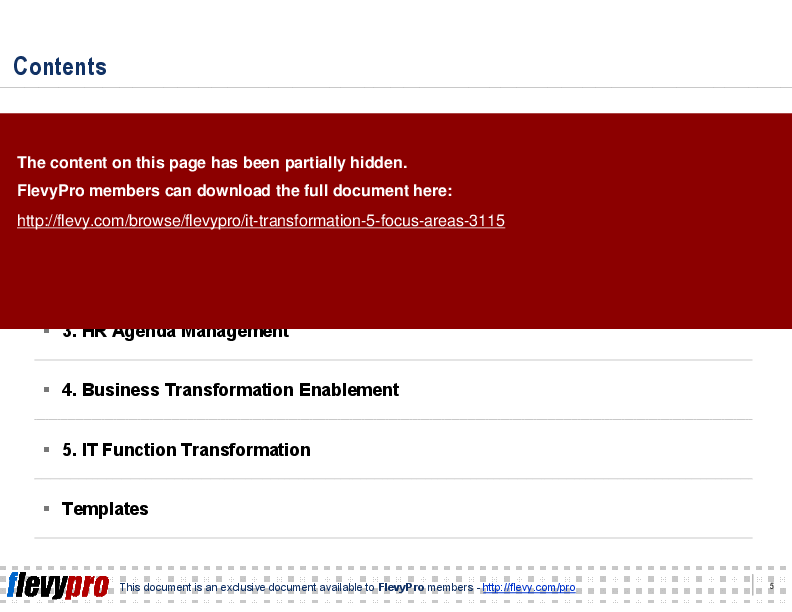
3. HR Agenda Management
4. Business Transformation Enablement
5. IT Function Transformation
The CIOs have a major role to play during downturns. Prepare for the short-term challenges and keep the tabs on long-term opportunities.
The presentation deck also includes some slide templates for you to use in your own business presentations.
This comprehensive presentation outlines actionable strategies for CIOs to navigate economic downturns effectively. It emphasizes the importance of a pragmatic approach to cost reduction, highlighting key actions such as rationalizing IT spend and renegotiating vendor contracts. The PPT also delves into investment optimization, stressing the need for robust cash management systems and improved risk information architecture to safeguard financial stability.
The presentation further explores HR agenda management, focusing on maintaining employee morale and retaining top talent during turbulent times. Business transformation enablement and IT function transformation are also covered, providing insights into leveraging IT as a catalyst for change and innovation. This deck is an essential tool for IT leaders seeking to drive value and efficiency in challenging economic climates.
This PPT slide outlines key actions for enabling business transformation through the IT organization. The IT department is uniquely positioned to identify opportunities for cost containment and value creation. The first action, "Proactively Commence Business Transformation Initiatives," emphasizes that the IT team should lead transformation activities to maximize immediate benefits, leveraging their understanding of business processes. The second action involves creating an M&A IT SWAT team, essential for large enterprises assessing portfolios for acquisitions or divestitures, with a robust integration strategy vital for realizing synergies. The final action, "Establish a New Business Model Team," highlights the CIO's role in revising business models in response to competition and economic changes, underscoring the IT department's critical role in driving strategic changes.
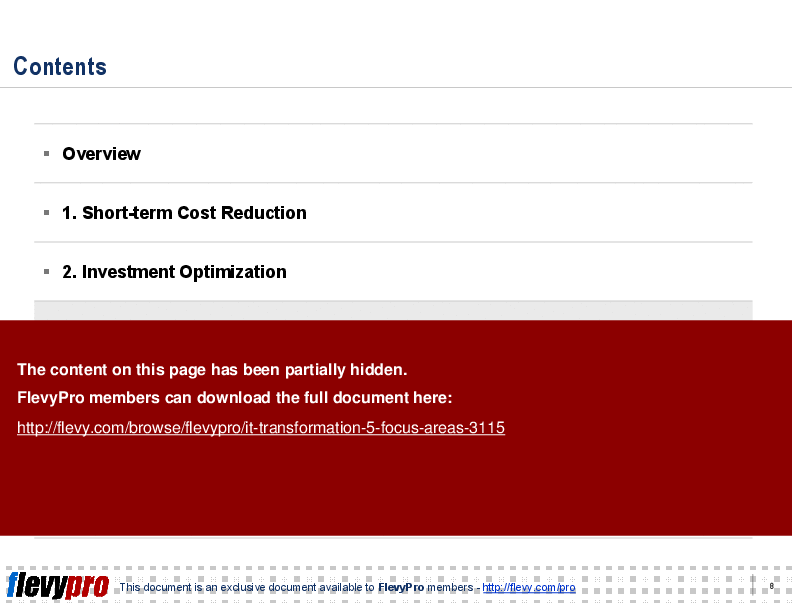
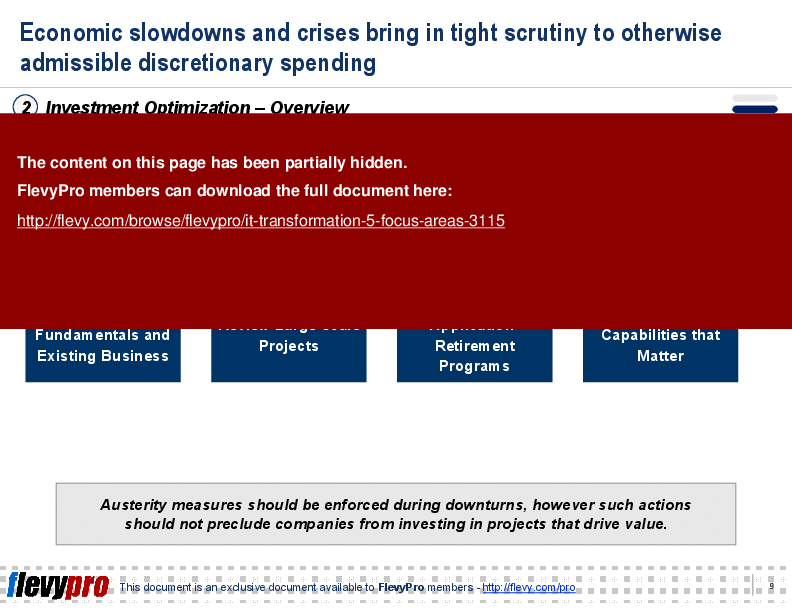
Organizations must scrutinize discretionary spending during economic slowdowns, with Chief Information Officers (CIOs) focusing on minimizing project expenditures while prioritizing investments that yield short to medium-term value. Key strategies for investment optimization include:
1. "Protect Financial Fundamentals and Existing Business" to maintain core financial health.
2. "Review Large-scale Projects" for evaluating the viability of significant initiatives against current business priorities.
3. "Invest in Application-Retirement Programs" to phase out outdated systems, freeing resources for strategic investments.
4. "Identify Capabilities that Matter" to ensure investments align with essential skills and long-term objectives.
While austerity measures are necessary, they should not impede investments that create value, enabling organizations to navigate economic challenges and position for future growth.
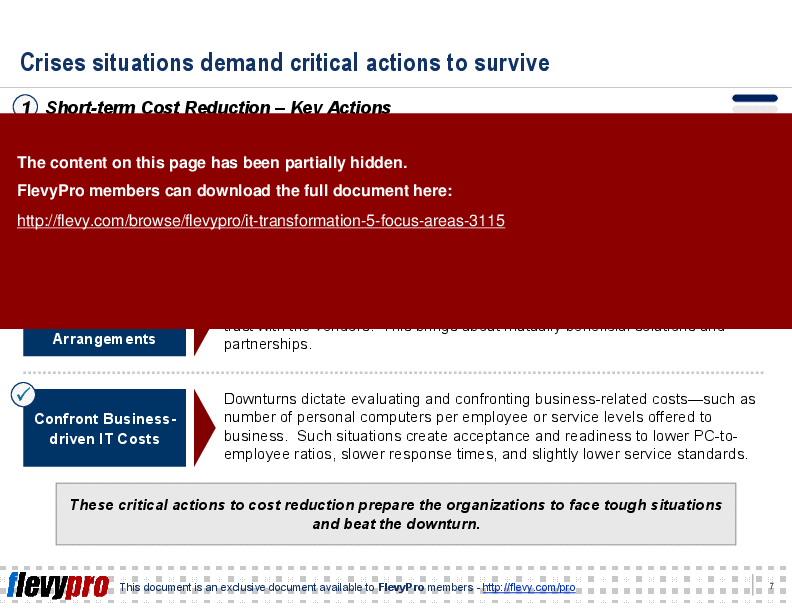
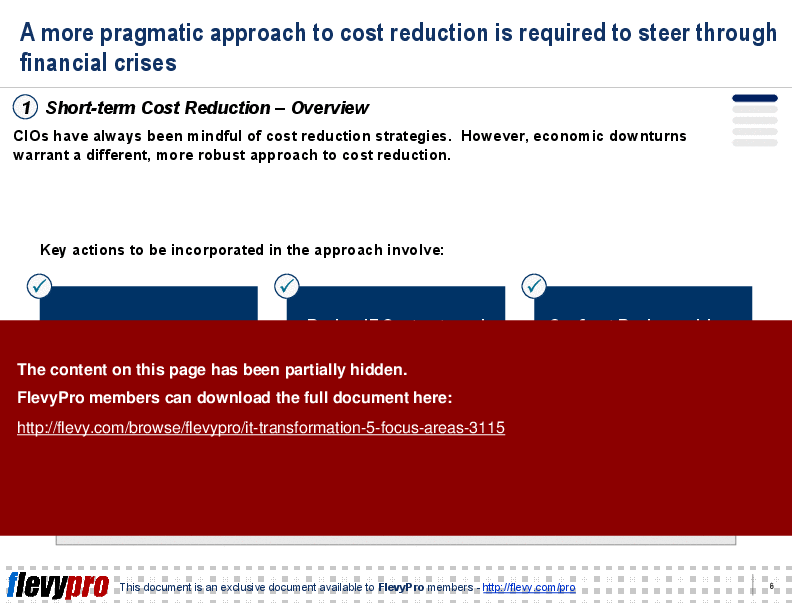
Short-term cost reduction requires a pragmatic approach to cost management, especially during economic downturns. Chief Information Officers (CIOs) must adopt a comprehensive strategy that includes 3 key actions.
1. Delayer the IT Organization: Streamlining the IT structure enhances operational efficiency and reduces overhead by flattening hierarchies and minimizing management layers, leading to quicker decision-making.
2. Review IT Contracts and Sourcing Arrangements: Scrutinizing vendor agreements can uncover opportunities for renegotiation or consolidation, aligning contracts with strategic objectives and financial constraints.
3. Confront Business-driven IT Costs: Organizations should evaluate IT expenditures driven by business needs, assessing the return on investment for initiatives to prioritize or scale back projects.
Effective IT cost reduction can yield substantial benefits for CIOs and enhance overall organizational efficiency.
Economic downturns pose challenges to workforce dynamics, particularly in IT departments, leading to risks of redundancy, declining morale, and reduced productivity. CIOs must implement 3 key actions: "Review the Fit of People and Roles" to align employee roles with organizational needs, optimizing workforce efficiency; "Take Care of Top Talent" to retain high-performing employees essential for morale and productivity; and "Communicate Regularly" to ensure transparent communication, alleviating uncertainties and building trust among employees. Effective human resource management and strategic HR practices are essential for sustaining organizational performance during economic challenges.
This PPT slide outlines critical actions for short-term cost reduction in IT organizations during economic downturns, emphasizing 3 strategies: delaying the IT organization, reviewing IT contracts and sourcing arrangements, and confronting business-driven IT costs. Delaying the IT organization involves flattening hierarchical structures to enhance responsiveness and allocate resources effectively for essential business transformation initiatives. Reviewing IT contracts focuses on analyzing agreements from a procurement perspective to build trust with vendors and foster strategic alliances, identifying mutually beneficial solutions. Confronting business-driven IT costs includes evaluating personal computer ratios per employee and adjusting service levels to achieve cost savings while maintaining operational effectiveness. These strategies equip organizations to navigate economic challenges and emerge stronger.
CIOs must consider critical actions during economic downturns to transform the IT function. Recessions present challenges and opportunities, necessitating a reevaluation of IT structures and processes. Key initiatives include:
1. Develop Bold Initiatives to Offset Recession - Proactive strategies that mitigate economic challenges and drive innovation.
2. Create Innovative Processes and Procedures - Rethinking operational workflows through new technologies or methodologies to enhance efficiency.
3. Introduce Product or Solution Managers - Shifting towards a product-oriented approach within IT for better alignment with business needs and improved service delivery.
Downturns can catalyze essential changes, encouraging organizations to view crises as opportunities for transformative growth.
Source: Best Practices in Business Transformation, IT Strategy, Cost Reduction, IT Transformation PowerPoint Slides: IT Transformation: 5 Focus Areas PowerPoint (PPT) Presentation Slide Deck, LearnPPT Consulting
This framework is developed by a team of former McKinsey and Big 4 consultants. The presentation follows the headline-body-bumper slide format used by global consulting firms.
For $10.00 more, you can download this document plus 2 more FlevyPro documents. That's just $13 each.
ABOUT FLEVYPRO
This document is part of the FlevyPro Library, a curated knowledge base of documents for our FlevyPro subscribers.

FlevyPro is a subscription service for on-demand business frameworks and analysis tools. FlevyPro subscribers receive access to an exclusive library of curated business documents—business framework primers, presentation templates, Lean Six Sigma tools, and more—among other exclusive benefits.
The average daily rate of a McKinsey consultant is $6,625 (not including expenses). The average price of a Flevy document is $65.
Trusted by over 10,000+ Client Organizations
Since 2012, we have provided business templates to over 10,000 businesses and organizations of all sizes, from startups and small businesses to the Fortune 100, in over 130 countries.
"Flevy.com has proven to be an invaluable resource library to our Independent Management Consultancy, supporting and enabling us to better serve our enterprise clients.
The value derived from our [FlevyPro] subscription in terms of the business it has helped to gain far exceeds the investment made, making a subscription a no-brainer for any growing consultancy – or in-house strategy team."
– Dean Carlton, Chief Transformation Officer, Global Village Transformations Pty Ltd.
"My FlevyPro subscription provides me with the most popular frameworks and decks in demand in today’s market. They not only augment my existing consulting and coaching offerings and delivery, but also keep me abreast of the latest trends, inspire new products and service offerings for my practice, and educate me
in a fraction of the time and money of other solutions. I strongly recommend FlevyPro to any consultant serious about success.
"
– Bill Branson, Founder at Strategic Business Architects
"As a small business owner, the resource material available from FlevyPro has proven to be invaluable. The ability to search for material on demand based our project events and client requirements was great for me and proved very beneficial to my clients. Importantly, being able to easily edit and tailor
the material for specific purposes helped us to make presentations, knowledge sharing, and toolkit development, which formed part of the overall program collateral. While FlevyPro contains resource material that any consultancy, project or delivery firm must have, it is an essential part of a small firm or independent consultant's toolbox.
"
– Michael Duff, Managing Director at Change Strategy (UK)
"I like your product. I'm frequently designing PowerPoint presentations for my company and your product has given me so many great ideas on the use of charts, layouts, tools, and frameworks. I really think the templates are a valuable asset to the job."
– Roberto Fuentes Martinez, Senior Executive Director at Technology Transformation Advisory
"As a consulting firm, we had been creating subject matter training materials for our people and found the excellent materials on Flevy, which saved us 100's of hours of re-creating what already exists on the Flevy materials we purchased."
– Michael Evans, Managing Director at Newport LLC
"I have used FlevyPro for several business applications. It is a great complement to working with expensive consultants. The quality and effectiveness of the tools are of the highest standards."
– Moritz Bernhoerster, Global Sourcing Director at Fortune 500
"As a niche strategic consulting firm, Flevy and FlevyPro frameworks and documents are an on-going reference to help us structure our findings and recommendations to our clients as well as improve their clarity, strength, and visual power. For us, it is an invaluable resource to increase our impact and value."
– David Coloma, Consulting Area Manager at Cynertia Consulting
"As a young consulting firm, requests for input from clients vary and it's sometimes impossible to provide expert solutions across a broad spectrum of requirements. That was before I discovered Flevy.com.
Through subscription to this invaluable site of a plethora of topics that are key and crucial to consulting, I
have been able to exceed expectations and deliver quality advice and solutions to my clients. The quality and expertise of the authors are exemplary and gives me great confidence to use as part of my service offerings.
I highly recommend this company for any consultant wanting to apply international best practice standards in their service offerings.
"
– Nishi Singh, Strategist and MD at NSP Consultants
Download our FREE Digital Transformation Templates
Download our free compilation of 50+ Digital Transformation slides and templates. DX concepts covered include Digital Leadership, Digital Maturity, Digital Value Chain, Customer Experience, Customer Journey, RPA, etc.