
Editor Summary
Business Plan Fundamentals is a 34-slide PowerPoint presentation that provides a structured framework for developing a business plan, designed with the rigor and clarity expected from McKinsey, Bain, or BCG-quality documents (consulting-grade; not affiliated).
Read moreIncludes a business plan template, situation analysis framework, SWOT tool, financial projection models (break-even, NPV, IRR), action plan template with GANTT chart, and executive summary outline. Target users include corporate executives, project managers, business analysts, investors, and internal teams. Sold as a digital download on Flevy.
Use this presentation when an organization needs a systematic approach to create or vet a business plan—such as at venture launch, investor pitch preparation, or strategic planning sessions.
Corporate executives defining objectives and trade-offs for a new venture using the objective and business case slides.
Project managers building a detailed action plan and milestones with the action plan template and GANTT chart.
Business analysts conducting market and competitive situation analyses using the situation analysis framework.
Investors or investor-relations teams preparing financial due diligence using break-even, NPV, and IRR models.
The deck’s emphasis on structured situation analysis, SWOT-driven option development, and financial projection rigor mirrors typical McKinsey/Bain/BCG-style consulting approaches.
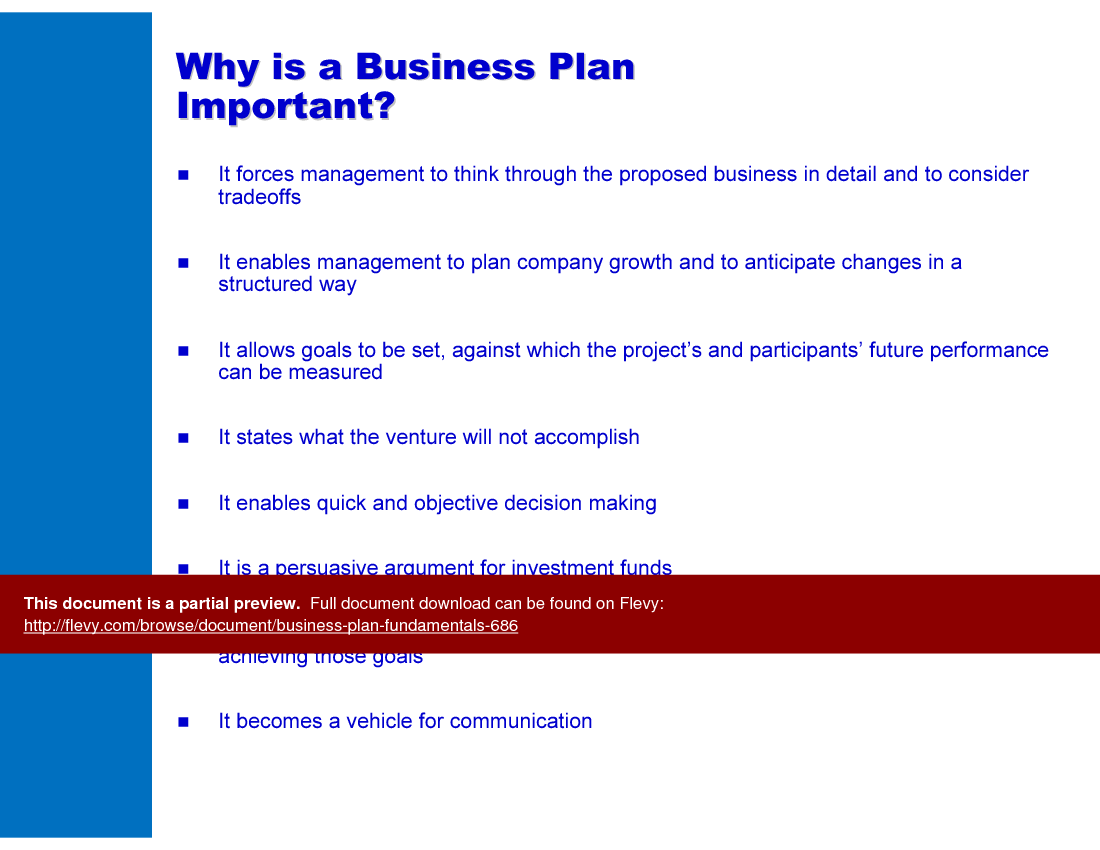
• It forces management to think through the proposed business in detail and to consider tradeoffs
• It enables management to plan company growth and to anticipate changes in a structured way
• It allows goals to be set, against which the project's and participants' future performance can be measured
• It states what the venture will not accomplish
• It enables quick and objective decision making
• It is a persuasive argument for investment funds
• It commits the management team to a common set of goals, and contains a blueprint for achieving those goals
• It becomes a vehicle for communication
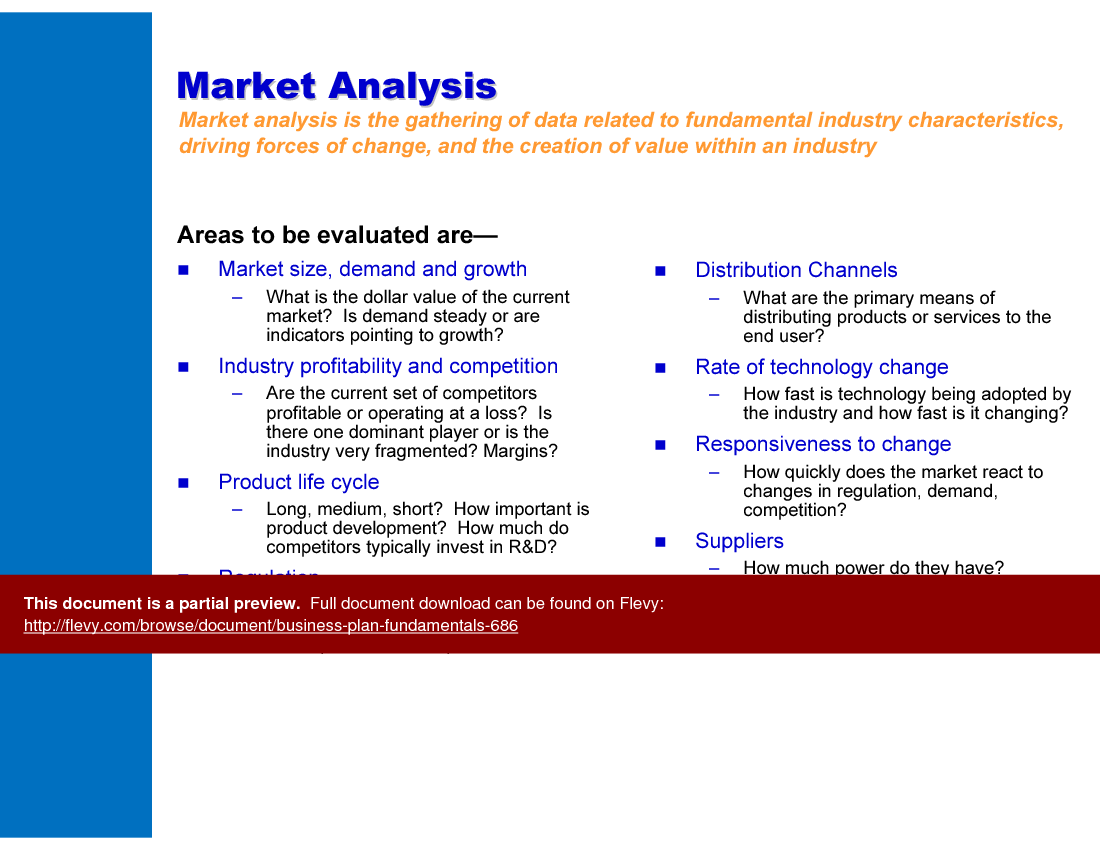
This document delves into the critical elements of a business plan, offering a comprehensive guide to crafting a robust strategy. It covers everything from market analysis to financial metrics, ensuring you leave no stone unturned. The detailed market analysis section helps you evaluate market size, demand, growth, and industry competition, providing a solid foundation for strategic decisions.
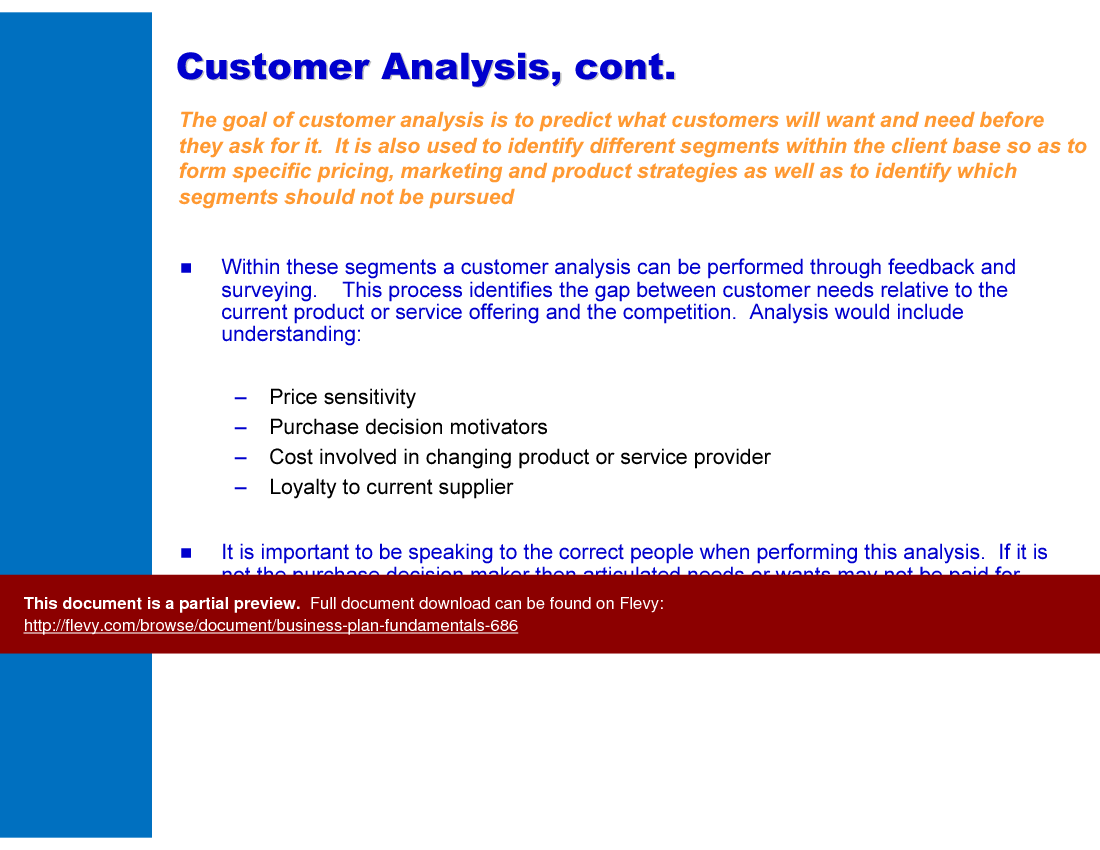
The customer analysis segment emphasizes the importance of understanding customer needs and behaviors. It guides you through the process of segmenting your client base and identifying key motivators, ensuring your offerings align with market demands. This section is vital for developing targeted marketing and product strategies, setting you up for success.
The strategy development section is a blueprint for achieving your business objectives. It includes a thorough situation analysis, SWOT analysis, and strategic option development. This part ensures that you can identify and leverage your strengths while mitigating risks. The document also covers distribution strategies, helping you choose the right channels to reach your customers effectively.
Got a question about the product? Email us at support@flevy.com or ask the author directly by using the "Ask the Author a Question" form. If you cannot view the preview above this document description, go here to view the large preview instead.
MARCUS OVERVIEW
This synopsis was written by Marcus [?] based on the analysis of the full 34-slide presentation.
Executive Summary
The Business Plan Fundamentals presentation offers a structured approach to developing a comprehensive business plan, designed with the rigor and clarity expected from a McKinsey, Bain, or BCG-quality document (consulting-grade; not affiliated). This presentation guides corporate executives and managers through the critical elements of a business plan, including objective setting, situation analysis, strategy development, and financial projections. By utilizing this framework, users will be equipped to articulate their business ventures effectively, anticipate challenges, and secure necessary investments, ensuring that their plans are actionable and aligned with organizational goals.
Who This Is For and When to Use
• Corporate executives seeking to launch new business ventures
• Project managers responsible for strategic planning and execution
• Business analysts conducting market and competitive assessments
• Investors evaluating potential funding opportunities
• Internal teams needing a structured approach to business planning
Best-fit moments to use this deck:
• During the initial stages of developing a new business venture
• When preparing for investor presentations or stakeholder meetings
• In strategic planning sessions to align team objectives
• For training sessions on effective business plan development
Learning Objectives
• Define the essential components of a business plan and their significance
• Articulate the objectives and trade-offs of a proposed business venture
• Conduct a thorough situation analysis, including market, competitive, and internal assessments
• Develop actionable strategies for product, marketing, and distribution
• Create financial projections, including break-even analysis, NPV, and IRR
• Formulate a detailed action plan with milestones and resource requirements
Table of Contents
• Introduction (page 3)
• Critical Elements of the Business Plan (page 5)
• Objective (page 6)
• Situation Analysis (page 7)
• Strategy Development (page 10)
• Business Case (page 12)
• Action Plan (page 15)
• Executive Summary (page 18)
Primary Topics Covered
• Business Plan Definition - A business plan is a rigorous examination of a proposed venture, detailing products, marketplace strategies, and financial impacts.
• Importance of Business Plans - Business plans facilitate detailed management planning, goal setting, and investment persuasion.
• Common Pitfalls - Identifies frequent mistakes in corporate ventures, such as underestimating costs and misjudging market demand.
• Situation Analysis - A comprehensive assessment of internal and external factors that influence business viability.
• SWOT Analysis - A tool for evaluating strengths, weaknesses, opportunities, and threats to inform strategic decisions.
• Financial Metrics - Key financial evaluations such as break-even analysis, NPV, and IRR to assess project viability.
Deliverables, Templates, and Tools
• Business plan template for structured development
• Situation analysis framework for market and competitive assessment
• SWOT analysis tool for strategic planning
• Financial projection models including break-even and NPV calculations
• Action plan template with GANTT chart integration for task management
• Executive summary outline for concise proposal presentation
Slide Highlights
• Overview of business plan components emphasizing their interconnections
• Visual representation of the situation analysis process, including market and competitive factors
• Detailed breakdown of financial metrics and their significance in decision-making
• Examples of common pitfalls in business planning and strategies to avoid them
• Action plan framework showcasing milestones and resource allocation
Potential Workshop Agenda
Business Plan Development Workshop (2 hours)
• Introduction to business plan fundamentals and objectives
• Group activity: Conducting a situation analysis using provided templates
• Discussion on common pitfalls and strategies for success
Financial Projections Deep Dive (1 hour)
• Overview of financial metrics: break-even, NPV, and IRR
• Hands-on exercise: Creating financial projections for a sample business plan
Customization Guidance
• Tailor the business plan template to reflect specific organizational goals and market conditions
• Adjust financial assumptions based on current economic indicators and internal benchmarks
• Modify the action plan to align with resource availability and project timelines
• Incorporate company-specific terminology and strategic objectives throughout the presentation
Secondary Topics Covered
• Market demand analysis and growth forecasting
• Competitive landscape evaluation and positioning strategies
• Customer segmentation and targeted marketing approaches
• Risk assessment and mitigation strategies
• Funding sources and financial planning
Topic FAQ
What are the typical sections to include when developing a business plan?
A well-structured business plan typically moves from introduction to defining critical elements and objectives, then through situation analysis and strategy development, into a business case and action plan, and concludes with an executive summary. The Business Plan Fundamentals organizes content across these core sections, including an Action Plan and Executive Summary.
How should I structure a situation analysis for a new product or venture?
Structure a situation analysis to assess internal capabilities and external market factors: market size and demand, competitive landscape, and internal strengths/weaknesses. The Business Plan Fundamentals provides a situation analysis framework tailored for market and competitive assessment to support strategic decisions.
When is a SWOT analysis most useful in business planning and how is it applied?
Use a SWOT analysis during strategy development to identify internal strengths and weaknesses and external opportunities and threats, then translate findings into strategic options and risk mitigations. The presentation includes a SWOT analysis tool to inform strategic decision-making.
What should I look for in a business-plan PowerPoint template if I have limited time?
Prioritize templates that include clear section headings, an executive summary outline, a situation analysis framework, ready-made financial projection models (break-even, NPV, IRR), and an action plan with GANTT chart integration. Flevy's Business Plan Fundamentals lists these specific deliverables for quick assembly.
How can I assess whether buying a business-plan template is worth the cost?
Compare whether the template supplies the specific tools you need—business plan template, situation analysis framework, SWOT tool, financial projection models, and an action plan/GANTT—against your budget and expected time savings. Evaluate value by the included financial models such as break-even and NPV calculations.
Which financial metrics are essential to include when preparing an investor pitch?
Investors typically expect financial viability metrics like break-even analysis, net present value (NPV), and internal rate of return (IRR), along with a clear business case and assumptions. Flevy's Business Plan Fundamentals includes templates and examples for break-even, NPV, and IRR.
How can a small internal team use a business plan template to align stakeholders?
Use the template to define objectives and trade-offs, perform a situation analysis, craft a concise executive summary for stakeholders, and develop an action plan with milestones and resource requirements, using GANTT chart integration to show timelines and responsibilities.
What common pitfalls should I avoid when writing a business plan for a corporate venture?
Avoid underestimating costs, misjudging market demand or customer willingness to pay, and failing to clearly define objectives and trade-offs. Address these by conducting thorough market analysis, financial projections, and a situation analysis to surface risks and assumptions.
Document FAQ
These are questions addressed within this presentation.
What is the primary purpose of a business plan?
A business plan serves as a comprehensive document that outlines the strategy, objectives, and financial projections for a proposed business venture, facilitating informed decision-making and investment opportunities.
How can a situation analysis improve my business plan?
A situation analysis provides critical insights into market conditions, competitive dynamics, and internal capabilities, enabling more informed strategic decisions and reducing the risk of oversight.
What are common pitfalls to avoid when creating a business plan?
Common pitfalls include failing to understand customer willingness to pay, underestimating costs, and not clearly defining objectives and trade-offs, which can derail project success.
How do I conduct a SWOT analysis?
A SWOT analysis involves identifying and evaluating the strengths, weaknesses, opportunities, and threats related to your business venture, providing a framework for strategic planning.
What financial metrics should I include in my business plan?
Key financial metrics include break-even analysis, net present value (NPV), and internal rate of return (IRR), which help assess the viability and profitability of the venture.
How do I ensure my business plan is persuasive to investors?
Focus on clear, concise arguments that demonstrate the business’s potential for profitability, strategic fit, and the management team's capabilities, supported by solid financial projections.
What is the significance of the executive summary?
The executive summary is a concise overview of the business plan, designed to engage stakeholders and encourage them to explore the full details of the proposal.
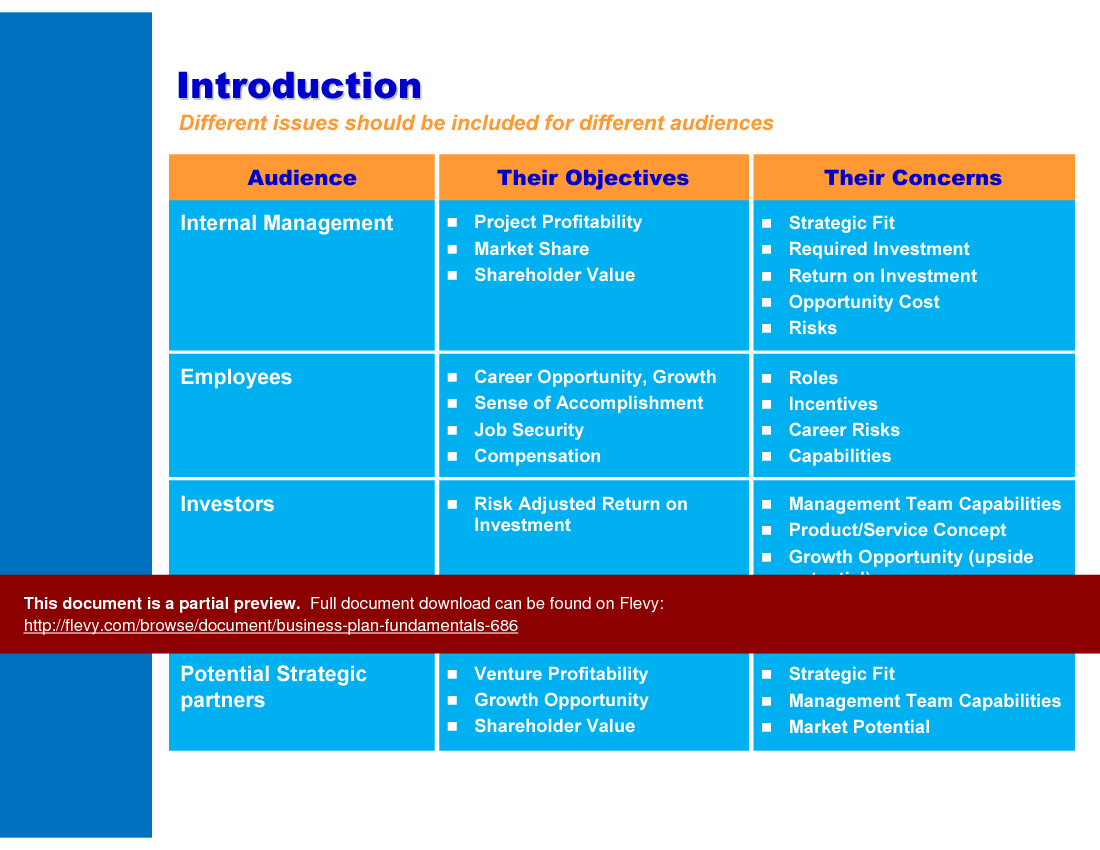
How can I tailor my business plan for different audiences?
Customize the content to address the specific objectives and concerns of each audience, such as internal management, employees, investors, and strategic partners.
What resources are needed for effective implementation of the business plan?
Identify necessary resources including personnel, technology, financial investments, and materials, and outline their acquisition timelines in the action plan.
Glossary
• Business Plan - A formal document detailing the strategy, objectives, and financial forecasts for a business venture.
• SWOT Analysis - A strategic planning tool used to identify strengths, weaknesses, opportunities, and threats.
• Break-Even Analysis - A financial assessment to determine the sales volume at which total revenues equal total costs.
• Net Present Value (NPV) - A financial metric that calculates the present value of future cash flows minus the initial investment.
• Internal Rate of Return (IRR) - The discount rate at which the NPV of a project equals zero, indicating the project's profitability.
• Situation Analysis - A comprehensive evaluation of internal and external factors affecting a business venture.
• Action Plan - A detailed outline of steps, responsibilities, and timelines for implementing the business strategy.
• Market Analysis - The study of market size, demand, competition, and trends to inform business decisions.
• Customer Segmentation - The process of dividing a customer base into distinct groups based on characteristics and needs.
• Financial Projections - Estimates of future revenues, expenses, and profitability based on historical data and market analysis.
• Stakeholders - Individuals or groups with an interest in the success of a business venture, including employees, investors, and partners.
• Competitive Analysis - An assessment of competitors to understand their strengths, weaknesses, and strategies.
• Funding Sources - Various means by which a business can secure financial resources for its operations and growth.
• Opportunity Cost - The potential benefits lost when choosing one alternative over another.
• Market Demand - The total quantity of a product or service that consumers are willing and able to purchase at various prices.
• Regulatory Factors - Legal and governmental influences that affect business operations and market entry.
• Value Proposition - The unique value a product or service offers to customers, distinguishing it from competitors.
• Trade-Offs - The compromises made when selecting one option over another in business planning.
• Milestones - Key achievements or points of progress that indicate the advancement of a project.
• GANTT Chart - A visual project management tool that outlines tasks, deadlines, and responsibilities.
• Market Share - The portion of a market controlled by a particular company or product.
• Investment Hurdle Rate - The minimum acceptable return on an investment required by an investor or company.
• Customer Feedback - Information provided by customers about their experiences and satisfaction with a product or service.
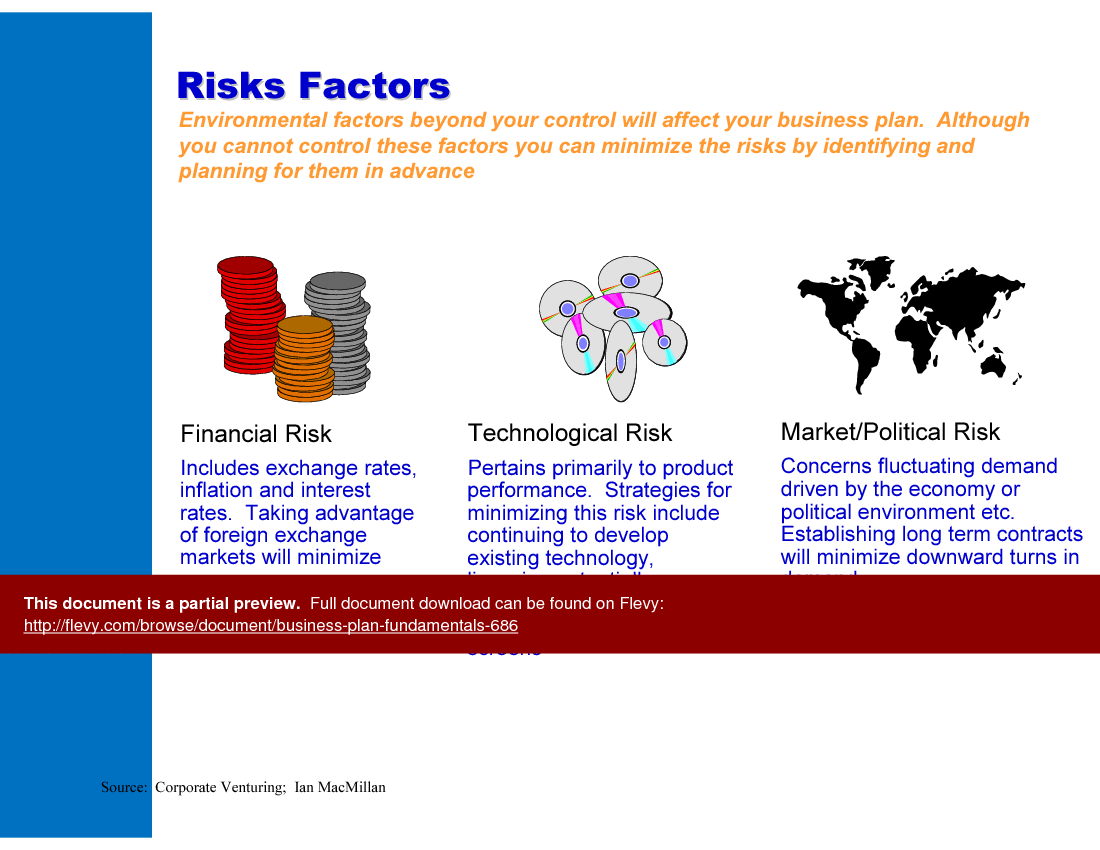
This PPT slide outlines key assumptions for projecting future business performance, emphasizing a conservative approach to avoid overly optimistic projections that can damage credibility. Key concepts include Market Growth, the expected rate of market change; Inflation, a baseline economic indicator affecting financial metrics; and Market Share, the portion of the total market targeted for revenue projections. Revenue Growth indicates the anticipated increase in revenue, while Product Life refers to the expected commercial lifespan of the product. R&D Costs detail necessary investments for product improvements, and Barriers to Entry assess challenges for new market entrants. Cost factors, including Cost of Sales, Operating Costs, and SG&A Costs, are crucial for financial health. Sensitivity Analysis highlights the importance of testing assumptions by defining ranges, such as inflation rates, to understand potential scenarios and their financial impacts.
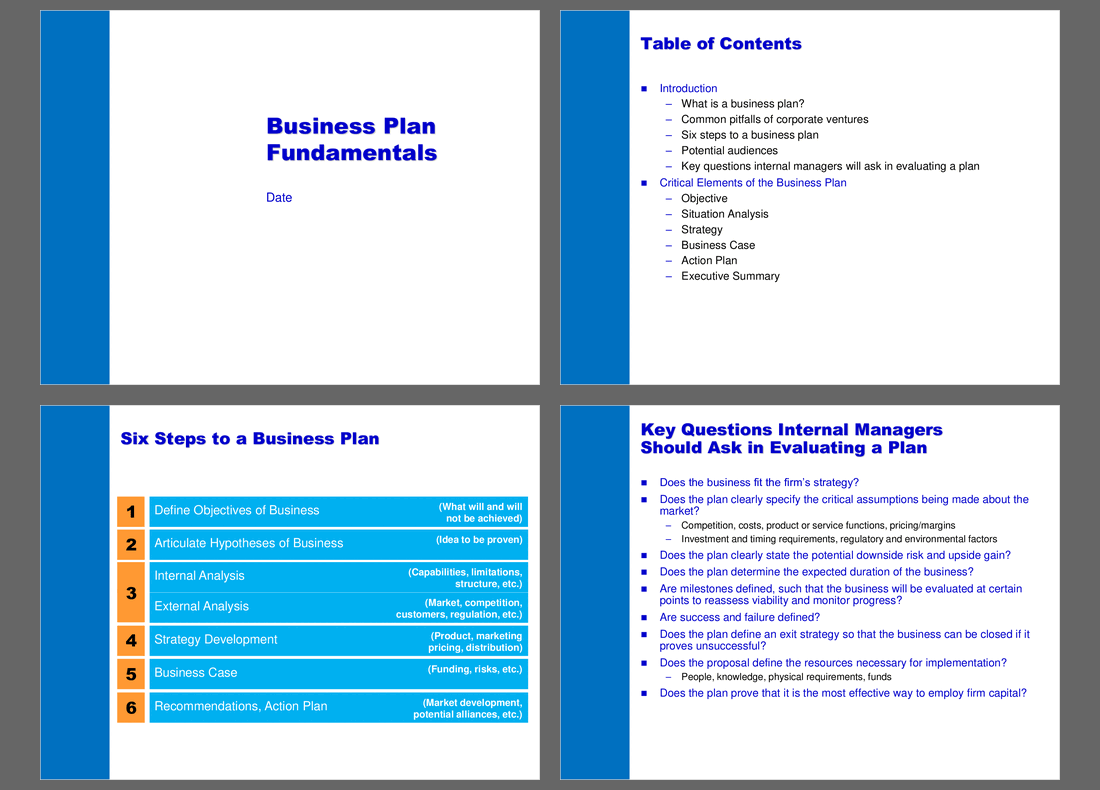
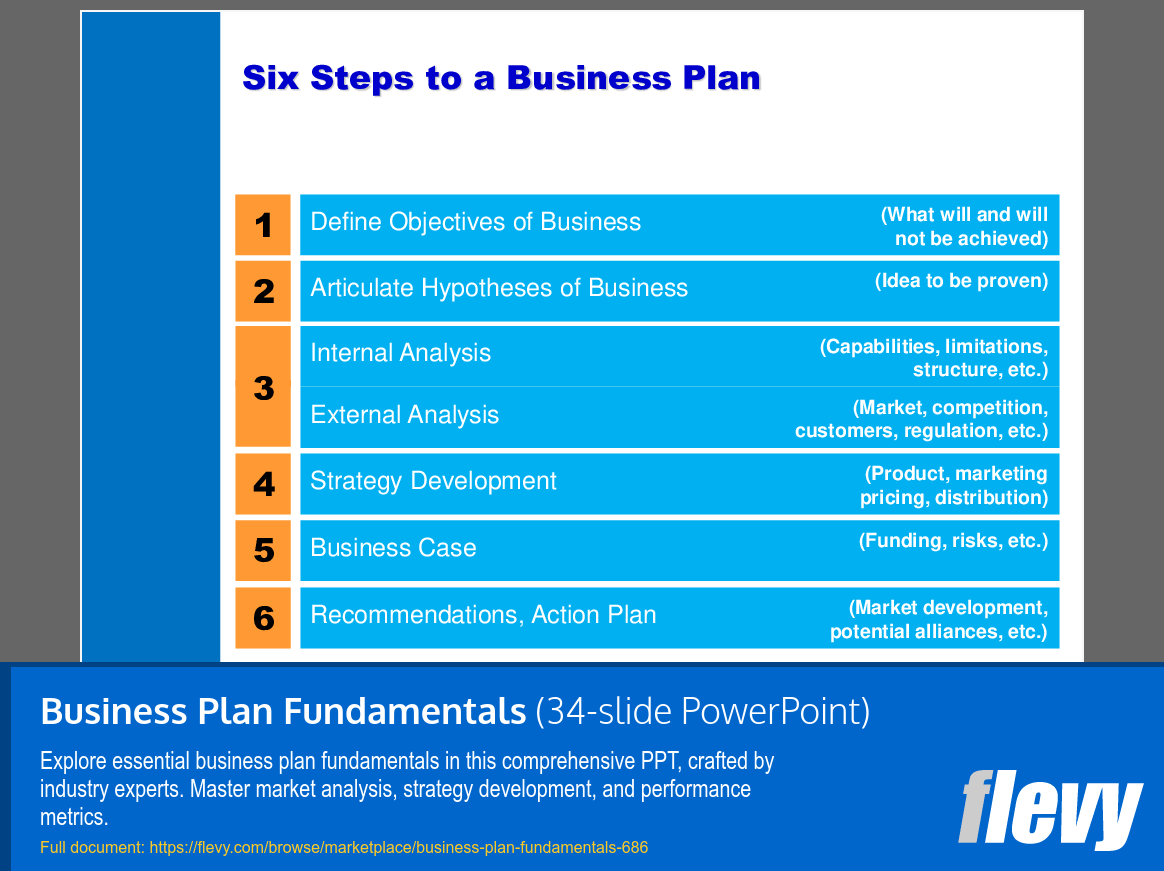
This PPT slide outlines a structured approach to developing a business plan through 6 key steps. The first step, "Define Objectives of Business," establishes clarity on business goals, forming the foundation for subsequent actions. The second step, "Articulate Hypotheses of Business," focuses on formulating ideas for validation, guiding business strategy.
"Internal Analysis" assesses company capabilities and limitations, while "External Analysis" examines market conditions, competition, and customer needs, identifying opportunities and threats. The fourth step, "Strategy Development," synthesizes insights into actionable strategies encompassing product offerings, marketing, pricing, and distribution.
The fifth step, "Business Case," outlines financial and operational aspects, including funding requirements and risk assessments for stakeholder justification. Finally, "Recommendations, Action Plan" provides a roadmap for implementation, detailing market development strategies and potential alliances, ensuring the business plan is executable.
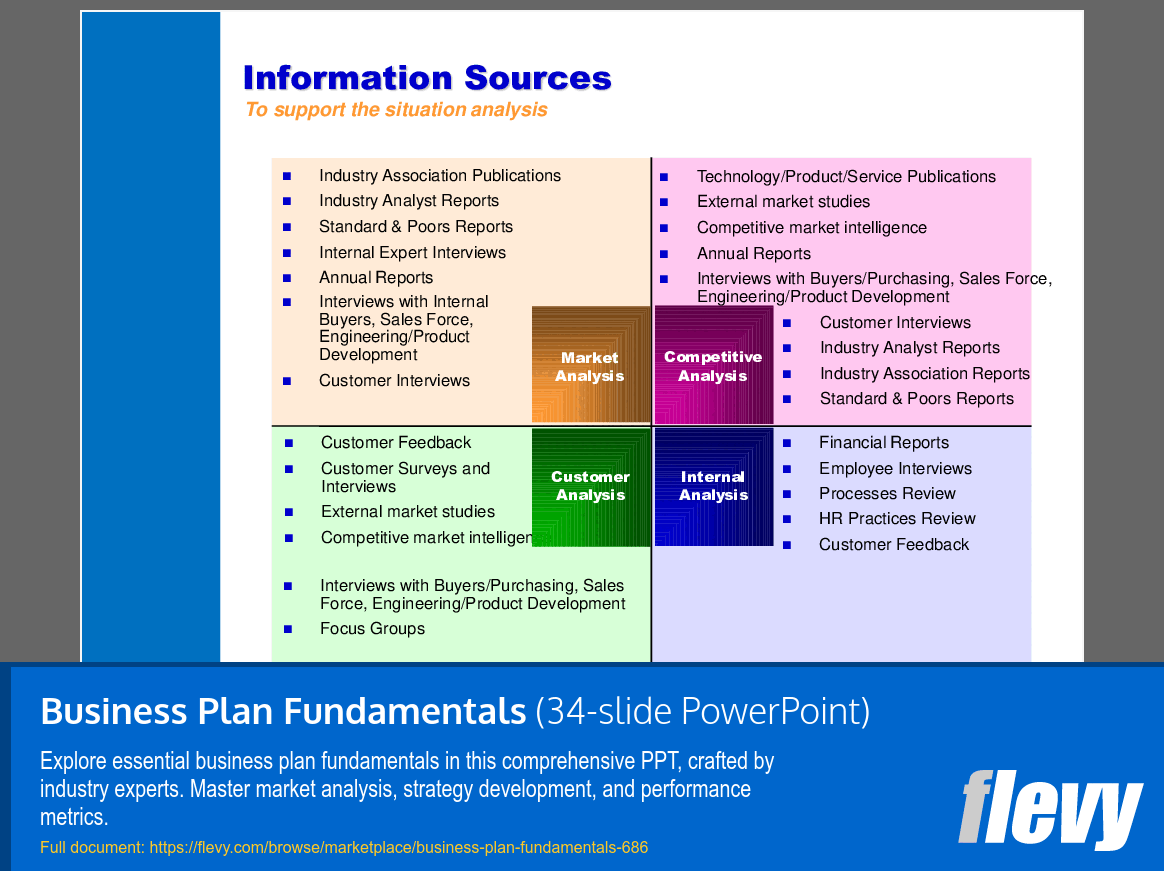
This PPT slide outlines essential information sources for conducting a situation analysis, categorized into Market Analysis, Competitive Analysis, Customer Analysis, and Internal Analysis. Market Analysis includes industry association publications, analyst reports, and internal stakeholder interviews, emphasizing a comprehensive view of market dynamics. Competitive Analysis focuses on external market studies and competitive intelligence, alongside buyer and sales team interviews for insights on competitor positioning. Customer Analysis utilizes feedback mechanisms like surveys and focus groups to gauge customer sentiment and preferences, guiding product development. Internal Analysis incorporates financial reports and employee interviews to evaluate organizational capabilities and operational efficiency. This framework supports informed strategic planning by integrating external and internal insights.
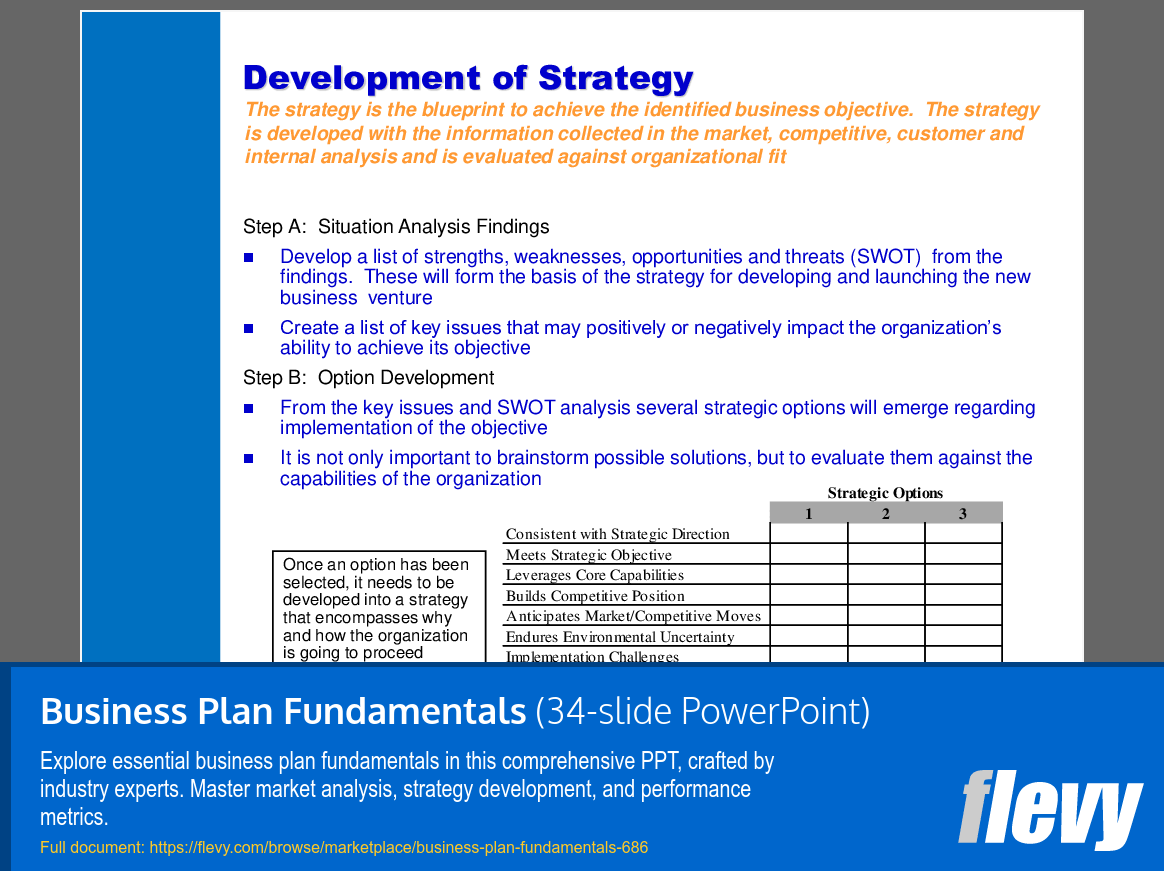
This PPT slide outlines a structured approach to strategy development, beginning with Situation Analysis Findings. This step involves creating a SWOT analysis to identify strengths, weaknesses, opportunities, and threats, which forms the foundation for business strategy. Identifying key issues that influence organizational objectives is essential for a realistic assessment of the internal and external environment.
Step B focuses on Option Development, where strategic options are generated based on the SWOT analysis. Each option must be evaluated against the organization's capabilities to ensure alignment with strengths and address weaknesses.
A framework for assessing strategic options includes criteria such as consistency with strategic direction, meeting objectives, leveraging core capabilities, and anticipating market moves, enabling informed decision-making for strategy selection.
This PPT slide outlines essential questions for evaluating a business plan, emphasizing alignment with the firm's overarching strategy to ensure effective resource utilization and contribution to company goals. Managers should clarify critical assumptions regarding market competition, costs, pricing strategies, investment, and regulatory requirements to assess feasibility. Risk assessment is crucial, identifying potential downsides and upsides to inform decision-making. Duration considerations help plan resources and timelines, while defining milestones allows for ongoing evaluation of business viability. Clear definitions of success and failure establish performance metrics and accountability, alongside the necessity of an exit strategy. Finally, the proposal must detail required resources, including personnel, knowledge, and funding, for thorough evaluation and informed decision-making.
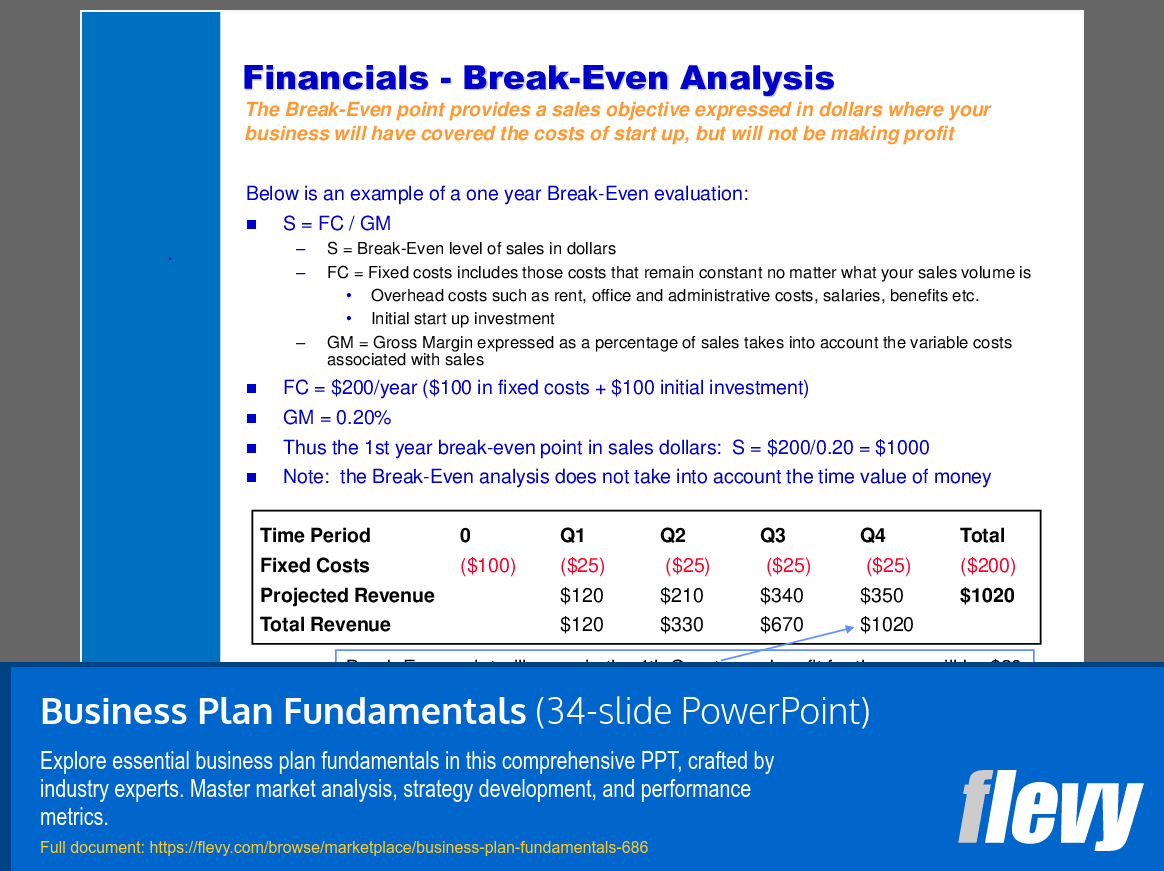
This PPT slide presents a break-even analysis, essential for determining the sales threshold to cover fixed costs without profit. The formula S = FC / GM defines break-even sales (S) in dollars, where FC represents fixed costs and GM is the gross margin percentage. Fixed costs, such as rent and salaries, are specified at $200 per year, including $100 in fixed costs and a $100 initial investment. The gross margin is set at 20%, crucial for calculating the revenue needed to reach break-even. A one-year projection illustrates fixed costs, projected revenue, and total revenue across 4 quarters, showing an initial loss of $100 in Q1, with total revenue reaching $1,020 by year-end. This analysis does not consider the time value of money, a key factor in long-term financial planning.
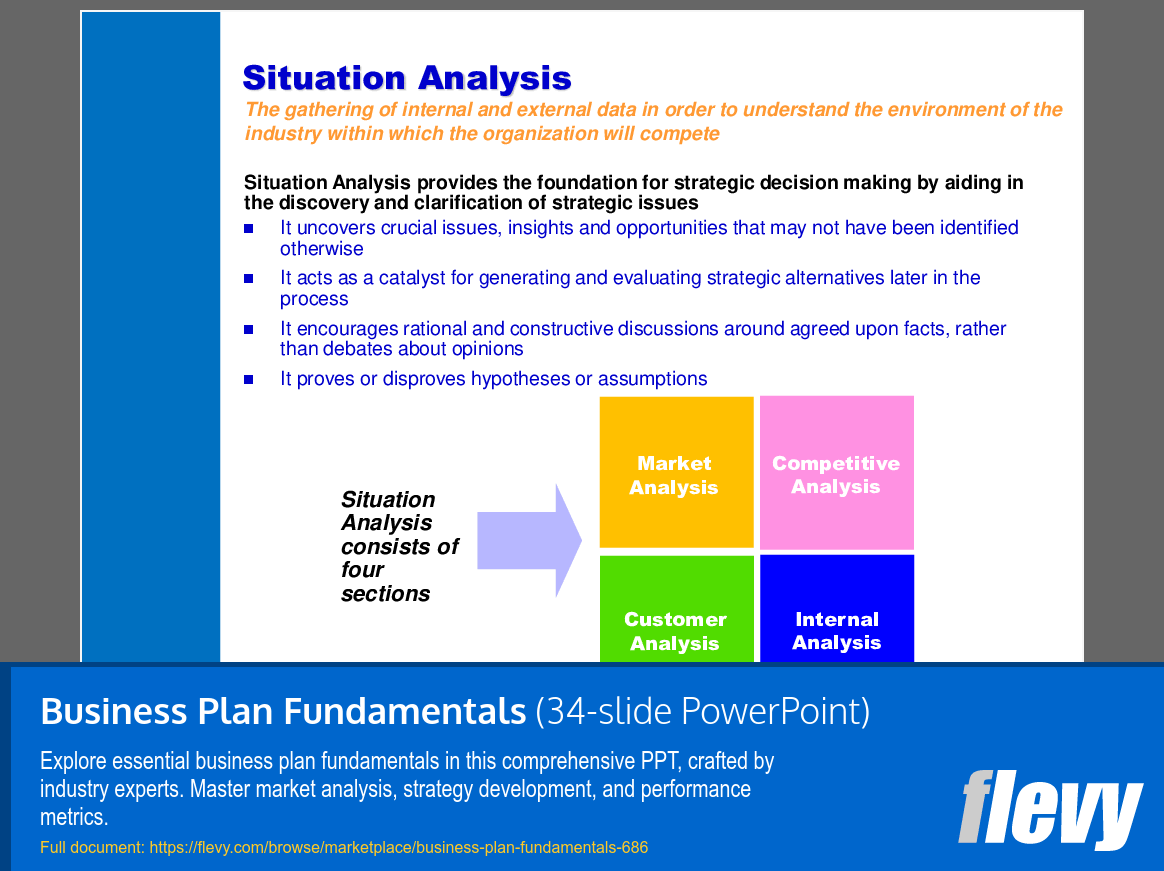
This PPT slide provides an overview of Situation Analysis, a critical component of strategic decision-making. It identifies internal and external factors impacting organizations and highlights key benefits. First, Situation Analysis uncovers vital issues, insights, and opportunities, enhancing understanding of the operational environment. Second, it generates and evaluates strategic alternatives, facilitating exploration of various paths to adapt to changing conditions. Third, it fosters rational discussions based on agreed-upon facts, ensuring decisions are data-driven. Lastly, it validates or disproves existing hypotheses, confirming strategic directions. The slide outlines the 4 sections of Situation Analysis: Market Analysis, Competitive Analysis, Customer Analysis, and Internal Analysis, ensuring a holistic view of the strategic environment.
This PPT slide outlines the importance of clearly defined objectives in a business plan. Specific goals enhance the likelihood of success, while vague goals can lead to project derailment. It compares 2 tradeoffs in product introduction: prioritizing quarterly profitability versus achieving market leadership by the third quarter. The chosen objective must align with the organization's strategic direction and be realistic, considering inherent tradeoffs. A well-defined objective acts as a catalyst for progress and reinforces overall strategy. By establishing clear objectives and understanding tradeoffs, organizations can navigate the complexities of launching new products or services, enhancing decision-making and team accountability.
Source: Best Practices in Business Plan Writing PowerPoint Slides: Business Plan Fundamentals PowerPoint (PPT) Presentation Slide Deck, Documents & Files
Since 2012, we have provided business templates to over 10,000 businesses and organizations of all sizes, from startups and small businesses to the Fortune 100, in over 130 countries.
"I am extremely grateful for the proactiveness and eagerness to help and I would gladly recommend the Flevy team if you are looking for data and toolkits to help you work through business solutions."
– Trevor Booth, Partner, Fast Forward Consulting
"As a consulting firm, we had been creating subject matter training materials for our people and found the excellent materials on Flevy, which saved us 100's of hours of re-creating what already exists on the Flevy materials we purchased."
– Michael Evans, Managing Director at Newport LLC
"One of the great discoveries that I have made for my business is the Flevy library of training materials.
As a Lean Transformation Expert, I am always making presentations to clients on a variety of topics: Training, Transformation, Total Productive Maintenance, Culture, Coaching, Tools, Leadership Behavior, etc. Flevy
It is well worth the money to purchase these presentations. Sure, I have the knowledge and information to make my point. It is another thing to create a presentation that captures what I want to say. Flevy has saved me countless hours of preparation time that is much better spent with implementation that will actually save money for my clients.
"
– Ed Kemmerling, Senior Lean Transformation Expert at PMG
"As a niche strategic consulting firm, Flevy and FlevyPro frameworks and documents are an on-going reference to help us structure our findings and recommendations to our clients as well as improve their clarity, strength, and visual power. For us, it is an invaluable resource to increase our impact and value."
– David Coloma, Consulting Area Manager at Cynertia Consulting
"FlevyPro has been a brilliant resource for me, as an independent growth consultant, to access a vast knowledge bank of presentations to support my work with clients. In terms of RoI, the value I received from the very first presentation I downloaded paid for my subscription many times over! The
quality of the decks available allows me to punch way above my weight – it's like having the resources of a Big 4 consultancy at your fingertips at a microscopic fraction of the overhead.
"
– Roderick Cameron, Founding Partner at SGFE Ltd
"Flevy is now a part of my business routine. I visit Flevy at least 3 times each month.
Flevy has become my preferred learning source, because what it provides is practical, current, and useful in this era where the business world is being rewritten.
many challenges and there is the need to make the right decisions in a short time, with so much scattered information, we are fortunate to have Flevy. Flevy investigates, selects, and puts at our disposal the best of the best to help us be successful in our work.
"
– Omar Hernán Montes Parra, CEO at Quantum SFE
"As a young consulting firm, requests for input from clients vary and it's sometimes impossible to provide expert solutions across a broad spectrum of requirements. That was before I discovered Flevy.com.
Through subscription to this invaluable site of a plethora of topics that are key and crucial to consulting, I
have been able to exceed expectations and deliver quality advice and solutions to my clients. The quality and expertise of the authors are exemplary and gives me great confidence to use as part of my service offerings.
I highly recommend this company for any consultant wanting to apply international best practice standards in their service offerings.
"
– Nishi Singh, Strategist and MD at NSP Consultants
"Last Sunday morning, I was diligently working on an important presentation for a client and found myself in need of additional content and suitable templates for various types of graphics. Flevy.com proved to be a treasure trove for both content and design at a reasonable price, considering the time I
saved. I encountered a download issue during the ordering process. However, a quick email to Flevy's support team, even on a Sunday (!!!), resulted in assistance within less than an hour, allowing me to download the content I needed. Fantastic job, Flevy! I give 5 stars for both content/price and customer service. Thank you!
"
– M. E., Chief Commercial Officer, International Logistics Service Provider
Save with Bundles

This document is available as part of the following discounted bundle(s):
Download our free compilation of 50+ Strategy & Transformation slides and templates. Frameworks include McKinsey 7-S, Balanced Scorecard, Disruptive Innovation, BCG Curve, and many more.