Your AI assistant becomes a Flevy-powered consultant, with direct access to our full library of frameworks, templates, and case studies. Free to connect. No account, sign-in, or API key required.
STEP 1 · CHOOSE YOUR ASSISTANT
STEP 2 · CONNECT
1
No copying needed. Flevy is in the official Claude Connectors Directory.
2
Click the button below, then click Connect on the Flevy listing.
This framework is developed by a team of former McKinsey and Big 4 consultants. The presentation follows the headline-body-bumper slide format used by global consulting firms.
Editor Summary
28-slide PowerPoint presentation explaining the Greiner Growth Model (Stages of Evolution and Revolution), authored by PPT Lab, mapping organizational growth across 5 methodology phases: Growth through Creativity, Direction, Delegation, Coordination, and Collaboration.
Read moreCovers 5 key dimensions for an organizational maturity model (including age, size, and industry growth rate), and includes practical templates and visual aids to apply the framework. Used by executives, HR and OD leaders, and strategy consultants to analyze current growth and plan for management crises; sold as a digital download on Flevy.
Use this presentation when an organization is growing, facing recurring management crises, or needs to diagnose which management styles and structures fit its current maturity stage.
CEOs and founders mapping current organizational practices to a stage and anticipating the next crisis by assessing age and size against the 5-stage model.
HR/OD leaders designing governance, delegation, or coordination mechanisms tailored to a specific stage (e.g., delegation vs. coordination).
Strategy or transformation consultants diagnosing misalignment between management style and organization stage and recommending structural changes.
The model’s phase-based maturity analysis, with explicit evolution–crisis–revolution inflection points, follows common consulting maturity-diagnostic approaches.
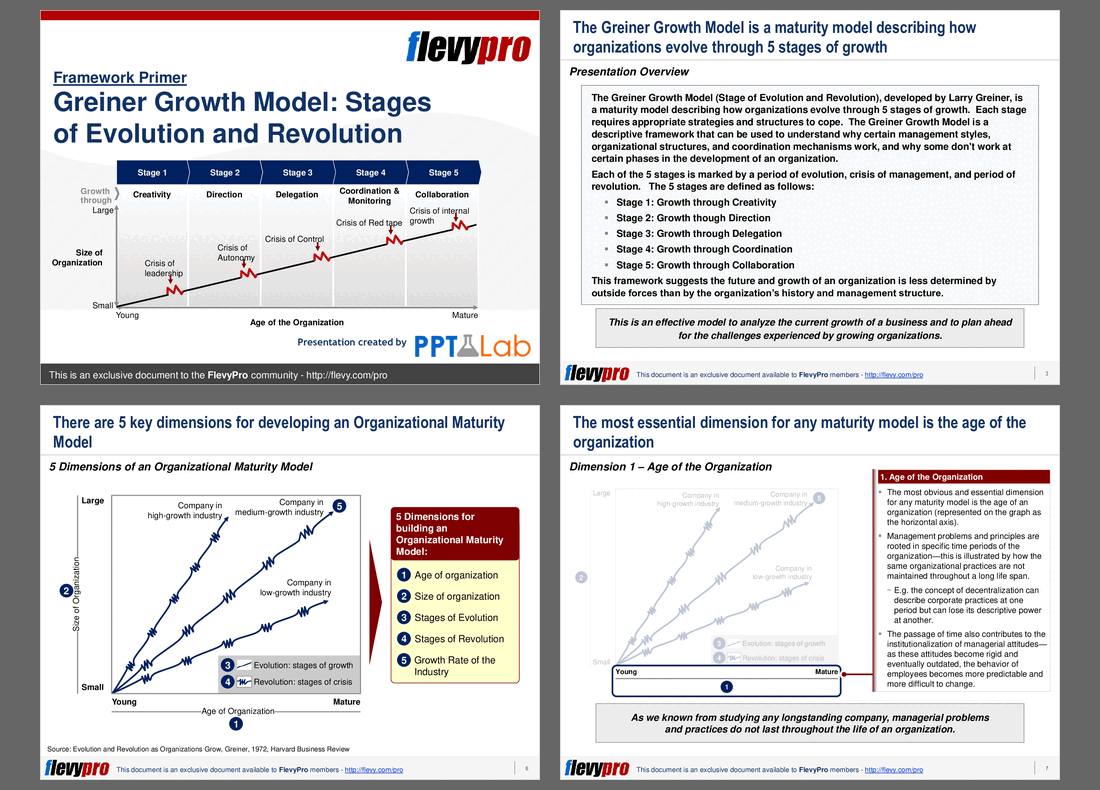
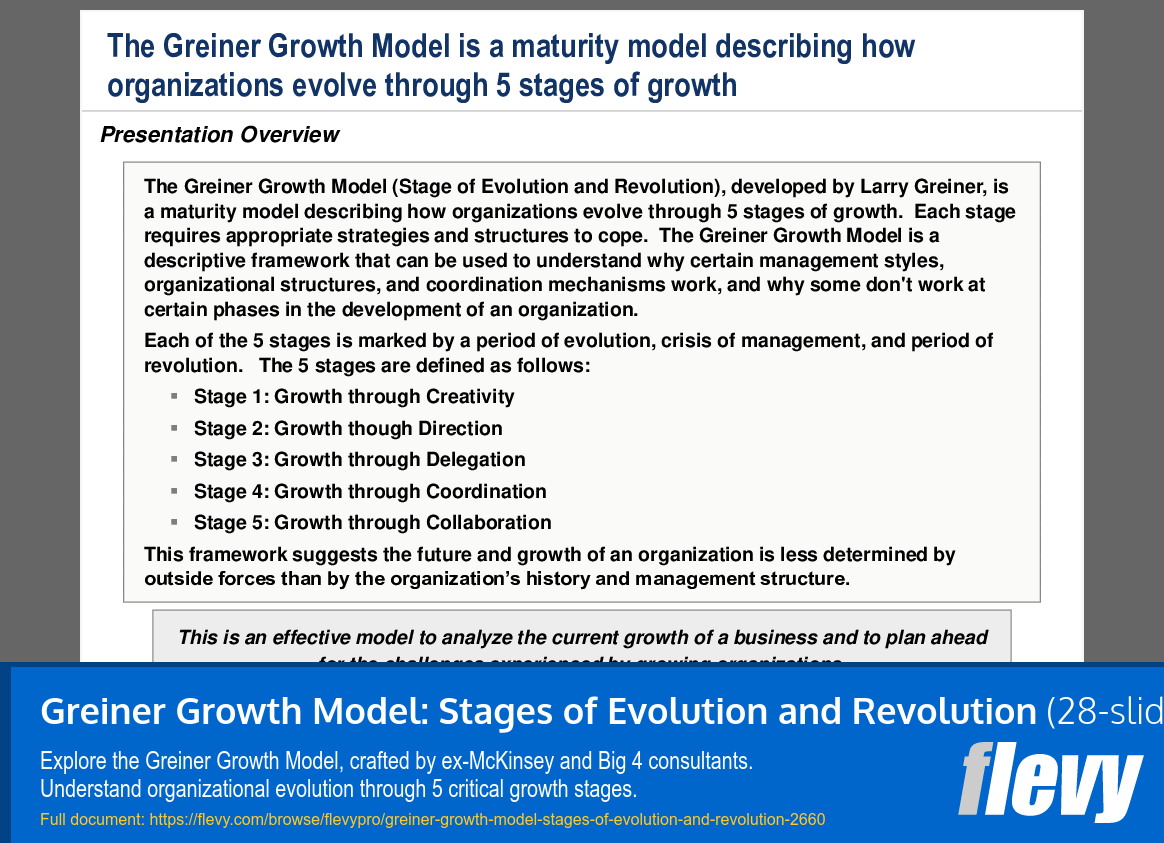
The Greiner Growth Model (Stages of Evolution and Revolution), developed by Larry Greiner, is a maturity model describing how organizations evolve through 5 stages of growth. Each stage requires appropriate strategies and structures to cope. The Greiner Growth Model is a descriptive framework that can be used to understand why certain management styles, organizational structures, and coordination mechanisms work, and why some don't work at certain phases in the development of an organization.
Each of the 5 stages is marked by a period of evolution, crisis of management, and period of revolution. The 5 stages are defined as follows:
Stage 1: Growth through Creativity
Stage 2: Growth though Direction
Stage 3: Growth through Delegation
Stage 4: Growth through Coordination
Stage 5: Growth through Collaboration
This framework suggests the future and growth of an organization is less determined by outside forces than by the organization’s history and management structure. This is an effective model to analyze the current growth of a business and to plan ahead for the challenges experienced by growing organizations.
The PPT delves into the five key dimensions essential for developing an Organizational Maturity Model, providing a comprehensive analysis of how the age and size of an organization, along with its stages of evolution and revolution, impact growth. It emphasizes the importance of understanding these dimensions to navigate the complexities of organizational development effectively. The model also highlights the critical role of industry growth rate in shaping organizational strategies and practices.
This presentation offers a deep dive into each stage of growth, from Creativity to Collaboration, detailing the organizational practices and management focus required at each phase. It includes practical templates and visual aids to facilitate the application of the Greiner Growth Model in real-world scenarios. This resource is invaluable for executives aiming to anticipate and manage the inevitable crises that accompany each stage of growth, ensuring sustained organizational success.
The Greiner Growth Model defines 5 sequential stages of organizational development: Growth through Creativity, Growth through Direction, Growth through Delegation, Growth through Coordination, and Growth through Collaboration, structured around evolution, a crisis of management, and a revolution at each stage across 5 stages.
How does the Greiner model explain management crises during growth?
The model describes each growth stage as a period of evolution followed by a crisis rooted in the prevailing management style; that crisis triggers a revolutionary shift to new structures or coordination mechanisms, repeated across all 5 stages.
How can I use the model to plan organizational change?
Use the model to map your organization’s age, size, and current practices to a specific stage, then select structures and management approaches suited to that stage; the PPT includes practical templates and visual aids to apply the framework across 5 key dimensions.
What should I look for when buying an organizational growth/maturity presentation?
Evaluate whether the material maps distinct stages with recommended management styles, addresses age and size and industry growth rate, provides templates and visual aids for application, and offers a stage-based diagnostic process covering the 5 key dimensions.
How should I assess the cost versus value of maturity-model templates?
Compare deliverables such as slide count, included templates, and depth of stage analysis; for example, Flevy’s Greiner Growth Model: Stages of Evolution and Revolution is a 28-slide PowerPoint that includes templates and visual aids to apply the model across stages.
Is the Greiner model applicable to both startups and large firms?
Yes; the framework emphasizes that an organization’s history, age, and size influence which management styles and structures are effective, allowing diagnosis and planning for entities at different scales across the model’s 5 stages.
How does industry growth rate factor into the Greiner framework?
The model highlights industry growth rate as a critical dimension shaping organizational strategies and practices, so assessments should incorporate external growth dynamics alongside internal factors like age and size and the 5 key dimensions.
I need to restructure after rapid expansion—how can the Greiner model help?
Use the model to identify which of the 5 stages you currently inhabit, anticipate the likely management crisis for that stage, and select appropriate structural or coordination changes; Flevy’s Greiner Growth Model PPT offers a stage-by-stage deep dive to support that process across Stage 1 through Stage 5.
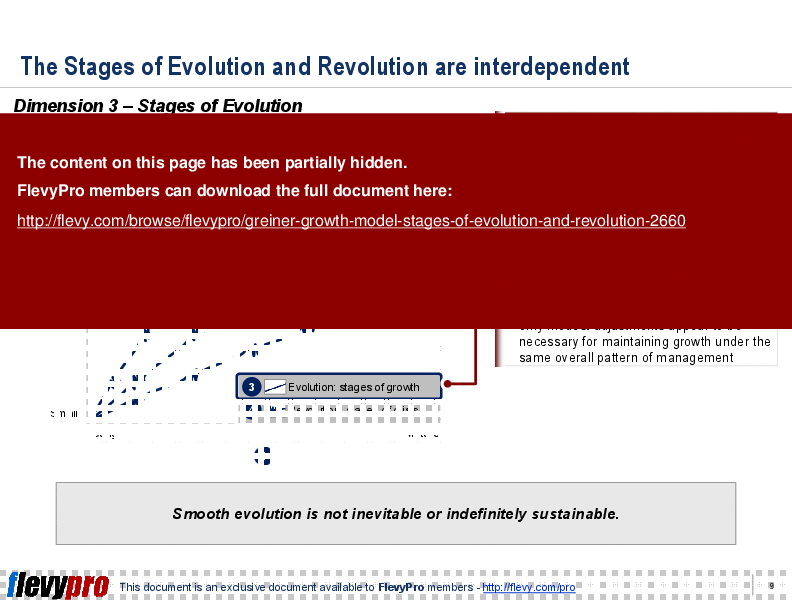
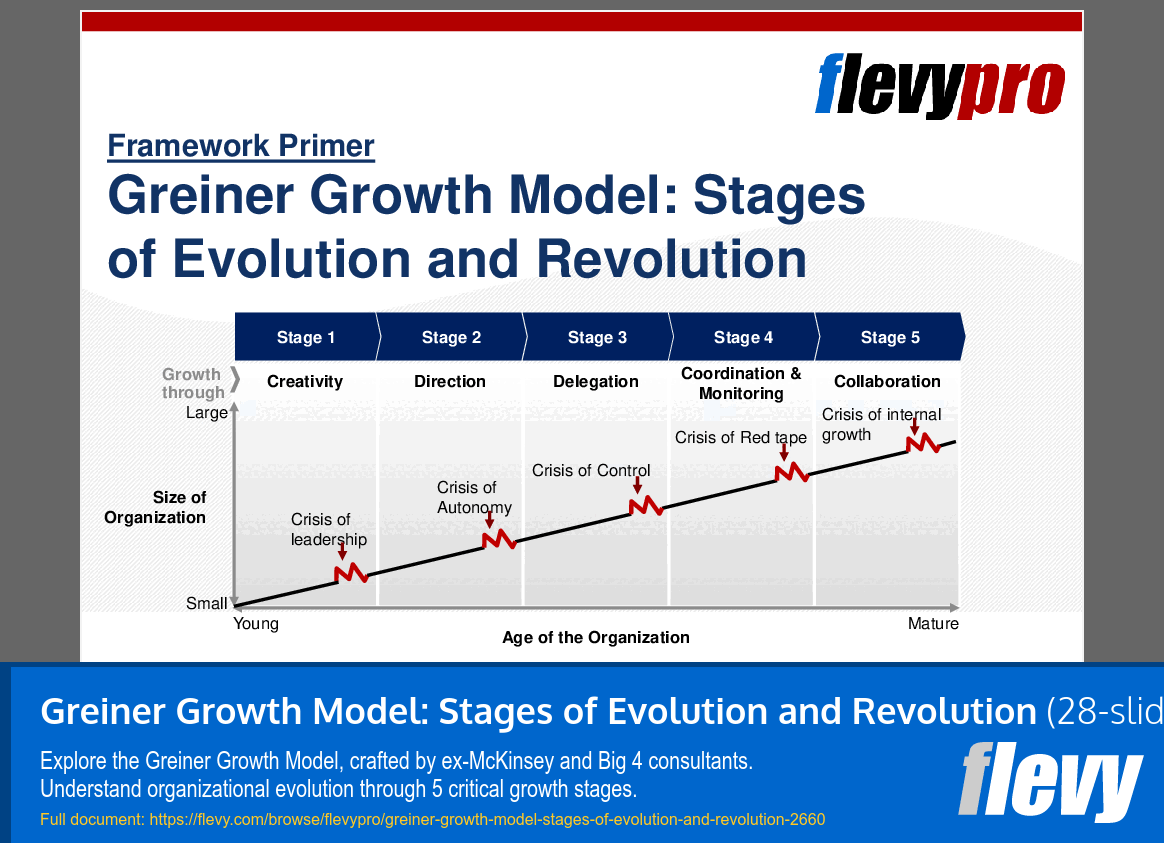
The Greiner Growth Model outlines 5 stages of organizational growth, each with distinct challenges and crises. Stage 1, "Creativity," faces a "Crisis of Leadership" as organizations expand. In Stage 2, "Direction," formalized processes lead to a "Crisis of Autonomy," stifling employee initiative. Stage 3, "Delegation," attempts to distribute decision-making, but may result in a "Crisis of Control" due to oversight challenges. Stage 4, "Coordination & Monitoring," introduces structured systems, risking a "Crisis of Red Tape" from excessive bureaucracy. Finally, Stage 5, "Collaboration," seeks integration, but can encounter a "Crisis of Internal Growth," necessitating new strategies for sustained expansion.
The fourth stage of the Greiner Growth Model, "Coordination," focuses on establishing formal systems and procedures to enhance organizational efficiency and resource allocation. Top-level executives are essential in managing these systems, which streamline operations and facilitate growth. Key characteristics include merging decentralized units into product groups for greater integration and implementing formal planning procedures subject to intensive review for accountability and strategic alignment. Capital expenditures are carefully evaluated, treating each product group as an investment center with monitored performance metrics. However, the "Crisis of Red Tape" warns that increasing complexity can hinder agility and innovation. Stock options and profit-sharing initiatives aim to maintain employee engagement and alignment with organizational goals amidst growing formal structures.
The second stage of the Greiner Growth Model, labeled "Direction," features capable, directive leadership essential for companies transitioning from initial growth. This leadership effectively channels employee efforts, but may become insufficient as organizations grow more complex, leading to a "Crisis of Autonomy" and the need for decentralized decision-making. Key characteristics of this stage include increased job specialization and a functional organizational structure that separates manufacturing from marketing, enhancing operational efficiency. The implementation of accounting systems for inventory and purchasing, along with incentives, budgets, and work standards, is crucial. As the organization expands, a hierarchy develops, resulting in more formal communication and limiting the autonomy of lower-level supervisors, who become functional specialists rather than decision-makers. Balancing directive leadership with autonomy and delegation is vital for organizational evolution.
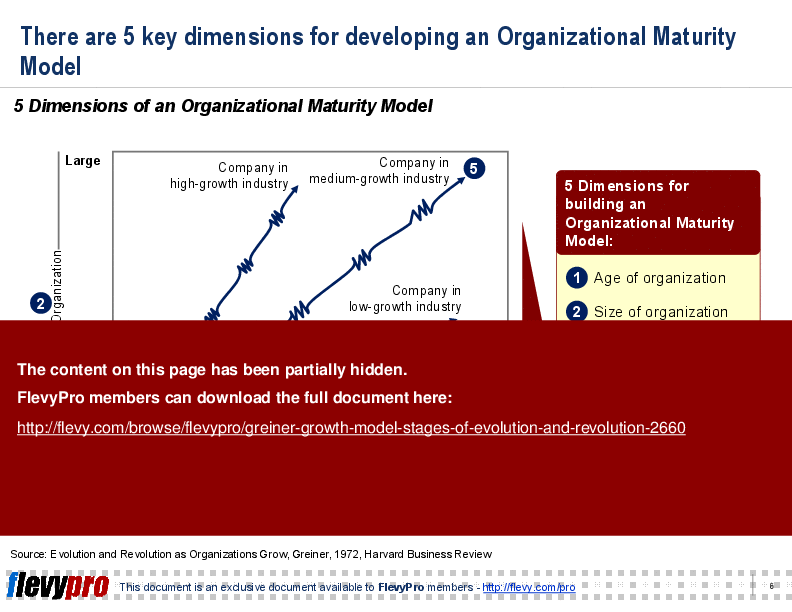
This PPT slide template outlines an Organizational Maturity Model framework with 5 critical dimensions: age of organization, size of organization, stages of evolution, stages of revolution, and growth rate of the industry. The vertical axis represents organization size (small to large), while the horizontal axis depicts organization age (young to mature). The model features 3 lines for companies in high-growth, medium-growth, and low-growth industries, illustrating that organizational growth and maturity trajectories vary based on external factors like industry growth rates. Organizations evolve through 2 main phases: stages of evolution, reflecting natural maturation, and stages of revolution, indicating periods of crisis requiring significant change. Understanding these dimensions helps leaders evaluate their organizational maturity and navigate growth complexities.
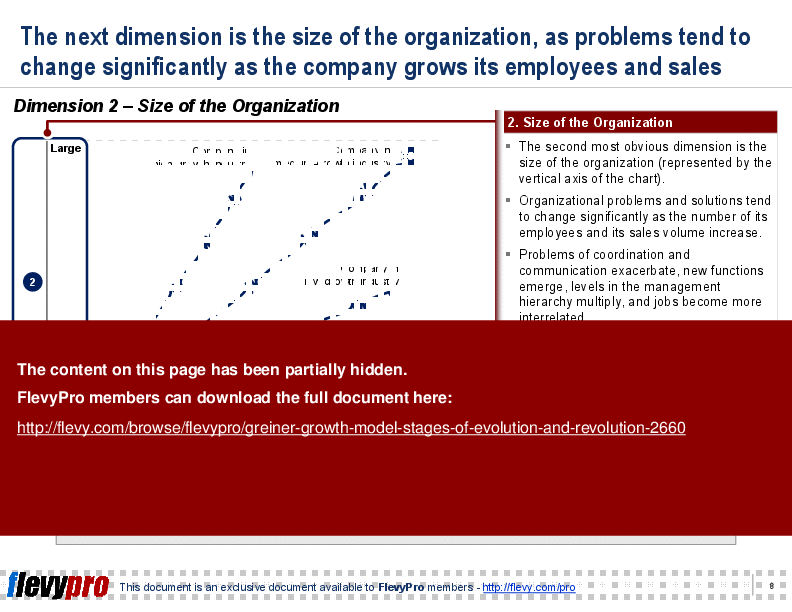
This PPT slide template focuses on the second dimension of the Greiner Growth Model, highlighting the relationship between organizational size and growth challenges. As organizations expand in employees and sales, they face increasing complexities in coordination and communication. Larger organizations experience more intricate management hierarchies and new functions, leading to unique operational hurdles not encountered by smaller firms. The slide emphasizes that organizational structure is shaped by size and growth trajectory, rather than time alone. Companies that scale must adapt their structures and processes to address emerging challenges, making it essential for executives to understand how growth impacts organizational dynamics.
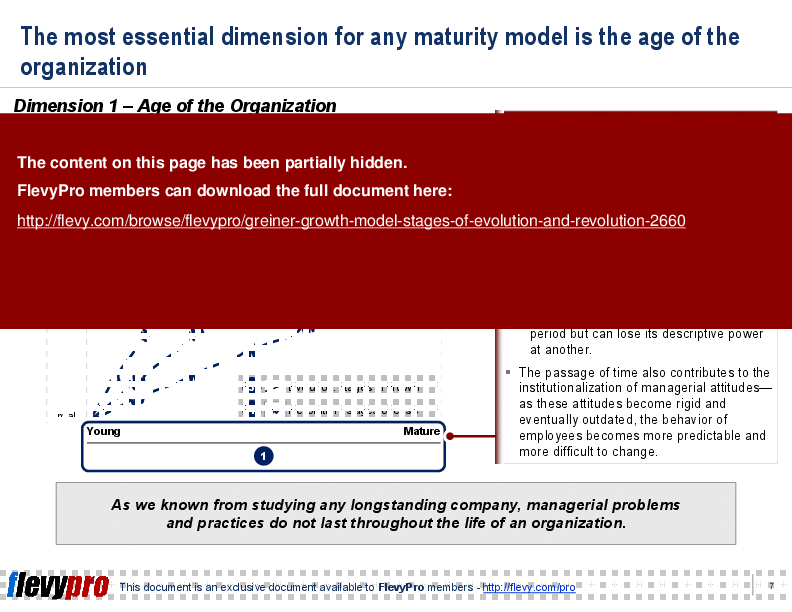
The growth rate of an industry significantly influences an organization’s growth trajectory. Companies in rapidly expanding markets must scale operations quickly, often requiring rapid hiring to meet demand. Evolutionary phases are brief in fast-growing sectors, while mature or slowly growing industries experience prolonged evolutionary periods. This relationship indicates that industry dynamics directly impact organizational adaptation and evolution. In prosperous industries, evolution can be extended, and revolutions postponed, allowing companies to delay necessary changes until a crisis arises. This creates a false sense of security that can be detrimental over time. Understanding these dynamics enables executives to anticipate challenges based on industry growth rates, facilitating informed decision-making and proactive resource management.
Source: Best Practices in Organizational Design, Growth Strategy, Maturity Model, Organizational Development PowerPoint Slides: Greiner Growth Model: Stages of Evolution and Revolution PowerPoint (PPT) Presentation Slide Deck, PPT Lab
This framework is developed by a team of former McKinsey and Big 4 consultants. The presentation follows the headline-body-bumper slide format used by global consulting firms.
For $10.00 more, you can download this document plus 2 more FlevyPro documents. That's just $13 each.
ABOUT FLEVYPRO
This document is part of the FlevyPro Library, a curated knowledge base of documents for our FlevyPro subscribers.
FlevyPro is a subscription service for on-demand business frameworks and analysis tools. FlevyPro subscribers receive access to an exclusive library of curated business documents—business framework primers, presentation templates, Lean Six Sigma tools, and more—among other exclusive benefits.
The average daily rate of a McKinsey consultant is $6,625 (not including expenses). The average price of a Flevy document is $65.
Trusted by over 10,000+ Client Organizations
Since 2012, we have provided business templates to over 10,000 businesses and organizations of all sizes, from startups and small businesses to the Fortune 100, in over 130 countries.
"I have used Flevy services for a number of years and have never, ever been disappointed. As a matter of fact, David and his team continue, time after time, to impress me with their willingness to assist and in the real sense of the word. I have concluded in fact
that it is not at all just a repository of documents/resources but, in the way that David and his team manage the firm, it is like dealing with consultants always ready to assist, advise and direct you to what you really need, and they always get it right.
I am an international hospitality accomplished senior executive who has worked and lived during the past 35 years in 23 countries in 5 continents and I can humbly say that I know what customer service is, trust me.
Aside from the great and professional service that Flevy's team provide, their wide variety of material is of utmost great quality, professionally put together and most current.
Well done Flevy, keep up the great work and I look forward to continue working with you in the future and to recommend you to a variety of colleagues around the world.
"
– Roberto Pelliccia, Senior Executive in International Hospitality
"The wide selection of frameworks is very useful to me as an independent consultant. In fact, it rivals what I had at my disposal at Big 4 Consulting firms in terms of efficacy and organization."
– Julia T., Consulting Firm Owner (Former Manager at Deloitte and Capgemini)
"Flevy is our 'go to' resource for management material, at an affordable cost. The Flevy library is comprehensive and the content deep, and typically provides a great foundation for us to further develop and tailor our own service offer."
– Chris McCann, Founder at Resilient.World
"FlevyPro provides business frameworks from many of the global giants in management consulting that allow you to provide best in class solutions for your clients."
– David Harris, Managing Director at Futures Strategy
"As a young consulting firm, requests for input from clients vary and it's sometimes impossible to provide expert solutions across a broad spectrum of requirements. That was before I discovered Flevy.com.
Through subscription to this invaluable site of a plethora of topics that are key and crucial to consulting, I
have been able to exceed expectations and deliver quality advice and solutions to my clients. The quality and expertise of the authors are exemplary and gives me great confidence to use as part of my service offerings.
I highly recommend this company for any consultant wanting to apply international best practice standards in their service offerings.
"
– Nishi Singh, Strategist and MD at NSP Consultants
"[Flevy] produces some great work that has been/continues to be of immense help not only to myself, but as I seek to provide professional services to my clients, it gives me a large "tool box" of resources that are critical to provide them with the quality of service and outcomes they are expecting."
– Royston Knowles, Executive with 50+ Years of Board Level Experience
"Last Sunday morning, I was diligently working on an important presentation for a client and found myself in need of additional content and suitable templates for various types of graphics. Flevy.com proved to be a treasure trove for both content and design at a reasonable price, considering the time I
saved. I encountered a download issue during the ordering process. However, a quick email to Flevy's support team, even on a Sunday (!!!), resulted in assistance within less than an hour, allowing me to download the content I needed. Fantastic job, Flevy! I give 5 stars for both content/price and customer service. Thank you!
"
– M. E., Chief Commercial Officer, International Logistics Service Provider
"FlevyPro has been a brilliant resource for me, as an independent growth consultant, to access a vast knowledge bank of presentations to support my work with clients. In terms of RoI, the value I received from the very first presentation I downloaded paid for my subscription many times over! The
quality of the decks available allows me to punch way above my weight – it's like having the resources of a Big 4 consultancy at your fingertips at a microscopic fraction of the overhead.

 Click main image to view in full screen. Unlock all 9 preview images: