
This framework is developed by a team of former McKinsey and Big 4 consultants. The presentation follows the headline-body-bumper slide format used by global consulting firms.
Explore a comprehensive EAM Implementation framework by ex-McKinsey & Big 4 consultants. Enhance operational efficiency, data management, and supply chain integration. Enterprise Asset Management (EAM) is a 27-slide PPT PowerPoint presentation slide deck (PPT) available for immediate download upon purchase.
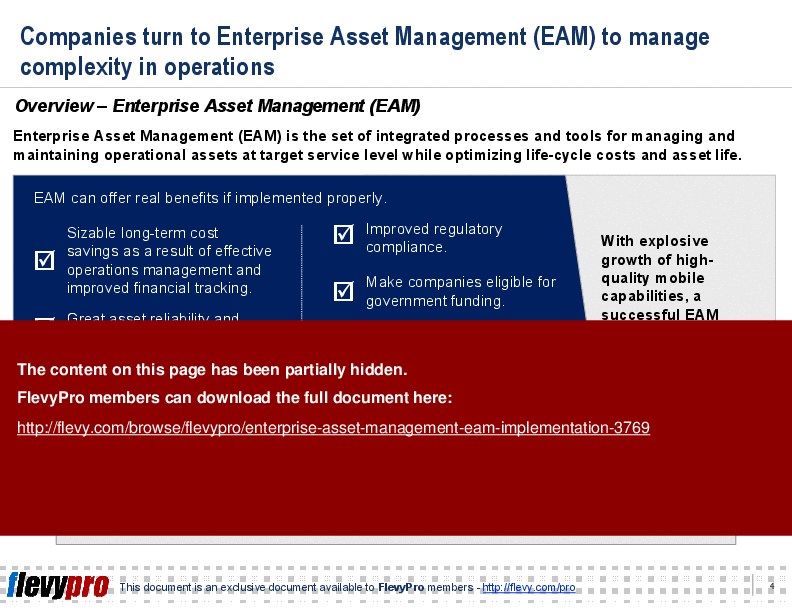
Enterprise Asset Management (EAM) can bring significant benefits to our company. It can translate to cost savings, operational efficiency, increased asset reliability, longer asset life, and increased safety. Implementing EAM however, is a highly complex endeavor. There are many reasons why EAM can fail to produce the hoped-for benefits.
Surprisingly, the most critical reasons are not technological. The most critical reasons are strategic, people-based, and process-oriented. With the right people, strategy, and mindset, these problems can be solved. The key is to devise a complete and coherent strategy and translate that strategy into processes and technology needed to carry it out.
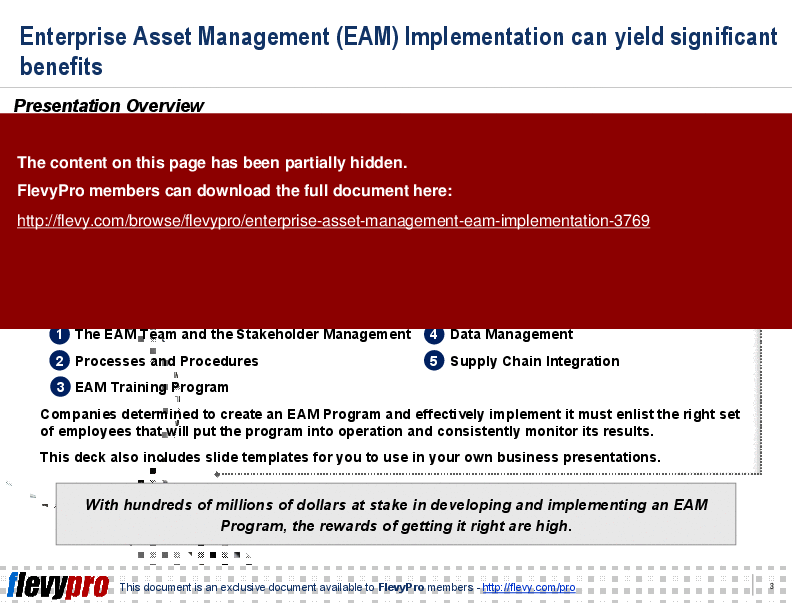
This presentation takes an in-depth review of the various element that must be considered for an effective implementation of the company’s Enterprise Asset Management (EAM) Program.
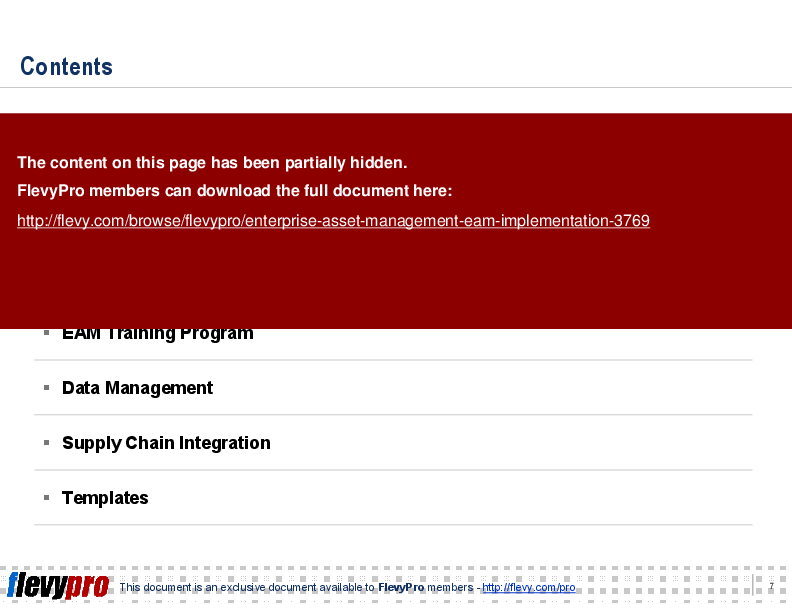
1. The EAM Team and the Stakeholder Management
2. Processes and Procedures
3. EAM Training Program
4. Data Management
5. Supply Chain Integration
Companies determined to create an EAM Program and effectively implement it must enlist the right set of employees that will put the program into operation and consistently monitor its results.
This deck also includes slide templates for you to use in your own business presentations.
The EAM Implementation presentation also delves into the critical role of data management, emphasizing that data is the lifeblood of any EAM solution. Poor data management can lead to inaccurate and incomplete data, incompatible integrations, and ultimately, the same inefficiencies that the new EAM program aims to eliminate. The PPT provides strategies for ensuring data quality, such as involving frontline employees and supplementing internal teams with third-party vendors specializing in data cleansing.
Supply chain integration is another key focus area. The presentation outlines the necessity of harmonizing supply chain strategies with the overall EAM program. This includes coordinating closely with supply chain executives and examining supply chain processes in tandem with EAM procedures. Proper integration can prevent delays, reduce wastage, and ensure the timely availability of critical parts, thereby maximizing the benefits of the EAM program.
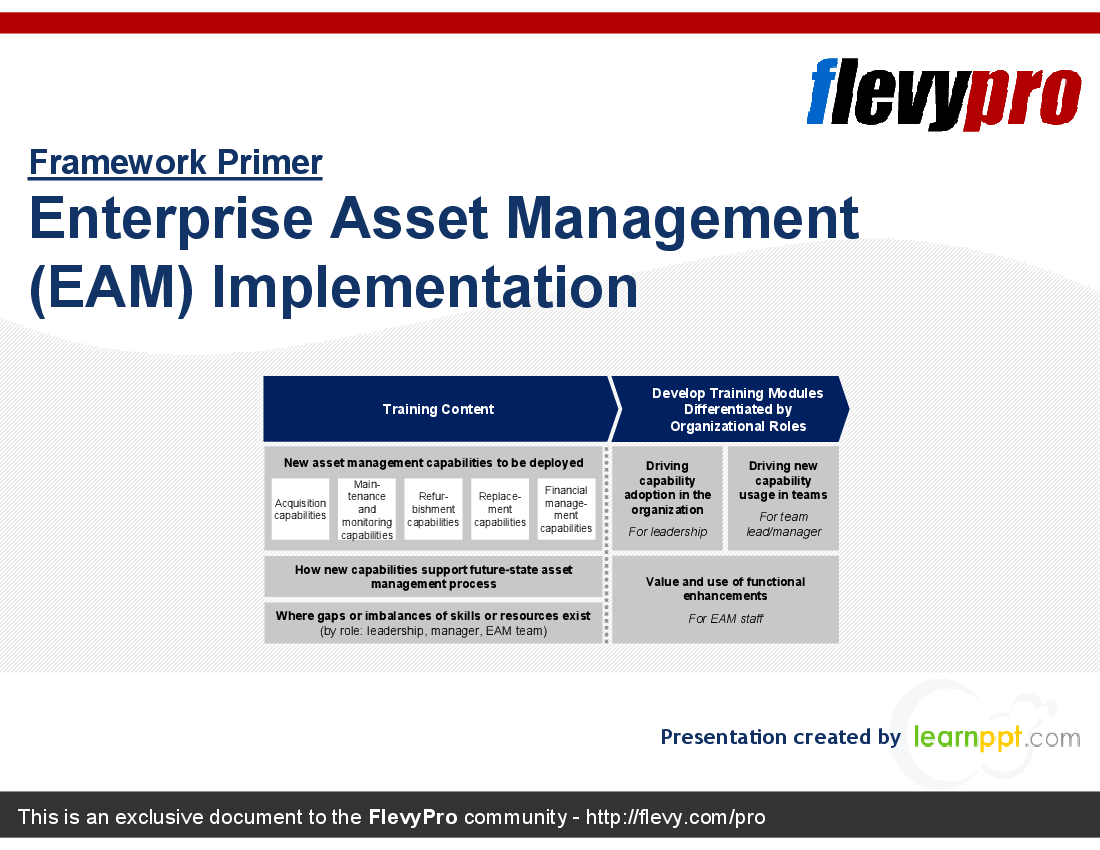
This PPT slide outlines a structured approach for developing an Enterprise Asset Management (EAM) Training Program. Key components include identifying new asset management capabilities such as acquisition, maintenance, refurbishment, replacement, and financial management. These capabilities support the future-state asset management process, aligning training with long-term organizational goals. Identifying skill gaps enables targeted training interventions for specific roles, including leadership, managers, and EAM teams. Training modules should be differentiated by role: leadership focuses on capability adoption, while team leads and managers utilize new capabilities. EAM staff must understand the value and use of functional enhancements. Tailored training based on specific functional requirements ensures relevance and effectiveness, leading to improved asset management practices.
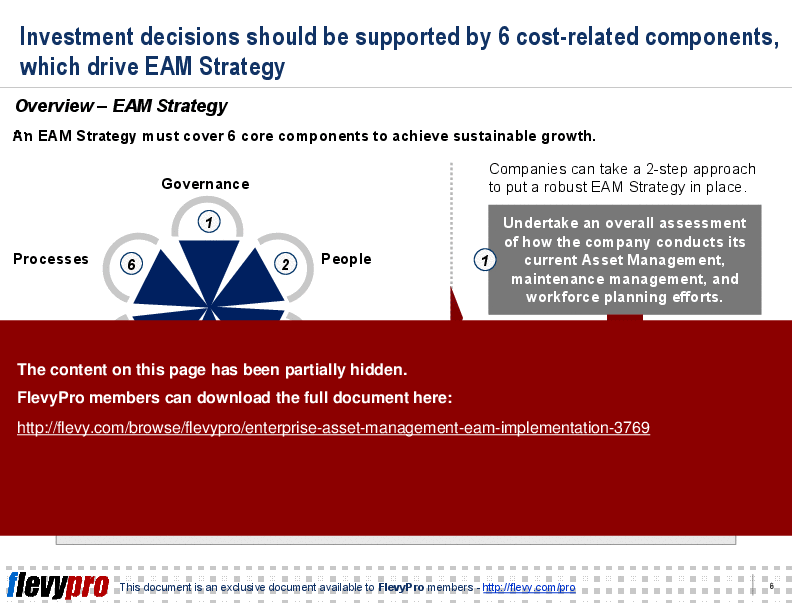
This PPT slide presents a framework for developing an effective Enterprise Asset Management (EAM) strategy, highlighting 6 core components: Governance, People, Organization, Performance Management, Processes, and Technology. These components must be integrated into investment decisions for sustainable growth.
The two-step approach begins with assessing existing asset management practices, maintenance management, and workforce planning to identify strengths and weaknesses. The second step involves senior leaders in creating the business plan, ensuring alignment with overall business objectives and operational efficiencies.
The circular layout of the components indicates their interconnectedness, suggesting that neglecting any component could undermine the EAM strategy's effectiveness. This comprehensive approach is essential for enhancing asset management capabilities.
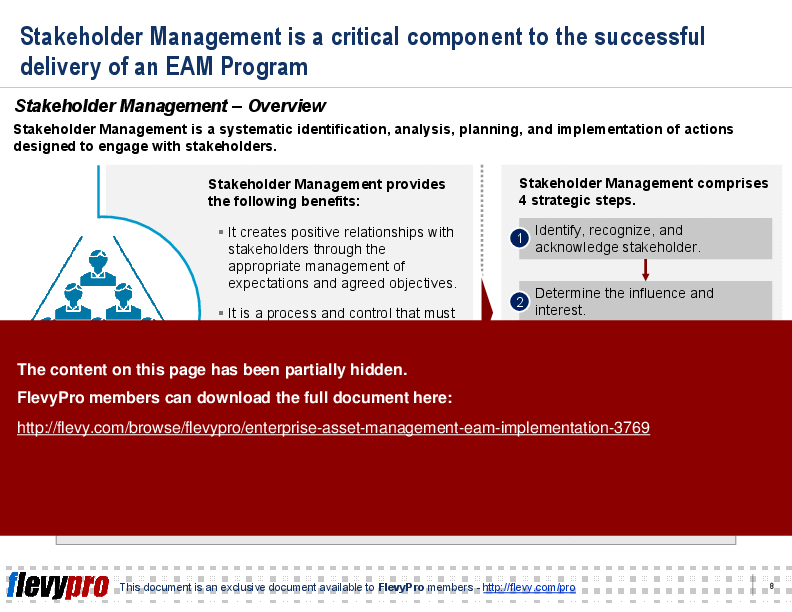
This PPT slide provides an overview of Stakeholder Management in Enterprise Asset Management (EAM) programs. Stakeholder Management is defined as a systematic approach involving identification, analysis, planning, and implementation of actions to engage stakeholders effectively. Key benefits include fostering positive relationships by managing expectations and aligning objectives, which is essential for stakeholder buy-in and support. It requires a structured process guided by foundational principles and relies on data-driven insights for tailored engagement strategies. The slide outlines 4 strategic steps: identifying stakeholders, assessing their influence and interest, establishing a communication management plan, and engaging stakeholders, offering a clear roadmap for effective stakeholder engagement in EAM initiatives.
This PPT slide highlights the importance of engaging individuals with relevant field experience in implementing an Enterprise Asset Management (EAM) program. Neglecting this can lead to misallocated resources, ineffective solutions, and wasted financial investments on initiatives that fail to address core operational challenges. Poor adoption rates of the EAM program often result from a lack of involvement from those who will implement it. To mitigate these risks, it is essential to build a diverse EAM team, including experts from relevant fields and external EAM strategy consultants who can provide insights and develop optimal asset maintenance solutions. Inclusive stakeholder management is critical for successful EAM initiatives.
Asset-intensive organizations face challenges in maintaining efficient operational processes due to outdated maintenance practices. Key inefficiencies include manual work scheduling, localized parts management, and a reactive maintenance approach. Cumbersome inventory management and poorly defined work orders further exacerbate these issues, resulting in lost time and unsafe conditions. To address these inefficiencies, organizations should analyze existing processes for improvement, involving operations personnel to ensure relevance and effectiveness. Processes must be simple, easy to follow, and adaptable to implement world-class asset management practices. Recognizing the negative impact of poor maintenance on performance, companies can enhance asset management by adopting a systematic approach and engaging operational teams in reassessing current practices.
This framework is developed by a team of former McKinsey and Big 4 consultants. The presentation follows the headline-body-bumper slide format used by global consulting firms.
For $10.00 more, you can download this document plus 2 more FlevyPro documents. That's just $13 each.
ABOUT FLEVYPRO
This document is part of the FlevyPro Library, a curated knowledge base of documents for our FlevyPro subscribers.

FlevyPro is a subscription service for on-demand business frameworks and analysis tools. FlevyPro subscribers receive access to an exclusive library of curated business documents—business framework primers, presentation templates, Lean Six Sigma tools, and more—among other exclusive benefits.
The average daily rate of a McKinsey consultant is $6,625 (not including expenses). The average price of a Flevy document is $65.
Trusted by over 10,000+ Client Organizations
Since 2012, we have provided business templates to over 10,000 businesses and organizations of all sizes, from startups and small businesses to the Fortune 100, in over 130 countries.
"One of the great discoveries that I have made for my business is the Flevy library of training materials.
As a Lean Transformation Expert, I am always making presentations to clients on a variety of topics: Training, Transformation, Total Productive Maintenance, Culture, Coaching, Tools, Leadership Behavior, etc. Flevy
It is well worth the money to purchase these presentations. Sure, I have the knowledge and information to make my point. It is another thing to create a presentation that captures what I want to say. Flevy has saved me countless hours of preparation time that is much better spent with implementation that will actually save money for my clients.
"
– Ed Kemmerling, Senior Lean Transformation Expert at PMG
"As an Independent Management Consultant, I find Flevy to add great value as a source of best practices, templates and information on new trends. Flevy has matured and the quality and quantity of the library is excellent. Lastly the price charged is reasonable, creating a win-win value for
the customer, Flevy and the various authors. This is truly a service that benefits the consulting industry and associated clients. Thanks for providing this service.
"
– Jim Schoen, Principal at FRC Group
"I like your product. I'm frequently designing PowerPoint presentations for my company and your product has given me so many great ideas on the use of charts, layouts, tools, and frameworks. I really think the templates are a valuable asset to the job."
– Roberto Fuentes Martinez, Senior Executive Director at Technology Transformation Advisory
"I have used FlevyPro for several business applications. It is a great complement to working with expensive consultants. The quality and effectiveness of the tools are of the highest standards."
– Moritz Bernhoerster, Global Sourcing Director at Fortune 500
"As a consultant requiring up to date and professional material that will be of value and use to my clients, I find Flevy a very reliable resource.
The variety and quality of material available through Flevy offers a very useful and commanding source for information. Using Flevy saves me time, enhances my expertise and ends up being a good decision."
– Dennis Gershowitz, Principal at DG Associates
"I have found Flevy to be an amazing resource and library of useful presentations for lean sigma, change management and so many other topics. This has reduced the time I need to spend on preparing for my performance consultation. The library is easily accessible and updates are regularly provided. A wealth of great information."
– Cynthia Howard RN, PhD, Executive Coach at Ei Leadership
"As a young consulting firm, requests for input from clients vary and it's sometimes impossible to provide expert solutions across a broad spectrum of requirements. That was before I discovered Flevy.com.
Through subscription to this invaluable site of a plethora of topics that are key and crucial to consulting, I
have been able to exceed expectations and deliver quality advice and solutions to my clients. The quality and expertise of the authors are exemplary and gives me great confidence to use as part of my service offerings.
I highly recommend this company for any consultant wanting to apply international best practice standards in their service offerings.
"
– Nishi Singh, Strategist and MD at NSP Consultants
"FlevyPro has been a brilliant resource for me, as an independent growth consultant, to access a vast knowledge bank of presentations to support my work with clients. In terms of RoI, the value I received from the very first presentation I downloaded paid for my subscription many times over! The
quality of the decks available allows me to punch way above my weight – it's like having the resources of a Big 4 consultancy at your fingertips at a microscopic fraction of the overhead.
Receive our FREE presentation on Operational Excellence
This 50-slide presentation provides a high-level introduction to the 4 Building Blocks of Operational Excellence. Achieving OpEx requires the implementation of a Business Execution System that integrates these 4 building blocks.
Receive our FREE presentation on Operational Excellence
Get Our FREE Product.
This 50-slide presentation provides a high-level introduction to the 4 Building Blocks of Operational Excellence. Achieving OpEx requires the implementation of a Business Execution System that integrates these 4 building blocks.