
This framework is developed by a team of former McKinsey and Big 4 consultants. The presentation follows the headline-body-bumper slide format used by global consulting firms.
Explore the Sibson EVP model, crafted by ex-McKinsey & Big 4 consultants, to enhance employee engagement and align HR strategies with organizational goals. Employee Value Proposition (EVP) is a 20-slide PPT PowerPoint presentation slide deck (PPTX) available for immediate download upon purchase.
High Employee Engagement ties directly to financial benefits for a company and companies with high Employee Engagement typically have distinctive and compelling Employee Value Propositions (EVP). We can define an EVP as what we offer our employees in exchange for their effort and commitment.
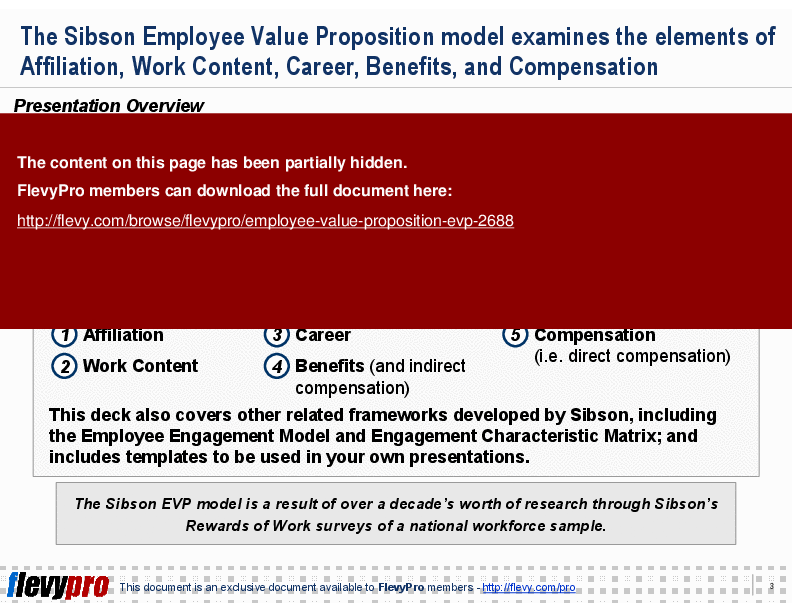
This presentation provides an overview to an EVP model, as developed by Sibson Consulting. The Sibson EVP model can be used to diagnose the effectiveness, develop, and improve our own EVP. The Sibson EVP model is a result of over a decade's worth of research through Sibson's Rewards of Work surveys of a national workforce sample.
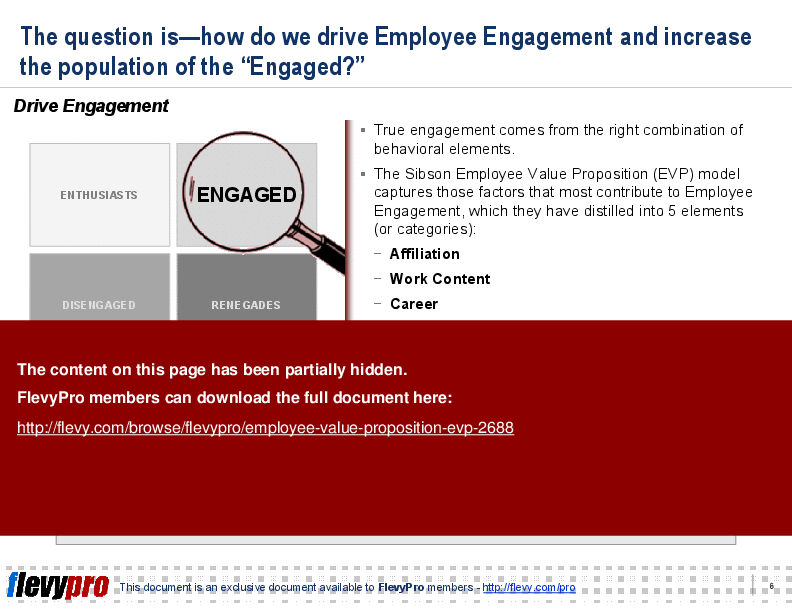
This framework captures those factors that most contribute to Employee Engagement, categorized into 5 elements:
1. Affiliation
2. Work Content
3. Career
4. Benefits (i.e. indirection compensation)
5. (Direct) Compensation
This deck also covers other related frameworks developed by Sibson, including the Employee Engagement Model and Engagement Characteristic Matrix; and includes templates to be used in your own presentations.
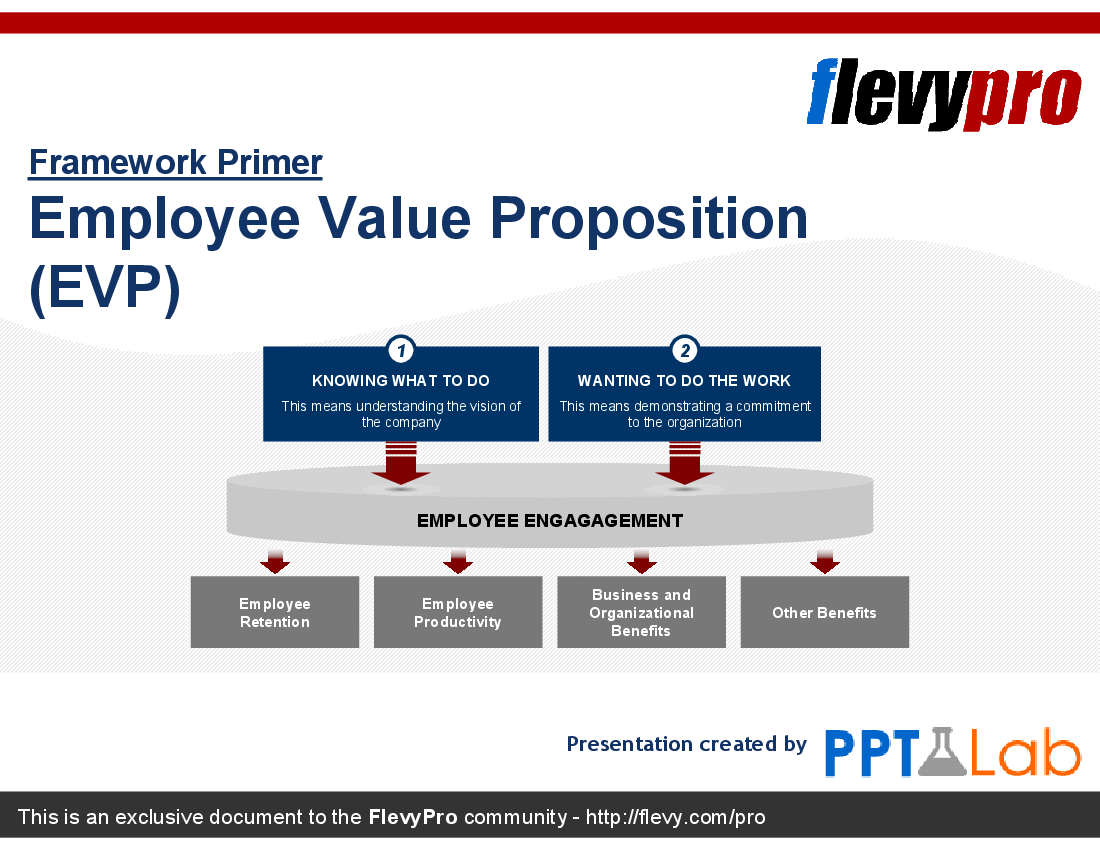
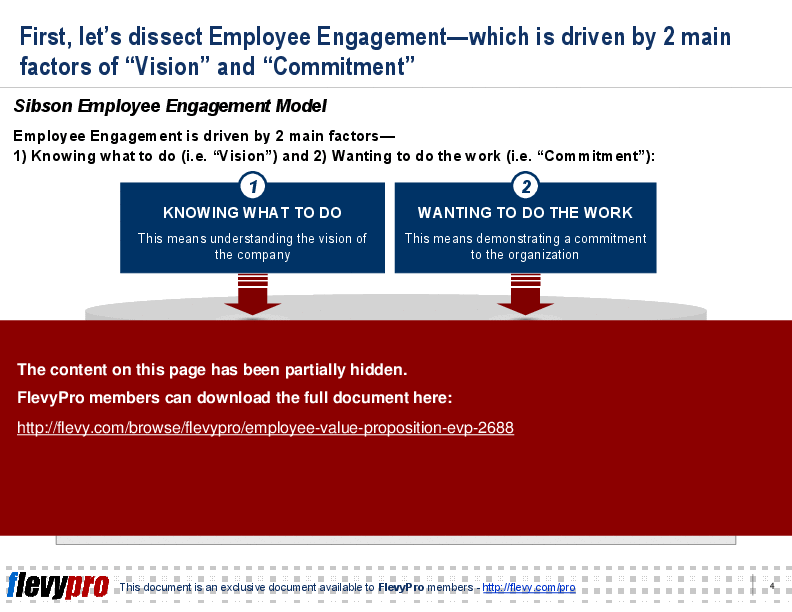
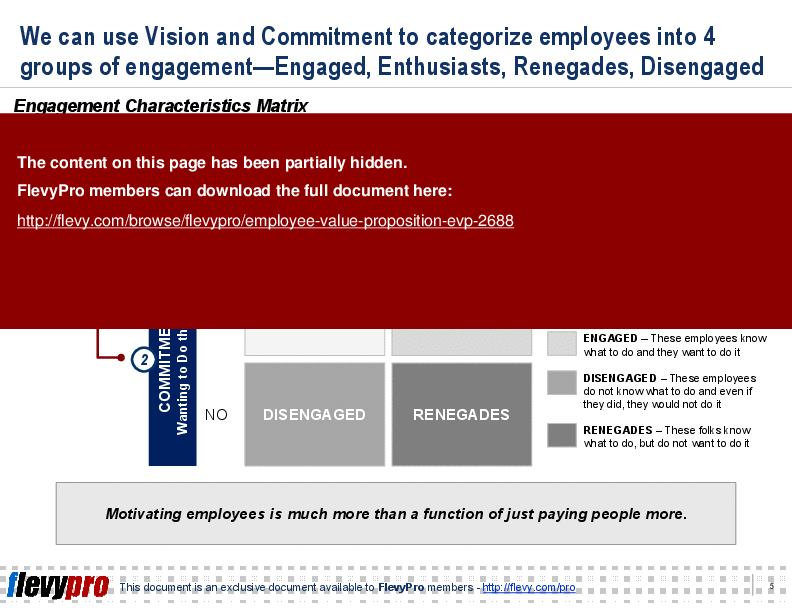
The Sibson Employee Engagement Model dissects engagement into two critical factors: Vision and Commitment. Understanding what to do and demonstrating a commitment to the organization are essential for driving employee engagement. This model categorizes employees into four groups—Engaged, Enthusiasts, Renegades, and Disengaged—based on their levels of vision and commitment. This segmentation helps in tailoring strategies to boost engagement across different employee types.
The presentation also includes practical templates for implementing the Sibson EVP model within your organization. These templates are designed to align talent and HR strategies with the broader EVP, ensuring that compensation, benefits, and career development are in sync with organizational goals. This alignment is crucial for enhancing employee engagement, retention, and overall organizational performance.
This PPT slide presents the Sibson Employee Value Proposition (EVP) model, focusing on employee engagement categorized into 4 segments: Enthusiasts, Disengaged, and Renegades. Genuine engagement stems from 5 critical categories: Affiliation, Work Content, Career, Benefits (indirect compensation), and Compensation (direct compensation). Understanding which elements resonate with employees is essential for fostering engagement. Organizations should identify weak perceptions to target improvements effectively. Prioritizing employee feedback allows companies to tailor engagement strategies, driving higher levels of engagement and enhancing performance and retention. This structured approach clarifies the path to engagement and highlights the importance of understanding employee needs and perceptions.
The Sibson Employee Value Proposition (EVP) model identifies 5 key elements influencing employee engagement: Affiliation, Work Content, Career, Benefits, and Compensation. The EVP encapsulates what employers offer in return for employee commitment. Aligning talent and HR strategies, particularly Compensation Strategy, with the EVP framework reinforces organizational mission and values, enhancing employee engagement. Organizations recognized as "employers of choice" have distinct and compelling EVPs that foster commitment. The Affiliation element shows the strongest correlation with employee engagement, followed closely by Work Content, indicating that fostering belonging and providing meaningful work are critical for employee satisfaction and retention.
The Employee Value Proposition (EVP) consists of 4 key components: Affiliation, Work Content, Career, and Benefits. Affiliation emphasizes belonging within the organization, fostering trust and commitment among employees. Work Content relates to job satisfaction, highlighting the importance of engaging tasks, autonomy, and meaningful contributions. Career focuses on long-term development opportunities, motivating employees to envision their career paths and pursue further education or training. While benefits are not explicitly mentioned, these elements collectively shape employee expectations and satisfaction. Aligning HR strategies with these insights can enhance retention and performance by leveraging intrinsic and extrinsic rewards to boost overall employee engagement.
This PPT slide outlines 4 key measures significantly correlated with employee turnover intention: Organization Commitment, Organizational Support, Trust in Management, and Job Responsibility. Each measure relates to the Employee Value Proposition (EVP) elements of Affiliation and Work Content. Affiliation, emphasized 3 times, highlights the importance of belonging for employee retention. Job Responsibility under Work Content indicates that work nature affects satisfaction. A strong statistical relationship is noted, with a Pearson’s correlation coefficient of 0.6 or higher, explaining over 60% of variation in employee engagement levels. Additionally, generational differences reveal Millennials as the least satisfied and most likely to leave, while retirement-age workers show lower turnover intentions, guiding tailored retention strategies.
Source: Best Practices in Employee Engagement, Employee Value Proposition, Sibson, Turnover PowerPoint Slides: Employee Value Proposition (EVP) PowerPoint (PPTX) Presentation Slide Deck, PPT Lab
This framework is developed by a team of former McKinsey and Big 4 consultants. The presentation follows the headline-body-bumper slide format used by global consulting firms.
For $10.00 more, you can download this document plus 2 more FlevyPro documents. That's just $13 each.
ABOUT FLEVYPRO
This document is part of the FlevyPro Library, a curated knowledge base of documents for our FlevyPro subscribers.

FlevyPro is a subscription service for on-demand business frameworks and analysis tools. FlevyPro subscribers receive access to an exclusive library of curated business documents—business framework primers, presentation templates, Lean Six Sigma tools, and more—among other exclusive benefits.
The average daily rate of a McKinsey consultant is $6,625 (not including expenses). The average price of a Flevy document is $65.
Trusted by over 10,000+ Client Organizations
Since 2012, we have provided business templates to over 10,000 businesses and organizations of all sizes, from startups and small businesses to the Fortune 100, in over 130 countries.
"FlevyPro provides business frameworks from many of the global giants in management consulting that allow you to provide best in class solutions for your clients."
– David Harris, Managing Director at Futures Strategy
"As an Independent Management Consultant, I find Flevy to add great value as a source of best practices, templates and information on new trends. Flevy has matured and the quality and quantity of the library is excellent. Lastly the price charged is reasonable, creating a win-win value for
the customer, Flevy and the various authors. This is truly a service that benefits the consulting industry and associated clients. Thanks for providing this service.
"
– Jim Schoen, Principal at FRC Group
"As a consulting firm, we had been creating subject matter training materials for our people and found the excellent materials on Flevy, which saved us 100's of hours of re-creating what already exists on the Flevy materials we purchased."
– Michael Evans, Managing Director at Newport LLC
"I have found Flevy to be an amazing resource and library of useful presentations for lean sigma, change management and so many other topics. This has reduced the time I need to spend on preparing for my performance consultation. The library is easily accessible and updates are regularly provided. A wealth of great information."
– Cynthia Howard RN, PhD, Executive Coach at Ei Leadership
"My FlevyPro subscription provides me with the most popular frameworks and decks in demand in today’s market. They not only augment my existing consulting and coaching offerings and delivery, but also keep me abreast of the latest trends, inspire new products and service offerings for my practice, and educate me
in a fraction of the time and money of other solutions. I strongly recommend FlevyPro to any consultant serious about success.
"
– Bill Branson, Founder at Strategic Business Architects
"As a consultant requiring up to date and professional material that will be of value and use to my clients, I find Flevy a very reliable resource.
The variety and quality of material available through Flevy offers a very useful and commanding source for information. Using Flevy saves me time, enhances my expertise and ends up being a good decision."
– Dennis Gershowitz, Principal at DG Associates
"The wide selection of frameworks is very useful to me as an independent consultant. In fact, it rivals what I had at my disposal at Big 4 Consulting firms in terms of efficacy and organization."
– Julia T., Consulting Firm Owner (Former Manager at Deloitte and Capgemini)
"Last Sunday morning, I was diligently working on an important presentation for a client and found myself in need of additional content and suitable templates for various types of graphics. Flevy.com proved to be a treasure trove for both content and design at a reasonable price, considering the time I
saved. I encountered a download issue during the ordering process. However, a quick email to Flevy's support team, even on a Sunday (!!!), resulted in assistance within less than an hour, allowing me to download the content I needed. Fantastic job, Flevy! I give 5 stars for both content/price and customer service. Thank you!
"
– M. E., Chief Commercial Officer, International Logistics Service Provider
Download our free compilation of 50+ slides and templates on Organizational Design, Change Management, and Corporate Culture. Methodologies include ADKAR, Burke-Litwin Change Model, McKinsey 7-S, Competing Values Framework, etc.