
This framework is developed by a team of former McKinsey and Big 4 consultants. The presentation follows the headline-body-bumper slide format used by global consulting firms.
Explore the Double Diamond Model, crafted by ex-McKinsey & Big 4 consultants. Enhance your design process with proven frameworks for innovation and user-centric solutions. Double Diamond Model is a 30-slide PPT PowerPoint presentation slide deck (PPTX) available for immediate download upon purchase.
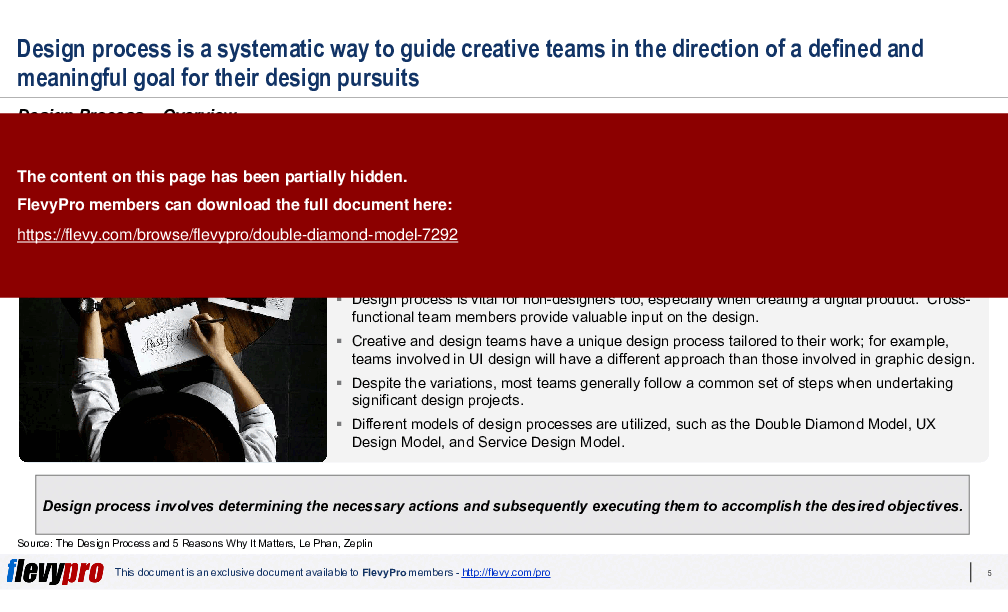
Design plays a vital role in creating effective solutions. It encompasses aesthetics, functionality, and user experience. Various models, such as the Double Diamond Model, UX Design Model, and Service Design Model, are used to guide the design process.
Despite the diversity of design models, there are common foundational steps. These include understanding the problem, generating ideas, prototyping, testing, and refining the solution. These steps form the core of Design Thinking and enable designers to navigate complex challenges effectively.
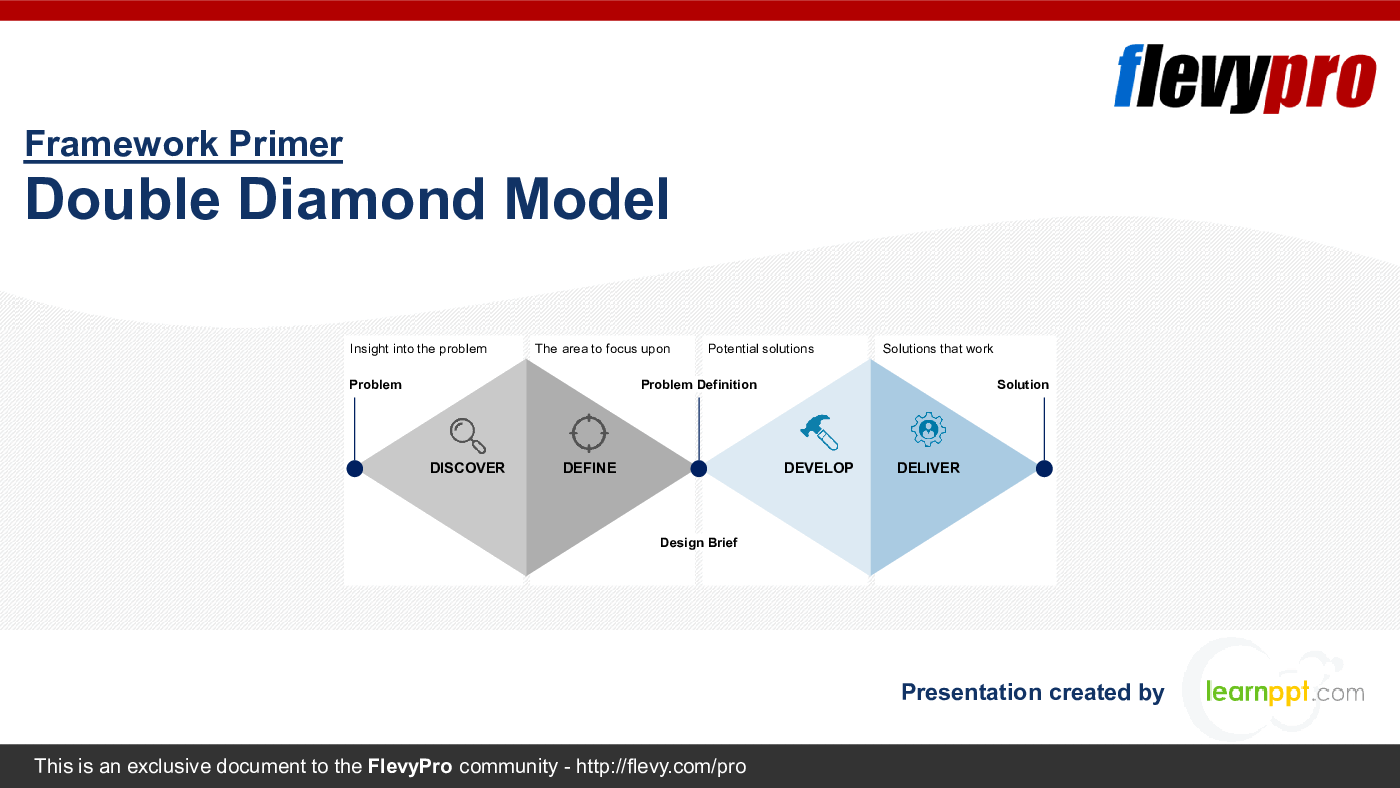
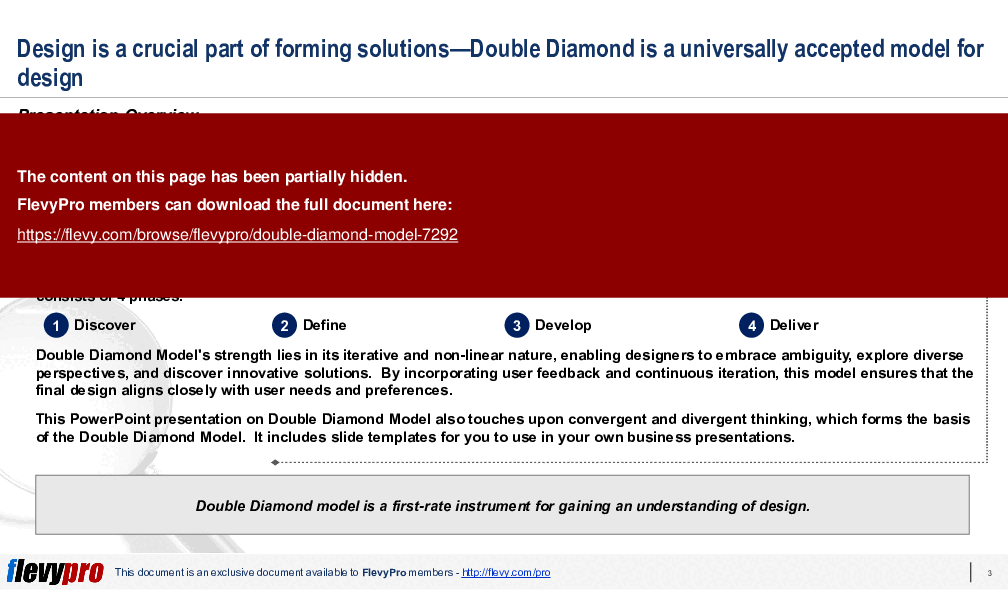
One widely recognized design model is the Double Diamond Model. It provides a framework for divergent and convergent thinking, emphasizing the importance of exploring multiple possibilities before narrowing down to a single solution. The Double Diamond Model consists of 4 phases:
1. Discover (insight into the problem)
2. Define (the area to focus on)
3. Develop (potential solutions)
4. Deliver (solutions that work)
Each of the 4 Ds of the Double Diamond Model is discussed in depth. This PowerPoint presentation on Double Diamond Model also touches upon convergent and divergent thinking, which forms the basis of the Double Diamond Model. There is a also a comparison of the Double Diamond Model with Design Thinking.
Double Diamond Model's strength lies in its iterative and non-linear nature, enabling designers to embrace ambiguity, explore diverse perspectives, and discover innovative solutions. By incorporating user feedback and continuous iteration, this model ensures that the final design aligns closely with user needs and preferences.
Double Diamond model is applicable across diverse industries and can be implemented in virtually any context.
This PowerPoint presentation includes slide templates for you to use in your own business presentations.
This PPT slide compares the Double Diamond Model and Design Thinking framework, highlighting their distinct approaches and objectives in the design process. The Double Diamond Model emphasizes divergent and convergent thinking, enabling teams to explore a wide range of ideas before refining them systematically. In contrast, Design Thinking prioritizes understanding user needs, generating creative solutions, and iteratively refining them through testing and feedback. While the Double Diamond Model is a specific framework, Design Thinking offers a more holistic and flexible approach, advantageous in dynamic environments. The slide outlines the Design Thinking process in 5 key steps: Empathize, Define, Ideate, Prototype, and Test, making it accessible for non-designers.
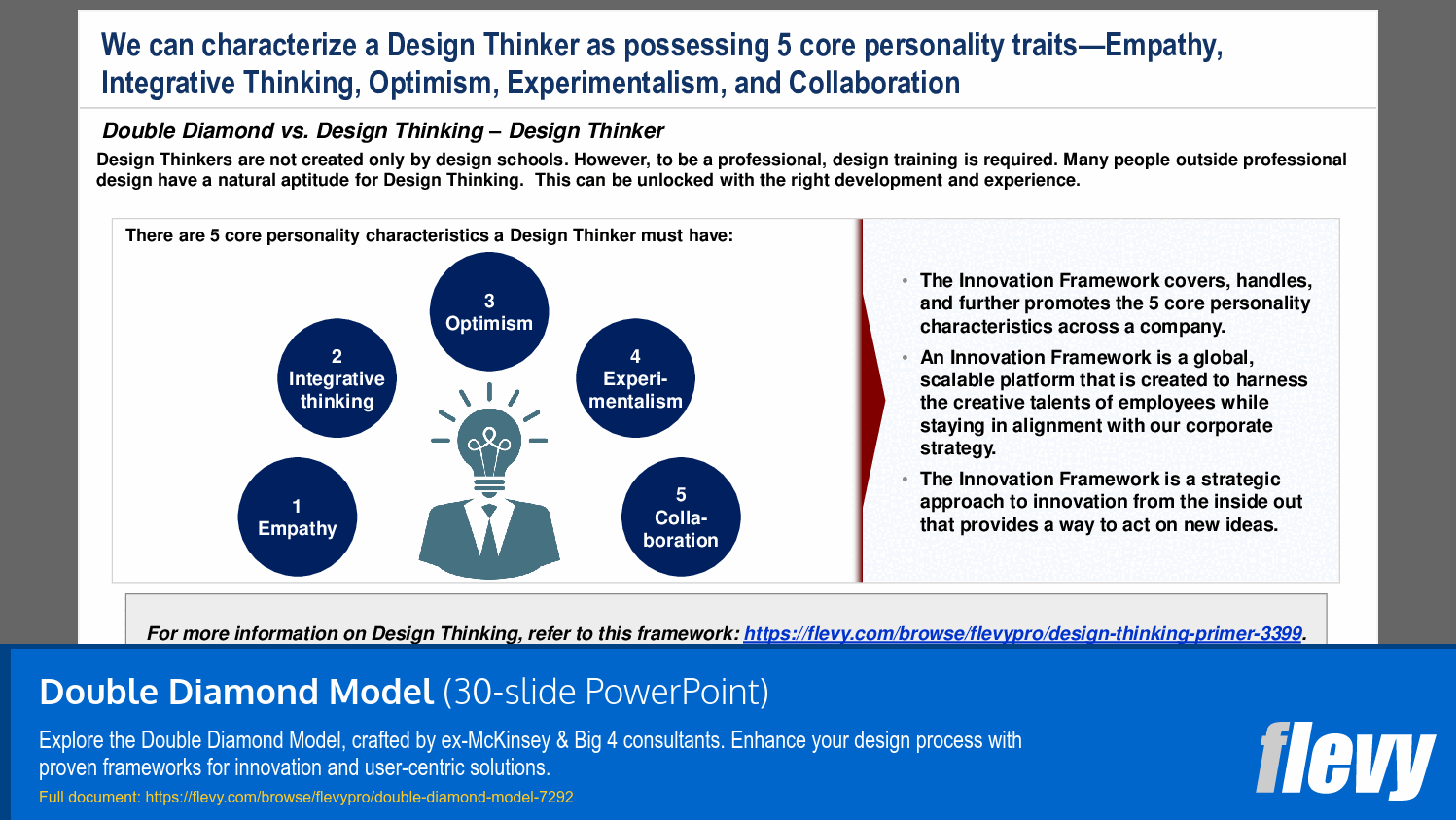
This PPT slide outlines 5 essential traits of a Design Thinker: Empathy, Integrative Thinking, Optimism, Experimentalism, and Collaboration. While some individuals may naturally exhibit these traits, formal training is vital for professional development in Design Thinking. The circular visual representation suggests a holistic approach, where each trait contributes to innovative solutions and effective teamwork. Additionally, the slide introduces the Innovation Framework, a strategic tool designed to nurture these characteristics across an organization, aligning employee creativity with corporate strategy. This framework facilitates internal innovation, enabling organizations to adapt to new ideas and shift towards an integrated, employee-driven model. Understanding these foundational traits and the strategic role of the Innovation Framework fosters a sustainable culture of innovation aligned with business objectives.
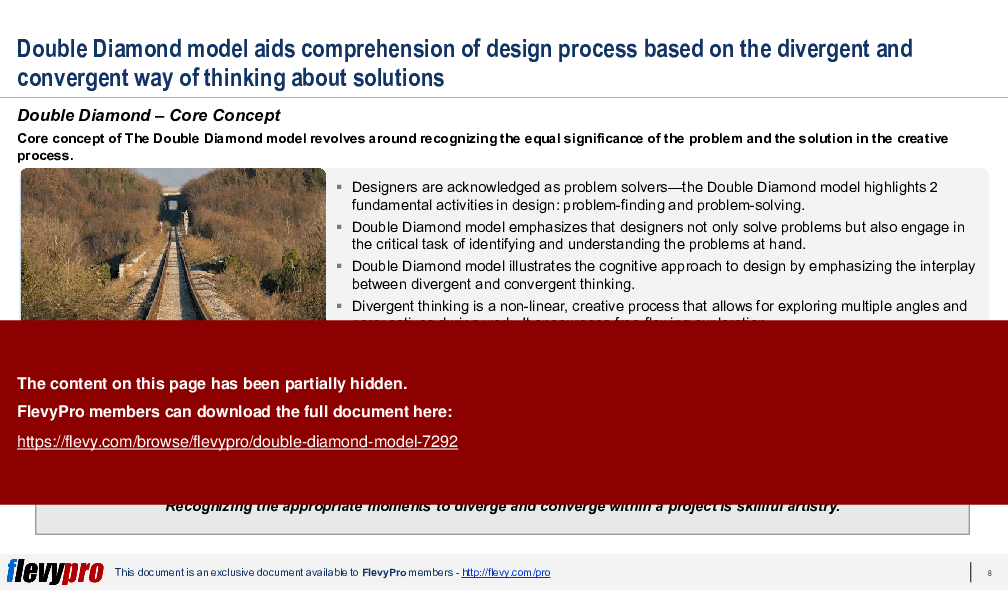
This PPT slide presents a framework for managing the transition from divergent to convergent thinking in collaborative design projects. Divergent thinking involves broad exploration and generation of innovative ideas during brainstorming sessions. The transition to convergent thinking focuses on narrowing down ideas to a viable concept, often referred to as the "groan zone," a critical juncture where teams must discard ideas to maintain momentum. The term "groan zone" is linked to Sam Kaner's Diamond Participation Model, highlighting emotional challenges in decision-making. Practical strategies like timeboxing and voting facilitate this transition, helping teams prioritize ideas efficiently and ensure effective project progression. Structured facilitation is essential for navigating this complex process.
The Define phase of the Double Diamond Model is crucial for analyzing and expanding information from the Discover phase. Key actions include identifying bottlenecks, inefficiencies, and uncovering hidden opportunities. Designers must take a comprehensive view of the project, considering financial resources, logistics, and market conditions. This phase culminates in a corporate sign-off, determining whether the project proceeds with allocated resources or is scrapped. Top management's endorsement is essential for project support. The Define phase filters ideas from the Discover phase, ensuring only viable concepts align with organizational capabilities and market realities, setting the stage for successful design execution.
Source: Best Practices in Service Design, Design Thinking PowerPoint Slides: Double Diamond Model PowerPoint (PPTX) Presentation Slide Deck, LearnPPT Consulting
This framework is developed by a team of former McKinsey and Big 4 consultants. The presentation follows the headline-body-bumper slide format used by global consulting firms.
For $10.00 more, you can download this document plus 2 more FlevyPro documents. That's just $13 each.
ABOUT FLEVYPRO
This document is part of the FlevyPro Library, a curated knowledge base of documents for our FlevyPro subscribers.
FlevyPro is a subscription service for on-demand business frameworks and analysis tools. FlevyPro subscribers receive access to an exclusive library of curated business documents—business framework primers, presentation templates, Lean Six Sigma tools, and more—among other exclusive benefits.
The average daily rate of a McKinsey consultant is $6,625 (not including expenses). The average price of a Flevy document is $65.
Trusted by over 10,000+ Client Organizations
Since 2012, we have provided business templates to over 10,000 businesses and organizations of all sizes, from startups and small businesses to the Fortune 100, in over 130 countries.
"My FlevyPro subscription provides me with the most popular frameworks and decks in demand in today’s market. They not only augment my existing consulting and coaching offerings and delivery, but also keep me abreast of the latest trends, inspire new products and service offerings for my practice, and educate me
in a fraction of the time and money of other solutions. I strongly recommend FlevyPro to any consultant serious about success.
"
– Bill Branson, Founder at Strategic Business Architects
"Flevy is now a part of my business routine. I visit Flevy at least 3 times each month.
Flevy has become my preferred learning source, because what it provides is practical, current, and useful in this era where the business world is being rewritten.

many challenges and there is the need to make the right decisions in a short time, with so much scattered information, we are fortunate to have Flevy. Flevy investigates, selects, and puts at our disposal the best of the best to help us be successful in our work.
"
– Omar Hernán Montes Parra, CEO at Quantum SFE
"FlevyPro has been a brilliant resource for me, as an independent growth consultant, to access a vast knowledge bank of presentations to support my work with clients. In terms of RoI, the value I received from the very first presentation I downloaded paid for my subscription many times over! The
quality of the decks available allows me to punch way above my weight – it's like having the resources of a Big 4 consultancy at your fingertips at a microscopic fraction of the overhead.
"
– Roderick Cameron, Founding Partner at SGFE Ltd
"As a consulting firm, we had been creating subject matter training materials for our people and found the excellent materials on Flevy, which saved us 100's of hours of re-creating what already exists on the Flevy materials we purchased."
– Michael Evans, Managing Director at Newport LLC
"I have used FlevyPro for several business applications. It is a great complement to working with expensive consultants. The quality and effectiveness of the tools are of the highest standards."
– Moritz Bernhoerster, Global Sourcing Director at Fortune 500
"I like your product. I'm frequently designing PowerPoint presentations for my company and your product has given me so many great ideas on the use of charts, layouts, tools, and frameworks. I really think the templates are a valuable asset to the job."
– Roberto Fuentes Martinez, Senior Executive Director at Technology Transformation Advisory
"FlevyPro provides business frameworks from many of the global giants in management consulting that allow you to provide best in class solutions for your clients."
– David Harris, Managing Director at Futures Strategy
"I have found Flevy to be an amazing resource and library of useful presentations for lean sigma, change management and so many other topics. This has reduced the time I need to spend on preparing for my performance consultation. The library is easily accessible and updates are regularly provided. A wealth of great information."
– Cynthia Howard RN, PhD, Executive Coach at Ei Leadership
Download our free compilation of 50+ Strategy & Transformation slides and templates. Frameworks include McKinsey 7-S, Balanced Scorecard, Disruptive Innovation, BCG Curve, and many more.